[Pop Up; Sport]Biblio.com
16 résultats
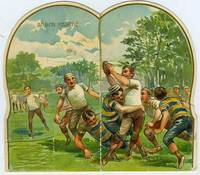
190021251Paris: J. E. Goossens 1900. Very good overall. Rugby illustrated pop up trade card for the French store Au Bon Marche Maison A. Boucicaut. The pop up illustrated with rugby player having just caught the ball being tackled by opposing team. Also with illustration of the elegant shop buildings on the verso of the card and addresses listed at Rue du Bac Rue de Sevre Rue de Babylone and Rue Velpeau. The store was a member of the jury at the Universal Exposition of 1900. Strengthened at spine on verso of pop up with sticky tape. 6 x 5 1/4" J. E. Goossens unknown
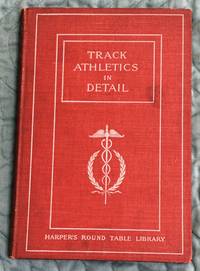
189679846Harper & Brothers 1896. First Edition. Good condition. Harper & Brothers unknown
188138138Wien Seidel & Sohn 1881. Orig. full pictorial cloth richly gilt and blindstamped. Small tear along hinge. Remains of a paerlabel on lower part of back. Stamps on the titlepage and the first leaf. X423 pp. hardcover
186789526London: Chapman & Hall 1867. First U.K. Edition. Octavo. 20cm. Contemporary red half crushed morocco over marbled boards by Wood titled and ruled in gilt to spine. xi; 224pp. Some light scuffing to edges and extremities and some mild rubbing to spine ends strong bright and attractive; internally clean and fresh marbled endpapers hinges strong top edge gilt frontis. with tissue guard illustrated throughout with 12 plates on pale blue paper. A very good well bound and handsome copy.<br /> <br /> A tribute to the energetic exploits of Tom Smith master fox-hunter famous horseman and at various points Master of some of the most famous Hunts in Britain. The memoir doesn't confine itself merely to hunting it also encompasses speculation on the manner in which Stonehenge was built and the possible design of mobile field artillery among other things. Chapman & Hall unknown
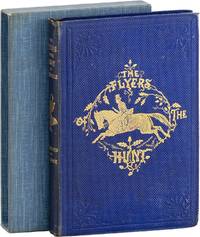
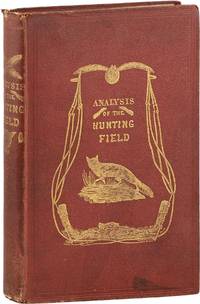
185689506New York: Stringer and Townsend 1856. First American Edition. Octavo. 19cm. Publisher's original dark blue cloth titled and lavishly decorated in gilt to spine and boards. xvi; 480pp. Tight and solid darkened to spine with some dulling of the gilt some mild rubbing of the boards and a little scuffing of the extremities; internally clean and fresh coated yellow endpapers all edges gilt old booksellers label to front pastedown ink and stamp ownership of J. Townsend Connolly to flyleaves frontis. with tissue guard illustrated throughout some light spotting in places. A very good copy of a handsome book with some wear. <br /> <br /> An exhaustive guide on the introducing of young men to the masculine pursuits of shooting hunting and fishing. Stringer and Townsend unknown
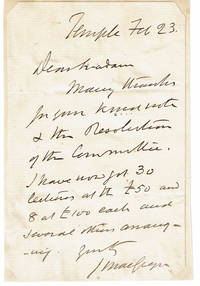
186096259Temple London February 23 circa 1860's 1860's. Very good. - Approximately 30 words penned on 6 inch high by 3-7/8 inch wide creamy white paper. MacGregor writes thanking the recipient for her "note & the Resolution of the Committee". He goes on to outline the numerous lectures he is scheduled to give at the price of 50 pounds and 100 pounds each. Signed "J. MacGregor". Once folded for mailing the corners are clipped and the note has been mounted with glue from the verso onto a slightly larger sheet of paper. Very good. <p>Nicknamed "Rob Roy" after his famous relative John MacGregor 1825-1892 was a Scottish sportsman explorer and travel writer. He is said to have practically invented the "sport" of kayaking then known as canoeing through his travels books and magazine articles. MacGregor worked as a barrister in London specializing in patent law and pursued his passion to travel throughout several parts of the world. Introduced to canoeing while visiting the U.S. and Canada MacGregor designed a double-ended canoe decked in cedar covered with rubberized canvas. Much as with modern kayaks MacGregor's canoe has an open cockpit in the center and was propelled by a double-bladed paddle. He named his canoe the "Rob Roy" after his famous or infamous relative. He undertook canoe trips through Scandinavia Jordan Egypt and the Baltic some of which he featured in his book "A Thousand Miles in the Rob Roy Canoe on Rivers and Lakes of Europe". A gifted artist he illustrated his own books. MacGregor founded the British Royal Canoe Club in 1866 and the American Canoe Association in 1880. Temple, (London), February 23, circa [1860's] unknown
184889498London: Richard Bentley 1848. First Edition. Two Volumes. Octavo. 20cm. Publisher's original bottle green embossed cloth titled in gilt to spines. viii; 344pp.; vii; 343pp. Tight and clean softening and bumping to corners and with bumping and light fraying to the spine ends of both volumes a couple of tiny chips to the cloth; internally clean and fresh coated yellow endpapers offsetting to p.50-51 in Vol I due to a laid in newspaper clipping celebrating Forester's work inner joint in Vol II just starting otherwise a very solid pair. A very good clean set. <br /> <br /> Henry Herbert was a rather tragic figure seemingly continually falling short of his own expectations of himself and who only seemed to find any sort of steady personal voice in his works under the Forester pseudonym discussing the finer arts of shooting fishing and woodland stalking. A sort of wandering genetic remnant of several aristocratic British bloodlines but frequently financially wobbly and unable to get a steady footing Herbert seems to have alienated most people in his circle at one time or another and eventually shot himself in a full length mirror after having thrown a party to which many were invited but none attended. <br /> Although his output included a slew of adventure novels and various other literary exploits he is chiefly remembered for his wistful keenly observed and evocative accounts of woodland sporting activities. Richard Bentley unknown
185989525London: The Field" Office; Ward and Lock 1859. First U.K. Edition. Octavo. 19cm. Publisher's embossed pebble grain cloth in deep blue titled and decorated in gilt and blind to spine and front board. 114pp.; 1. Strong and handsome some bumping and scuffing to corners some darkening to the spine panel scuffing to hinges gilt bright; internally clean and fresh orange coated endpapers with some oxidation bookplate to front pastedown all edges gilt rear inner hinge cosmetically starting illustrated throughout with 6 color engravings by Leech old binder's label to rear pastedown from Burn. A very good handsome copy housed in a tailor made cloth slipcase. The Field" Office; Ward and Lock unknown
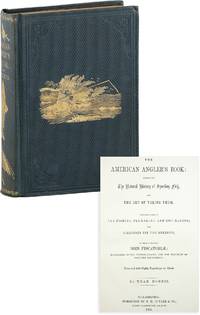
186489523Philadelphia: E.H. Butler and Co 1864. First American Edition. Ocatvo. 22.5cm. Publisher's dark green embossed cloth lavishly decorated in blind and gilt gilt titles to spine. 604pp. Tight bright and handsome a little bumped to corners and some softening at the spine ends otherwise very pleasing; internally clean and fresh coated brown endpapers inner hinge barely starting with a crack to the paper not affecting the joint frontis with tissue guard illustrated throughout with full page plates of fish and flies and numerous in-text engravings. A very good bright strong copy indeed.<br /> <br /> A major work by the sportsman and naturalist known as "America's Walton" and generally referred to as "Uncle Thad" by his acolytes. Norris was one of the first sporting author's to develop techniques specifically for American waters realising that traditional European methods had been developed for a completely different ecological environment. He was also the developer and designer of new fly-fishing technologies and pioneered the development and adoption of the split bamboo fishing rod. Scarce thus. E.H. Butler and Co unknown
1894122218Milano - Roma Garbini 1894/1897. Fascicoli in folio pp. varie da 12 a 16 ognuno bella testata illustrata fino al maggio del 1894 variata in seguito. Disponiamo di un blocco di 78 numeri sfusi seppur non continuativi dal n° 592 del 4 gennaio 1894 al n° 769 del 29 maggio 1897. Tutti in buono stato di conservazione. TUTTI Milano - Roma, Garbini unknown
184989503Philadelphia: Carey and Hart 1849. First Edition. Octavo. 18.5cm. Bound in dark blue half calf over marbled boards by Whitman Bennett unsigned but laid in is an als from Bennett discussing the process and apologising for being absent because his son also a binder had just enlisted; which places the binding job somewhere in the early to mid-1940's titled and decorated in gilt to spine. 198pp. A little light wear to the edges and a couple of small scrapes to the fore-edge tight bright and handsome; internally clean marbled endpapers edges speckled brown a little scattered pale foxing in parts mainly towards the front of the book. A very good and extremely handsome copy.<br /> <br /> Originally issued in wraps copies of which are legendarily scarce something Bennett alludes to in his letter and rather scurrilously reprinted without permission by Peterson of Phildalphia nice copies in any binding are thin on the ground. Carey and Hart unknown
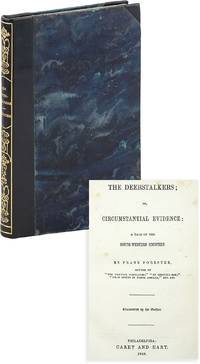
185789486Philadelphia: T.B. Peterson 1857. First Thus. Two Volumes. Octavo. 19cm. Publisher's embossed brown cloth titled and decorated in gilt to spines. Light bumping and scuffing to corners light bumping to spine ends a little discoloration to the cloth in places strong pretty and tight; internally clean and fresh coated yellow endpapers two armorial bookplates to Vol. I with only one of them reappearing in Vol. II that of Charles Fry whose ink ownership also appears on the flyleaves illustrated throughout ostensibly by Darley but in actual fact most of the illustrations are by Herbert himself. A very good set indeed. <br /> <br /> An odd little object in the American sporting genre; produced entirely without permission by Peterson in fact actively against Herbert's wishes this collection gathers "My Shooting Box" "The Deerstalkers" "The Warwick Woodlands" and "The Quorndon Hunt" sort of a greatest hits of Frank Forester. The titles are bound with separate title pages for each work and general title pages for the collection all of which have either different or inaccurate dates of publication a trick dreamed up by Peterson to muddy the waters of his piracy; not only did he create this distinct work out of four others but he later separated the works once more and issued them under his own imprint in brightly decorated paper wraps. To 'non-book' people this will sound relatively run of the mill but bibliographers and publishing scholars encountering this information might feel the need to pause for a moment in recognition of The Audacity.<br /> Nevertheless they are tidy nicely produced little volumes on decent paper and probably served to somewhat revitalize Herbert's fortunes in America as they were subsequently reprinted as late as 1881 and beyond. Scarce in such nice condition. T.B. Peterson unknown
184689489London: Rudolph Ackermann 1846. First Edition. First Issue text with plates bearing the dates of the second issue so something of a mixed issue. 26cm. Publisher's red pebble grained cloth titled and decorated in gilt and blind to spine and front board. 6; 326pp.; 2. Bumped and scuffed to corners and spine ends tight and strong some soiling and discoloration of the cloth in places some darkening of the spine panel and fraying to spine ends; internally clean and fresh coated yellow endpapers a little discolored and with the front hinge just starting slightly edges untrimmed two small areas of attempted repair with tissue following the title page which is overstrained with a small tear in the gutter the seven hand colored plates are vivid and striking alongside numerous in-text woodcuts. A good bright and clean copy with some mild wear.<br /> <br /> Laid in at the front of this volume another suitably lavish contributiopn to hunting and sporting books from Ackermann is a letter to a previous owner from Ernest Gee the New York based bookdealer. Gee specializing in American books on Hunting and field sports was one of the mid to late 20th centuries leading dealers in rarities in his field. Rudolph Ackermann unknown
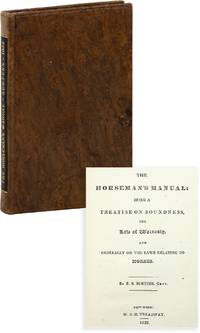
183289407New York: W.R.H. Treadway 1832. First American Edition. 12mo. 16cm. Contemporary tree pattern sheep or roan with a black leather and gilt title label to spine old respine. xii; 132pp. Very light wear tight and bright hinges strong light sunning to spine gilt bright; internally clean and fresh albeit with fairly low production values. A very good neat little copy indeed of the author's first published work. W.R.H. Treadway unknown
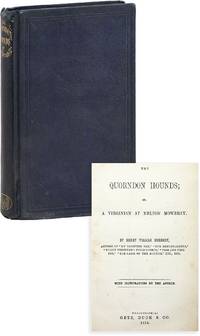
185289485Philadelphia: Getz Buck & Co 1852. First American Edition. Octavo. 19cm. Publisher's original dark blue ripple grain cloth titled in gilt to spine with blind ruling to boards this edition can also be seen in red cloth. 173pp.; 4pp. ads. Bumping to extremities with some light scuffing to the lower corners and some softening and fraying at the head and tail strong tight and pretty; internally clean and fresh a triangle of dampstaining to the prelims that fades out before the title page four woodcuts by the author including frontis. some pale cosmetic foxing in places something this book is prone to and the first gathering is perhaps a little proud. A very good copy with some mild cosmetic wear of a scarce and highly collectable title. <br /> <br /> A tale of English sporting life of the early 19th century recounting the adventures of a visiting American sampling the madcap pleasures of foxhunting with The Quorn one of the oldest and most respected "Hunts" essentially a hunting club for the local gentry with each region having their own variations territories and indeed techniques. The Quorn was one of the first Hunts to introduce a system of hunting techniques under Hugo Meynell from the 1750's until his death around 1800 by which time the techniques skills and training styles he had introduced had spread and been developed upon by all the subsequent rural Hunts that appeared like the Tiverton or Beaufort. This form of hunting was quite obviously a pursuit of the gentry something that Surtees later "Jorrocks" character highlighted satirically; recounting the adventures and misadventures of a bluff wealthy cockney grocer pursuing the pastimes of the seated and landed nobility. A scarce book. Getz, Buck & Co unknown
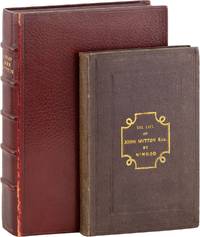
183589496London: Rudolph Ackermann 1835. First Edition. First Printing. Octavo. 21.5cm. Publisher's original pebble grain deep brown cloth titled and embellished in gilt to front board. iv; 2; 110pp. Tight clean and strong a little bumping and scuffing to extremities light sunning to spine very handsome; internally clean and fresh brown endpapers with armorial bookplate to front pastedown tipped into the prelims actually affixed to the rear of the frontis by a stub is an addressed postal paper probably the front of an envelope bearing Mytton's signature an 1820 Shrewsbury postal frank and the address of Mrs. Lethbridge the married name of Mytton's sister; the 12 hand colored plates by Alken are spectacularly bright and striking tissue guards are present. An outstandingly clean and attractive copy if it is possible for a book that has made its way from 1835 to be described as "near fine" then this fits the bill. <br /> <br /> The book in the hand is quite a slight volume but is housed in one of the most luxurious book boxes we have encountered; a deep red levant morocco case by Sangorski with a push button clasp a rather decadent cushioned velvet lining and a drop front for ease of opening. The book itself has a tailor made red cloth and board chemise. <br /> Also present in the case are old catalog entries for the book one of which is on a Bernard Quaritch letterhead and a three page typed analysis of the title in all its editions and permutations by Ernest R. Gee one of the most legendary New York dealers in sporting and hunting books. Quaritch's pencil notes to the front flyleaf state: "Very rare in original condition. Extremely fine and perfect copy" which for them is the equivalent of throwing a parade. The bookplate is that of noted collector of fine books E. Hubert Litchfield whose legendary library was auctioned off in 1951 like so many post-war libraries from country seats of extinguished gentry. <br /> <br /> John "Mad Jack" Mytton himself was probably the epitome of the early 19th century fearless noble rake. Frequently in his own lifetime compared to that other luminous doomed libertine Lord John Rochester; Mytton was an alcoholic he took 2000 bottles of port with him to college a gambler by the standards of the time a womaniser and as Rifleman Harris would say; "A courtier to my Lord Bacchus and an unremitting debtor." <br /> Regardless of his belief that moral highground was just something to gallop one's hounds over during his lifetime Mytton was very much loved by his friends associates and servants. <br /> A mad eccentric whose life can best be described as a series of enthusiastically botched suicide attempts he was also generous to a fault utterly without fear completely at home in his own lunacy kind thoughtful creative and very much a product of his time. When he wasn't dressing as a highwayman to terrify rural clergy or hunting wildfowl in winter at night on ice.naked he was riding a bear into dinner parties accidentally setting himself on fire to cure hiccups and dressing up as a tramp to test the charity of his own estate staff he ended up fist fighting his own under butler when they failed to be forthcoming. <br /> He was dead by 38 riddled with alcoholism and compounded injury and just like with Rochester his light went down entangled with the dark. Accounts vary but something like 3500 people including his tenants and servants attended his funeral including a beautiful young woman named Susan whom Mytton had met on Westminster Bridge in 1831 and promptly offered a salary of 500 pounds a year to be his companion; she stayed with him until his death. A rare book lavishly preserved commemorating a type of man that for better or worse no longer exists. Rudolph Ackermann unknown