1 445 résultats
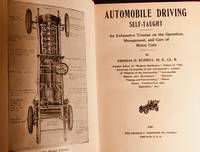
1909787<p>Small Octavo 7 7/8 X 5 3/4 inchesChicago: The Charles C. Thompson Co. "Not Inc." 1909. First Edition. 222 pages with numerous photomechanical illustrations of car parts technical drawings and diagrams for a 1909 automobile with detailed descriptive text.</p><p>Original red cloth hardcover binding with title in gilt on front cover and spine; very good condition minor age wear at corners and top and bottom of spine but contents clean intact and in fine condition.</p><p>A very thorough discussion of automobile driving including subjects on: "Meeting horses Cattle and Cyclists" "Laying Up tor the Winter" and "The Live Axle."</p><p>Also "Don't try to wipe engine while in motion" "Don't fail to have a fine gauze screen put in your funnel and strain all gasolene put in the tank" and "Do not drive in street car tracks ."</p> The Charles C. Thompson Co. ("Not Inc.") hardcover
19222111902156203513Not Available 1922. Soft Cover. Fine. The book is in fine condition. Not Available paperback
19642092902139202108Friedrich Frommann Verlag 1964. Soft Cover. Fine. The book is in fine condition. Friedrich Frommann Verlag paperback
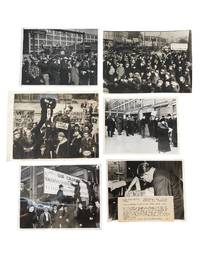
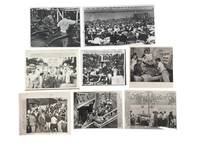
1937234461937. Labor Organization Chrysler strike press photo archive documenting the 1937 sit down strikes and picketing campaigns at Dodge Main and other Chrysler facilities in Detroit and Highland Park Michigan during the decisive phase of industrial unionization in the American automobile industry. The archive records workers occupying plants mass picket mobilizations outside factory gates anti injunction demonstrations and violence connected to the struggle between Chrysler management the United Automobile Workers and competing independent unions. These events unfolded only weeks after the February 1937 settlement of the Flint sit down strike against General Motors which established the UAW as a major industrial union and accelerated organizing efforts across Detroit's auto plants. Chrysler initially resisted recognition obtaining court injunctions ordering workers to evacuate occupied factories while thousands of laborers remained inside the plants or formed flying squadrons to block strikebreakers from entering. The scenes here capture the atmosphere of confrontation in Depression era industrial labor conflict at a time when mass production workers forced some of the largest corporations in the United States to negotiate with organized labor.<br /> <br /> Photo archive of 6 silver gelatin press photographs from 6 x 8 inches to 8 x 10 inches Detroit and Highland Park Michigan 1937. Affixed captions on versos with filing stamps dated March and August 1937. Crowds of striking workers gather outside Dodge Division and Chrysler factory gates beneath signs reading "Dodge Division of Chrysler Corporation Employment Office" and "We Are Here To Stay Dept. 82." Several men hold placards reading "82 is Sittin Too" "Spirit of 1937" and "Fence Jumper" while an effigy labeled "Injunction" hangs over the crowd in open defiance of a court order directing workers to vacate occupied plants. A large calendar board records the passing days of the sit down occupation beginning March 8 1937. Another scene shows relatives and supporters communicating with occupying workers through numbered department cards hung along the perimeter fence after union organizers established an improvised locating system for men inside the plant. One caption identifies "flying squadrons" directing picket activity outside Chrysler headquarters. The latest photograph records Frank A. Dillon identified as president of an independent Chrysler union receiving questioning from Detective Sergeant Harry Scher after an alleged beating connected to union violence that led Chrysler officials to temporarily close a plant pending investigation.<br /> <br /> The Chrysler strike formed part of the larger wave of industrial labor upheaval that reshaped American manufacturing during the New Deal. Passage of the Wagner Act in 1935 legally protected collective bargaining but enforcement depended on workers physically preventing corporations from continuing production with replacement labor. Sit down strikes became one of the most controversial tactics of the era because occupying workers halted machinery while denying employers access to their own factories. The archive preserves not only the mechanics of strike organization but also the public theater of industrial conflict in Depression era Detroit: marching pickets improvised communication systems anti injunction symbolism and massive worker assemblies outside factory gates. Moderate surface wear occasional creasing editorial markings and toning to versos with captions firmly affixed; images remain sharp and highly legible. Overall very good condition. unknown
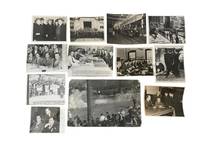
1938234231938. Labor Organizing United Auto Workers and CIO labor photograph archive documenting strike action union leadership and collective bargaining negotiations during the expansion of organized labor in the American automobile industry 1938-1949. The archive traces the period immediately following the 1935 Wagner Act when unions gained federal legal protection for collective bargaining but still faced violent resistance from corporations police departments and municipal governments. Several scenes connect directly to the years surrounding the 1937 Battle of the Overpass in Dearborn when Ford security men beat UAW organizers attempting to distribute union literature outside the River Rouge complex and to the broader wave of sit-down strikes and factory shutdowns that forced General Motors Chrysler and eventually Ford into formal negotiations with the UAW. The captions identify senior labor figures including Walter Reuther R. J. Thomas George Addes and Richard T. Leonard establishing the archive as documentation not merely of rank-and-file unrest but of the institutional consolidation of the UAW-CIO into one of the most powerful industrial unions in the United States. The material also records how labor disputes extended beyond factory gates into courts city halls state legislatures and police jurisdictions revealing the political dimensions of industrial unionism during the New Deal and early Cold War years.<br /> <br /> Photo archive of 12 Large silver gelatin press photographs one large panorama measuring 9.5 x 16.5 inches 11 press photos ranging from 6 x 8 inches to 8 x 10 inches primarily Detroit Dearborn South Gate and Atlantic City circa 1938-1949. A large-format scene dated 1939 records tear gas and street violence during a UAW strike at the Fisher Body plant with clouds of gas spreading across trolley tracks as helmeted police advance toward crowds of fleeing workers and spectators. Another image shows hundreds of demonstrators carrying a massive American flag through downtown Detroit toward City Hall during protests following clashes between union pickets and police at Federal Screw Works; the verso caption notes approximately forty injuries and references accusations of "police brutality" raised before city council. Additional photographs show UAW-CIO officials seated at conference tables negotiating contracts and appearing in municipal hearing rooms beneath desk microphones and courthouse lighting. Captions identify figures including Walter Reuther George Addes and R. J. Thomas while a 1940 Dearborn caption records the arrest of union leaders for distributing handbills asserting workers' rights under the National Labor Relations Act. South Gate strike scenes outside a General Motors facility show workers carrying placards demanding a thirty percent wage increase while Rev. Louis R. Loe conducts prayer services along the picket line. Convention and leadership photographs from Atlantic City and Washington document labor leaders gathered under the authority of Samuel Gompers and later CIO leadership structures linking local strike activity to national labor organization.<br /> <br /> The archive illustrates the transformation of the automobile industry from one of the nation's most violently anti-union industrial sectors into the center of postwar collective bargaining power. Ford Motor Company resisted union recognition longer than General Motors or Chrysler relying on private security forces local police cooperation labor espionage and anti-handbill ordinances to suppress organizing inside and outside its plants. Several captions directly reference these legal confrontations including arrests tied to leaflet distribution and disputes over municipal authority to restrict labor organizing in public space. By the late 1940s many of the same figures shown here were negotiating contracts that established wage standards pensions grievance procedures and health benefits that reshaped industrial employment across the United States. Creasing edge wear scattered minor losses adhesive residue and newsroom markings to versos; images remain clear and intact overall. Overall good condition. unknown
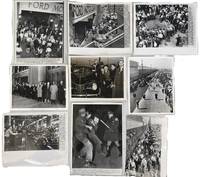
1941234341941. Labor Organizing Ford River Rouge plant labor photo archive documenting the struggle over union recognition strike enforcement and industrial bargaining at Ford Motor Company between 1941 and 1953. River Rouge was Ford's massive Dearborn complex where raw materials blast furnaces rail lines ships assembly shops and tens of thousands of workers were concentrated at one site. Ford resisted the United Auto Workers longer than General Motors and Chrysler and the 1941 strike forced the company into an NLRB-supervised vote that led to UAW representation at Rouge. The later 1949 strike over speed-up conditions demonstrates the continued role of the union in protecting workers from unreasonable production paces giving bargaining authority and strengthening worker control inside the plant.<br /> <br /> Photo archive of 7 Large silver gelatin press photographs measuring between 7 x 8 and 8 x 10 inches Dearborn and Detroit Michigan 1941-1953. Workers stream across elevated pedestrian bridges into the Rouge gates crowd plant entrances receive ballots under the supervision of officials and a Michigan State Police officer and stand in picket lines outside Ford buildings. A Black worker charges toward a picket while a state policeman advances with club raised with the Acme caption identifying the incident as "Vengeance at River Rouge" on April 4 1941. Other captions identify Sunday dinner served to pickets on April 6 1941; thousands returning to work after settlement of the UAW-CIO strike on April 14 1941; workers voting in the NLRB election on May 21 1941; pickets entertained from a truck during the May 1949 walkout; and Ford's River Rouge plant in 1953 described by the Ford News Department as employing more than 60000 and able to turn raw materials into a finished car in 28 hours.<br /> <br /> The archive records both the scale of River Rouge and the mechanics of labor conflict: police interference union voting picketing crowds and shop workers moving between strike and production. It connects the 1941 recognition fight to the postwar UAW's continuing battles over working conditions at one of the most closely watched industrial sites in the United States. Creasing handling wear surface marks and caption wear; images remain intact and legible. Overall in good condition. unknown
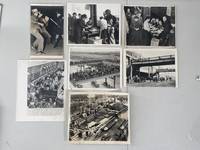
1941234311941. Labor Organizing Ford River Rouge plant press photographs documenting labor conflict picketing and union organization at the largest industrial complex in the United States from the early UAW recognition battles of 1941 through the major Ford walkouts of 1949 and 1967. The River Rouge plant in Dearborn employed tens of thousands of workers and was the center of Ford's anti-union resistance during the rise of the Congress of Industrial Organizations CIO. Ford Motor Company remained the last major Detroit automaker to recognize the United Auto Workers after General Motors and Chrysler signed contracts following the 1936-1937 sit-down strikes. Several scenes here connect directly to the April 1941 strike that finally forced Ford to negotiate with the UAW after years of union busting and company sanctioned violence against organizers. Later scenes document the 1949 strike involving roughly 65000 workers and the 1967 Rouge walkout documenting three decades of union activity in the American auto labor history.<br /> <br /> Photo archive of 9 black-and-white press photographs silver gelatin prints ranging from 7 x 9" to 8 x 11" Dearborn and Detroit Michigan 1941-1967. Photographs show UAW members at Rouge plant gates carrying placards reading "Ford Is On Strike" while reporters and cameramen surround circular picket formations outside the factory entrances. One scene records women from the Women's Auxiliary of UAW Local 600 marching in orderly formation with American flags during an April 1941 demonstration outside the Rouge complex. Another captures a state policeman advancing with baton raised as two men recoil during violence near a plant gate; the attached caption identifies one figure as an unidentified Black man striking a UAW picket captain. Additional scenes show workers waiting in line for pay envelopes during the strike men gathered outside plant entrances under heavy guard and a largely idle assembly floor where a lone foreman sits beside silent production lines after tens of thousands of workers walked out. Typed press captions affixed to versos on image margins including references to the May 1949 strike and September 1967 Rouge picketing.<br /> <br /> The Ford strikes were some of the most consequential labor battles in twentieth-century American industry. Ford's Service Department under Harry Bennett built an extensive anti-union apparatus that used labor spies intimidation and physical violence against organizers culminating in nationally publicized confrontations such as the 1937 "Battle of the Overpass." The April 1941 strike represented the decisive collapse of Ford's resistance to industrial unionism and secured UAW recognition at the Rouge plant fundamentally changing labor relations in the American automobile industry. These scenes preserve not only the mechanics of organized strike action but also the scale of industrial labor mobilization in midcentury Detroit where mass demonstrations were central in the struggle between organized labor and corporate management. Light creasing scattered surface wear and minor handling marks consistent with newsroom use; captions and editorial markings largely intact and legible. Overall good to very good condition. unknown
1961234081961. Labor Organizing United Auto Workers strike and labor photographs documenting national contract disputes factory shutdowns collective bargaining and picket line action across the American auto industry during the 1960s and 1970s. The group records major UAW conflicts involving General Motors Ford and Chrysler including the 1961 General Motors bargaining deadline the 1967 Ford strike in Los Angeles and the 1973 Chrysler contract dispute led by Leonard Woodcock and Douglas Fraser. These conflicts grew from fights over wages speedup compulsory overtime pensions medical coverage retirement eligibility and plant safety inside the nation's largest manufacturing sector. By the early 1970s the UAW represented more than one million workers and could halt production across dozens of plants through coordinated bargaining local picketing convention mobilization and public demonstrations.<br /> <br /> Photo archive of 8 Large silver gelatin press photographs one large panorama measuring approximately 8 x 14 inches and the remaining ranging from 8 x 8.5 to 8 x 10 inches primarily Detroit and Los Angeles 1961-1973. Workers paint strike placards inside a Local 15 UAW-CIO shop space with slogans including "Improve Working Conditions" "Free Paid Medical and Insurance" and "Stop Speed Up." Leonard Woodcock and Douglas Fraser march beside white-collar Chrysler employees carrying a sign reading "30 and Out No Age Limit." Ford workers gather beneath the "Ford Motor Co." sign at the Los Angeles assembly plant while signs reading "UAW on Strike for Justice" and "UAW Local 148" rise above the crowd. At Ford's Rouge plant hundreds of UAW members picket outside the entrance after a contract settlement while the attached caption notes that the plant employed roughly 33000 workers and that pickets remained after the "lonely guard" opened the gate. Factory interiors show chassis assembly lines rear axle installation and suspension components while a crowded convention hall displays banners reading "Get America Back to Work" and "Improve Working Conditions."<br /> <br /> The group demonstrates the UAW operations in the labor strife of the 60s and 70s: national officers negotiated with automakers local members prepared signs and walked gates convention delegates debated priorities and production workers controlled the pace of automobile output by withholding labor. Kennedy publicly intervened during the 1961 GM dispute to prevent a shutdown of the auto industry while the 1973 Chrysler negotiations centered on retirement working conditions and contract protections during a decade of inflation and labor unrest. Creasing edge wear scattered minor losses and occasional handling wear; captions editorial markings stamps and verso annotations retained throughout; images overall intact and clear. Overall in good condition. unknown
19752110502150908994Toyota Auto Body Co. Ltd. 1975. Soft Cover. Fine. Volume: 1 Toyota Auto Body Co., Ltd. paperback
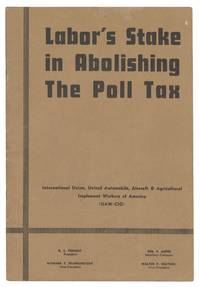
194313767Detroit: International Education Department UAW-CIO 1943. A pamphlet by the International Union United Automobile Aircraft & Agricultural Implement Workers of America from material prepared by the National Committee to Abolish the Poll Tax on what the poll tax does to labor in its disenfranchisement of both black and white workers the reactionary anti-labor Congressmen elected because of the poll tax and how the labor movement can defeat it in 1944. Includes 13 tables.<br /> <br /> Stapled wrappers 38 p. tables. Mailing label partly torn off on the rear wrapper a very good copy. International Education Department, UAW-CIO unknown
1987corvDAutomobile Quarterly Publishing 1987. First Edition. oblong Hardcover. very good/very good. The 2 volumes of: Corvette - An American Legend: The Gold-Certified Cars of Bloomington: <br /> 1953 -1967 <br /> and 1968-1986<br /> <br /> ISBN: 978-091503851-X 978-0915038527<br /> Automobile Quarterly Publishing 1986 1987<br /> 184 pages 190 pages. 13 x 0.75 x 10 inches each.<br /> <br /> In very good condition. the dust jackets have faint shelf wear on the edges. -- From 1953 to 1967 fewer than 200000 Corvettes were built hardly more than a week's production at GM. Yet each one was destined to become an enthusiast's dream: fast beautiful and rare. Read about and see this selection of special Gold-certified Corvettes with an in-depth photographic representation of each model year from the Corvette's birth in 1953 to the end of the Sting Ray era in 1967. Automobile Quarterly Publishing hardcover
191226351NY: Self Published. Very Good with no dustjacket. 1912. Hardcover. Name inside one volume. ; Original hardcover not a reprint. 2 book set. ; 8vo 8" - 9" tall . Self Published hardcover
191526348NY: Self Published. Good with no dustjacket. 1915. Hardcover. Both volumes have very good and clean pages except for a name/address inside one front cover. The covers have some old spotting/staining. Very sound. ; Two book set. Original not reprints. ; 8vo 8" - 9" tall . Self Published hardcover
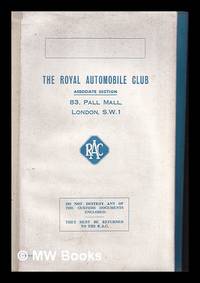
1950433242The Royal Automobile Club 1950. 1st edition. Softcover. Good stiff-card folder with maps certificates driving permits envelops and similar documentation. Edges and documents nicked stained dust-dulled and somewhat rubbed as with age. Scans and additional bibliographic detail on request. Physical description; folder with envelops coloured maps permits certificates and similar cash of papers. Subjects; The Royal Automobile Club. Insurance cars 20th century. Automobiles 20th century. The Royal Automobile Club paperback
1918008531London: The Institution of Automobile Engineers 1918. Very informative technical book on automobile and aircraft construction in early 1900s t0 1918 Volume 8 twelve issues January to December 1918 original 1918 publications in officiai ILIFFE binding. 366 pages in very bright clean condition just some heavy browning to endpapers all other pages clean. Many B/w photographs and technical illustrations all present as called for with some fold out diagrams plus very informative text NO dustwrapper outer board have a couple of small marks slight wear to top and bottom of spine and corners little area on extreme botoom edge of rear board worn half inch across slight darkening to spine.HEAVY BOOK 2.3 Kg with sound packaging EXTRA POSTAGE REQUIRED FOR OVERSEAS A nice example of this book SEE IMAGES. DETAILED IMAGES AVAILABLE ON REQUEST. First Edition. Gold Embossed Cloth Boards. Good Plus/No Jacket. 13 ½ x 10 ¼ Inches. Hardcover. The Institution of Automobile Engineers Hardcover
1920008530London: The Institution of Automobile Engineers 1920. Very informative technical book on automobile and aircraft construction in 1920s Volume 10 twelve issues January to December 1920 original 1920s publications bound in official ILIFFE binding. 504 pages in very bright clean condition justsome browning to endpapers. Many B/w photographs and technical illustrations all present as called for with some fold out diagrams plus very informative text NO dustwrapper outer boards are bright and clean just slight darkening to spine.HEAVY BOOK 2.8 Kg with sound packaging EXTRA POSTAGE REQUIRED FOR OVERSEAS A nice example of this book SEE IMAGES. DETAILED IMAGES AVAILABLE ON REQUEST. First Edition. Gold Embossed Cloth Boards. Very Good/No Jacket. 13 ½ x 10 ¼ Inches. Hardcover. The Institution of Automobile Engineers Hardcover
1984mon0000031463Jarrold and Sons LTD 1984. Paperback. Good. in x in x in. Ex-Library. Paperback. Jarrold and Sons LTD paperback
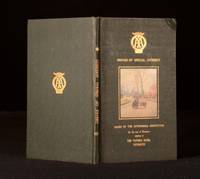
1930GEN33-F-15London : Fanum House c1930. Cloth. Very Good. 8.5" by 5". None. A local interest book on various drives in the UK. Including: Drives From Weymouth Drives From Lyme Regis Drives From Yeovil etc. Issued by The Automobile Association. In a decorative green cloth binding with an illustration to the front board. Externally generally smart lightly rubbed in places. Corners are bumped. Internally generally firmly bound. Pages are generally bright and clean. There is an institutional library stamp to the front pastedown and verso and recto of front free end papers. Very Good Fanum House hardcover
1997Q-0393316432W. W. Norton & Company 1997-04-17. Paperback. New. New. In shrink wrap. Looks like an interesting title! W. W. Norton & Company paperback
2000Q-0393050254W. W. Norton & Company 2000-11-01. Hardcover. New. In shrink wrap. Looks like an interesting title! W. W. Norton & Company hardcover
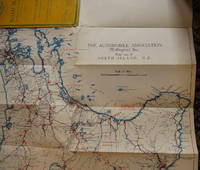
193620509Wellington: Automobile Association Wellington. Very Good- with no dust jacket. 1936. First Edition. Softcover. Some rubbing and creasing to edges of covers.; Road map of North Island of New Zealand. Dimensions: 1145 x 670mm. Folds to a tall narrow format 340 x 125mm. Yellow card covers green photographic illustrations on rear cover. With visitor information in red e.g. "Good Sea Fishing" "Big Game Fishing" "Burning Gas Here" "Deer Shooting" "Mt. Hikurangi is the first point in N.Z. to catch the morning sun it shares with Taveuni priority in the British Empire". . Automobile Association Wellington paperback
2000Q-0393319423W. W. Norton & Company 2000-03-17. Paperback. New. New. In shrink wrap. Looks like an interesting title! W. W. Norton & Company paperback
1916144930New York: The Automobile Trade Directory 1916. Hardcover. 875p. Brown cloth. A hardcover book in very good condition. Cover dirtied corners bumped otherwise pages clean and tight. Vol. XIV No. 2. April 1916. "A Classified Trade Directory of the Automobile and Commercial Vehicle Industries containing the Names and Addresses of the American Manufacturers of Automobiles and Commercial Vehicles and of the Makers of the Materials Component Parts Accessories Machinery Tools Shop Equipment and Supplies. Contains also a Directory of National Trade Associations Tables and Data and other pertinent information. The Automobile Trade Directory hardcover
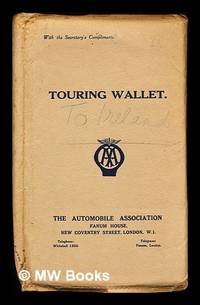
1935358342London: The Automobile Association 1935. First Edition. Softcover. Near fine copy in the original stiff-card wrappers; edges very slightly dust-dulled and toned. Remains particularly and surprisingly well-preserved; tight bright clean and especially sharp-cornered. Physical description; wallet of maps and tourist publications for Great Britain and Ireland. Notes; No clear publication date given. Contents; Route No. I: Colchester to Fishguard via London Oxford & Gloucester ; Route No. 2: Colchester to Fishguard via Baldock & Chipping Norton ; Route: Rosslare to Portrush ; Route: Rosslare to Killarney ; Route: a tour from Killarney to Belfast via Londonderry & The Antrim ; Drives from Portrush ; Drives from Belfast ; Drives from Killarney ; Route: alternative Route Killarney to Portrush ; Service Map of Ireland. Subjects; Irish tourism. Tourist routes throughout Ireland. Irish Maps. London: The Automobile Association paperback
1997Q-0785319603Pubns Intl Ltd 1997-12-01. Hardcover. New. In shrink wrap. Looks like an interesting title! Pubns Intl Ltd hardcover