Melville, HermanBiblio.com
325 résultats
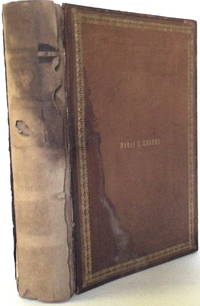
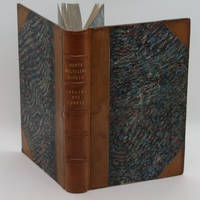
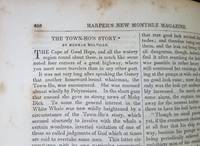
18512020008The first appearance of any part of Melville's Moby-Dick! "The Town-Ho's Story" would become chapter 54 of the classic novel.<br /><br />Harper & Brothers New York 1851. Hardcover. First Edition. Black leather with matching corners dark brown boards with gilt spine label. 864 pp. total the Town-Ho's Story is 8 pages starting on p. 658 With a the footnote: "From 'THE WHALE." The title of a new work by Mr. Melville in the press of Harper and Brothers and now publishing in London by Mr. Bentley."<br /><br />Additionally a wealth of other mid-19th century light reading including "The Treason of Benedict Arnold" by Benson Lossing immediately following as well as such page-turners as "Somnambulism" and "Visit to Laplanders." Harper and Brothers hardcover
1852009008NY: Harper & Brothers. First edition. Six issues of Harper's New Monthly Magazine Volume III: June - November 1851 leather bound. Published NY: Harper & Brothers 1852. 8vo. viii864pp. illustrated throughout with engravings. The first appearance in print of any part of Moby Dick. Gilt tooled full leather all edge gilting yellow endpapers. Leather backstrip missing covers intact binding tight stain darkening to area on front cover stamp of Adriance Memorial Library on verso no other markings. Good. Internally very good pages clean bright with minimal foxing. . Good. Hard. 1st. 1852. Harper & Brothers unknown
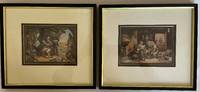
18533377London: G. Baxter 1853. Two framed prints of famous images. One is entitled: "Australia. News from Home". This first depicting a group of men inside a wooden building in Australia. Two of whom appear indigenous. The other entitled: "News from Abroad". This showing a family gathered around for the reading of a letter whilst on the wall there is a poster promoting emigration to Australia. Both from paintings by Harden Sidney Melville and engraved printed and published by G. Baxter. They are cropped so no longer have the Baxter stamp at the bottom. Tipped on to card and mounted in wooden frames under glass. Each measures: 110 mm x 150 mm. Total size including frame: 260 mm x 290 mm. They have a label to the rear which says they were framed by The Petersfield Book Shop. In very good condition. Price is for the pair. G. Baxter unknown
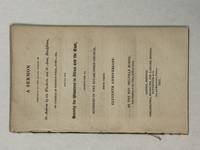
1805AQ11951Edinburgh: Printed for Peter Hill 1805. 2 64pp. Recent blue paper boards printed paper title labels to spine and upper board. Neat ink numeral to head of dust-soiled title occasional light foxing short marginal tear to B6. An address by Henry Dundas Viscount Melville 1742-1811 regarding accusations of misconduct in his role as treasurer of the Royal Navy during the period of the Napoleonic Wars. A Parliamentary commission had revealed discrepancies within the accounts and instances of the breaking of regulations. The irony being that the legislation that Melville was charged with breaching was that which he himself had passed in 1785 to put right the disorderly finances of the service. . First edition. 8vo. Printed for Peter Hill hardcover
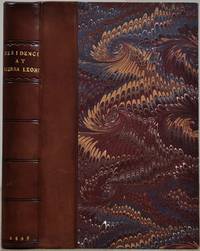
184934587London: John Murray 1849. First Edition. 8vo in a handsome binding of brown morocco over marbled paper covered boards the spine with raised bands black morocco lettering label gilt xii 335 1 pp. A handsome copy the binding is strong and solid and in excellent condition the text is essentially free of any spotting or staining on occasion just a touch age mellowed. FIRST EDITION AND A VERY EARLY ACCOUNT OF A BRITISH WOMAN'S TIME IN AFRICA. The author lived for several years in Sierra Leone. She informally tells us of the hardships and discomforts but also provides much on the missionaries the climate the natural attributes of the area the slave traders and of the native peoples. John Murray hardcover
1849019049London: John Murray 1849. Book. Very good condition. Hardcover. First Edition. 12mo - over 6¾ - 7¾" tall. xii 335 pages of text. Newly rebound with a full leather spine and marbled paper-covered boards. The text is clean and unmarked. First edition. John Murray Hardcover
181142074Philadelphia: London Printed: Philadelphia Reprinted 1811. 29 3 blanks pp. Disbound Good plus.<br /> <br /> We need more missionaries to convert benighted Africans.<br /> LCP 4958. London, Printed: Philadelphia, Reprinted unknown
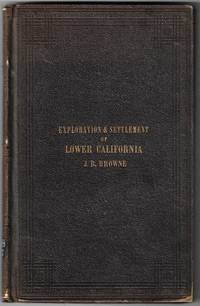
186923330San Francisco: H.H.Bancroft and Company 1869. Hardcover. Good. 8vo 200 pp in original brown pebbled cloth with title stamped in gilt on front board. Ex-library with call number on spine lacking front free endpaper. Binding sound text clean. A scarce edition of this compilation which was also published in the same year by Appleton as the second part of Browne's "Resources of the Pacific Slope." Includes: Taylor's Historical Summary of Lower California from its Discovery in 1532 to 1867; Scammon's Exploration of Lower California; Journal of the Expedition of Mr. J.D. Hawks and Party Through the Interior of the Peninsula of Lower California from San Domingo to San Diego; Report of Dr. John A. Veatch on Cerros or Cedros Island; Extracts from a History of Old or Lower California by Padre Francisco Javier Clavijero; Washington Territory Historical Memoir unattributed; and Historical Sketch of Nevada Including Boundaries Population Aboriginal Inhabitants Early Settlements &c. unattributed. Cowan p. 79. H.H.Bancroft and Company hardcover
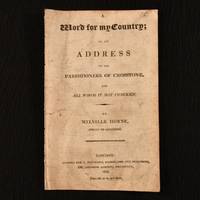
1817907F37London: J. Hatchard 1817 . First edition. Unbound. Good. 8.5" by 5.5". None. The very scarce first edition of this essay from Anglican clergyman and British missionary Melville Horne. A very scarce first edition from this prominent Anglican figure a man who campaigned for all British Protestants to unite in a common missionary enterprise.In this essay he calls upon English patriots to defend the country against 'the Jacobins' who are 'spreading their pernicious principles'.His rousing statements include 'personal liberty is the first and most essential branch of civil liberty' and 'kill or be killed'. He commends the late William Pitt and condemns the radicalism of the French Revolution warning that it may shortly take place in England too if the people do not resist.With publisher's advertisements to the final leaf. Unbound as issued. Significant handling marks and age toning to first and final leaf. Internally firmly bound. Pages lightly age toned with the odd spot. Good J. Hatchard unknown
189553863Washington DC: The Volta Bureau 1895. First edition 8vo pp. 25 3; printed paper self-wrappers including "with the Author's Compliments" printed at the head of title; light soiling to covers. A speech covering errors in elocution education and a brief aside on Bell's universal system of visible speech. Alexander Melville Bell father of the more famous Alexander Graham Bell was a scientist and inventor in his own right and is aside from being a prominent teacher of elocution invented the precursor to the international phonetic alphabet called the Universal System of Visible Speech. A scarce piece of neographic history. One of two variants the other lacking the compliments of the author and with a tipped in slip reading "compliments of the Volta Bureau. The Volta Bureau unknown
189553862Washington DC: The Volta Bureau 1895. First edition 8vo pp. 25 3; printed paper self-wrappers; light soiling to covers with tipped in slip reading "compliments of The Volta Bureau." A speech covering errors in elocution education and a brief aside on Bell's universal system of visible speech. Alexander Melville Bell father of the more famous Alexander Graham Bell was a scientist and inventor in his own right and is aside from being a prominent teacher of elocution invented the precursor to the international phonetic alphabet called the Universal System of Visible Speech. A scarce piece of neographic history. One of two variants the other lacking the slip and with the cover title reset to include "With the Author's Compliments. The Volta Bureau unknown
1841368974New York: Dayton and Saxton 1841. First edition. 435 pp. 1 vols. Tall 8vo. Original brown pebbled cloth. Spine chipping and almost detached boards loose. Internally Fine. First edition. 435 pp. 1 vols. Tall 8vo. Inscribed on the ffep: "John Hone Esq/ with the regards of /Gansevoort Melville/ New York June 1842. Dayton and Saxton unknown
185176908Bath N.Y.:: R. L. Underhill & Co. 1851. First edition. publisher's blind-embossed cloth. Front and rear free endpapers lacking; foxing throughout; light use to cloth. . 12mo. R. L. Underhill & Co., hardcover
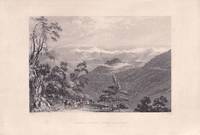
1858176630London.: The London Printing and Publishing Company. Circa1858. Engraving 12.5 x 18.4 cm margins a little toned but in very good condition. Fine engraving prepared for R. Montgomery Martin's "Indian Empire". . (The London Printing and Publishing Company). unknown
1851PELst[ME23London: Chas. Cox & J.Effingham Wilson 1851. 1851. 8vo. pp. xiv 392. 1 map of Storm Bay. title vignette. original blind-stamped cloth rebacked with spine mounted. First Edition. According to the preface the author had resided for more than twenty years in the colonies. His work includes discussion of emigration the present state of the colonies of New South Wales Western Australia South Australia Victoria and New Zealand prison discipline - with suggestions for obviating the difficulties attending the transportation of convicts the penal settlement of Van Diemen's Land trade and manufactures land regulations the aborigines and their customs. Bagnall 3504n. Ferguson 12467. F. Hardcover. London: Chas. Cox & J.Effingham Wilson, 1851. Hardcover
185490374George Baxter. c.1854. Etching wood engraving 125 x 160mm on larger mount some creases to edges of mount ink stamp verso- "Webster Collection 5038" A famous image showing the preconceptions of colonial life in the Australian bush. The timber hut not only has have a variety of animal life but also an aborigine dressed in a Maori cloak. This misconception of aboriginal dress had also been used by George French Angas in his image "Interior of Mount Gambier". Settlers reading letters and a dog and game on the floor with a parrot on a perch. George Baxter unknown
18522564671852. 2 pp. pen-and-ink on folded sheet. 1 vols. 12mo. Fine. 2 pp. pen-and-ink on folded sheet. 1 vols. 12mo. Secretary of State Edward Everett writes to Secretary of the Navy John Pendleton Kennedy on Justice Lemuel Shaw's behalf to recommend his son John Oakes Shaw for a position in the Navy. Oakes Shaw as he was known was the eldest son from his father's second marriage to Hope Savage. He became the brother-in-law of Herman Meville when the author married Justice Shaw's daughter Elizabeth from his first marriage. In fact Oakes had truly disgraced his family when in 1844 he married an "inopportunely preganant Caroline Caro Sarah Cobb."<br /> Reading in full "Mr. John O. Shaw of Boston a son of Chief Justice Lemuel Shaw of Massachusetts is desirous of being appointed a pursor in the Navy. His father equally respectable as a Magistrate & a citizen desires me to speak a good word for him. I have no knowledge of the young man but I am sure the Chief Justice would not recommend him if he did not think him fully qualified for the place". Parker Herman Melville Volume 1: 1819-1851 pp. 341-343 unknown
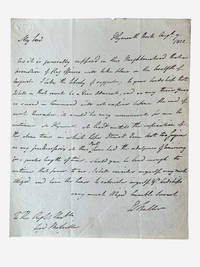
1812003905original letter. BULLER Sir Edward 1764-1824. Autograph Letter Signed to Lord Melville concerning his anticipated promotion to Vice-Admiral and continuation of command at Plymouth Dock during the Napoleonic Wars. Plymouth Dock 7 August 1812. Single sheet folded bifolium written on the front side. Embossed crest at head. 230 x 185mm. Old folds a little browned and creased several small marginal stains but overall clean and very good. A naval letter written by Vice Admiral Sir Edward Buller to Robert Dundas 2nd Viscount Melville then First Lord of the Admiralty at the end of Buller's navy career. Writing from Plymouth Dock on 7 August 1812 Buller notes the widespread expectation that a promotion of flag officers will shortly occur on 12 August adding that he himself expects in consequence to become a Vice-Admiral. He respectfully requests permission to remain at Plymouth until the completion of his three-year term as second in command observing that previous officers at the port had received similar indulgence from the Admiralty. The letter is written by Buller at the precise moment before his final promotion to Vice-Admiral on 12 August 1812. Despite his request his active employment effectively ended shortly afterwards giving the letter a faintly valedictory character as an appeal to prolong his useful service. Sir Edward Buller was a distinguished Royal Navy officer who served throughout the American War of Independence and the French Revolutionary and Napoleonic Wars. He commanded HMS Britannia at the Battle of Cape St Vincent in 1797 under Admiral Jervis later held senior Mediterranean commands and was created a baronet in 1809. Appointed second in command at Plymouth in 1809 he remained there during an important wartime period before his promotion to Vice-Admiral in August 1812. Contemporary anecdotes portray Buller as a firm but respected officer. A good Napoleonic naval letter directly connected to Buller's final promotion and moments in ther Navy. Addressed to one of the most important Admiralty figures of the period. . Very Good. Soft cover. 1st Edition. 1st Printing. 1812. original letter paperback
18906040141890. "Melville D. Landon" in black fountain pen ink n.d. ca. 1890. 5" x 3"; 1 page recto only. Very good. "And my heaven continue to protect you from Yours truly' "Eli Perkins" Melville D. Landon Fifth Ave. Hotel New York.". No Binding. Very Good. unknown
1888369787104 E. 26th St. New York 1888. Written in brown ink dated in another hand likely Johnson's 1 p. 8vo. Integral blank leaf apparently removed "Davis and Gilman reported that it was written on the same paper as that of Melville's 29 January 1888 letter to Edmund C. Stedman" Horth; old folds; very good. Custom cloth folding case. Written in brown ink dated in another hand likely Johnson's 1 p. 8vo. In December Rossiter Johnson editor of various encyclopedias dictionaries anthologies and volumes of abridged classics including Melville's piece "The Bell-Tower" in the third volume "Tragedy" 1875 of his Little Classics 1874-81 wrote to Melville requesting that he contribute to a work that Rossiter was editing either the Annual Cyclopaedia or Appletons' Annual Cyclopadia. Melville had written on December 11 declining his invitation: "I am unpractised in a kind of writing that exacts so much of heedfulness-heedfulness I mean of a sort not demanded in some other departments." <br /> This letter is the follow-up returning the proof not present: "Herewith you have the proof. I have supplied the dates and names wanted and see nothing else to do. Many thanks for your courtesy Very truly yours / H. Melville." <br /> <br /> Melville had retired as a customs inspector in New York in 1885 and did not published a book between Clarel in 1876 his death in 1891. Horth Lynn ed. Herman Melville: Correspondence Northwestern U. Press 1993 pp. 503-504 unknown
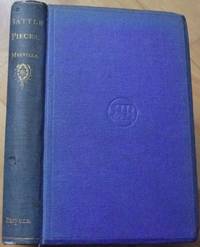
1866373840New York: Harper & Brothers 1866. First Edition of Melville's first collection of poetry. x 11-272pp. 8vo 197 x 116mm. Original publisher's brown cloth gilt-stamped spine brown coated endpapers. Bookplates of L.G. Sandford and Lilitas Rumsey Sanford and William S. Reese. Signed by L.G. Sandford 1869 on ffep in pencil. Almost fine minor wear at the hed and tle of the spine. First Edition of Melville's first collection of poetry. x 11-272pp. 8vo 197 x 116mm. BAL 13673 Harper & Brothers unknown
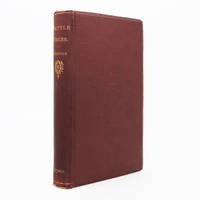
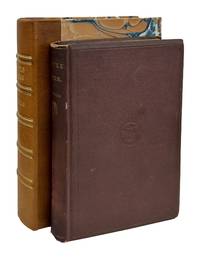
1866HM050New York: Harper and Brothers 1866 First edition first printing with "hundred" misspelled as "hnndred" on copyright page. Publisher's brown C cloth publisher's device in blind to boards spine stamped in gilt beveled edges to boards and brown-coated endpapers. Very good with modest toning to spine very shallow chipping to cloth at spine ends light rubbing to corners of boards and to endpapers small chip and closed tear to fourth front flyleaf slight abrasion to title page chip to top corner of p. 119 and slight separation between pp. 120-121. Overall a handsome and sleek copy. Housed in a custom quarter morocco clamshell box. From the library of Pulitzer Prize winning author Kenneth Silverman. BAL 13673. Melville's reflections on the moral questions of the American Civil War Battle-Pieces explores themes such as the loss of innocence and martyrdom during a time when the nation was in a period of intense conflict. The book was Herman Melville's first volume of poetry with 72 poems about the Civil War and its aftermath the poems are divided into two sections - an untitled first section containing 52 poems that trace the history of the war followed by a section titled "Verses Inscriptive and Memorial". Additionally a prose Supplement at the end of the volume features Melville's thoughts on how the country can heal and move forward. The book was not popular or critically acclaimed in its time selling only 486 copies in two years but received renewed attention and praise at the start of the 20th century. Chiefly a biographer Professor Kenneth Silverman co-directed the American Civilization program at NYU and won the Pulitzer and Bancroft prizes for his work The Life and Times of Cotton Mather. Other notable works of his include biographies of Edgar Allan Poe and Samuel F. B. Morse. A magician himself he also profiled the life of Harry Houdini. . First Edition. Hard Cover. Very Good. New York: Harper and Brothers hardcover
1866158051866. one of Melville's scarcest New York: Harper & Brothers 1866. Original violet cloth beveled board edges.<br/> <br/> First Edition of Melville's first published volume of verse about the just-concluded American Civil War -- "dedicated to the memory of the Three Hundred Thousand who in the war for the maintenance of the Union fell devotedly under the flag of their fathers." In 1857 Melville stopped writing fiction after the publication of THE CONFIDENCE-MAN -- though he would live 34 additional years; discouraged by the lack of critical acclaim he turned instead to verse to which he had originally aspired. Three years later 1860 he submitted some poems to Harper but his proposed volume was rejected and those poems today are lost. Five years after that spurred on by the fall of Richmond he wrote the 72 poems that comprise BATTLE-PIECES -- the first section of 50 describing the war chronologically event by event and the second section consisting of elegies epitaphs and requiems. His introductory poem "The Portent" not cited in the Contents covers the hanging of John Brown in 1859; two poems after "The Surrender at Appomattox" is "The Martyr" the assassination of Lincoln. Throughout Melville describes not the glory of the war but the horror and the tragedy of the war. As Blanck notes all copies bear the misprint "hnndred" on the copyright page it is small print and the letters "u" and "n" are very similar so a myth has evolved that there are two states. This copy is bound in textured violet cloth Blanck's "red-purple C-like cloth" one of seven possibilities of cloth grain and color no precedence. Condition is very good slight wear at the spine ends and two small dents in the spine; spine a little sunned as always with this color; front endpaper cracked but tight. This is one of Melville's scarcer titles; one can well imagine that Harper printed comparatively few copies of Melville's second attempt at verse having rejected his first attempt outright. Blanck 13673. Provenance: bookplates of Dr. Walter Ralph Steiner 1870-1942 and of Prof. Joseph Vincent Ridgely 1921-2014. unknown
1855008113New York: Dix & Edwards 1855. Book. Very Good. Hardcover. First Printing. 8vo - over 7¾" - 9¾" tall. SCARCE. The first appearance of this novella about a revolt on a Spanish slave ship captained by Don Benito Cereno appearing in the magazine in three installments on pages 353-367 459-471 and 633-644. Acknowledged as one of Melville's greatest achievements it was included with some revisions in his short story collection "The Piazza Tales" published May 1856. Very Good indeed bound in contemporary quarter calf over marbled boards five raised bands with dark brown calf volume label in gilt title label missing marbled end papers and edges. The complete six monthly magazines with title pages well bound and lacking only the original wrappers. Moderate toning to end papers only interior pages clean and with no foxing or toning. Quite uncommon especially so in collectible condition. Basis for the 1969 French film of the same title winner of a Gold Medal at the 1969 Venice International Film Festival and the NET Playhouse television episode in 1967. American Literature Science and Art Volume VI. Dix & Edwards Hardcover
1890FB451 /4B<p>Part of a set. tan calf spine with gilt lettering. Believed to be First if only edition prior to modern reprints The "complete list" of publications given in the 1898 edition of "Riding Recollections" notes that this publication was posthumous <strong>Black But Comely Or the Adventures of Jane Lee. </strong>Excerpt from Black but Comely or the Adventures of Jane Lee <em>'Why should he trouble himself about the culprit a journeyman tailor who had stabbed his wife in a fit of drunken ferocity and been convicted on the evidence of his sister-in-law. He could not look along the whitewashed passages of the prison nor into the bare blank cell where the doomed man cowered and Shook before that awful unknown to which he was gliding so smooth and Swift and sure upheld it may be for a moment at a time by the presence of two robust turnkeys who guarded him as a timid passenger feels upheld in a storm by companionship with some stout Skipper and his mate; yet now and again stung to agony at the contrast between their situation and his own. I'vould it have dulled the pieman's enterprise or the appetites of his customers to see the gray drawn face.'</em> <strong>George John Whyte-Melville</strong> 19 June 1821 – 5 December 1878 was a Scottish novelist much concerned with field sports and also a poet. He took a break in the mid-1850s to serve as an officer of Turkish irregular cavalry in the Crimean War. Major George John Whyte-Melville was born in 1821 at Mount Melville near St Andrews Scotland as a son of Major John Whyte-Melville and Lady Catherine Anne Sarah Osborne and a grandson on his mother's side of the 5th Duke of Leeds. His father was a well-known sportsman and Captain of The Royal and Ancient Golf Club of St Andrews. George was tutored privately at home by the young Robert Lee then educated at Eton before entering the army with a commission in the 93rd Highlanders in 1839. He exchanged into the Coldstream Guards in 1846 and retired with the rank of captain in 1849. Whyte-Melville married the Hon. Charlotte Hanbury-Bateman in 1847 and they had one daughter Florence Elizabeth who went on to marry Clotworthy John Skeffington 11th Viscount Massereene and 4th Viscount Ferrard. His marriage was not a happy one and this led to the "constantly recurring note of melancholy" that runs through all of his novels "especially in reference to women". His wife also was not happy with the marriage. In 1849 Whyte-Melville was the subject of a summons for maintenance by Elizabeth Gibbs described as "a smartly-dressed and interesting looking young woman" who alleged that he was the father of her son. She stated that she had known Whyte-Melville since December 1846 and that she had given birth to his child on 15 September 1847. The Magistrate read some letters stated by Gibbs to be from Whyte-Melville in one of which the writer expressed his wish that Gibbs would fix the paternity unto some other person as he did not wish to pay for the pleasure of others. The Magistrate found for the defendant as the written evidence could not be proved to be in Whyte-Melville's hand but allowed the complainant to apply for a further summons in order to obtain proof. Gibbs testified that since the child was born she had received £10 from Whyte-Melville and he had offered her two sums of £5 on condition that she surrender his letters to her and sign a disclaimer on further claims. The case continued on 25 September 1849. Gibbs' landlady supported by her servant testified that Gibbs was in the habit at the time of receiving visits from other gentlemen particularly two one of whom had paid for the nurse and supported Gibbs during her confinement. The magistrate said that there had definitely been perjury on one side or the other and dismissed the summons. After translating some Horace in 1850 Whyte-Melville published his first novel <em>Digby Grand</em> in 1852 which was a success. He went on to publish 21 other novels and became a popular writer about hunting. Most of his heroes and heroines – Digby Grand Tilbury Nogo the Honourable Crasher Mr Sawyer Kate Coventry Mrs Lascelles – ride to hounds or are would-be members of the hunt. Some characters reappear in different novels such as the supercilious stud groom the dark and wary steeple-chaser or the fascinating sporting widow. <em>Bones and I or The Skeleton at Home</em> is an anomaly in his work as it is far from the realms of the hunting field or historical romance. It centres on an urban recluse living in a small modern villa in a London cul de sac looking out on "the dead wall at the back of an hospital". His most famous lyric is also unusual in its unexpected melancholy – the words to Paolo Tosti's song "Good-bye!" Several of his novels are historical <em>The Gladiators</em> being the best known. Whyte-Melville also wrote <em>Sarchedon</em> a historical novel set in Ancient Babylon. He also published volumes of poetry including <em>Songs and Verses</em> 1869 and <em>Legend of the True Cross</em> 1873. However it is for his portrayal of contemporary sporting society that he is most regarded. Henry Hawley Smart is said to have taken Whyte-Melville as one of his models when he too set out to be a sporting novelist. Mrs. Lovett Cameron 1844–1921 acknowledged that her novel <em>A Grass Country</em> was inspired by Whyte-Melville. He also served as one of the two models for the writing of Mrs. Robert Jocelyn. He was the first person to encourage Florence Montgomery 1843–1923 to publish her children's stories and persuaded her to do so. The novelist John Galsworthy admired the "bright things" in Whyte-Melville's novels and wrote that Digby Grand was Jolyon Forsythe's first idol in the <em>Forsythe Saga</em>. The catch phrase for which he is best remembered comes from a song about hunting: "Drink Puppy Drink". This recurs also in <em>The Flashman Papers</em> by George MacDonald Fraser as a frequently mentioned favourite song of the anti-hero. In 1876 Whyte-Melville penned the rarely attributed but widely recognized opening line to the short poem <em>The Object of a Life</em>: "To eat drink and be merry because to-morrow we die."</p> Ward Lock & Co. hardcover