44 résultats
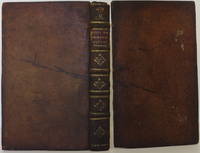
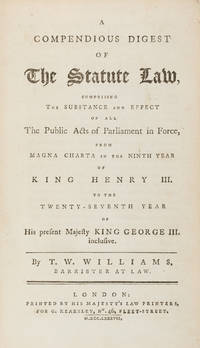
1787715111787. The Last Digest of English Statute Law Williams Thomas Walter 1763-1833. A Compendious Digest of the Statute Law Comprising the Substance and Effect of All the Public Acts of Parliament in Force From Magna Charta in the Ninth Year of King Henry III. To the Twenty-Seventh Year of His Present Majesty King George III. Inclusive. London: Printed by His Majesty's Law Printers 1787. viii 669 25 pp. Lacking half-title. Final two pages are a publisher advertisement. Octavo 8-1/2" x 5". Contemporary calf blind fillets to boards raised bands to spine lettering piece lacking. Light rubbing and a few minor stains and scuffs to boards which are beginning to separate but secure some chipping to spine ends corners bumped and somewhat worn. Moderate toning to text light soiling to margins in a few places. $250. First edition. Williams was the last writer to produce a digest of Great Britain's statute law. The contents are arranged alphabetically by topic. A barrister of the Inner Temple he didn't have success as a pleader. He was known instead for his writings. In addition to digests and a dictionary he wrote manuals for justices of the peace compiled abridgments and edited an edition of William Sheppard's Precedent of Precedents. A well-received work the Compendious Digest had 3 later editions the last in 1812. The first edition is scarce. OCLC locates 5 copies in North American law libraries Boston College Harvard Library of Congress UCLA University of Virginia. English Short-Title Catalogue T94598. unknown books
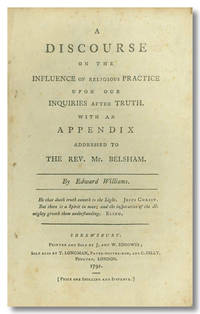
1791WRCLIT81620Shrewsbuury: Printed and sold by J. and W. Eddowes . 1791. 4893pp. Octavo. Extracted from bound pamphlet volume. Some dust-spotting to title and terminal advert leaf otherwise a good copy. First edition published the year before Williams 1750-1813 earned his D.D. from the University of Edinburgh and was appointed the first editor of the EVANGELICAL MAGAZINE. ESTC locates five copies in North America. ESTC T78139. Printed and sold by J. and W. Eddowes ... unknown books
173312855Oxford 1733. Engravings. Both printed on watermarked laid paper."The North Prospect of the New Quadrangle of Christs Church in Oxford" In excellent condition with the exception of being trimmed slightly along the left margin within the image. Left margin has been remargined with contemporary paper. Trimmed along upper margin and remargined with contemporary paper. Three creases within image where it was folded into a book. Faint off-setting. Small tear in bottom margin and small tear along upper crease. Sheet size: 18 x 22 3/4 inches. "The South Prospect of the New Quadrangle of Christs Church in Oxford" In excellent condition with the exception of being trimmed slightly along the left margin within the image. Left margin has been remargined with contemporary paper. Trimmed along upper margin and remargined with contemporary paper. Three creases within image where it was folded into a book. Faint off-setting. Sheet size: 18 x 22 7/8 inches. A pair of striking views of Christ Church college from William Williams' seminal text "Oxonia Depicta."<br/> <br/>These striking studies illustrate the north and south prospect of the New Quadrangle Christ Church College Oxford. Following the success of David Loggan's "Oxonia Illustrata" published in 1675 the University commissioned William Williams to produce a similar work entitled "Oxonia Depicta". Published between 1732 and 1733 "Oxonia Depicta" is comprised of sixty-four plans and views of Oxford University's various colleges. As in this pair of images many of the engravings include blueprints for proposed buildings and renovations; some of which were carried out and some of which were left unfinished. Williams' important text is not only a fascinating architectural study; it provides a crucial record of the changing landscape of this renowned academic institution. unknown books
179859613Elizabeth-town N.J.: Printed by Shepard Kollock for Cornelius Davis. No. 94. Water-Street New-York 1798. First American Edition. 1 vols. 8vo. Contemporay polished tree calf upper board detached. First American Edition. 1 vols. 8vo. Printed by Shepard Kollock for Cornelius Davis. No. 94. Water-Street, New-York unknown books
1798318217Elizabeth-town New Jersey: Printed by Shepard Kollock for Cornelius Davis 1798. First American Edition. xx 1 22-517 3 p. 8vo. Contemporary calf rebacked new endpapers title-page rebacked at upper outer edge. First American Edition. xx 1 22-517 3 p. 8vo. ESTC W36435; Evans 35030; Morsch L.M. New Jersey 409 Printed by Shepard Kollock for Cornelius Davis unknown books
1798m1722Elizabeth-Town N.J.: Printed by Shepard Kollock for Cornelius Davis 1798. 1st American edition. Octavo full calf calf label 517 pp. Very Good with small chip to spine label and former-owner signature. Printed by Shepard Kollock for Cornelius Davis, 1798. unknown books
1762WRCAM47563Boston: S. Kneeland 1762. 228pp. Lacks half title. Dbd. Minor soiling. Very good. Sermon preached on the occasion of "the election of His Majesty's Council for said Province." Abraham Williams was the pastor of the church in Sandwich Mass. EVANS 9310. ESTC W29217. S. Kneeland unknown books
177125148Boston: Richard Draper. 1771. Half title 31 1 blank pp. Disbound. Lightly foxed. Very Good. <br/><br/> "As we are made rational and accountable creatures the care of ourselves and of our own happiness is the first natural and reasonable concern of every man. A rational self love though distinct from is not inconsistent with the more noble principles but subserves and promotes them." A footnote states that Hilliard succeeded Reverend Joseph Green who served the Barnstable church from 1725 until his death in 1770. <br/>FIRST EDITION. Evans 12289. 664 NUC 0319346 6. Richard Draper... unknown books
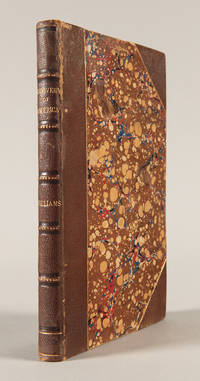
1792WRCAM48300London 1792. Two volumes bound in one. iii-viii824; ix1511pp. Lacks half title in first volume. 19th- century three-quarter morocco and marbled boards spine gilt. Boards worn along edges and joints. Bookplate on rear pastedown. Scattered foxing. Very good. The author gives an account of Prince Madog's discovery of America about 1170 three hundred years before Columbus founding a Welsh tribe of Indians west of the Mississippi River. "The propositions of the learned author in favor of the existence of a tribe of Welsh Indians are so well sustained by veritable evidence and yet so positively known to be untrue that it makes us doubt the value of all ratiocination" - Field. HOWES W462 "aa"; W463 "aa." FIELD 1664 1665. SABIN 104276 104277. hardcover books
1791286883London: Printed for E. and R. Brooke 1791. First Edition. Full Leather. Very Good binding. First Edition of Francis Williams Sanders' Essay on the Nature and Laws of Uses and Trusts. "A professional treatise of deservedly high repute" DNB. Collates complete with index and advertising leaf at the rear; 2 v 3 564 16 pp. Joints cracked but holding well. Name label pasted on the spine. Contemporary full calf binding with a red leather label. ESTC T100936. DNB XVII 747. Very Good binding. Printed for E. and R. Brooke unknown books
17291508081Freebairn's 1729. 1st Edition. Hardcover. Good. A good first edition front cover detached. Housed in a custom-made collector's slipcase. Freebairn's hardcover books
1795042329London: T. Hepinstall 1795. First Edition. Hardcover Full Leather. Fair Condition. 2 volumes in full contemporary calf worn boards bowed on volume 1 and front board detached Scattered foxing but generally clean internally. Notable for a long section detailing efforts at converting the indigenous peoples of North American the West-Indies and elsewhere. Sabin 104379. Scarce. Size: Octavo 8vo. 2-volume set complete. Previous owner's signature in ink. Quantity Available: 1. Shipped Weight: Under 1 kilo. Category: Religion & Theology; Indigenous Cultures. Inventory No: 042329. <br/><br/> T. Hepinstall hardcover books
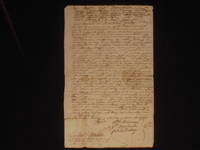
178507935Lebanon 1785. Autograph Document Signed "Wm. Williams" one page 9" x 13" dated April 4 1785. The present legal document is regarding common land: "We the subscribers bring by the proprietors of the comon sic undivided lands in Lebanon appointed a committee and agents to sue and prosecute to final judgement and execution all persons who have committed any trespass on such common land."Light stain in lower left not affecting signature or the text of the document; wear at folds; very good with a fine bold signature. William Williams 1731-1811 graduated Harvard in 1751 was businessman partiot and Signer of the Declaration of Independence from Connecticut. <br/><br/> unknown books
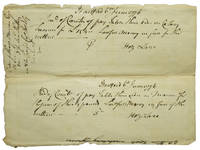
1776310481Stamford Connecticut 1776. 1 p. pen and ink on paper with receipt of pay order docketed on the verso. 8vo 6 x 8-1/4 inches. Horizontal crease from prior folding some wear and small tears at edges. 1 p. pen and ink on paper with receipt of pay order docketed on the verso. 8vo 6 x 8-1/4 inches. A Signer Writes One Month Before the Declaration of Independence. William Williams 1731-1811 delegate for Connecticut to the continental Congress and a signer of the Declaration of Independence writes on June 6 1776 as clerk for the Governor of the Council of Safety to the Connecticut Committee of Pay Table requesting a payment of £154 to Thomas Morgan "in discharge of an order for that sum drawn by Cap. John Ely . in settlement of his acct. and service to the Company under his command in Colony service" and a payment of £30 to Samuel Shelton "which is in discharge of Cap. Elys order for him ." Colonel John Ely 1737-1800 was a Connecticut surgeon and physician who invested nearly his entire wealth in the raising and outfitting of a regiment of regular troops. He was captured by the British in December of 1777 later refusing to be released in a prisoner exchange because his skills as a physician were desperately needed among his fellow captured soldiers. unknown books
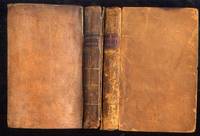
1744WRCAM45244Boston: Printed by Rogers and Fowle for D. Henchman 1744. 4151pp. Contemporary half calf and marbled boards. Lightly worn at extremities. Lacks blank endpapers. A bit of light scattered foxing but quite clean internally. A very good copy in unsophisticated condition. Solomon Williams was a pastor at the First Congregational Church of Lebanon Connecticut and father of William Williams Connecticut delegate to the Continental Congress and signer of the Declaration of Independence. He published many works in his lifetime including the present volume which argues that salvation is possible not through works but only through faith and conscience. EVANS 5521. ESTC W37757. Printed by Rogers and Fowle, for D. Henchman hardcover books
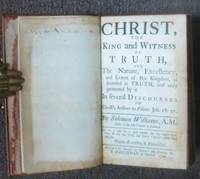
174419351Boston: Printed by Rogers and Fowle for D. Henchman in Cornhill. 1744. Contemporary rear board front board lacking. pp 4 151 1. Errata notice at page 4. Upper forecorner of title leaf torn taking part of the 'S' and all of the 'T' in CHRIST. Scattered fox and wear. Good. "Dr. Williams possessed wide influence among the clergy of New England." VI Appleton 526. Here he reasons "One Reason of the Jews Hatred and Rejection of Christ was the Meanness of his Appearance in the World; they look'd for a Messiah who would appear in this World as a mighty Prince in the Pomp and Glories of this World and rescue them from the Subjection they were under to the Roman Government and put them in a State of great temporal and outward Prosperity. But Christ gave no Prospect or Promises of any such Thing." FIRST EDITION. Evans 5521. Not in Jenkins. Printed by Rogers and Fowle, for D. Henchman in Cornhill. unknown books
174440709<i>12mo 18.5 cm. 4 2-151 pp. </i><br /><br /><i>First edition of this collection of sermons by an important Connecticut clergyman and father of William Williams delegate to the Continental Congress and signer of the Declaration of Independence. According to Grasso's "A Speaking Aristocracy: Transforming Public Discourse in Eighteenth-Century" Solomon Williams argued that "Christ's kingdom was spiritual not worldly. A person can become one of Christ's subjects only by free choice and can so choose only if regenerated." The book has been signed on the front blank by owner Stephen White of Wilton CT 1760 and by his sons James and Jonas. Evans 5521. No ships here but a nice example of an early New England imprint. Very good condition. Bound in modern paneled full calf.</i> Rogers and Fowle hardcover books
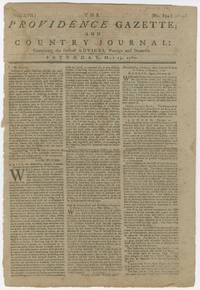
178025999<p><b>Jefferson's Excessively Rare BILL FOR ESTABLISHING RELIGIOUS FREEDOM</b></p><p><b>One of the three achievements of which Jefferson was most proud as listed on his epitaph. </b></p><p>Only the <b>second known newspaper</b> printing and the <b>first front-page</b> printing. </p><p>THOMAS JEFFERSON. Prominent front-page printing of "<i>A Bill for establishing religious Freedom Printed for the Consideration of the People</i>" <i>The Providence Gazette; and Country Journal </i>Rhode Island May 13 1780 1:1-2.</p><p>Jefferson drafted the bill in 1777 and John Harvie 1742-1807 introduced it in the Virginia General Assembly on June 12 1779. James Madison reintroduced a slightly different version in October 1785 and the General Assembly adopted a further revised version on January 16 1786.</p><p>This eclipses by roughly six years the rare 1786 Paris four-page printing of the Act making it the earliest obtainable printing of Jefferson's proposed bill. It is closer to Jefferson's original text than either the amended act or Jefferson's hybrid version created in 1786.1 </p><p>Here it is introduced by a local commentator signing as "Roger Williams" in homage to America's earliest advocate of religious toleration and separation of church and state.</p><p><b>Complete Transcript of Introduction</b></p><p><i>Mr. Carter</i></p><p><i> <u>In times of public dissention wherein the exertions of municipal law are too feeble to check the encroachments of popular or despotic leaders or of factions directed to particular views the men who nobly oppose the vicious torrent give an irresistible proof of the innate excellence of human nature.</u> Commotions of every kind are near the confines of usurpation: They terminate in horror when the rights of mankind are essentially violated. Of all those rights freedom of thinking in matters religious is the most important. Actions are the necessary consequence of volition; and therefore religious establishments counteract their own intentions. Religion is relative only to the creature and the Creator: It existed the same where in the mundane or other systems coeval with nature in gradation; and consequently anteceded the objects of civil institution. <u>For governments therefore whether republican monarchical or despotic to enforce religion as pertaining to their formation is absurd and ridiculous; but more especially so when freedom is the glorious prize for which we dare to fight to bleed to die!</u>—Unhappy contrast! The first State but one in the confederated union of America is attempting to enslave the free-born mind.—The first State but one in the confederated union of America is boldly declaring the rights of humanity in the most critical of times! Happy Virginia! thy unsullied charms will smile with truth when the universal boon shall be known to all and heaven pronounce impartial freedom.</i></p><p><i> The following Sir is an <u>Act of the State of Virginia</u>: That the noble sentiments therein contained may universally prevail in the anxious prayer of your very humble servant.</i></p><p><i> ROGER WILLIAMS.</i></p><p><b>Bill for Establishing Religious Freedom as introduced June 12 1779 and printed here</b></p><p>deletions in final version in bold</p><p><i><b>A</b> <b>Bill</b></i><i>for establishing religious Freedom.</i></p><p><i><b>Printed for the Consideration of the People.</b></i></p><p><b><i>Well aware that the opinions and belief of men depend not on their own will but follow involuntarily the evidence proposed to their minds that</i></b><i> <b>Almighty God has created the mind free and manifested his supreme will that free it shall remain by making it altogether insusceptible of restraint</b></i><i>; that all attempts to influence it by temporal punishments or burthens or by civil incapacities tend only to beget habits of hypocrisy and meanness and therefore are a departure from the plan of the holy Author of religion who being Lord of both body and mind yet chose not to propagate it by coercions on either as was in his Almighty power to do <b>but to extend it by its influence on reason alone</b>; that the impious presumption of legislators and rulers civil as well as ecclesiastical who being themselves but fallible and uninspired men have assumed dominion over the faith of others setting up their own opinions and modes of thinking as the only true and infallible and as such endeavouring to impose them on others hath established and maintained false religions over the greatest part of the world and through all time; that to compel a man to furnish contributions of money for the propagation of opinions which he disbelieves <b>and abhors</b> is sinful and tyrannical; that even the forcing him to support this or that teacher of his own religious persuasion is depriving him of the comfortable liberty of giving his contributions to the particular pastor whose morals he would make his pattern and whose powers he feels most persuasive to righteousness and is withdrawing from the ministry those temporary rewards which proceeding from an approbation of their personal conduct are an additional incitement to earnest and unremitting labour for the instruction of mankind; that our civil rights have no dependence on our religious opinions any more than on our opinions in physics or geometry that therefore the proscribing any citizen as unworthy the public confidence by laying upon him an incapacity of being called to offices of trust and emolument unless he profess or renounce this or that religious opinion is depriving him injuriously of those privileges and advantages to which in common with his fellow citizens he has a natural right; that it tends also to corrupt the principles of that </i><i><u>very</u></i><i> religion it is meant to encourage by bribing with a monopoly of worldly honors and emoluments those who will externally profess and conform to it; that though indeed those are criminal who do not withstand such temptations yet neither are those innocent who lay the bait in their way; <b>that the opinions of men are not the object of civil government nor under its jurisdiction; </b>that to suffer the civil magistrate to intrude his powers into the field of opinion and to restrain the profession or propagation of principles on supposition of their ill tendency is a dangerous fallacy which at once destroys all religious liberty because he being of course judge of that tendency will make his opinions the rule of judgment and approve or condemn the sentiments of others only as they shall square with or differ from his own; that it is time enough for the rightful purposes of civil government for its officers to interfere when principles break out into overt acts against peace and good order; and finally that truth is great and will prevail if left to herself; that she is the proper and sufficient antagonist to error and has nothing to fear from the conflict unless by human interposition disarmed of her natural weapons free argument and debate; errors ceasing to be dangerous when it is permitted freely to contradict them.</i></p><p><i><b>We the General Assembly of Virginia do Enact</b></i><i> That no man shall be compelled to frequent or support any religious worship place or ministry whatsoever nor shall be enforced restrained molested or burthened in his body or goods nor shall otherwise suffer on account of his religious opinions or belief; but that all men shall be free to profess and by argument maintain their opinions in matters of religion and that the same shall in no wise diminish enlarge or affect their civil capacities. And though we well know that this Assembly elected by the people for the ordinary purposes of legislation only have no power to restrain the acts of succeeding Assemblies constituted with powers equal with our own and that therefore to declare this act irrevocable would be of no effect in law; yet we are free to declare and do declare that the rights herein asserted are of the natural rights of mankind and that if any act shall be hereafter passed to repeal the present or to narrow its operation such act will be an infringement of natural right.</i></p><p><b>"An Act for establishing religious Freedom" as adopted January 16 1786</b></p><p><i>An Act for establishing religious Freedom.</i></p><p><i>Whereas Almighty God hath created the mind free; that all attempts to influence it by temporal punishments or burthens or by civil incapacitations tend only to beget habits of hypocrisy and meanness and therefore are a departure from the plan of the holy author of our religion who being Lord both of body and mind yet chose not to propagate it by coercions on either as was in his Almighty power to do; that the impious presumption of legislators and rulers civil as well as ecclesiastical who being themselves but fallible and uninspired men have assumed dominion over the faith of others setting up their own opinions and modes of thinking as the only true and infallible and as such endeavouring to impose them on others hath established and maintained false religions over the greatest part of the world and through all time; that to compel a man to furnish contributions of money for the propagation of opinions which he disbelieves is sinful and tyrannical; that even the forcing him to support this or that teacher of his own religious persuasion is depriving him of the comfortable liberty of giving his contributions to the particular pastor whose morals he would make his pattern and whose powers he feels most persuasive to righteousness and is withdrawing from the Ministry those temporary rewards which proceeding from an approbation of their personal conduct are an additional incitement to earnest and unremitting labours for the instruction of mankind; that our civil rights have no dependence on our religious opinions any more than our opinions in physics or geometry that therefore the proscribing any citizen as unworthy the public confidence by laying upon him an incapacity of being called to offices of trust and emolument unless he profess or renounce this or that religious opinion is depriving him injuriously of those privileges and advantages to which in common with his fellow citizens he has a natural right; that it tends only to corrupt the principles of that very Religion it is meant to encourage by bribing with a monopoly of worldly honours and emoluments those who will externally profess and conform to it; that though indeed these are criminal who do not withstand such temptation yet neither are those innocent who lay the bait in their way; that to suffer the civil magistrate to intrude his powers into the field of opinion and to restrain the profession or propagation of principles on supposition of their ill tendency is a dangerous fallacy which at once destroys all religious liberty because he being of course judge of that tendency will make his opinions the rule of judgment and approve or condemn the sentiments of others only as they shall square with or differ from his own; that it is time enough for the rightful purposes of civil government for its officers to interfere when principles break out into overt acts against peace and good order; and finally that truth is great and will prevail if left to herself that she is the proper and sufficient antagonist to error and has nothing to fear from the conflict unless by human interposition disarmed of her natural weapons free argument and debate errors ceasing to be dangerous when it is permitted freely to contradict them:</i></p><p><i>Be it enacted by General Assembly That no man shall be compelled to frequent or support any religious worship place or Ministry whatsoever nor shall be enforced restrained molested or burthened in his body or goods nor shall otherwise suffer on account of his religious opinions or belief; but that all men shall be free to profess and by argument to maintain their opinions in matters of Religion and that the same shall in no wise diminish enlarge or affect their civil capacities. </i></p><p><i>And though we well know that this Assembly elected by the people for the ordinary purposes of legislation only have no power to restrain the Acts of succeeding Assemblies constituted with powers equal to our own and that therefore to declare this Act irrevocable would be of no effect in law; yet we are free to declare and do declare that the rights hereby asserted are of the natural rights of mankind and that if any Act shall be hereafter passed to repeal the present or to narrow its operation such Act will be an infringement of natural right.</i></p><p><b>Additional Content</b></p><p>This issue also includes a report that King Louis XVI had given the Marquis de Lafayette permission to rejoin the army of the United States p1/c3; rumors from London that Parliament would be dissolved p1/c3; news of John Adams' arrival in Europe as a negotiator to try to end the Revolutionary War p2/c1; the installation of the Rev. Samuel Williams as Hollis Professor of Mathematics at Harvard University p2/c2; news of raids by Native Americans in Pennsylvania skirmishes with British forces and local news of taxes and a burglary p3/c1-3; a proclamation by British Commander-in-Chief Henry Clinton offering a pardon to all those who would return to their loyalty to the Crown p4/c1; a brief letter by Lafayette to the Massachusetts General Assembly: "<i>Nothing but those particular marks of their favour and the grateful feelings they have excited could increase the happiness I enjoyed in finding myself on the American shore and the warm desire I feel of being again with my American fellow-soldiers in the defence of our noble cause.</i>" p4/c2</p><p><b><i>The Providence Gazette and Country Journal</i></b> 1762-1817 was the first newspaper published in Providence Rhode Island. Sarah Updike Goddard ca. 1701-1770 her son William Goddard 1740-1817 and her daughter Mary Katherine Goddard 1738-1816 established the weekly newspaper in 1762. When William Goddard moved to Philadelphia to establish the <i>Pennsylvania Chronicle</i> in 1767 Sarah Goddard published <i>The Providence Gazette and Country Journal</i>with the assistance of Philadelphia-born John Carter 1745-1814 who had been a printer's apprentice to Benjamin Franklin. Carter purchased <i>The Providence Gazette and Country Journal </i>in 1768. Postmaster-General Franklin appointed John Carter as the postmaster of Providence in 1772 and Carter held the position until 1792. In 1795 Carter shortened the title of the newspaper to <i>The Providence Gazette</i> until 1811 when he restored the original title. Carter sold the newspaper to Hugh H. Brown and William H. Wilson in 1814 and the newspaper continued under that title until 1817. Successor newspapers continued into the 1830s.</p><p><b>CENSUS OF NEWSPAPER PRINTINGS BEFORE JANUARY 16 1786:</b></p><p><i>Independent Ledger and the American Advertiser.</i> April 10 1780. Boston MA p4/c1</p><p><i>Providence Gazette; and Country Journal. </i>May 13 1780. Providence RI p1/c1-2</p><p><i>Thomas's Massachusetts Spy Or American Oracle of Liberty.</i> May 25 1780. Worcester MA p2/c1-2</p><p><i>Virginia Journal and Alexandria Advertiser.</i> April 14 1785. Alexandria VA. p2/c1-2</p><p><i>Maryland Journal and Baltimore Advertiser.</i> November 18 1785. Baltimore MD p2/c32</p><br /><p>1 For Jefferson's combination of parts of the bill and act into an odd hybrid in 1786 see the editorial discussion in 82. A Bill for Establishing Religious Freedom 18 June 1779.</p><p>2 <i>The Maryland Journal and Baltimore Advertiser</i>. June 7 1785. Baltimore MD p2/c3-p3/c1 proposed the same text for a similar act of the Maryland General Assembly by "A Citizen" but since Maryland is not Virginia it is omitted here.</p><br /><br /><br /><br /><br /> books
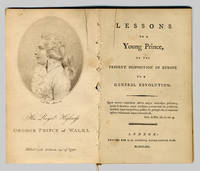
179058294London: Printed for H.D. Simmons Pater-Noster Row 1790. Fifth edition. Frontispiece portrait of Prince of Wales on back of title page and five other plates. iv 2 159 pp. 1 vols. 8vo. Polished contemporary tree calf gilt spine. Bookplate of E.J. Daniell. Repairs to title page with small loss and last leaf without loss. Fifth edition. Frontispiece portrait of Prince of Wales on back of title page and five other plates. iv 2 159 pp. 1 vols. 8vo. ESTC T16984 Printed for H.D. Simmons, Pater-Noster Row unknown books
1790WRCLIT51860London: Printed for H.D. Simmons 1790. iv2911pp. Small octavo. Portrait and two of three folding plates. Extracted from bound pamphlet volume. Old repairs to clean tears in margins of frontis title and terminal leaf wanting the plate that accounts for pp. 43-4 first plate split at fold else a sound copy. First edition. Directed to the then Prince of Wales summarizing with some sympathy the revolutionary ferment particularly in France and with a brief chapter about events in North America. Williams an acquaintance of Franklin Garrick and others prominent at the time founded the Royal Literary Fund and pursued an active career of pamphleteering translation Voltaire teaching and publishing on political and educational subjects. ESTC locates nine copies at least two of them lacking two or three of the plates. SABIN 104185. ESTC T108912. Printed for H.D. Simmons unknown books
1795318215London: G.G.and J. Robinson 1795. First Edition With half-titles in volumes II & III. 2 291; 4 268; 4 233pp. 3 vols. 8vo. Contemporary calf grrem leather labels gilt bird motif. Very pretty. First Edition With half-titles in volumes II & III. 2 291; 4 268; 4 233pp. 3 vols. 8vo. A 4th volumes was published in 1796. ESTC T70504 G.G.and J. Robinson unknown books
179655822Philadelphia: from the press of Sowden & McCorkle 1796. First American edition 12mo pp. 160; contemporary full mottled calf gilt-ruled spine morocco label; top of spine chipped away joints cracked "No. 1284 / Birmingham Library" in ink on front pastedown small library sticker on spine with the annotation in in "1284" light foxing; good. Williams 1762-1827 the English author who resided for most of her life in France wrote passionately but ignorantly on the French Revolution. "The honesty with which she wrote carried conviction to many of her readers; and there can be little doubt that her works were the source of many erroneous opinions as to facts." see DNB. Evans 31635. <br/><br/> from the press of Sowden & McCorkle unknown books
1794046754New York: T. Allen 1794. Second Edition. Hardcover Full Leather. Fair Condition. Full period sheep boards reattached with tape worn. First volume is lacking the title and most of the first page of the first letter - separate title for volume 2. First few pages worn at edges some scattered foxing smal ldampstain near the end. 219pp with a separate title for vol 2 but paginated continuously. The 2nd America edition. Size: Octavo 8vo. 2-volume set complete. Quantity Available: 1. Shipped Weight: Under 1 kilo. Category: Americana; History. Inventory No: 046754. T. Allen hardcover books
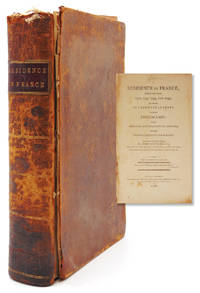
1794233638Printed at Boston 1794. A-D6. Pp. 1 title-3 4-47 48 blank. 1 vols. 8vo. Contemporary blue boards. Last leaf torn with loss of bottom third not affecting text. Some staining throughout. A-D6. Pp. 1 title-3 4-47 48 blank. 1 vols. 8vo. The French Revolution had a great impact on Williams's own life and literary career. She went to France in the summer of 1790 and her enthusiastic book about her travels Letters Written in France 1790 would become the first of eight volumes of eyewitness accounts later known as the Letters from France 1790-96. She explained in her first book that the historic Bastille day celebration in Paris was 'not a time in which distinctions of country were remembered. It was the triumph of human kind . and it required but the common feelings of humanity to become in that moment a citizen of the world' p. 14 ODNB.<br/><br/>Scarce. Evans 28091; Shipton & Mooney 28091 noting "imprint given by Evans was assumed from advs. unknown books
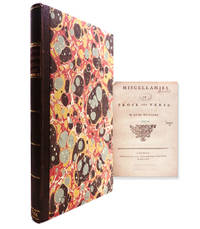
1766318208London: Printed for T. Davies 1766. First edition. "Samuel Johnson contributed the 'Advertisement' at least nine other pieces including 'The Fountains: A Fairy Tale' pp. 111-41 revised several others and was presumably responsible for the general editing and arrangement of the volume. 4 1-184pp. 4to. Bound in modern brown quarter calf and marbled boards. With library markings on title-page. First edition. "Samuel Johnson contributed the 'Advertisement' at least nine other pieces including 'The Fountains: A Fairy Tale' pp. 111-41 revised several others and was presumably responsible for the general editing and arrangement of the volume. 4 1-184pp. 4to. "Miss. Williams the blind Welsh poetess remained a member of Johnson's household from the days when she was his wife's constant companion. Johnson wrote a proposal for the work in the Gentleman's Magazine in 1750 but publication was delayed for 16 years presumably due to the lack of material by the poetess herself until Johnson arranged for contributions from many of his friends" --Maggs 1038/110. ESTC T77856; Fleeman pp. 1139-42 Courteney & Nicholl Smith p. 111 Printed for T. Davies unknown books