Blake William.ABAA

144 résultats
18851228914to. London: Muir 1885. 4to 1p. preface by Muir 27 leaves hand-colored 1p. appendix 2 leaves at the end in facsimile of Blake’s manuscript arrangement of the Songs of Innocence and of Experience and the separate plate ‘A Divine Image’. Original printed wrappers stitched as issued a fine copy. § The superb Muir facsimile limited to 50 copies this copy numbered 40. Reproduces copy A - the Beckford-Harvard copy. “This book is Blake’s Principia in which he announced a new concept of the universe.†Damon Blake Dictionary. One of Blake’s most popular texts with numerous famous lines. See Bentley Blake Books #249e. Muir unknown books
18851074264to. London: Muir 1885. 4to 1p. preface by Muir 27 leaves hand-colored 1p. appendix 2 leaves at the end in facsimile of Blake’s manuscript arrangement of the Songs of Innocence and of Experience and the separate plate ‘A Divine Image’. Original printed wrappers bound into full mottled calf red morocco vertical label on backstrip; upper hinge split but holding internally a very fine copy. § The superb Muir facsimile limited to 50 copies this copy numbered 31. Blake's prophetic book The Marriage of Heaven and Hell is known in only twelve copies; Muir's facsimile reproduces copy A now owned by Harvard. “This book is Blake’s Principia in which he announced a new concept of the universe.†Damon Blake Dictionary. "Through the voice of the "Devil" Blake parodies and attacks the theology of Emanuel Swedenborg the cosmology and ethics of Milton's Paradise Lost and biblical history and morality as constructed by the "Angels" of the established church and state. Energy and passion are positively valorized; reason and temperance are characterized as restraints on spiritual insight and self-expression" The William Blake Archive. See Bentley Blake Books #249e. Muir unknown books
1885123394Sm. London: Muir 1885. Sm. 4to 1p. preface by Muir 27 leaves hand-colored 1p. appendix 2 leaves at the end in facsimile of Blake’s manuscript arrangement of the Songs of Innocence and of Experience and the separate plate ‘A Divine Image’. once badly stained in the margins now washed and cleaned by Court Benson. New brown cloth upper cover lettered in gilt. § The extremely rare variant of the superb Muir facsimile limited to maybe 5 copies; only two copies ever offered for sale are recorded by Essick this copy and the Essick copy. Reproduces the Fitzwilliam Cambridge copy I they have three very different copies of which there is only the Dent trade reproduction and this one. Muir has noted this in manuscript in the preface crossing out the reference to copy A - the Beckford-Harvard copy. Inscribed by Muir: "This copy is coloured after the Original in the Fitzwilliam Museum at Cambridge. W Muir". “This book is Blake’s Principia in which he announced a new concept of the universe.†Damon Blake Dictionary. One of Blake’s most popular texts with numerous famous lines. See Bentley Blake Books #249e and 249h "On Homer's Poetry"; Blake Books Supplement p. 153. Muir hardcover books
1885303029Edmonton 1885. No. 39 of 50 copies on Hodgkinson wove paper. William Muir facsimile. Preface and 11 hand-colored plates. 1 vols. 4to. Full dark green levant preserving wrappers with an unrecorded folding announcement from Muir bound in at front. No. 39 of 50 copies on Hodgkinson wove paper. William Muir facsimile. Preface and 11 hand-colored plates. 1 vols. 4to. Muir Facsimile. Bentley 249c unknown books
18881088084to. Edmonton: William Muir 1888. 4to intaglio title page iv text prologue 18 leaves with Muir's black and white intaglio engraved plates sewed and more recently bound in vellum and new endpapers and fitted into a modern marbled slipcase. Original Muir wrappers not bound in. § Possibly one of the copies Quaritch had for sale as recently as 1942 when their catalogue records only 31 copies had been published rather than the 50 first envisaged and of these 31 at least some were still being offered for sale. The facsimile is convincing enough that plates from it have been offered as originals on occasion. Copies in such fine condition are almost unheard of. Bentley BB 249m. William Muir hardcover books
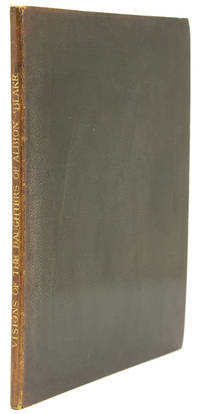
18851088074to. Edmonton: William Muir 1885. 4to 1 preface by Muir 8 hand- colored leaves; 1preface by Muir 11 hand-colored leaves bound with tissue guards in original gray wrappers as issued by Muir: copies 24 and 30. Bound in contemporary half navy calf gilt with navy morocco and gilt label on cover and navy cloth boards with H.C. Plimmer's bookplate. Very good. § The Thel facsimile is based on copy D colored by hand and limited to about 50 copies. Essick notes three versions of the ca. 1885 edition one entirely executed by hand this version with the correction of ’sprin’ to ’springs’ on leaf 5 line 7 and with the two final plates numbered 7 and 8 and a third version with the final two leaves correctly numbered 5 and 6 as in Blake’s original. The Visions facsimile also limited to around 50 copies is on Hodgkinson wove paper some copies were printed on a thinner “Antique Note†laid paper. Based on copy A in the British Museum. Bentley Blake Books 249 b and c William Muir hardcover books
18861088064to. Edmonton: William Muir 1886. 4to 4 45 hand-colored plates 2 leaves. Contemporary half navy calf gilt with navy morocco and gilt label on cover and navy cloth boards original wrappers bound in. A fine copy with the bookplate of H.C. Plimmer. § Limited to about 50 copies by Muir and his team based on copy A. Muir’s preface is five pages and at the end is a three-page facsimile of Blake’s letter of March 16 1804. The first facsimile of the second-longest and penultimate of Blake’s illuminated books which is known in only four copies. The poem follows the poet John Milton returned from heaven to the mortal world on a journey of self-discovery and renewal The William Blake Archive. Blake himself is present as the personification of Imagination and the poem contains many biographical allusions. It is exceptionally rich with numerous full-page plates. Blake’s famous poem “Jerusalem†appears in the preface to Milton only in copies A and B. Bentley BB 249f. William Muir hardcover books
18881223864to. Edmonton: William Muir 1888. 4to intaglio title page iv text prologue 18 leaves with Muir's black and white intaglio engraved plates sewed. with 25 leaves including the preliminary and final blank. Original wrappers upper cover lettered in manuscript and signed and numbered by Muir. with 1 leaf signed and numbered by Muir. Dark green straight grain morocco panelled in gilt gilt top backstrip lettered in gilt slightly worn but internally perfect. § The "Gates" is copy #17 signed by Muir. The facsimile is convincing enough that plates from it have been offered as originals on occasion. Bentley BB 249m. "There is No Natural Religion" is copy #4 and includes “ All Religions are One†and Muir's own version of the missing plate b5. Essick notes: There is No Natural Religion. The "Preface" dated 1886 indicates that the facsimile is based on plates "in the British Museum copy A and from some papers in my own possession copy L." Upper wrapper present. "On Homer's Poetry" is a single leaf #4 signed by Muir. Bentley BB 249 h. William Muir unknown books
18081078254to. London: Bensley for Cromek 1808. 4to xiv 36 4 pp. With a portrait frontispiece after Phillips etched title page and 11 plates engraved by Luigi Schiavonetti after Blake’s designs. Original drab gray boards printed paper label on upper cover preserved in a red cloth box worn. The finest copy we have ever seen. § First quarto edition of exceptional rarity in boards as issued. A completely untrimmed copy thus with the title-page uncropped. Bentley Blake Books 435B. Bindman Complete Graphic Works of Blake 465-476."In October 1805 Blake was commissioned by the engraver and would-be publisher Robert H. Cromek to prepare forty drawings illustrating Robert Blair's The Grave a popular "Graveyard" school poem first published in 1743. Cromek planned to select twenty of these designs for a deluxe edition of the poem. In Cromek's first prospectus of November 1805 Blake is named as both the designer and engraver of fifteen designs. Blake etched one image Deaths Door in white-line but Cromek rejected it. The dark power of the white-line print appeals to modern tastes but was far from fashionable in the early nineteenth century. In a second prospectus also of November 1805 Cromek announced that Luigi or Louis Schiavonetti would engrave twelve designs for the new edition. Blake had lost the potentially lucrative commission to engrave his own designs; his relationship with Cromek descended into anger and argument. In spite of their disagreement Cromek included a portrait of Blake as a frontispiece to the volume published in 1808. Cromek promoted the book aggressively and the illustrations to The Grave became Blake's best known work through much of the nineteenth century." The William Blake Archive Bensley for Cromek hardcover books
1887109161Folio. Edmonton: William Muir 1887. Folio 18 plates printed in blue. Original wrappers rebacbacked top edge gilt fine. § Uncolored Muir facsimile limited to around 50 copies of which according to Keynes in 1921 only 6 were hand-colored. This is copy #3 signed priced and numbered by Muir. "In the first of his "Continental Prophecies" see also Europe and The Song of Los Blake explores the radical paradigms of political repression and revolt through a highly imaginative treatment of the American Revolution. While historical figures such as Washington and Paine appear much of the symbolic and thematic weight is placed on Blake's own invented mythological figures including "Albions Angel" and "Londons Guardian" forces of the British government Urizen the god of restrictive reason and the origin of political repression and fiery Orc the spirit of revolt. The American Revolution is viewed as a harbinger of universal revolution epistemological as much as political." The Blake Archive. Eighteen copies of the original are known to exist. William Muir's facsimiles of Blake's works were the most ambitious and in many cases the first of their kind until the Trianon Press began work for the Blake Trust in 1951. Upon establishing the Blake Press at Edmonton his goals were clear: "My desire and intention is to reproduce ALL the important works by Wm Blake that exist in book form and also some of his finest designs and this by methods of working as nearly the same as Blake himself used as the need of maintaining fidelity to his results will allow. I will not use either photography or chromolithography. All outlines are drawn and all the colouring is by hand. I produce fifty copies only of each book and each of them is numbered".Keri Davies writes "‘Muir’s facsimiles not only made Blake’s works in “Illuminated Printing†accessible for the first time in reliable copies and helped establish Blake’s reputation as visual artist alongside his reputation as poet but I feel must also have contributed to the most advanced ideas in English art of the 1880s." Bentley Blake Books 249j. William Muir unknown books
1884303028Edmonton: John Pearson for Bernard Quaritch 1884. Each title one of 50 copies. With 8 26 11 and 21 plates in the four works 66 total. 1 vols. 4to. Contemporary full white vellum gilt spine and upper cover titled in gilt t.e.g. others untrimmed. Fine copy. Cloth slipcase. Each title one of 50 copies. With 8 26 11 and 21 plates in the four works 66 total. 1 vols. 4to. Four Muir Facsimiles in Special Binding. The Muir facsimiles were produced in editions of 50 copies; a few copies would have been bound up by Quaritch the distributor in white vellum as here. The wrappers are not preserved but the books are complete. Bentley 249 bce & g John Pearson for Bernard Quaritch unknown books
1887109160Folio. Edmonton: William Muir 1887. Folio 17 plates richly hand colored. Original printed wrappers dated September 1887 backstrip renewed gilt top fine. § Limited to fewer than 50 copies this copy numbered #11 signed priced and numbered by Muir. Based on three different copies see below. With the frontispiece “The Ancient of Days†which is perhaps Blake’s most famous image. Bentley BB 249k1: "plates 1 and 4 are from originals in Mr. Muir's possession copy c plates 2 5-6 and 8 are from copy D and plate 7 9-18 from copy A." See also Bentley Blake Books Supplement pp.66-69. William Muir unknown books
18851228882 vols. Edmonton: William Muir 1885. 2 vols. 4to 34; 30 leaves hand-colored with the original blue-gray wrappers as issued enclosed in a modern quarter-blue morocco folding box lettered in gilt. § Limited to around 50 copies of each "Innocence" inscribed "No. 0 Pearson's copy" and "Experience" inscribed "for The Times". These are amongst the most alluring and successful of Muir’s facsimiles. Songs of Innocence was taken from the Pearson copy and he is recorded at the end as the Publisher in London in 1884 but his death caused Muir to take the project to Quaritch who distributed the whole series. Songs of Experience is taken from the Beckford copy. The general title to both works is found at the end of Experience. Bentley BB 249 a and 249 d. Loosely inserted in the box is a prospectus from John Pearson for a series of facsimiles after Blake and a 4-pp ALS from Muir to the editor of The Times. Last sold by Heritage Bookshop in 1998. William Muir unknown books
18851223852 vols. Edmonton: William Muir 1885. 2 vols. in one. 4to 34; 30 leaves hand-colored with the original blue-gray wrappers as issued; copies No. 24 Innocence and 11 Experience. Full dark red morocco gilt top gilt-lettered backstrip with gilt device at foot bookplates of Thomas William Waller and Willis Vickery. Very good with tissue guards as issued. § Limited to around 50 copies of each. These are amongst the most alluring and successful of Muir’s facsimiles. Songs of Innocence was taken from the Pearson copy and he is recorded at the end as the publisher in London in 1884 but his death caused Muir to take the project to Quaritch who distributed the whole series. Songs of Experience is taken from the Beckford copy. The general title to both works is found at the end of Experience. Bentley BB 249 a and 249 d. William Muir unknown books
1827105078Printed in black ink on thick card. London: William Blake 1827. Printed in black ink on thick card. Very finely printed in good condition though trimmed very close to the image at the left and right edges once pasted down and thus with traces of mounting on the verso and pencil notes from an earlier collector c. 1950 image and plate mark exactly as per Essick 1DD. § Blake’s last engraving executed for one of his closest friends. The images invoke one of Blake’s greatest themes—the relationships between time and eternity. Although probably intended as a calling card two books have been located with this card pasted in both written by George Cumberland Jr. Thus it has on occasion been sold as a “bookplateâ€. Examples on card not in Cumberland's book are exceptionally rare and have been presumed to be of the earliest printing and possibly by Blake himself. All other impressions on laid paper most often are posthumous. Thirty-nine examples in all are known to Essick not including examples now untraced of which eight are on card of which one is described as printed in green ink. Essick The Separate Plates of William Blake XXI see entry 1DD for identical measurements but not this copy. Bindman Complete Graphic Works of Blake 654. William Blake unknown books
1881108279Impression measures 93. London: Colnaghi printing after 5 March 1881. Impression measures 93.9 x 30 cm. printed on laid India paper; recently cleaned. § Final state: it is worth noting that the only difference between the so-called fourth and fifth states is the absence of the scratched dry-point inscriptions clearly visible in a few prints and less and less visible until completely absent by the time Sessler was printing the plate. Instead of “states†the more accurate definitions might be very early to very late 4th state and in that scheme then this print would be well after the early impressions with some or most of the scratched inscriptions visible but before the Sessler printings of the 1940s none of which were on laid India. “‘Chaucers Canterbury Pilgrims’ was one of Blake’s major attempts at building a reputation as a painter-engraver and achieving the sort of critical and financial success that had escaped him for so many years.…†However Blake wasn’t to meet with the critical success he had hoped for and the competition created when Thomas Stothard executed a plate of the same subject caused him to become bitter. “Most contemporary connoisseurs probably found the print old-fashioned and ‘Gothic’ in the pejorative sense.… The record of prices brought by the print at auction indicates that it has attracted strong interest from collectors only in the last few years†Essick pp. 86-88. “It is only in the last two states of the plate that we find Blake’s mature artistry as an original printmaker bringing to his largest and most ambitious single print the same techniques distinguishing his Job and Dante engravings.†Essick Separate Plates of William Blake XVI and see William Blake Printmaker. Colnaghi printing unknown books
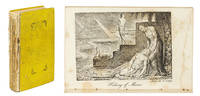
182511080112mo. London: I. Poole 1825. 12mo frontispiece "A Tribute of Regard."; title-page "Remember Me" etc. with 1826 beneath "Christmas Present"; second engraved leaf recto "Calendar and Album 1826." verso January and February next three leaves with the rest of the Calendar; verso of third leaf "The Virgin Child and St. Johnâ€; 8 pp. of engraved music; contents and introduction i ii-xxiv; plate "Her screams aroused her servant"; 1 2-336. With the Blake plate at p. 32 and color plates at 42 73 88 89 93 148 149 275 b/w The Storm and 326 color. Publisher’s original printed yellow paper boards no backstrip occasional spotting but a good copy of this fragile booklet in its rarest format preserved in a cloth box. § Second issue of the book no variance in the plate the contents omits the blank leaves and the misnumbered leaves at the end. One of the rarest of all of the plates designed and engraved by Blake here in its rarest format. The plate titled ‘The Hiding of Moses’ was the last plate designed and engraved by Blake himself for a commercial publication; the original drawing ‘Moses placed in the Ark of Bulrushes’ which closely echoes a tempera now untraced that was executed some 25 years earlier is in the Huntington Library. BB #490B. Easson and Essick William Blake Book Illustrator XI recording the Rosenwald proof and 3 copies. Keynes Blake Studies XIX recording 7 variants but not mentioning the 1826 printing. Also see Bentley’s detailed essay and census of copies in “Remember Me! Customs and Costumes of Blake’s Gift Book†University of Toronto Quarterly 80.4 fall 2011: 880-92. I. Poole hardcover books
182665634ìBlakeÃs Most Widely Known Achievementî BLAKE William. Illustrations of the Book of Job. Invented & engraved by William Blake 1825. London: Published by the Author and Mr. J. Linnell 1874. One of 100 sets printed on india paper. Folio sheets: 20 x 14 inches; 510 x 350 mm. engravings 8 1/4 x 6 1/2 inches; 209 x 158 mm. Line-engraved title and twenty-one line- and stipple-engraved plates by and after Blake. Also with an additional letterpress title-page not issued with the book. Printed from the original plates. Evidence of the word proof on the lower edge of engravings number 5 7 8 10 11 12 14 18 and 20. Bound in quarter reverse calf over black cloth. Spine lettered and ruled in gilt. With black and red morocco spine labels lettered in gilt. Marbled endpapers. Corners a bit bumped and cloth lightly scuffed. Sheets mounted on stubs. A bit of very light foxing to some of the sheets generally not affecting engravings mainly title-page sheet and sheet of plate 20. Plate 14 with the mounting sheet trimmed at top margin about 1.5 inches not affecting plate. A fine strikingly clean copy of ìBlakeÃs most widely known achievementî Keynes. The engravings were commissioned by John Linnell on March 25 1823. Despite the date 1825 on the engravings the plates were not actually issued until March 1826. The entire edition consisted of 315 sets: 150 ìProofî sets on India paper and sixty-five on French paper were printed in March 1826 at which time the word ìProofî was removed from the plates and 100 sets were printed on drawing paper see Bentley. BlakeÃs original copperplates remained in the possession of the Linnell family and as late as 1863 Linnell was offering for sale sets of the India-paper and French-paper issues. By 1874 these must have been sold as a further 100 sets of the engravings were printed at that time the present copy is from this set. No more pulls were taken between 1874 and 1919 when the copperplates were given by Herbert Linnell to the British Museum. Linnell's son wrote "My father considered the plates at the last 1874 were as good as they ever were for the work being cut by a graver and not etched it is durable- and is not worn by the printing as is the case with an etching." Bentley Books p. 523. Bentley 421A. Binyon 105-126. Russell 33. HBS 65634. $32500 William Blake hardcover books
1821VBF48<p><b>BLAKE</b> William</p><p><i><b>The Pastorals of Virgil</b></i> With a course of English Reading adapted for Schools . enabling youth to acquire the Latin Language in the shortest period of time. Edited by Robert John <b>Thornton</b>. </p><p>London: F C & J Rivington 1821. </p><p>Two volumes illustrated with engraved frontispieces 230 illustrations: of which William Blake has contributed 17 original woodblock designs for the First Eclogue six copperplates of Classical poets and philosophers all of which he also engraved and with four additional Blake designs engraved by other hands. These are WILLIAM BLAKE's only woodcut designs and have remained amongst the most influential woodcuts in the history of British art. Their influence can be seen in the prints of Edward Calvert and Samuel Palmer. The original blocks survive and are preserved in the British Library London last restruck in 1977 by Iain Bain.</p><p>8vo. xii -vii/viii 12 xxiv -i/iv 214 pp. i 215-592 pp. plates erratic preliminaries nonetheless complete as matching collations in both Keynes and Easson/Essick; matching contemporary sheep leather possibly as published.</p><p>Third edition first thus</p><p>Provenance: George R. Gardner pasted bookplate inside covers</p> F C & J Rivington hardcover books