Blake, William Hayley, WilliamBiblio.com

304 résultats
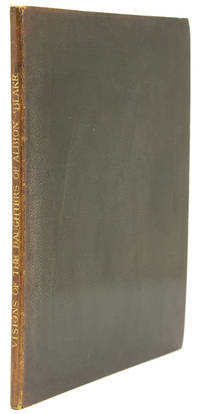
18031241491803. Chichester: J. Seagrave for T. Cadell and W. Davies 1803. <br /> <br /> Large 8vo 22.7 x 14.2 cm. xii 165 pages. With 6 engraved plates by William Blake after Maria Flaxman. Contemporary mottled calf gilt titled backstrip marbled edges minor rubbing to backstrip and corners faint darkening to preliminary & final leaves otherwise an excellent copy with wide margins.<br /> <br /> § A large-paper copy unusually clean and with fine dark impressions of the plates. First edition of Blake's engravings after these dreamy and slightly surreal illustrations by Maria Flaxman.<br /> Provenance: Brackenburn book label of Hugh Walpole and book label of Pamela and Raymond Lister. Bentley Blake Books 471A. Essick William Blake's Commercial Book Illustrations XLIII. unknown
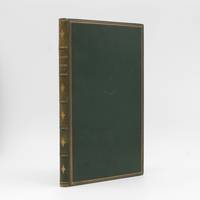
18031044001803. Chichester: J. Seagrave for T. Cadell and W. Davies 1803. <br /> <br /> Roy. 8vo 9.5 x 5.75 ins. xii 165 pp. With 6 engraved plates by William Blake after Maria Flaxman. Later half green morocco gilt top other edges untrimmed an excellent copy with wide margins.<br /> <br /> § A large-paper copy unusually clean and with fine dark impressions of the plates. First edition of Blake's engravings after these dreamy and slightly surreal illustrations. Bentley BB 471A. Essick CBI XLIII. DNB notes of Hayley: "Possibly his greatest achievement however was his didactic poem Triumphs of Temper 1781 which 'was to reform the entire feminine mind of England by the advice' Bishop 53. This allegorical work aspired in rhyming couplets to teach young women the virtues of a pleasant nature. Its advice was heeded by some: Emma Hamilton thanked Hayley 'for the lessons she had learnt from the poem' P. Jaffe Drawings by George Romney 1978 44 and asked Romney to inform Hayley that his poem 'made me Lady H. . for Sir W. minds more temper than beauty' ibid. Triumphs of Temper ran into fourteen editions and proved to be the most durable of all his publications.". unknown
1886302993London: Quaritch 1886. No. 40 of 50 copies signed by Muir. William Muir facsimile. 23 plates including Preface and title all hand colored save for the final plate On Homer's Poetry. 1 vols. 4to. Printed wrappers. Some splitting and marginal chipping internally fine. Brown morocco backed folding case. No. 40 of 50 copies signed by Muir. William Muir facsimile. 23 plates including Preface and title all hand colored save for the final plate On Homer's Poetry. 1 vols. 4to. Includes the title-page and All Religions are One and Muir's own version of the missing plate b5. The "Preface" dated 1886 indicates that the facsimile is based on plates "in the British Museum copy A and from some papers in my own possession copy L."<br /> The last leaf of the facsimile is the single page On Homer's Poetry. Bentley Blake Books 249g Quaritch unknown
18051079151805. London: C. and J. Rivington 1805. <br /> <br /> 10 volumes royal 8vo with a portrait frontispiece of Shakespeare and 37 separate engravings after drawings by Fuseli by Neagle Cromek Rhodes Dodsley and two by William Blake. Original calf rather worn with some hinges cracked. Gilt on raised backstrip also rather worn. Volume 1 has some cracking to spine. Some spotting. Volume 1 has one minor worm hole on the lower margin the goes through a number of pages to the rear pastedown. Volume 3 has a small worm hole that goes through the entire lower margin of the book and becomes two holes that continues to the back pastedown. Volume 9 has some minimal worming at the rear pastedown. The text in all volumes is unaffected. Volumes 1 and 3 have a few untrimmed pages. Each volume has a bookplate from the previous owner Henry Frederick Thistlethwayte at front. Volume 1 is inscribed with a note from Thistlethwayte to his son Alfred. The plates are fine impressions. <br /> <br /> § Large-paper issue of the best illustrated collection of Shakespeare's plays save only the elephant-folio Boydell. This was one of Fuseli's major projects as a book-illustrator and it succeeds brilliantly; the engravings are dramatic and rich and in this edition well printed. Blake engraved two plates after Fuseli for the book. Vol. VII for King Henry VIII and vol. X for Romeo and Juliet. There was a nine-volume small-paper issue with greatly inferior printing of text and plates but as Bentley observed "the ten-volume edition is considerably more elegant." Bentley 498. Essick CBI XLVII. unknown
18261233531826. 1826. <br /> <br /> Folio single sheet 16 1/4 x 11 image inc. platemark 8 1/4 x 6 1/2 ins. Fine.<br /> <br /> § First edition from the printing of 65 sets with the word "Proof" on French wove paper. A fine impression of one of the most affecting plates in this series in which Job laments his unfortunate existence while his friends bear witness to his grief in silence Job 3:3. Illustrations of the Book of Job was Blake's last completed prophetic book. "It was produced while Blake was still working on Jerusalem his most obscure book; yet the illustrations are Blake's most lucid; and they are the supreme example of his reading the Bible in its spiritual sense" S. Foster Damon A Blake Dictionary p. 217. "The modest size of the central panels does not prevent them from ranking with the supreme masterpieces of graphic art" Ray Illustrator and the Book in England #8. Bentley Blake Books 421A. Bindman Complete Graphic Works of Blake 625-641C. Provenance: Sotheby's May 4& 5 1983. unknown
18091087411809. Chichester: W. Mason 1809. <br /> <br /> Large 4to 8 416 7 pp. With portrait frontispiece and 11 engraved plates including one by Blake after Romney. Large paper copy in red half calf over marbled paper boards with gilt rules and titling. A very good copy with clean pages and prints throughout just traces of ageing on the first few pages.<br /> <br /> § First edition large-paper copy. Although not substantially bigger than uncut copies of the regular issue the large-paper copies are on heavier paper and the impressions are stronger. The 1-page advertisement at the end for "Epistles to Romney" is not found in the small-paper copies. Blake's plate of the shipwreck incorporates a number of familiar figures from his iconography and is a strong and vivid illustration. Bentley BB 469 Essick CBI XLIX: large-paper issue has an "1807" watermark without a maker's name; the small paper is watermarked "Rye Mill / 1807.". unknown
1885303018London 1885. No. 38 of 50 copies. William Muir facsimile based on copy D. 8 leaves. 1 vols. 4to. Full green levant wrappers bound in. Spine toned. Fine. No. 38 of 50 copies. William Muir facsimile based on copy D. 8 leaves. 1 vols. 4to. Bentley 249b unknown
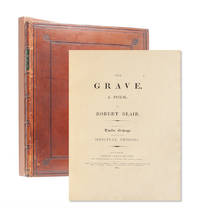
18084613London: Printed by T. Bensley for R. H. Cromek 1808. First edition. Near Fine. Quarto pages 275 x 340mm: xvi 36 4 prospectus; complete with the engraved frontis of Blake engraved title page and eleven other plates engraved by Louis Schiavonetti after illustrations by William Blake. Handsomely bound in early 20th century full calf with rules stamped in black and a blue morocco spine label. Illustrated title trimmed a little tightly no loss to the illustration. A clean and attractive copy internally with all plates retaining their tissue guards. With the armorial bookplate of C. E. Richardson motto: virtute aquiritus honos. Housed in a custom slipcase.<br /> <br /> A blank verse poem The Grave was the work for which Scottish writer Robert Blair was most renowned. "In October 1805 William Blake was commissioned by the engraver and would-be publisher Robert H. Cromek to prepare forty drawings illustrating the popular "graveyard" school poem first published in 1743. In Cromek's first prospectus of November 1805 Blake is named as both the designer and engraver of fifteen designs.In a second prospectus also from November 1805 Cromek announced that Luigi Schiavonetti would engrave twelve designs for the new edition. Blake had lost the lucrative commission to engrave his own designs; and his relationship with Cromek descended into anger and argument. In spite of their disagreement Cromek included a portrait of Blake as a frontispiece to the volume published in 1808. Cromek promoted the book aggressively and the illustrations to The Grave became Blake's best known work through much of the nineteenth century" William Blake Archive. Near Fine. Printed by T. Bensley for R. H. Cromek unknown
1884303008Edmonton: John Pearson for Bernard Quaritch 1884. One of 50 copies. Hand-colored facsimile by William Muir. With 11 hand-colored plates bound without wrappers or the preface addressed to Muir's patron. 1 vols. 4to. Full green straight-grain morocco covers gilt with triple gilt fillets spines lettered in gilt within decorative framing lines board edges gilt marbled endpapers t.e.g. Faint wear to extremities else fine; probably the publisher's special binding. One of 50 copies. Hand-colored facsimile by William Muir. With 11 hand-colored plates bound without wrappers or the preface addressed to Muir's patron. 1 vols. 4to. Keynes 217c; Bentley pp. 28-9 John Pearson for Bernard Quaritch unknown
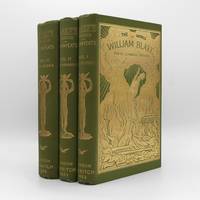
1893375973London: Bernard Quaritch 1893. First Edition limited to 500 copies. There was a large paper edition One of 150 bound in leather but the regular edition as here is more desirable on account of the lavish gilt publisher's binding. 3 portraits 2 folding charts approx. 312 reproductions from the illuminated books. xiv 420; viii 436; x 100 2; 176 pp. 3 vols. Royal 8vo. Original grass green cloth heavily stamped in gilt t.e.g brown endpapers. Light rubbing to edges of binding. A VERY FINE COPY. First Edition limited to 500 copies. There was a large paper edition One of 150 bound in leather but the regular edition as here is more desirable on account of the lavish gilt publisher's binding. 3 portraits 2 folding charts approx. 312 reproductions from the illuminated books. xiv 420; viii 436; x 100 2; 176 pp. 3 vols. Royal 8vo. Bentley 369: "The enthusiasm and comprehensiveness of this work are of considerable historical importance."<br /> <br /> Wade Yeats Bibliography 218 quoting a letter from Yeats: "The writing of this book is mainly Ellis's the thinking is as much mine as his. The biography is by him. He re-wrote and trebled in size a biography of mine. The greater part of the 'symbolic system' is my writing; the rest of the book was written by Ellis working over short accounts of the books by me except in the case of the 'literary period' the account of the minor poems & the account of Blake's art theories which are all his own except in so far as we discussed everything together." Bentley 369; Wade Yeats Bibliography 218. Provenance: Louis V. Ledoux bookplate in each vol. Bernard Quaritch unknown
180546810WILLIAM BLAKE ILLUSTRATED <br />first edition 8vo. 2 blank 8 title leaf preface leaf a blank leaf half or sub-title 212 2 contents and colophon 2 blankpp. 5 plates by Blake untrimmed and clearly exhibiting the plate mark near contemporary maroon roan backed boards marbled paper over boards edges untrimmed as issued paper title label on spine lettered in faded ink manuscript plain later endpapers light water stain at the lower gutter side of the last 2 leaves mainly evident on the terminal blank leaf with very light marks at the same point on neighbouring leaves including the last plate leaves A4-A5 a trifle creased and dusty some light dustiness mainly at the untrimmed edges some plates with light foxing and some lightly toned at the untrimmed edges last plate The Horse with small patch of light surface abrasion at lower corner outside the image but inside the plate mark occasional other minor dusty smudges generally a very good and pleasing copy. <br />Armorial bookplate of James Balfour slightly damaged.<br /><br />Bentley Blake Books 465<br />The plates are signed below the images "Blake inv & sc' and have the imprint 'Pubd. or Pub'd june 18 1805 by R. Phillips No6 Bridge Street Black Friers".Plates 1 to 3 inclusive are in the second more extensively worked state. Plates 4 and 5 are in the first and only state. This copy has a comma rather than a full stop after 'BLAKE' on the title page as in the copy at Princeton with plates 1 and 2 in the second state.<br />This book is possibly a copy in the original boards that have at some later point in the nineteenth century been backed with maroon roan and the boards covered with cloth and then with marbled paper and supplied with new endpapers possibly by an amateur. The bookplate looks as if it may have been lifted from an earlier setting and relaid. Printed by J. Seagrave; for Richard Phillips .. hardcover
1813018448London: J. Johnson 1813. Second Edition. Hardcover. Occasional light small stain but very clean overall. Near Fine with minor wear. Two quarto 8-1/2" x 10-1/2" volumes bound in early calf-backed marbled boards with calf corners contrasting gilt-lettered morocco spine labels marbled endpapers top edges gilt rebacked. A graphic account of the slave rebellion in Dutch Guiana 1772- 1777 illustrated with 81 engravings including 3 folding maps after drawings by the author by William Blake 13 with an additional 3 attributed to him Bartolozzi Benedetti Barlow and others. Sabin 91075 called this "one of the richest contemporary accounts of a plantation society in the Americas." According to the DNB Stedman's narrative is "one of the most vivid indictments of slavery that have been penned." Stedman also depicts the social and natural history of the area in detail and many of the engravings illuminate his writings on these subjects. Blake's work among the finest that he did for hire are primarily powerful portraits of slaves. <br/><br/> J. Johnson hardcover
180576378Chichester and London:: J. Seagrave; for Richard Phillips 1805. First edition. old full straight-grain morocco; gilt spine; all edges gilt. Some inoffensive very slight tanning to a couple of leaves; contents almost entirely clean and fine. Some scuffing to the spine and extremities of the leather but tight sound and attractive. . 12mo. With Prints Designed and Engraved by William Blake. The five plates are in the first state. Keynes 74. There are two old pencil notes of provenance: one that this copy was in the "Hy. White sale" and the other a 1902 ownership signature. J. Seagrave; for Richard Phillips, hardcover
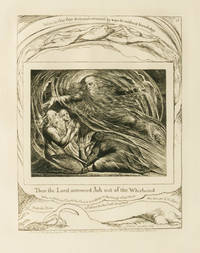
1825122290London: William Blake for John Linnell 1825. Fine. London William Blake for John Linnell 'Published as the Act directs March 8: 1825' in fact 1826. An original engraving printed surface 195 × 148 mm plus the credits paper size 377 × 271 mm matted with archival board and behind glass in a simple but apposite polished wooden frame visible image size 237 × 187 mm external dimensions 540 × 448 mm. Paper lightly cockled with a tiny closed tear to the bottom margin of the sheet well clear of the printed surface; essentially in fine condition. 'William Blake's "Illustrations of the Book of Job" primarily refers to a series of twenty-two engraved prints published 1826 by Blake illustrating the biblical Book of Job. It also refers to two earlier sets of watercolours by Blake on the same subject 1806 and 1821. The engraved "Illustrations" are considered to be Blake's greatest masterpieces in the medium of engraving and were also a rare commercial and critical success for Blake' Wikipedia. Plate 13 quotes Job 38:1-2 and 28 'Then the Lord answered Job out of the whirlwind / Who is this that darkeneth counsel by words without knowledge . Hath the Rain a Father & Who hath begotten the Drops of the Dew' and Psalms 104:3 'Who maketh the Clouds his Chariot & walketh on the Wings of the Wind'. The Blake authority G.E. Bentley Jr 'Blake Books. Annotated Catalogues of William Blake's Writings in Illuminated Printing .' Clarendon Press 1977 records that 'According to Linnell's "Job" accounts 150 "Proof" sets on India paper watermarked J WHATMAN TURKEY MILL 1825 and 65 on French paper watermarked J WHATMAN 1825 were printed by Lahee in March 1826. Then the word "Proof" was removed from the plates though it is still faintly visible on the copperplates and in some pulls and 100 sets were printed on drawing paper'. The example we have for sale is one of the latter group printed after the word 'Proof' was removed from the original copperplate. William Blake [for John Linnell] unknown
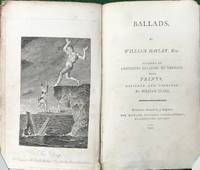
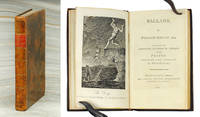
18051277681805. BLAKE William HAYLEY William. Ballads founded on Anecdotes Relating to Animals with Prints Designed and Engraved by William Blake. London: Richard Phillips 1805. Octavo early 20th-century full blue morocco raised bands elaborately gilt-decorated spine top edge gilt uncut. $6000.Expanded second editionthe only obtainable editionof this poetry collection with five engravings by William Blake handsomely bound by Bedford.""These Ballads were originally intended to have been issued separately in fifteen quarto parts with numerous illustrations by Blake and for the benefit of the artist. Four parts were issued in 1802 but the series did not meet with success and was discontinued. Later it was arranged to issue them in the present again for Blake's benefit"" Keynes. This 1805 edition is an expanded version with additional poems of the extremely rare 1802 first edition which last appeared at auction 70 years ago. Blake reengraved the first three plates and added two more to illustrated the additional poems. The first three plates are in first state. Easson & Essick 41-44. Bookplates.Fine condition. hardcover
18051228731805. Chichester: J.Seagrave for Richard Phillips 1805. <br /> <br /> Small 8vo 6 212 1 indexpp. with 5 plates designed and engraved by Blake. Overall a clean and very pleasing copy in contemporary calf skillfully rebacked retaining the original backstrip and red label. Bookplate of Benjamin Dickinson ink signature of J.W. Dickinson dated Oct. 9th 1824 later bookplate of Walter Hirst.<br /> <br /> § First edition with plates 1-3 in the first state. An important book in the Blake canon being his second version of the Ballads after the extremely rare 1802 edition see above for the frontispiece. "For this 1805 volume Hayley added twelve ballads to the four first published in 1802. Blake engraved new plates of his designs for three of the 1802 ballads plates 1-3 and both designed and engraved new illustrations for two of the additional ballads plates 4-5. Blake and Phillips were to "go equal shares . . . in the expense and the profits" Blake's letter to Hayley of 22 January 1805 Erdman page 763. Robert Southey's mocking review of Hayley's poems and Blake's illustration to "The Dog" Plate 1 appeared in the Annual Review for 1805." Bentley BB 465. Easson and Essick WBBI Vol. I VIII. Bindman Complete Graphic Works of Blake 403-407. unknown
1885303029Edmonton 1885. No. 39 of 50 copies on Hodgkinson wove paper. William Muir facsimile. Preface and 11 hand-colored plates. 1 vols. 4to. Full dark green levant preserving wrappers with an unrecorded folding announcement from Muir bound in at front. No. 39 of 50 copies on Hodgkinson wove paper. William Muir facsimile. Preface and 11 hand-colored plates. 1 vols. 4to. Bentley 249c unknown
18011227331801. London : Dalla Stamperia di Gul. Bulmer 1801. <br /> <br /> Thick 4to 2 1 1-721 pp. Printed in English and Italian. Contemporary red straight-grained goatskin flat spine banded with double gilt rules single gilt rule to the margins of the boards all edges gilt some foxing to the preliminaries binding repaired and refurbished still showing some scratches and stains but still an attractive copy.<br /> <br /> § Only edition of absolute rarity three copies recorded none at auctionone in the marketplace bought by Yale. Maggs wrote of this copy: "Written by an associate of William Blake this is a profoundly eccentric production full of the revolutionary spirit of the times combining mysticism philosophy electricity and magnetism. One of an unknown number of copies privately printed for the author without a title page by George Bulmer all of them intended for presentation to the author's friends this copy bearing the 19th Century ownership inscription 'Girdlestone' for whose identity there are several candidates none completely convincing.<br /> <br /> It is in two parts the first "An Investigation into Principles" written in English is a series of reflections on the nature of elements gravitation "the pressure of the general ethereal fluid against our orb" time "Look for time in the vast expanse Eternity will start to view and time revolve no more" tides earthquakes and the lack of salt in rain when raised into the sky by waterspouts it is sweetened by the action of electricity. His logic is baffling at times demonstrating the wisdom of a forward five year old or of an experienced haschischan : for instance he observes that gravity isn't all that Newton cracked it up to be since water "from a known principle in hydraulics" rises to the top of mountains which truth he derives from the fact that rivers never run dry. "On the Barleycorn" is a dialogue between Mata and Ata based on a conversation with George Finch Earl of Winchilsea concerning wisdom folly genius reason the individuality and the faculty of the soul.<br /> <br /> The second part is titled "On the Soul. On Magnetism. Magnetic Productions." and comprises the transcripts of Avena's automatic writings see below in Italian many with English introductions and some untranscribed writings dismissed as "too confused to merit attention". There are a total 51 sessions in the first year dated to "Alessandria 1796" 52 in the second year and 27 in the third and last year. The last two years have almost no English narrative.<br /> <br /> In researching this book we Maggs rely heavily on the intoxicating and brilliant essay by Marsha Schuchard "Blake's Healing Trio: Magnetism Medicine and Mania" published in Blake an Illustrated Quarterly Vol 23 Issue 1 which explores Blake's relationship with the "eclectic network of illuminés which included Swedenborgians Freemasons and Cabalists who shared his interest in animal magnetism spirit-communication and erotic trances". George Baldwin was one of these and is included as "Baldwin of Egypt's Lake" in a vicious later 1808 - 1811 poem attacking their lack of commitment to his studies.<br /> <br /> Baldwin born in 1744 was an author and diplomat who became very wealthy in the later years of the 18th century establishing trade links for the East India Company with Egypt owning a monopoly of the British trade route through Suez demonstrating remarkable prescience about the importance to British trade of this route to the east. He was British Consul-General in Egypt from 1786 to 1796 in which position he warned the British Government of French plans to take over Egypt a warning which was largely ignored. When the French invaded Egypt in 1798 he left the country for Italy leaving behind substantial property in Alexandria which was seized by the French. He was of considerable help in the planning of the British counter invasion returning to Egypt in 1801 with the British forces and claimed the credit for the decision to breach the canal in Alexandria and flood Lake Mareotis to hinder French navigation which played a significant role in the recapture of Egypt - this is what Blake refers to when he mentions "Baldwin of Egypt's Lake." It is attractive to think of a time in which a man could be a senior servant of the state as well as indulging in such arcane personal tastes.<br /> <br /> Baldwin's wife Jane Malpass a famous Greek beauty sat for her portrait to Sir Joshua Reynolds and to Richard Cosway who introduced Baldwin to English devotees who believed in healing by magnetism which although he was a popular figure in English society made him the subject of some ridicule. Some Blake scholars believe that Jane Malpass is one of the figures in Blake's 'Vala' manuscript. Baldwin had come across what he claimed were many cures in Egypt using magnetism and experimented on himself with he said considerable success. His Magus so to speak was an itinerant poet one Cesare Avena di Valdieri who passed on his gifts to Baldwin during magnetic sleep. The 'Principles' begins in English with a history of the development of Animal Magnetism then turns to Italian and intertwines the further exploration of the theme with the story of Baldwin's 'contact' with the spirit of his lost first love through the mediumship of Valdieri in a magnetised trance. Both Blake and Baldwin believed that the same Muse that dictated spirit writings to them also inspired Milton in the writing of 'Paradise Lost'. <br /> <br /> Baldwin was in London from 1781-6 where he must have first encountered the English school of Animal Magnetism a fashionable science begun largely by Franz Anton Mesmer who was for a while very successful as a practitioner in London society. It is highly likely that Baldwin made the acquaintance of Blake during these years. Mesmer was soon eclipsed by his disciple Dr. John Bonniot de Mainaduc who became a very rich man treating the great and the good of British society from Royalty downwards. Mainaduc published in 1798 a series of lectures with a frontispiece by Cosway where much of the phraseology bears a striking resemblance to the writings of Blake. Baldwin was back in Egypt in 1786 from where he ordered many publications on Animal Magnetism and on his interest in 'native' medicines with their use of magic and trance states. He set himself up as a practitioner and claimed much success as a healer - it is thought that a drawing from Blake's notebooks showing a cloaked man wearing a turban treating a young crippled girl represents Baldwin. Baldwin even claimed to be able to heal the plague rife in Egypt at the time mainly by the use of massage with olive oil. <br /> <br /> This publication originated with Baldwin's meeting with Valdieri and his consequent magnetisation of the poet who poured forth the verse printed here dictated to him by spirits. In 1797 Baldwin was visited in Egypt by the art connoisseur Thomas Hope a devotee of Animal Magnetism. The copy of this book in Emory University Library is inscribed to Hope's brother Henry a wealthy banker and disciple of Mainaduc. The inscription reads 'To Henry Hope Esq from his humble servant George Baldwin author of the English part of this work and editor only of the Italian'. Baldwin himself categorises the principles of the title as 'the discovery of a spiritual influence on the physical temperature of man'.<br /> <br /> Worldcat reports only two copies in institutions worldwide Emory University and the University of Chicago but a deeper poke reveals a mis-catalogued copy in the British Library. Not in Crabtree Animal Magnetism early hypnotism and psychical research an annotated bibliography. 1766-1925."<br /> <br /> DNB notes: "Baldwin was welcomed into London society as an exotic newcomer. He was described by Wright as 'lolling on oriental cushions amid strange hangings' T. Wright Life of William Blake 1929 2.31 and had some interesting pictures to share. Baldwin became intrigued by Cosway's keen interest in the therapeutic powers of magnetism as expounded by John de Mainauduc. Baldwin's presence was noted in William Blake's lines:<br /> Cosway Frazer and Baldwin of Egypt's lake<br /> Fear to associate with Blake<br /> This life is a warfare against evils<br /> They heal the sick he Blake casts out devils."<br /> Bentley BBS 495 p. 404. unknown
1884303028Edmonton: John Pearson for Bernard Quaritch 1884. Each title one of 50 copies. With 8 26 11 and 21 plates in the four works 66 total. 1 vols. 4to. Contemporary full white vellum gilt spine and upper cover titled in gilt t.e.g. others untrimmed. Fine copy. Cloth slipcase. Each title one of 50 copies. With 8 26 11 and 21 plates in the four works 66 total. 1 vols. 4to. The Muir facsimiles were produced in editions of 50 copies; a few copies would have been bound up by Quaritch the distributor in white vellum as here. The wrappers are not preserved but the books are complete. Bentley 249 bce & g John Pearson for Bernard Quaritch unknown
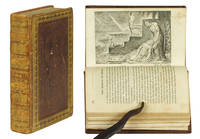
18061087301806. London: J Johnson 1806. <br /> <br /> 2 vols. 4to xviii 423 4 index and plate list; iv 419 6 index and plate list pp with 40 hand-coloured plates in both vol I and vol II as called for plus hand-coloured title page to vol I and coloured vignette to both volumes. 16 of the plates and the two title page vignettes are by Blake. Contemporary diamond calf with gilt rules and decoration including to spine with general light wear the front cover of vol I rehinged; internally good some offsetting and spotting to reverse of a few plates occasional mild foxing to margins but generally a good clean copy. <br /> <br /> § Second edition revised and enlarged very scarce colored. Stedman's account of the slave rebellion in Dutch Guiana 1772-1777 with 40 hand-colored plates 16 by William Blake. A best-seller in its day and translated many times Stedman's narrative was an important resource for the abolitionist movement across Europe even though Stedman himself was not straightforwardly anti-slavery. Stedman based the text on personal diaries he kept on his travels now held by the University of Minnesota albeit with his numerous accounts of sexual liaisons with free and enslaved women reduced and romaticised. Essick writes that "Stedman's narrative of the brutalities of slavery very probably influenced Blake's own anti-slavery position"; Blake's graphic illustrations of abused slaves infused with human dignity undoubtedly influenced the reading public and advanced the abolitionist's cause. Essick William Blake's Commercial Book Illustrations XXXIII. Bentley Blake Books 499. unknown
18271050781827. London: William Blake 1827. <br /> <br /> Printed in black ink on thick card. Very finely printed in good condition though trimmed very close to the image at the left and right edges once pasted down and thus with traces of mounting on the verso and pencil notes from an earlier collector c. 1950 image and plate mark exactly as per Essick 1DD.<br /> <br /> § Blake's last engraving executed for one of his closest friends. "Blake inscribed the plate lower right with his name and age "A Æ 70." He may have sensed that 1827 could well be the last year of his life but took pride in being capable of pursuing his art and craft to the end. Blake was in fact 69 when he died; perhaps he inscribed "70" on the Cumberland card in anticipation of working on it until he turned that age. At least when considered in retrospect this most unusual inscription contributes to the elegiac and prophetic iconography of the design."<br /> <br /> The images invoke one of Blake's greatest themes-the relationships between time and eternity. Although probably intended as a calling card two books have been located with this card pasted in both written by George Cumberland Jr. Thus it has on occasion been sold as a "bookplate." Examples on card not in Cumberland's book are exceptionally rare and have been presumed to be of the earliest printing and possibly by Blake himself. All other impressions on laid paper most often are posthumous. Thirty-nine examples in all are known to Essick not including examples now untraced of which eight are on card of which one is described as printed in green ink. Essick The Separate Plates of William Blake XXI see entry 1DD for identical measurements but not this copy. Bindman Complete Graphic Works of Blake 654. unknown
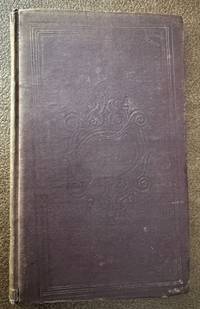
1839368615London: W. Pickering . and W. Newbery 1839. First letterpress edition issue without "The Little Vagabond. xxi iii 74 pp. 1 vols. 8vo. Full green morocco gilt. Fine copy. Circular gilt vellum label of William Twopeny. First letterpress edition issue without "The Little Vagabond". xxi iii 74 pp. 1 vols. 8vo. The first letterpress edition of Blake's Songs of Innocence and Experience preceded only by the small number of copies of the illuminated first edition engraved and colored by Blake. With a laudatory Preface by the Swedenborgian James John Garth Wilkinson 1812-99 who edited and arranged the present volume for publication. Wilkinson worked from Charles Augustus Tulk's copy of the illuminated first edition c.1795-1807; Tulk had previously lent his copy to Coleridge. The work appears in two issues with or without a poem entitled "The Little Vagabound" at page 71 which was supposedly canceled by the editor out of prudishness. No priority has been established<br /> Both issues appear with about equal frequency which is to say not often. Keynes 135; Bentley & Nurmi 161B; Bentley Blake Books 171 W. Pickering ... and W. Newbery unknown
18241245961824. London: I. Poole 1824. <br /> <br /> Small 8vo xxiv 372pp. With an engraved frontispiece 4 full-page engravings including one by Blake 8 hand-colored botanical plates 8 plates of engraved music a calendar with an engraved title-page and 6 plates and 12 blank leaves titled "Album 1825" recorded by Keynes but not noted in other copies we have had. Publisher's original full brown calf central panels on both covers blind-stamped within a richly gilt border backstrip with four raised bands gilt-decorated lettered REMEMBER ME slightly scuffed and small black splotch ink on lower cover occasional small spots on plates as usual a very good copy of a de luxe issue binding on the first of three editions of the book.<br /> <br /> § First edition first issue of the book no state variance in the plate with a very early pencil inscription from one woman to another illegible repeated on the next leaf. One of the rarest of all of the plates designed and engraved by Blake. There was a reissue dated 1826 as part of the title probably published late in 1825. The plate titled 'The Hiding of Moses' was the last plate designed and engraved by Blake himself for a commercial publication; the original drawing 'Moses placed in the Ark of Bulrushes' which closely echoes a tempera now untraced that was executed some 25 years earlier is in the Huntington Library. Bentley BB 490B. Easson and Essick WBBI Vol. I XI recording the Rosenwald proof and 3 copies. Keynes Blake Studies XIX recording 7 variants but not mentioning the 1826 printing. Also see Bentley's detailed essay and census of copies in "Remember Me! Customs and Costumes of Blake's Gift Book" University of Toronto Quarterly 80.4 fall 2011: 880-92. Bentley in the U of T Quarterly 2011 noted: "The gift book Remember Me! with Blake's wonderful engraving of the 'Hiding of Moses' was more remarkable for its decorations than for its literary contents. Of the twenty-four copies recorded each differs from the others in the pattern of binding colour of fore-edges endpapers and the decorated sleeve-case. Despite this varied elegance the work had only a modest sale and the same sheets were re-issued in 1825 for the 1826 gift-giving season. This paucity of sales may be related to the fact that the publisher John Poole had little experience of book distribution. His speciality was as a maker of Marble Paper and Fancy Pocket-Books not in selling them.". unknown
182665634London: William Blake 1826. BLAKE William. Invented & engraved by William Blake 1825. London: Published by the Author and Mr. J. Linnell 1874.<br> <br> One of 100 sets printed on india paper. Folio sheets: 20 x 14 inches; 510 x 350 mm. engravings 8 1/4 x 6 1/2 inches; 209 x 158 mm. Line-engraved title and twenty-one line- and stipple-engraved plates by and after Blake. Also with an additional letterpress title-page not issued with the book. Printed from the original plates. Evidence of the word proof on the lower edge of engravings number 5 7 8 10 11 12 14 18 and 20.<br> <br> Bound in quarter reverse calf over black cloth. Spine lettered and ruled in gilt. With black and red morocco spine labels lettered in gilt. Marbled endpapers. Corners a bit bumped and cloth lightly scuffed. Sheets mounted on stubs. A bit of very light foxing to some of the sheets generally not affecting engravings mainly title-page sheet and sheet of plate 20. Plate 14 with the mounting sheet trimmed at top margin about 1.5 inches not affecting plate. A fine strikingly clean copy of "Blake's most widely known achievement" Keynes.<br> <br> The engravings were commissioned by John Linnell on March 25 1823. Despite the date 1825 on the engravings the plates were not actually issued until March 1826. The entire edition consisted of 315 sets: 150 "Proof" sets on India paper and sixty-five on French paper were printed in March 1826 at which time the word "Proof" was removed from the plates and 100 sets were printed on drawing paper see Bentley. Blake's original copperplates remained in the possession of the Linnell family and as late as 1863 Linnell was offering for sale sets of the India-paper and French-paper issues. By 1874 these must have been sold as a further 100 sets of the engravings were printed at that time the present copy is from this set. No more pulls were taken between 1874 and 1919 when the copperplates were given by Herbert Linnell to the British Museum.<br> <br> Linnell's son wrote "My father considered the plates at the last 1874 were as good as they ever were for the work being cut by a graver and not etched it is durable- and is not worn by the printing as is the case with an etching." Bentley Books p. 523.<br> <br> Bentley 421A. Binyon 105-126. Russell 33.<br> <br> HBS 65634.<br> <br> $32500. William Blake unknown
183918535London: William Pickering 1839. First letterpress edition of Blake’s best-loved works which had been available previously only in the poet’s privately printed and unobtainable hand-painted and engraved editions. Edited with a lengthy 18-page preface by the Swedenborgian James John Garth Wilkinson 1812-1899 who used Charles Augustus Tulk’s copy of the illuminated first edition c.1795-1807 to make his selection. This edition appears in two issues with and without a poem entitled “The Little Vagabond†at page 71. The poem was reportedly canceled by the editor out of prudishness. It is not present in this copy. No priority between the two issues has been established. Keynes 135; Bentley & Nurmi 161B; Bentley Blake Books 171 The English poet and dramatist John Drinkwater’s copy with his ownership signature dated 1923 on the front free endpaper and his bibliographical annotations beneath in pencil and his delightful little gilt embossed leather bookplate on the front endsheet. The book also bears the engraved bookplate of Elizabeth Walbridge on the front endsheet. Elizabeth Walbridge was married to S. Cornell Walbridge a major figure in the glass industry in Toledo Ohio aka “Glass City†and an avid book collector in the early years of the Twentieth Century. There is also a contemporary ownership signature on the front free endpaper that is difficult to decipher: possibly “Miss Mare or Miss Marie†and the remnant of a red wax seal beneath the tipped-in Walbridge bookplate. Head and tail of spine very slightly worn spine faintly sunned with covers fading slightly toward the margins otherwise a remarkably attractive and clean copy of this rare and important edition. 8vo original plum cloth. Head and tail of spine very slightly worn spine faintly sunned with covers fading slightly toward the margins otherwise a remarkably attractive and clean copy of this rare and important edition. William Pickering unknown