351 résultats
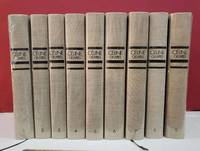
19811150471Club de l'honnête homme 1981. Hard cover. Very good/No jacket. Nine volume set.<br /> <br /> Text is in French.<br /> <br /> For each volume cover is in excellent condition with text and images clear and bright. Binding is tight. Inside is clean and unmarked. Club de l'honnête homme unknown
1961164626Winnipeg Manitoba Canada.: Harlequin Books. 1961. Book. Illus. by Harmon- Good Girl Art Painted Cover. Fine. Soft cover. 1st Paperback Edition 1st Printing;. 12mo - over 6¾ - 7¾" tall. #620 - WHITE DOCTOR Originally titled = Rustle of Bamboo by Celine Conway; 10/1961; FIRST paperback printing; SCARCE; cover by Harmon; Romance; October/1961 Harlequin edition; >> We have A GIANT selection of Harlequin books in stock in many difference grades. If you prefer a different grade ask we might just have it. > Minor cover scuffing; staining to right edge of book spine. Harlequin Books. Paperback
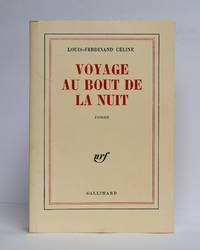
19621117733Gallimard 1962. Hardcover. Very Good. In very good condition. Gallimard hardcover
1952HAY383331952. Paris Gallimard. broché. dos légèrement incurvé et ridé trace de scotch ancien sur le mors supérieur ; papier à peine bruni sinon bon état. fort in-8. unknown
1943HAY373821943. Paris Éditions Denoël. broché. Couverture un peu défraîchie avec quelques traces sur les plats ; dos légèrement gauchi et recollé en pied le long du premier plat ; sous cellophane bon état et intérieur très frais. in-8. avec les 15 dessins pleine page de Gen-Paul. unknown
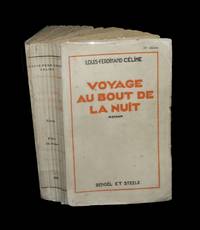
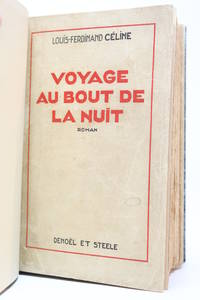
1932316701932. Paris Editions Deno‘l et Steele 1932. Un fort vol. au format in-12 188 x 123 mm de 623 pp. catalogue ÂŽditeur imprimÂŽ sur papier vert d'eau in fine brochÂŽ. ''RÂŽimpression en offset par l'Imprimerie franÂaise de l'ÂŽdition'' parue ˆ la date de l'originale. L'ouvrage recÂle bien le rare catalogue ÂŽditeur in fine imprimÂŽ sur papier vert d'eau. Pour ce premier roman CÂŽline s'inspira principalement de son expÂŽrience personnelle. Il avait en effet participÂŽ ˆ la PremiÂre Guerre mondiale et celle-ci lui rÂŽvÂŽla l'absurditÂŽ du monde allant mÂme jusqu'ˆ la qualifier ÇÊd'abattoir international en folieÊÈ. CÂŽline expose ainsi ce qui est pour lui la seule faÂon raisonnable de rÂŽsister ˆ une telle folieÊ: la l‰chetÂŽ. Il est hostile ˆ toute forme d'hÂŽro•sme celui-lˆ mÂme qui va de pair avec la guerre. Pour lui la guerre ne fait que prÂŽsenter le monde sous la forme d'un gant mais un gant que l'on aurait retournÂŽ et dont on verrait l'intÂŽrieur ce qui amÂne ˆ la trame fondamentale du livreÊ: la pourriture et sa mise en ÂŽvidence. De Benoist Bibliographie internationale de l'oeuvre de CÂŽline B4 pour l'ÂŽdition originale millÂŽsimÂŽe octobre 1932. Quelques piqžres ÂŽparses sur les couvertures. Petit manque angulaire au second plat. Dos passÂŽ. Papier lÂŽgÂrement oxydÂŽ prÂŽsentant en outre quelques rousseurs. DiscrÂte cerne en marge supÂŽrieure des derniers cahiers. Condition nÂŽanmoins satisfaisante. b42961 unknown
19921411362Paris France: Gallimard 1992. First Edition. Softcover. Octavo 505 pages. In Very Good minus condition. Foxing to top edge of textblock on back cover and along spine. Pen writing on pages 3 and 8 from a previous owner. Mild shelf wear otherwise. Shelved in Foreign Languages - France. 1411362. Shelved Dupont Bookstore. Gallimard unknown
1933314143Paris : Éditions Denoël et Steele 1933. Second Edition. Softcover. Poor copy in the original stiff-card wrappers; wear and tear as with age. Text remains in fine condition and without blemish. Physical description; 623 pages ; 19 cm. Subjects; French fiction 20th century. Genres; French fiction - 20th century. Novel. Paris : Éditions Denoël et Steele paperback
1932158019Paris: Editions Denoël et Steele 1932. The author's debut inscribed to one of his earliest and most ardent defenders First trade edition first printing inscribed by the author on the half-title "A mon Marcel Espiau hommage de l'Auteur Louis Céline" together with an autograph letter signed by the author inviting Espiau to dinner to celebrate "the benevolence and the good taste of his jury" our translation. Espiau was instrumental in awarding the Prix Renaudot to Céline for this his debut. Voyage au bout de la nuit was published in October 1932 to immediate and widespread critical acclaim. It was quickly touted as the favourite for the Prix Goncourt and Céline was assured of his victory. In 1926 a group of critics Espiau among them had created the Prix Renaudot while waiting for the nomination of the Goncourt. Though not officially related the juries of both prizes announce the winners at the same time and place on the first Tuesday of November at the Drouant restaurant in Paris. The Renaudot is often considered a consolation prize with the jurors ensuring that they have an alternative laureate in case their first choice receives the more prestigious Goncourt. Voyage did not win the Goncourt that year. In a scandal that fuelled Céline's notoriety the Goncourt was awarded instead to Guy Mazeline's Les Loups. Céline's subsequent fame resulted in 50000 copies of Voyage selling in the following two months. Despite the consensus that the Goncourt decision was a travesty Espiau still had to fight bitterly to have Voyage awarded the Renaudot: it took three rounds of voting for Céline to emerge victorious with a small majority of six votes out of ten. Céline left France almost immediately for a "little medico-sentimental tour of Europe" quoted in Gibault. He was mortified by the loss having been vocally confident of his success and overwhelmed by the attention the affair had garnered his debut. On his return to France he sent Espiau this letter of invitation apparently unpublished. The letter invites Espiau to dine with Céline and the previous winner of the Renaudot Philippe Hériat. The letter is undated aside from a "le 3". Espiau gave continued vocal support of Céline writing in an article for Les Nouveaux Temps in 1941: "I liked Céline straight away the barely dry proofs of his unalterable Voyage au bout de la nuit. I immediately fought for him within a literary panel - the only one who crowned him - and where moreover everyone was quickly won over. a writer of his kind is a blessing from the gods". Céline was grateful for the support sending thanks for the article: "I know you and remain greatly in your debt for the admirable courage with which you defended my first book at the time when the league of Perfect Thinking already had me in a lasso" Letter to Marcel Espiau March 1941. This is the uncommon first printing of the trade issue with the points: "Grande Imprimerie de Troyes" imprint in the colophon "Le Flute Corsaire" advertised on the bottom right of rear wrapper as "Sous presse" and with no imprint below the red frame and a lowercase "m" printed upside down on p. 150 line 10. Some copies although not this one also have the lowercase m on p. 541 line 37 and 8 pages of publisher's advertisements at the rear on grey-blue paper dated 1932; these are not indicative of priority. Octavo. Original white wrappers printed in red and black edges untrimmed. Housed in a custom cream flat-backed box lettered and ruled in red and black imitating the wrappers. Spine lightly sunned two short closed tear to foot of spine and rear corner trivial chip and a few nicks to head front joint a little rubbed contents uniformly toned. Letter folded one nick and one short closed tear a little paper adhered to verso very sharp and bright. A beautiful copy clean and fresh. En français dans le texte 366; Connolly The Modern Movement 74F. Gibault Céline 1932-1944: Délires et persécutions 1985. unknown
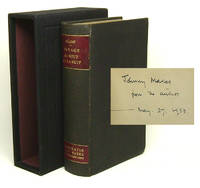
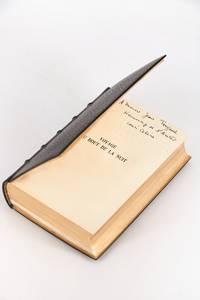
193333339Paris: Editions Denoel et Steele Paris 1933. First Thus. Hardcover. First Thus. Hardcover. Signed by Authors. Celine's legendary First Novel. Inscribed Presentation/ Association Copy of Some Significance. A very early reprint of the first edition published in 1932. 8vo 18.5cm x 12cm. 623pp. A superb presentation inscribed to his friend John Marks who translated this very title into English the following year. A very good copy in a contemporary black buckram binding with titles on the spine in gilt on a maroon panel. There is some off-setting to the endpapers & the cheaper publisher's paper stock has lightly & evenly tanned. A faint stain to the fore-edge. The original card covers are not bound in. The presentation on the first blank reads: Johnny Marks from the author ~ May. 27. 1933. "Celine's Journey to the End of the Night along with Death on the Installment Plan were both very successful in the 1930s & are unique: they come nearer than any other works of the century to creating the illusion of a living infuriated comic vibrant voice. This voice comes off the pages.as though it were the pure real flux of a mind actively working." - Martin Seymour-Smith in Novels and Novelists 1980. A cornerstone of Modern World Literature the publication of this work in 1932 had an immediate impact on author s of the period such as Henry Miller with Tropic of Cancer in 1934 George Orwell with Down and Out in Paris and London in 1935 Henry Green & many others. Connolly: The Modern Movement No. 74. An important Association Copy. Editions Denoel et Steele, Paris hardcover
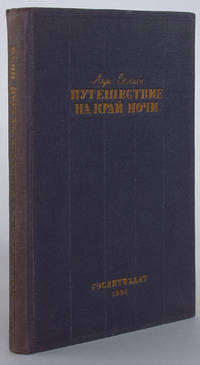
19345727<p><strong>Rare especially in such condition.</strong> </p><p><strong>Second edition of the translation of the novel '<em>Voyage au bout de la nuit' </em>1932 in Russian.</strong> This edition was published eleven months later after the first edition. The new preface was added and the text of the translation was slightly edited. One of 15 000 copies printed. </p><p>As the original publication of the novel became a bestseller Leon Trotsky wrote an article that compared Celine with Rabelais. He invited Elsa Triolet 1896-1970 to translate the novel into the Russian language. She left Russia in 1919 and became Louis Aragon's wife. The novel was published in the USSR with substantive cuts and Celine accused Elsa Triolet and Louis Aragon of distortion of the text. According to François Gibault Celine's biographer the novel was translated by an unknown person in Moscow. Triolet only helped him or her to understand the meaning of some words. After the publication of the novel '<em>Mort a Credit' </em>1936 Soviet critics called Celine '<em>aesthetics of mud'</em>. Russian translations of all of Celine's books were put in the library's special storage section after the publication of pamphlets '<em>Mea Culpa' </em>1936 and '<em>Bagatelles pour un massacre' </em>1937. </p><p>OCLC locates four copies of this edition: in the University of Utah the Vassar College Library the National Library of Israel and the University of Haifa Library. </p> Khudozhestvennaia literatura hardcover
1988C2601Futuropolis-Gallimard 1988. Softcover. Neuf. Relié carton souple 30x23 cm 380 pages. Magnifique livre à l'état neuf n a jamais été lu. Pour l'UE envoi depuis la France sans frais ou taxe douanière ou TVA Futuropolis-Gallimard paperback
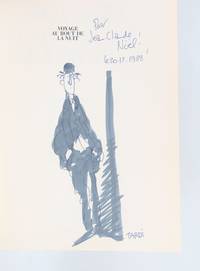
198888339Paris: Gallimard& Futuropolis 1988. Fine. Gallimard & Futuropolis Paris 1988 22 x 30 cm reliure de l'éditeur New edition and first printing of the illustrations by Jacques Tardi. Publisher's full white paper boards smooth spine. Handsome copy. Autograph inscription dated and signed by Jacques Tardi to Jean-Claude Noël enhanced with an original drawing in black felt-tip pen depicting Bardamu standing next to a streetlamp. Gallimard& Futuropolis hardcover
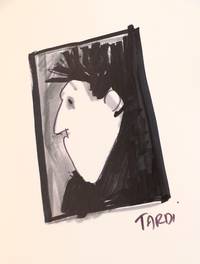
198890031Paris: Gallimard& Futuropolis 1988. Fine. Gallimard & Futuropolis Paris 1988 22 x 30 cm reliure de l'éditeur New edition and the first printing of Jacques Tardi’s illustrations. Publisher’s white boards smooth spine. A handsome copy. Presentation inscription dated and signed by Jacques Tardi to Joëlle Passani with an original black-felt drawing depicting a sorrowful-faced Bardamu in a small vignette.  Gallimard& Futuropolis hardcover
19321144450Denoël et Steele 1932. Hard cover. Fair/No jacket. French text. Printed the same year as the first edition and rebound by previous owner. Book is in good condition for its age.<br /> <br /> Cover boards are worn particularly along edges and corners. Binding is tight but front hinge is cracked. Fore edge of text bock is stained not visible on pages. Title page is lightly stained not affecting legibility of text. All other pages are clean and unmarked. Denoël et Steele unknown
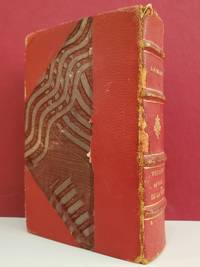
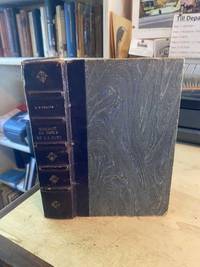
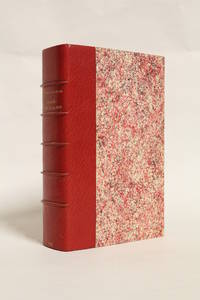
193253776Denoel et Steele Paris 1932. First Edition. Hardcover Quarter Leather. Fair Condition. Size: 12mo 6 3/4 - 7 3/4". 623 pp. Text is in French. Hinges cracked. Spine cocked with splits to tops of both joints. Top of spine coming away. Foxing front/rear pages. Pages browned. Edges foxed and browned. 167-170pp loosening. Covers worn. Corners bumped. Rebound in quarter leather with marbled board gilt and raised bands to spine. Quantity Available: 1. Shipped Weight: Under 1 kilogram. Category: Fiction; French Language; Biography & Autobiography. Pictures of this item not already displayed here available upon request. Inventory No: 53776. . Denoel et Steele hardcover
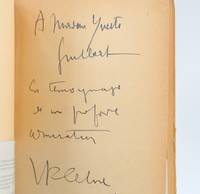
193288966Paris Paris: Denoël & Steele 1932. Fine. Céline gifts his Voyage to the queen of Paris Music Hall and tries to get her to sing his bawdy tunes Denoël & Steele Paris Paris 1932 12 x 19 cm Broché sous chemise et étui First edition with all first printing features one of the press copies. Exceptional presentation copy inscribed by the author to the famous singer Yvette Guilbert to whom Céline himself sang and offered one of his scandalous compositions Katika la putain Katika the Whore later renamed À Nud coulant With a Slipknot"" ""A madame Yvette Guilbert en témoignage de ma profonde admiration. LFCéline. Beneath Céline's inscription the actor Fabrice Luchini added: A Yvette Guilbert in memoriam. FLuchini ; and on the half-title actor Jean-François Balmer wrote in turn: Merci en bon voyage. JFBalmer. With pasted-in entry tickets to their respective performances of Voyage au bout de la nuit at the Comédie des Champs-Élysées for Luchini and at the Théâtre de luvre for Balmer. This remarkable presentation copy reveals Céline's consuming passion for the musical attributes of language. Song is omnipresent in Voyage au bout de la nuit from its famous epigraph the well-known Chanson des Gardes suisses which Céline would later claim to have written himself. The book's title derives from one of the song's verses. Céline was also a songwriter and even performed two of his own compositions: Règlement and above all À Nud coulant a bawdy tune he first presented as a translation of a Finnish folk song. He composed À Nud coulant after the publication of Voyage during the writing of Mort à Crédit Death on Credit between 1934 and 1936 and recorded it in 1955. Arnaud Marzorati noted Célines impossibly deep voice and confessed to being captivated by his deliberate arrythmia. As if the rhythm of life could be chaotic and not tied to the mere beating of the heart; as if he sought to tell his story with a pulse outside of consensus. Program May 16 2013 Les Chansons de Céline Cité de la musique. But before recording the song himself Céline had the audacity to offer this scandalous song to the great Yvette Guilbert in the 1930s. As Michaël Ferrier notes Céline would spend his life seeking the friendship of the stars of his time - some now forgotten Guy Berry Max Révol Alfred Pizella others more memorable like Michel Simon or Arletty to whom he dedicated a piece Arletty jeune fille dauphinoise in 1948 many built their careers on operettas both staged and filmed. This passion for song no doubt traces back to Célines childhood: the Passage Choiseul where his mother kept a lace shop was home to Offenbachs Théâtre des Bouffes-Parisiens and a gramophone dealer. Télérama special issue June 2011. Célines close friend the painter Henri Mahé recounted the memorable evening when Céline unsuccessfully offered À Nud Coulant to the singer. Whether it was on this musical occasion that Céline gifted his Voyage to the queen of the Parisian music hall remains unknown: Why did the great Yvette Guilbert one day invite him to visit her at home He leapt at the chance! She introduced him to Cécile Sorel the unforgettable Célimène. Overjoyed he promptly sang them his brand-new Katika. The compliments were brief and tepid barely courteous. No! They had something else in mind. A film a screenplay he was to write based on their ideas: two sisters triumphing on stage One on official stages across the globe the other in the worlds music halls. Henri Mahé La Brinquebale avec Céline p. 72. This extraordinary copy contains inscriptions by two renowned interpreters of Célines prose - actors Fabrice Luchini and Jean-François Balmer both of whom have brought to life the musicality of the Voyage. Denoël & Steele unknown
1942993Y6Paris : Les Editions Denoel 1942. Cloth. Very Good Indeed. 8.5" by 5.5". Not Stated . A new edition of Louis-Ferdinand Celine's award-winning first novel complete with fifteen full-page drawings. New edition. Rebound in quarter cloth with marbled paper covered boards.Illustrated with fifteen full-page drawings by Gen-Paul. Collated complete.'Voyage au Bout de la Nuit' 'Journey to the End of the Night' is the first novel from French novelist Louis-Ferdinand Celine. A semi-autobiographical work following the adventures of Ferdinand Bardamu in World War I colonial Africa the United States and the poor suburbs of Paris.The novel won the Prix Renaudot in 1932 but divided critics due to the author's pessimistic depiction of the human condition and his innovative writing style based on working class speech slang and neologisms. It is now widely considered to be one of the greatest novels of the twentieth century. Rebound in quarter cloth with marbled paper covered boards. Externally very smart with rubbing and slight bumping to the extremities. Internally firmly bound. Pages are age toned but generally clean with a couple instances of spotting to the margins. Small closed tear to first illustration. Very Good Indeed Les Editions Denoel hardcover
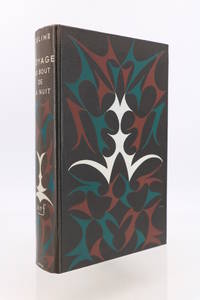
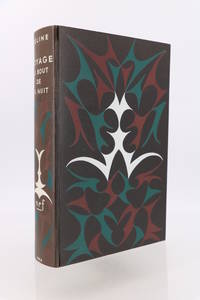
195291740Paris: Gallimard 1952. Fine. Gallimard Paris 1952 13.6 x 22 cm Reliure de l'éditeur First Gallimard edition one of 1050 numbered copies printed on Alfama du Marais paper.Publishers boards bound after the original design by Paul Bonet.A very fine copy. Gallimard hardcover
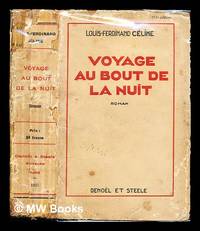
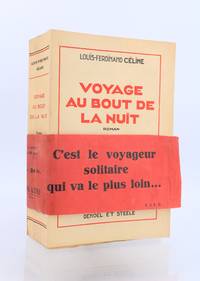
193291201Paris: Denoël & Steele 1932. Fine. ""Unprejudiced minds will have to bow before the integrity of his testimony"" publisher's band Denoël & Steele Paris 1932 12 x 19 cm Broché First edition on ordinary paper with all the features of the first printing. Includes its publishers band expertly restored and the publishers catalogue at rear. An exceptionally fresh copy preserved with its rare red publishers band quoting Mollys phrase Cest le voyageur solitaire qui va le plus loin he travels farthest who travels alone translation by John H. P. Marks followed by this text on the verso: One should not be misled by the tone of this extraordinary novel and take Journey to the End of the Night for a pamphlet by the violence of its sarcasm as well as its ever-present and particularly ferocious satire. The author aims to create a very faithful image of urban man with all his implied complexity richness and contradictions. In this book of prodigious variety and vividness he has no other ambition than to approach life: unprejudiced minds will have to bow before the integrity of his testimony translation our own. From December 1932 copies sported a new band printed on green paper: Un formidable / succès / Prix Théophraste Renaudot. Denoël & Steele unknown
193291871Paris: Denoël & Steele 1932. Fine. Only deluxe presentation copy motivated by ideological conviction Denoël & Steele Paris 1932 12 x 19 cm Relié sous chemise et étui First edition one of the deluxe copies on alfa this one an unnumbered hors commerce only deluxe issue after 10 copies on Arches. Full blue-gray morocco binding spine with five raised bands gilt date at foot yellow box calf doublure watered silk free endpapers original wrappers including spine bound in all edges gilt half morocco chemise in panels wood motif paper boards slipcase edged in morocco wood motif paper boards lined with blue felt outstanding binding signed Hélène Alix. Unrecorded presentation copy signed and inscribed by Louis-Ferdinand Céline to Belgian pacifist writer Jean Tousseul. Handsome copy housed in a fine doublure morocco binding by Hélène Alix in perfect condition despite the foxing-prone Alfa paper. Jean Tousseul pen name of Olivier Degée 1890-1944 is one of the most singular figures in Belgian Francophone literature of the interwar period: he was at once a self-taught writer from the working-class world of the Meuse quarries a militant journalist and a committed socialist and pacifist. He served four months in prison in 1918 for his anti-militarist articles receiving at the time the public support of Romain Rolland. Tousseul contributed to Barbusses journal Monde and published his work in Paris with the publisher Rieder. By 1932 he was a recognised author in pacifist and proletarian circles on both sides of the Franco-Belgian border. His major novel on the First World War which appeared a few months after Célines Voyage springs from the same terrible reckoning: La Rafale constitutes an objective testimony a powerful and meticulous document on the war and the disarray of minds that resulted from it. Jean Tousseul condemns recourse to war but fears that it may long remain attached to the flank of a humanity still in the grip of its elementary instincts. This analysis by Désiré Denuit might well have been borrowed from the finest studies of Célines masterpiece. In 1937 Jean Tousseul was awarded the Prix Triennal de Littérature belge for Le Masque de Tulle. During the war he refused collaboration with the occupying forces and died in 1944. This unrecorded Céline presentation copy to Jean Tousseul who does not appear in any Céline biography on one of the most precious issues of the first edition is nonetheless beyond the promotional and commercial imperatives that motivated the distribution of luxury copies a unique testament to the humanist conviction that presided over the writing of Voyage au bout de la nuit. it all began just like that Few were those who immediately recognised the importance of the novel. Céline the writer who was still known as Dr Destouches had offered his manuscript to Gallimard Bossart and Figuière before approaching Denoël et Steele. The latter was the only publisher to show genuine enthusiasmthough without the resources to ensure adequate promotion. The initial print run was accordingly cautious: 200 press copies printed on 12 October 1932 followed the next day by 20 on Arches and 95 on Alfa paper according to the printers archives. The 3000 ordinary copies of the first edition were printed between 15 October and 3 November. It was only after the award of the Prix Renaudot that more than 100000 further copies appeared with the textual variants that are now well documented. one can never be sufficiently defiant with words Céline sent several press copies to close friends such as Abel Gance to leading critics including Georges Bernanos to figures of influence such as André Breton and to artists he admired among them the singer Yvette Guilbert. Then as the books success grew to new acquaintances. He reserved very few deluxe issue copies for his inner circle. These were destined primarily for members of the Prix Goncourt jury and a handful of influential journalists. T Denoël & Steele hardcover
195292050Paris: Gallimard 1952. Fine. Gallimard Paris 1952 13.6 x 22 cm Reliure de l'éditeur First Gallimard edition one of 1050 numbered copies on alfama du marais paper.Publisher's boards executed after the original design by Paul Bonet.Spine slightly faded as often encountered two neatly repaired splits at the head and foot of one joint Gallimard hardcover
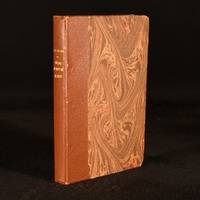
193271871Paris: Denoël & Steele 1932. Fine. Denoël & Steele Paris 1932 12 x 19 cm relié First edition printed on ordinary paper with all the points of the first printing present. A pleasant copy complete with the publisher's catalogue bound at the end. Bradel binding in full grey paper with abstract patterns smooth spine grey mouse morocco label original wrappers and spine preserved though soiled three restored losses at foot of spine binding signed by Thomas Boichot. Denoël & Steele unknown
2000Q-2070360288Assimil Gmbh 2000-02-01. Mass Market Paperback. New. New. In shrink wrap. Looks like an interesting title! Assimil Gmbh paperback
193269416Paris: Denoël & Steele 1932. Fine. Denoël & Steele Paris 1932 12 x 19 cm relié First edition on ordinary paper with all the characteristics of the first print. Binding in half red morocco preserved covers and spine first cover plate and lined spine with restorations top edge gilt binding signed by Laurenchet. Nice copy with the publisher's catalog in fine. Denoël & Steele unknown