314 résultats
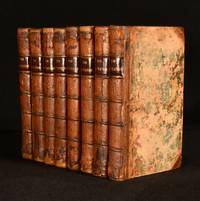
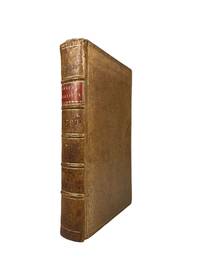
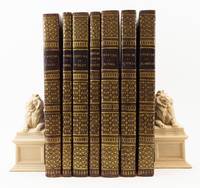
1800ST17757London: William Miller; T. M'Lean; William Bulmer 1800-18. 370 x 270 mm. 14 1/2 x 10 1/2". Seven volumes. <br/> Uniformly bound in stately contemporary dark burgundy straight-grain morocco covers with gilt palmette-and-wheat-sheaf border inner frame of blind-stamped grapevine raised bands spine compartments densely gilt with repeating botanical tools gilt lettering gilt-rolled turn-ins all edges gilt. Two engraved titles with hand-colored vignettes not included in plate count and 356 FULL-PAGE HAND-COLORED PLATES FEATURING COSTUMES OCCUPATIONS AND SOCIAL INTERACTION OF VARIOUS NATIONS. Volume I-III V and VI with text in French as well as English. Front pastedown with armorial bookplate of Edward Gordon Douglas-Pennant 1st Baron Penrhyn. Abbey Life 430; Abbey Travel 71 244 370 373 532 533. Joints and extremities lightly rubbed one board with a couple of faint scratches two rear boards with neat older repairs to short tears at tail edge but the bindings quite sound and most attractive on the shelf. Flyleaves a little foxed minor offsetting from plates to text leaves occasionally more pronounced but never offensive isolated minor marginal foxing to plates otherwise very fine WITH CLEAN BRIGHT PLATES.<br/> <br/> This is a collection of major early 19th century color plate books with well-drawn and richly-colored engravings in bindings that make a handsome appearance on the shelf. All of these works have appealing plates where the costumes of the various social strata are carefully and colorfully delineated. And two of the volumes--those showing British costumes and the book on Chinese punishments--contain in addition a good deal of diverting background detail that serves as a revealing context for each of the costumes depicted. The content of each of the volumes is worth noting. With a few exceptions the plates in the "Costumes of China" portray ordinary working-class men and women toiling at their trades. We see a bookseller with his wares spread out on a mat women sewing and embroidering a butcher a fisher a barber a man with a "magic lantern" show and a "man striking a small gong during an eclipse" an ancient ritual that the author tells us he was privileged to witness on 17 November 1789. The "Punishments of China" volume is filled with almost gleefully painful depictions of all degrees of disciplinary action from the relatively minor twisting of the ears or chaining to an iron pole to the humiliating ordeal of the wooden collar to methods of execution by beheading or by crucifixion using a cord. The opulent and brightly colored costumes in Dalvimart's volume on Turkey are mostly those of the ruling classes although also represented is a wide variety of native dress from the many regions of the vast Turkish empire of the day which included Bosnia Albania Syria Egypt and parts of Greece. It is particularly interesting to contrast the clothing of the very heavily veiled Turkish and Egyptian women with the much more relaxed style of the Greek women and the nearly immodest garb of the female Bedouin. We also are shown a eunuch an odalisque from the harem a grand vizier various royal functionaries and government officials all splendidly attired. The Russian costumes based on engravings done by C. W. Müller at the request of Empress Catherine the Great are focused on the ethnic dress of the empire's many holdings. The Laplanders and Finns wear clothing that would look familiar to most Europeans but the Mongols in their Oriental dress would be quite exotic. The clothing of the northern tribes such as the Kamchatkans Aleutians Koriaks and Tungoosi will impress the modern reader with their similarity to the traditional dress of Native American and First Nation peoples. The Tchutski woman is even depicted naked to display her tattoos. Bertrand de Moleville's Austrian costumes also illustrate the native dress of the empire's citizens but the illustrations here are less fashion plates than romanticized scenes: peasant couples are shown courting and dancing; Croatian women gossip beside a stream; and a wild-haired Bohemian gypsy whose "profession is not hard to guess" from her state of "déshabillé" flees with her naked and no doubt illegitimate child. Pyne's "Costumes of Great Britain" is one of the most highly praised works in this set and for good reason: the simple working men and women of Britain it depicts are always shown going about their daily tasks in the midst of a well-realized scene. The woman selling "salop" a hot morning beverage is seated at her cart with its urn judiciously located by the watchman's stall surrounded by customers including soldiers and a woman with her market basket. A fireman with an ax and a torch hurries toward his engine company while they unwrap their hose. The potter is at his wheel the tanner is cleaning skins and the bill-sticker posts the winning lottery numbers. The clothing while carefully detailed is almost secondary to the depictions of everyday life. The "Military Costumes of Turkey" illustrates the official regalia "uniform" is much too drab a word for these outfits worn by officers in various regions of the empire. Perhaps the most intriguing plate here is that of the Ladle Bearer a post that was also illustrated in "Costumes of Turkey." What appears to be a man with a giant spoon is in fact the holder of an important military position equivalent to the color-bearer in a western army. We are told that the loss of its ladles is the greatest disgrace that can befall a Turkish regiment: if the two great ladles the size of a grown man that are borne into battle at the head of the troops are captured the regiment must be disbanded and formed anew. Former owner Edward Gordon Douglas-Pennant 1st Baron Penrhyn 1800-86 was a leading figure in the Welsh slate industry; he owned the Penrhyn Quarry the largest slate quarry in the world at the end of the 19th century. He was known for his paternalistic attitude to his employees creating the "model village" of Llandegai to house the quarry workers. It was notable for having "no corrupting alehouse." He was ruthless enough to fire 80 men in 1868 because they did not vote for his son George who was running for a seat in Parliament. Single volumes from this set appear with frequency in the marketplace; full sets show up much less often; sets as handsome and well preserved as the present are rarely seen. William Miller; T. M'Lean; William Bulmer unknown
178123404EN MADRID: En la Imprenta de Don Antonio de Sancha 1781-1782. Folio menor.- Encuadernación posterior de principios del siglo XIX a media piel lomera con texto filetes y florones y dorados.- 3 obras encuadernadas en 1 volumen.- I: Games Gutierre de 1782. Crónica de Don Pedro Niño. Conde de Buelna por. su alférez. La publica Don Eugenio de Llaguno Amirola.- VIII de Portada y El Editor.- 2 hojas Tabla.- 236 páginas.- Palau 56377 y 73771 - Aguilar Piñal V-1987.- II: Argote de Molina Gonzalo - Silva y Figueroa García de 1782. Historia del Gran Tamorlan e itinerario y narración del viage y relación de la embajada que Ruy González de Clavijo le hizo por mandato del muy poderoso Señor Rey Don Henrique el Tercero de Castilla: y un breve discurso hecho por Gonzalo Argote de Molina para mayor inteligencia de este libro. Segunda impresión. A que se ha añadido la vida del Gran Tamorlan sacada de los comentarios que escribió Don García de Silva y Figueroa de su embajada al Rey de Persia.- XIII de Portada El Editor y Dedicatoria a Antonio Pérez.- 248 páginas.- Palau 56377 y 313611 - Aguilar Piñal V-1988 la separata.- III: Llaguno de Amirola Eugenio de 1781. Sumario de los Reyes de España por el despensero mayor de la Reyba Doña Leonor muger del Rey Don Juan el Primero de Castilla con las alternaciones y adiciones que posteriormente le hizo un anónimo. Publicado por. .- VIII de Portada y El Editor.- 95 páginas.- Palau 56377 - Aguilar Piñal V-1986. El texto de Gonzalo Argote de Molina llega hasta la página 220. A partir de la siguiente sigue de la mano de García de Silva ""Noticia del Gran Tamorlan sacadas del libro V de los comentarios Mss de Don García de Silva de la Embajada que de parte del Rey de España Felipe III hizo al Rey Xaabas de Persia. Año de 1618."" Palau indica que existen separatas de estas últimas 48 páginas. Hay una segunda edición de los dos textos de 1903-1905 y también se tradujo al francés. Muy buen ejemplar. En la Imprenta de Don Antonio de Sancha unknown
179961804Leipzig Jacobaeer 1799. 8vo. In contemporary half calf. Light wear to spine otherwise a nice and clean copy. X 358 1 pp. <br/><br/><em>Rare work containing various papers on agricultural and farming techniques and practices inspired by English agriculture. Goldsmiths-Kress 17574 </em> unknown
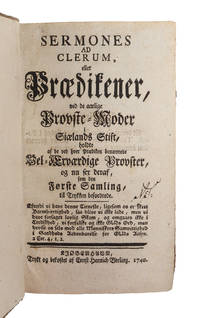
174662227Kjøbenhavn Berling 1740 - 1746. 8vo. In contemporary half calf with four raised bands. Wear to extremities. Last blank leaf closely annotated in contemporary hand. Internally nice and clean. 16 240 4 243 5 187 5 152 pp. <br/><br/><em>Biblioteca Danica I 470. </em> hardcover
177746131Leiden: C. van Hoogeveen Jr. 1777-1783. 7 brochures. 8vo 22x13 cm. Without wrappers but in good condition uncut. - Rare set 1779 is not present of New Year's greetings put into rhyme. C. van Hoogeveen Jr. unknown
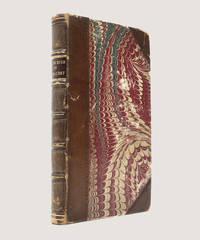
1753856P6London: J. and R. Tonson and S. Draper c1753. Leather. Good. 7" by 4". Not Stated. A complete set of the popular short-lived periodical by Joseph Addison and Richard Steele complete with a frontispiece to each volume. Complete in eight volumes.Illustrated with a frontispiece to each volume.'The Spectator" was a daily publication than ran from 1711 to 1712 created by Joseph Addison and Richard Steele. It was widely read despite its modest circulation including being read by James Madison when he was a teenager.Richard Steele was an Irish politician and playwright. He was a member of the Kit-Kat Club an English Whig club with strong literary and political associations. His first successful play was 'The Funeral' which was performed at Drury Lane.Joseph Addison was an essayist politician and playwright. He also held form the Kit-Kat Club which renewed his friendship with Richard Steele whom he at met at Charterhouse School. His most famous work was 'Cato a Tragedy' a successful play about Marcus Porcius Cato Uticensis.Addison and Steele founded several publications during their friendship including the literary and social journal "Tatler" which published from 1709 to 1711. Steele also founded the short lived "The Guardian". None of these publications are related to the modern day ones which share their same names. In a half calf binding with marbled paper to the boards neatly rebacked with the original boards and spines restored. Externally rubbed mostly to the boards. Minor bumping to the extremities. Discolouration to the extremities. Crack to the rear joint of Volume I. Backstrips are worn with some loss and surface cracks repaired with the rebacking. Cracks to the joints of Volume II III V VI and VII. Front hinge of Volume III is strained. Front hinge of Volume V is starting but firm. Stain to the bottom edge of Volume VII affecting the text. Internally firmly bound Volume VII is weak and textblock may fail even with careful handling. Pages are lightly age-toned and generally clean with scattered spots a little heavier to the first and last few pages. Good J. and R. Tonson and S. Draper hardcover
1791mon0003166971Philadelphia: Carey Stewart & C 1791. Single Issue Magazine. Good. . Single issue without original wraps that looks like it was once bound together with others. Shows minor wear tanning. Philadelphia: Carey, Stewart & C unknown
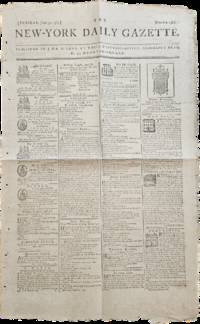
1789List2972New York City: J. & A. M’Lean 1789. Four pages measuring 12 ¼ x 9 ½ inches. Marginal holes folded with tear at central fold; else fine. The New-York Daily Gazette was a newspaper published by J. and A. M’Lean publishers best known for being the first to publish the collected Federalist papers in 1788. Of special interest in this edition of the Gazette are reports on the early days of the French Revolution and relations with Indigenous peoples in Ohio and an advertisement for a reward of $16 for the return of two escaped enslaved men.<br /> <br /> In France at the time the Estates-General—wherein the National Assembly was formed—had just disbanded and the Bastille had not yet been stormed. The Gazette’s report is baffled at the severity of violence in the country:<br /> <br /> “There never was known in the history of that country such tumults as have arisen within the last few weeks throughout almost all the Provinces. We may suppose that from the frenzy which has seized the people that the scarcity of grain must have been nearly equal to a famine or that there has been gross neglect in the inferior offices of governments. It is however not impossible but that this scarcity has been in some instances the plausible pretext for committing violences which might originate in other causes. It is well known that the most unhappy seditions exist in many places on the difference of opinion in the mode of convening the States General of the kingdom. . At Alix several people lost their lives. The town-house was attacked the public corn magazines broke open and the military put to flight. But at Aulps the tumults were most outrageous and we are now confirmed in a report which at first seemed incredible that at this latter place the mob killed the Chief Magistrate of the town by name Montserra in the most barbarous manner. They broke open his house and having seized his person tore him limb from limb after dragging him along the streets as a sight.â€<br /> <br /> The situation is violent back in the States as well. A report from the “Western Territoryâ€â€”here referring to the land that would become Ohio— tells of the “very hostile appearance†of the “Indians . in that quarterâ€:<br /> <br /> “a Captain King belonging to the New England settlers had been murdered by a party of them about fifteen days previous to his departure near the mouth of the Hockhocking river as he was reconnoitering some ground for the purpose of laying off a town and that Captain Brandtt sic is a leading instrument in endeavouring to rouse his yellow bretheren to commit depredations on the white inhabitants.â€<br /> <br /> New Englanders the first Euro-Americans to settle Ohio had begun to do so only a year prior when Ebenezer Sproat Rufus Putnam and others established the town of Marietta. By “Captain Brandtt†the Gazette is likely referring to Thayendanegea also known as Joseph Brant 1743–1807 a Mohawk political and military leader who allied with Great Britain during the American Revolution. Thayendanegea had recently met in Michigan with leaders from a number of Indigenous nations and released a declaration that the Ohio River would be the eastern boundary of their territory.<br /> <br /> Lastly an advertisement promises a $16 reward for the return “home†of two fugitive enslaved men:<br /> <br /> “Run away from the subscriber living near the Long Calm Fork of Gunpowder on Sunday the 31st of May to young NEGRO MEN one named Harry about 26 years of age five feet seven or eight inches high straight and well made has a down look when spoke to and is very lively . NATT about 23 years of age five feet ten or eleven inches high a little bow legged and very active has lost one of his upper fore teeth has a bold look and is rather talkative . neither of them very black both fond of drink particularly Natt who is impertinent and quarrelsome when in liquor; they are sensible artful fellows and will probably endeavour to pass for free Negroes.â€. J. & A. M’Lean unknown
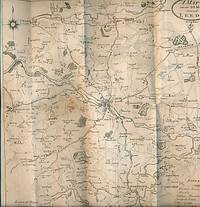
1797e9983Leeds: Printed and sold by all Booksellers. G : in good condition. Lower board rubbed. Tape repair to map. Book-plate on paste-down. 1797. First Edition. Half leather marbled board cover. 150mm x 100mm 6" x 4". 187pp 3pp; 33pp. Fold out plan and engraving. . Printed and sold by all Booksellers hardcover
178735890London: Harrison and Co 1787. Hardcover. Very Good. Hardcover. First edition of James Harrison's eight volume compendium of important eighteenth century periodicals with essays by such figures as Samuel Johnson Richard Steele Joseph Addison George Lord Lyttelton Launcelot Temple Isaac Bickerstaff and Adam Fitz-Adam among others. As is evident in the reprinting of these essays letters and newspaper issues the eighteenth century was a time of great knowledge exploration rapidly growing technology and expanding archives of information made possible by advances in the printing press. Bound in contemporary leather in generally very good condition. Interior pages have spotting and foxing scattered throughout the eight volumes. An occasional loose page. Still very good. <br /> Volume I: Samuel Johnson's "The Rambler" in four volumes with 463 pages; and George Lyttleton's "Letters from a Persian in 81 pages. Volume II: "The Adventurer" - a newspaper with 140 issues that continued Samuel Johnson's prose with 366 pages. Volume III: "The Tatler" written by Isaac Bickerstaff in four volumes with 641 pages. Volume IV: "The Spectator" written by Joseph Addison and Richard Steele volumes 1-4 with 646 pages. Volume V: "The Spectator volumes 5-8 with 1260 pages. Volume VI: "The Connoisseur" written by Mr. Town with 313 pages; "The Citizen of the World" written by Oliver Goldsmith in two volumes with 208 pages; "The Babler" written by Hugh Kelly in two volumes with 199 pages. Volume VII: "The World" with 490 pages; Lord Lyttleton's "Dialogue with the Dead" with 96 pages. Volume VIII: "The Idler" written by Samuel Johnson with 146 pages; "Fitzosborne's Letters" with 124 pages; "Launcelot Temple's Sketches: with 45 pages; " The Lover" by Richard Steele with 86 pages; "Essays on Men and Manners" written by William Shenstone with 80 pages. LIT/080422. Harrison and Co hardcover
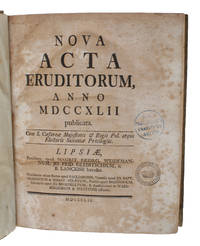
174246015Leipzig Grosse & Gleditsch 1742. 4to. Contemp. full vellum. Faint handwritten title on spine. Two small stamps on titlepage. In: "Nova Acta Eruditorum Anno MDCCXLII". Occassional brownspotting. The entire volume offered. 4 720 33 pp 6 engraved plates. <br/><br/><em>First edition of the 1742-edition of Nova Acta Eruditorum which are including two reviews of Voltaire and one of Newton's Principia. </em> hardcover
17643924Paris Grenoble and elsewhere 1764. Very good. Contemporary mottled calf; spine tooled in gold; red edges; marbled endpapers. The first Grenoble imprint lacking the first leaf half-title; both Grenoble imprints cropped close just shaving some text; occasional light foxing. Text block splitting from the bottom between two of the pamphlets roughly two-thirds into the volume. Modern armorial bookplate on the front paste-down. Later perhaps early 20th-century handwritten table of contents tipped in at front. An attractive Sammelband suitable for exhibition and study. SAMMELBAND OF 30 ANTI-JESUIT TRACTS ATTESTING TO THE "INTRACTABLE" RELATIONS BETWEEN THE FRENCH STATE AND THE JESUITS DOCUMENTING THE OFFICIAL SUPRESSION PROCESS. <br /> <br /> The earliest documents beginning in 1761 and running into 1762 demonstrate the French government's early steps toward suppression. Many of these edicts demand copies of the order's Constitutions for inspection. Of course it's clear the authorities had already made up their minds evidenced too by their numerous judgments against Jesuit books which appear to have provided abundant bonfire fuel in palace courtyards across the country. We find plenty of references to the Jesuits being kicked out of their homes the confiscation of their property and much on the closure of their schools and plans for their continued operation under state-sponsored control. The penultimate document in our volume is the French king's final blow to the Jesuit order followed by a final edict outlining conditions of Jesuit resettlement in France. If you're expecting sanitized administrative legalese from these documents the amount of invective animosity and hatred may surprise you. Endless referrals to the "so-called Jesuits" underscore a perception that the order must hardly be aligned with the teachings of Jesus. Grievance-laden dressing-downs are ubiquitous. The devastation to Jesuit lives seen here was enormous. Our brief commentaries below merely scratch the surface of what these contain. <br /> <br /> ¶ The suppression of the Jesuits was a global phenomenon that began with their expulsion from Portuguese territories in 1759. From there it spread not simply through the European continent but through its countries' vast overseas empires. The final blow landed with a papal decree of 21 July 1773 though the Jesuits found some sympathetic European pockets where they managed to continue their mission. The order's official restoration was enabled by a papal decree in 1814 from which the Jesuits eventually regained their European footing. <br /> <br /> ¶ The depths of blame for Jesuit suppression has been endlessly plumbed by scholars. The Enlightenment is an oft cited factor as was fear of outsize political influence from Rome and royal desires to seize control of Jesuit revenue sources. "Whichever way one analyses the surviving evidence any attempt to provide a single all-embracing explanation of the destruction and ultimate suppression of the Society is fruitless: there was a whole host of reasons which curiously coalesced into a wider international phenomenon" Whitehead. <br /> <br /> ¶ In France groundwork for Jesuit antipathy had been laid by a deep long-standing theological tension between them and the Jansenists. But everything came to a head with the well intentioned but ill advised trade dealings of one Father Lavalette in Martinique. In trying to improve the condition of his overseas community he found himself hopelessly indebted to French creditors. The Jesuits tried to cover the debts themselves but eventually found themselves in French courts. A Jesuit appeal to the French parlement stacked with individuals not favorably disposed to them was a fatal mistake. "The protracted court proceedings lasted from April to August 1761 and were to prove immensely damaging for the Jesuits as the Society's Institute was examined and ultimately denounced. During the winter of 1761 and the spring of 1762 the parlement of Paris and the fifteen provincial parlements of France deliberated independently on how to deal with the future of the Jesuits within their respective jurisdictions." This decentralized approach to their suppression is vital context for the broad geographic coverage of the volume here. "Enormous power struggles took place in various parlements but the detailed debates of their members were rendered largely irrelevant when on 1 April 1762 the parlement of Paris having found against the Society of Jesus forced the Jesuits to leave the thirty-eight colleges within its jurisdiction" Whitehead. Some provincial parlements continued to shelter the Jesuits-Artois for example from which we have a 1762 decree here-but Louis XV's edict of November 1764 ordered the Society's complete dissolution. <br /> <br /> ¶ The unusually broad geographic coverage of the volume is impressive. While eleven tracts were printed in Paris nineteen ! come from ten different provincial cities the latter often broadcasting the same language the same grievances and the same judgments as those issued from Paris. Even the spine title hints at the variety of origins: Arrets de divers parts Jesuites. The collection is a telling witness to how demotic anger towards the Jesuits developed into an official campaign of suppression in France.<br /> <br /> CONTENTS OF THE COLLECTION:<br /> <br /> 1. Declaration du roi qui ordonne que dans six mois pour tout délai les supérieurs de chacune des maisons de la Société des Jésuites seront tenus de remettre au greffe du conseil les titres de leurs établissements en France; donné a Versailles le 2 août 1761 - Paris: Pierre-Guillaume Simon 1761 - 8 p.<br /> 2. Arrest de la cour du parlement extrait des registres du parlement du 6 août 1761 - Paris: Pierre-Guillaume Simon 1761 - 16 p. - Opening in part "that the said priests and scholars of the said society Jesuits will be required to deliver within three days to the clerk of the said court a printed copy of the Constitutions of the said society."<br /> 3. Arrêt de la cour de parlement du 6 août 1761 - Paris: Pierre-Guillaume Simon 1761 - 12 p. - On the state examination of Jesuit literature. Includes a lengthy list of controversial Jesuit books with Claude Lacroix's expansion of Hermann Busenbaum's Theologia Moralis singled out: "They will be lacerated and burned in the courtyard of the palace" p. 7.<br /> 4. Arrest de la cour de parlement du trois septembre 1761 - Paris: Pierre-Guillaume Simon 1761 - 16 p. - Concerns the inspection of Jesuit books noting that Orazio Torsellini's "Historiae sacrae & profanae epitome" is also to be lacerated and burned in the palace courtyard p. 6.<br /> 5. Arreté du p. de Paris 26 mars 1762 - Manuscript copy of the printed text - 2 pp. 2 mostly blank pp. - More on Jesuit suppression.<br /> 6. Extrait des registres du parlement du 30 avril 1762 - Paris: Pierre-Guillaume Simon 1762 - 11 1 p. - On the seizure of Jesuit property.<br /> 7. Arrest de la cour de parlement - Paris: Pierre-Guillaume Simon 1762 - 105 1 p. - An extensive overview of Jesuit sins against the state including "dangerous and pernicious assertions of all kinds which the so-called Jesuits have at all times and perseveringly held taught and published in their books" p. 16.<br /> 8. Arrest de la cour de parlement extrait des régistres du parlement du six août 1762 - Paris: Pierre-Guillaume Simon 1762 - 16 p. - In part "concerning the keeping of schools and colleges by others than the aforementioned so-called Jesuits" p. 1.<br /> 9. Arrêt du parlement de Toulouse au sujet des Jésuites extrait des registres du parlement du 5 juin 1762 - Toulouse: Nicolas Caranove 1762 - 24 p. - Like many others opening with the requirement that the Jesuits are to provide a copy of their Constitutions to the court within three days.<br /> 10. Arrest de la cour de parlement qui juge l'apel comme d'abus . de l'institut de la Société se disant de Jesus; fait défenses aux soi-disant Jésuites & à tous autres de porter l'habit de la lite société; de vivre sous les loix de l'institut de ladite Société; d'entretenir aucune correspondance directe our indirecte avec le général & supérieure de ladite société . enjoint aux soi-disans Jésuites de vuider les maisons de ladite société dans quinzaine &c du 26 février 1763 - Toulouse: Widow of Bernard Pijon 1763 - 12 p. - Omitted from the above lengthy title is reference to the multiple the passages on the burning of Jesuit books deemed seditious and contrary to good Christian values p. 2.<br /> 11. Arrêt du parlement de Rouen rendu toutes les chambres assemblées du vendredi 12 février 1762 - Rouen: Jacques-Joseph Le Boullenger 1762 - 24 p. - Again demanding a copy of the Jesuits' constitution for inspection and again with a list of Jesuit books to be lacerated and burned in the palace courtyard p. 19-24.<br /> 12. Arrest du parlement de Rouen du samedi 27 mars 1762 - Rouen: Jacques-Joseph Le Boullenger 1762 - 7 1 p. - Remarks "that there is no way to reform a society that is essentially irreformable which counts among its strange privileges stated in its Constitutions that of being independent in its way of being" p. 3-4.<br /> 13. Arrêt definitif du parlement de Rouen contre les ci-devant soi-disans Jésuites du 21 juin 1762 - Rouen: Jacques-Joseph Le Boullenger 1762 - 19 1 p. - Referencing any government assistance the Jesuits might or might now receive.<br /> 14. Arrest et arretés de la cour de parlement seant a Rouen pour l'exécution des arrêts des 12 février 21 & 28 juin 1762 - Rouen: Jacques-Joseph Le Boullenger 1762 - 31 1 p. - On a letter sent by M. Plesse a Jesuit college official in Caen to the French authorities apparently in response to their indictment.<br /> 15. Arrêt du parlement de Rouen qui ordonne que dans un mois à compter du jour de la publication du présent arrêt tous les prêtres & ecoliers de la ci-devant société qui se disoit de Jesus seront tenus de sortir du royaume à peine d'être poursuivis extraordinairement si ce n'est qu'ils justifiassent avoir quitté ladite ci-devant société avant le douze février mil sept cent soixante-deux &c.; extrait des registres de la cour du 22 mars 1764 - Rouen: Jacques-Joseph Le Boullenger 1764 - 7 1 p. - Declaring that all Jesuits who do not renounce the Society before 12 February 1762 "will be required to leave the kingdom."<br /> 16. Arrest du parlement de Bretagne qui juge l'appel comme d'abus interjetté par Monsieur le Procureur Général du Roi des brefs bulles constitutions &c. concernant les sui-disans Jésuites; extrait des registres du parlement du 27 mai 1762 - Rennes: Guillaume Vatar 1762 - 24 p. - Requesting a copy of the Jesuit Constitutions from its college at Rennes plus more on the Jesuit college there. <br /> 17. Extrait des registres séant a Bordeaux du 8 mars 1762 - Bordeaux 1762 - 7 1 p. - Raises the question: "Does the Jesuit institution tend by its privileges to make this society independent of all spiritual and temporal authority such as it may be Have the views of dangerous politics taken in this institution and this regime the place of those of religion" A copy of the Jesuit Constitution is again requested.<br /> 18. Arrêt de parlement de Bordeaux qui reçoit le Procureur-Général apellant comme d'abus de la Bulle Regimini déclare le régime & l'institut de la société des soi-disans Jésuites attentatoire à toute autorité spirituelle temporelle & incompatible avec les principes & les regles de tout etat policé; & les voeux & faits par lesdits soi-disans Jésuites abusifs téméraires & inconsiderés; fait défense à tous sujets du roi de vivre déformais sous l'empire desdites régles; ordonne qu'au premier août prochain les soi-disans Jésuites vuideront toutes les maisons collèges & noviciats du ressort de la cour dudit parlement; & que lesd. prêtres & ecoliers soi-disans actuellement Jésuites ne pourront être admis à aucun bénefice aucunes charges civiles sans au préalable avoir prêté serment devant un juge royal d'être fidèles au roi de tenir & enseigner les quatre propositions du clergé de France de 1682; & ordonne la saisie & sequestration des biens de ladite société &c.; du 26 mai 1762 - Bordeaux: Jean-Baptiste Lacornée 1762 - 22 p. - The title summarizes the state's grievances against the Jesuits e.g. "incompatible with the principles and the rules of any policed state" and the hardships facing them during their suppression e.g. "priests and students who are currently called Jesuits cannot be admitted to any benefice or civil office without first having taken an oath before a royal judge to be faithful to the king".<br /> 19. Réquisitoire de M. le procureur-général du parlement de Metz au sujet des soi-disans Jésuites - Metz: Joseph Collignon 1762 - 28 p. - More on the Jesuit Constitutions. "The court has no doubt already seen with astonishment the horrible fabric of this body of Constitutions a monstrous work in all its content and which presents a society that one sees at birth humiliate itself" p. 2.<br /> 20. Arrêt du parlement de Dijon contre les soi-disans Jésuites du 11 juillet 1763 - Dijon: Chez Causse 1763 - 12 p. - Again declaring everything about the Society of Jesus incompatible with the French state. "The said court orders that on the first of next October the aforementioned Jesuits remaining within the jurisdiction of the court will empty each and every one of the houses colleges residences or other establishments which they occupy in order to withdraw to such places of the kingdom as they see fit other nevertheless than colleges seminaries or any other house intended for the instruction and education of youth" p. 3.<br /> 21. Avis dans l'affaire des Jesuites d'un conseiller du parlement seant en Bourgogne depuis la réunion à la couronne de cette ancienne pairie; du 11 juillet 1763 - Burgundy 1763 - 42 2 p. last leaf blank - A comprehensive account of the state's grievances against the Jesuits. <br /> 22. Arrêté du conseil souverain de Roussillon au sujet de l'edit du roit donné à Versailles au mois de mars 1762 tendant à modifier l'institut des Jésuites & à fixer leur état s'il étoit possible; du 17 mars 1762 - Roussillon 1762 - 3 1 p. - Demanding copies of the Jesuits' Constitutions and all other regulatory documents.<br /> 23. Arret du conseil souverain de Roussillon qui ordonne à tous les soi-disans Jésuites du ressort de la cour de sortir & vuider toutes leurs maisons dans huitaine &c.; extrait des registres de la cour du 12 juin 1762 - Perpignan: J.B. Reynier 1762 - 28 p. - Demanding the expulsion of Jesuits from their homes.<br /> 24. Arrest du conseil provincial et superieur d'Artois du 5 avril 1762 - Artois or Roussillon 1762 - 8 p. - Addressing the fate of Jesuit schools among other topics.<br /> 25. Arrest du parlement de Dauphiné rendu toutes les chambres assemblées le 21 mars 1763; extrait des registres du parlement - Grenoble: André Giroud 1763 - 12 p. - An exposition of the state's problems with the Jesuits and the fate that now awaits the Society including "seizure of all the goods furniture and buildings possessed by the said Jesuits" as well as "all the incomes and other annual products of the said houses" p. 11.<br /> 26. Arrest du parlement de Dauphiné du 29 août 1763 qui juge l'appel comme d'abus interjetté par M. le procureur général des bulles brefs constitutions & autres réglements de la Société de Jesus; fait défenses aux Jesuites & à tous autres de porter l'habit de ladite société de vivre sous l'obéissance au général & aux constitutions de ladite société & d'entretenir aucune correspondance directe ou indirected avec le général & les supérieurs de cette société ou autres par eux préposès; enjoint auxdits Jesuites de vuider les maisons de ladite société; leur fait défenses de vivre en commun; réservant d'accorder à chacun d'eux les pensions alimentaires nécessaires; comme aussi ordonne à tous ceux desdits Jesuites nés sous une domination étrangere de sortir du royaume au premier octobre prochain &c. &c. &c.; extrait des registres du parlement - Grenoble: André Giroud 1763 - 23 1 p. - "Enjoins the said Jesuits to empty the houses of the said society forbids them to live in common" &c. &c.<br /> 27. Arrest de la cour de parlement de Provence concernant les ci-devant Jésuites qui se trouvent dans le ressort; du 18 janvier 1764 - Aix-en-Provence 1764 - 16 p. - "Such gentlemen is the picture of this society which regards itself as dispersed rather than dissolved which claims to be persecuted and in not at all destroyed. The conduct of its children is consistent with their condition with their known character and with the spirit of their institution; each Jesuit who had some respect in his order reigns today in a circle of which he is the center" p. 4.<br /> 28. Arrest de la cour de parlement du 9 mars 1764 - Paris: Pierre-Guillaume Simon 1764 - 8 p. - More on the burning of Jesuit books not only for their seditious and morally destructive character but also for "teaching a murderous and abominable doctrine not only against the safety of the life of the citizens but even against sacred persons of the sovereigns" p. 4.<br /> 29. Edit du roi concernant la Société des Jésuites donné à Versailles au mois de novembre 1764 - Paris 1764 - 2 p. - Louis XV's final dissolution of the Jesuit order in France and the conditions for those who would remain.<br /> 30. Extrait des registres du parlement du premier décembre 1764 - Paris: Pierre-Guillaume Simon 1764 - 3 1 p. - Concerning the resettlement of the Jesuits ordering that they "will be required to reside in the diocese of their birth and nevetheless will not be able to approach the city of Paris closer than ten leagues" p. 1.<br /> <br /> CATALOGUER'S NOTE: We are grateful to Patrick Olsen for his detailed analysis of the present Sammelband. <br /> <br /> References: Maurice Whitehead "From Expulsion to Restoration: The Jesuits in Crisis 1759-1814" Studies: An Irish Quarterly Review 103.412 Winter 2014/2015 p. 448 454; Dorinda Outram The Enlightenment Cambridge University 2019 p. 36 "Jansenist concerns about returning to the simplicities of the early church fitted well with the concerns of governments struggling to diminish the power of the Catholic Church within their own dominion as is shown by the universal attack on the Jesuit order from 1759". unknown
17204191London i.e. The Hague: Printed for the Company i.e. Thomas Johnson 1720. Good. 8vo. Contemporary Dutch marbled calf smooth spine gilt in six compartments red lettering piece "Tragedy" chipped in the second binding worn significantly at the foot and corners headcap missing; marbled endpapers red edges. CLANDESTINELY PUBLISHED BY THE KEY FIGURE IN THE SCOTTISH-DUTCH BOOKTRADE OF THE EARLY 18TH CENTURY. <br /> <br /> Excellent Sammelband of four English Restoration plays three tragedies and one comedy. All imprints are ficticious: the present volume was published -- and probably compiled -- by Thomas Johnson ca. 1677-1735 a Scotsman who was active as a bookseller in The Hague from 1701 to 1728; he then went to Rotterdam where he was active until his death. With Alexander Cunningham Johnson was the most significant agent of the Scottish Dutch book trade at that time. Johnson created and exploited Anglo-Dutch communications and retail networks and in doing so became one of the foremost publishers in The Netherlands during the Enlightenment Scottish or otherwise. <br /> <br /> "Johnson was probably born in 1677 in Edinburgh and he arrived in the United Provinces around 1700. It is not known what motivated him to move and there is no indication that he intended to become a bookseller. He was probably simply attracted by the significant Scottish presence in the United Provinces their economic successes and the tolerant Dutch climate. Soon after his arrival he established himself as a bookseller in The Hague after a brief cooperation with the French publisher Jonas l'Honore." SOURCE: Esther Mijers 'News from the Republick of Letters': Scottish Students Charles Mackie and the United Provinces 1650-1750" pp. 135-137. <br /> <br /> "Johnson brought out upwards of 60 English plays Pope's 'Works' and translation of the 'Iliad' and a number of other titles in the 1710s and 1720s. He did not own the rights to any of them. In the Netherlands that was not a problem; indeed he was providing a valuable service for expatriates. But in Britain Johnson's books were illegal and so had to be smuggled in sometimes bearing false imprints" as here. SOURCE: Allington et al. The Book in Britain: A Historical Introduction 2019 pp. 202-203. <br /> <br /> CONTENTS OF THE SAMMELBAND: <br /> <br /> 1. Rowe NIcholas. The Ambitious Step-Mother. A Tragedy. London i.e. The Hague printed for the Company of booksellers Thomas Johnson 1715. 92 4 pp. Early edition of the first work by Nicholas Rowe 1674-1718 first performed in 1700 and published in 1702. <br /> <br /> 2. Cibber Colley. The Non-Juror. A Comedy. London i.e. The Hague printed for Thomas Johnson & are sold by the Booksellers of London & Westminster 1718. 110 2 pp. One of several editions in the year of the first publication. Cibber's Whig-inspired version of Moli re's "Tartuffe" with a caustic foreword by Nicholas Rowe was dedicated to King George I who rewarded the author with 200 guineas and made him Poet Laureate in 1730.<br /> <br /> 3: Dryden John. All for Love: or The World Well Lost. A Tragedy. Written in Imitation of Sakespear's sic Stile. The Hague printed for T. Johnson 1720. 101 1 pp. final blank leaf. Later edition of Dryden's tragedy in blank verse first published in 1678 written in imitation of Shakespeare's "Antony and Cleopatra" and probably still his most frequently performed play.<br /> <br /> 4. Banks John. The Unhappy Favourite: or The Earl of Essex. A Tragedy. London i.e. The Hague printed for the Company of booksellers; Thomas Johnson 1711 or 1730. 85 3 pp. final page -- a blank -- pasted onto flyleaf. Later edition of Banks's first dramatic success "The Unhappy Favourite" a tragedy in blank verse first shown in 1682. John Dryden contributed the Prologue and Epilogue. <br /> <br /> Literature: Emil Rybczak "Thomas Johnson: the publisher as an agent of Enlightenment" in: Dutch Crossing: Journal of Low Country Studies online accessed 5/2020. See also: B.J. McMullin "T. Johnson Bookseller in The Hague" in: An Index of Civilization: Studies of Printing and Publishing History in Honour of Keith Maslen 1993 pp. 99-112. Printed for the Company (i.e. Thomas Johnson) unknown
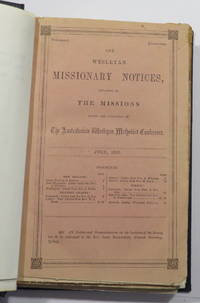
174927011various: Sydney / Wellington / Bristol / Auckland: various. Very Good- with No dust jacket as issued. 1749-1966. First Edition. Hardcover. Bound in 20th century blue cloth boards. Previous owner's ex-libris bookplate Frank G. Glen. ; Bound volume of pamphlets publication dates ranging from 1749 to 1966. Blue cloth boards. Gilt lettering on spine "VOL. 9". With 2 typewritten contents pages bound in. Publication dates from 1749-1966. The 19th century or earlier there is one 18th century pamphlet by John Wesley contents are as follows: 1 8 monthly issues of "The Wesleyan Missionary Notices Relating to The Missions under the direction of The Australasian Wesleyan Methodist Conference". Published Sydney: 1857-1866. The 8 issues are: July 1857 16 pages; January 1858 33-48 pages; January 1859 16 pages; April 1859 113-126 pages; July 1860 193-208 pages; October 1861 273-288 pages; January 1866 533-548 pages large 80 x 65mm chip to upper corner of front wrapper and first text leaf with significant loss of text; April 1866 549-566 pages heavy fading to lower part of front wrapper. Original printed wrappers bound. Contents includes articles relating to missionary activities in New Zealand; Friendly Islands; Feejee / Fiji; Samoa; Chinese Mission in Victoria 2 pages in July 1860 issue; Rotumah. Page dimensions: c. 207 x 129mm.; 2 "Description of the Battle of Orakau As Given by the Native Chief Hitiri Te Paerata of the Ngatiraukawa Tribe At the Parliamentary Buildings 4th August 1888. Interpreter - Capt. Gilbert Mair." Wellington: G. Didsbury Government Printer 1888. 14 1 Genealogical Table Hitiri Te Paerata 1 blank pages. Original blue printed paper wrappers bound in. Page dimensions: 166 x 102mm. A couple of 12mm chips to blank margin of front wrapper. 17 x 6mm or smaller chip to lower blank margins of all leaves without loss of text. Rubber stamp on inside of front wrapper "Frank G. Glen / Historic Collection No. 40". Reference: Bagnall 2611; 3 John Wesley "Directions Concerning Pronunciation and Gesture". Bristol: Printed and sold by Felix Farley at the Printing-Office in Castle-Green 1749. 12 pages. Page dimensions: 165 x 96mm. Small clipping from a bookseller's catalogue tipped in: "First Edition 12pp. 12mo. unbound RARE 4/6. / Bristol 1749". "'The Cambridge Companion to John Wesley' notes that this pamphlet was an abridgment of a work by Michel Le Faucher 1585-1657" - Taylor Fontaine Walle "Viva Voce: Speech and Orality in Eighteenth-Century Literature" Dissertation accessed online February 2025; 4 D. M. Luckie "The Raid of the Russian Cruiser 'Kaskowiski' : An Old Story of Auckland". Wellington: Printed by the New Zealand Times Company 1894. 39 1 6 advertisements 2 blank pages. Original orange-brown printed paper wrappers bound in. Page dimensions: 211 x 133mm. Other contents are several 20th century New Zealand church history and biographial pamphlets mostly published in 1966 including: "Proceedings of the Wesleyan Historical Society New Zealand Branch"; "Makomako Church 50th Anniversary 1916-1966"; "John A. Luxford C.M.G. C.J. A Biography" by Frank Glen; "If Any Man . . ." by Rev. C. W. Brown. Auckland: Methodist Spiritual Advance Committee 1966; "The Rev. James Buller 1812-1884" by Bernard Gadd. The Wesley Historical Society New Zealand Proceedings July 1966. . [various] hardcover
17904202London: Printed for J. Dodsley in Pall Mall 1790. First Edition. Leather bound. Near fine. Octavo : 548pp. 4 202 2 193-300 216 16 last verso blank : all edges speckled red : double gilt ruled speckled calf : five raised bands : red leather title panel lettered in gilt : "1788" in gilt to panel below : edges of the boards are tooled in blind.<br /> <br /> Joints starting at the head; light edgewear; previous owner name bookcase no. and shelf number on first paste-down. The Annual Register for 1788 has two minor references to Australia. The first occurs on p. 205 of the Chronicle where it is reported that the fleet on its way to Botany Bay has made it safely to the Cape of Good Hope with the loss of only twenty-one lives. Apparently the convicts were orderly. In the Appendix to the Chronicle the sum paid for the bills drawn by the governor & etc. of New South Wales Captain Arthur Phillips is recorded.<br /> <br /> The History of Europe is mostly concerned with the Russo-Turkish conflict which began in 1787 and was to continue until 1791 as part of the Crimean War. There is also a review of volumes 2-6 of Gibbons "Decline and Fall" the first volume having been released and reviewed the year before. An Allegory attributed to Benjamin Franklin is included in the Miscellaneous Essays Franklin died in April 1790 and there is a letter from a Hungarian noblewoman about her experience of the Gypsies that live on her estate. The highlight for this bookseller is the article in Useful Projects about the making of an "Ardent Spirit" from potatoes. Printed for J. Dodsley in Pall Mall unknown
178614550London; Pinnock and Maunder John Fielding John Stockdale 1786�1820. 1786. Pinnock's Heraldry is the third edition. Duodecimo-size sig. A�B18 -A1 A2 fspiece; 1 4 A4 B�N2 O8 -O8; B�D6 A6 12 engraved plates pp. 2 6�69 2 of ads 1 blank plus engraved frontispiece; 2 prelims 8 engraved plates 1 engraved title-page 69 plates 18 of 'introduction' 18 index of mottoes; 12 24 of plates. Half-calf over marbled paper blind rolls to boards titled in gilt to leather spine label top edge dyed red. Extremities rubbed upper joint a little worn. 'A Catechism of Heraldry' may lack two preliminary leaves but this bookseller cannot confidently infer the ideal state of this book from the available physical evidence some pages cropped close the third publication ostensibly bound out of order but given the registration of the index A gathering is both continuous and self-contained this may well be the intended state. A well-preserved copy. A well-illustrated collection of heraldry pamphlets from the turn of the nineteenth century. A necessarily unique volume gathering together ephemeral and accessible works on coats of arms emblems badges and medals. Initial date from title-page of 'The Arms Crests and Supporters of Present Baronets .'. London; Pinnock and Maunder, John Fielding, John Stockdale, 1786�[1820?]. hardcover
17801585London: Richardson and Urquhart. c.1780. A new edition with great additions". Octavo. Later nineteenth-century full brown calf the boards double-ruled in gilt and with gilt corner devices the spine with five raised bands compartments ruled in gilt and with titles in gilt. Top edge gilt the others untrimmed. Marbled endpapers. Illustrated with an engraved frontispiece depicting a Bacchanalian scene by Isaac Taylor after Hubert-François Gravelot and an engraved title-page vignette. Engraved armorial bookplate for Herbert McGlennon to the front pastedown. xiv 356pp. A very good copy the binding square and firm with rubbing to the boards and spine. The contents with some occasional light foxing are otherwise in very good order. An uncommon late eighteenth-century anthology of around 350 English Scottish and Irish songs. As the long title explains the work was compiled "from all the numerous Books of the Kind that have been published from the first Appearance of such Works to the present Time; including every celebrated Song that has been sung at the Public Gardens and Theatres either the last or any preceding Season. With a great Number of Valuable Originals. Being an Attempt to improve upon others in the true Spirit of Social Mirth and Good Fellowship without forgetting the Respect that is due to the Public. To which is added a complete Collection of the various Toasts Sentiments and Hob Nobs now in vogue". A number of the later songs give additional details regarding their performance for example: "Sung by Mr. Peretti in the English Opera of Artaxerxes. Set by Dr. Arne"; "Set by Mr. Baildon. Sung at Vauxhall"; "Sung by Mrs. Pinto in Love in a Village". London: Richardson and Urquhart. hardcover
1734mon0003558100London: William Jackson 1734. Hardcover. Acceptable. . volume 3 only. in poor condition lacking spine boards detached. bookplate and minor writing in the prelims. pages shaken and clean with engraved head- and tail-pieces full-page plates. London: William Jackson hardcover
179937350London England: H. L. Galabin. Very Good-. 1799. Full Leather. Very Good- full calf leather edition there is a previous owner's name at the top of the title page. Both hinges are cracked and mended but remain tender. Wear to spine ends and corner tips. There are some pencil notations on the front pastedown. ; 8vo 8" - 9" tall; 580 pages . H. L. Galabin hardcover
1701180723104Concordia Publishing House 1917-01-01. 3RD. Hardcover. Very Good. Concordia Publishing House hardcover
1792BCM7416Madrid: Don Blas Roman 1792. .y de las congregaciones regulares y seculares que han existido en varias partes del mundo hasta el dia de hoy; Published 1792 & 1793; Two volumes; Full sheep with black spines & tree calf covers gilt spine titles blind device to covers all edges rose & marbled endpapers/pastedown; A very good set with handsome bookplates inside front covers & contemporary cramped ink notes to 1st rear endpaper volume 1; 260 & 535 pages. Size: 5.25"x8.25". Hardcover. Don Blas Roman Hardcover
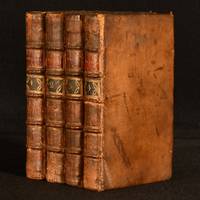
1729906P8Paris: Veuve Delaulne 1729. Leather. Very Good. 6.5" by 4". None. A collection of the witticism and table talk of the French scholar Gilles Menage an expanded edition by Bernard de la Monnoye. Complete in four volumes.In the original French.A charming set containing a selection of the witticisms and table talk of Gilles Menage.Menage was a French scholar and man of letters of the seventeenth century. He hosted literary salons at his house in the cloister of Notre-Dame and was the tutor of Madame de La Fayette in her youth. This work was collected by his friends this edition edited and expanded by Bernard de la Monnoye. The work was published after his death in homage to his long and illustrious life.Monnoye was a lawyer philologue and critic. He got into trouble for his expansion of this work as he included some of his own text purporting them to be by Menage. He got into legal troubles but got off on technicalities thanks to Cardinal de Rohan.Bookplate of the Reverend F. Hutcheson to the front paste downs. In a full calf binding. Externally generally smart a little rubbing to the boards and spines. Minor bumping to the extremities. A small amount of loss to the head of the spine of Volume II. Light marks to the boards. Small amount of loss to the tail of the rear joint of Volume I and to the rear board of Volume II. Bookplate to the front paste downs. Internally firmly bound. Pages are very lightly age-toned and clean. Ink inscription to the title pages. Very Good Veuve Delaulne hardcover
1750003805London: Printed For R. Griffiths at the Dunciad in St. Paul's Church Yard 1750. Hard Cover. Fair/Good. Marbled boards with leather binding. 512 pp plus 8 pages of index. November 1749 through April of 1750. Most likely from the collection of George Peabody as this was purchased in a lot of others some of which bear his signature. Containing the Peabody Institute bookplate on the inside front cover which also states Presented by George Peabody. George Peabody 1795-1869 is considered one of the first modern philanthropists establishing trusts to help the poor as well as founding the Peabody Institute. He gained much of his fortune from banking eventually partnering with Junius Spencer Morgan father of J.P. Morgan. Edited and published by Ralph Griffiths the Monthly Review published works of criticism on many authors and books providing bibliographic and historical information on many topics. Of note in this volume is a review of a work by Maillet including lengthy excerpts arguing that animals may have originated in the sea a look at the work of David Jeffries that examines the properties and values of diamonds and pearls a brief account of electrical experiments by Dr.Hale a look at the work of De la Caille titled The Elements of Astronomy that reflects on mathematical principles from Newtonian philosophy as well as containing several mathematical equations A review of Tom Jones a Foundling articles on various religious and political pamphlets etc. EX-LIBRARY from the Peabody Institute. In FAIR to GOOD condition with the boards covered by dull blue paper glued to the inside cover. This paper bears library shelving info on the spine. The paper bears some soiling fading and scuffing with dark glue residue emanating from beneath the label on the spine. Aforementioned bookplate present. Library ownership stamp and call numbers on the title pages. Small circular library stamp on one page in the text. Interior hinges repaired with library tape. Minor scattered foxing and soiling with the title page moderately soiled. Minor toning to the pages. Last page of index torn at its fore edge. Printed For R. Griffiths, at the Dunciad in St. Paul's Church Yard unknown
1784014554Troppau : Joseph George Trasler 1784. First German Edition . Quarter Leather and Marbled Boards. Very Good/No Jacket. 12mo - over 6¾ - 7¾" tall. All 32 Volumes Are In Very Good Order With Handling Wear Consistent With Their Age . Edgeworn Bindings And Tanned Pages The Edition Label On Volume 26 Is Damaged And Some Loss On The Bottom Spine Ends Of Volumes 14 And 25 . Published Between 1784 And 1787 Rare! <br/> <br/> Joseph George Trasler hardcover
1761988Y28London: Printed for the Author 1761. Hardback. Very Good Indeed. 10.5" by 8". None. A very scarce work containing letters sent to and from fraudulent estate manager John Ayliffe. The first edition of this very scarce volume.Bound in later paper covered boards with renewed endpapers. An intriguing selection of correspondence concerning John Ayliffe and his creditors including an ongoing dispute with one S. S. Horner. Ayliffe taught for a while at the recently founded free school at Lyneham. Soon afterwards hoping to acquire an interest in the Grittenham estate he became estate manager there. Subsequently in his attempts to secure the Grittenham estate Ayliffe was guilty of many frauds and was executed for forgery in 1759. Bound in later paper covered boards with renewed endpapers. Externally with bumping and a couple small splits to the spine. A few dark spots to the rear board. Internally firmly bound. Pages are lightly toned with a few occasional spots. Very Good Indeed Printed for the Author hardcover