18 résultats
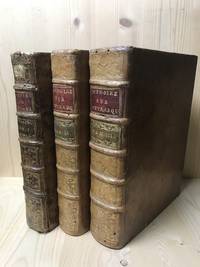
17992503310077Printed by T. Maiden for Vernor and Hood London 1799. Hardcover. Good. 2 volume set. Hardcover. Good binding and cover. Scattered spotting. Library stamps and markings. An abridgment of J.F.A. de Sade's 'Memoires pour la vie de Francois Petrarque' 22 cm. Pagination: volume 1: xviii 388 12 pages 6 leaves of plates; volume 2: 2 401 11 pages. From the library of noted New Yorker Frederic de Peyster 1796-1882. Printed by T. Maiden, for Vernor and Hood, London hardcover
17951370659London: Aux depens de la compagnie 1795 1880. First Edition Thus. Hardcover. Octavo 453 pages. In Very Good condition. Quarter bound in green cloth with silk marbled paper boards. Gilt lettering to spine. Minor rubbing and shelfwear to head and tail of spine with stray dark possible ink marks above title. Fading of cloth boards along hinges of spine. Bumping to paper fore-edges exposing boards and chipping along top and bottom edges of front and back paper covers. Age-toning to textblock. Small ink marks to top left of first free edge. Slight separation between first free edge and half-title page at gutter. Tanning with intermittent light soiling to edges of pages. Mild soiling and minor tearing to half-title page for second book in volume located after page 206. Noticeable staining to bottom right of pages 2165-247. Pages tipped in between 16-17 and 240-241 cut. The listed print date of 1795 is inaccurate. This copy was printed in 1880. This volume actually contains two distinct books and it was banned at the time of its publication. It is likely that this is a clandestine edition published by Jan Gay in Belgium. <br /> <br> <br /> <br> <br /> Currently these two works are seen as more of a social commentary on morality especially in the wake of the French Revolution. De Sade's arguments in support of 'libertinism' and atheism are of particular focus. 1370659. Special Collections - Downstairs. Aux depens de la compagnie hardcover
17743103Amsterdam 1774. Full Leather. original edition good condition 448 82 pp 495 83 pp 812 102 pp hardcover
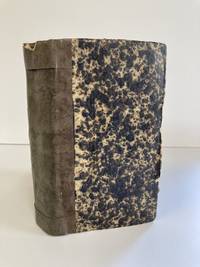
18001370732Paris: Chez Massé Éditeur proprietaire 1800. First Edition. Hardcover. 12mo 4 256 4 246 1 pages. In Poor condition. Rebound in quarter marbled paper plain brown paper spine. Shelfwear chipping and tearing to paper spine and boards. Edges of textblock tanned with age-toning and minor soiling to textblock. Lacking both issued frontispieces. With both half-titles. On Tome III the title page has had 'Tom III' torn out with the small hole repaired. Small backing to fore edge of half-title and title page. Tome III A1 is missing the top half of the leaf plain paper attached with crude ink titling to the recto only. Tome III F1 with small repair to the fore edge and crude ink lettering to the recto. Tome IV G11-12 with some damage to fore edges G12 with slight loss to words. Significant tide-marks and water staining throughout though most severe at extremities and along gutters. A damaged and incomplete copy but any editions of Sade's works published during his life are scarce. This volume is books 3 and 4 of a 4 volume collection of 11 stories and an original essay by the author. Not included in this volume is Sade's essay "Idée sur les Romans" in which Sade denies being the author of Justine. 1370732. Special Collections - Downstairs. Chez Massé, Éditeur proprietaire hardcover
177659527s. l.: S. n. 1776. Fine. S. n. s. l. Circa 1776 32 x 40.50 cm une feuille encadrée Original drawing in ink and watercolor. Modern frame. Drawing made during the journey with the Marquis de Sade in 1776. Jean-Baptiste Tierce 1737-1794 student at the École des Beaux-arts in Rouen then at the Academy of Painting and Sculpture in Paris quickly distinguished himself as a landscape painter for his views of Southern France and Italy. His paintings are preserved in the Uffizi in Florence and in several French museums. When in December 1775 Sade left Rome for Naples he was welcomed by the son-in-law of his friend Doctor Mesny Jean-Baptiste Tierce who at that time received commissions from Cardinal de Bernis. He found lodging for the Marquis ""who intended to see everything in the region learn about everything judge admire criticize love hate in short to give free rein to that insatiable and passionate curiosity which led him into museums galleries churches palaces and libraries as well as into caves vaults catacombs and even into the bowels of volcanoes. He was not content to contemplate works of art ancient or modern monuments he also observed customs politics religion administration social life. The beauty of women worldly customs the quality of performances ways of eating drinking dressing praying conducting oneself in society: nothing left him indifferent. He wanted to grasp all the present and all the past of this civilization to embrace it entirely in a single and universal vision. A gigantic program matching his exceptional imagination but which he no longer had to fulfill which it was impossible for him to fulfill. Yet such was his first ambition as a writer: grandiose excessive. With this 'great work' in view Sade took hasty notes at roadsides or in inns which he completed with notes from his correspondents Mesny and Iberti. Thus was built this monument he intended for the public but which would not see the light of day until the twentieth century. Jean-Baptiste Tierce collaborated closely: he reread the notes and recorded his observations in small notebooks with numbers referring to the works described. Sade took the greatest account of them. Often the painter accompanied him on his walks his sketch pad in hand drawing the buildings and landscapes they had before their eyes. A hundred of these drawings and gouaches were recently found in the Sade family archives. They give the Voyage en Italie the appearance of a true reportage."" Maurice Levert Sade pp. 283-284. Provenance: Sade family archives. S. n. unknown
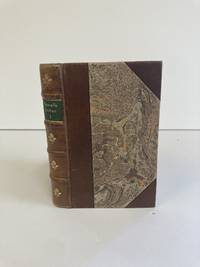
17971370760En Hollande Paris 1797. First Edition. Hardcover. 18mo. 347 pages. In Good condition. Rebound in 20th century half brown leather with marbled paper boards. Paneled spine has gilt lettering and tooling with green label for title title misspelled 'Justine' as 'Justinn.' Volume one only. This copy almost certainly washed. Title page through page 6 and page 339-end mounted on tabs. Lacking seven leaves plus six engravings being the half-title page; pages i ii iij iv Editor's Notice unpaginated sheet frontispiece and five of the ten engravings. Engravings tipped in at pages 82 219 209 240 and 262. Scarce in any condition. Shelved case 3. BNF: Enfer 2507. Identifying a particular edition of Justine is a bibliographical challenge due to the complexity of the printing. The clandestine printing of publishers and printers through multiple countries and cities combined with seizures by the authorities led to a wide variety of reissues and reprints.<br /> <br> <br /> <br> <br /> "La Nouvelle Justine" is one of Sade's most notorious books which he at times denied authorship of during his lifetime. This is only volume one of the original edition and is missing some of the original pages. Its alternate title is "Les Malheurs de la Vertu" and the second volume following this one is titled "L'Histoire de Juliette Sa Soeur." 1370760. Shelved Dupont Bookstore. hardcover
1790594741790. Fine. s. d. circa 1790 16 x 20.10 cm 3 pages sur un double feuillet List of 38 plays 15 plays performed at the Théâtre-Français and 23 at the Comédie-Italienne probably written by one of the Marquis's secretaries. Annotations erasures deletions and corrections in the Marquis de Sade's hand. This list corresponds to theatrical plays performed from 1783 to 1785 at the Théâtre français present-day Théâtre de l'Odéon and at the Théâtre italien known today as the Opéra-Comique or Salle Favart. The Marquis was in the habit of having the Almanach des spectacles sent to him each year in order to keep informed of current events on the Parisian stage. Thus in a letter of December 1784 to his wife Renée-Pélagie he requests: ""Liste d'objets dont j'ai besoin. . Deux almanachs . des spectacles. Les comédies ou tragédies nouvelles de l'année de l'un et l'autre spectacles. J'en ai d'autant plus besoin cette année que j'ai prodigieusement travaillé dans l'un et l'autre genre et que je ne puis me passer de ce qui paraît pour m'instruire et vérifier."" ""List of objects I need. . Two almanacs . of spectacles. The new comedies or tragedies of the year from both theaters. I need them all the more this year as I have worked prodigiously in both genres and I cannot do without what appears to educate myself and verify."". All the plays listed in this inventory appear in the theatrical almanacs reproduced by Sylvie Dangeville in her work Le Théâtre change et représente Honoré Champion Paris 1999. Anxious to maintain a link with the outside world the Marquis ordered enormous quantities of works notably brochures of freshly published theatrical plays. Thus in 1775 in a letter to the Widow Duchesne a famous Parisian bookseller-publisher he requests: ""Pour l'intelligence du billet ci-joint Madame Duchesne est priée de jeter les yeux sur l'Almanach des Spectacles article pièces nouvelles et en conséquence elle voudra bien remettre au présent porteur tout ce qui a été imprimé à l'un ou l'autre spectacle savoir du Théâtre français depuis l'Hôtellerie ou le faux ami et du Théâtre italien depuis l'Amitié au village l'un et l'autre inclusivement si elles sont imprimées ou exclusivement si elles ne le sont pas jusqu'à l'époque de la clôture des spectacles. Le porteur n'a qu'un louis ; si les pièces montaient à une somme plus forte Madame Duchesne enverrait d'abord pour cette somme et ferait dire celle qu'il faudrait envoyer le lendemain pour avoir le total."" ""For the understanding of the enclosed note Madame Duchesne is requested to cast her eyes on the Almanach des Spectacles article 'new plays' and consequently she will kindly give to the present bearer everything that has been printed at one or the other theater namely from the Théâtre français since 'l'Hôtellerie ou le faux ami' and from the Théâtre italien since 'l'Amitié au village' both inclusively if they are printed or exclusively if they are not up to the time of the theaters' closure. The bearer has only one louis; if the plays amounted to a greater sum Madame Duchesne would send first for this sum and would have announced the amount that would need to be sent the next day to have the total."". The ""note"" referred to at the beginning of the letter is very likely the list we are offering; the two titles to which the Marquis refers appear in it. Rare and precious list cataloguing the works read by the Marquis at the beginning of his incarceration at the Bastille starting point of his prolific literary production. Provenance: family archives. unknown
177659528s. l.: S. n. 1776. Fine. S. n. s. l. Circa 1776 40 x 50 cm une feuille encadrée Italian scene: animated seaside with square tower Original pencil drawing showing an animated seaside scene. Modern black wooden frame. A drawing done during the journey the artist undertook with Sade in 1776. Jean-Baptiste Tierce 1737-1794 who studied at the School of Fine Arts in Rouen and subsequently at the Academy of Painting and Sculpture in Paris quickly built a reputation as a landscapist for his views of the South of France and Italy. His paintings are in the Uffizi in Florence and several French museums. When in December 1775 Sade left Rome for Naples he was welcomed by the son-in-law of his friend Dr. Mesny Jean-Baptiste Tierce who at the time was working on commissions for Cardinal de Bernis. He found lodgings for the Marquis who intends to see everything of the region learn everything judge admire critique love hate in short give himself over to the insatiable and passionate curiosity that takes him to museums galleries churches palaces and libraries as well as grottoes caves catacombs and right down to the very innards of volcanoes. He was not content merely to look at the various works of art and ancient and modern monuments; he also set out to observe the local mores politics religion administration and social life. The beauty of the women the local traditions the quality of plays table manners and the way people drank dressed prayed and made their way in the world all interested him. He wanted to take in both the present and the past of this culture to encompass it all in a unique and universal vision. A massive undertaking to match his extraordinary imagination which he was however unable to fulfil it being impossible for him to do so. This was however the nature of his central ambition as a writer: grandiose and outsized. With a view to this great work Sade took hurried notes at the side of the road or in hostelries which he then complemented with notes from his correspondents Mesny and Iberti. Thus he built up the monument he intended to put before the public but which did not end up seeing the light of day until the 20th century. Jean-Baptiste Tierce was a close collaborator: he re-read Sade's notes and gave his observations on the little notebooks with numbers referring to the works mentioned. Sade took the greatest notice of his views. Often the painter accompanied him on his rambles sketchbook in hand drawing the buildings and landscapes before them. A hundred or so of these drawings and watercolors were recently found in the Sade family archives. They give the Voyage en Italie the charm of a real travel diary. Maurice Levert Sade pp. 283-284. Provenance : Sade family archives. S. n. unknown
175859468Paris 1758. Fine. Paris dimanche 2 avril 1758 13.40 x 19.20 cm 2 feuillets Will of Louise-Anne de Bourbon-Condé known as Mademoiselle de Charolais copied by the hand of Jean-Baptiste-François-Joseph Count de Sade and father of the Marquis in which the latter makes her nephew Louis-François Joseph de Bourbon Prince de Conti her universal legatee. A second part concerns bequests to livery servants to chambermaids and valets to the wardrobe keeper etc. Footnote in the hand of the Marquis de Sade: ""known as Mademoiselle de Charolais"". Attached is a note sheet written in Sade's hand with a view to publishing his father's correspondence. This will was written five days before the death of Mademoiselle de Charolais whose death occurred on Friday April 7 1758 following three months of illness. The second part of the will is dated Sunday April 2 1758 while the first bears the date of Sunday April 12 1758: this is obviously an erroneous date. The entirety of this copy was written by the hand of the Count de Sade who lived with Mademoiselle de Charolais at her château of Athis-Mons from 1750 until her death. The young Count de Sade sent by his father to Paris around 1720 had as protector Louis-Henri de Bourbon Prince de Condé known as Monsieur le Duc. Upon his arrival the young man appreciated court life and ""Rare thing he pleased women without making himself hated by men: hence the number of his friends at least as high as that of his mistresses. . M. de Sade was not content with easy conquests; bourgeois women left him indifferent. Those he sought - and most often conquered - were court women not only endowed with wit and beauty but also adorned with an illustrious name credit influence or fortune capable in a word of serving his interests and putting him in good standing at court."" Lever Sade. Among his conquests figured Mademoiselle de Charolais seven years his senior sister of his protector and then royal mistress. Little desirous of marrying she preferred all her life to remain unmarried and multiplied adventures and prestigious lovers. She was notably the favorite of the Duke de Richelieu but also of Louis XV for whom she recruited numerous mistresses thus earning the sobriquet of ""royal procuress"". The carnal encounter between Mademoiselle de Charolais and the Count de Sade took place on November 24 1725 while the latter was confined to bed because of a sprain. A letter from Louise-Anne attests to this nascent adventure: ""November 24 is the most beautiful day of my life if I have regained possession of my kingdom and my sovereignty by the rights of the bed where I swore you an oath of fidelity. I count on having received yours and I now live for the prettiest king in the world."" Papiers de famille p.20. The passion was not reciprocal however and the fickle Count de Sade soon met the Duchess de la Trémoïlle. Thus distancing himself from Mademoiselle de Charolais he wrote to her by way of breaking up: ""I regarded Madam the advances you made to me as provocation of your mind and not of your heart. I did not have the honor of knowing you I owed you nothing a sprain obliged me to keep to my room I was idle there your letters were pretty they amused me I flattered myself if it were true that I had made your conquest that you might cure me of an unfortunate passion which occupies me entirely."" op. cit. p.23. In 1752 the Count de Sade was ruined by his lifestyle he had sent young Donatien to Louis-le-Grand college and lodged with his good friend Mademoiselle de Charolais at the château of Athis-Mons: ""I have retired to Mademoiselle's although it is cruel at my age to depend on someone to reduce my expenses."" Letter from the Count de Sade to his uncle the provost of L'Isle-sur-Sorgue November 11 1752. He remained with his friend accompanying her in her numerous travels across Europe until her death. The correspondence between the Count de Sade and Mademoiselle de Charolais con unknown
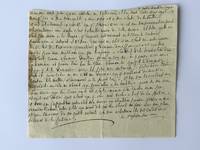
1778919461778. Fine. 1778 - 1779 15.5 x 13.5 cm Une feuille ENGLISH DESCRIPTION ON DEMAND Lettre autographe originale du Marquis de Sade écrite depuis la prison de Vincennes le 21 mai 1778 possiblement 1779 le dernier nombre se terminant en paraphe étant difficile à déchiffrer. Cette lettre a été écrite à l'épouse du Marquis de Sade Renée Pélagie le dernier paragraphe est adressé à sa mère la présidente de Montreuil responsable de son emprisonnement par lettre de cachet. La lettre s'achève juste par un paraphe comme souvent avec la correspondance de Sade. La lettre provient directement de la famille descendante de Sade. Une feuille de papier mal découpée en marge haute avec deux pliures au dos. 20 lignes d'une écriture serrée. Lettre dans laquelle Sade requiert son transfert dans une prison plus salubre avec des sorties journalières telle que Saumur ou Doullens. L'auteur évoque ses conditions difficiles et l'altération de sa santé provoquée par sa détention à Vincennes ainsi que l'existence d'un complot dont il serait ""la vache à lait de la police"". Les dernières lignes sont adressées à la présidente de Montreuil sa belle-mère : A vous que j'appelais autrefois ma mère . et se concluent avec cette opprobre : ""Qui m'eut dit que ce serait un jour avec mon sang et avec l'honneur de vos petits enfants que vous achèteriez le vil crédit du tribunal de police."" unknown
177659469s. l.: S. n. 1776. Fine. S. n. s. l. circa 1776 32 x 40.50 cm une feuille encadrée Original drawing in ink and watercolor depicting an animated seaside view with a village perched on a cliff. Modern framing in blonde molding. Drawing executed during the journey made with the Marquis de Sade during the year 1776. Jean-Baptiste Tierce 1737-1794 student at the École des Beaux-arts in Rouen then at the Academy of Painting and Sculpture in Paris quickly distinguished himself as a landscape painter for his views of the South of France and Italy. His paintings are preserved at the Uffizi in Florence and in several French museums. When in December 1775 Sade left Rome for Naples he was welcomed by the son-in-law of his friend Doctor Mesny Jean-Baptiste Tierce who at that time was receiving commissions from Cardinal de Bernis. He found lodging for the Marquis ""who intended to see everything in the region learn about everything judge admire criticize love hate in short to give free rein to that insatiable and passionate curiosity which led him into museums galleries churches palaces and libraries as well as into grottos vaults catacombs and even into the bowels of volcanoes. He was not content to contemplate works of art ancient or modern monuments; he also observed customs politics religion administration social life. The beauty of women worldly customs the quality of entertainments ways of eating drinking dressing praying conducting oneself in society: nothing left him indifferent. He wanted to grasp all the present and all the past of this civilization to embrace it entirely in a single and universal vision. A gigantic program commensurate with his exceptional imagination but which he could no longer fulfill which was impossible for him to fulfill. Yet such was his first ambition as a writer: grandiose excessive. With this 'great work' in view Sade hastily took notes at roadsides or in inns which he supplemented with the notes of his correspondents Mesny and Iberti. Thus was built this monument which he intended for the public but which would not see the light of day until the 20thth century. Jean-Baptiste Tierce collaborated closely: he reread the notes and recorded his observations in small notebooks with numbers referring to the works described. Sade took the greatest account of them. Often the painter accompanied him on his excursions his sketchbook in hand drawing the buildings and landscapes before their eyes. About a hundred of these drawings and gouaches were recently found in the archives of the Sade family. They give the Journey to Italy the appearance of a true reportage."" Maurice Levert Sade pp. 283-284. Provenance: archives of the Sade family. S. n. unknown
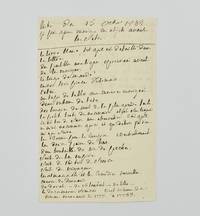
178321208931783. Vincennes fortress. 15 October 1783. Single leaf c. 155 x 100 mm pp. 2 comprising 38 lines written in dark brown ink; a few small stains to verso but generally very good.An apparently unpublished autograph note by the Marquis de Sade 1740-1814 addressed to his wife listing items he requested from prison primarily books.On 26 August 1778 Donatien Alphonse Francois Marquis de Sade was arrested at his chateau in La Coste Provence on charges of sexual violence and libertine excesses and subsequently imprisoned in the fortress of Vincennes. From his cell he remained prolific maintaining an extensive correspondence - primarily with his wife Renee-Pelagie de Montreuil 1763-1813 - and continuing work on Voyage d'Italie and several plays. In the summer of 1782 he wrote Dialogue entre un pretre et un moribund and began Les 120 Journees de Sodome ou l'ecole du libertinage. When Vincennes closed in February 1784 he was transferred to the Bastille where he produced a fair copy of Sodom the so-called ""rouleau de la Bastille"" now regarded as his first major work.An insatiable reader Sade regularly consulted the catalogue of the bookseller Merigot le Jeune whose shop stood at the corner of Quai des Augustins now Quai des Grands-Augustins and Rue Pavee now Rue Seguier. He selected works on history science philosophy and travel which he ordered through his wife. In this note to her he requested essential items for prison life including writing and reading materials: a ""blank book"" a ""table mat"" and the ""night candles of the largest size"". Among his reading requests were works by Francois-Thomas-Marie de Baculard d'Arnaud 1718-1805 Jacques Delille 1738-1813 Claude Joseph Dorat 1734-1780 and Jean Francois de Saint-Lambert 1716-1803 as well as Le Decameron francais by Louis d'Ussieux 1744-1804. Of these authors Dorat stands out for his affinity with libertine themes having gained renown for his erotic poetry plays and novels including the epistolary seduction novel Les Malheurs de l'inconstance 1772.The text of the note runs as follows:liste du 15 octobre 1783.je prie qu'on envoie les objets avantles fetes.Le livre blanc tel quil est detaille dans le lettresdes pastilles arabiques eprouvees avantde les envoyer.Le linge demandeencore trois pieces d'estomac.L'etui.Un tapis de table aux mesures envoyees.Deux rubans de tete.Des bougies de nuit de la plus grande taille.La petite boite du necessaire objet sur lequelil est bon de faire une observation c'est quil ne m'est necessaire quici et que dehors je n'en ai que faire.Le coussin pour le croupion essentiellement.Les douze paires de bas.Deux bouteilles de vin de peche.Suite du bon empiresuite de l'histoire de francesuite du voiyageur.Les almanachs et les Comedies nouvelles.OEuvres de darnaudde dorat. - de st lambert - de lille -le decameron francois vingt volumes de roman nouveaux de 1777 a 17783 sic.verso:envoyez de ces livres les au moinsvingt ou trente volumes parce que j'en manque tres absolument et tres au pied de la lettre. Je ne vous demande point de quinzaine expres afin que vous m'envoyiez a la place des livres don't je ne peux plus absolument me passer 8 jours surtout ceux de seconde - lecture don't j'ai encore pour la semaine et pas davantage Je vous embrasse de tout mon coeurList of 15 October 1783I pray that the items be sent before the holidays.The blank book as detailed in the letters.The Arabic pastilles tested before being sent.The requested linen.Three more stomach pieces.The case.A table man to the measurements sent.Two head ribbons.Night candles of the largest size.The small necessity box an item on which it is worth making an observation: it is only necessary for me here and outside I have no use for it.The cushion for the rump essential.Twelve pairs of stockings.Two bottles of peach wine.Continuation of the Bon empireContinuation of the History of France.Continuation of the Voyageur.The almanacs and the new comedies.Works of d'Arnaud.Of Dorat - of Saint-Lambert - of Delille.The Decameron francais.Twenty volumes of new novels from 1777 to 1783.verso:Send at least twenty or thirty volumes of these books for I am in absolute need of them and that in the strictest sense. I do not request fortnightly shipment on purpose so that instead you may send books without which I absolutely cannot do for even eight days - especially those for second reading of which I have enough for the week and no more.I kiss you with all my heart. unknown
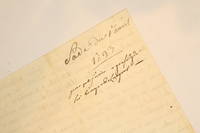
1793733941793. Fine. 1er avril 1793 15.60 x 20 cm une page sur un feuillet Unpublished autograph letter signed and dated written in black ink and addressed to a notary. On the verso probably in the hand of a secretary the inscription ""Sade du 1er avril 1793""; below this inscription a short sentence in the Marquis's hand: ""so that I may write to Gaufridy to send him money"". Some transverse folds from the original folding for posting. Lengthy letter addressed to a notary while the Marquis freed on April 2 1790 by the abolition of royal warrants is at liberty and attempting to put his affairs in order. After the Revolution his sons emigrated and he did not follow them. His name nevertheless appears on the list of persons who left France due to the revolutionary troubles: ""I hope that with all this I will manage to have my name erased from that fatal list of émigrés."" Anxious not to be considered a ci-devant Marquis in this period preceding the Terror he insists on the persecution of which he claims to be a victim despite his good will: ""It is an unparalleled atrocity that such a trick should have been played on me who have not left Paris since the revolution and who since that time have not ceased to give the most unequivocal proofs of my patriotism"". In this letter Sade also denounces the complexity of the workings of the French administration after the Revolution: ""I have just sent M. Lions the appropriate certificate of residence and I have attached a petition to the district which he tells me is . essential."" Impecunious he begs his lawyer ""to excite the zeal of those who owe him and to urge them to pay as much money as they collect immediately to M. Gauffridi sic"" and does not hesitate to show himself obliging in order to achieve his ends: ""spare no effort then I beseech you . always preserve for me your care and your friendship . I embrace and greet you with all my heart."" Sade's efforts would prove futile; in December 1793 he was imprisoned at the Madelonnettes before being admitted through the good offices of his friend Mme Quenet to the Coignard de Picpus establishment a nursing home sheltering wealthy suspects. Interesting unpublished letter showing the unfortunate Marquis at bay during one of his rare moments of freedom. unknown
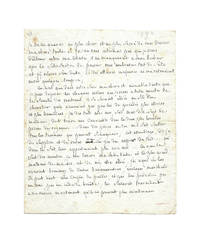
178159108s. l. Vincennes 1781. Fine. s. l. Vincennes s. d. circa 1781 15.70 x 20.10 cm une feuille SADE Donatien Alphonse François Marquis de Autograph letter to his wife. Hommages à la Présidente: Faire noyer vive l'exécrable coquine qui depuis neuf ans . suce mon sang. N. p. Vincennes Castle n. d. circa 1781 157 x 201 mm 6 3/16 x 7 15/16 single leaf The more I think about it however the more I think you have to have quite a nerve to dare write to a poor suffering unfortunate. Autograph letter unsigned from the Marquis de Sade to his wife. One page closely written in ink on 31 lines. This letter was written during Sade's imprisonment at Vincennes probably in April 1781 if one is to believe the occasional indicators of date referenced by the writer. Sade mentions the end of his exile from Marseilles referring to the decision of the court in Aix-en-Provence to overturn his conviction for debauchery and libertinage on the 14 July 1778 but which nonetheless banned him from living in or visiting Marseilles for three years. Sade also mentions one of the defining episodes of his life his flight to Italy between January and November 1776: they may as well have killed me straight off as left me in that foreign country where I was. Sade also mentions the amazing favor that befell him of moving house which is to say his potential transfer to the fort at Montélimar. In April 1781 Madame de Sade through the good offices of her friend Madame de Sorans got authorization from the King for her husband to be transferred to the prison there. Sade explains in the letter: I think you have to have quite a nerve to dare write to a poor suffering unfortunate who has been beset these nine years.telling him to thank ever so humbly the woman who obtained for him the amazing favor of moving house. Sade is here no doubt referring to the famous Madame de Sorans a lady of Louis XVI's sister's bedchamber and a friend of his wife's who out of a spirit of adventure accepted the task of petitioning the King in his favor. It was to Commissioner Le Noir referenced in this letter that Renée-Pélagie left the task of breaking the news to the prisoner: Ah I see now what this nice little visit by M. Lenoir means I'm used to seeing him in the middle of my incarcerations. Despite the fact that as Pauvert points out in Sade vivant this change of house occupied the Marquis' thoughts to a large extent he was never actually moved preferring to stay in the gaols of the keep at Vincennes. At this point Sade had been imprisoned for several years and this letter full of movement reveals his thirst for freedom. This letter was written when Madame de Sade withdrew to the convent at Sainte-Aure. If she saw this act as a liberation from the yoke of her marriage the Marquis for his part was obsessed by the idea of his own liberation and mentions a potential date: October 1783. His long incarceration which began in 1777 would last till April 1790 when lettres de cachet were abolished. Madame de Sade's visits were not reauthorized by the prison authorities until 13 July 1781 after four years and five months of separation. Several important themes in Sade's correspondence already appear in this letter from his first years in prison. First of all his hatred for his mother-in-law the Présidente de Montreuil an execrable wretch who drinks my blood.disgraces her children who has not yet done scattering her horrific deeds and platitudes and whom he would like to drown alive. The Marquis also complains of his poor physical health: my head spins and in my condition I hardly need any more misery using very Sadean epithets to express his despair. A poor suffering unfortunate who has been beset these nine years; what have I done what have I done dear Lord to suffer for twelve years. Provenance: family archives. unknown
178059110s. l.: S. n. 1780. Fine. S. n. s. l. 17 août 1780 10 x 16 cm 2 pages sur un feuillet Handwritten letter to his wife. Sufferance and philosophy: Punish as much as you like but do not kill me: I did not deserve it . Ah! If you could read to the bottom of my heart see everything that happens there I think you would give up using it!August 17 1780 10 x 16 cm loose leaves Handwritten letter from the Marquis de Sade addressed to his wife. One recto-verso leaf written in fine tight writing. It has the partial date at the top ce jeudi 17 this Thursday 17th. Two slight signs of folding. The end of the letter was mutilated at the time probably by the prison administration which destroyed the Marquis' licentious correspondence. So several months later in March 1781 his wife wrote to him: My dear you really must change your style so that your letters can reach me whole. If you give the truth it offends turns against you. If you give any untruths they say: this is an incorrigible man always with the same head that ferments ungrateful false etc. In any case your style can only harm you. So change it. The letter was found as it was when in 1948 the Marquis' trunk that had been sealed by the family since 1814 was open and it was published in this reduced form in the correspondence of the Marquis de Sade. Provenance: family archives. This letter was written on 17 August 1780 during the Marquis' incarceration in Vincennes Prison. Following the umpteenth altercation with the prison guard the right to go for a walk was taken away from him on 27 June and was not reinstated until 9 March the following year. The Marquis' physical and mental health is strongly affected by not being able to go out and he constantly begs Renée-Pélagie for the right to be quickly reinstated: I urge you to let me get some fresh air: I absolutely cannot take it any longer. The suffering caused by these deprivations is a pretext for setting up a mechanism of guilt and blackmail with his wife: There three days that I have felt an awful dizziness with blood rushing to my head so much so that I do not know how I have not fainted. One of these days they will find me dead and you will be responsible after having warned you as I do and having asked you for the help which I need to avoid it. Here the Marquis is intentionally pulling on Renée-Pélagie's heartstrings really putting her Christian values to the test and giving her the role of grand inquisitor: You can grant me what I ask for whilst keeping on your signal the same strength. We note as in Tancrède's letter a new appearance of signal which masks completely different semantics. An essential component of the Marquis' prison mindset this encoded language like the fantasised interpretations of his correspondents' letters feeds the theories of researchers philosophers mathematicians. and poet biographers. As such Gilbert Lely estimates that far from being symptomatic of psychosis the return to signals is his psyche's defence reaction a subconscious struggle against despair where without the help of such a distraction his motivation could have declined. Missing from his correspondence during his eleven years of freedom these enigmatic semantic depths a real challenge to semiological judgement Lever p.637 reappear in his Charenton diary. This letter is also an opportunity for the Marquis to deploy his rhetorical panel confronting the sadistic antonyms in the same sentence. Pleasure is synonymous with abominable revolting cemeteryand garden are superimposed I suffer is conjugated as I enjoy and softness stands alongside darkness. The mastered practice of this eloquence exercise is united with the depths of Sadian thought: sufferance and pleasure are closely mixed simultaneously endured inflicted and desired. Through these associations we glimpse the sensitive Manicheism of the Marquis's philosophical thought which reaches its climax at the S. n. unknown
1790Sade1<p><strong>SADE </strong><strong>Donatien-Alphonse-François marquis de 1740-1814</strong></p><p>Autograph letter signed "de Sade" to his aunt Gabrielle-Eléonore de Sade N.p 22nd April 1790 3 pp. in-8vo</p><p><strong>Long and powerful letter from the Marquis de Sade just after his release from the hospice of Charenton. He shouts with rage the injustice done to him by his in-laws these "<em>monsters</em>" and mourns the loss of his precious manuscripts – including <em>The 120 Days of Sodom</em> – during the storming of the Bastille the previous year.</strong></p><p><strong><em>"</em></strong><em>M</em><strong><em>y room was searched and I lost everything. precious works the fruit of fifteen years' work I have saved nothing. and all this through the fault of those wretched rascals whom I hope God will one day avenge me"</em></strong></p><p><em>" Je manquerais au plus cher et au plus sacré de mes devoirs ma chère tante si je ne vous informais pas que <strong>je viens d'obtenir enfin ma liberté </strong>; il ne manquerait à mon bonheur que la satisfaction de pouvoir vous embrasser tout de suite et j'y volerai sans doute si des affaires majeures ne me retenaient encore quelque temps ici.</em><em><br />Ce n'est que dans votre sein ma chère et aimable tante que je puis déposer les chagrins violents que je reçois à toutes minutes de ma famille de Montreuil ; ils se seraient alliés au fils d'un charretier qu'ils n'auraient pas pour lui de procédés plus atroces et plus humiliants. J'ai des torts avec eux soit mais <strong>dix-sept</strong></em> ans <strong><em>de malheur dont treize ans consécutifs dans les deux plus horribles prisons du royaume… dans des prisons où l'on m'a fait souffrir tous les tourments qui peuvent s'imaginer</em></strong><em> <strong>cet assemblage dis-je de supplices et de revers n'a-t-il pas dû expier ses torts…</strong> <strong>qui dans le fait leur appartenaient plus qu'à moi</strong>. <strong>Ces gens-là sont des monstres</strong> je vous l'assure ma chère tante et le plus grand malheur de ma vie est de m'y être allié ; j'ai acquis en les épousant beaucoup de cousins banqueroutiers quelques marchands du Pont Neuf un couple de pendus et pas une protection pas un ami pas un individu honnête ; <strong>les scélérats travaillent à me ruiner maintenant qu'ils ne peuvent plus m'enfermer</strong>. Ils veulent me séparer d'avec ma femme et comme dans les commencements de mon mariage ils me facilitaient exprès des déplacements sur la dot il faut maintenant que mon bien réponde de ces déplacements et cela me ruine. Il va me rester à peine de quoi vivre et moi qui ne m'étais marié que pour trouver une société dans ma maison quand je vieillirais me voilà délaissé abandonné isolé et réduit au triste destin dans lequel mon malheureux père a fini ses jours de toutes les positions de la vieillesse celle que je redoutais le plus dans le monde.</em><em><br />Par un de ces plats coquins là excepté mes enfants dont je n'ai qu'à me louer pas un dis-je ne m'a seulement tendu la main quand je suis sorti de prison. <strong>Je me suis trouvé au milieu de Paris avec un louis dans ma poche sans savoir où aller manger et dormir</strong> sans savoir qui me donnerait un écu quand mon louis serait fini et ne recevant que des vilaines gens que j'implorais que des rebuffades et de mauvais compliments ; <strong>porte fermée chez tous et principalement chez ma femme ce qui est le comble de l'horreur </strong>; non non ma chère tante jamais on n'a vu de procédés pareils je vous le répète ou n'en imagina jamais de semblables.</em><strong><em><br />J'avais quelques meubles un peu de linge beaucoup de livres et plus de quinze volumes d'ouvrages manuscrits de ma composition fruits des travaux de ma solitude ; par une négligence ou plutôt une incompréhensible méchanceté ces vilaines gens m'ont laissé prendre tout cela au siège de la Bastille. Ils venaient de peur que je n'eusse ma liberté à cette époque de m'en faire sortir pour aller dans une autre prison. Ils n'ont jamais voulu que je prisse mes effets avec moi ; ils ont fait mettre le scellé sur la porte huit jours après est venu le siège ma chambre a été enfoncée et j'ai tout perdu… des ouvrages précieux le fruit du travail de quinze ans je n'ai rien sauvé… et tout cela par la faute de ces misérables coquins dont j'espère que Dieu me vengera un jour.</em></strong><em><br />Pardon ma chère et bonne tante vous que j'ai toujours adorée mille et mille pardons de vous ennuyer si longuement de moi mais j'ai tant de chagrin dans le cœur qu'il m'est impossible de ne pas le confier à une aussi bonne et si chère amie que vous. Je vous supplie de m'écrire de me parler de votre santé de me dire si vous m'aimez encore un peu et d'être bien persuadée que vous n'avez au monde personne qui vous soit plus tendrement et plus respectueusement attachée que moi.</em><em><br />Je vous prie de me rappeler dans le souvenir de celle de mes tantes et de mes cousines que j'ai le bonheur de conserver encor sans oublier Madame de Raousset avec laquelle je vous prie de me raccommoder s'il lui restait encore quelque chose sur le cœur contre moi. </em><em><br />Je vous assure ma chère tante de mon profond respect de Sade. "</em></p><p>Written from 1782 on the manuscript of<em>The 120 Days of Sodom</em> was entirely assembled by Sade in his cell at the Bastille. Every evening between 22 October and 28 November 1785; he copied his drafts on thirty-five pieces of paper eleven centimeters wide which glued end-to-end formed a roll twelve meters long and written on each side. Protected by a leather case the manuscript was hidden between two stones of his cell. On July 2 1789 twelve days before the storming of the Bastille Sade revolted:</p><p>"<em>He sat at his window yesterday at noon and shouted with all his rage and was heard from the whole neighborhood and passers-by that the prisoners of the Bastille were being slaughtered that the prisoners of the Bastille would be murdered and that they had to come to their rescue"</em> reports the Marquis de Launay governor of the Bastille. He obtained the immediate transfer of Sade to the asylum in Charenton. Sade was released the following year on 2 April 1790.</p>
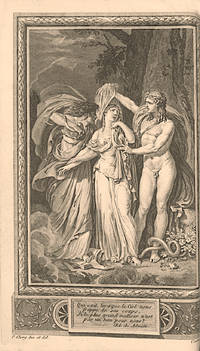
1791LCS-A103<p><strong>Original edition of <em>Justine</em> Sade's first work printed in 1791<br />"whose copies could be counted on the fingers of one hand." Pierre Berès</strong></p><p><strong>Pierre Berès described a copy of this 1791 original edition bound around 1890 by Lortic frères<br />"with large margins" height 190 mm priced at 375000 FF about 57500 33 years ago<br />Cat. 79 year 1989 no. 129.</strong></p><p><strong>Fine copy height 194 mm.</strong></p><p>2 volumes in 1 8vo. 1 frontispiece 283 pp. 2 ll. 191 pp.</p><p>Aubergine jansenist morocco spine with raised bands gilt filleted edges wide inner gilt roll gilt edges. <em>Binding signed by Petit around 1850.</em></p><p>194 x 122 mm.</p><p>"Original edition of the first work of Sade whose copies could be counted on the fingers of one hand." Pierre Berès.</p><p>The touching printed dedication of the book "A ma bonne amie" is addressed to the writer's faithful companion in misery Marie-Constance Quesnet; in this important apology for his writings Sade justifies his undertaking and asserts that his aim is to arrive at <em>one of the most sublime moral lessons ever given to man even if by a path little traveled until then.</em></p><p>A novel of adventure in the "dark genre" pushed to its paroxysm the book immediately met with considerable success. It appeared at the moment when the Constituent Assembly restored Sade's liberty after twelve years of captivity brought on by numerous clashes with his family and with society. Aristocrat allied with the Bourbons philosopher and libertine Sade grew fervent for the Revolution which disdained his services; kept in captivity after the fall of the Bastille from whose walls he incited passersby in early July 1789 the writer escaped the guillotine only thanks to the fall of Robespierre.</p><p>The frontispiece Neo-classical in style drawn and engraved by P. Chery under the direction of Antoine Carrée represents Virtue assailed by Lust.</p><p>"<em>It is under multiple aspects that one must consider the history of </em><em>Justine ou les Malheurs de la vertu</em><em>. The philosophy of the marquis de Sade is entirely summarized in the final tirade where Juliette exclaims in a triumphant voice: ' I admit it I love crime with fury; it alone inflames my senses and I will profess its maxims until the last moment of my life. Free from all religious fears knowing how to place myself above the laws by my discretion and by my wealth what power divine or human could therefore constrain my desires The past encourages me the present electrifies me I fear little for the future . Nature created men only so that they might amuse themselves with everything on earth; this is the dearest law it will always be that of my heart. Too bad for the victimsthere must be victims; everything in the universe would be destroyed without the profound laws of equilibrium; it is only through crimes that nature maintains itself and regains the rights that virtue takes from her. We obey her then by giving ourselves over to evil; our resistance is the only crime she should never forgive us. Oh! My friends let us convince ourselves of these principles; in their exercise are found all the sources of man's happiness.</em>'"</p><p>The Surrealists embraced this subversion considering the marquis de Sade as one of their most important forerunners. "A man who long remained famous only for having attached his name to a depravity a man whose conclusions in every domain are verified each day even outside his premises whose influence continues to grow and whom Baudelaire and Apollinaire did not hesitate to place in a class by himself the marquis de Sade appears as the first incarnation of the revolutionary spirit that the 19th century failed to stifle." <em>Louis Aragon and André Breton letter to Jacques Doucet</em> February 1922.</p><p>The original edition of 1791 and the new 1797 version are both equally rare and have essentially the same value.</p><p>Pierre Berès described a copy of the 1791 original bound around 1890 by Lortic frères "<em>with large margins</em>" height 190 mm priced at 375000 FF about 57500 33 years ago Cat. 79 year 1989 no. 129.<br />A copy of the 1797 edition incomplete by two engravings was sold for 160000 19 years ago in Belgium.<br />In June 2007 15 years ago Librairie P. Sourget catalogued a copy of this 1791 edition but bound in the 20th century by Tridullier priced at 75000.</p><p>Fine copy height 194 mm.</p><p>From the library of Edith Piaf's lyricist <em>René Rouzaud</em> with ex-libris "La Goualante."</p><p>Pia <em>Les Livres de l'Enfer</em> 388. Delon <em>Sade un athée en amour</em> Bibliothèque Bodmer 2014 no. 100. Bibliothèque de l'Arsenal <em>Les Choix de Pierre Leroy</em> 2016 no. 45.</p><p>FRANCAIS</p><p><strong>Edition originale de <em>Justine</em> le premier ouvrage de Sade imprimé en 1791</strong></p><p><strong>" <em>dont les exemplaires pourraient se compter sur les doigts</em>. " Pierre Berès.</strong></p><p><strong>Pierre Berès décrivait un exemplaire de cette originale de 1791 relié vers 1890 par Lortic frères</strong></p><p><strong>" <em>à belles marges</em> " hauteur 190 mm au prix de 375 000 FF environ 57 500 il y a 33 ans</strong></p><p><strong>Cat. 79 année 1989 n° 129.</strong></p><p><strong>Bel exemplaire hauteur 194 mm.</strong></p><p>2 tomes en un volume in-8. 1 frontispice 283 pp. 2 ff. 191 pp.</p><p>Maroquin aubergine janséniste dos à nerfs coupes filetées or large roulette intérieure tranches dorées. <em>Reliure signée de Petit vers 1850.</em></p><p>194 x 122 mm.</p><p>" Edition originale du premier ouvrage de Sade dont les exemplaires pourraient se compter sur les doigts. " Pierre Berès.</p><p>La touchante dédicace imprimée du livre " <em>A ma bonne amie "</em> s'adresse à la fidèle compagne de misère de l'écrivain Marie-Constance Quesnet ; dans cette importante apologie de ses écrits Sade justifie son entreprise et affirme que son dessein est d'aboutir à <em>l'une des plus sublimes leçons de morale que l'homme ait encore reçues fût-ce par une route peu frayée jusqu'à présent</em>.</p><p>Roman d'aventures du " genre noir " poussé à son paroxysme le livre eut immédiatement un succès considérable. Il paraissait au moment où la Constituante rendait à Sade sa liberté au terme de douze années de captivité que lui avaient valu des heurts nombreux avec sa famille et la société. Aristocrate allié aux Bourbons philosophe et libertin Sade s'enflamma pour la Révolution qui dédaigna son concours ; maintenu en captivité après la prise de la Bastille d'où il ameutait les passants au début du mois de juillet 1789 l'écrivain n'échappa à la guillotine que grâce à la chute de Robespierre.</p><p>Le frontispice de style néo-classique dessiné et gravé par P. Chery sous la direction d'Antoine Carrée représente la Vertu assaillie par la Luxure.</p><p>" <em>C'est sous de multiples aspects qu'il convient d'envisager l'histoire de " Justine ou les Malheurs de la vertu</em> ". <em>La philosophie du marquis de Sade y est tout entière résumée dans la tirade finale où Juliette s'écrie d'une voix triomphante : " . Je l'avoue j'aime le crime avec fureur lui seul irrite mes sens et je professerai ses maximes jusqu'au dernier moment de ma vie. Exempte de toutes craintes religieuses sachant me mettre au-dessus des lois par ma discrétion et par mes richesses quelle puissance divine ou humaine pourrait donc contraindre mes désirs Le passé m'encourage le présent m'électrise je crains peu l'avenir . La nature n'a créé les hommes que pour qu'ils s'amusent de tout sur la terre ; c'est la plus chère loi ce sera toujours celle de mon cur. Tant pis pour les victimes il en faut ; tout se détruirait dans l'univers sans les lois profondes de l'équilibre ; ce n'est que par des forfaits que la nature se maintient et reconquiert les droits que lui enlève la vertu. Nous lui obéissons donc en nous livrant au mal ; notre résistance est le seul crime qu'elle ne doive jamais nous pardonner. Oh ! Mes amis convainquons-nous de ces principes ; dans leur exercice se trouvent toutes les sources du bonheur de l'homme.</em> "</p><p>Les Surréalistes revendiquèrent cette subversion considérant le marquis de Sade comme l'un de leurs plus importants devanciers. " Un homme qui n'est resté longtemps célèbre que pour avoir attaché son nom à une dépravation un homme dont les conclusions dans tous les domaines se vérifient chaque jour en dehors même de ses prémisses dont l'influence va grandissant et que n'ont pas craint de mettre hors pair Baudelaire et Apollinaire le marquis de Sade apparaît comme la première incarnation de l'esprit révolutionnaire que le XIXè siècle n'est pas parvenu à étouffer <em>Louis Aragon et André Breton lettre à Jacques Doucet</em> février 1922.</p><p>L'édition originale de 1791 et la nouvelle rédaction de 1797 sont aussi rares l'une que l'autre et ont sensiblement la même valeur.</p><p>Pierre Berès décrivait un exemplaire de l'originale de 1791 relié vers 1890 par Lortic frères " <em>à belles marges</em> " hauteur 190 mm au prix de 375 000 FF environ 57 500 il y a 33 ans Cat. 79 année 1989 n° 129.</p><p>Un exemplaire de l'édition de 1797 incomplet de deux gravures fut adjugé 160 000 il y a 19 ans en Belgique.</p><p>En juin 2007 il y a 15 ans la Librairie P. Sourget cataloguait un exemplaire de cette édition de 1791 mais relié au XXè siècle par Tridullier au prix de 75 000 .</p><p>Bel exemplaire hauteur 194 mm.</p><p>De la bibliothèque du parolier d'Edith Piaf <em>René Rouzaud</em> avec ex-libris " La Goualante ".</p><p>Pia <em>Les Livres de l'Enfer</em> 388. Delon <em>Sade un athée en amour</em> Bibliothèque Bodmer 2014 n°100. Bibliothèque de l'Arsenal <em>Les Choix de Pierre Leroy</em> 2016 n°45.</p> chez les Libraires Associés (Paris Girouard).
179167693s. l. Londres London Paris Toulon. 1791. Fine. s. l. Londres London Paris Toulon. 1791-1832 12 000 feuillets de divers formats en feuilles Unpublished political scientific and historical archives The complete manuscript unpublished papers of Louis Chevalier de Sade 1753-1832 author of the Lexicon politique and cousin of the famous Marquis. The important geopolitical historical and scientific archives of a learned aristocrat a privileged witness of the end of the Ancien Régime the French Revolution the Consulate Empire and Restoration. A unique fund of research on the implementation of a constitutional monarchy. Exceptional collection of the Chevalier Louis de Sade's personal archives the cousin of the Marquis de Sade representing 12000 handwritten pages including several thousand unpublished and written by his hand. The Chevalier shows a thought system that he describes as «holistic» including historical political and scientific reflections. Louis Chevalier de SADE If we take the French Revolution as the birth of an experiment both secular and political the Chevalier de Sade was without doubt one of its early critics. Not only of the Revolution which had many other detractors but of its political ideology which would go on profoundly to impact the two hundred years that followed. What he calls «positive politics» is «based on reasoning and experience». «The theory did have some attractions for me; I studied it with care I savored its principles. Now I see their value only in terms of the impact of their implementation what we've seen them produce in the peoples of which history has given me knowledge. This is my method; I know that it is all in all the opposite of the methods utilized by the men who have governed us and written our constitutions to this very day without deviation. This continuous divergence between what has been done and what should never have been done increased my confidence in the path to be followed and at the same time fortified my determination to keep to the views I had adopted of judging laws by the historic consequences they entail rather than by the lyrical supposedly conclusive metaphysical arguments with which these innovators continually and still to this day assault us.» The Chevalier de Sade who saw the world in terms of his own time and place could be nothing other than a Royalist. There were practically no examples of democracy in the history known to the Chevalier apart from the Classical democracies of Greece and Rome which had been experiments only in very elitist forms of democracy. These were very well known to this political scientist whose papers contain 7000 pages dedicated to the history of the Classical world. The republic ushered in by the Revolution was more than just a political system it was the realization of a philosophical political ideal. And while most of those opposed to the new regime saw in it above all a threat to their personal situations their religious beliefs or even more simply their habits the writings of the Chevalier de Sade show no such dogmatic influence; or at least he never uses dogma to justify his arguments. Louis de Sade a gentleman without a fortune and without significant ties was conservative through philosophical and historical conviction and not out of interest. It is with this perfect intellectual honesty that he studies the essays memoirs and political or theoretical works of his contemporaries. Running counter to Enlightenment thought the Chevalier's view of society owed very little to philosophy. Though he puts together a serious theoretical history of the development of Man from the condition of «savages» to the forging of various societies he does not posit Man's ideal nature as some of his contemporaries did. Rather the Chevalier examines the gap between nature and the civilized being without passing moral or philosophical judgment as was the fashion at the time. «The political error that damned Europe in the 18th unknown