33 résultats
1888228430Paris: E Dentu 1888. Hardback Ex-Library with almost no markings in fair condition suitable as a reading copy 301 pages. French text. Please note the Image in this listing is a stock photo and may not match the covers of the actual item400grams ISBN: E Dentu hardcover
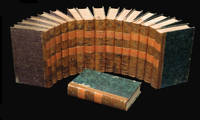
1813mon0003477182Paris: Longchamps; F. Buisson 1813. Hardcover. Very Good. . 16-volume set complete. Uniformly bound with green leather spines marbled boards gilt lettering and decoration. Pages lightly tanned with occasional minor scattered foxing. Slight rubbing to the boards and spine ends. Paris: Longchamps; F. Buisson hardcover
1813033116Paris: F. Buisson 1813. Book. Near Fine. Hardcover. First Edition. 8vo 18.5 x 12.5 cm. complete set of 15 volumes published from 1812 - 1813 portrait frontispiece to vol. 1 series two. The set comprising of; First series 1813 Longchamps & F. Buisson Paris depuis 1753 jusqu'en 1769 in 6 volumes. Second series 1812 Seconde Edition revue et corrigee F. Buisson Paris depuis 1770 Jusqu'en 1782 in 4 volumes . Third series 1813 F Buisson Paris pendant une partie des annees 1775 - 1776 et pendant les annees 1782 a 1790 inclusivement in 5 volumes. Attractively bound in half leather ornate bright gilt decoration to spine compartments two contrasting title labels on the spine. Binding fine and Content clean and tight A near fine complete frontispiece plate title page and numerous engraved plates. Bound in red leather with marbled covered boards page edges marbled six gilt decorated spine compartments with two contrasting leather title labels. Bindings near fine strong with very little sign of wear and rubbing joints firm no cracking. now with protective archival removable wrappers. Contents clean and tight a little toning to some blank pages private book plate belonging to Sir John Stuart Forbes no inscriptions or other marks. A near fine attractive set. Sir John Stuart Hepburn Forbes 8th Baronet of Monymusk of Fettercairn and Pitsligo FRSE 1804-1866 was a Scottish baronet landowner advocate and agriculturalist. F. Buisson Hardcover

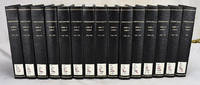
18292411140047Furne Paris 1829-1831 1829. Hardcover. Good. The World of the French Enlightenment 15 volume set. Rebound in sturdy modern black buckram cloth. Hardcover. Good binding and cover. Library stamps and markings. Scattered foxing toning. La Correspondance litteraire philosophique et critique was a cultural newsletter printed 1753-1790. Written by Friedrich Melchior baron von Grimm the newsletter also included contributions from Denis Diderot and Madame d'Epinay. Grimm's newsletter gives readers a window on a broad range of Parisian cultural affairs and includes occasionally biting criticism of contemporary literature art and theater. The Correspondance litteraire was where Diderot first published the Salons his essays of art criticism. Contents:T.I. 1753-1756; T.II. 1756-1760; T.III. 1761-1764; T.IV. 1764-1765; T.V. 1766-1768; T.VI. 1768-1770; T.VII. 1770-1772; T.VIII. 1772-1776; T.IX. 1776-1778; T.X. 1778-1781; T.XI. 1782-1783; T.XII. 1784-1785; T.XIII. 1786-1787; T.XIV. 1788-1789; T.XV. 1790-Opuscules; <br> This is an oversized or heavy book which requires additional postage for international delivery outside the US. Furne, Paris, 1829-1831 hardcover
1813283111813. Paris Longchamps / F. Buisson puis Buisson seul 1813. Trois parties reliÂŽes en 16 vol. au format in-8 208 x 133 mm de 2 ff. n.fol. vii - 509 pp. ; 2 ff. n.fol. et 478 pp. ; 2 ff. n.fol. et 550 pp. ; 2 ff. n.fol. et 571 pp. ; 2 ff. n.fol. et 564 pp. ; 2 ff. n.fol. et 559 pp. ; 2 ff. n.fol. xii - 515 pp. ; 2 ff. n.fol. et 526 pp. ; 2 ff. n.fol. et 440 pp. ; 2 ff. n.fol. et 594 pp. ; 2 ff. n.fol. et 397 pp. ; 2 ff. n.fol. iv - 512 pp. ; 2 ff. n.fol. et 557 pp. ; 2 ff. n.fol. et 574 pp. ; 2 ff. n.fol. et 694 pp. ; 2 ff. n.fol. et 699 pp. Reliures uniformes de l'ÂŽpoque de demi-basane marbrÂŽe fauve dos lisses ornÂŽs de filets gras et maigres dorÂŽs fleurons dorÂŽs piÂces de titre et de tomaison de maroquin chair titre dorÂŽ tomaison dorÂŽe tranches jaunes et mouchetÂŽes. Edition originale ; complÂte des 16 volumes la constituant. ''Cette sorte d'histoire littÂŽraire de la France qui comprend une sÂŽrie de prÂs de 40 ans offre un tableau assez complet de la littÂŽrature franÂaise pendant la derniÂre moitiÂŽ du XVIIIÂme siÂcle ; et qu'on ne lit pas sans intÂŽrÂt et profit.'' in QuÂŽrard. ''Cette correspondance embrasse ˆ la fois les moeurs les lois la philosophie les arts et la littÂŽrature et prÂŽsente une variÂŽtÂŽ piquante dans la maniÂre dont tous les sujets sont traitÂŽs. La Correspondance renferme par ailleurs un grand nombre de lettres de Voltaire pour certaines restÂŽes jusqu'alors inÂŽdites.'' Graesse III TrÂŽsor de livres rares et prÂŽcieux p. 155 pour une ÂŽdition ÂŽgalement millÂŽsimÂŽe 1813 mais parue chez Michaud / ChÂŽrou / Salgues / Suard - QuÂŽrard III La France littÂŽraire p. 479 - Brunet II Manuel du libraire et de l'amateur de livres 1741 - Cioranescu II Bibliographie de la littÂŽrature franÂaise du XVIIIÂme siÂcle 32478 et suivants. Papier marbrÂŽ diffÂŽrant selon les exemplaires. Petit manque superficiel en marge de deux plats. Frottements pouvant par ailleurs affecter le papier marbrÂŽ de quelques plats. Petit manque en marge supÂŽrieure de deux feuillets. Quelques cahiers oxydÂŽs. PrÂŽsence de quelques rousseurs et t‰ches claires dans les corps d'ouvrage. Nonobstant ensemble en belle condition. b42961 unknown
1829elala1448Paris: Furne Et Ladrange 1829. 1829. 15 Volumes. 8vo. with half-titles. original bds. some light to moderate foxing throughout Vol. XIII headpiece worn & with short splits in upper joints dampstaining to Vol. IX spine. Second and Best Edition greatly enlarged of the Correspondance Littéraire edited by Jules Taschereau. WITH: GRIMM Frédéric Melchior Correspondance Inédite Et Recueil De Lettres Poésies Morceaux Et Fragments Retranchés Par La Censure Impériale En 1812 Et 1813. 16 Volumes in total. First Edition of the Correspondance Inédite edited by Chéron and Thory. The German Baron Grimm was introduced to Parisian literary society through his friendship with Jean Jacques Rousseau and this led to a close association with the Encyclopédistes in particular with Denis Diderot. In 1753 he began a literary correspondence with various German sovereigns which he managed to carry on during temporary absences from France with the help of Diderot and Mme dÉpinay. The correspondence consisted of two letters a month until 1773 and Grimm eventually counted among his subscribers Catherine II of Russia Stanislas Poniatowski King of Poland and many princes of the smaller German states. His correspondence which embraces the entire period from 1753 to 1790 was strictly confidential and was not divulged during his lifetime. It is one of the most celebrated of the eighteenth century. "At first Grimm contented himself with enumerating the chief current views in literature and art and indicating very slightly the contents of the principal new books but gradually his criticism became more extended and trenchant and he touched on nearly every subject political literary artistic social and religious which interested the Parisian society of the time. His notices of contemporaries are somewhat severe and he exhibits the foibles and selfishness of the society in which he moved; but he was unbiased in his literary judgments and time has only served to confirm his criticisms. In style and manner of expression he is thoroughly French. He is generally somewhat cold in his appreciation but his literary taste is delicate and subtle; and it was the opinion of Sainte-Beuve that the quality of his thought in his best moments will compare not unfavourably even with that of Voltaire. His religious and philosophical opinions were entirely negative." Encyc. Britann 11th Edn. Also noteworthy here are Diderots contributions in particular his accounts of the annual exhibitions of paintings in Paris: "These Salons are among the most readable of all pieces of art criticism. They have a freshness a reality a life which take their readers into a different world from the dry and conceited pedantries of the ordinary virtuoso. As has been said by Sainte-Beuve they initiated the French into a new sentiment and introduced people to the mystery and purport of colour by ideas." Encyc. Britann. 11th Edn. Many of Diderots writings were not published in his lifetime circulating only in manuscript and eventually appearing here with his friend Grimms correspondence. Brunet II 1740-41. Cioranescu 32482-83. Quérard III 1136-38. Vicaire III 1136-38. 1st Edition. Paris: Furne Et Ladrange, 1829. unknown
187756018n128Paris: Garnier Freres 1877. Book. Very Good. Hardcover. 8vo - over 7¾ - 9¾" tall. Published 1877-79. 16 volumes in matching contemporary quarter morocco over marbles boards. Edges speckled; marbled endpapers. Some moderate wear and scuffing to covers and edges. Otherwise clean tight and unmarked. Very neat -- a very sound and handsome intact and completely workable set. Garnier Freres Hardcover
1887A9-N3SZ-5F9CJan 01 1887. 1898Bon etat pour son agedos de couverture un peu abiméextremites assez frottéesinterieur tres propreaffranchissement philatelique la plupart du tempsnombreux livres dans mon stockenvoi rapide et soigné unknown
1802031070Paris France: Agasse 1802. Hardcover. Very Good. 2 leather bound books. One of text half-title title page advertisement page and 298 pages of text in-text vignettes in woodcut. Second of the plates; short of 2" taller than former title page 54 woodcut plates two of which 27 & 42 double page. Uniformly and professionally rebound in full leather new end-papers six compartment to spine gilt title label. Slight unrecognized darkening to first pages up to ad page to text vol and unobtrusive foxing through out. Slight foxing to title page to plates vol. Most plates clean and sharp. 4to. Agasse hardcover
187977381Paris:: D. & J. L. D'Alambert. ca. 1879-70. modern cloth. Some light staining around the edges of just one engraved plate; otherwise fine. Folio. 12 engraved plates depicting a variety of earthenware forms kilns tools moulds racks etc. D. & J. L. D'Alambert. hardcover
1802291825Milan 1802. hardcover. very good. 111 pages. Slim 12mo 1/2 contemporary mottled calf marbled boards. Milan: 1802. Light foxing throughout still a very good copy.<br/> <br/> unknown
18141296344London: Henry Colburn 1814. Hardcover. Octavos 2 volumes; Poor; 3/4 bound in brown leather marbled boards; paneled spines one compartment with burgundy label one with an ex-library sticker label on volume 1 has been lost; severe wear and rubbing to boards and binding; gutter visible on ffep of volume 1 with front board and spine detached from text block but attached to rear board at hinge volume 2 nearly detached in a similar manner but still held together; ex-library with usual stamps bookplates and stickers; volume 2 lacking front endpapers all pages after 486;. 1296344. Rockville Non-Retail Listings. Henry Colburn hardcover
18611006211861. Paris Hachette 1861. iv82pp. Original wrappers dustsoiled. unknown
1886AQ27833Paris: P. Arnould 1886. 2 412pp. With an engraved frontispiece and one further engraved plate by P. Kauffmann. Attractively bound in contemporary gilt-tooled red half-morocco marbled boards T.E.G. Very minor shelf-wear. Marbled endpapers later bookplate of E. L. Allhusen to FEP recent bookplate of Robert J. Hayhurst to recto of FFEP leaves toned. A late nineteenth century edition of Diderot’s perennially popular epistolary novel first published in 1782. Though initially conceived as an elaborate practical joke not intended for literary consumption the work would become a passion project for Diderot one that would allow him to expose the supposed rampant corruption within the religious institutions of France through the narrative of a young girl forced against her will into a Catholic convent. . 16mo. P. Arnould hardcover
182139082Paris: Delauney and J.L.J. Brière 1821. THE TWO FIRST EDITIONS OF DIDEROT'S GREATEST LITERARY AND PHILOSOPHICAL MASTERPIECE. The first item published by Delaunay in 1821 is actually a re-translation into French of Goethe's German translation. vii 262 pp complete with the publisher's catalogue and the frontispiece depicting the title character with a crazed expression. The second item published in 1823 but dated 1821 is the first edition of the true French text. 3 XXVII 394 pp complete with the "table chronologique des uvres de Diderot" which is often missing. 8vos. The first item is bound late 19th-century three-quarters morocco and decorated boards. ORIGINAL WRAPS AND BACKSTRIP PRESERVED. Top edge gilt other edges uncut. A bit of wear to extremities of binding but internally fine and bright. The second item is bound in recent white ivory boards. Some discoloration to paper as always but otherwise fine and bright. AN OUTSTANDING SET OF THE TWO FIRST EDITIONS OF ONE OF THE GREAT MASTERPIECES OF THE EUROPEAN LITERARY TRADITION. <br/><br/> Delauney [and] J.L.J. Brière paperback
1821352133Paris: Delaunay libraire Palais-Royal 1821. First Paris edition retranslation into French from Goethe's German version of 1805. Published the same year as the edition of Diderot's Works containing the original French text. Frontispiece. 4 262 pp. 1 vols. 8vo. Half blue morocco and marbled boards t.e.g. by David. Fine. Bookplate of Ross Ambler Curran. First Paris edition retranslation into French from Goethe's German version of 1805. Published the same year as the edition of Diderot's Works containing the original French text. Frontispiece. 4 262 pp. 1 vols. 8vo. Diderot's great satire attractively bound. Delaunay, libraire, Palais-Royal unknown
18831412497Paris: A. Quantin 1883. Hardcover. Octavo 279 pages. In Fair plus condition. Spine is brown with gold print raised bands. Boards half bound with brown leather to spine and corners and marbled paper to boards; leather is dry and cracking worn hinges with tear to front hinge wear to spine caps and corners. Text block has gilt top edge marbled endpapers multicolor ribbon marker red line framed text: penciled name on front endpapers cracked hinges spine crack at page 144. Illustrated: b&w frontispiece portrait one folded plate facsimile. Text in French.<br /> <br /> NOTE: Shelved in Netdesk Column BB. 1412497. FP New Rockville Stock. A. Quantin hardcover
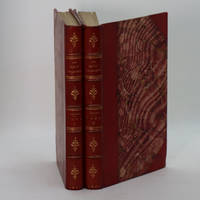
1881FB920 (1 & 2) /6A<p>Red leather spine and corners. Red marbled boards. Gilt lettering and banding on the spine. No 499 of a limited edition of 500. Dimensions are for one volume. Could be described as early humorous pornography <strong> In French</strong></p><p><strong><em>The Indiscreet Jewels</em></strong> or <strong><em>The Indiscreet Toys</em></strong> or <strong><em>The Talking Jewels</em></strong>; French: <strong><em>Les Bijoux indiscrets</em></strong> is the first novel by Denis Diderot published anonymously in 1748. It is an allegory that portrays Louis XV of France as Mangogul Sultan of Congo who owns a magic ring that makes women's vaginas "jewels" talk. The character of Mirzoza represents Louis XV's mistress Madame de Pompadour. Diderot portrayed Pompadour in a flattering light in <em>The Indiscreet Jewels</em> most likely to ensure her support for his <em>Encyclopedie.</em> <em>'Sultan Mangogul of Congo is bored with life at court and suspects his mistress Mirzoza of infidelity. A genie presents him with a magical ring that has unique properties. When the ring is rubbed and pointed at the vagina of any woman the vagina begins speaking about its amorous experiences to the confusion and consternation of its owner. The Sultan uses the ring about thirty times usually at a dinner or other social gathering and on these occasions the Sultan is typically visible to the woman. However since the ring has the additional property of making its owner invisible when required a few of the sexual experiences are recounted through direct observation as the Sultan makes himself invisible in the unsuspecting woman's boudoir.'</em></p><p><strong>Denis Diderot</strong> 5 October 1713 – 31 July 1784 was a French philosopher art critic and writer best known for serving as co-founder chief editor and contributor to the <em>Encyclopédie</em> along with Jean le Rond d'Alembert. He was a prominent figure during the Age of Enlightenment. Diderot initially studied philosophy at a Jesuit college then considered working in the church clergy before briefly studying law. When he decided to become a writer in 1734 his father disowned him. He lived a bohemian existence for the next decade. In the 1740s he wrote many of his best-known works in both fiction and non-fiction including the 1748 novel <em>The Indiscreet Jewels</em>. In 1751 Diderot co-created the <em>Encyclopédie</em> with Jean le Rond d'Alembert. It was the first encyclopedia to include contributions from many named contributors and the first to describe the mechanical arts. Its secular tone which included articles skeptical about Biblical miracles angered both religious and government authorities; in 1758 it was banned by the Catholic Church and in 1759 the French government banned it as well although this ban was not strictly enforced. Many of the initial contributors to the <em>Encyclopédie</em> left the project as a result of its controversies and some were even jailed. D'Alembert left in 1759 making Diderot the sole editor. Diderot also became the main contributor writing around 7000 articles. He continued working on the project until 1765. He was increasingly despondent about the <em>Encyclopédie</em> by the end of his involvement in it and felt that the entire project might have been a waste. Nevertheless the <em>Encyclopédie</em> is considered one of the forerunners of the French Revolution. Diderot struggled financially throughout most of his career and received very little official recognition of his merit including being passed over for membership in the Académie française. His fortunes improved significantly in 1766 when Empress Catherine the Great who heard of his financial troubles paid him 50000 francs to serve as her librarian. He remained in this position for the rest of his life and stayed a few months at her court in Saint Petersburg in 1773 and 1774. Diderot's literary reputation during his life rested primarily on his plays and his contributions to the <em>Encyclopédie</em>; many of his most important works including <em>Jacques the Fatalist Rameau's Nephew</em> <em>Paradox of the Actor</em> and <em>D'Alembert's Dream</em> were published only after his death.</p><p>The <strong>Age of Enlightenment</strong> also known as the <strong>Age of Reason</strong> or simply <strong>the Enlightenment</strong> was an intellectual and philosophical movement that dominated the world of ideas in Europe in the 17th and 18th centuries. The Enlightenment included a range of ideas cantered on the value of human happiness the pursuit of knowledge obtained by means of reason and the evidence of the senses and ideals such as liberty progress toleration fraternity constitutional government and separation of church and state. The Enlightenment has its roots in a European intellectual and scholarly movement known as Renaissance humanism and was also preceded by the Scientific Revolution and the work of Francis Bacon among others. Some date the beginning of the Enlightenment back to the publication of René Descartes' <em>Discourse on the Method</em> in 1637 featuring his famous dictum <em>Cogito ergo sum</em> "I think therefore I am". Others cite the publication of Isaac Newton's <em>Principia Mathematica</em> 1687 as the culmination of the Scientific Revolution and the beginning of the Enlightenment. European historians traditionally date its beginning with the death of Louis XIV of France in 1715 and its end with the 1789 outbreak of the French Revolution. Many historians now date the end of the Enlightenment as the start of the 19th century with the latest proposed year being the death of Immanuel Kant in 1804. Philosophers and scientists of the period widely circulated their ideas through meetings at scientific academies Masonic lodges literary salons coffeehouses and in printed books journals and pamphlets. The ideas of the Enlightenment undermined the authority of the monarchy and the Catholic Church and paved the way for the political revolutions of the 18th and 19th centuries. A variety of 19th-century movements including liberalism communism and neoclassicism trace their intellectual heritage to the Enlightenment. In France the central doctrines of the Enlightenment philosophers were individual liberty and religious tolerance in opposition to an absolute monarchy and the fixed dogmas of the Church. The Enlightenment was marked by an emphasis on the scientific method and reductionism along with increased questioning of religious orthodoxy—an attitude captured by Immanuel Kant's essay <em>Answering the Question: What is Enlightenment</em> where the phrase <em>Sapere aude</em> Dare to know can be found.</p> Gay & Douce. hardcover
1884693<p>Brochure with handmade cover using the original cover. Pages yellowed and oxidized by time.</p> Auguste Ghio paperback
186100246790Hachette Paris 1861. Softcover. Good. 1861 edition; Parts spine missing; cover loosening. Hachette, Paris paperback
183469789-A-65964Paris: Paulin 1834. Halfleather bindings with marbled boards. 434 449 459 517 pp. -spines scratched and vol. 1 and 4 partly loosened boards slightly discoloured paper rust spotted otherwise in good condition front endaper vol. 1 loosened vol. 1 ex-libris. written on half-titles: E. Kossmann / Paris 1886 Paulin hardcover
1821mon0003515468Paris: J.L.J. Briere 1821. Hardcover. Good. . 3-volume set French language text. Rebacked spines covers show minor wear and fading. Pages are lightly foxed. Paris: J.L.J. Briere hardcover
18805796826Garnier Freres 1880. Volume 2. This is an ex-library book and may have the usual library/used-book markings inside.This book has hardback covers. In good all round condition. Re-bound by library. Library sticker on front cover.Medium 8vo. Green library cloth with gilt lettering on backstrip. Bumped corners light exterior wear. Interior is secure clean and clear. Light foxing. Original paper cover secured at rear. Trimmed. Please note the Image in this listing is a stock photo and may not match the covers of the actual item550grams ISBN: Garnier Freres hardcover
187769126Paris : Librairie des Bibliophiles - Jouaust 1877-1879. 230x160mm. XXXI- 282 p. - 374 p. - III- 311 p. - 300 p. - 305 p. IV- 336 p. broch. couverture remplie. Couverture demi-basane bleue auteur titre et tomaison dors au dos plats papier marbr sous embotage cartonn. Tirage en grand papier 15 sur Chine 15 sur Whatmann et 170 sur Hollande 1 des 15 exemplaires sur Chine n¡ 7 avec le portrait grav en deux tat. 2757 Librairie des Bibliophiles - Jouaust unknown
1876222042Paris: Garnier Freres 1876. Beaux-Arts IV Miscellanea Encyclopedie A-B. Cover slightly worn pages beginning to spot.HardbackEx-Librarywith usual stamps markings in fair to good all-round conditionno dust jacket521pages. French text. Please note the Image in this listing is a stock photo and may not match the covers of the actual item1100grams ISBN: Garnier Freres hardcover