33 résultats
183025217Leipzig: Kohler 1830. hardcover. very good-. Nach der dreizehnten Auflage aus dem Franzosischen bearbeitet und mit Anmerkungen begleitet von einem Arzte. 204pp. 12mo contemporary calf-backed boards rebacked with cloth tips worn front hinge reinforced. Leipzig: Karl Franz Kohler 1830. Good.<br/> <br/> Translation of De la connaissance du temperament.Paris 1830 a handbook on diagnosing all diseases. Extremely rare; not in NUC or Wellcome.<br/> <br/> Kohler unknown
18301301830. Etching drypoint and roulette on watermarked Hallines cream laid paper 3 3/4 x 5 7/8 inches 95 x 148 mm full margins. A very good impression of this charming image with all of the fine lines printing clearly. Plate is inky and well-wiped. Scattered light surface soiling age tone and mat tone. Several scattered spots of foxing all outside of image area. Issued 1908 as the frontispiece in Le Peintre-Graveur Illustre third volume: Ingres and Delacriox. Sixth state of 6. <br /> <br /> Delteil 12. unknown
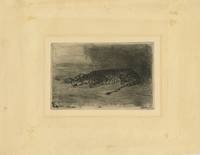
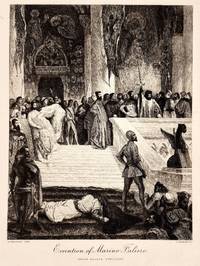
18642167London: George Barrie 1864. Etching with engraving on buff cream laid paper 12 x 6 inches 305 x 152 mm; sheet 16 1/2 x 10 3/4 inches 420 x 273 mm full margins. Scattered areas of discoloration and toning notation in pencil in the lower right sheet area beneath the platemark. Marino Faliero the 55th Doge of Venice was beheaded for treason on April 17 1355 at the top of the "del Piombo" staircase in the Doge's Palace. After his plot to overthrow the government was discovered he was sentenced to death executed and his portrait was replaced with a black veil. Here Faliero's body lies at the bottom of the steps while the executioner holds the sword used in the beheading high above his shoulder in one hand and Faliero's head mostly obscured by the balustrade in the other. George Barrie unknown
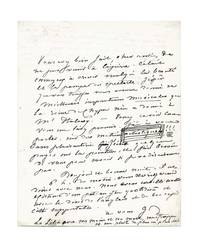
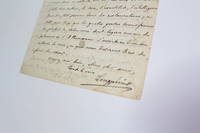
1841Sand14<p><strong>DELACROIX SAND George 1804-1876</strong></p><p>Autograph letter signed " G.S. " to Eugène Delacroix<br />Paris Postal mark 23rd December 1841 1 p. 1/2 in-8°<br />Autograph address on fourth folio wax seal : " Monsieur Delacroix rue des Marais Saint Germain 17 "</p><p><strong>Superb letter to her friend Delacroix about her desire to write "a few pages on painting" the <em>Femmes d'Alger</em> her contempt for the <em>Ingresque</em> school and other artistic news</strong></p><p><em>" Vous avez bien fait cher ami de ne pas venir à l'Opéra. <strong>C'était ennuyeux à crever malgré la beauté et la pompe du spectacle.</strong> J'espère que vos truffes vous auront donné de meilleures inspirations musicales que la reine de Chypre n'en a donné à Mr Halevy.1</em><br /><strong><em>Venez ce soir comme vous me l'avez promis. J'ai à vous parler sur des matières artistiques !!!</em></strong> le mot est entouré par Sand d'un triple trait de plume.<strong><em> Sans plaisanterie j'écris quelques pages sur la peinture et j'ai besoin de vous pour savoir si je ne déraisonne pas. </em></strong><em>2</em><br /><em>Bonjour et bonne nuit. Il est 6h du matin. Vous devriez venir dîner avec nous. Nous avons embelli notre existence d'un pot-au-feu quotidien et avec le dîner de l'anglais3 et du bon café c'est supportable.</em><br /><em>G.S.</em><br /><strong><em>La Lélia</em></strong><em>4<strong>avec son moine et son mort me frappe et me plaît de plus en plus c'est ce qui m'a mise en veine d'écrire sur la couleur et ce qu'il faut entendre par la forme. Avec ça j'ai vu vos femmes d'Alger</strong>5 ce matin. Si vous m'encouragez je suis capable de faire le prochain salon dans notre revue</em> La Revue indépendante<em> et <strong>vous savez que je ne caponnerai pas</strong></em> ne se montrera pas lâche <strong><em>avec tout cette école silhouettiste</em></strong><em>6<strong> qui se dit en possession du dessin</strong> ".</em></p><p>1 <em>La Reine de Chypre</em> an opera in five acts by Halévy to a libretto by St. George took place the day before December 22 1841. Unlike George Sand Richard Wagner who was also present at the premiere considered the music "noble moved and even new and exhilarating" although he criticized Halévy's failings in simple orchestration.<br />2 In Horace which George Sand was then writing she staged a rapin a pupil of Delacroix but there were no "few pages on painting". Is this an article intended for the Independent Review – which it has just created – but which it has renounced The word written in postscript confirms that it is an aesthetic reflection that focuses on "color" and "form".<br />3 Possible reference to an English restaurateur or caterer frequented by George Sand.<br />4 <em>Lélia avec son moine et son mort</em> is the third work offered by Delacroix to George Sand for the gifts of 1842. It is a pastel depicting Lélia kneeling near Stenio's corpse while the monk Magnus "in the shadows leaning stiffly against the wall of the cave darted on her his sparkling eyes". The subject was treated several times by Delacroix.<br />5 This is the <em>Femmes d'Alger dans leur appartement</em> a painting presented at the Salon of 1834 where it caused a sensation. A synthesis of orientalism and romanticism this painting expresses a deep "melancholy" for the poet and art critic Baudelaire.<br />6 George Sand refers to the school of Ingres as a "Silhouettist school". We know the adversity between the two painters that animated the artistic scene of the nineteenth century. The writer had resolutely taken Delacroix's side that of "form" and "color".</p><p><u>Bibliography:</u><br /><em>George Sand</em> – Correspondance t. V Lubin Garnier p. 529-531 lettre n°2369<br /><em>Correspondance</em> éd. Françoise Alexandre Les éditions de l'Amateur p. 117-118 n°50</p><p><u>Provenance:</u><br />Achille Piron Delacroix's universal legatee<br />Bibliothèque Marc Loliée</p>
1842Sand29<p><strong>DELACROIX SAND George 1804-1876</strong></p><p><u>Two autograph letters</u> signed " GS " to Eugène Delacroix<br />Nohant 6 & 7 July 1842 3 p. in-8° in total in black ink<br />Autograph addresses on verso<br />Stamp marks previous trace of mounting</p><p><strong>Saddened by the departure of her "good little" Delacroix after the latter's stay in Nohant in the company of Chopin and the rest of the Sand family the writer found herself immersed in her reading of <em>Les Mystères de Paris</em></strong></p><p><strong><u>From the Marc Loliée library</u></strong></p><p><em>" <strong>Cher bon petit</strong> J'espère que vous êtes arrivé à bon port sans trop souffrir de la chaleur qui a été modérée le jour de votre départ. Vous avez oublié ici quelques effets dont Maurice a fait une caisse laquelle part aujourd'hui. Comme le port en est payé accusez-en réception afin qu'elle ne s'égare pas sans que nous la fassions réclamer. J'ai encore retrouvé dans mes mouchoirs un mouchoir à vous. Je vous le mets à part ainsi que ceux qui pourraient se retrouver au prochain blanchissage. <strong>Que Jenny</strong></em> la gouvernante de Delacroix <strong><em>ne nous accuse donc pas de vous avoir grinché vos zardes</em></strong>¹<em>. – <strong>Je lis le Chourineur et je vous assure que malgré l'horreur du sujet et des détails</strong></em>²<strong><em> c'est jusqu'à présent fort intéressant et fabriqué avec beaucoup de talent</em></strong><em>. – <strong>Nous sommes restés tout tristes et tout déconfits de votre départ</strong>. Nous tâchons de jouer au billard mais je crois que vous avez emporté le carambouillage</em>³<em> dans votre poche et que vous ne nous avez laissé que le manque de touche. J'attends avec impatience un petit mot de vous. <strong>Nous sommes encore trop chagrins pour vous en dire long aujourd'hui</strong>. Et puis l'heure me presse. À présent cher soyez bien portant. Si vous nous regrettez autant que nous vous regrettons faites un effort pour nous oublier jusqu'à notre retour </em>Sand et Chopin rentreront à Paris le 31 juillet<em> alors vous nous raimerez de nouveau. <strong>Adieu moi et tous vous embrassons et vous aimons</strong>.<br />GS. "</em></p><p><em>" Cher ami mon dadet </em>sic <em>de Thomas </em>peut-être Thomas Aucante autrefois vacher<em> a commencé le cours de bêtises auxquelles je dois m'attendre en ne payant pas le port de la caisse que je vous ai envoyée hier. Si bien qu'il faut que vous le sachiez afin de n'avoir pas de contestation avec l'administration. Accusez-moi réception car tout ceci a été fort mal fait malgré mes précautions.<br />Nous nous portons bien. <strong>Nous vous aimons. J'ai rêvé de vous toute la nuit</strong> ; j'espère que c'est bon signe et que vous êtes bien portant.<br />À vous<br />GS. "</em></p><p>In response to his friend's repeated invitations Delacroix spent nearly two weeks in Nohant in June 1842. He wanted above all to rest "vegetate" as he put it and enjoy the pleasures of the countryside. Back in Paris he replied on the 8th stating that he had received the crate and calling the person who had brought it to him a cheat and an imposter demanding postage. He asked his friend for a small purse left in Nohant a purse that Solange had given him and a small cord from Algiers. He concluded: "The weather is awful for the nerves. When you dreamed that you saw me did you dream that you were the Duchess of Berry I send you all my sincere embraces but I am very sad" Corr. gén. de Delacroix t. II p. 116.</p><p>Using the slang present in Eugène Sue's work we understand that Sand is here in the middle of reading The Mysteries of Paris. The serial novel published in the Journal des débats from June 19 1842 to October 15 1843 inaugurated mass literature in the 19th century and earned its author immense fame in all social classes.</p><p><u>Provenance:<br /></u>Bibliothèque Marc Loliée<br /><u><br />Bibliography:<br /></u><em>Correspondance</em> t. V éd. G. Lubin Garnier n°2477 & 2478</p>
185414648Paris: La Revue des deux mondes 1854. Fine. La Revue des deux mondes Paris 15 juillet 1854 15.50 x 25 cm broché First edition. Eugène Delacroix's articles would only be collected after his death in 1865 and printed in only 300 copies. In original wrappers. La Revue des deux mondes unknown
185414647Paris: La Revue des deux mondes 1854. Fine. La Revue des deux mondes Paris 15 juillet 1854 15.50 x 25 cm broché Published before the first edition. Softcover as issued. La Revue des deux mondes paperback
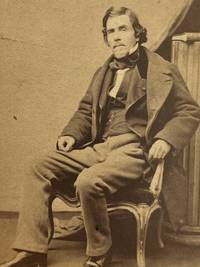
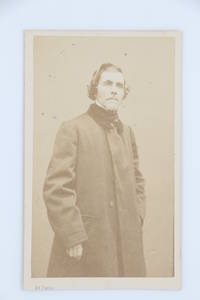
185884082Paris: Pierre Petit 1858. Fine. Pierre Petit Paris 1858 6 x 10.40 cm une feuille An original albumen carte-de-visite photograph of Eugène Delacroix depicting the artist seated in a chair his most famous portrait. The session at Pierre Petits studio yielded multiple poses; variants of this print survive at the Musée dOrsay and the Metropolitan Museum of Art New York. Mounted on card with Pierre Petits signature in the lower margin and his studio advertisement on the verso. Pierre Petit unknown
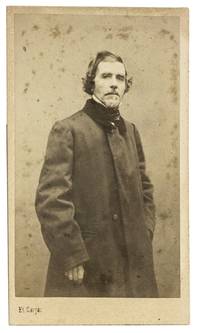
186071194Paris: Carjat et Cie 1860. Fine. Carjat et Cie Paris s. d. circa 1860 6 x 10.30 cm une photographie Photographic portrait of Eugène Delacroix Carjat et Cie Paris n.d. circa 1860 6 x 10.3 cm photograph Original photograph on albumin paper in a visiting-card format laid down on card. Foxing. Very rare copy of this photograph only found at Carnavalet Louvre and Orsay museums. Carjat et Cie unknown
186078831Paris: Carjat et Cie 1860. Fine. Carjat et Cie Paris s. d. circa 1860 6 x 10.30 cm une photographie Photographic portrait of Eugène Delacroix Carjat et Cie Paris ca 1860 6 x 103 cm one photograph Original photograph on albumen paper in carte de visite format mounted on a board. Some small foxing. Rare copy of this photograph only found at Carnavalet Louvre and Orsay museums. Carjat et Cie unknown
1880179399Paris: Chez l'Auteur 1880. Hardcover. Good pages are very brittle with beginning pages loose from binding age toning to pages as expected but pages are otherwise clear. Light shelfwear/staining to boards. Green cloth boards with gilt spine lettering 25 pages 1 folded leaf of plates bw illustrations. Text is in French. Text and designs by Alfred Robaut. A rare volume. Chez l'Auteur hardcover
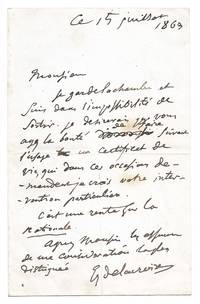
1863Dela1<p><b>DELACROIX Eugène 1798-1863</b></p><p>Autograph letter signed <i>" E Delacroix "</i> to an unknown recipientParis 6 rue de Fürstenberg 15 July 18631 page in-8 on double sheet.Fold marks some light stains.</p><p><b>Moving letter from Delacroix one of his very last ones less than a month before his passing</b></p><p><b><br /></b></p><p><i>"Monsieur <b>Je garde la chambre et suis dans l'impossibilité de sortir.</b> Je désirerais que vous ayez la bonté de faire suivant l'usage un certificat de vie qui dans ces occasions demandent je crois votre intervention particulière. C'est une rente sur la national. Ayez monsieur les assurances de ma considération la plus distinguée. E Delacroix"</i></p><p><i><br /></i></p><p><i><br /></i></p><p>Delacroix's health had considerably deteriorated at the beginning of July 1863 evidenced here by an unprecise writing. The following week he would confess to his long term friend George Sand "<i>Writing is for me unbearable</i>" . He would pass away on August 13th 1863.</p><p>This letter is not published in the general correspondence by Joubin.</p>
18281166<p>1828. Lithograph. L. Delteil 67 iv/vi after the address of Villain. Image: 10 x 7¼. Margins: 15½ x 11. Flaws in the margins. From the set of 17 illustrations to Goethe's Faust published 1828.</p> Villain
186872798BesanÂon : Imprimerie Dodivers 1868. 225145mm. 1 plan dÂŽp. des thermes brochÂŽ. DÂŽchirures au dos intÂŽrieur propre. Envoi de lÕauteur sur page de garde. Ex libris. 162 Imprimerie Dodivers unknown
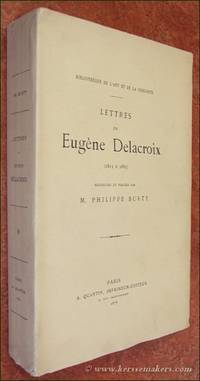
187830347Paris: A. Quantin 1878. Original wrappers paperback xx394 pp.: portr. 2x facs. fold-out lithograph plate in color; 26x17 cm. Uncut unopened. "Bibliothèque de l'Art et de la Curiosité" Text in French spine slightly folded some minor spots protection paper of lithograph plate bit damaged because because he was stuck to the plate Although in very good original condition see picture. Limited edition: '50 exemplaires sur papier de Hollande numérotés. Exemplaire No 30' A. Quantin paperback
187828585Paris: Quantin 1878. Quantin unknown
1852713631852. Fine. 13 septembre 1852 12.20 x 19 cm une feuille Long autograph letter signed by the archaeologist and curator of antiquities at the Louvre Museum Adrien de Longpérier to a journalist 4 pages on a folded sheet. In this fascinating letter about Eugène Delacroix the curator of Egyptian antiquities Longpérier castigates a journalist author of a harsh critique of the painter's ceiling at the Galerie d'Apollon in the Louvre: ""mais quand il s'agit seulement d'un plafond fait pour une galerie roccoco quand du reste j'ai reconnu que cet ouvrage produit un excellent effet décoratif que le ton général est parfaitement adapté à la place et qu'outre cela le tableau contient un certain noombre de détails traités avec un véritable talent je ne vois pas la nécessité d'aller attaquer très vivement très rudement non seulement l'oeuvre mais encore la personne de l'artiste"" ""but when it concerns merely a ceiling made for a rococo gallery when moreover I have recognized that this work produces an excellent decorative effect that the general tone is perfectly adapted to the place and that besides this the painting contains a certain number of details treated with real talent I do not see the necessity of going to attack very vigorously very harshly not only the work but also the person of the artist"". Delacroix had created a composition entitled Apollon terrassant Python for the gallery built under Louis XIV and newly restored under the Second Republic. In the midst of the Romantics' quarrel Longpérier also mentions Jean-Auguste Dominique Ingres himself the author of a ceiling at the Louvre L'apothéose d'Homère: ""Comme vous avez l'imprudence de mettre le plafond d'Homère en parallèle avec celui d'Apollon vous n'eussiez pas pu empêcher que dans la discussion on ne s'en prit à votre vénérable ami. Croyez vous que si Ingres qui aime si peu la discussion vous eu su un bien grand gré de ces horizons que vous lui eussiez procurés . Imaginez-vous que vous ayez fait le sacrifice d'une somme assez considérable pour fonder un journal et que je vous apporte un article violent contre M. Ingres Je dis : imaginez car je suis moi un admirateur de M. Ingres et n'ai en aucune manière envie de le critiquer . Iriez-vous donner aide à celui qui voudrait le combattre "" ""Since you have the imprudence to put Homer's ceiling in parallel with that of Apollo you could not have prevented that in the discussion people would attack your venerable friend. Do you believe that if Ingres who so dislikes discussion would have been very grateful to you for these horizons that you would have provided him . Imagine that you had made the sacrifice of a considerable sum to found a journal and that I bring you a violent article against M. Ingres I say: imagine for I am myself an admirer of M. Ingres and have no desire whatsoever to criticize him . Would you go to aid the one who would want to fight him"". Ingres the painter representing the classical school had his preference unlike Delacroix the Romantic whose style he did not appreciate but whose human qualities he nevertheless recognized: ""J'ai reconnu que c'est un homme très doux très poli fort instruit et fort modeste . Je parle de l'homme ; quant à ses oeuvres elles sont plus ou moins bonnes. Il y en a même de fort mauvaises"" ""I have recognized that he is a very gentle man very polite well educated and very modest . I speak of the man; as for his works they are more or less good. There are even some very bad ones"". Longpérier speaks at length about the restoration work at the Louvre led by the architect Félix Duban who supervised the renovation of the Galerie d'Apollon and other major projects: ""Je verrais avec grand plaisir que vous fissiez sentir le mérite de la restauration de la galerie d'Apollon de la façade du jardin de l'infante de la façade d'Henri IV sur le quai et du plafond de la Salle des sept cheminées décoré avec tout de goût de f unknown
1837894P35Paris: Gaume Freres 1837. Leather. Very Good. 5.5" by 3.5". None. A very scarce French textbook on the wonders of nature a concise and educational work. The second edition of this very scarce work. The only record of this work being held institutionally is at the Bibliotheque Nationale de France.In the original French.A study on the wonders of nature in which the author presents concise explanations for a variety of natural occurrences and phenomena.With chapters on the elements earthquakes mountains the position of the sun the moon eclipses the sea and her use and more as well as notes on the nature of humans such as vision gout spirit the creation of man man's dignity and the difference between men and animals. Half-title is present.Written by Frederic-Titeux Delacroix. Ink inscription to the front paste down dated 1837. In a half calf binding with marbled paper to the boards. Externally generally smart with light rubbing to the spine and extremities and lighter rubbing to the boards resulting in a small patch of loss to the tail of the rear board. A few very light marks to the boards. Minor bumping to the extremities. Prior owner's ink inscription to the front paste down. Internally firmly bound. Pages are bright with the occasional scattered spot. Faint tide mark to the bottom edge a little heavier to the final 40 pages of text. Very Good Gaume Freres hardcover
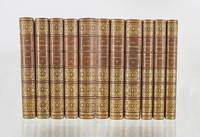
184077055Paris: Léon Curmer 1840. Fine. Léon Curmer Paris 1840-1842 18 x 26.50 cm 11 volumes reliés Les Français peints par eux-mêmes. Encyclopédie morale du dix-neuvième siècle Le Prisme with Les Anglais peints par eux-mêmes The French painted by themselves The English painted by themselves Léon Curmer Paris 1840-1842 18 x 265 cm 11 volumes in half morocco First edition one of the grand papier deluxe copies with two states of the illustrations for the 8 volumes of Les Français peints par eux-mêmes: one in black on tinted paper and one enhanced by hand using the so-called coloris gommé technique with watercolour and varnish on white paper. Les Anglais peints par eux-mêmes includes the engravings in black. No deluxe copies in colour have been made for this rare set of Les Français. Bound in half brown morocco spine in five compartments enhanced with stipple engraving and double gilt panels richly decorated with gilt floral motifs framing a mosaic medallion of green morocco with a gilt rose stamped in the center cartouches at the top decorated with a gilt garland framing the place and publication date some light minor rubbing on some compartments gilt fillets on the marbled paper boards comb-patterned endpapers top edges gilt. Elegant late nineteenth century bindings signed Durvand-Thiret. Complete with all engravings along with added engravings i.e. 930 engravings including 415 in colour. Title pages dated 1841 for all volumes of Les Français except for volume 5 of Les Parisiens and volume 3 of La Province dated 1842. Les Français peints par eux-mêmes has 415 engravings in black including that of Napoleon on horseback instead of the 405 announced and 415 in colour including a double page map of France in volume III of the Province. The English volume illustrated by Kenny Meadous is complete with 100 plates in black. This unique set contains in total almost a thousand black and coloured engravings and more than 1500 in-text illustrations. Famous gallery of woodcut portraits depicting the social classes of the 19th century by the greatest artists of the time: Gavarni Daumier Delacroix Grandville Johannot Bellangé Charlet Daubigny etc. The portraits are all accompanied by original texts from the most famous Romantic authors including: Balzac Nodier Gautier Nerval Gozlan Janin Karr etc. Scarce foxing affecting mainly the Prism and the Anglais. The texts and illustrations of the book paint a lively picture of inhabitants and their trade in metropolitan France and its colonies. It sets the tone for panoramic literature a new genre coined by Walter Benjamin in Charles Baudelaire. A lyric poet at the height of capitalism. In addition to these portraits of the Français the contribution of a whole areopagus of great and small authors and illustrators S. Le Men La 'littérature panoramique' dans la genèse de la Comédie Humaine: Balzac et Les Français peints par eux-mêmes L'Année balzacienne 2002/1 No. 3 CAIRN includes some of the most renowned authors and cartoonists of the time each of whom made an original creation for the project. This protean fresco was directed by editor Léon Curmer already known for the publishing success of Paul et Virginie between 1836 and 1838. Curmer is represented here by an article L'éditeur in volume IV written by Elias Regnault. The latter takes example in Louis-Sebastien Mercier's Tableau de Paris published in 1781 whose vision is even further extended by the representation of French provinces in Les Français. Thanks to Curmer the work finds an even deeper meaning: the editor has widened his frame and instead of letting a few fleeting portraits get lost in the immense daily whirlwind that engulfs all things he has sought to bring together the most salient physiognomies of that time. S. Le Men Ibid. Curmer selected the authors and illustrators closest to the ones they depict: It is therefore a question of calling upon authors and illustrators who are wel Léon Curmer hardcover
1885211400Paris France: Charavay Freres Editeurs 1885. Hardcover. Good textblock has some cuts on side first few pages have ripped edges reinforced with tape other small tears throughout are sometimes repaired with small tape page content is otherwise good condition. Black boards with gilt text on spine. 537 pp. Some bw illustrations. "Eugene Delacroix is part of this illustrious family of mysetious artists on whom the investigation remains open forever. It belongs to this group of superior minds that the admirable philosopher R. W. Emerson named: representatives of Humanity Representative Men. But in addition he offers our sympathies an even more imperative title. Delacroix is the supreme last and highest manifestation in this century of French genius in art." - from introduction. Charavay Freres Editeurs hardcover
186514621Paris: Published by A. Cadart et Luquet 79 rue de Richelieu 1865. Etching. Printed on watermarked aqua-fortistes laid paper. State i/iii before letters with artist's name and date engraved in the upper left corner of plate. Monogram in upper right corner of plate. Full sheet in excellent condition. Image size: 7 7/8 x 6 1/6 inches. This stunning image is a rich proof impression of Delacroix's famous print "Juive d'Alger."<br/> <br/> In early 1832 Delacroix visited North Africa. He accompanied his friend the Count de Mornay on his good-will mission to the Sultan of Morocco Abd-er-Rahman II. This experience had a drastic influence on his art introducing an edge of brilliant realism into his majestic paintings and bold engravings. He filled countless sketchbooks with drawings and observations of Arab life and gathered a wealth of ideas that served him for the rest of his life. This sumptuous etching is inspired by Delacroix's travels in North Africa and is considered one of his greatest prints. Assigned to the delegation as dragoman was Abraham-Ben-Chimol of Tangiers a Jew who introduced Delacroix to his wife Saada and daughter. Delacroix was greatly influenced by this encounter and he did a number of images depicting young Jewish women in simple interiors. This breathtaking image depicts a young Jewish woman in traditional dress seated in a simple room; she is accompanied by an Algerian woman who is seated on the floor beside her. The leader of the French Romantic movement Delacroix is widely considered to be one of the greatest French painters in history but he is also one the most hailed printmakers of the modern age. The simple lines and bold textures of this monumental print delineate Delacroix's genius and distinguish him as a true master of his art. This is an exceptional early impression of this important print executed before the published title and publication details were added. Included in one of the first collections of the Society de Aqua-Fortistes publications by Cadart this print is extremely rare in this early state. With its rich dark tones and fresh details this is a magnificent example of Delacroix's work and a true collector's item. Between 1862 and 1866 the Societe des Aqua-Fortistes produced a five-volume collection of artists' etchings entitled "Eaux-Fortes Modernes." Printed on laid paper made especially for the series this outstanding collection is one of the seminal publications to spring out of the etching revival in France. The Societe des Aqua-Fortistes was the French equivalent of the Etching Club in England and similarly it aimed to produce a collection of high quality etchings by the leading artists of the period. Like the Etching Club the Societe des Aqua-Fortistes sought to raise the prestige of the medium from a reproductive technique to a fine art. Although the etching revival began somewhat earlier in England the French movement exerted a far greater influence on the medium and included a wider range of prominent artists. The Barbizon painters were among the earliest French artists to participate in the etching revival and their superb prints helped raise the medium to new heights of genius. This unique publication which included works by Manet Corot and Delacroix is an outstanding example of fine art printing at its best<br/> <br/> Delteil Le Peintre-Gravure Illustre vol. III no. 18 i/iii; Beraldi Les Gravures du XIXe Siecle Guide de l'Amateur d'Estampes Modernes vol. V p. 158 i/ii. Benezit Dictionnaire des Peintres Sculpteurs Dessinateurs et Graveurs; Biographical information has been taken from the website of the National Gallery in Washington and The Metropolitan Museum in New York. Published by A. Cadart et Luquet, 79, rue de Richelieu unknown
189317456AB1893. 3e édition 2 volumes off 3 Paris Plon 1893. LV 462; 2 leaves 496 pages 2 plates. Original wrappers. Uncut in original wrappers. unknown
1893052637<p>Paris: Plon-Nourrit. Near Fine. 1893. 3e Edition. Hardcover. Complete in 3 volumes with French text 452 496 488 pages this beautifully-preserved set has been rebound in sturdy black cloth with bright gold spine-titles the original front and rear wraps are bound-in also each volume features a frontis illustration Volumes 1 & 2 contain a fold-out facsimile illustration Volumes 1 & 2 subtitled "Precede D'une Etude Sur Le Maitre Par Paul Flat" which translates to "Preceded by a study on the master by Paul Flat" Volume 3 subtitled "Suivi D'une Table Alphabetique Des Noms Et Des Ouevres Cites" which translates to "Followed by an alphabetical table of names and works cited" the set is in excellent condition some mild tanning to the pages and to a small portion of the fold-outs the original wraps in volume one have a couple of shallow edge-chips the original front wrap to volume 1 has a few neat tape-mends the bindings are tight and in as new condition and the text is clean as can be .</p> Plon-Nourrit hardcover
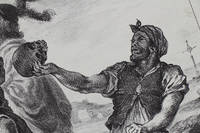
184348704Paris.: Chez Gihaut Frères. 1843. Loose as issued with the original front and rear wrappers housed in modern box; wrappers torn with tape repair; occasional foxing to some plates mainly in the margins damp-staining affecting the upper margin only of one plate a small stain on the far right margin of another plate. Folio. 13 original lithographs by Eugène Delacroix. The complete suite of the first published edition on large paper.From the first published edition with 13 original lithographs limited to 80 copies with this one of 60 on French paper; 20 copies were also issued on Chine.Delacroix originally composed 16 lithographs in order to illustrate Hamlet the work gradually being completed between 1834 and 1843 but only 13 were issued with the first published edition. All of the prints presented here are with letters and the majority are with the printer’s imprint of Villain. The prints in the set are as follows: - 'La reine s'efforce de consoler Hamlet' Robaut 577; Delteil 103; - 'Hamlet veut suivre l'ombre de son père' Robaut 578; Delteil 104; - 'La fantôme sur une autre partie de la terrasse' Robaut 579; Delteil 105; - 'Polonius and Hamlet' Robaut 580; Delteil 106; - 'Hamlet fait jouer aux comediens la scène de l'empoisonnement de son père' Robaut 583; Delteil; Delteil 109; - 'Hamlet et Guildenstern' Robaut 584; Delteil 108; - 'Hamlet tente de tuer le roi' Robaut 585; Delteil 110; - 'Le meurtre de Polonius' Robaut 586 - 587; Delteil 111; - 'Hamlet et la reine' Robaut 588; Delteil 112; - 'Hamlet et le cadavre de Polonius' Robaut 589; Delteil 113; - 'Mort d'Ophélie' Robaut 591 - 592; Delteil 115; - 'Hamlet et Horatio devant les fossoyeurs' Robaut 593 - 594; Delteil 116; - 'Mort d'Hamlet' Robaut 597; Delteil 118. Chez Gihaut Frères. unknown
184387676Paris: Chez Gihaut frères Edit. Boulevard des Italiens 5 1843. Fine. Chez Gihaut frères Edit. Boulevard des Italiens 5 Paris s.d. 1843 36.40 x 49.80 cm relié Complete set of 13 original lithographs by Eugène Delacroix in first edition first issue with the letter one of 20 copies on Chine paper pasted on laid paper: ""It was originally printed in a few proofs on Chine the format of which exceeds the square line by one or two centimeters. They are highly sought-after even though they bear the letter"" Robaut. Bound in the original publisher's brown half-shagreen binding title gilt stamped on first board original first cover wrapper preserved. Small restored tear to the margin of the wrapper over 5 cm sunned spine joints and corners rubbed scattered foxing and a dampstain to the lower part of the laid paper on which the lithographs are pasted on without affecting the lithographs themselves. Exceptional and rare set of original lithographs by Eugène Delacroix on Chine paper illustrating Shakespeare's masterpiece. A cornerstone of Romantic art this series was ""made at M. Delacroix's personal expense. Only 80 copies were printed 60 on blanc and 20 on chine and these were sold out at the time of the author's death"" Henri Béraldi. It is now esteemed as Delacroix's most accomplished graphic undertaking which took him more than ten years to achieve and generally considered to be one of the first modern livres de peintre. This is Delacroix's second lithographic portfolio based on a literary work after Goethe's 'Faust' in 1828. Strongly influenced by Goya's Caprices the plates feature deep black tones and striking contrasts magnified by the Chine paper: ""No one is unaware of the important role played by Delacroix in lithography . in the Hamlet in the Horse struck down by a tiger or better still in the Lion of the Atlas and the Royal Tiger these marvels he shows what vigor and color the lithographic pencil can acquire in the hand of a master""Henri Béraldi. Despite good reviews from Théophile Gautier and Jules Janin the Hamlet suite remained little-known from the moment of its publication by the Gihaut brothers upon Delacroix's request: ""I had them printed in small numbers and I was well advised for they were not successful and were far from having met printing costs"" wrote Delacroix in a letter to Champfleury May 1 1852. Even in the 19th-century copies on Chine paper were almost impossible to find: only twenty years after publication Philippe Burty considered the set ""so rare now"" regardless of its different issues Colonel De La Combe sale 1863. His contribution to Hamlet's visual imagination and iconography is immense. Delacroix first created the pose of Ophelia's lifeless body lying horizontally on the water - foreshadowing John Everett Millais' famous painting. It was from these lithographs that a number of his paintings were created: ""Between the 1830s and his death Delacroix also painted oil versions of a number of lithographs including Hamlet and His Mother now in the Metropolitan Museum."" Alan R. Young Hamlet and the Visual Arts 1709-1900. Delacroix showed interest in Shakespeare's theater - and Hamlet in particular - early on. As a youth he signed some of his letters ""Yorick"" when recounting his first passions for the young Englishwoman Elizabeth Salter. According to his diary studied by Luciana Lourenço Paes he probably read the play in the original English and identified with the main protagonist who inspired his ""Self-portrait as Hamlet"" now in the Musée Delacroix. In 1825 the painter traveled to London where he attended several of the Bard's plays and apparently regretted missing the Hamlet performed by the legendary Henry Keane at the Drury Lane Theater. Two years later Delacroix was among the Romantics who fell under the spell of a special performance of Hamlet at the Théâtre de l'Odéon by the English company of Covent Garden director Charles Kemble. It was the first time Shakespeare had been played in his origin Chez Gihaut frères, Edit. Boulevard des Italiens, 5 unknown