3 résultats
1773045263Parma: Stamperia Reale 1773. First Edition. Hardcover. Very Good Condition/No Dust Jacket. Full navy cloth bearing gilt Harvard University stamp on spine bookplate on pasted endpaper and library stamp on first page. Some discoloration to spine where sticker was removed minor wear to corners extra engraved titlee dedication to Duke Ferdninand I and Archduchess Maria Amalia of Austria. Interior bright with limited foxing to some pagesand vignette illustrations. Overall an attractive book of verse. 18 137 1pp. Size: Octavo 8vo. Quantity Available: 1. Shipped Weight: Under 1 kilo. Category: Antiquarian & Rare; Poetry. Inventory No: 045263. <br/><br/> Stamperia Reale hardcover books
173453392London: printed for J. Martin and sold at Lycurgus's Head in Warwick-Court Holborn 1734. First edition 8vo pp. 57 1; later wrappers; near fine. A translation of Radicati's Récit fidèle et comique de la religion des cannibales modernes. ESTC locates 12 copies only 2 both at the BL in the UK and the rest in North America including 2 at Harvard Huntington NYPL Newberry Princeton UCLC Illinois Minnesota and North Carolina. <br/><br/> printed for J. Martin, and sold at Lycurgus's Head in Warwick-Court, Holborn unknown books
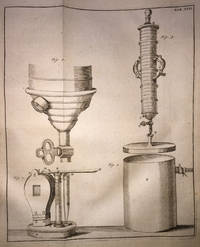
1731S13115Lugduni Batavorum:: Joan. et Herm. Verbeek 1731. 1731. Two parts bound as one. 4to. xvi xlviii vii 193 1; 192 xiv pp. Title printed in red & black 32 engraved folding plates 1 folding table index; margin of p.99 trimmed 1 ¾ x 2" away. some foxing browning of leaves title very browned due to offsetting. Beautifully preserved original mottled calf raised bands gilt spine compartments red leather spine label. Ownership mark on title of "Mr. Al. Liotard." Very good. FIRST EDITION incorporating the first Latin edition of the Saggi di naturali esperienze 1667 prepared by the Accademia del Cimento Florence with substantial additions throughout by Musschenbroek. Musschenbroek was one of the great physical experimenters and lecturers of the eighteenth century and the teacher of Nollet. This book contains the first description of the pyrometer an instrument for measuring the expansion of solid bodies under the influence of heat. Like many of Musschenbroek's books the Tentamina contains fine illustrations and is concerned with experiments in measuring humidity magnets and electricity air pressure the structure of ice heat and cold capillarity optics the motion of sound etc. / "He devised many of his experiments in the process consulting records of other experimenters among them those of the Accademia del Cimento. Musschenbroek translated their accounts into Latin adding reports concerning his own work 1731." :: Encyclopedia. / The work opens with Musschenbroek's Oratio de Methodo Instituendi Experimenta Physica regarding his views on experimental philosophy as inspired by Newton. "Underlying Musschenbroek's lectures demonstrated with experiments was the experimental philosophy the principal source of inspiration was Newton but Galileo Torricelli Huygens Reaumur and others were important to this school." :: DSB IX p. 596. The Accademia del Cimento Academy of Experiments was founded in Florence in 1657. Among the founding members were Borelli Steno Redi Cassini Viviani and Torricelli these final two being disciples of Galileo. This makes the Accademia older than either the Royal Society or the Academie des Sciences. Count Lorenzo Magalotti's text includes accounts of experiments on temperature and air pressure including Torricelli's invention of the barometer the velocity of sound and light phosphorescence magnetism amber and other electrical bodies the freezing of water etc. The many fine plates in this translation illustrate the Accademia's work as well as Musschenbroek's own subsequent experiments. :: Wolf History of science I pp. 55-59.2 parts in 1. / Musschenbroek 1692-1761 professor of natural philosophy and mathematics at Utrecht and later professor of experimental physics at Leyden. He was one of the most celebrated physicists and investigators of his time; the experiments he describes are classics in primary instruction. / "Musschenbroek's earliest account of electricity 1731 the estimable notes to his Latin translation of the Saggi is fuller more circumspect and less coherent than 's Gravesande's which he later entertained favorably. Two curious points emerge from the notes. To resolve the discrepancy between the results of Boyle and Hauksbee who respectively did and did not succeed in generating electricity in vacuo Musschenbroek hit on an unprecedented and prescient idea; remarking that Boyle used amber and Hauksbee glass he concluded that these substances have different electricities. . . The second point concerns repulsion. Musschenbroek records without emphasizing Hauksbee's observation that light bodies are sometimes repelled farther than they are attracted; he squeezes it into a note that also gives an excellent prescription for rubbing the tube :: always end with your hands together :: and a warning about atmospheric humidity. He does not recognize that the Saggi require updating about repulsion and concentrates on the perplexing behavior of screens the opacity of muslin and the transparency of glass." :: J. L. Heilbron Electricity in the 17th and 18th Centuries: A Study of Early Modern Physics 1979 p.242. / Wheeler Gift 276. Not in Bakken. FULL TITLE: Tentamina experimentorum naturalium captorum in Academia del cimento sub auspiciis Serenissimi Principis Leopoldi Magni Etruriae Ducis et ab ejus Academiae Secretario Conscriptorum: Ex Italico in Latinum Sermonem conversa. Quibus commentarios nova experimenta et orationem de methodo instituendi experimenta physica addidit Petrus van Musschenbroek Joan. et Herm. Verbeek, 1731. hardcover books