141 résultats
1894BOOKS072948ILondon: Raphael Tuck & Sons 1894. HC. good pictorial boards maroon cloth spine hardcover. 9 Chromoliths B&W ill. UNCOMMON - not dated but a Christmas 1894 gift inscription on the half-title page. IMAGES AVAILABLE. 79pp. Raphael Tuck & Sons unknown
1898010303London and New York: John Lane The Bodley Head 1898 Blue cloth pictorially stamped and titled in gilt gilt and cloth darkened stain to upper cover roughness to inner rear hinge A collection of 12 fairy tales illustrated with detailed and imaginative b&w line art by Charles Robinson. . First Edition. Pictorial Cloth. Very Good Minus/No Jacket. Illus. by Charles Robinson. 8vo. John Lane The Bodley Head hardcover
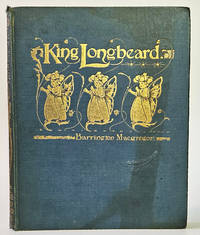
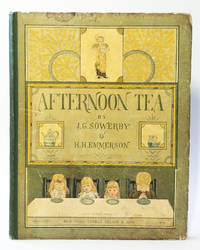
1880009319New York: Thomas Nelson 1880 Date based on institutional holdings. 64 pgs.Pictorial boards edges worn and rubbed through binding shaken small marginal loss from one page offsetting opposite illustrations else clean. Juvenile verse with lovely color artwork on every page by artists Sowerby and Emmerson. Beautifully printed by the Dalziel Brothers Brain and Co. and Clay Son and Taylor. First American Edition. Pictorial Boards. Good to Very Good/No Jacket. Illus. by John George Sowerby & Henry Hetherington Emmerson. 4to. Thomas Nelson unknown
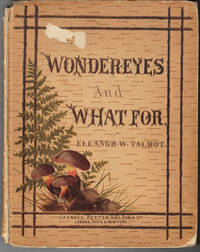
1880009032London Paris & New York: Cassell Petter Galpin & Co 1880 60 leaves printed on rectos only. Color pictorial boards with a 2" abrasion to front cover heavy shelf wear losss to spine ends gift inscriptions and a few small marks inside but generally clean. Entertaining verse accompanied by color artwork on every page. The verses and images range from everyday scenes whimsy and nearly fantastical including a humanized kite cat and insects. Originally published in booklet format in 3 volumes. Scarce. Pictorial Boards. Good/No Jacket. 4to. Cassell, Petter, Galpin & Co unknown
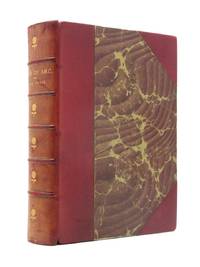
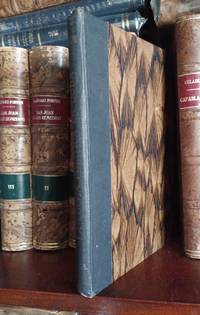
18961252A003Leipzig: Bernhard Tauchnitz 1896. Copyright Edition . Hardback. Printed pages: 718. Very Good. 4.75 x 6.5 inches 12 x 16.5 cm. Tauchnitz copyright edition. Complete in two volumes bound as one. First impression with 16 Twain titles to the verso of the first half title page. Half red calf leather binding with marbled boards. Marbled page edges and endpapers. Spine with five raised bands and floral ornaments to compartments. Fading and slight rubbing to spine. Good solid binding very clean text throughout. Contemporary gift inscription to first title page. Scarce. Overall condition is Very Good. Size: 4.75 x 6.5 inches 12 x 16.5 cm. Bernhard Tauchnitz hardcover
180926319Paris: Imprimerie Impériale 1809. Fine. Imprimerie Impériale Paris 1809-1829 71 x 53.50 cm une feuille Original etching in plano uncut extracted from the so-called ""Imperial"" edition of the Description de l'Égypte ou Recueil des observations et recherches faites en Égypte pendant l'expédition française publié par les ordres de Sa Majesté l'Empereur Napoléon le Grand. Executed between February 1802 and 1829 by order of Napoleon Bonaparte and published from 1809 actually 1810 it was printed in 1000 copies on watermarked laid paper ""Égypte ancienne et moderne"" and offered to institutions. Light and marginal foxing not affecting the engraving otherwise in very fine state of freshness and preservation. Volume ETAT MODERNE II: The genius of the Institute's scholars is particularly revealed through the plates of the section called Egypte Moderne. Architecture industry social structures sanitary conditions water management music craftsmanship are presented with exceptional precision and graphic quality. The spirit of Diderot and d'Alembert's L'Encyclopédie remains underlying in the approach of the draftsmen of the Description de L'Egypte who accompany the text volumes with numerous detailed plates endeavoring to create a portrait of the populations imbued with beauty and respect. Wealthy pashas or simple potter artisans are represented with sensitivity going about their occupations amid aesthetic compositions without falling into idealism or caricature. LA DESCRIPTION DE L'EGYPTE IMPERIAL edition 1809-1829: La Description de l'Egypte is one of the masterpieces of French publishing and the starting point of a new science: Egyptology. A titanic exposition of Egypt at the time of Bonaparte's conquests between 1798 and 1799 it is divided into 23 volumes including 13 volumes of engravings gathering nearly 1000 plates in black and 72 in color. The 6 volumes of plates titled Antiquités are devoted to the splendors of pharaonic Egypt. L'Histoire naturelle is distributed across 3 volumes of engravings. One volume is devoted to Cartes géographiques et topographiques while the 3 volumes : Etat Moderne present a striking portrait of Coptic and Islamic Egypt as it was seen by Bonaparte's armies of the Orient. The ""Egyptian campaign"" a military disaster reveals through the engravings of the Description de l'Egypte the scientific success it became thanks to the some 167 scholars members of the Commission of Sciences and Arts of the Institute of Egypt who followed Napoleon's army. The Institute brought together in Egypt the mathematician Monge the chemist Berthollet the naturalist Geoffroy Saint-Hilaire as well as numerous artists engineers architects physicians. They were charged with rediscovering modern and ancient Egypt showing its natural riches and the expertise of its inhabitants. The first edition called ""Imperial"" of the Description de l'Egypte was produced in four large formats two of them specially created for it and named ""Moyen-Egypte"" and ""Grand-Egypte"" formats. A specific press was built for its printing which extended over twenty years between 1809 and 1829. The Imperial edition proved so popular that a second edition in 37 volumes entirely in black and without the ""Egypte ancienne et moderne"" watermark called the ""Panckoucke"" edition was published from 1821 by the C.-L.-F. Panckoucke printing house Paris. The realization of this monument of erudition owes much to Baron Dominique Vivant Denon illustrator diplomat collector and later director of the Napoleon Museum of the Louvre who accompanied Napoleon to Egypt with numerous other scholars but decided alone to venture into the South of the country while the other invited scientists remained confined to the Cairo region. The fabulous sketches brought back by Denon during his romantic ride gave Bonaparte the idea to send the other members of the Institute there and thus create a faithful and complete portrait of the territory. Following Denon it was therefore t Imprimerie Impériale unknown
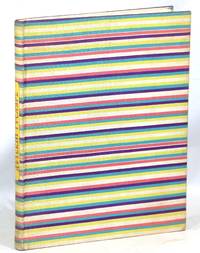
1866000015011Saint Petersburg and Moscow: Published by the Bookseller and Printer M.O. Wolf 1866. Early printing. Hardcover. Near Fine. 4to. 5 6-106 pp. Turn of the twentieth-century striped multi-colored cloth with the title printed in red on a yellow paper label on the spine. Later endpapers and pastedowns. With 51 in-text black and white drawings by Ludviga Richtera. Date of 1866 on the title page a date of 1865 on the copyright page. Text and title page in Russian. A collection of Russian folk tales for children. Two bookplates on the front pastedown light foxing to the leaves. Published by the Bookseller and Printer M.O. Wolf hardcover
186495326Paris: Peltier et Mulo Editeurs 1864. Rilegato hardback. Molto buono Very Good. Deuxième édition. 8 incisioni protette da velina. 16mo. pp. 324. Molto buono Very Good. Fioriture leggere Some light yellowing. Seconda edizione 2nd Edition. Peltier et Mulo Editeurs, hardcover
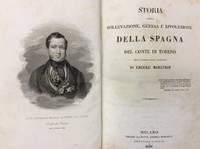
183835980Milano: Bonfanti 1838-1841. In-8 p. mm. 228 x 145 mz. tela coeva con aloni titolo oro al dorso pp. 934 testo su due colonne con ritratto dell'A. Don Giuseppe-Maria-Queypo de Llano Conte di Toreno inc. in rame. Storia della guerra di indipendenza ampliatasi nella guerra peninsulare 1808-13 inizio della rivolta europea contro Napoleone alla cui catastrofe finale si ebbe l'ascesa al trono di Spagna di Ferdinando VII di Borbone 11 dic. 1813. Piccoli fori di tarlo con relativa perdita di alcune lettere del testo alla p. 933; restauro con nastro adesivo per strappo alla pagina 242; qualche rara e lieve fioritura altrimenti testo ben conservato. Bonfanti, hardcover
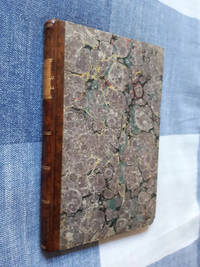
1840441313Tip. di F. Andreola Venezia 1840. Hardcover. Good copy bound in plain boards. Marbled end-papers. Spine bands and panel edges somewhat bumped and rubbed as with age. Some discoloration to boards. Remains quite well-preserved overall. Physical Description: 59 p. ; In-8°. Tip. di F. Andreola, Venezia hardcover
1822#BIBLIO-1044De La Révolution Piémontaise. Troisième Édition Revue Corrigée Et Augmentée De Notes Et De L'Analyse De La Constitution Sicilienne par Conte di Santarosa Santorre Annibale De Rossi Hardback 1822 third edition published by Chez Alexandre Corréard Libraire Paris 1822 224 pages 8-page publisher catalogue at rear <p>Octavo/8vo measures around 5" by 7 3/4" by 1/2". Quarter-leather binding with marbled boards. Gilt lettering and bands to spine. Binding is in exceptionally good condition very clean and containing only the smallest of wear. The binding might be later possibly still 19th century or early 20th century though signs of replacement are not obvious aside from the front free endpaper and pastedowns being of thicker paper than the textblock though it may be that the binding has simply been very well preserved and cared for. A little rubbing at edges and bumped corners. Binding firm. Speckled page edges are browned scuffed a little foxed and otherwise marked. Some marking to endpapers a little writing to recto of front free endpaper. A little loss to several page edges. Considerable foxing and browning to page surfaces throughout and some other marking but no underlining marginalia etc. A few creased page corners to rear. See pictures for further information.</p> Chez Alexandre Corréard Libraire hardcover
180926322Paris: Imprimerie Impériale 1809. Fine. Imprimerie Impériale Paris 1809-1829 71 x 53.50 cm une feuille Original etching in plano uncut extracted from the so-called ""Imperial"" edition of the Description de l'Égypte ou Recueil des observations et recherches faites en Égypte pendant l'expédition française publié par les ordres de Sa Majesté l'Empereur Napoléon le Grand. Executed between February 1802 and 1829 on Napoleon Bonaparte's orders and published from 1809 actually 1810 it was printed in 1000 copies on watermarked laid paper ""Égypte ancienne et moderne"" and presented to institutions. Light marginal foxing not affecting the engraving otherwise very fine condition and preservation. Volume ETAT MODERNE II : The genius of the Institute's scholars is particularly revealed through the plates of the section called Egypte Moderne. Architecture industry social structures sanitary conditions water systems music craftsmanship are presented with exceptional precision and graphic quality. The spirit of Diderot and d'Alembert's Encyclopédie remains underlying in the approach of the draughtsmen of the Description de L'Egypte who accompany the text volumes with numerous detailed plates endeavoring to create a portrait of the populations imbued with beauty and respect. Wealthy pashas or simple potter craftsmen are represented with sensitivity going about their occupations in the midst of aesthetic compositions without falling into idealism or caricature. LA DESCRIPTION DE L'EGYPTE IMPERIAL edition 1809-1829 : La Description de l'Egypte is one of the masterpieces of French publishing and the starting point of a new science: Egyptology. A titanic exposition of Egypt at the time of Bonaparte's conquests between 1798 and 1799 it is divided into 23 volumes including 13 volumes of engravings gathering nearly 1000 plates in black and 72 in color. The 6 volumes of plates entitled Antiquités are devoted to the splendors of Pharaonic Egypt. L'Histoire naturelle is divided into 3 volumes of engravings. One volume is devoted to Cartes géographiques et topographiques while the 3 volumes : Etat Moderne present a striking portrait of Coptic and Islamic Egypt as it was seen by Bonaparte's Army of the Orient. The ""Egyptian campaign"" a military disaster reveals through the engravings of the Description de l'Egypte the scientific success it became thanks to the some 167 scholars members of the Commission of Sciences and Arts of the Institute of Egypt who followed Napoleon's army. The Institute brought together in Egypt the mathematician Monge the chemist Berthollet the naturalist Geoffroy Saint-Hilaire as well as numerous artists engineers architects doctors. They were charged with rediscovering modern and ancient Egypt showing its natural riches and the know-how of its inhabitants. The first edition called ""Imperial"" of the Description de l'Egypte was executed in four large formats two of them specially created for it and named ""Moyen-Egypte"" and ""Grand-Egypte"" formats. A specific press was built for its printing which extended over twenty years between 1809 and 1829. The Imperial edition proved so popular that a second edition in 37 volumes entirely in black and without the ""Egypte ancienne et moderne"" watermark called the ""Panckoucke"" edition was published from 1821 by the C.-L.-F. Panckoucke printing house Paris. The realization of this monument of erudition owes much to Baron Dominique Vivant Denon illustrator diplomat collector and subsequently director of the Napoleon Museum at the Louvre who accompanied Napoleon to Egypt with many other scholars but decided alone to venture into the South of the country while the other invited scientists remained confined to the Cairo region. The fabulous sketches brought back by Denon during his romantic ride gave Bonaparte the idea of sending the other members of the Institute there and thus creating a faithful and complete portrait of the territory. Following Denon it was therefore the gr Imprimerie Impériale unknown
180926321Paris: Imprimerie Impériale 1809. Fine. Imprimerie Impériale Paris 1809-1829 71 x 53.50 cm une feuille Original etching in plano uncut extracted from the so-called ""Imperial"" edition of the Description de l'Égypte ou Recueil des observations et recherches faites en Égypte pendant l'expédition française publié par les ordres de Sa Majesté l'Empereur Napoléon le Grand. Executed between February 1802 and 1829 on Napoleon Bonaparte's orders and published from 1809 actually 1810 it was printed in 1000 copies on watermarked laid paper ""Égypte ancienne et moderne"" and presented to institutions. Light marginal foxing not affecting the engraving otherwise very fine condition and preservation. ISLAMIC ARCHITECTURE OF CAIRO : The set of engravings to which this plate belongs constitutes one of the first reasoned studies of the monuments of Islamic Egypt in Cairo gathering plans sections and elevations of mosques mausoleums and fortifications from the 9th century Tulunid period to the Mamluk constructions contemporary with the arrival of Bonaparte's troops. Furthermore the architects and engineers of the Institute of Egypt realized a large series of plates devoted to dwellings and civil constructions whether of grand or more modest execution providing precious testimony on the life of Cairenes at the end of the 19th century. The few ancient vestiges remaining in the city were also immortalized by the scholars of the Institute who had established their quarters in the capital. Volume ETAT MODERNE II : The genius of the Institute's scholars is particularly revealed through the plates of the section called Egypte Moderne. Architecture industry social structures sanitary conditions water systems music craftsmanship are presented with exceptional precision and graphic quality. The spirit of Diderot and d'Alembert's Encyclopédie remains underlying in the approach of the draughtsmen of the Description de L'Egypte who accompany the text volumes with numerous detailed plates endeavoring to create a portrait of the populations imbued with beauty and respect. Wealthy pashas or simple potter craftsmen are represented with sensitivity going about their occupations in the midst of aesthetic compositions without falling into idealism or caricature. LA DESCRIPTION DE L'EGYPTE IMPERIAL edition 1809-1829 : La Description de l'Egypte is one of the masterpieces of French publishing and the starting point of a new science: Egyptology. A titanic exposition of Egypt at the time of Bonaparte's conquests between 1798 and 1799 it is divided into 23 volumes including 13 volumes of engravings gathering nearly 1000 plates in black and 72 in color. The 6 volumes of plates entitled Antiquités are devoted to the splendors of Pharaonic Egypt. L'Histoire naturelle is divided into 3 volumes of engravings. One volume is devoted to Cartes géographiques et topographiques while the 3 volumes : Etat Moderne present a striking portrait of Coptic and Islamic Egypt as it was seen by Bonaparte's Army of the Orient. The ""Egyptian campaign"" a military disaster reveals through the engravings of the Description de l'Egypte the scientific success it became thanks to the some 167 scholars members of the Commission of Sciences and Arts of the Institute of Egypt who followed Napoleon's army. The Institute brought together in Egypt the mathematician Monge the chemist Berthollet the naturalist Geoffroy Saint-Hilaire as well as numerous artists engineers architects doctors. They were charged with rediscovering modern and ancient Egypt showing its natural riches and the know-how of its inhabitants. The first edition called ""Imperial"" of the Description de l'Egypte was executed in four large formats two of them specially created for it and named ""Moyen-Egypte"" and ""Grand-Egypte"" formats. A specific press was built for its printing which extended over twenty years between 1809 and 1829. The Imperial edition proved so popular that a second edition in 37 volumes entirely in Imprimerie Impériale unknown
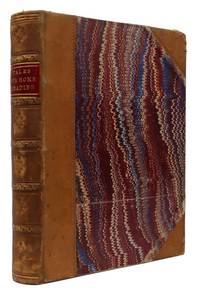
1869AQ22121London and Edinburgh: William and Robert Chambers 1869. 224pp. With an engraved frontispiece. Contemporary half-calf marbled boards tooled in gilt and blind contrasting red morocco lettering-piece. Heavily rubbed. FFEP torn away else internally clean and crisp. The sixth volume of short stories selected from Chamber's Journal including Anna Maria Sargeant's 'The lie of expediency' Percy B. St John's 'The rifle: a tale of Arkansas' Camilla Toulmin's 'To slay or to save' and several unattributed others such as 'Story of an Edinburgh sedan-carrier' and 'The work-girl'. . 8vo. William and Robert Chambers hardcover
18992020181Chicago: Geo. M. Hill Company 1899 . Second Edition. Hardcover. Good. W.W. DENSLOW. Quarto 102 unnumbered pages pictorial boards rubbed edgeworn corners worn rebacked in brown leather with new endpapers. Ex libris Elsie Walch 1929. Note: it appears that young Elsie helpfully provided pencilled page numbers at the top of each page. <br/><br/>Verse by L. Frank Baum. Illustrated by W. W. Denslow who of course also did THE WONDERFUL WIZARD OF OZ the next year. Hand-lettered by Ralph Fletcher Seymour his first big job after arriving in Chicago from Indiana. and before he began his Alderbrink Press. The final page is a drawing of Ralph Seymour by W. W. Denslow. Geo. M. Hill Company hardcover
188919429AB1889. Tokyo Kubunsha 1889. 18 : 13 cm. 9 leaves with many coloured woodblock-printed illustrations by Kobayashi Sensai Eitaku. Coloured illustrated original Japanese binding. The Kobunsha's Japanese Fairy Tales Series Vol. 4. - Text in German. unknown
1822elala126Paris: Alexandre Corréard 1822. 1822. 8vo. pp. 2 p.l. 224. Uncut in original printed wrs. spine bit chipped some light foxing. Paris: Alexandre Corréard, 1822. unknown
18893562<p>La lucha politica en cubalos unos y los otros 1878-1889 por francisco augusto conteprimera edicion habana cuba 1889nueva encuadernacionbuen estadolibro original de 1889 interesante estudio historico de cuba en el siglo XIX terminada la guerra de los diez anosque situacion politica habia en la islaen estos anosla enemistad entre criollos y peninsulaeslos separatistasel autonomismoy otros aspectos de la convulsa cuba del siglo XIX.su autor <strong>Francisco Augusto Conte</strong> >Cádiz 1821-La Habana 1891 fue un escritor periodista y economista español emigrado a Cuba donde terminó inscrito en posiciones favorables a la autonomía de la isla.Nació en 1821el día 26 de junio.Era natural de >Cádiz Llegó a La Habana el 17 de enero de 1869 a la edad de cuarenta y siete años a bordo del vapor Guipúzcoa y comenzó inscrito en posiciones unionistas próximas a las de >José María Avendaño fundador y presidente del >Casino Español de La Habana Publicó artículos en <em>La Voz de Cuba</em> de cuya dirección se hizo cargo el 23 de octubre de 1871 hasta su cese el 5 de abril de 1873.De inclinación abolicionista inicialmente se mostró opuesto a la autonomía cubana si bien a lo largo de la década de 1870 cambió de opinión y viró al autonomismo.Después de la sublevación del 26 de agosto de 1879 pasó a formar parte de la Junta Central del Partido Liberal.Versado en materias políticas y económicas escribió en publicaciones periódicas como <em>El Triunfo</em> y <em>El País</em> de La Habanay fue autor de títulos como <em>Exámen de la Hacienda pública de España</em> <em>La lucha política en Cuba</em> o de opúsculos publicados por la <em>Revista Cubana</em> como "La situación monetaria y su reforma" "Tierra población é industria" y "Las aspiraciones del Partido Liberal de Cuba".Falleció el 1 de noviembre de 1891 en La Habana</p> Imprenta de soler alvarez y compania hardcover
1880000421Carrara: Iginio Drovandi 1880. Hardcover. Near Fine. Octavo 22.5x15.5 cm . 4 VI 414 pages . - With 9 of 10 plates on heavy stock including the frontispiece color map of Carrara. - Contemporary 3/4 red morocco marbled covers. Spine with multiple decorations and title in gilt. Corners and edges very slightly worn. - Interior is fine. - Plates are very fine and those present are: 1. Citta di Carrara map - 2. Panorama di Carrara e delle sue cave - 3. Duomo di Carrara. - 4. Panorama di Carrara. - 5. Carrara Fattacia principale del Teatro degli Animosi. 6. Torano e le cave di Crestola. - 7. Carrara Piazza Alberica. - 8. Carrara Via Alberica. - 9. Carrara La Piazza d'Armi. <br/> <br/> Iginio Drovandi hardcover
1895003263London: Lawrence and Bullen 1895 Mauve patterned cloth pictorially stamped in gilt gilt slightly dulled spine sunned boards slightly bowed. Fairy stories set in Ireland written by Irish poetess Moira O'Neill. Illustrated with lovely b&w plates by Britten. Scarce. First Edition. Pictorial Cover. Very Good/No Jacket. Illus. by W. E. F. Britten. 8vo. Lawrence and Bullen hardcover
18193380Paris: Theodore Desoer 1819. Hardcover. Very Good. 8vo xv 480p. Quarter green morocco leather with gilt framed spine compartments and gilt spine lettering. Mottled paper boards marbled endpapers. Corners of boards lightly bumped and rubbed edges lightly rubbed contents clean binding is tight and square. A very good copy. Theodore Desoer hardcover
180925427Paris: Imprimerie Impériale 1809. Fine. Imprimerie Impériale Paris 1809-1829 53.50 x 70 cm une feuille Original unshaved full-page etching from the Imperial edition of the Description de l'Égypte or Recueil des observations et recherches faites en Égypte pendant l'expédition française publié par les ordres de Sa Majesté l'Empereur Napoléon le Grand A Collection of the observations and research carried out in Egypt during the French expedition published on the orders of his Majesty the Emperor Napoleon the Great'.Produced between February 1802 and 1830 on the orders of Naopleon Bonaparte and published between 1809 and 1828 1000 copies were printed and distributed to institutions on vergé paper with an 'Égypte ancienne et moderne' watermark visible when held up to the light. Light marginal spotting not touching image otherwise in very fresh fine condition. An engraving from the Description de l'Egypte one of the masterpieces of French printing and the birth of a new field: Egyptology. A gigantic survey of Egypt at the time of Bonaparte's conquests in 1798 and 1799 the work is divided into 13 volumes of engravings making up 892 plates of which 72 colored as well as presenting the splendors of the Egypt of the Pharaohs in 9 volumes. The other volumes discuss natural history and present a fascinating portrait of Coptic and Islamic Egypt as it was seen by Bonaparte's Eastern Armies. The Egyptian campaign' militarily a disaster demonstrates through the engravings of the Description d'Egypte the scientific success it nonetheless became thanks to the 167 expert members of the Commission of the Sciences and Arts of the Institut d'Egypte Egyptian Institute who followed Napoleon's army. The Institut gathered together in Egypt the mathematician Monge the chemist Berthollet the naturalist Geoffroy Saint-Hilaire as well as numerous artists engineers architects and doctors. They were tasked with re-discovering modern and ancient Egypt and displaying its natural treasures as well as the know-how of its inhabitants.This edition the so-called Imperial edition of the plates for the Description de l'Egypte was printed in four large formats two of which were specially created for it and christened Moyen-Egypte and Grand-Egypte. A special press was built to print it the process extending over 20 years from 1809 to 1829. The Imperial edition proved so popular that a second edition this time in black and white and without the Egypte ancienne et moderne watermark known as the Royal Edition was published during the Restoration by the printing house of C.-L.-F. Panckoucke Paris.The engravings of the Description d'Egypte owe a great deal to Baron Dominique-Vivant Denon illustrator diplomat collector and later Director of the Musée Napoléon the Louvre. His exploration of the South of Egypt gave Bonaparte the idea of sending the experts of the Institut there thus creating a faithful and complete portrait of the area. This was the research gathered together from 1802 in the mammoth Description de L'Egypte.Denon embarked on this story of archeological exploration at the age of 51 reaching first Alexandria and then Cairo before exploring Upper Egypt. Along with the members of the Institut d'Egypte the Natural History Museum's painter H.J. Redouté brother of Pierre-Joseph Redouté author of Roses the mineralogist Dolomiue and the draughtsman Joly Denon then explored the Nile Delta and Lower Egypt. When however he joined the 21st Light Infantry Regiment as it marched across Upper Egypt in pursuit of the retreating Mameluks in November 1798 he found himself the only civilian. In the very midst of the battle itself he reeled off sketches of the works of art that peppered his path right up to the threshold of the Sudan. He said that he had crossed a country that is apart from its name entirely unknown to Europeans and therefore everything was worth describing Voyages dans la Basse et la Haute Egypte pendant les campagnes Imprimerie Impériale unknown
180925431Paris: Imprimerie Impériale 1809. Fine. Imprimerie Impériale Paris 1809-1829 70 x 53.50 cm une feuille Original unshaved full-page etching from the Imperial edition of the Description de l'Égypte or Recueil des observations et recherches faites en Égypte pendant l'expédition française publié par les ordres de Sa Majesté l'Empereur Napoléon le Grand A Collection of the observations and research carried out in Egypt during the French expedition published on the orders of his Majesty the Emperor Napoleon the Great'.Produced between February 1802 and 1830 on the orders of Naopleon Bonaparte and published between 1809 and 1828 1000 copies were printed and distributed to institutions on vergé paper with an 'Égypte ancienne et moderne' watermark visible when held up to the light. Light marginal spotting not touching image otherwise in very fresh fine condition. An engraving from the Description de l'Egypte one of the masterpieces of French printing and the birth of a new field: Egyptology. A gigantic survey of Egypt at the time of Bonaparte's conquests in 1798 and 1799 the work is divided into 13 volumes of engravings making up 892 plates of which 72 colored as well as presenting the splendors of the Egypt of the Pharaohs in 9 volumes. The other volumes discuss natural history and present a fascinating portrait of Coptic and Islamic Egypt as it was seen by Bonaparte's Eastern Armies. The Egyptian campaign' militarily a disaster demonstrates through the engravings of the Description d'Egypte the scientific success it nonetheless became thanks to the 167 expert members of the Commission of the Sciences and Arts of the Institut d'Egypte Egyptian Institute who followed Napoleon's army. The Institut gathered together in Egypt the mathematician Monge the chemist Berthollet the naturalist Geoffroy Saint-Hilaire as well as numerous artists engineers architects and doctors. They were tasked with re-discovering modern and ancient Egypt and displaying its natural treasures as well as the know-how of its inhabitants.This edition the so-called Imperial edition of the plates for the Description de l'Egypte was printed in four large formats two of which were specially created for it and christened Moyen-Egypte and Grand-Egypte. A special press was built to print it the process extending over 20 years from 1809 to 1829. The Imperial edition proved so popular that a second edition this time in black and white and without the Egypte ancienne et moderne watermark known as the Royal Edition was published during the Restoration by the printing house of C.-L.-F. Panckoucke Paris.The engravings of the Description d'Egypte owe a great deal to Baron Dominique-Vivant Denon illustrator diplomat collector and later Director of the Musée Napoléon the Louvre. His exploration of the South of Egypt gave Bonaparte the idea of sending the experts of the Institut there thus creating a faithful and complete portrait of the area. This was the research gathered together from 1802 in the mammoth Description de L'Egypte.Denon embarked on this story of archeological exploration at the age of 51 reaching first Alexandria and then Cairo before exploring Upper Egypt. Along with the members of the Institut d'Egypte the Natural History Museum's painter H.J. Redouté brother of Pierre-Joseph Redouté author of Roses the mineralogist Dolomiue and the draughtsman Joly Denon then explored the Nile Delta and Lower Egypt. When however he joined the 21st Light Infantry Regiment as it marched across Upper Egypt in pursuit of the retreating Mameluks in November 1798 he found himself the only civilian. In the very midst of the battle itself he reeled off sketches of the works of art that peppered his path right up to the threshold of the Sudan. He said that he had crossed a country that is apart from its name entirely unknown to Europeans and therefore everything was worth describing Voyages dans la Basse et la Haute Egypte pendant les campagnes Imprimerie Impériale unknown
180926394Paris: Imprimerie Impériale 1809. Fine. Imprimerie Impériale Paris 1809-1829 53.50 x 71 cm une feuille Original etching in plano uncut from the so-called ""Imperial"" edition of the Description de l'Égypte ou Recueil des observations et recherches faites en Égypte pendant l'expédition française publié par les ordres de Sa Majesté l'Empereur Napoléon le Grand. Executed between February 1802 and 1829 by order of Napoleon Bonaparte and published from 1809 actually 1810 it was printed in 1000 copies on watermarked laid paper ""Égypte ancienne et moderne"" and offered to institutions. Slight marginal foxing not affecting the engraving otherwise in very fine fresh condition and well preserved. Volume ETAT MODERNE II: The genius of the Institute's scholars is particularly revealed through the plates of the section called Egypte Moderne. Architecture industry social structures health conditions water systems music crafts are presented with exceptional precision and graphic quality. The spirit of Diderot and d'Alembert's L'Encyclopédie remains underlying in the approach of the draughtsmen of the Description de L'Egypte who accompany the text volumes with numerous detailed plates endeavoring to create a portrait of the populations imbued with beauty and respect. Wealthy pashas or simple pottery artisans are represented with sensitivity going about their occupations amid aesthetic compositions without falling into idealism or caricature. LA DESCRIPTION DE L'EGYPTE IMPERIAL edition 1809-1829: La Description de l'Egypte is one of the masterpieces of French publishing and the starting point of a new science: Egyptology. A titanic exposition of Egypt at the time of Bonaparte's conquests between 1798 and 1799 it is divided into 23 volumes including 13 volumes of engravings gathering nearly 1000 plates in black and 72 in color. The 6 volumes of plates entitled Antiquités are devoted to the splendors of pharaonic Egypt. L'Histoire naturelle is divided into 3 volumes of engravings. One volume is devoted to Cartes géographiques et topographiques while the 3 volumes : Etat Moderne present a striking portrait of Coptic and Islamic Egypt as it was seen by Bonaparte's armies of the East. The ""Egyptian campaign"" a military disaster reveals through the engravings of the Description de l'Egypte the scientific success it became thanks to the some 167 scholars members of the Commission of Sciences and Arts of the Institute of Egypt who followed Napoleon's army. The Institute brought together in Egypt the mathematician Monge the chemist Berthollet the naturalist Geoffroy Saint-Hilaire as well as numerous artists engineers architects physicians. They were charged with rediscovering modern and ancient Egypt showing its natural riches and the know-how of its inhabitants. The first edition called ""Imperial"" of the Description de l'Egypte was produced in four large formats two of them specially created for it and named ""Moyen-Egypte"" and ""Grand-Egypte"" formats. A specific press was built for its printing which spread over twenty years between 1809 and 1829. The Imperial edition proved so popular that a second edition in 37 volumes entirely in black and without the ""Egypte ancienne et moderne"" watermark called the ""Panckoucke"" edition was published from 1821 by the C.-L.-F. Panckoucke printing house Paris. The realization of this monument of erudition owes much to Baron Dominique Vivant Denon illustrator diplomat collector and later director of the Napoleon Museum of the Louvre who accompanied Napoleon to Egypt with numerous other scholars but decided alone to venture into the South of the country while the other invited scientists remained confined to the Cairo region. The fabulous sketches brought back by Denon from his romantic ride gave Bonaparte the idea to send the other members of the Institute there and thus create a faithful and complete portrait of the territory. Following Denon it was therefore the greatest French scientists and Imprimerie Impériale unknown
180926330Paris: Imprimerie Impériale 1809. Fine. Imprimerie Impériale Paris 1809-1829 53.50 x 71 cm une feuille Original etching in plano untrimmed extracted from the so-called ""Imperial"" edition of the Description de l'Égypte ou Recueil des observations et recherches faites en Égypte pendant l'expédition française publié par les ordres de Sa Majesté l'Empereur Napoléon le Grand. Executed between February 1802 and 1829 by order of Napoleon Bonaparte and published from 1809 actually 1810 it was printed in 1000 copies on watermarked laid paper ""Égypte ancienne et moderne"" and offered to institutions. Light and marginal foxing not affecting the engraving otherwise very fine condition and preservation. Volume MODERN STATE II: The genius of the scholars of the Institute is particularly revealed through the plates of the section called Modern Egypt. Architecture industry social structures sanitary conditions water management music craftsmanship are presented with exceptional precision and graphic quality. The spirit of Diderot and d'Alembert's Encyclopedia remains underlying in the approach of the draughtsmen of the Description de L'Egypte who accompany the text volumes with numerous detailed plates endeavoring to draw a portrait of the populations imbued with beauty and respect. Wealthy pashas or simple potter craftsmen are represented with sensitivity going about their occupations in the midst of aesthetic compositions without falling into idealism or caricature. THE DESCRIPTION OF EGYPT IMPERIAL edition 1809-1829: The Description of Egypt is one of the masterpieces of French publishing and the starting point of a new science: Egyptology. Titanic exposition of Egypt at the time of Bonaparte's conquests between 1798 and 1799 it is divided into 23 volumes including 13 volumes of engravings gathering nearly 1000 plates in black and 72 in color. The 6 volumes of plates entitled Antiquities are devoted to the splendors of Pharaonic Egypt. Natural History is divided into 3 volumes of engravings. One volume is devoted to Geographical and topographical maps while the 3 volumes : Modern State draw a striking portrait of Coptic and Islamic Egypt as it was seen by Bonaparte's armies of the Orient. The ""Egyptian campaign"" military disaster reveals through the engravings of the Description of Egypt the scientific success it became thanks to the some 167 scholars members of the Commission of Sciences and Arts of the Institute of Egypt who followed Napoleon's army. The Institute brought together in Egypt the mathematician Monge the chemist Berthollet the naturalist Geoffroy Saint-Hilaire as well as numerous artists engineers architects physicians. They were charged with rediscovering modern and ancient Egypt showing its natural riches and the know-how of its inhabitants. The first edition called ""Imperial"" of the Description of Egypt was executed in four large formats two of them specially created for it and baptized ""Middle-Egypt"" and ""Grand-Egypt"" formats. A specific press was built for its printing which stretched over twenty years between 1809 and 1829. The Imperial edition proved so popular that a second edition in 37 volumes entirely in black and without the watermark ""ancient and modern Egypt"" called the ""Panckoucke"" edition was published from 1821 by the C.-L.-F. Panckoucke printing house Paris. The realization of this monument of erudition owes much to Baron Dominique Vivant Denon illustrator diplomat collector and subsequently director of the Napoleon Museum at the Louvre who accompanied Napoleon to Egypt with numerous other scholars but decided alone to venture into the South of the country while the other invited scientists remained confined in the Cairo region. The fabulous sketches brought back by Denon from his romantic cavalcade gave Bonaparte the idea to send the other members of the Institute there and thus draw a faithful and complete portrait of the territory. Following Denon it was therefore the greatest Fre Imprimerie Impériale unknown