CONTE - Louis-Alexandre DE BUIGNEBiblio.com

141 résultats
180926321Paris: Imprimerie Impériale 1809. Fine. Imprimerie Impériale Paris 1809-1829 71 x 53.50 cm une feuille Original etching in plano uncut extracted from the so-called ""Imperial"" edition of the Description de l'Égypte ou Recueil des observations et recherches faites en Égypte pendant l'expédition française publié par les ordres de Sa Majesté l'Empereur Napoléon le Grand. Executed between February 1802 and 1829 on Napoleon Bonaparte's orders and published from 1809 actually 1810 it was printed in 1000 copies on watermarked laid paper ""Égypte ancienne et moderne"" and presented to institutions. Light marginal foxing not affecting the engraving otherwise very fine condition and preservation. ISLAMIC ARCHITECTURE OF CAIRO : The set of engravings to which this plate belongs constitutes one of the first reasoned studies of the monuments of Islamic Egypt in Cairo gathering plans sections and elevations of mosques mausoleums and fortifications from the 9th century Tulunid period to the Mamluk constructions contemporary with the arrival of Bonaparte's troops. Furthermore the architects and engineers of the Institute of Egypt realized a large series of plates devoted to dwellings and civil constructions whether of grand or more modest execution providing precious testimony on the life of Cairenes at the end of the 19th century. The few ancient vestiges remaining in the city were also immortalized by the scholars of the Institute who had established their quarters in the capital. Volume ETAT MODERNE II : The genius of the Institute's scholars is particularly revealed through the plates of the section called Egypte Moderne. Architecture industry social structures sanitary conditions water systems music craftsmanship are presented with exceptional precision and graphic quality. The spirit of Diderot and d'Alembert's Encyclopédie remains underlying in the approach of the draughtsmen of the Description de L'Egypte who accompany the text volumes with numerous detailed plates endeavoring to create a portrait of the populations imbued with beauty and respect. Wealthy pashas or simple potter craftsmen are represented with sensitivity going about their occupations in the midst of aesthetic compositions without falling into idealism or caricature. LA DESCRIPTION DE L'EGYPTE IMPERIAL edition 1809-1829 : La Description de l'Egypte is one of the masterpieces of French publishing and the starting point of a new science: Egyptology. A titanic exposition of Egypt at the time of Bonaparte's conquests between 1798 and 1799 it is divided into 23 volumes including 13 volumes of engravings gathering nearly 1000 plates in black and 72 in color. The 6 volumes of plates entitled Antiquités are devoted to the splendors of Pharaonic Egypt. L'Histoire naturelle is divided into 3 volumes of engravings. One volume is devoted to Cartes géographiques et topographiques while the 3 volumes : Etat Moderne present a striking portrait of Coptic and Islamic Egypt as it was seen by Bonaparte's Army of the Orient. The ""Egyptian campaign"" a military disaster reveals through the engravings of the Description de l'Egypte the scientific success it became thanks to the some 167 scholars members of the Commission of Sciences and Arts of the Institute of Egypt who followed Napoleon's army. The Institute brought together in Egypt the mathematician Monge the chemist Berthollet the naturalist Geoffroy Saint-Hilaire as well as numerous artists engineers architects doctors. They were charged with rediscovering modern and ancient Egypt showing its natural riches and the know-how of its inhabitants. The first edition called ""Imperial"" of the Description de l'Egypte was executed in four large formats two of them specially created for it and named ""Moyen-Egypte"" and ""Grand-Egypte"" formats. A specific press was built for its printing which extended over twenty years between 1809 and 1829. The Imperial edition proved so popular that a second edition in 37 volumes entirely in Imprimerie Impériale unknown
180926342Paris: Imprimerie Impériale 1809. Fine. Imprimerie Impériale Paris 1809-1829 53.50 x 71 cm une feuille Original etching in plano untrimmed extracted from the so-called ""Imperial"" edition of the Description de l'Égypte ou Recueil des observations et recherches faites en Égypte pendant l'expédition française publié par les ordres de Sa Majesté l'Empereur Napoléon le Grand. Executed between February 1802 and 1829 by order of Napoleon Bonaparte and published from 1809 actually 1810 it was printed in 1000 copies on laid paper watermarked ""Égypte ancienne et moderne"" and presented to institutions. Slight and marginal foxing not affecting the engraving otherwise very fine condition and preservation. Volume ETAT MODERNE II: The genius of the Institute's scholars is particularly revealed through the plates of the section called Egypte Moderne. Architecture industry social structures sanitary conditions water systems music craftsmanship are presented with exceptional precision and graphic quality. The spirit of Diderot and d'Alembert's Encyclopédie remains underlying in the approach of the draughtsmen of the Description de L'Egypte who accompany the text volumes with numerous detailed plates endeavoring to create a portrait of the populations imbued with beauty and respect. Rich pashas or simple potter craftsmen are represented with sensitivity going about their occupations amid aesthetic compositions without falling into idealism or caricature. LA DESCRIPTION DE L'EGYPTE IMPERIAL edition 1809-1829: La Description de l'Egypte is one of the masterpieces of French publishing and the starting point of a new science: Egyptology. A titanic exposition of Egypt at the time of Bonaparte's conquests between 1798 and 1799 it is divided into 23 volumes including 13 volumes of engravings gathering nearly 1000 plates in black and 72 in color. The 6 volumes of plates entitled Antiquités are devoted to the splendors of pharaonic Egypt. L'Histoire naturelle is distributed across 3 volumes of engravings. One volume is devoted to Cartes géographiques et topographiques while the 3 volumes : Etat Moderne present a striking portrait of Coptic and Islamic Egypt as it was seen by Bonaparte's armies of the Orient. The ""Egyptian campaign"" a military disaster reveals through the engravings of the Description de l'Egypte the scientific success it became thanks to the some 167 scholars members of the Commission of Sciences and Arts of the Institute of Egypt who followed Napoleon's army. The Institute brought together in Egypt the mathematician Monge the chemist Berthollet the naturalist Geoffroy Saint-Hilaire as well as numerous artists engineers architects physicians. They were charged with rediscovering modern and ancient Egypt showing its natural riches and the know-how of its inhabitants. The first edition called ""Imperial"" of the Description de l'Egypte was produced in four large formats two of them specially created for it and named ""Moyen-Egypte"" and ""Grand-Egypte"" formats. A specific press was built for its printing which stretched over twenty years between 1809 and 1829. The Imperial edition proved so popular that a second edition in 37 volumes entirely in black and without the watermark ""Egypte ancienne et moderne"" called the ""Panckoucke"" edition was published from 1821 by the C.-L.-F. Panckoucke printing house Paris. The realization of this monument of erudition owes much to Baron Dominique Vivant Denon illustrator diplomat collector and subsequently director of the Napoleon museum at the Louvre who accompanied Napoleon to Egypt with numerous other scholars but decided alone to venture into the South of the country while the other invited scientists remained confined to the Cairo region. The fabulous sketches brought back by Denon during his romantic ride gave Bonaparte the idea to send the other members of the Institute there and thus draw a faithful and complete portrait of the territory. Following Denon it was therefore the g Imprimerie Impériale unknown
180925376Paris: Imprimerie Impériale 1809. Fine. Imprimerie Impériale Paris 1809-1829 53.50 x 70 cm une feuille Original unshaved full-page etching from the Imperial edition of the Description de l'Égypte or Recueil des observations et recherches faites en Égypte pendant l'expédition française publié par les ordres de Sa Majesté l'Empereur Napoléon le Grand A Collection of the observations and research carried out in Egypt during the French expedition published on the orders of his Majesty the Emperor Napoleon the Great'.Produced between February 1802 and 1830 on the orders of Naopleon Bonaparte and published between 1809 and 1828 1000 copies were printed and distributed to institutions on vergé paper with an 'Égypte ancienne et moderne' watermark visible when held up to the light. Light marginal spotting not touching image otherwise in very fresh fine condition. An engraving from the Description de l'Egypte one of the masterpieces of French printing and the birth of a new field: Egyptology. A gigantic survey of Egypt at the time of Bonaparte's conquests in 1798 and 1799 the work is divided into 13 volumes of engravings making up 892 plates of which 72 colored as well as presenting the splendors of the Egypt of the Pharaohs in 9 volumes. The other volumes discuss natural history and present a fascinating portrait of Coptic and Islamic Egypt as it was seen by Bonaparte's Eastern Armies. The Egyptian campaign' militarily a disaster demonstrates through the engravings of the Description d'Egypte the scientific success it nonetheless became thanks to the 167 expert members of the Commission of the Sciences and Arts of the Institut d'Egypte Egyptian Institute who followed Napoleon's army. The Institut gathered together in Egypt the mathematician Monge the chemist Berthollet the naturalist Geoffroy Saint-Hilaire as well as numerous artists engineers architects and doctors. They were tasked with re-discovering modern and ancient Egypt and displaying its natural treasures as well as the know-how of its inhabitants.This edition the so-called Imperial edition of the plates for the Description de l'Egypte was printed in four large formats two of which were specially created for it and christened Moyen-Egypte and Grand-Egypte. A special press was built to print it the process extending over 20 years from 1809 to 1829. The Imperial edition proved so popular that a second edition this time in black and white and without the Egypte ancienne et moderne watermark known as the Royal Edition was published during the Restoration by the printing house of C.-L.-F. Panckoucke Paris.The engravings of the Description d'Egypte owe a great deal to Baron Dominique-Vivant Denon illustrator diplomat collector and later Director of the Musée Napoléon the Louvre. His exploration of the South of Egypt gave Bonaparte the idea of sending the experts of the Institut there thus creating a faithful and complete portrait of the area. This was the research gathered together from 1802 in the mammoth Description de L'Egypte.Denon embarked on this story of archeological exploration at the age of 51 reaching first Alexandria and then Cairo before exploring Upper Egypt. Along with the members of the Institut d'Egypte the Natural History Museum's painter H.J. Redouté brother of Pierre-Joseph Redouté author of Roses the mineralogist Dolomiue and the draughtsman Joly Denon then explored the Nile Delta and Lower Egypt. When however he joined the 21st Light Infantry Regiment as it marched across Upper Egypt in pursuit of the retreating Mameluks in November 1798 he found himself the only civilian. In the very midst of the battle itself he reeled off sketches of the works of art that peppered his path right up to the threshold of the Sudan. He said that he had crossed a country that is apart from its name entirely unknown to Europeans and therefore everything was worth describing Voyages dans la Basse et la Haute Egypte pendant les campagnes Imprimerie Impériale unknown
180926339Paris: Imprimerie Impériale 1809. Fine. Imprimerie Impériale Paris 1809-1829 71 x 53.50 cm une feuille Original etching in plano untrimmed extracted from the so-called ""Imperial"" edition of the Description de l'Égypte ou Recueil des observations et recherches faites en Égypte pendant l'expédition française publié par les ordres de Sa Majesté l'Empereur Napoléon le Grand. Created between February 1802 and 1829 by order of Napoleon Bonaparte and published from 1809 actually 1810 it was printed in 1000 copies on watermarked laid paper ""Égypte ancienne et moderne"" and offered to institutions. Light and marginal foxing not affecting the engraving otherwise very fine condition and preservation. Volume ETAT MODERNE II: The genius of the Institute's scholars is particularly revealed through the plates of the section called Egypte Moderne. Architecture industry social structures health conditions water management music and craftsmanship are presented with exceptional precision and graphic quality. The spirit of Diderot and d'Alembert's L'Encyclopédie remains underlying in the approach of the Description de L'Egypte draftsmen who accompany the text volumes with numerous detailed plates endeavoring to create a portrait of the populations imbued with beauty and respect. Wealthy pashas or simple potter artisans are represented with sensitivity going about their occupations amid aesthetic compositions without falling into idealism or caricature. LA DESCRIPTION DE L'EGYPTE IMPERIAL edition 1809-1829: La Description de l'Egypte is one of the masterpieces of French publishing and the starting point of a new science: Egyptology. A titanic exposition of Egypt during Bonaparte's conquests between 1798 and 1799 it is divided into 23 volumes including 13 volumes of engravings gathering nearly 1000 plates in black and 72 in color. The 6 volumes of plates entitled Antiquités are devoted to the splendors of Pharaonic Egypt. L'Histoire naturelle is divided into 3 volumes of engravings. One volume is devoted to Cartes géographiques et topographiques while the 3 volumes : Etat Moderne present a striking portrait of Coptic and Islamic Egypt as it was seen by Bonaparte's armies of the Orient. The ""Egyptian campaign"" a military disaster reveals through the engravings of the Description de l'Egypte the scientific success it became thanks to the approximately 167 scholars members of the Commission of Sciences and Arts of the Institute of Egypt who followed Napoleon's army. The Institute brought together in Egypt the mathematician Monge the chemist Berthollet the naturalist Geoffroy Saint-Hilaire as well as numerous artists engineers architects doctors. They were charged with rediscovering modern and ancient Egypt showing its natural riches and the expertise of its inhabitants. The first edition called ""Imperial"" of the Description de l'Egypte was produced in four large formats two of them specially created for it and named ""Moyen-Egypte"" and ""Grand-Egypte"" formats. A specific press was built for its printing which stretched over twenty years between 1809 and 1829. The Imperial edition proved so popular that a second edition in 37 volumes entirely in black and without the ""Egypte ancienne et moderne"" watermark called the ""Panckoucke"" edition was published from 1821 by the C.-L.-F. Panckoucke printing house Paris. The realization of this monument of erudition owes much to Baron Dominique Vivant Denon illustrator diplomat collector and later director of the Napoleon Museum at the Louvre who accompanied Napoleon to Egypt with many other scholars but decided alone to venture into the South of the country while the other invited scientists remained confined to the Cairo region. The fabulous sketches brought back by Denon from his romantic ride gave Bonaparte the idea to send the other members of the Institute there and thus create a faithful and complete portrait of the territory. Following Denon it was therefore the greatest French scientis Imprimerie Impériale unknown
180926348Paris: Imprimerie Impériale 1809. Fine. Imprimerie Impériale Paris 1809-1829 53.50 x 71 cm une feuille Original etching in plano format untrimmed extracted from the so-called ""Imperial"" edition of the Description de l'Égypte ou Recueil des observations et recherches faites en Égypte pendant l'expédition française publié par les ordres de Sa Majesté l'Empereur Napoléon le Grand. Produced between February 1802 and 1829 by order of Napoleon Bonaparte and published from 1809 actually 1810 it was printed in 1000 copies on laid paper watermarked ""Égypte ancienne et moderne"" and presented to institutions. Light and marginal foxing not affecting the engraving otherwise very fine state of freshness and preservation. VOLUME ETAT MODERNE II: The genius of the scholars of the Institute is particularly revealed through the plates of the section called Egypte Moderne. Architecture industry social structures health conditions water management music craftsmanship are presented with exceptional precision and graphic quality. The spirit of L'Encyclopédie by Diderot and d'Alembert remains underlying in the approach of the draftsmen of the Description de L'Egypte who accompany the text volumes with numerous detailed plates endeavoring to create a portrait of the populations imbued with beauty and respect. Rich pashas or simple potter craftsmen are represented with sensitivity going about their occupations in the midst of aesthetic compositions without falling into idealism or caricature. LA DESCRIPTION DE L'EGYPTE IMPERIAL edition 1809-1829: La Description de l'Egypte is one of the masterpieces of French publishing and the starting point of a new science: Egyptology. A titanic exposition of Egypt at the time of Bonaparte's conquests between 1798 and 1799 it is divided into 23 volumes including 13 volumes of engravings gathering nearly 1000 black plates and 72 in color. The 6 volumes of plates entitled Antiquités are devoted to the splendors of pharaonic Egypt. L'Histoire naturelle is divided into 3 volumes of engravings. One volume is devoted to Cartes géographiques et topographiques while the 3 volumes : Etat Moderne present a striking portrait of Coptic and Islamic Egypt as it was seen by Bonaparte's Army of the Orient. The ""Egyptian campaign"" a military disaster reveals through the engravings of the Description de l'Egypte the scientific success it became thanks to the some 167 scholars members of the Commission of Sciences and Arts of the Institute of Egypt who followed Napoleon's army. The Institute brought together in Egypt the mathematician Monge the chemist Berthollet the naturalist Geoffroy Saint-Hilaire as well as numerous artists engineers architects doctors. They were charged with rediscovering modern and ancient Egypt showing its natural riches and the know-how of its inhabitants. The first edition called ""Imperial"" of the Description de l'Egypte was produced in four large formats two of them specially created for it and named ""Moyen-Egypte"" and ""Grand-Egypte"" formats. A specific press was built for its printing which extended over twenty years between 1809 and 1829. The Imperial edition proved so popular that a second edition in 37 volumes entirely in black and without the watermark ""Égypte ancienne et moderne"" called the ""Panckoucke"" edition was published from 1821 by the C.-L.-F. Panckoucke printing house Paris. The realization of this monument of erudition owes much to Baron Dominique Vivant Denon illustrator diplomat collector and subsequently director of the Napoleon Museum at the Louvre who accompanied Napoleon to Egypt with numerous other scholars but decided alone to venture into the South of the country while the other invited scientists remained confined to the Cairo region. The fabulous sketches brought back by Denon from his romantic ride gave Bonaparte the idea to send the other members of the Institute there and thus create a faithful and complete portrait of the territory. Following Denon it Imprimerie Impériale unknown
180926388Paris: Imprimerie Impériale 1809. Fine. Imprimerie Impériale Paris 1809-1829 71 x 53.50 cm une feuille Original etching in plano untrimmed extracted from the so-called ""Imperial"" edition of the Description de l'Égypte ou Recueil des observations et recherches faites en Égypte pendant l'expédition française publié par les ordres de Sa Majesté l'Empereur Napoléon le Grand. Executed between February 1802 and 1829 by order of Napoleon Bonaparte and published from 1809 actually 1810 it was printed in 1000 copies on watermarked laid paper ""Égypte ancienne et moderne"" and offered to institutions. Light and marginal foxing not affecting the engraving otherwise in very fine fresh condition and preservation. Volume MODERN STATE II: The genius of the scholars of the Institute is particularly revealed through the plates of the section called Modern Egypt. Architecture industry social structures health conditions water systems music crafts are displayed with exceptional precision and graphic quality. The spirit of Diderot and d'Alembert's Encyclopédie remains underlying in the approach of the draftsmen of the Description de L'Egypte who accompany the text volumes with numerous detailed plates endeavoring to create a portrait of the populations imbued with beauty and respect. Wealthy pachas or simple potter craftsmen are represented with sensitivity going about their occupations amid aesthetic compositions without falling into idealism or caricature. THE DESCRIPTION DE L'EGYPTE IMPERIAL edition 1809-1829: La Description de l'Egypte is one of the masterpieces of French publishing and the starting point of a new science: Egyptology. A titanic exposition of Egypt at the time of Bonaparte's conquests between 1798 and 1799 it is divided into 23 volumes including 13 volumes of engravings gathering nearly 1000 plates in black and 72 in color. The 6 volumes of plates titled Antiquités are devoted to the splendors of Pharaonic Egypt. Natural History is divided into 3 volumes of engravings. One volume is devoted to Geographic and topographic maps while the 3 volumes : Modern State present a striking portrait of Coptic and Islamic Egypt as it was seen by Bonaparte's Army of the Orient. The ""Egyptian campaign"" a military disaster reveals through the engravings of the Description de l'Egypte the scientific success it became thanks to the some 167 scholars members of the Commission of Sciences and Arts of the Institute of Egypt who followed Napoleon's army. The Institute brought together in Egypt the mathematician Monge the chemist Berthollet the naturalist Geoffroy Saint-Hilaire as well as numerous artists engineers architects physicians. They were charged with rediscovering modern and ancient Egypt showing its natural riches and the know-how of its inhabitants. The first edition called ""Imperial"" of the Description de l'Egypte was executed in four large formats two of them specially created for it and named ""Middle-Egypt"" and ""Grand-Egypt"" formats. A specific press was built for its printing which extended over twenty years between 1809 and 1829. The Imperial edition proved so popular that a second edition in 37 volumes entirely in black and without the ""Ancient and modern Egypt"" watermark called the ""Panckoucke"" edition was published from 1821 by the C.-L.-F. Panckoucke printing house Paris. The realization of this monument of erudition owes much to Baron Dominique Vivant Denon illustrator diplomat collector and subsequently director of the Napoléon Museum at the Louvre who accompanied Napoleon to Egypt with numerous other scholars but decided alone to venture into the South of the country while the other invited scientists remained confined to the Cairo region. The fabulous sketches brought back by Denon from his romantic ride gave Bonaparte the idea to send the other members of the Institute there and thus create a faithful and complete portrait of the territory. Following Denon it was therefore the greatest French scientis Imprimerie Impériale unknown
180926393Paris: Imprimerie Impériale 1809. Fine. Imprimerie Impériale Paris 1809-1829 71 x 53.50 cm une feuille Original unshaved full-page etching from the Imperial edition of the Description de l'Égypte or Recueil des observations et recherches faites en Égypte pendant l'expédition française publié par les ordres de Sa Majesté l'Empereur Napoléon le Grand A Collection of the observations and research carried out in Egypt during the French expedition published on the orders of his Majesty the Emperor Napoleon the Great'.Produced between February 1802 and 1830 on the orders of Naopleon Bonaparte and published between 1809 and 1828 1000 copies were printed and distributed to institutions on vergé paper with an 'Égypte ancienne et moderne' watermark visible when held up to the light. Light marginal spotting not touching image otherwise in very fresh fine condition. An engraving from the Description de l'Egypte one of the masterpieces of French printing and the birth of a new field: Egyptology. A gigantic survey of Egypt at the time of Bonaparte's conquests in 1798 and 1799 the work is divided into 13 volumes of engravings making up 892 plates of which 72 colored as well as presenting the splendors of the Egypt of the Pharaohs in 9 volumes. The other volumes discuss natural history and present a fascinating portrait of Coptic and Islamic Egypt as it was seen by Bonaparte's Eastern Armies. The Egyptian campaign' militarily a disaster demonstrates through the engravings of the Description d'Egypte the scientific success it nonetheless became thanks to the 167 expert members of the Commission of the Sciences and Arts of the Institut d'Egypte Egyptian Institute who followed Napoleon's army. The Institut gathered together in Egypt the mathematician Monge the chemist Berthollet the naturalist Geoffroy Saint-Hilaire as well as numerous artists engineers architects and doctors. They were tasked with re-discovering modern and ancient Egypt and displaying its natural treasures as well as the know-how of its inhabitants.This edition the so-called Imperial edition of the plates for the Description de l'Egypte was printed in four large formats two of which were specially created for it and christened Moyen-Egypte and Grand-Egypte. A special press was built to print it the process extending over 20 years from 1809 to 1829. The Imperial edition proved so popular that a second edition this time in black and white and without the Egypte ancienne et moderne watermark known as the Royal Edition was published during the Restoration by the printing house of C.-L.-F. Panckoucke Paris.The engravings of the Description d'Egypte owe a great deal to Baron Dominique-Vivant Denon illustrator diplomat collector and later Director of the Musée Napoléon the Louvre. His exploration of the South of Egypt gave Bonaparte the idea of sending the experts of the Institut there thus creating a faithful and complete portrait of the area. This was the research gathered together from 1802 in the mammoth Description de L'Egypte.Denon embarked on this story of archeological exploration at the age of 51 reaching first Alexandria and then Cairo before exploring Upper Egypt. Along with the members of the Institut d'Egypte the Natural History Museum's painter H.J. Redouté brother of Pierre-Joseph Redouté author of Roses the mineralogist Dolomiue and the draughtsman Joly Denon then explored the Nile Delta and Lower Egypt. When however he joined the 21st Light Infantry Regiment as it marched across Upper Egypt in pursuit of the retreating Mameluks in November 1798 he found himself the only civilian. In the very midst of the battle itself he reeled off sketches of the works of art that peppered his path right up to the threshold of the Sudan. He said that he had crossed a country that is apart from its name entirely unknown to Europeans and therefore everything was worth describing Voyages dans la Basse et la Haute Egypte pendant les campagnes Imprimerie Impériale unknown
1888393031888. Cbl. med. Wiss. 26/39-41. - Berlin August Hirschwald 1888 8° pp.721-800 Rückenbroschur. First Edition! Giuseppe Conte Gradenigo was the son of the physician Pietro Conte Gradenigo 1831-1904. On the advice of his father he turned to otology working in Wien under Adam Politzer 1835-1920 and at the same time worked on the embryology of the ear under Samuel Leopold Schenk 1840-1902. In 1889 he became head of the otiatric department of the Torino polyclinic and subsequently headed the ear-nose-throat clinic until 1917 when he was appointed to the chair in Napoli. His publications concern the embryology morphology physio-pathology as well as the clinics of the ear. He worked on acumetry with Aristide Stefanini 1846-1925. unknown
1887321911887. Med. Jb. 1887. - Wien Alfred Hölder 1887 8° IV 648 pp. mit 23 Abbildungen und 30 Tafeln Halbleinenband d.Zt. Erstdruck! Giuseppe Conte Gradenigo was the son of the physician Pietro Conte Gradenigo 1831-1904. On the advice of his father he turned to otology working in Wien under Adam Politzer 1835-1920 and at the same time worked on the embryology of the ear under Samuel Leopold Schenk 1840-1902. In 1889 he became head of the otiatric department of the Torino polyclinic and subsequently headed the ear-nose-throat clinic until 1917 when he was appointed to the chair in Napoli. His publications concern the embryology morphology physio-pathology as well as the clinics of the ear. He worked on acumetry with Aristide Stefanini 1846-1925. unknown
1888393041888. Cbl. med. Wiss. 26/ 5-6. - Berlin August Hirschwald 1888 8° pp.81-128 Rückenbroschur. unknown
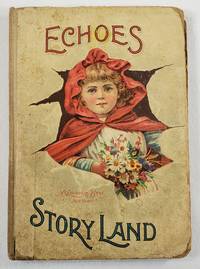
1900044146New York: McLoughlin Bros. 1900. Undated ca. 1900. Several classic children's stories illustrated throughout with dozens of color illustrations a few black and white. Pictorial hardcover with tan cloth spine 8 inches tall. Covers quite rubbed chipping to the corners front hinge internally lightly cracked but secure text block sound pages clean with some occasional light finger soil to the margins gift notation dated 1901 on front free endpaper no other markings. Includes: Cinderella Little Red Riding Hood Pauline and the Matches Envious Minnie Robinson Crusoe Favorite Rhymes and Jingles. Hard Cover. Good. 8vo - over 7¾" - 9¾" tall. McLoughlin Bros. Hardcover
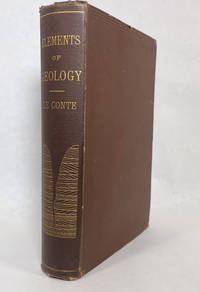
188814462New York: D. Appleton and Company 1888. Third Edition. 9x6.25in xiv 633 pp. 6 science related book advertisements frontispiece illustration of begging of the Grand Canyon at Marble Canyon many in text illustrations as you would find in a text book appendix listing of authorities index; Publishers dark brown cloth covers with gilt lettering and design on spine pale yellow end papers all edges trimmed; Shelf wear to covers edges and corners with rubbing at joints and edges corners bumped and frayed small dent on top front edge small splits to top and bottom of spine red stain to rear end paper prior owner ink name and address on front end paper some pencil notes on rear end paper. Joseph Le Conte 1823-1901 was a physician geologist professor at the University of California Berkeley author and early California conservationist. He was trained by Louis Agassiz 1807-1873 and accompanied him on several geological trips. He was very influential in conservation movements in California and as a professor at Berkeley. This book is a text book that from the first edition in 1877 has been updated and expanded to reflect changes in geological knowledge and theories.<br /> <br /> Richard F. Dean -1902 lived in San Francisco and was a student at the University of California Berkeley in 1889. He received an A.B. in 1890 and continue to receive a LL.B. in 1893. This book was for a course in Geology which was likely one of the science requirements for the A. B. Little information is known about Dean he was a member of the Phi Delta Phi Fraternity at Hasting College of the Law and his than his death from the UCB alumni records. D. Appleton and Company unknown
1895003263London: Lawrence and Bullen 1895 Mauve patterned cloth pictorially stamped in gilt gilt slightly dulled spine sunned boards slightly bowed. Fairy stories set in Ireland written by Irish poetess Moira O'Neill. Illustrated with lovely b&w plates by Britten. Scarce. First Edition. Pictorial Cover. Very Good/No Jacket. Illus. by W. E. F. Britten. 8vo. Lawrence and Bullen hardcover
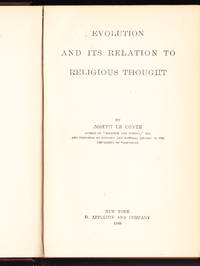
1888002938New York: D. Appleton and Company 1888. Le Conte 1823-1901 was a Southern sympathizer during the Civil War. His unhappiness with Reconstruction drove him to California where he became a famed professor of geology and natural history as well as a co-founder of the Sierra Club. This is a Near Fine copy of the First Edition. Brown pebbled cloth binding; ruled with gilt lettering on the spine. Clean text; 344 pages indexed; with a ten-page catalogue of Appleton's publications related to Evolution. Mild bumping and rubbing to head and foot of spine else a Fine copy. An uncommon to scarce title; solid and attractive. Size: 12mo - over 6¾" - 7¾" tall. First Edition. Hard Cover. Near Fine/No Jacket. D. Appleton and Company Hardcover
1892002524New York: D. Appleton and Company 1892. Joseph Le Conte 1823-1901 was a physician and scientist who was a co-founder of the Sierra Club with John Muir. Resident and working in the South during the Civil War he harbored racist views of Reconstruction; Quercus finds this ironic considering his later academic career and fame at UC Berkeley. First published in 1888; this is a Very Good copy of the Second Edition containing Le Conte's revisions of the previous version. Olive green cloth binding tanned to a brown shade on the spine which has gilt lettering. Clean text; 392 pages with 12 pages of publisher's adverts in the rear. Mildly bumped and with some wear visible at the margins; chipped at head and foot of the spine. A solid copy if not the most beautiful. Second Edition. Hard Cover. Very Good/No Jacket. 8vo - over 7¾" - 9¾" tall. D. Appleton and Company Hardcover
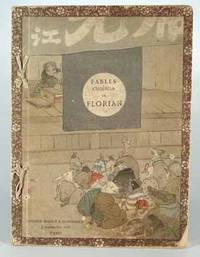
1895830091895. EHON - FAIRY TALES BARBATOU P. FABLES CHOISES DE FLORIAN. The first volume only. Paris: Librairie Marpon & Flammarion; Tokyo: Shueisha Meiji 28 1895. Fukuro toji cord-bound in printed paper covers. This first volume is 26.6 X 19.8 cm with 14 full page color woodcuts by Kano Tomonobu and Kajita Hanko. #167 of 200 from a deluxe edition on Japanese hosho paper. Covers soiled and a bit edgeworn one cvorner chipped. The contents are very good and the impressions and colors are quite lovely. This work despite its French text may be seen as squarely in the tradition of the Japanese ehon and it shares many characteristics of the revival of picture book printing in mid to late Meiji demonstrated by other works: an emerging Nihonga style skilled printed increasingly restrained coloration etc. In that context the large scale of its illustrations renders it particularly interesting. The first volume only of two. unknown
18700913636London: Bell & Daldy 1870. Bound in green cloth stamped in gold and black. All edges gilt top edge faded a bit. Some scuffing to spine but type still very readable. A handsome early copy in English of this 542 pp. book of Fairy Tales by the master storyteller. Handsome tight copy. . Early Reprint. Hard Cover. Very Good /No Jacket. 8vo - over 7¾" - 9¾" tall. Bell & Daldy Hardcover
18992020181Chicago: Geo. M. Hill Company 1899 . Second Edition. Hardcover. Good. W.W. DENSLOW. Quarto 102 unnumbered pages pictorial boards rubbed edgeworn corners worn rebacked in brown leather with new endpapers. Ex libris Elsie Walch 1929. Note: it appears that young Elsie helpfully provided pencilled page numbers at the top of each page. <br/><br/>Verse by L. Frank Baum. Illustrated by W. W. Denslow who of course also did THE WONDERFUL WIZARD OF OZ the next year. Hand-lettered by Ralph Fletcher Seymour his first big job after arriving in Chicago from Indiana. and before he began his Alderbrink Press. The final page is a drawing of Ralph Seymour by W. W. Denslow. Geo. M. Hill Company hardcover
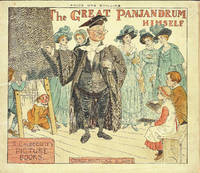
1885008866London: George Routledge & Sons 1885 8" x 9.5". 24 pgs. Paper wraps front cover printed in color edge wear closed tear near base of spine old bookseller sticker inside front cover. Published between 1886 and 1900 based on rear cover titles and size of book. This was Caldecott's last shilling picture book. The text a nonsense verse was written by Samuel Foote allegedly to test the actor Macklin who boasted that he could memorize anything with a single read-through Osborne pg 63. Illustrated with 6 color plates the balance in line. The best part is there is a bear wearing a dress!. Thwaite pg 197 Muir English Children's Books pg. 199 and British Book Illustrators 1860-1900 pg 36 C20. . Early Edition. Pictorial Wraps. Very Good. Illus. by Randolph Caldecott. Small Oblong 4to. George Routledge & Sons unknown
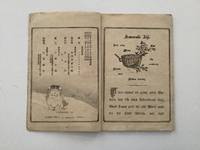
188919429AB1889. Tokyo Kubunsha 1889. 18 : 13 cm. 9 leaves with many coloured woodblock-printed illustrations by Kobayashi Sensai Eitaku. Coloured illustrated original Japanese binding. The Kobunsha's Japanese Fairy Tales Series Vol. 4. - Text in German. unknown
18362851Paris: Furne Libraire / Fruger et Brunet 1836. fifth edition. Hardcover. Very Good. 12 vol set complete. Fifth edition.5 x 8 1/2 in. Text in French.Brown polished quarter calf with marbled boards. 46 B&W engravings and 20 fold-out hand-colored maps. All illustrations tissue-protected. Gilt lettering and decoration on spine with embossed motif. Marbled endpapers. Condition of book is VERY GOOD ; Spines very gently worn leather remarkably good corners and ends of spine very lightly worn. The maps colors are very fresh and the maps only have some faint foxing if at all while the B&W engravings vary as to foxing – the busts of emperors more so the full illustrations less. Upper text block slightly darkened. Foxing throughout sporadic with owner's name in ink on some half title pages otherwise very tight solid copies uniformly aged. Furne Libraire / Fruger et Brunet hardcover
1844560207Philadelphia PA: Thomas Cowperthwait and Co. Good with No dust jacket as issued. 1844. Hardcover. Small volume in faded brown cloth. Spine indicates volume 11 possibly Roman numeral 2 of Parley's Cabinet Library. Scattered light foxing throughout. ; 16mo 6" - 7" tall; 320 pages . Thomas, Cowperthwait and Co hardcover
184434472Boston MA: Bradbury Soden & Company. Very Good. 1844. Full-Leather. Very Good full calf leather no names or marks. Front and rear outer hinges are both cracked but holding tight. Leather boards have some rubbing. Spine ends are worn. ; 16mo 6" - 7" tall; 320 pages . Bradbury, Soden & Company hardcover
1812155305Milano : dalla Stamperia Reale 1812. In-8 p. mm. 228x135 brossura muta coeva pp. 52. Istruzione estratta dai num. 86 87 e 89 del Moniteur 1812. Tradotta coll'aggiunta di alcune note da Claro-Giuseppe Malacarne Dottore di Med. e Chir. gia Professore nel Real Liceo di Brescia ora Segretario del Consiglio delle Miniere e pubblicata per ordine di S.E. il Signor Conte Vaccari Ministro dell'Interno del Regno D'Italia.Ben conservato intonso con barbe. dalla Stamperia Reale, unknown
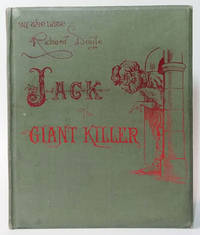
1888009536London: Eyre & Spottiswoode 1888 48 pgs. Grey-green cloth pictorially stamped in red ink cloth rubbed gift inscription thumbing to pages 2 pin holes through a number of pages. A facsimile of Doyle's 1842 manuscript which was sold at auction by Christie's and eventually published by Eyre & Spottiswoode in 1888. Each page contains hand-lettered text and color artwork reproduced from Doyle's manuscript. Scarce. Osborne pg 29. . Pictorial Cloth. Near Very Good/No Jacket. Illus. by Richard Doyle. 4to. Eyre & Spottiswoode hardcover