Living Language (Corporate Author)Biblio.com
1 118 résultats
20091-1400006597Living Language 2009. Audio CD. New. com/cdr un edition. 7.00x5.25x1.25 inches. Living Language unknown
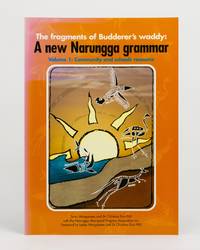
2010145967Canberra: Pacific Linguistics School of Culture History and Language College of Asia and the Pacific The Australian National University 2010. First Edition. Paperback. Very Good. Canberra Pacific Linguistics School of Culture History and Language College of Asia and the Pacific The Australian National University 2010. Quarto xviii 123 pages with a map. Colour-pictorial card covers; an excellent copy. The Narungga people of Yorke Peninsula in South Australia. Pacific Linguistics, School of Culture History and Language, College of Asia and the Pacific, The Australian National University paperback
2006145853Maitland: Narungga Aboriginal Progress Association Inc 2006. First Edition. Paperback. Very Good. Maitland Narungga Aboriginal Progress Association Inc. 2006. Quarto vi 66 pages. Colour-pictorial card covers lightly sunned; an excellent copy. The Narungga people of Yorke Peninsula in South Australia. Narungga Aboriginal Progress Association Inc paperback
20192-169937578XIndependently published 2019. Paperback. New. 375 pages. 11.69x8.27x0.85 inches. Independently published paperback
200236518Pàtron Editore. 2002. Softcover. Very Good. Scholar's name to ffep D. Gerber. Else fine.; Contents: E. VOGT: Enzo Degani da Aion a Eikasmos pp.3-15 ; G. MORELLI: Iambografia pp.15-31 ; G. MASTROMARCO: Commedia pp.31-59 ; M. DI MARCO: Poesia parodica pp.59-73 ; F. MONTANARI: Filologia ed erudizione antica pp.73-89 ; L. LEHNUS: Epigramma classico e bizantino pp.89-101 ; L. CANFORA: Enzo Degani e la storia degli studi classici pp.101-109; Eikasmos: Quaderni Bolognesi Di Filologia Classica. Studi 8; 111 pages . 8855526847 . Pàtron Editore paperback
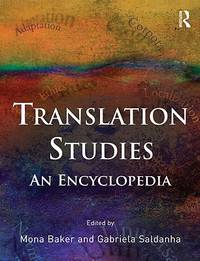
200838898Routledge. 2008. Second Edition. Softcover. Very Good. Minor soiling to textblock.; 6.85 X 1.59 X 9.69 inches; 704 pages . 0415609844 . Routledge paperback
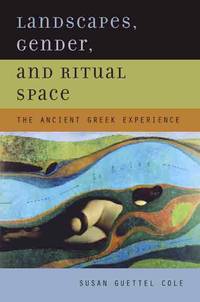
200442553University of California Press. 2004. Hardcover. Very Good in Near Fine dust jacket. Underlining in pencil to a few pages. Very minor shelfwear.; 9.1 X 5.6 X 1.1 inches; 312 pages . 0520235444 . University of California Press hardcover
200411038Latomus. 2004. Softcover. Fine. Collection Latomus Volume 286; 81 pages . 287031227X . Latomus paperback
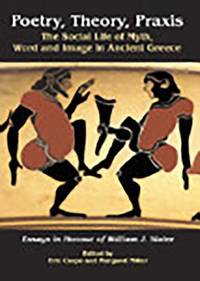
200334312Oxbow Books. 2003. Hardcover. Fine in Near Fine dust jacket. Book is fine. Very Light shelfwear to DJ.; A Festschrift in honor of the classical scholar William J Slater this volume looks at the social life of theories artifacts and poems in ancient Greece. The central focus of the collection is Greek theater but essays on such typically Slaterian subjects as ancient scholarship lyric poetry art and inscriptions are also included. From a literary search for the elusive Pelasgians an iconographic analysis of illustrations of Athenian women's religious rituals to reflections on the revival and politicisation of Greek plays in the modern era each paper attempts to elucidate the meaning of ancient Greek words myths poems artifacts theories and activities by reinserting them into their cultural environment.; 10.1 X 6.8 X 0.8 inches; 288 pages . 1842171011 . Oxbow Books hardcover
201128998Cambridge University Press. 2011. Hardcover. Very Good in Very Good dust jacket. light shelfwear with faint bumping to book and DJ.; 294 pages; Prudentius is one of the major Latin poets of antiquity. A Christian living and writing in Spain in the late fourth and early fifth centuries he was thoroughly imbued with the whole tradition of Latin poetry. The Hamartigenia is a didactic poem exploring the origins of evil and how it operates in the world. It is full of echoes and reworkings of earlier poems by Lucretius Virgil and others but is also a serious contribution to this important theological issue which was much discussed in Church circles of the day. This is a major new study of the Hamartigenia in the context of Prudentius' work as a whole and is striking for being as seriously interested in its theological as in its literary contribution. . 1107004535 . Cambridge University Press hardcover
20118420Cambridge University Press. 2011. Hardcover. Near Fine in Near Fine dust jacket. Very light shelfwear to book and DJ else Fine.; 294 pages; Prudentius is one of the major Latin poets of antiquity. A Christian living and writing in Spain in the late fourth and early fifth centuries he was thoroughly imbued with the whole tradition of Latin poetry. The Hamartigenia is a didactic poem exploring the origins of evil and how it operates in the world. It is full of echoes and reworkings of earlier poems by Lucretius Virgil and others but is also a serious contribution to this important theological issue which was much discussed in Church circles of the day. This is a major new study of the Hamartigenia in the context of Prudentius' work as a whole and is striking for being as seriously interested in its theological as in its literary contribution. . 1107004535 . Cambridge University Press hardcover
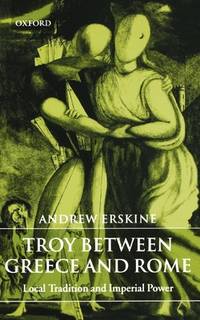
200316159Oxford University Press. 2003. Paperback. Near Fine. In this book Andrew Erskine examines the role and meaning of Troy in the changing relationship between Greeks and Romans as Rome is transformed from a minor Italian city into a Mediterranean superpower. The book seeks to understand the significance of Rome's Trojan origins for the Greeks by considering the place of Troy and Trojans in Greek culture. It moves beyond the more familiar spheres of art and literature to explore the countless overlapping local traditions the stories that cities told about themselves a world often neglected by scholars.; 336 pages . 0199265801 . Oxford University Press paperback
201426303Johns Hopkins University Press. 2014. Hardcover. Near Fine. Very faint rubbing to boards else fine.; Quintus Ennius often considered the father of Roman poetry is best remembered for his epic poem the Annals a history of Rome from Aeneas until his own lifetime. Ennius represents an important bridge between Homer’s works in Greek and Vergil’s Aeneid. Jay Fisher argues that Ennius does not simply translate Homeric models into Latin but blends Greek poetic models with Italic diction to produce a poetic hybrid. Fisher's investigation uncovers a poem that blends foreign and familiar cultural elements in order to generate layers of meaning for his Roman audience. Fisher combines modern linguistic methodologies with traditional philology to uncover the influence of the language of Roman ritual kinship and military culture on the Annals. Moreover because these customs are themselves hybrids of earlier Roman Etruscan and Greek cultural practices not to mention the customs of speakers of lesser-known languages such as Oscan and Umbrian the echoes of cultural interactions generate layers of meaning for Ennius his ancient audience and the modern readers of the fragments of the Annals.; 224 pages . 1421411296 . Johns Hopkins University Press hardcover
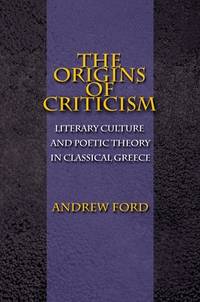
200239883Princeton University Press. 2002. Hardcover. Good in No Dust Jacket dust jacket. Ex-library copy with usual stamps call numbers and pocket.; By "literary criticism" we usually mean a self-conscious act involving the technical and aesthetic appraisal by individuals of autonomous works of art. Aristotle and Plato come to mind. The word "social" does not. Yet as this book shows it should--if that is we wish to understand where literary criticism as we think of it today came from. Andrew Ford offers a new understanding of the development of criticism demonstrating that its roots stretch back long before the sophists to public commentary on the performance of songs and poems in the preliterary era of ancient Greece. He pinpoints when and how later in the Greek tradition than is usually assumed poetry was studied as a discipline with its own principles and methods. The Origins of Criticism complements the usual history-of-ideas approach to the topic precisely by treating criticism as a social as well as a theoretical activity. With unprecedented and penetrating detail Ford considers varying scholarly interpretations of the key texts discussed. Examining Greek discussions of poetry from the late sixth century B. C. Through the rise of poetics in the late fourth he asks when we first can recognize anything like the modern notions of literature as imaginative writing and of literary criticism as a special knowledge of such writing. Serving as a monumental preface to Aristotle's Poetics this book allows readers to discern the emergence within the manifold activities that might be called criticism of the historically specific discourse on poetry that has shaped subsequent Western approaches to literature.; 356 pages . 0691074852 . Princeton University Press hardcover
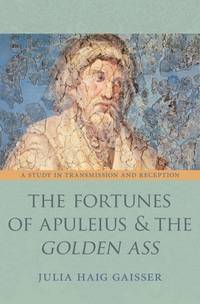
200826809Princeton University Press. 2008. Hardcover. Very Good in Near Fine dust jacket. Gift inscription from author to R. E. Fantham on ffep. Light bump to 1 corner. A few correction by Fantham in pencil. Very light shelfwear to DJ.; This book traces the transmission and reception of one of the most influential novels in Western literature. The Golden Ass the only ancient Roman novel to survive in its entirety tells of a young man changed into an ass by magic and his bawdy adventures and narrow escapes before the goddess Isis changes him back again. Its centerpiece is the famous story of Cupid and Psyche. Julia Gaisser follows Apuleius' racy tale from antiquity through the sixteenth century tracing its journey from roll to codex in fourth-century Rome into the medieval library of Monte Cassino into the hands of Italian humanists into print and finally over the Alps and into translation in Spanish French German and English. She demonstrates that the novel's reception was linked with Apuleius' reputation as a philosopher and the persona he projected in his works. She relates Apuleius and the Golden Ass to a diverse cast of important literary and historical figures--including Augustine Fulgentius Petrarch Boccaccio Bessarion Boiardo and Beroaldo. Paying equal attention to the novel's transmission how it survived and its reception how it was interpreted she places the work in its many different historical contexts examining its representation in art literary imitation allegory scholarly commentary and translation. The volume contains several appendixes including an annotated list of the manuscripts of the Golden Ass.; Martin Classical Lectures; 408 pages; Signed by Author . 0691131368 . Princeton University Press hardcover
201225493Editions Errance. 2012. Hardcover. Very Good in No Dust Jacket dust jacket. Corners bumped with faint crease through some pages.; 4to 11" - 13" tall; 282 pages . 2877724980 . Editions Errance hardcover
200121566Bari: Edipuglia. 2001. Hardcover. Very Good. Upper corners bumped. Light bumping to base of spine.; 178pp illustrated. PRIMO CICLO: Lo scavo subacqueo di un villaggio perilacustre del VI millennio a. C. ; Volontariato e archeologia suacquea: esperienze di ricerca in Calabria; Archeologia e speleologia subacquee: dai relitti alle grotte; Navi antiche nei musei d’Europa. ”… e buoni ultimi gli archeologi subacquei”. SECONDO CICLO: Il relitto di Uluburun Kas Turchia : splendide scoperte dalla Tarda Età del Bronzo; Le invenzioni di Archimede e le grandi navi; I porti di Claudio e di Traiano; Relitti lungo il litorale francese Isole di Hyéres. Dagli scavi programmati alla carta archeologica; La nave greca arcaica di Gela: analisi della tecnica costruttiva e del carico commerciale; La tutela del patrimonio sommerso del LazioCostruire nell’acqua: I porti antichi.; Biblioteca Archaeologica 9; 4to - over 9¾" - 12" tall; 178 pages . 8872282438 . Edipuglia hardcover
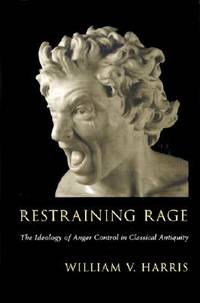
200128718Harvard University Press. 2001. Hardcover. Near Fine in Very Good dust jacket. Very faint shelfwear Else book is fine. DJ has light edgewear with a bit of creasing. Dustjacket is protected in plastic sleeve.; The angry emotions and the problems they presented were an ancient Greek preoccupation from Homer to late antiquity. From the first lines of the Iliad to the church fathers of the fourth century A. D. the control or elimination of rage was an obsessive concern. From the Greek world it passed to the Romans. Drawing on a wide range of ancient texts and on recent work in anthropology and psychology Restraining Rage explains the rise and persistence of this concern. W. V. Harris shows that the discourse of anger-control was of crucial importance in several different spheres in politics--both republican and monarchical--in the family and in the slave economy. He suggests that it played a special role in maintaining male domination over women. He explores the working out of these themes in Attic tragedy in the great Greek historians in Aristotle and the Hellenistic philosophers and in many other kinds of texts. From the time of Plato onward educated Greeks developed a strong conscious interest in their own psychic health. Emotional control was part of this. Harris offers a new theory to explain this interest and a history of the anger-therapy that derived from it. He ends by suggesting some contemporary lessons that can be drawn from the Greek and Roman experience.; 480 pages . 0674006186 . Harvard University Press hardcover
200226259Harvard University Press. 2002. Hardcover. Very Good in Very Good dust jacket. Very faint bump to 1 corner else book is fine. DJ has light edgewear with a bit of creasing.; The angry emotions and the problems they presented were an ancient Greek preoccupation from Homer to late antiquity. From the first lines of the Iliad to the church fathers of the fourth century A. D. the control or elimination of rage was an obsessive concern. From the Greek world it passed to the Romans. Drawing on a wide range of ancient texts and on recent work in anthropology and psychology Restraining Rage explains the rise and persistence of this concern. W. V. Harris shows that the discourse of anger-control was of crucial importance in several different spheres in politics--both republican and monarchical--in the family and in the slave economy. He suggests that it played a special role in maintaining male domination over women. He explores the working out of these themes in Attic tragedy in the great Greek historians in Aristotle and the Hellenistic philosophers and in many other kinds of texts. From the time of Plato onward educated Greeks developed a strong conscious interest in their own psychic health. Emotional control was part of this. Harris offers a new theory to explain this interest and a history of the anger-therapy that derived from it. He ends by suggesting some contemporary lessons that can be drawn from the Greek and Roman experience.; 480 pages . 0674006186 . Harvard University Press hardcover
200240678Société D'Édition- Les Belles Lettres. 2002. Softcover. Fine. Collection Des Universités De France. Association Guillaume Budé; 229 pages . 2251013210 . Société D'Édition- Les Belles Lettres paperback
200710509University of London Institute of Classical Studies. 2007. Softcover. Fine. As new.; Bulletin of the Institute of Classical Studies Supplement 95; 156 pages; Pindar’s fifteen victory odes for Sicilian victors include some of Pindar’s most impressive and widely admired poems such as the first two Olympians and first three Pythians. The majority of the Sicilian odes date from between about 476 to 466 BC and were composed to celebrate the victories of the great tyrants of Sicily Hieron of Syracuse and Theron of Akragas or their families or courtiers at the crown games. The Sicilian tyrants made spectacular use of their wealth and power in competing in equestrian events at the games and in commissioning Pindar and Bacchylides to celebrate their victories in song. This book examines the Sicilian odes of Pindar as a group investigating the ways in which they interact and exploit their overlapping and intersecting audiences. It studies the different performances of Pindar’s odes including reperformances subsequent to the first performance and the audiences of these performances and argues that these have important consequences for our view of the role victory odes played in the self-display of the Sicilian tyrannies to one another and the wider Greek world the intertexts between the odes the ‘conventional’ material in Pindar and the ways in which Pindar fulfils his promise of lasting fame for his patrons. . 1905670095 . University of London Institute of Classical Studies paperback
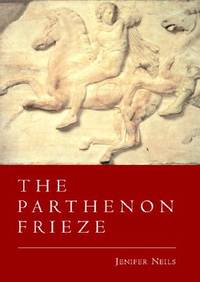
200143615Cambridge University Press. 2001. Hardcover. Fine in Near Fine dust jacket. Includes cd-rom; 4to 11" - 13" tall; 316 pages; While the sculpted Ionic frieze of the Parthenon with its galloping horsemen and classically portrayed gods is reproduced in every art history text and has been much studied by scholars no single book has yet been devoted to all its myriad aspects. This study by classical archaeologist and art historian Jenifer Neils breaks new ground by considering all aspects of this complex and controversial monument. Although the frieze has been studied for over two hundred years most scholarship has sought an overall interpretation of the iconography rather than focusing on the sculpture's visual language essential for a full understanding of the narrative. Neils' study not only decodes the language of the frieze but also analyzes its conception and design style and content as well as its impact on later art. Unusual for its wide-ranging approach to the frieze this book also brings ethical reasoning to bear on the issue of its possible repatriation as part of the on-going Elgin Marble debate. As one of the foremost examples of the high classical style and the finest expression of mid-fifth century Athenian ideology the Parthenon frieze is without doubt one of the major monuments of western civilization and as such deserves to be understood in all its dimensions. The accompanying CD-ROM contains a virtual reality Macromedia Director movie of the complete frieze based on the plaster casts in the Skulpturhalle in Basel Switzerland. Developed by Rachel Rosenzweig of the Department of Greek and Roman Art of the Cleveland Museum of Art the casts are arranged in conformity with Neils' reconstruction and enable the user to view them in succession as if walking around the Parthenon. The CD-ROM requires a computer running either MAC OS 8.01 or later or Windows 95 or later. . 0521641616 . Cambridge University Press hardcover
200225296Cambridge University Press. 2002. Hardcover. Very Good in Very Good dust jacket. Scholar's name to ffep Robert Brown. Else very light shelfwear to book. Faint shelfwear to DJ with 1 tiny chip to base of DJ spine; Statius' Silvae are argued in this book to be important social and literary productions. Traditionally derided as occasional and therefore inconsequential verse they offer fascinating insight into the history politics art and literature of the Flavian period. They celebrate and explore in all its variety and ambiguity a flourishing literary and artistic culture which the condemnation of Domitian's memory after his assassination had largely suppressed. They deserve consideration for what they reveal about the role of poetry and patronage in imperial society as well as about imperial art and architecture.; 366 pages . 052180891X . Cambridge University Press hardcover
201116137Barkhuis. 2011. Hardcover. Fine in No Dust Jacket dust jacket. The study of the reception of the ancient novel and of its literary and cultural heritage is one of the most appealing issues in the story of this literary genre. In no other genre has the vitality of classical tradition manifested itself in such a lasting and versatile manner as in the novel. However this unifying centripetal quality also worked in an opposite direction spreading to and contaminating future literatures. Over the centuries from Antiquity to the present time there have been many authors who drew inspiration from the Greek and Roman novels or used them as models from Cervantes to Shakespeare Sydney or Racine not to mention the profound influence these texts exercised on for instance sixteenth-to eighteenth-century Italian Portuguese and Spanish literature. Volume I is divided into sections that follow a chronological order while Volume II deals with the reception of the ancient novel in literature and art. The first volume brings together an international group of scholars whose main aim is to analyse the survival of the ancient novel in the ancient world and in the Middle Ages in the Renaissance in the 17th and 18th centuries and in the modern era. The contributors to the second volume have undertaken the task of discussing the survival of the ancient novel in the visual arts in literature and in the performative arts.; Ancient Narrative Supplementum 14.2; 2; 211 pages . 9077922989 . Barkhuis hardcover
201116125Barkhuis. 2011. Hardcover. Fine in No Dust Jacket dust jacket. The study of the reception of the ancient novel and of its literary and cultural heritage is one of the most appealing issues in the story of this literary genre. In no other genre has the vitality of classical tradition manifested itself in such a lasting and versatile manner as in the novel. However this unifying centripetal quality also worked in an opposite direction spreading to and contaminating future literatures. Over the centuries from Antiquity to the present time there have been many authors who drew inspiration from the Greek and Roman novels or used them as models from Cervantes to Shakespeare Sydney or Racine not to mention the profound influence these texts exercised on for instance sixteenth-to eighteenth-century Italian Portuguese and Spanish literature. Volume I is divided into sections that follow a chronological order while Volume II deals with the reception of the ancient novel in literature and art. The first volume brings together an international group of scholars whose main aim is to analyse the survival of the ancient novel in the ancient world and in the Middle Ages in the Renaissance in the 17th and 18th centuries and in the modern era. The contributors to the second volume have undertaken the task of discussing the survival of the ancient novel in the visual arts in literature and in the performative arts.; Ancient Narrative Supplementum 14.1; 1; 254 pages . 9077922970 . Barkhuis hardcover