Malink, MarkoBiblio.com
1 118 résultats
201338776Harvard University Press. 2013. Hardcover. Fine in Near Fine dust jacket. Very light shelfwear to DJ.; 155.575 X 30.48 X 234.95 millimeters; 384 pages . 0674724542 . Harvard University Press hardcover
201042983Cambridge University Press. 2010. Hardcover. Near Fine in No Dust Jacket dust jacket. 8vo 8" - 9" tall; 312 pages . 0521190622 . Cambridge University Press hardcover
201315562Éditions Latomus. 2013. Softcover. Fine. This book is an investigation of several key questions relevant to Juvenal’s Fifth Satire: What is the character of the speaker What is the nature of the addressee s How should we understand the relationship between patron and client Furthermore if we compare Juvenal to Horace’s Satires and Epistles what are the similarities and differences between Juvenal’s world and the egalitarianism of patronage within the circle around Augustus and Maecenas What do those texts reveal about Juvenal’s attitude to the emperor; and is it possible to extend Juvenal’s jaundiced view of the rex to the princeps; Collection Latomus Volume 342; 100 pages; Isbn: 978287031289X . Éditions Latomus paperback
201214890Franz Steiner Verlag. 2012. Softcover. Fine. Still wrapped in plastic.; Moyen fréquemment utilisé pour établir une communication avec les dieux les offrandes ne correspondent pas exactement telles qu'on les conçoit aujourd'hui à ce que les Grecs désignaient ainsi. Le vocabulaire qui leur est associé et les contextes dans lesquels elles sont trouvées sont examinés à partir des sources littéraires épigraphiques et archéologiques. La question est de savoir comment ces objets étaient apportés aux sanctuaires comment ils étaient dédiés et quelles valeurs leur étaient attribuées. Les noms grecs de l'offrande différencient en effet les objets selon leurs qualités propres ou selon les occasions de l'acte d'offrir dont les diverses modalités sont ici détaillées à travers l'examen des dispositifs rituels. Le parcours des objets est donc suivi depuis les lieux et les structures de consécration ou d'exposition jusqu'à la mise au rebut. La diversité des pratiques liées aux offrandes permet de cerner les gestes rituels et de remettre en question leurs interprétations modernes.; Potsdamer Altertumswissenschaftliche Beiträge 41; 292 pages . 3515101888 . Franz Steiner Verlag paperback
201213399Cambridge University Press. 2012. Hardcover. Near Fine in Very Good dust jacket. Light bump to lower edge of front board else book is fine. DJ has light creasing to edges.; Previous scholarship on classical pseudepigrapha has generally aimed at proving issues of attribution and dating of individual works with little or no attention paid to the texts as literary artefacts. Instead this book looks at Latin fakes as sophisticated products of a literary culture in which collaborative practices of supplementation recasting and role-play were the absolute cornerstones of rhetorical education and literary practice. Texts such as the Catalepton the Consolatio ad Liviam and the Panegyricus Messallae thus illuminate the strategies whereby Imperial audiences received and interrogated canonical texts and are here explored as key moments in the Imperial reception of Augustan authors such as Virgil Ovid and Tibullus. The study of the rhetoric of these creative supplements irreverently mingling truth and fiction reveals much not only about the neighbouring concepts of fiction authenticity and reality but also about the tacit assumptions by which the latter are employed in literary criticism.; 322 pages . 1107000734 . Cambridge University Press hardcover
201314887Oxford University Press. 2013. Hardcover. Fine in Very Good- dust jacket. Book is fine. DJ has hard crease along upper rear edge.; Classical Presences; 304 pages . 0199699739 . Oxford University Press hardcover
201226644Fabrizio Serra Editore. 2012. Softcover. Near Fine in Near Fine dust jacket. Very light shelfwear to book and DJ.; Il ritorno dell'interesse sul poeta Publio Papinio Stazio che negli anni di Domiziano indirizzò la sua maggiore opera all'epos tragico tebano La Tebaide che racconta della lotta fratricida tra Eteocle e Polinice per la successione al trono di Tebe trova molteplici spiegazioni negli studi che si sono sviluppati sull'onda di un rinnovato interesse per la letteratura dell'età flavia. La Tebaide è stata negli ultimi decenni oggetto di un ricco dibattito focalizzato sulla complessità ideologica e letteraria dell'opera. Sull'onda degli studi sulla lingua inquieta del racconto epico la scelta dell'autore è stata quella di analizzare gli 819 versi che costituiscono il dodicesimo e ultimo libro. Esso propone infatti la riapertura inaspettata di un conflitto che sembrava risolto e che si dirama in numerose trame del racconto. La tensione è tra Eteocle e Polinice; tra due stirpi quella argiva e quella tebana; tra il 'maschile' e il 'femminile'; tra Creonte e Teseo; tra la pace e la guerra; tra il furor e l'armonia dell'equilibrio tra il pianto del luctus e la gioia sfrenata che sembrano coesistere con sinistri accenti di inquietudine negli ultimi versi della narrazione. La lingua si fa specchio e cassa di risonanza di una polisemia e di polarità non risolte: attraverso gli strumenti retorici della negazione dell'enallage dell'uso allusivo di alcuni lessemi Stazio veicola un potenziale di ambiguità stilistica che riflette il disordine di un cosmo non pacificato. La prospettiva filologica sulla quale è basato questo lavoro rivendica alla lingua un livello di sapere profondo che permea insieme l'ideologia la costruzione dei personaggi la trama delle ricche relazioni intratestuali e intertestuali. La lettura di questo 'canto' della Tebaide interessa quindi intimamente il senso ultimo dell'epos tutto contribuendo alla formazione di ipotesi sulla sua struttura sulla sua composizione e sul suo messaggio di fondo.; Altera 2; 194 pages . 8862274521 . Fabrizio Serra Editore paperback
201210685Fabrizio Serra Editore. 2012. Softcover. Very Good in Very Good- dust jacket. Two bumps along top edges of wraps. Light creasing to corners. One small closed tear 1cm to top edge of DJ. Very Light moisture stains to bottom edge of front panel of DJ.; Il ritorno dell'interesse sul poeta Publio Papinio Stazio che negli anni di Domiziano indirizzò la sua maggiore opera all'epos tragico tebano La Tebaide che racconta della lotta fratricida tra Eteocle e Polinice per la successione al trono di Tebe trova molteplici spiegazioni negli studi che si sono sviluppati sull'onda di un rinnovato interesse per la letteratura dell'età flavia. La Tebaide è stata negli ultimi decenni oggetto di un ricco dibattito focalizzato sulla complessità ideologica e letteraria dell'opera. Sull'onda degli studi sulla lingua inquieta del racconto epico la scelta dell'autore è stata quella di analizzare gli 819 versi che costituiscono il dodicesimo e ultimo libro. Esso propone infatti la riapertura inaspettata di un conflitto che sembrava risolto e che si dirama in numerose trame del racconto. La tensione è tra Eteocle e Polinice; tra due stirpi quella argiva e quella tebana; tra il 'maschile' e il 'femminile'; tra Creonte e Teseo; tra la pace e la guerra; tra il furor e l'armonia dell'equilibrio tra il pianto del luctus e la gioia sfrenata che sembrano coesistere con sinistri accenti di inquietudine negli ultimi versi della narrazione. La lingua si fa specchio e cassa di risonanza di una polisemia e di polarità non risolte: attraverso gli strumenti retorici della negazione dell'enallage dell'uso allusivo di alcuni lessemi Stazio veicola un potenziale di ambiguità stilistica che riflette il disordine di un cosmo non pacificato. La prospettiva filologica sulla quale è basato questo lavoro rivendica alla lingua un livello di sapere profondo che permea insieme l'ideologia la costruzione dei personaggi la trama delle ricche relazioni intratestuali e intertestuali. La lettura di questo 'canto' della Tebaide interessa quindi intimamente il senso ultimo dell'epos tutto contribuendo alla formazione di ipotesi sulla sua struttura sulla sua composizione e sul suo messaggio di fondo.; Altera 2; 194 pages . 8862274521 . Fabrizio Serra Editore paperback
200739810Classical Press of Wales. 2007. Softcover. Near Fine in Very Good dust jacket. Very faint yellowing to pages. Light edgewear to DJ. Very faint sunning to DJ spine.; 6.36 X 0.83 X 9.34 inches; 200 pages . 1905125151 . Classical Press of Wales paperback
200828126M. D'Auria Editore. 2008. Softcover. Near Fine. Very light shelfwear else fine.; 149 pages . 8870922863 . M. D'Auria Editore paperback
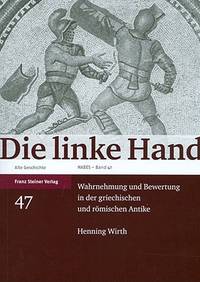
20106706Franz Steiner Verlag. 2010. Softcover. Near Fine. Very light rubbing else Fine.; Heidelberger Althistorische Beitrage Und Epigraphische Studien Band 47; 47; 283 pages; English summary: Human perception includes the division of space into left and right. In general left holds a negative connotation: A clumsy man appears linkisch in German links meaning left and the term translates as awkward. If you conned him he has been gelinkt. For a long time this negative coloring was also closely associated with the image of left-handers: Left-handers were often regarded as disabled appeared awkward and antisocial and were exposed to discrimination. To understand the people of ancient Greece and Rome one must understand the role right and left played in their perception and evaluation of the world. Henning Wirth studies the following questions from an ancient historical perspective: How did the Greeks and Romans perceive left What role was provided to the left hand in a dominantly right-handed world where the right hand attested Godly effectiveness And how does one explain the phenomenon of left-handedness and assessment of left-handed people German text. German description: Zur menschlichen Wahrnehmung gehort die Einteilung des Raumes in links und rechts. Dabei ist links in der Regel negativ konnotiert: Ein ungeschickter Mensch erscheint alinkisch. Hat man ihn betrogen so hat man ihn agelinkt. Lange Zeit war diese Negativfarbung auch eng mit dem Bild uber Linkshander verknupft: Linkshander galten oftmals als behindert erschienen asozial und ungeschickt und waren Diskriminierungen ausgesetzt. Will man den Menschen der griechischen und romischen Antike verstehen muss man nachvollziehen welche Rolle rechts und links in seiner Wahrnehmung und Bewertung der Welt spielten. Aus althistorischer Perspektive untersucht Henning Wirth hier folgende Fragen: Welche Vorstellungen besassen Griechen und Romer von links' Welche Rolle war in einer mehrheitlich aus Rechtshandern bestehenden Welt in der der rechten Hand gottliche Wirkkraft attestiert wurde fur die linke Hand vorgesehen' Und wie erklarte man sich das Phanomen der Linkshandigkeit und bewertete linkshandige Menschen' . 3515094490 . Franz Steiner Verlag paperback
200217833Cambridge University Press. 2002. Hardcover. Very Good in Very Good dust jacket. Light pencilling to a few pages margins. Lower corners bumped. Minor shelfwear. DJ has creasing along upper edge with some rubbing.; This book is a collection of freshly commissioned essays which covers the whole range of the output of an exceptionally versatile and innovative poet. The essays introduce readers to a variety of critical approaches to Horace and to Latin poetry. All of the essays show close attention to the actual text of Horace while placing that analysis in a number of different contexts - political philosophical historical. The collection sheds light not only on Horace but on the problems of Augustan poetry in general.; 282 pages . 0521642469 . Cambridge University Press hardcover
201430219Bloomsbury Academic. 2014. Hardcover. Very Good in No Dust Jacket dust jacket. Very light pencilling to a couple of pages by R. E. Fantham else book is fine. Card of Dr. Martin Hose taped to ffep.; 9.3 X 6.4 X 0.9 inches; 296 pages . 1472511883 . Bloomsbury Academic hardcover
2004DADAX1400020913Brand: Living Language 2004-11-16. paperback. New. 6.00x1.00x9.25. Buy with confidence. Excellent Customer Service & Return policy. Brand: Living Language paperback
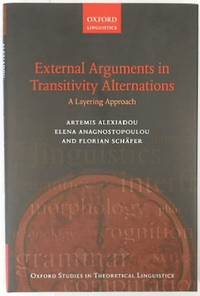
2015532929Oxford: OUP Oxford 2015. Oxford Studies in Theoretical Linguistics no.55. Hardcover. Jacket and boards are unmarked pages are clean and the text is clear. TH. Hardcover. Very Good/Very Good. Used. OUP Oxford Hardcover
2001544906Clevedon: Multilingua Matters Ltd 2001. Hardcover with printed boards no dust jacket in very good condition. Board edges corners and spine ends are slightly bumped and rubbed. Content is as unread. LW. Hardcover. Very Good/No Dust Jacket. Used. Multilingua Matters Ltd Hardcover
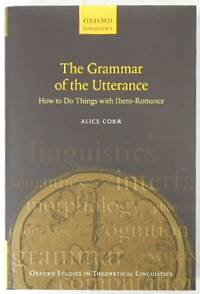
2012532909Oxford: Oxford University Press 2012. Oxford Studies in Theoretical Linguistics no.78. Hardcover. Jacket and boards are unmarked pages are clean and the text is clear. TH. Hardcover. Very Good/Very Good. Used. Oxford University Press Hardcover
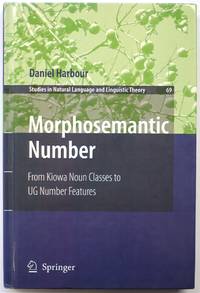
2007610056Dordrecht: Springer 2007. Hardcover with printed boards no dust jacket in very good condition. Lower board edges and spine foot are slightly bumped. Boards are clean binding is sound and pages are clear. LW. Hardcover. Very Good/No Dust Jacket. Used. Springer Hardcover
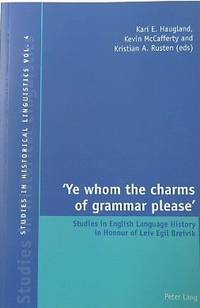
2014525368Bern: Peter Lang 2014. Paperback. Unused shop stock with minor shelf wear. Like new. AD. Paperback. New. Used. Peter Lang Paperback
2007498086Basingstoke: Palgrave MacMillan 2007. Faintly marked hardcover without jacket printed boards; very good condition with clean sound pages. TS. Hardcover. Very Good. Used. Palgrave MacMillan Hardcover
2003531751Elibron Classics 2003. Paperback complete 3-volume set in very good condition. Facsimilie reprint of the 1823 original. Minor shelfwear to covers contents clean and unmarked. AD. Paperback. Very Good. Used. Elibron Classics Paperback
2018537384Lanham: Lexington Books 2018. Hardcover without dust jacket in very good condition. Spine ends are slighlty bumped otherwise almost like new. LW. Hardcover. Very Good/No Dust Jacket. Used. Lexington Books Hardcover
2009508538Basingstoke: Palgrave MacMillan 2009. Hardcover no dust jacket printed boards. Very good condition. Spine ends and corners are slightly bumped. Pages are clean and sound. TA. Hardcover. Very Good. Used. Palgrave MacMillan Hardcover
2017316047Nomos Verlagsgesellschaft Baden-Baden 2017. Hardcover kartoniert ohne Schutzumschlag 1. Auflage Mit einer Zueignung vom Autor. Zustand: Keine Beschädigungen saubere Seiten. Der Einband hat dezente Gebrauchsspuren. Rücken Ecken Kanten sind leicht bestoßen. Nomos Verlagsgesellschaft, Baden-Baden, hardcover
200319423University of Michigan Press. 2003. Hardcover. Very Good in Very Good dust jacket. Scholar's name to ffep Robert Brown. Else book has very light shelfwear. DJ spine a bit sunned.; Moving beyond the usual pairing of Homer and Virgil Iliad and Aeneid Rossi refutes the notion that Homer is the only code model for the latter. This in-depth study reveals that Virgilian battle narrative assimilates conventions of other literary genres namely historiography and indirectly tragedy. Rossi demonstrates how Virgilian war narrative allows multiple and diachronic visions of reality and hence multiple systems of signification to co-exist in the text. In this way Virgil's Aeneid detaches itself from the Homeric epic and forcefully asserts its own relative modernity.; 236 pages . 0472113593 . University of Michigan Press hardcover