30 résultats
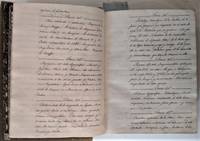
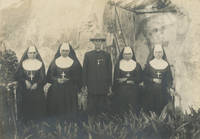
1900List518Most Cuba or Jacksonville 1900. Silver gelatin or albumen photographs various sizes ranging from 3 x 3 to 6 x 8 most captioned to verso. With handwritten manuscript four leaves discussing various diseases. The Spanish-American War was the first war in which nurses formed their own dedicated units as well as the first war in which they were accepted within military hospitals. While no nurses died in battle 153 died during the war from disease. Nurses were responsible for both treating soldiers as well as maintaining sanitary conditions within the camps. Conditions were often poor leading some to work until they were too sick to continue. <br /><br /> The current collection of photographs documents the experiences of a Mrs. Waters who was originally from Groton Massachusetts. The collection begins with a couple early photographs including a portrait as a young woman and a cyanotype of one of Waters' leprosy patients at Johns Hopkins Hospital in Baltimore. The next section shows Waters' training in Jacksonville Florida with either the Fourth or Seventh Army Corps at what was called Camp Cuba Libre both Corps trained there in 1898. The photographs of Jacksonville show life around the military camp and environs with some notable photographs of African-American inhabitants of the region. Three photographs quite notably show the Congregation of American Sisters a small group of American Indian nuns led by Reverend Francis Craft. The photographs taken in Cuba are notable for their portrayal of local life. Several photographs of military installations are taken around the "trocha" or line established by General Valeriana Weyler from Mariel to Majana. Another notable photograph is a cabinet card of a large group of nurses taken by the Havana photographer R. Testar. <br /><br /> The group overall shows very early photographic records of military nurses in training as well as a scarce photographic record from a woman in a combat situation. The photographs are generally well preserved in very good to excellent condition with some light fading. Accompanying the photographs is a four page manuscript essay presumably by Waters discussing leprosy as well as the booklet Spanish Phrase Book for American Soldiers and Sailors published by the National Relief Commission of Philadelphia. <br /><br /> Offered in partnership with Daniel / Oliver Gallery. books
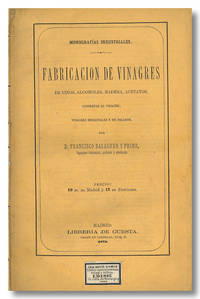
1879WRCLIT82812Madrid: Libreria de Cuesta 1879. 775pp. Large octavo. Printed wrappers extracted from pamphlet volume. Tables and illustrations. French bookseller's ticket on front wrapper spine covering absent but a very good copy. First edition published in the series "MonografÃas Industriales." OCLC/Worldcat locates two copies in North America: Sutro Library and Yale. OCLC: 42946953. Libreria de Cuesta unknown books
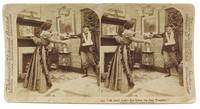
189947205New York: Underwood & Underwood Publishers 1899. Now housed in an archival mylar sleeve. Some wear & soiling to card. A bit of yellowing to image. A VG example. Caption printed to verso in 6 languages. Stereo image separate domed mounted to stiff-stock concave card. Oblong format: 3-1/2" x 7". Rounded corners. <br/><br/> Underwood & Underwood, Publishers unknown books
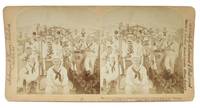
189947201New York: Underwood & Underwood Publishers 1899. Now housed in an archival mylar sleeve. Modest wear & soiling to card. A bit of yellowing to image. A VG example. Stereo image separate domed mounted to stiff-stock concave card. Oblong format: 3-7/16" x 7". Rounded corners. <br/><br/> Underwood & Underwood, Publishers unknown books
1820WRCAM21881Washington 1820. 8; 4pp. plus twenty-seven folding tables. Modern half morocco and marbled boards. Some occasional foxing. Overall crisp and very good. Untrimmed. The first report includes communications of the Spanish minister General Vives regarding the revolting Spanish American colonies possible Spanish session of Florida and other subjects. The second work consists of twenty-seven folding plates listing the names of American-owned vessels and other property claimed as Spanish spoliations. SERVIES 1048. hardcover books
18504251850. 8vo. 215 x 160 mm. 8 ½ x 6 ¼ inches. 306 leaves chapters separated by blanks. 19th century leather backed marbled paper boards; inner hinge cracked edges bumped some abrasion to the head of the spine; sound. Beautifully written manuscript volume containing an extensive discussion of library management and practices written by an anonymous Spanish author in the middle of the 19th century. This dissertation organized in 70 chapters begins with a discussion of the library profession and its importance to civil society. His first chapters describe the "Archive" with reference to Spanish monastic governmental and diplomatic collections that have been preserved. He focuses his attention on Aragon Mallorca Navarra and Santiago. He turns to France to furnish some interested information on the archives in Paris before getting into the chapters on classification of materials and the creation of inventories. After nearly 200 leaves of text on the subject of archives the authors turns his attention to libraries. From the beginning he takes a historical approach focusing his attention on both books and manuscripts mentioning the collections at Cambridge University. Paleography is a subject he spends some time describing and then he moves into the history of printing typography Gutenberg and the spread of printing to Spain. The final dozen chapters are devoted to the rules for managing a library lessons in classification and inventory control. He quotes from both DeBure and Brunet in his lessons on cataloguing. A rather remarkable piece of work thought to be unpublished. An examination of both United States and Spanish national collections turned up no reference to this anonymous piece of library scholarship. unknown books
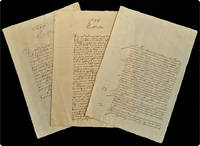
188441011copies made in Seville: Establecimiento Tipografico y Litografico "El Porvenir 1884. Folio 31 cm 12.5". 1 2 3 pp. <br><br>Each facsimile has this note on it: "Photographed from the original preserved in the 'Archivo General de Indias' de Sevilla under Royal Order dated Madrid December 26th 1883 for Aldoph Sutro Esq. of San Francisco California" and the typographic imprint above.<br>Â Â Â Â One is a letter of Junipero Serra dated Monterey 7 October 1779 reporting that he has made a copy of Fr. Crespi's diary and is sending it via the ship that has just arrived; a second Serra letter dated Monterey 9 September 1779 reports on the various missions and states that he hopes to establish one in San Francisco. The third letter is by Sebastian Vizcaino dated Monterey 8 December 1602 reporting on his voyage of discovery along the California coast.<br>Â Â Â Â The facsimiles are on laid paper and in sepia ink and are great replicas of the originals with a great backstory as to their creation.<br>Â Â Â Â Provenance: Adolph Sutro; later for sale by E. B. Sterling Historical Print Seller Trenton NJ 18511925. Overall very good: Some age stains one corner repaired some dust-soiling. In a light paper folder with E.B. Sterling's faint rubber-stamp. Establecimiento Tipografico y Litografico "El Porvenir unknown books
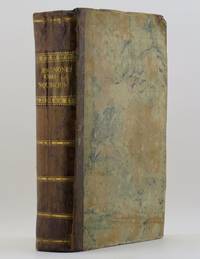
1813869Cadiz: Imprenta Nacional 1813. 1/4 Leather. Good. 4to 21 cm 8.3 in. 4 694 pp. lacks frontis. <br/><br/>First edition: The Spanish Inquisition was established in the 13th-century. The power of the Spanish Inquisition wavered over the centuries and was limited to the censorship of books and free speech by the early 1800s; this censorship was abolished in 1812. Here is a discussion regarding its potential reinstatement by the Spanish Cortes 1810-1813 and their decision against it in 1813. <br/><br/>Palau 74471. Encyclopaedia Britannica. Columbia Encyclopedia. Contemporary quarter speckled leather with gilt tooling on the spine and marbled paper over boards on sides the binding shows age and handling plus wear to joints and fore-edge corners. Red-speckled edges with top edge dusty. As usual lacks the frontispiece. Scattered light foxing. Well-preserved tight and square. Imprenta Nacional unknown books
1897262561London: Published for the Spanish Atrocities Committee by J. Perry 1897. 23p. stapled wraps 5x7.25 inches wraps lightly foxed bottom edge of front wrap browned staple rusted pp8-17 evenly browned rear wrap lightly silverfished along two edges. Reprinted from "Freedom." On the mistreatment of anarchist political prisoners. Published for the Spanish Atrocities Committee by J. Perry unknown books
1897262648London: Published for the Spanish Atrocities Committee by J. Perry 1897. 23p. stapled wraps 5x7.25 inches wraps lightly foxed staple rusted else good condition. Reprinted from "Freedom." On the mistreatment of anarchist political prisoners. Published for the Spanish Atrocities Committee by J. Perry unknown books
1898WRCAM54953Puerto Principe Cuba 1898. Broadside 16 1/4 x 12 1/4 inches. Toned old folds and creases minor edge chipping short closed tear slight fold separations. Very good. A very rare possibly unique surviving example of a Cuban broadside dating from the month after the conclusion of the Spanish- American War. The war ceased with a truce between the United States and Spain on August 12 1898; the official end of the war came a few months later on December 10 when the two parties signed the historic Treaty of Paris. Here on September 10 in the interim between truce and treaty the outgoing Spanish colonial governor of the south- central Cuban city of Puerto Principe present-day Camagüey Emilio March y Garcia calls for reinforcement of the truce agreement that would ensure free and open commercial trade in the region in the face of continuing interference by Cuban insurgents. March y Garcia claims that the Cuban revolutionaries are illegally detaining people interrupting the cattle trade trampling property rights carrying arms in flagrant disregard for the law and more. The ARIZONA REPUBLICAN published an English translation of this proclamation in its September 26 1898 issue. The translation reads: <br> <br> "I hereby inform the commanders of insurgent bands who are pillaging in the neighborhood of this city; who not observing the agreement between the Spanish and American governments with regard to the freedom of commercial relations are illegally detaining the country people; who are obliging the land owners to procure special passes and permits in order to put in order their plantations and will not allow them either to sell their cattle under the absurd pretext that the estates are the property of the nominal Cuban state and that its government alone can distribute and sell them and turn their products to what uses it sees fit thus trampling under foot the rights of property whereas on the part of this government the most absolute liberty in making contracts has been allowed and will be allowed in the future thus demonstrating the respect it has for the rights of all persons within its jurisdiction. I must call to notice with real sorrow that if these towns are suffering almost the horrors of starvation it is the result of the measures adopted by the chiefs of the insurgent bands who are impeding free traffic by forbidding the entry of all kinds of provisions especially cattle into the towns. In view of what I have already explained I consider it necessary to publish the following warnings: Article 1. I repeat my order of August 23 last permitting free entry and exit to all towns of this province subject to my authority and the most absolute freedom of trade between all the inhabitants of the province. Article 2. The prohibition to enter towns with arms remains in force and whoever is found with arms in his possession will be punished in accordance with the laws." <br> <br> Don Emilio Augusto March y Garcia Mesa was a career Spanish military commander who spent at least three stretches of time in Cuba the last as military governor of Puerto Principe during the Spanish defeat in the Spanish- American War. He also served as the colonial governor of Puerto Rico and general captain of Arago the Balearic Islands and the Canary Islands. <br> <br> The present broadside is exceedingly rare and quite possibly unique with no copies listed in OCLC and no records at auction. unknown books
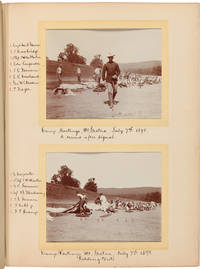
1898WRCAM54683Various places including Pennsylvania Virginia at sea New Jersey and Puerto Rico 1898. 171pp. with 342 photographs. Four large quarto photograph albums. Matching contemporary three-quarter crimson morocco and cloth front covers gilt. Minor shelf wear and some rubbing. Images in overall very good condition. An amazing assemblage of photographs documenting the Spanish-American War experiences of the First Troop Philadelphia City Cavalry which was at that time the oldest volunteer military unit in continuous service to the United States. The photographs are arranged chronologically in four contemporary photo albums with the images occasionally annotated in a contemporary hand and including the identification of numerous members of the Troop. <br> <br> The first volume opens with images of Mt. Gretna Pennsylvania "where troops were sworn into U.S. service May 7th 1898 by Maj. Thompson U.S.A." The photographs record field exercises camp building and tent organization at Camp Hastings cavalry drills an image of "Capt. Groome reading the Articles of War to Troop June 1898" a "first arrival of government horses" several shots of men training and "throwing" their horses shooting practice "Capt. Groome assigning Government horses to Troopers" and various shots of the men at work and even some play. Over the course of the album the names of numerous soldiers are recorded below several of the photographs. <br> <br> The second album opens with several photographs of the Troop striking their tents in preparation for leaving Camp Hastings at Mt. Gretna headed for Camp Alger at Dunn Loring Virginia. Here the Troop was ordered to increase their enlistment numbers. At Camp Alger the Troop was also fitted out with federal supplies and assigned to the Second Army Corps commanded by Maj. Gen. William Graham who is pictured here. Other photographs capture the camp scene at Alger "the First Troop picket line" the Troop receiving their federal-issue khaki uniforms the Troop at roll call and some shots featuring African-American helpers. <br> <br> In late July the Troop was sent to Newport News and several photographs record their brief time there with about a dozen shots of their temporary camp. On July 28 1898 the Troop left Virginia on the transport ship MASSACHUSETTS bound for Puerto Rico. Several images here capture the frenetic loading of the troops and their horses onto the ship with the remaining half dozen or so shots recording the Troop's time on board. <br> <br> The third album picks up where the second left off with the First City Troop embarked on the transport ship MASSACHUSETTS headed for Guanica Puerto Rico. Shipboard activities captured here include a few shots of groups of men being showered with water hoses. Several shots record the arrival of the men in the port of Guanica where they encounter the hospital ship NUECES which reports of the news of the "surrender of Ponce." After the men disembark they pitch their camp around Cathedral Virgin del Carmen on August 5. The next day several photographs record the unloading of horses and stores in the harbor at Ponce. The remaining thirty-eight photographs in this volume record scenes in the interior of Puerto Rico and are the most heavily annotated of the four albums. The images record scenes from the "road from Port of Ponce to Ponce" several scenes capturing a market day in Ponce and recording numerous native islanders the Troop's "temporary camp about 2 miles beyond Ponce" the "Troop wagon leaving camp beyond Ponce to join wagon train for Guayama" on August 8 a shot of the Troop's wagon "on road to Guayama in a Porto Rico mudhole" images of the wagon train to Guayama with the H Troop 6th U.S. Cavalry the "Point of Advance Guard entering Guayama within the lines" the Troop itself "entering Guayama passing General Brooke's Headquarters" a "View of First Troop Phila. City Cavalry U.S.V. Camp at Arroyo August 10th to 6A.M. Aug. 13th 1898" with the last ten images recording the camp or the streets at Arroyo. <br> <br> The fourth album documents the Troop's voyage home to Philadelphia. This time they take passage on the transport ship MISSISSIPPI and about half of the images record their voyage on board. On Sept. 10 1898 they reach Jersey City in New York harbor where they camp for a short time before returning to camp in Pennsylvania where the album ends. A couple of months later all three officers and the ninety- eight enlisted men of the First City Troop were mustered out of federal service for the Spanish-American War. <br> <br> Originally founded in 1774 by twenty-eight Philadelphia patriots as the "Light Horse of the City of Philadelphia" the First Troop of Philadelphia Cavalry is the oldest mounted military unit operating in continuous service to the American republic being the first volunteer cavalry troop organized in defense of the colonies. Among the Troop's original founders was John Dunlap printer to Congress from 1778 to 1789 publisher of the first American daily newspaper and the first printer of the Declaration of Independence. Most of the earliest members were similarly notable professional men of Philadelphia. The Troop served with valor in the American Revolution the War of 1812 the Mexican- American War the Civil War the Spanish- American War and every major American war through the Korean War. <br> <br> The present albums present a unique and important visual record of the First City Troop's activities before during and on the way home from the Spanish-American War. hardcover books
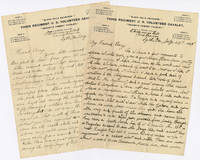
1898WRCAM46791Chickamauga Park Ga 1898. 5pp. Quarto written on "Black Hills Squadron" stationery. Old fold lines. Minor wear. Very good plus. A pair of letters written by Leighton H. Baxter to a friend back home. In his first letter he states that he is "not an enlisted soldier but has a regulation suit.a horse to ride and am fixed up very nicely. He works for the commander of the squadron Major Leigh H. French presumably as a teenage civilian clerk. His duties include "a good deal of writing to do telegrams to send take notes of cases tried in the regiment and a great many other minor duties." He sleeps in the same tent as the Major and takes his meals with the officers. He is well fed but is very glad not to be a private as they "fare badly." It is however "a regular circus to see the boys ride and shoot they beat Buffalo Bill all to pieces." Baxter reports that there are some 40000 to 50000 troops at Camp Thomas with more due to arrive. Some have already departed for "Porto Rico" and he expects his squadron to be going there at any time. In his second letter he notes that the men in his regiment are all "crack shots and fine riders" and all from around Deadwood and the Black Hills. He has been drilling with the men and has learned to handle a sword fairly well. He also mentions practicing "rough riding.such as leaping from a horse while he is running then back again picking up a hat while at full speed etc." <br> <br> The Third U.S. Volunteer Cavalry was mustered into service in May 1898 and commanded by Melvin Grigsby attorney general for the state of South Dakota. The unit was known both as the "Black Hills Squadron" and as "Grigsby's Cowboy Cavalry." Its commander Maj. Leigh H. French was trained as a medical doctor and surgeon and had a practice in Washington D.C. when the war broke out. One of his captains Seth Bullock was the first sheriff of Deadwood. The squadron never saw active duty outside the continental United States spending most of its brief career at Camp Thomas in Georgia. In the crowded camp in the heat of a southern summer typhus measles and other illnesses were rampant and Grigsby's Cavalry lost twenty-seven men to disease. unknown books
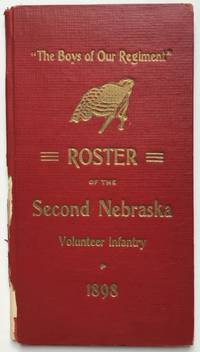
18981081Chattanooga: Times Print 1898. Very good. 29pp. Narrow 12mo. Original red cloth cover gilt. Spine heavily chipped corners worn. Contemporary ownership inscription on front pastedown contemporary notations to several leaves. Regimental roster for the Second Nebraska Volunteers mustered into service for the Spanish American War at Lincoln in May 1898. The regiment consisted of forty-six officers and 975 enlisted men each detailed herein by company. The regiment never saw active duty spending time training at Chickamauga before being transferred to Omaha and then mustered out in October of the same year. This copy with the ownership inscription of Irene G. Courtnay dated September 2 1898. Irene has made notations about several of the men -- presumably friends or acquaintances -- in the Remarks section of some pages. On the page for Company B she has written "Ernest G. Briggs drowned in Chickamauga Creek. 1st death in 2nd Neb. Regiment." Rare and likely produced in limited numbers for friends and family. Only a single photocopy reproduction located in OCLC. An interesting piece of Western Americana from this mostly-forgotten episode in American history. Times Print unknown books
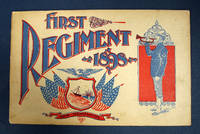
189840039Mexico Mo: Head Bros 1898. 1st printing. White paper wrappers printed in red & blue stapled. Age toning to paper. Staples a bit rusted. A VG copy. Unpaginated though 40 pp. Roster last 4 pages. Profusely illustrated with 65 b&w captioned photographic images. Oblong format: 5-7/8" x 9-1/4" <br/><br/>From the rear cover: "To the Officers and Members of this Regiment. . this book is presented to you as a souvenir of your camp life in the Spanish-American War. The idea is to show by photographs a practical army life ." Head Bros unknown books
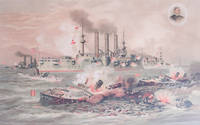
189840301Philadelphia: J. Hoover & Sons 1898. Image 27 x 17 1/2 inches. Framed and glazed. Image 27 x 17 1/2 inches. Schley was selected "at the opening of the Spanish-American War to command the Flying Squadron at Hampton Roads.when Cevera's ships reached Martinique the Flying Squadron.at 9:35 July3 1898 the Spanish ships emerged from the harbor of Santiago and turned westward Schley's flagship the Brooklyn westernmost of the blockading line."<br/><br/>Xanthus Russell Smith 1839-1929 comes from a Family of Philadelphia Artists. He was the som of Russell Smith. J. Hoover & Sons unknown books
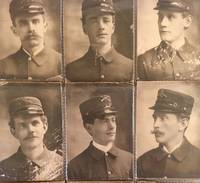
1898List319Massachusetts 1898. The 2nd Massachusetts Volunteers mustered into service in May 1898 and within a month saw significant action in Cuba at the Battle of El Caney. They were one of three volunteer units from Massachusetts to see action on the Santiago Campaign. The regiment was inexperienced - 55% were untrained recruits. The lack of experience combined with their rifles giving off a very visible black smoke led to a heavy casualties in the Battle of El Caney. After an encampment near Santiago de Cuba in which a large number of the soldiers became ill with disease - estimates are as high as 65% - the regiment returned home in August. Historians have noted that soldier demographics changed considerably from the Civil War to the Spanish American war as the smaller number of troops and the lack of a draft led to a more enthusiastic army with higher morale. <br /> <br /> The photographs in this group are interesting as a typological grouping of images of untrained soldiers and also for their historical value as most contain identifications to versos. The highlight of the group is forty-four uniformly mounted portraits of soldiers nearly all identified measuring 3 ¾ x 2 ½ inches each. Other photographs include a large portrait of Captain Frederick E. Pierce with the blindstamp of Goldsmith Studio Springfield Massachusetts and a 3 ¼ x 3 ¼ inch square card of Capt. Pierce in Camp Turner. Also included are two slightly larger photographs on similar mounts. <br /> <br /> Overall an interesting group. Good condition overall with assorted chips and wear. unknown books
1898WRCAM5606Washington 1898. 293pp. plus photos and two folding charts. Printed wrappers. Slightly dampstained. Good. The full testimony heard before the court of inquiry is included with nineteen photos of the wreckage and two charts of the keel of the Maine. The court found that the damage "could have been produced only by the explosion of a mine situated under the bottom of the ship" and that no officers or crew members were negligent in their duties. unknown books
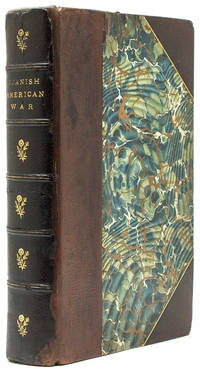
190020112Washington: Government Printing Office 1900. Folding maps. 8vo. Half burgundy morocco with original maroon spine laid down. Tightly bound else a very good copy. Folding maps. 8vo. Contains among the various reports "Government reports on the Battles and Capitulation of Santiago de Cuba" "Comments of Rear-Admiral Plüddemann on the Main features of the War with Spain" and "Sketches from the Spanish American War."¶ Senate Document 388 with the yellow slip preceeding title regarding the contents. Government Printing Office unknown books
1899613371899. SPANISH AMERICAN WAR. PROCLAMATIONS AND DECREES DURING THE WAR WITH SPAIN. Dept. of State Unites States of America. Washington: Government Printing Office 1899. 8vo. original wrappered pamphlet bound in black cloth-backed marbled paper-covered boards paper labels to spine; 99 pp. Ex-library. Very good. unknown books
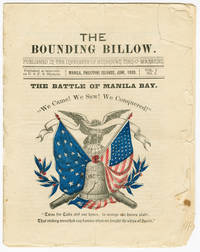
1898WRCAM56306Manila Philippines 1898. 16pp. printed in double columns. Color illustration on front wrapper uncolored map on rear wrapper. Original pictorial self-wrappers. Rear wrapper detached but present. Central vertical fold wrappers with chips and tears in edges upper outer corner of front wrapper repaired with tape on verso. Good. One of three issues of this scarce Spanish- American War periodical published on board Dewey's flagship Olympia in Manila Bay. There was a total of seven numbers of this naval periodical the first two published in Nagasaki the third in Yokohama the fourth in Hong Kong and numbers five to seven in Manila. The present issue entirely devoted to the Battle of Manila Bay is among the most desirable and contains American accounts and a translated Spanish account of the battle several poems and a map of the scene of action made by a sailor "with a couple of sail needles." The magazine was written and edited by Apprentice First Class Louis Stanley Young and printed by Harry B. Glover on paper captured from the "Commandancia General del Arsenal de Cavite." Young a former printer himself improvised a print shop in a torpedo room on board the Olympia. An illustration of the Liberty Bell two flags an American eagle etc. is printed on the front wrapper in black red and blue. "A historic piece one of major proportions" - Moebs. MOEBS AMERICA'S NAVAL HERITAGE 136. unknown books
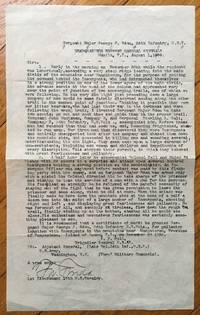
1900208Manila 1900. Very good. Typed letter signed 1p. Typed on thin paper. Folded. A true copy of a typed letter by Gen. J.F. Bell that recommends Sgt. Maj. George J. Oden of the 36th Volunteer Infantry for a Certificate of Merit for gallantry during an engagement with Insurgents native Filipinos who rebelled against American rule after Spain ceded the islands to the United States in the mountains near Mangaterem on November 28 1899 during the Spanish-American War. According to the text of the letter "When the attack was finally made he tore down the mountain side at the head of a half dozen men into the midst of a large number of Insurgents shooting right and left and displaying great fearlessness and gallantry. He was foremost of all and seemingly tireless flew down the rough trail finally winding up at the bottom chasing all he could see alone. His enthusiasm and unconscious fearlessness was something pleasant to see." Certified as a true copy of the letter by a Buffalo Soldier a First Lieutenant in the 10th U.S. Cavalry. unknown books
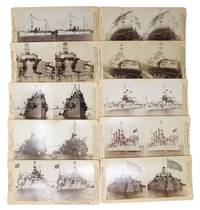
189947820New York / Washington DC: Strohmeyer & Wyman Publishers / J. F. Jarvis Publisher 1899. Peach-colored mounts concave. Versos blank. Images generally clear & sharp with mounts showing just minor wear & soiling. Two Jarvis views with 5 language captions to verso. Old prices penciled to verso upper corner. Withal a Very Good set. Individual domed b/w albumen images mounted side by side. Captioned underneath with publisher & distributer imprints to the view sides. 3-3/8" x 7" <br/><br/>A nice cache of views depicting 8 different vessels from the last turn-of-the-century conflicts: Cruiser Minneapolis Battleship Texas Cruiser New York Massachusetts Battleship Iowa Cruiser Brooklyn Oregon 3 & the Raleigh. Strohmeyer & Wyman, Publishers / J. F. Jarvis, Publisher unknown books
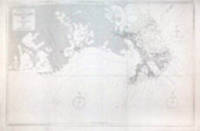
188015998Madrid: Published by the Spanish Admiralty 1880. Engraving. Printed on wove paper. In excellent condition. Image size: 24 x 37 1/4 inches. A wonderful sea chart of the Mississippi Delta produced by the Spanish Admiralty at the close of the nineteenth century.<br/> <br/>This is an impressive sea chart of the Mississippi Delta produced by the Spanish Admiralty in 1880. The coast line is clearly mapped out with little detailing except for the soundings around the Delta. There are two compasses and a number of lighthouses identified along the shoreline. The chart uses the surveys conducted by the U. S. Coast Survey which were carried out between 1853 and 1877. It is a wonderful chart of this important area and superb collector's piece for anyone interested in early maps of the Americas. Published by the Spanish Admiralty unknown books
1900300814Albany: Lyon 1900. hardcover. very good. 3 volumes 994 993 969 pages. Thick tall 8vos pale orange cloth with black type; a bit dust-soiled and spines rubbed. Albany: James B. Lyon 1900. First edition.<br/><br/> Lyon unknown books