10 résultats
1768769111768. BOUDOT Jean. DICTIONARIUM UNIVERSALE LATINO-GALLICUM ex Omnibus Latinitatis Autoribus Summa Diligentia Collectum. ad Usum Serenissimi Dombarum Principis. Rouen Printed by Lallement and Paris Barbou etc. 1768. Octavo. 4xvi11122pp. Dedicated to Louis Bourbon Prince of Dombes. Title in red and black. Some faint foxing else internally fine. Early calf quite worn and dried. Cordell Collection has 1786 edition. unknown books
1779983821Lucian cianucian Greek Lucianos Latin Lucianus born AD 120 Samosata Commagene Syria now Samsat Tur.—died after 180 Athens Greece<br /><br />Danza Dialogo di Luiano con Annotazioni con annotazioni. <br /><br />In Firenze : nella stamperia di Gaspero Pecchioni 1779. Original edition. 8vo. Old wrappers iv 44 p. Some stains to titlepage. Very good copy. In this dialogue the Cynic Crato who has no in pantomimic dancing or those who go to see it is converted to its appreciation by his friend Lycinus.<br />This is a translation into Italian with notes of Lucian's famous dialogue on pantomime or "tragic dancing" in ancient Greece. In "tragic" dancing a dramatic plot is enacted by a masked and costumed dancer supported by an actor. The dancer's lines are spoken for him by someone else. There is also a chorus and for accompaniment the flute and the syrinx with various instruments of percussion. The work is dedicated to Antonio Muzarelli who was ballet master at the Burgtheater in Vienna at a time when ballet was detested by Emperor Joseph II although the art form was gaining some popularity due to the reforms of Jean-Georges Noverre 29 April 1727 – 19 October 1810 the a French dancer and balletmaster generally considered the creator of ballet d'action. The dialogue was probably written in Antioch in 162–165 a.d. when the Emperor Verus was there in compliment to him because of his interest in pantomime at a time when visual art was held inferior to literary art. This work underscores the legitimacy of dance because Lucian recognizes the intellectual character of dance. He emphasizes that a dancer must be able to express his or her ideas and sentiments through the intelligibility of movement and posture. Lucian's dialogue on dancing remains popular today due to its clever dialogue and clarity of argument. Rare: two OCLC locations one in North America: NYP Pecchioni books
1755CA011424531 pages with engraved allegorical frontispiece and index. Small folio 11 1/2" x 8 1/2" bound in original full leather with raised spine bands and decorative gilt lettering. Palau 266572. Sabin 70785 First edition.<br /><br />Full of original documents respecting the establishment of the Church in the Indies and the protection of the Indians together with all the bulls referred to from that of Alexander VI to the time of publication. With the additional 24 preliminary leaves not in all printings.<br /><br />The ancestors of Rivadeneira on both sides had served the Crown for centuries in the Reconquista in high positions of Church and State and in the conquests of Mexico and the Darién. Among his relatives is the Marquis de Moncada lieutenant colonel of the Puebla Regiment. Rivadeneira received a bachelor's degree in Philosophy and Law from the University of Mexico. He obtained a scholarship at the Colegio Mayor de Todos Santos on November 11 1731 served in various positions competed for the Chair of Institutes and remained in residence until 1746. The Audiencia de México approved him to practice as a lawyer in 1733. While still in Todos Santos Rivadeneira began serving in various positions. He was an advisor to the mayors of the city and town of Carrión in Valle Atrisco. The interim viceroy-archbishop Juan de Bizarrón appointed him a lawyer for the poor of the Courtroom of the Audiencia in 1739 with similar capacity in the Tribunal del Santo Oficio the city of Puebla and the Agustino Convent of Mexico. In 1744 Rivadeneira became fiscal agent of the room of the Crime. He served as an advisor to the viceroy Duke of the Conquest and was commissioned to settle a dispute over land by his successor the Count of Fuenclara. In 1746 Rivadeneira decided to go to Spain for family businesses and to secure a position. For a payment of 13000 pesos he obtained the appointment as supernumerary judge of the Audiencia de Guadalajara by decree of January 30 and title of February 20 1748. Without occupying this position he obtained the criminal prosecution of the Audiencia de Mexico on December 22 of 1753. He obtained a license to sail to New Spain with the servants José Ostos of Écija; Diego Ibiricu from Cádiz; Antonio de la Cruz from Zacatecas and Manuel Tagle a "free black". Rivadeneira returned to New Spain in 1755 in the same vessel in which the new viceroy Marquis de las Amarillas went and assumed his post on October 30 1755. As a prosecutor he opposed the activities of the Tribunal de Acordada. Assigned to the civil prosecutor's office to replace Luis de Mosquera and Aranda by consultation of April 28 and title of June 21 1760 the following year by consultation of May 14 and title of August 15 was appointed to replace the deceased Francisco López Adán as judge of the Audiencia. He served until his death. While he was an oidor he was denounced for possessing forbidden books. While in Spain in 1752 Rivadeneira published <i>El Pasatiempo for the use of Ex.mo Señor Carvajal and Lancaster a history of the world from creation to Fernando VI</i> in three volumes. This long didactic and religious poem was an effort to obtain a position and Beristain perhaps not knowing of the payment of 13000 pesos by Rivadeneira considered his first appointment of audience due to the sponsorship of José de Carvajal. As a prosecutor in 1755 Rivadeneira wrote the <i>Handbook compendium of the Indian Board of Trustees</i> which traced the royal patronage to the Book of Genesis an achievement for which the Crown gave him 4000 pesos. He also wrote the <i>Defense of Royal Jurisdiction</i> in 1763 <i>the remarkable newspaper of His Excellency Marquise de las Amarillas</i> and the draft of the protest sent to Spain by the City Council of Mexico City in 1771 on a claim of appointments for Americans.<br /><br /><b>Condition:</b><br /><br />Missing some of spine label small crack along the heal font hinge spine ends chipped light rubbing to extremities with the corners rubbed through internally very nice over all a very good copy. Antonio MarÃn hardcover books
1800E0068viii514 pages with frontispiece map. Quarto 10 1/2" x 8 3/4" housed in a custom slipcase. Translated by Maurice Keatinge. First English edition.Bernal Dïaz del Castillo was a conquistador who wrote an eyewitness account of the conquest of Mexico by the Spaniards under Hernan Cortes himself serving as a rodelero under Cortes. Born in Medina del Campo Spain he came from a family of little wealth and he himself had received only a minimal education. He sailed to Cuba in 1514 to make his fortune but after two years found few opportunities there. Much of the native population of the island had already been killed by epidemics and forced labor and in 1517 an expedition was sent to the smaller Caribbean islands to find alternative sources of labor. Dïaz joined this group under the command of Francisco Hernandez de Cordoba. It was a difficult venture and although they discovered the Yucatan coast by the time the expedition returned to Cuba they were in disastrous shape. Nevertheless Dïaz returned to the coast of Yucatan the following year on an expedition led by Juan de Grijalva with the intent of exploring the newly discovered lands. Upon returning to Cuba he enlisted in a new expedition this one led by Hernan Cortes. In this third effort Dïaz took part in one of the legendary military campaigns of history bringing an end to the Aztec empire in Mesoamerica. During this campaign Dïaz spoke frequently with his companions in arms about their experiences collecting them into a coherent narration. The book that resulted from this was Historia verdadera de la conquista de la Nueva Espana English: The True History of the Conquest of New Spain. In it he describes many of the 119 battles in which he claims to have participated culminating in the fall of the Aztec Empire in 1521.As a reward for his service Dïaz was appointed governor of Santiago de los Caballeros present-day Antigua Guatemala. He began writing his history in 1568 almost fifty years after the events described in response to an alternative history written by Cortes's chaplain who had not actually participated in the campaign. He called his book the Verdadera Historia True History in response to the claims made in the earlier work. Dïaz died in 1585 without seeing his book published. A manuscript was found in a Madrid library in 1632 and finally published providing an eye-witness account of the events often told from the perspective of a common soldier. Today it is one of the most important sources in understanding the campaign that led to the collapse of the Aztec Empire and the Spanish conquest of Mexico.Condition:Spine renewed with new period spine label and original boards which the corners and edges are heavily rubbed some foxing to early pages. Frontispiece map repaired. Custom made red slipcase with Japanese toggles and leather spine label in gilt lettering else about a very good copy in a near fine case. Printed for J Wright by John Dean hardcover books
177410669Goettingae: Recudi fecit vidua b. Abr. Vandenhoeck 1774. 4to 23 cm. 2 494 pp. <br><br>Signed presentation copy from the Rev. Edward Bouverie Pusey Regius Professor of Hebrew Oxford University dated 1835. Edited by Simon de Magistris. Greek and Latin text printed in parallel columns. Illustrated with an engraving on p. 104 and engravings of Greek coins on p. 194. WorldCat locates only one copy of this edition in U.S. libraries. <br>Â Â Â Â <br>Â Â Â Â Not in Darlow & Moule but see 4760 for the 1773 edition and 4759 for the first edition. Contemporary plain wrappers paper over spine chipped and with lengthwise cracks; binding coming apart with final 14 pages separated. Gift inscription dated 1835 on verso of title-page. Bookplate of a theological seminary on inside of front cover. Some pages unopened. Foxed. Dog-eared. => Uncut mostly unopened copy. Recudi fecit vidua b. Abr. Vandenhoeck unknown books
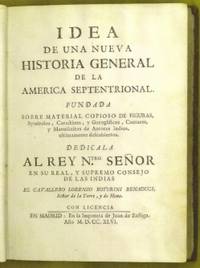
1746A0068xxxvi167viii96 pages. Octavo 8 1/4" x 6 1/4" bound in full leather with decorative gilt and lettering to spine. From the library of George M Foster. First edition.<br /><br />Lorenzo Boturini Benaducci born in Italy of noble parentage studied in Milan and lived in Trieste and Vienna. He was a knight of the Holy Roman Empire. Forced to flee Austria because of the war with Spain Boturini arrived in Spain via England and Portugal. In Madrid he met the Condesa de Santibáñez oldest daughter of the Condesa de Moctezuma. The mother authorized him to collect a pension due her as a descendant of the Aztec Emperor Moctezuma II from the royal treasury in New Spain. Boturini went to New Spain in 1736 where he remained eight years. During those years he assembled a vast collection of paintings maps manuscripts and native codices. He copied more than 500 pre-Columbian inscriptions and made his own drawings of monuments and sculptures and he investigated the history of the apparition of the Virgin of Guadalupe on the hill of Tepeyac. He traveled widely and on his travels brought together the largest collection of Mexican antiquities assembled to that time by a European. Not only did he intend to write the history of the Virgin of Guadalupe but he also had plans to crown her image with a gold crown. For that purpose he sought donations from the bishops and from the public. This brought him to the attention of the colonial government which was suspicious of the motives of a foreigner making this proposal. On June 2 1743 after an investigation the recently arrived viceroy Pedro Cebrián y AgustÃn had him imprisoned and impounded his collection. He was accused of entering New Spain without license from the Council of the Indies and of introducing papal documents without a royal permit. After eight months in prison Boturini was sent to Spain. He fell into the hands of pirates who eventually released him at Gibraltar. From there he traveled to Madrid in miserable conditions. In Madrid he met Mariano Fernández de EcheverrÃa y Veytia another passionate collector of Indian antiquities. Fernández de EcheverrÃa y Veytia offered Boturini a place to live and financial support and got the Council of the Indies to reconsider his case. Boturini was absolved. The king named him royal chronicler of the Indies ordered that his collection be returned to him and extended an invitation for him to return to New Spain. Boturini however declined to return to New Spain and his collection was never restored. It appears that he was granted recompense and a stipend to work on his projected history of the colony. In Madrid he wrote a history of ancient Mexico unpublished at the time of his death in 1753. The library at the BasÃlica de Nuestra Señora de Guadalupe is named for him. The Boturini Collection was formed between 1735 and 1743 to serve as the basis of a projected Historia de América Septentrional. It consisted of many valuable documents the majority of them of Indian provenance. Among these were hieroglyphic paintings that had belonged to Juan de Alva Ixtlilxochitl a descendant of the rulers of Texcoco. Ixtlilxotchitl bequeathed these documents to Carlos de Sigüenza y Góngora. The collection was confiscated by Viceroy Pedro Cebrián y AgustÃn at the time of Boturini's arrest in 1743. It was deposited in the office of the secretary of the viceroyalty. The documents were neglected there for years and suffered considerable pilferage. The subsequent viceroy Juan Francisco de Güemes 1st Count of Revillagigedo granted the historian and antiquary Fernández de EcheverrÃa y Veytia Boturini's friend from Madrid the paintings and documents he solicited for his own studies. On Fernández de EcheverrÃa y Veytia's death they passed to Antonio de León y Gama. He died in 1802 and the collection passed to his heirs. Shortly thereafter 16 paintings were obtained by Alexander von Humboldt during his visit to Mexico in 1802-03. He published them in Vues des cordillères et monuments des peuples indigènes d'Amérique. The originals of these are now in the Berlin State Library. Part of the remainder of the collection may have passed to Father José Pichardo an amateur antiquarian. Joseph Alexis Aubin beginning in 1827 or shortly thereafter obtained important parts of the collection from a variety of sources. He sold his collection to Eugène Goupil who was of French and Mexican descent. This part of the collection passed by donation or purchase to the National Library in Paris where it remains under the name Aubin-Goupil Collection.<br /><br />George McClelland Foster Jr born in Sioux Falls South Dakota on October 9 1913 died on May 18 2006 at his home in the hills above the campus of the University of California Berkeley where he served as a professor from 1953 to his retirement in 1979 when he became professor emeritus. His contributions to anthropological theory and practice still challenge us; in more than 300 publications his writings encompass a wide diversity of topics including acculturation long-term fieldwork peasant economies pottery making public health social structure symbolic systems technological change theories of illness and wellness humoral medicine in Latin America and worldview. The quantity quality and long-term value of his scholarly work led to his election to the National Academy of Sciences in 1976. Virtually all of his major publications have been reprinted and/or translated. Provenance from the executor of Foster's library laid in.<br /><br />Condition:<br /><br />Lacks frontispiece portrait. Lacks Foster's stamp or date of purchase. some damp stains to end papers neat old marginalia in Spanish to back end paper worm hole ant head and heal of spine going through spine extremities bumped and rubbed old owner's label to front paste down 1" chip at back head hinge and name to front end paper scuffed else a good copy of a rare item. En la Imprenta de Juan de Zuniga hardcover books
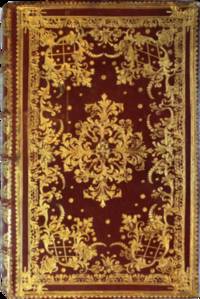
17564062Rome: Gioacchino & Giovanni Giuseppe Salvioni Stampatori Pontificii Vaticani 1756. 8vo 210 x 135 mm. 24 407 1 pp. 2 parts the Office of the Dead separately titled. Printed in red and black. Engraved frontispiece and 12 full-page engravings by Arnold Van Weserhout and Jacob Frey after Joseph Passarus Giuseppe Passaro two engraved title vignettes and 12 tailpiece vignettes a few unsigned others by Frey after Passaro or by M. Schedi engraver 3 engraved initials numerous red-printed woodcut initials. Occasional light browning. 18th-century Roman gold-tooled red goatskin covers with densely tooled dentelle border built up from leafy plant tools sprigs floral and arabesque tools each cornerpiece enclosing a grid with gold dots blossom tools and dots in central field ornamental centerpiece of large foliate arabesque and dandelion tools spine in six uniformly gold-tooled compartments block-printed pastedown endpapers with flower and fruit design stencil-colored in red green and yellow gilt edges with gauffred border design; upper cover a bit faded and bowed corner bumped a couple of scrapes to lower cover. Provenance: Horace de Landau 1824-1904 bookplate shelfmark no 47854; Vicomte de Cossette armorial bookplate. A rococo binding on a luxuriously printed and illustrated Office of the Virgin from the Salvioni press official printers to the Vatican. The Salvioni press used several workshops sometimes collectively mislabeled as the "Vatican" or "Salvioni" bindery. Those bound for the papal library were finely executed and different binderies can be identified by their tools color of leather and stylistic details. The present pretty but crowded binding decor with its in places overlapping tooling does not seem to belong to the corpus of binderies represented in for example the Vatican Library's 1977 exhibit catalogue of papal bindings. Stylistically it uses types of tools and decoration - the wide "Louis XV" style border and the basketweave cornerpieces - in vogue during the reigns of Clement XIV 1769-1774 and Pius VI 1775-1799. Its decoration is similar for example to binding no. 262 in Legature papali but it is of inferior workmanship and does not use the same tools. It was probably produced in a Roman shop executing many commissions and forced to work quickly although it could even be a provincial binding. Cf. Biblioteca Apostolica Vaticana Legature papali da Eugenio IV a Paolo VI no. 262 plate CXCI. Gioacchino & Giovanni Giuseppe Salvioni, Stampatori Pontificii Vaticani hardcover books
178540318Parisiis: Excudabat Fr. Amb. Didot natut maj. 1785. 8vo in 4s 19 cm 7.5". 8 vols. I: xvi 501 1 pp. II: 2 ff. 450 pp. III: 2 ff. 393 1 pp. IV: 2 ff. 428 pp. V: 2 ff. 400 pp. VI: 2 ff. 444 pp. VII: 2 ff. 407 1 pp. VIII: 2 ff. 373 1 pp. <br><br>Produced here in fine French bibliophilic style is the most extensive collection of => Old Latin versions which exist only in fragments compiled from manuscripts and the writings of the Fathers by Pierre Sabbathier and continued after his death under the care of Vincent de La Rue Darlow & Moule. This edition following the first Rheims 173949 was issued In the Didot series Collection des auteurs classiques françois et latins.<br>Â Â Â Â Binding: Full red crushed morocco gilt spine and boards; gilt rule on board edges; gilt rolls on turn-ins; marbled endpapers. All edges gilt. => Bindings signed Petit Succs. de Simier.<br>Â Â Â Â Provenance: Bookplates of Casimir L. Stralem Clarence E. Clark and Brian Douglas Stilwell.<br>Â Â Â Â WorldCat locates only six U.S. libraries reporting ownership of => all eight volumes as present here NYPL Cornell Seton Hall Holy Cross College New York Historical Society UC-Berkeley Law and two libraries reporting ownership of incomplete sets Harvard Divinity vols. 1 2 only University of Dayton vol. 3 only. . <br>Â Â Â Â <br>Â Â Â Â Darlow & Moule III 6263; Jammes Les Didot 25. Bound as above some joints outside showing cracking but all intact. All volumes housed in light marbled-paper open-back cases some with tape repairs. => Very good. Excudabat Fr. Amb. Didot natut maj. hardcover books
1709CA1100viii24412 pages with engraved map folding plan and four engraved illustrations in text and index. Quarto 9 ¾" x 7½" bound in period calf with modern rebacking original gilt spine leather laid down and ruled gilt edges to cover. Translated by Joh Stevens. First English Edition.<br /><br />This is a highly regarded chronicle of the conquest and colonization of Peru by Spaniards in the latter part of the 16th century and is lauded for its at the time objectivity. Cieza de Leon's Chronica was to appear in 4 sections this translation being the first part only all that was available of the history until the latter part of the 19th century.<br /><br />Pedro Cieza de León was a Spanish conquistador and chronicler of Peru. He is known primarily for his history and description of Peru Crónicas del Perú. He wrote this book in four parts but only the first was published during his lifetime; the remaining sections were not published until the 19th and 20th centuries. Cieza de León was born to a family of Jewish conversos1 around 1520 in Llerena a town in southeastern Extremadura less than 60 mi from Portugal. Although recently converted from Judaism to Catholicism the family enjoyed good social standing in the region because of their networks and business dealings. His father Lope de León was a shopkeeper in the town and his mother Leonor de Cazalla was a native of Llerena. There is scant documentary evidence of the young Cieza de León’s childhood and little is known of his early life before his voyage to the Americas. Given the fact that he left home at 13 it is unlikely that Cieza de León received more than a rudimentary education. In 1536 in Córdoba at 16 Cieza de León was greatly surprised to learn of the discovery of the land of the Incas and so decided to go to Seville to embark on his journey to South America to see for himself the artifacts of precious metals which had been brought to Spain from Cajamarca. In light of the prohibition of entry into the Spanish colonies for Jews and Jewish converts to Catholicism Alonso López and Luis de Torres attested for Cieza de León that he was not prohibited. Jewish converso Pedro López de Cazalla secretary of Spanish conquistador Francisco Pizarro conqueror of the Incan Empire was also his first cousin. He returned to Seville Spain in 1551 and married a woman named Isabel López de Abreu. Here he published in 1553 the first part of the chronicles of Peru Primera Parte. He died the following year leaving the rest of his work unpublished. His Second Part of Chronicles of Peru describing the Incas was translated by Clements Markham and published in 1871 for the Hakluyt Society. In 1909 the fourth part of his chronicle focusing on the civil wars among the Spanish conquerors was published under the title Third Book of the Peruvian Civil Wars. The third part of Cieza de León's Crónicas del Perú which examined the discovery and conquest of Peru by the Spaniards was considered by historians to be lost. The document eventually turned up in a Vatican library and historian Francesca Cantù published a Spanish version of the text in 1979. Though his works are historical and narrate the events of the Spanish conquest of Peru and the civil wars among the Spaniards much of their importance lies in his detailed descriptions of geography ethnography flora and fauna. He was the first European to describe some native Peruvian animal species and vegetables.<br /><br />Condition:<br /><br />Expertly rebacked some light rubbing to extremities foxing old book plate on front pastedown else very good. unknown hardcover books
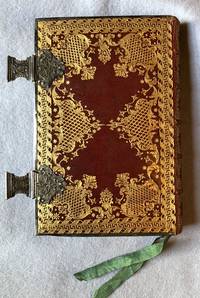
17562896Rome: Gioacchino & Giovanni Giuseppe Salvioni 1756. 8vo 208 x 133 mm. 24 407 1 pp. 2 parts the Office of the Dead separately titled. Printed in red and black. Engraved frontispiece and 12 full-page engravings by Arnold Van Weserhout and Jacob Frey after Joseph Passarus Giuseppe Passaro two engraved title vignettes 12 engraved tailpiece vignettes a few unsigned others by Frey after Passaro or by M. Schedi engraver 3 engraved capital initials numerous red-printed woodcut initials. Foxing occasionally severe short marginal tear to fol. Z7.Slightly later eighteenth-century Roman gold-tooled red goatskin covers with large dentelle border composed of a triple neo-classical roll-tooled outer frame enclosing six large ornaments each with a basketweave design of diagonally crossing gilt fillets framed in volutes and leafy sprigs a few tiny petal or star tools board edges protected with a probably later frame of silver or silver-plated metal discreetly nailed to the binding two elaborately chased silver fore-edge clasps and catches spine in six uniformly gold-tooled compartments gilt edges with gauffred border design pair of green ribbon page markers marbled endpapers; 20th-century black morocco felt-lined case. Provenance: with Gumuchian Catalogue XII/1930/225; Maurice Burrus bookplate purchased from Gumuchian in 1934 purchase notes at end. A striking rococo binding in fine condition on a luxuriously printed and illustrated Office of the Virgin from the official Vatican press.From the mid- to late eighteenth century the Salvioni press used one or more bookbinding workshops that produced finely gold-tooled bindings for their Vatican publications. Although often referred to as the "Salvioni bindery" this appellation is circumstantial: "the Salvioni firm was responsible for promoting the bindings but it is not known which workshop produced them" British Library Database of Bookbindings. Some of these "Vatican" bindings incorporated variously colored or mottled leather. This example with its basketweave cartouches relies purely on tooling for its effect. An example evidently from the same workshop on a book printed at Rome in 1791 by Salomini using analogous cartouches as corner-pieces as well as a similar "spiraling" border design and some of the same leafy spray and star tools is reproduced in Legature papali no. 264."Whereas the . more flamboyant bindings produced by the Salvioni Bindery rely frequently on polychrome enamel heightening these Vatican bindings strike a somewhat more sober note with their very fine dark-red morocco and rich gold-tooling of high quality" Martin Breslauer Catalogue 107/428.Gumuchian Catalogue de Reliures du XVe au XIXe siecle no. 225 plate 68. Cf. British Library Database of Bookbindings Shelfmark c27e18; For other "Salvioni" bindings see Miner / Walters Art Gallery The History of Bookbinding no. 523; Biblioteca Apostolica Vaticana Legature papali da Eugenio IV a Paolo VI no. 264 plate CXCIII. Gioacchino & Giovanni Giuseppe Salvioni hardcover books