46 résultats
1991182152Tucson: The League 1991. 16p. 8.5x11 inches and an 8p. insert stapled at top corner photos ads proclomations program very good booklet in stapled wraps. The League unknown books
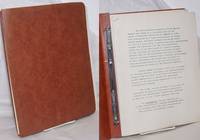
1967258590New York: NACLA 1967. Stiff Wraps. Various pagination over 100 pages In plain brown folder with metal struts through the reports and letters 8.5x11 inches this collection was published a year after NACLA's founding in 1966. It includes some of the early newsletters of the organization including Newsletters 1-8 various reports and newspaper articles bearing on it's work of providing a resource for the North American radical left data and information on the upsurges of the class struggle throughout Latin America. Laid in is a 10 page history & funding prospective with names of the collective members etc. includes a short mention of it's relationship with SDS. NACLA unknown books
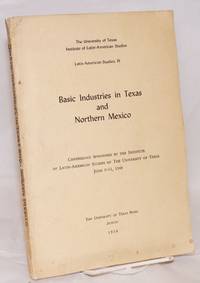
1950218187Austin: The University of Texas Press 1950. Paperback. 193p wraps a bit soiled and stained title neatly hand written on spine minor edge wear interior clean maps one folded charts one folded a few illustrations overall good condition. University of Texas Institute of Latin-American Studies. Latin-America studies 9. The University of Texas Press paperback books
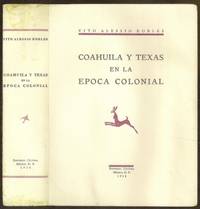
1938CA0116xii751 pages with color frontispiece maps some foldout plates some in color diagrams and illustrations. Royal octavo 9 1/2" x 7" bound in original wrappers. Inscribed by the author. Howes 382 Limited to 1000 copies.Vito Alessio Robles was born on August 14th of 1879 in Saltillo Coahuila son of Dominic Alessio and Cristina Robles. There he studied at the Ateneo Fuente. He graduated as an engineer at the Military College of Mexico City. In 1910 a lieutenant colonel in the Federal Army under the command of Colonel Samuel Garcia Cuellar fought Madero in the Battle of Casas Grandes Chihuahua. Before he had taken up arms against the Yaquis. Under Madero he served as Inspector General of Police Public Works and deputy military attache in Rome. n 1913 he returned to Italy as a result of the fall of Madero. Under the Victoriano Huerta presidency he was arrested and detained and imprisoned. Following this he joined the Constitutionalist ranks first operated in San Luis Potosi under the command of General Alberto Carrera Torres and then was sent north with Francisco Villa. At the onset of division of the revolutionary leaders in the Convention of Aguascalientes he remained with the convention and was a delegate and became secretary. He held the governorship of the Federal District during the presidency of Roque Gonzalez Garza allowing its inhabitants to bear arms. After 1920 he held a deputation by the Federal District and a senate of Coahuila . In 1925 and 1926 had moved in diplomatic circles as a minister of Mexico in Sweden. As Chairman of the National Anti Party fought against Plutarco Elias Calles and Alvaro Obregon. He ran for governor of Coahuila in 1929 and in that same year he was banished from the country finding acceptance in Austin Texas where he devoted himself to historical research. Vito Alessio Robles also excelled as a great journalist was director of the Heraldo de Mexico and The Democrat and contributor to El Universal Excelsior and La Prensa among others under the pseudonyms "Tobias O. Soler" and "Pingüino Macho". Condition:Still has the original onion skin wrapper. Inscribed on half title slight stain to head and tail of spine else a very good to fine copy. Editorial Cultura paperback books
1959339931959. First editions. Stapled self wrappers. Very good copies. 4to. Includes: Bibliography in the Americas by Arthur E. Groop Courses on Latin America their merits and Problems by J.V.D. Saunders Centro Latinoamericanao Sobre Documentacion Historica by Carlos Victor Penna El Problema de la Fuentes Bibliograficas by Jose Alcina Franch Prospectus for a Permanenet Organization of Latin American Studies plus three more articles and seven meeting minutes and discussions. unknown books
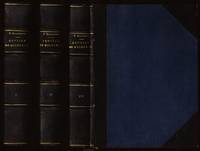
1932CA0246Description:<br /><br />3 volumes. xxix-574 pages with 4 folding maps; 466 pages with folding coats of arms 6 folding native illustrations and map; 469 pages with 2 coats of arms one folding and 6 folding native illustrations. Royal octavo 9 1/2" x 7" bound in three quarter blue leather with raised spine bands and gilt lettering to spine. Introduction by Rafael Lopez. From the library of George Foster. Publicaciones del Archivo General de la Nacion volume XVII XVIII and XIX.<br /><br />There are only meager biographical data about Pablo de la PurÃsima Concepción Beaumont whose work is a major source on Michoacán. Despite its title "Chronicle of the Holy Apostles St Peter and St Paul of Michoacán" Beaumont's work in fact spans a much greater area including much of western Mexico northward to New Mexico and tending toward a general history. It provides details to 1565. Beaumont divided his total work into tow major parts the firs or Aparato intended to be introductory to the second or the Crónica proper. the first seems complete but the second was never finished. The Aparato takes up fully a third of the extant Beaumont work although nominally introductory. It deals with the discovery of America and the conquest of Mexico to the year 1521. It was twice published before appearance of the total work. Far more valuable is the Crónica. It consists of two books and one chapter of book 3. Beaumont drew on a wide variety of sources. He tell us us that he gathered a large quantity of manuscripts from various Franciscan archives as well as listing 30 standard writers in printed sources. He gives full copies of some of his documents of which several have since disappeared. He speaks of obtaining a native painting possibly from which his illustrations came. These paintings show incidents of the first visits of Spaniards to Michoacán there reception by Tarascans labors of the Franciscans coats of arms of principal cities of Michoacán. It is usually through that Beaumont composed his work around 1777. That is the last date in the later copies of the original manuscript. Unfortunately his original manuscript is lost. It was copied in Mexico City around 1792 to for volumes 7-11 of a 32 volume Collection of Memories on New Spain ordered by Viceroy Conde de Revilla Gigedo and compiled by Manuel de la Vega. Three partially complete sets of these Vega Memorias are known; from one or another of them come other recopied manuscript copies as well as the printed versions. Editions of the work have a somewhat unfortunate publishing history. In 1826 Bustamante published an incomplete and useless edition of the Aparato attributing it to Vega who had owned the manuscript Bustamante used. In 1873-74 a five volume edition of both Aparato and Crónica appeared in Mexico; it lacks the Indian drawings and was based on a secondary manuscript copy made b y J F Ramirez that then belonged to Alfredo Chavero. A three volume version was published by the National Archives of Mexico in 1932 based on their copy of the 1792 collection of Memorias; it contains the Indian drawings and an introduction by Rafael Lopez. The text seems slightly corrupt but it may be near the original as Beaumont said his Spanish was defective owing to his Parisian rearing.<br /><br /> George McClelland Foster Jr born in Sioux Falls South Dakota on October 9 1913 died on May 18 2006 at his home in the hills above the campus of the University of California Berkeley where he served as a professor from 1953 to his retirement in 1979 when he became professor emeritus. His contributions to anthropological theory and practice still challenge us; in more than 300 publications his writings encompass a wide diversity of topics including acculturation long-term fieldwork peasant economies pottery making public health social structure symbolic systems technological change theories of illness and wellness humoral medicine in Latin America and worldview. The quantity quality and long-term value of his scholarly work led to his election to the National Academy of Sciences in 1976. Virtually all of his major publications have been reprinted and/or translated. Provenance from the executor of Foster's library laid in.<br /><br />Condition:<br /><br />Some underlining in pencil through out by Foster. Foster's date of acquire on front paste down early owner's name on front end paper. some light soiling and rubbing to extremities else a very good set. Talleres Graficos de la Nacion hardcover books
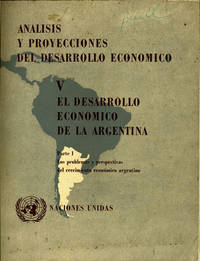
195934895México: Naciones Unidas Departamento de Asuntos Económicos y Sociales 1959. First edition. Cloth. A very good or better copy with light soiling and owner's name on original wrapper leaves clean. xiii 129 pp. Sm. 4to. A pioneer contribution to the economy of Argentina in the first half of the 20th c. Naciones Unidas Departamento de Asuntos Económicos y Sociales hardcover books
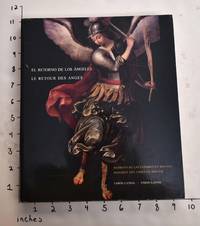
1996165293Paris: Union Latine 1996. Softcover. VG- crease to top corner of back cover and last 100 or so pages light wear to corners edges and spine. Glossy color-illustrated softcover with white and yellow lettering. 271 pp. 50 pages of color plates. Text in French and Spanish printed on facing pages. Catalogue to accompany an exhibition held in the Chapelle de la Sorbonne Paris during 1996. Union Latine paperback books
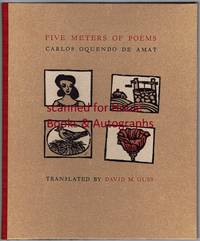
1986229746<p>First edition thus. 4to. Woodcuts by Antonio Frasconi. Original red cloth with large tan pictorial board for a front cover. Enclosed in the original publisher's red cloth drop box with tan board for a front cover. Fine fresh copy. No signatures or bookplates. Number 11 of 40 numbered copies on handmade paper signed by David M. Guss and Antonio Frasconi on the colophon page. Original publisher's prospectus laid in loose. Hardcover. Fine/No Jacket.</p> Turkey Press hardcover books
1976191608n.p.: USLA 1976. 18x24 inch poster sketch of a face with splattered blood streaming from its nose artist identified as "R. Castro" artwork is signed as Berkeley '76 but unknown if the poster was made later. The humorously titled US Senate report "Trotskyite Terrorist International" notes that the USLA was a front of the Socialist Workers Party. USLA unknown books
1934CA0247Description:<br />2 volumes: 427 pages with facsimile title and index; 513 pages with two facsimile pages appendix and index. Royal octavo 9 1/2" x 7" bound in three quarter blue leather with raised spine bands and gilt lettering to spine. From the library of George M Foster. Second edition.<br /><br />The two chronicles by Francisco de Burgoa easily hold first place for inflated style and bombastic phraseology especially the opening remarks to various chapters. Yet for the important area of Oaxaca and the numerous subjects he treats Burgoa's works are indispensable and irreplaceable sources. Burgoa born in Oaxaca was related to numerous local colonial families. He took his final vows in 1625 and by 1649 was provincial of his Order. In that post he made a special effort to visit various parts of Oaxaca especially seeking notices of Zapotecan antiquities with the aim of writing a history of Oaxaca. Before his death in 1681he did not complete it but left two prolix yet valuable published treatises. The two chronicles are the usually abbreviated Palestra historial and Geográfica descripción. Burgoa conceived of them as a single work but they differ in contents. The Palestra historial is a typical chronicle. It begins with the arrival in 1526 of Dominicans in Mexico City and shortly thereafter their appearance in Oaxaca. Burgoa rehearses the lives of many missionaries already biographized by Davila Padilla but Burgoa emphasizes their apostolate in the Oaxaca areas even before formal establishment of the Province of San Hipolito 1592. These lives are uniformly eulogistic but scattered through them are important bits of information on the numerous Indian groups of Oaxaca. The Geográfica descripción has 80 chapters. They detail the histories of the Monasteries and the work of their friars among the Indians with much less attention to biographical detail than in the Palestra historial. The data run to about mid-17th century in both. Handbook of Middle American Indians<br /><br /> George McClelland Foster Jr born in Sioux Falls South Dakota on October 9 1913 died on May 18 2006 at his home in the hills above the campus of the University of California Berkeley where he served as a professor from 1953 to his retirement in 1979 when he became professor emeritus. His contributions to anthropological theory and practice still challenge us; in more than 300 publications his writings encompass a wide diversity of topics including acculturation long-term fieldwork peasant economies pottery making public health social structure symbolic systems technological change theories of illness and wellness humoral medicine in Latin America and worldview. The quantity quality and long-term value of his scholarly work led to his election to the National Academy of Sciences in 1976. Virtually all of his major publications have been reprinted and/or translated. Provenance from the executor of Foster's library laid in.<br /><br />Condition:<br />Some occasional pencil marginalia by Foster. Foster's date of acquired on front paste down of volume one. Some rubbing to extremities else a very good set. Archivo General de la Nacion hardcover books
195347241Concepción: by the Company 1953-4. First Edition. Quarto 27cm. Twelve monthly issues comprising the entire first year of publication. Bound into cloth-backed boards front and rear wrappers retained; each issue 16pp. Moderate external wear; punch-holes in bound margin of each issue else Very Good. A graphically impressive company journal issued by the major Chilean mining and manufacturing firm Compañia de Acero del Pacifico CAP. Founded in 1947 CAP is still one of the largest industrial concerns in all of Latin America. Huachipato a publication aimed toward the company's employees chronicles activities both within the company and in the surrounding apparently vast company town. In addition to industrial and technological achievements the publication documents the social life of the company's workers with much coverage of sporting and cultural events the town's soccer team also called Huachipato was elevated to Chile's primera división as early as 1965. The journal is noteworthy for its graphical sophistication with photo-montaged covers sprightly layouts and a mid-century aesthetic reflecting Latin America's internationalist ambitions during this period. Rare; OCLC 2020 locates just scattered holdings all for three or fewer issues; Texas and Cornell only in North America. by the Company unknown books
19662222024<p>First edition. 4to. 65 tipped-in color plates over 30 line drawings including a folding map. Bibliography. Dust jacket unclipped. Very good. 154 pages. No signatures or bookplates.</p> Akademische Druck und Verlagsanstalt hardcover books
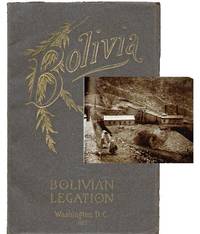
191218158Washington DC: Press of Byron S. Adams 1912. 6 x 9.25 inches 72 pp with chromolithograph frontispiece many b/w illustrations from photographs. Near fine with mild edgewear to wrappers. Stamp of the Bolivan Consulate in San Francisco on front endpaper. An attractive informational booklet aimed at potential investors with description of the major cities of Bolivia and details of topography demographics climate natural resources mining the financial system laws and tariffs and transportation. A colored folding map of the country shows forest agricultural areas and mineral locations. Press of Byron S. Adams unknown books
1910CA01065 volumes: volume 1 Texto: xx607 pages with frontispiece portraits illustrations facsimiles maps and plates; volume 2 Documentos: 552 pages; volume 3 Vida de Ercilla: 337 pages with portraits illustrations and index; volumes 4-5 Illustrations: 512 pages with facsimile titles to the first publications; 559 pages with facsimile signatures plates and index. Folio 15" x 10 3/4" with original wrappers bound in to cloth binding. Compiled and arranged by Jose Toribio Medina. First edition.<br /><br />La Araucana is an epic poem in Spanish about the Spanish conquest of Chile by Alonso de Ercilla; it is also known in English as The Araucaniad. It was considered the national epic of the Kingdom of Chile and one of the most important works of the Spanish Golden Age Siglo de Oro. The poem consists of 37 cantos that are distributed across the poem's three parts. The first part was published in 1569; the second part appeared in 1578 when it was published with the first part; the third part was published with the first and second parts in 1589. The poem shows Ercilla to be a master of the octava real the complicated stanza in which many other Renaissance epics in Castilian were written. A difficult eight-line unit of 11-syllable verses that are linked by a tight rhyme scheme the octava real was a challenge few poets met. It had been adapted from Italian only in the 16th century and it produces resonant serious-sounding verse that is appropriate to epic themes. The work describes the initial phase of the Arauco War which was born as a Spanish conquests attempt not at all comparable in importance to those of Hernán Cortés who helped conquer the Aztec empire and Francisco Pizarro who initiated the overthrow the Inca empire. Contrary to the epic conventions of the time however Ercilla placed the lesser conquests of the Spanish in Chile at the core of his poem because the author was a participant in the conquest and the story is based on his experiences there. On scraps of paper in the lulls of fighting Ercilla jotted down versified octaves about the events of the war and his own part in it. These stanzas he later gathered together and augmented in number to form his epic. It was the first poem of its kind written by a participant in the course of the events narrated and the first to immortalize the beginnings of a modern country. In the minds of the Chilean people La Araucana is a kind of Iliad that exalts the heroism pride and contempt of pain and death of the legendary Araucanian leaders and makes them national heroes today. Thus we see Ercilla appealing to the concept of the "noble savage" which has its origins in classical authors and took on a new lease of life in the renaissance - c.f. Montaigne's essay Des Canibales and was destined to have wide literary currency in European literature two centuries later. He had in fact created a historical poem of the war in Chile which immediately inspired many imitations.<br /><br />La Araucana is deliberately literary and includes fantastical elements reminiscent of medieval stories of chivalry. The narrator is a participant in the story at the time a new development for Spanish literature. Influences include Orlando furioso by Ludovico Ariosto. Also features extended description of the natural landscape. La Araucana's successes—and weaknesses—as a poem stem from the uneasy coexistence of characters and situations drawn from Classical sources primarily Virgil and Lucan both translated into Spanish in the 16th century and Italian Renaissance poets Ludovico Ariosto and Torquato Tasso with material derived from the actions of contemporary Spaniards and Araucanians. The mixture of Classical and Araucanian motifs in La Araucana often strikes the modern reader as unusual but Ercilla's turning native peoples into ancient Greeks Romans or Carthaginians was a common practice of his time. For Ercilla the Araucanians were noble and brave—only lacking as their Classical counterparts did the Christian faith. Caupolicán the Indian warrior and chieftain who is the protagonist of Ercilla's poem has a panoply of Classical heroes behind him. His valour and nobility give La Araucana grandeur as does the poem's exaltation of the vanquished: the defeated Araucanians are the champions in this poem which was written by one of the victors a Spaniard. Ercilla's depiction of Caupolicán elevates La Araucana above the poem's structural defects and prosaic moments which occur toward the end when Ercilla follows Tasso too closely and the narrative strays from the author's lived experience. Ercilla the poet-soldier eventually emerges as the true hero of his own poem and he is the figure that gives the poem unity and strength. The story is considered to be the first or one of the first works of literature in the New World cf. Cabeza de Vaca's Naufragios—Shipwrecked or Castaways for its fantastical/religious elements it is arguable whether that is a "traveler's account" or actual literature; and Bernal DÃaz del Castillo's Historia verdadera de la conquista de Nueva España The Conquest of New Spain. La Araucana's more dramatic moments also became a source of plays. But the Renaissance epic is not a genre that has as a whole endured well and today Ercilla is little known and La Araucana is rarely read except by specialists and students of Spanish and Latin American literatures and of course in Chile where it is subject of special attention in the elementary schools education both in language and history. La Araucana makes Chile the only American country that was founded under the lights of an epic poem. <br /><br />Condition:<br /><br />Bound in red cloth with original wrappers bound in. Volume one first 15 pages closed tear at heal repaired back page fore edge repaired. A very good set. Imprenta elzeviriana hardcover books
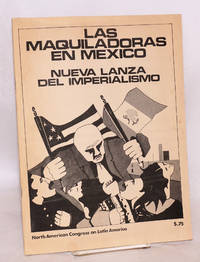
1975247782New York; Berkeley: NACLA 1975. Pamphlet. 31p. stapled wraps 8.5x11 inches paper toned else very good condition. Text in Spanish. NACLA unknown books
1975221803New York; Berkeley: NACLA 1975. Pamphlet. 31p. pamphlet 8.5x11 inches paper toned with some foxing. Text in Spanish. NACLA unknown books
197596663New York: New Outlook Publishers 1975. 52p. wraps. Statement issued jointly by the communist parties of various Latin American and Caribbean countries. New Outlook Publishers unknown books
19811334515Milwaukee: Marquette University Press 1981. Softcover. Octavo; pp 106; G/paperback; black spine with gilt text; no jacket; cloth shows some smudges to exterior; slight sticker residue to front; intact panels; text block has light tone to exterior edges; interior clean; illustrated. 1334515. FP New Rockville Stock. Marquette University Press unknown books
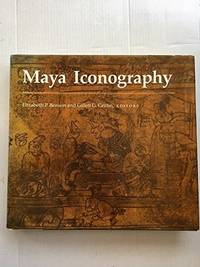
1988222Princeton: Princeton University Press 1988. First Edition First Printing. 1/4 cloth. Very good/fine. Very good first printing. Brown cloth under buckram quarter cloth binding. Cream endpapers. Pages are clean and bright. Rear endpaper and page 379 have short tear at bottom. From the private library of Larry Southwick collector's marginalia pencilled near front hinge. In a fine dust jacket now protected in a clear removable archival cover. Profusely illustrated with photos and drawings. 379 pp. including bibliography and index. Quarto 10 1/2 x 10 inches tall. Large and heavy item billed at actual shipping charges. Princeton University Press hardcover books
193329764Antofagasta: Partido Comunista de Chile 1933. Lithographed postal card ca 19.5cm x 9cm 5-1/4" x 3-1/2". Mild discoloration; corners slightly rounded; Very Good. Recto is a captioned portrait; verso printed for mailing with text providing a brief biography of Anabalon a communist-affiliated college professor who was arrested tortured and killed by Chilean government forces in 1932. A rare memorial of this little-remembered but briefly influential event. [Partido Comunista de Chile] unknown books
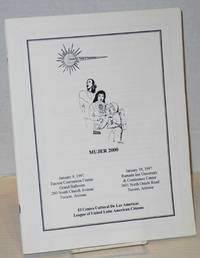
1997201723Tucson: El Centro Cultural de las Americas & League of United Latin American Citizens 1997. Magazine. 28p 8.5x11 inches biographical sketches and b&w photos of participants resources schedules events ads very good event program in stapled white pictorial wraps. El Centro Cultural de las Americas & League of United Latin American Citizens unknown books
1911CA0100a3 volumes. Volume 1. vi314 with frontispiece and plates; volume 2. 372 pages with frontispiece and plates. volume 3. 518 pages with frontispiece and one plate. Royal octavo 9 1/4" x6 1/4" Bound in quarter leather with gilt lettering to spine and raised spine bands; marbled boards. Preface par M. le Cte de MoüyFirst edition.<br /><br />Mémoires: L'Intervention Française au Mexique by Charles Blanchot. This very rare memoir by Charles Blanchot was aide-de-camp to General Bazaine Supreme Commander of French Forces in Mexico during Mexico's Second Empire. There is so much in here that has never seen light in either Spanish or English for instance: the powerful if behind-the-scenes role of Doña Juliana de Gómez Pedraza widow of Manuel Gómez Pedraza and the vicious if as Blanchot suggests unfounded rumors circulating in Mexico City about Bazaine in 1866-7. Blanchot who married an American of French origin in Mexico City also offers a detailed and lively portrait of Mexico City society at the time.<br /><br />Condition:<br /><br />First signature of volume one detached with some edge wear along the fore-edges title to volume two detached binding edges and hinges rubbed spines darkened. A good copy of a very rare and scarce work. Librairie Emile Nourry hardcover books
1973147306Boston: NACLA 1973. 48p. stapled wraps 8.5x11 inches wraps slightly worn else very good condition. NACLA unknown books
1946CA0057xxiv549 pages with 120 facsimile pages. Folio 13" x 9 1/2" bound in original publisher's wrappers. Originally written in English by Dr. Wagner it was published only in Spanish. Translated by Joaquin Garcia Pimentel and Federico Gomez de Orozco. Limited to 1000 copies of which this is number 285 on "fulva charta de Coyoacan" a yellow-tinted paper manufactured in Coyoacan. First edition.<br /><br />This monumental work was ten years in preparation. It contains a description of the books printed in Mexico before 1601 and in most cases includes a reproduction of the title page references to other bibliographies census of copies in public and private hands and prices and dates of sale. The author modestly calls this a supplement to the bibliographies of Joaquin Garcia Icazbalceta Jose Toribio Medina and Nicolas Leon. Actually it is the most complete and detailed work on printing in Mexico from 1539 to 1600 ever published.<br /><br /><b>Condition:</b><br /><br />Edge wear to wrappers with some closed tears else a very good copy still unread. Editorial Polis paperback books