12 résultats
1592RW1300Frankfurt:: Apud heredes Andreae Wecheli Claudium Marnium & Ioan. Aubrium 1592. 1592. Small 8vo. 16 919 1 pp. Greek text and Latin translation in parallel columns. Title vignette headpieces and initials indexes. Original blind-stamped pigskin paper spine-label; extremities worn early leaves waterstained occasional ink underlining. Very good. Second edition revised and emended. Giulio Pace was one of the pre-eminent Aristotle scholars of his day. He fled the Italian Inquisition first to Geneva and later to Heidelberg where he converted to Protestantism. His side-by-side Greek and Latin Organum went through eleven editions and was the standard text from the late sixteenth through the early seventeenth century. See: Adams Catalogue of Books Printed on the Continent of Europe 1501-1600 1867; Brunet I 462; Grasse 213; Charles H. Lohr Latin Aristotle Commentaries: Renaissance authors vol. 2 1988. Apud heredes Andreae Wecheli, Claudium Marnium, & Ioan. Aubrium, 1592. unknown books
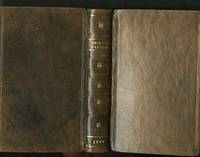
15608656Lyon: Haeredes Jacobi Juntae 1560. Later printing. Vellum. Very good. 16mo. 8426pp. With the leaf of colophon following p. 842 and the 2 final blank leaves. Printer's device on title. Bound in 19th century vellum marbled paper on both covers. Spine label abraded. Aristotle's text on natural history. A separate issue of Vol. 4 of the works of Aristotle published by the same press in the same year. Translation from the Greek by T. Gaza J. B. Felicianus N. Leonicus Thomaeus and Georgius Valla. Haeredes Jacobi Juntae hardcover books
1559D11175Venice: apud Hieronymus Scotum Scotus 1559. Hardcover. Very Good. Folio 315 x 215mm. 2 137pp. 1. Signatures: A-Q4 R6. Woodcut profile bust of Aristotle on title with dedication Peripateticae Disciplina Principis Vera Aristotelis Stagiritae Effigies. Final leaf with woodcut printers device of Scotus classical muse atop star sphere with motto Fiat pax in virtute tua Let there be peace in your walls. Latin translation by Girolamo Bagolino of Verona c. 1470-1535 professor of philosophy at Padua. Text in double column. Italic and Roman type. 18th-century marbled boards modeled to resemble tree-calf; hole through opening leaves causing some text loss title with minor stains hinges starting p. 135 folded corner repaired clean tear in blank portion of last leaf. The clipped booklabel of Seminarium Mutinense pasted on the title fittingly connects this copy to the Jesuit Seminary library in Modena in the Provincia Veneta which was also a center for study popularly called a Collegium. Sixteenth-century editions of Philoponuss Aristotelian explanations have a major place in the commentarial tradition and philosophy of the Renaissance. <br/><br/>1559 Scotus edition of Philoponuss commentary on the De Generatione et Corruptione of Aristotle; a beautifully produced Venetian work still in good form. John Philoponus also known as John the Grammarian was a Byzantine-era Aristotelian commentator and author of several philosophical treatises. The first Latin translation of Philoponuss commentary on Aristotles treatise De Generatione et Corruptione seems to be the one made by Hieronymus Bagolinus from the Aldine edition of 1527 first published in Venice by Hieronymus Scotus in 1540; the second made by Andrea Silviuis was published by Valgrisius in 1564. This is Scotuss fourth edition of 1559 in which he states errors of the first and the second edition are purged thus repeating the title found in the third. It precedes a fifth and final edition of 1568. Philoponus presents his commentary as notes taken from the seminars of Procluss student Ammonius c. 435-526 AD together with certain remarks of my own; Philoponuss is an elaborate exposition of Aristotelian theory followed by several criticisms which are answered with sophistication. To history this commentary has always been received as a school work but it was an interesting book to early scholars for it was supposed to have been written before 529 terminus post quem - hence before Philoponuss writings became entrenched in Christianity and creationist views. Like most ancient commentaries this one maintains certain importance for the constitution of the text on which it comments. Scotuss publications were widely regarded as elegant productions; wide-format and designed with attractive typeface this refined style was typical on the Venetian marketplace at this time. apud Hieronymus Scotum (Scotus) hardcover books
1585012628Francofurdi: Apud heredes Andreae Wecheli 1585. Book. Good- condition. Hardcover. Early edition. Quarto 4to. iv 318 pages of text. Rebound in circa 1920 cloth which is slightly worn and soiled. The entirety of the text is damp-stained and the first and final few pages are heavily discolored. Minor worming to final few pages of index repaired. Previous owner's name on the front pastedown endpaper and the occasional notation mark in the text. Title page is in Greek and Latin; text in Greek; annotations in Latin. Title continues ".Latinum & Graecum." Edited by Friedrich Sylburg 1536-1596. Apud heredes Andreae Wecheli Hardcover books
15466888Lugduni: Apud Seb. Gryphium 1546. Octavo 18 x 11 cm. 67 1 pages. Signatures: aa-dd8 ee2. Text in Latin. Illustrated with woodcuts including a title vignette and initials. Cuts title vignettes initials. Some age-toning bounding full limp vellum; untitled. Near fine. Rare. OCLC locates seven copies; Baudrier Bibliographie des Livres imprimés à Lyon VIII 200; Cranz 108.117. Apud Seb. Gryphium hardcover books
1530047158Paris: Simonem Colineum 1530. Early Edition. Hardcover Full Leather. Good Condition. Rebound in modern calf in an antique style scattered minor foxing dampstains generally clean internally. Notes and underlining in a contemporary hand scattered through. Lacking the final 6 leaves but a nice example of Parisian scholastic printing - most early Paris printings of Aristotle were in folio but Paris was becoming a center of scholasticism and turning out 8vo and 12mo editions of important works. 175 of 181 leaves.<br/><br/>George of Trebizond 1395-1486 was a Byzantine humanist who moved to Italy during the Renaissance there and edited and translated a number of works of philosophy and of the Church fathers. Size: Octavo 8vo. Quantity Available: 1. Shipped Weight: Under 1 kilo. Category: Philosophy; Inventory No: 047158. Simonem Colineum hardcover books
1585D11004Frankfurt am Main: Apud heredes Andreae Wecheli heirs of Andreas Wechel MDLXXXV 1585. Hardcover. Very Good. 4to 210 x 149mm. 16 blank leaves at front and back 4 318 2 pages including final leaf with Wechel printers device. Title also with Wechels woodcut printers device a pegasus soaring over a caduceus pair of cornucopia and shaking hands AW monogram twice. Edited by Friedrich Sylburg. Dedicated to French scholar Joseph Justus Scaliger 1540-1609. Latin dedication notes and index. Greek text 18th-century calf marbled endpapers and red edges rebacked; light edgewear light marginal foxing title lightly browned. Likely remaining for several generations at the library of Balliol College Taylor Institution Oxford number B.181 deaccessioned sometime in the early 20th century two bookplates on front pastedown. Collection of Francis Howard Forbes 1881-1957 professor of Greek language and literature at Amherst College his round pictorial bookplate of Attic-style scribes on front pastedown. This particular copy was cared for by Oxford institutions for a good part of its history then crossed into a New England personal library of a classical scholar sometime in the early 20th century. <br/><br/>This is the self-contained volume from the 1584-1587 collected edition of the works of Aristotle in Greek and the Metaphysica of Theophrastus. Friedrich Sylburg 1536-1596 was a German classical scholar who made important contributions to several popular Greek texts of the later sixteenth century like Estiennes Greek Thesaurus. In 1583 Sylburg resigned from an educational post he held at Lich and moved to Frankfurt to work as leading active editor for the enterprising Wechel publishers. The humanist printers flourished in three distinct cities; Paris Frankfurt and Hanau. Andreas Wechel settled the firm in Frankfurt and distinguished it mainly by publishing neo-Latin literature classical philology and works by Ramus and his followers. The relationship between Sylburg and the Wechel printers was a seamless match; this 1585 edition of Aristotle was praised for its great critical power and finesse. It is widely regarded as the authoritative edition of its kind. Sound example of a sixteenth century published work on Aristotelian principles born from the inventive relationship between scholar and press.Fabricius-Harles III 444; Hoffmann I 275 and 289. Apud heredes Andreae Wecheli (heirs of Andreas Wechel) hardcover books
155195873Venice: per Bartholomeo detto l'Imperador & Francesco suo genero 1551. Early Venetian edition of Bernardo Segni's translation of Aristotle's poems and rhetoric. Small octavo bound in full 19th century calf gilt titles and tooling to the spine morocco spine labels gilt ruled gilt turn-ins all edges gilt marbled endpapers. From the library of one of the most influential theologians of the 20th century Dr. Thomas C. Oden. Regarded as the founder of the paleo-orthodox movement Oden taught with a mission "to prepare the postmodern Christian community for its third millennium by returning again to the careful study and respectful following of the central tradition of classical Christianity." In very good condition. A unique association. Based on an analysis of Homer's epic of the Trojan war The Illiad Aristotle determined that poetry sought universal truths while history strove to explain the particular. From this Aristotle concluded poetry was superior to history. Aristotelian theorists of the Renaissance agreed on two basic principles: first that the poem had to have been written several centuries ago and second that the historical events narrated in the poem did not need to be exact but only to approximate reality. Therefore the author of an epic had more freedom of fantasy than an historian. per Bartholomeo detto l'Imperador & Francesco suo genero unknown books
1569D11176Venice: Hieronymus Scotum Scotus 1569. Hardcover. Very Good. Folio 315 x 215mm. 2 150pp. 2. Signatures: A-I 8 K4. Io. Grammatici in cartouche at head of title page. Woodcut profile bust of Aristotle on title with dedication Peripateticae Disciplina Principis Vera Aristotelis Stagiritae Effigies. Final leaf with woodcut printers device of Scotus of griffin in animated cartouche head-pieces and initials throughout. Text printed in double columns. Italic and Roman type. Original limp vellum vertically ruled in brown ink to front cover; edges slightly curled minor marginal dampstaining at beginning and end otherwise clean. Near contemporary ownership inscriptions in Latin on front flyleaf mostly faded but name and order of at least two young men Salvatoris and Bartolomei are given. 19th century stamp of the Seminario Vescovile of Volterra on title. The Tuscan Jesuit Seminary dedicated to Saint Andrew employed student novices throughout its history and one would have likely used this copy. Interestingly the seminary is still active today and maintains lodgings for travelers. This copy is further enhanced by a full-page pencil doodle of a mythological composition muses putti and foliate boughs on the rear flyleaf probably completed in the seventeenth century. <br/><br/>The last 1569 Scotus edition of Philoponuss commentary on the Posterior Analytics of Aristotle; an example-laden investigatory explanation on the classification of scientific knowledge Byzantine-era Philoponuss comments on the Posterior Analytics of Aristotle are interesting especially for their metaphysical analysis of the universal idea his account revealed his beliefs in Platonic forms as inherently part of the Divine Intellect. In his further reading of the Posterior Analytics Philoponus aimed to share his understanding of the concept of subordinate sciences which are sciences that can be classified by genus and species. A notion he supported was the idea that some sciences depended on higher ones for some of their principles Philoponus even goes as far to suggest formulating a taxonomy of the sciences. He maintains that philosophy dialectic and all the sciences employ common axioms regarding philosophy in particular it discovers and demonstrates the very principles of every science. Importantly Philoponus decided to take on this work because he thought that Aristotles concepts were too difficult and needed explanation. It was not the first he was indebted to the earlier work of Theophrastus and Galen but Philoponuss work is the earliest to survive. Philoponuss train of thought is frequently obscure and much of the discussion being carried out chooses investigatory examples over blatant argument. He wished to expound the meaning of the Aristotelian text rather than raising objections. It is clear Philoponus engages vigorously with the earlier commentators on the Posterior Analytics thus like most ancient commentaries this one maintains certain importance for the constitution of the text on which it comments. Scotus a prominent Venetian printer and elegant producer of texts was actively publishing a line of these philosophical treatises which were frequently revised and reprinted. The first Latin translation by Theodosius was published in 1539 and was reprinted frequently until 1569. This work remains important to the evolving tradition of early sixteenth century Italian university logic. Rare in North America OCLC lists holdings for this edition only at University of Oklahoma as part of the History of Science Collection. Hieronymus Scotum (Scotus) hardcover books
1545D11150Venice: Hieronymus Scotus 1545. Hardcover. Very Good. 8vo 157 x 106mm. 8 307pp. 13 leaves including final blank. Woodcut printers device of Scotus with personification of globe and motto FIAT PAX IN VIRTUTE Peace be with thee. Latin translation by Theodore Gaza. 12-line woodcut historiated initials at beginning of first chapter and at beginning of the Universalis generationis partitio. p. 224 of heraldry. Few woodcut initials throughout. Contemporary vellum; worn; spine and covers darkened; scattered stains worming affecting title next leaf and last 3 leaves; edges stained brown and gauffered to floral pattern. Sound copy enhanced by Latin marginalia in an contemporary hand. The Renaissance public as a part of their reading system frequently engaged Aristotles natural writings. Even at the height of this period at a time when Theodore Gaza had already produced his celebrated versions of Aristotles zoological corpus these works obtained wide recognition. <br/><br/>Aristotles zoological works edited by Theodore Gaza with Italian Renaissance commentary sparked on by the availability of Gazas text. Gazas version of the treatises were paraphrases of Aristotles zoological works but also included personal observations and information drawn from the other authors. Gaza in fact held a virtual monopoly on the biological works of Aristotle his translation completely overshadowing those before him and especially of his rival George of Trebizond. Gazas text had been used mainly as a source of quotations and only in philological and medical works such as Castigationes plinianae by Ermolao Barbaro or Benedettis Historia corporis humani. By 1521 starting with a course on the De Partibus animalium held in Bologna did the official Renaissance tradition of interpretation on Aristotles zoology take form. The Latin text which contributed to this renewed interest was none other than the elegant translation by Gaza. University Aristotelianism specifically that concerning the zoology was approached by the various interpreters in the context of systematic exploration of the encyclopedic work as a whole. The ample annotations of this volume showcase precisely this type of interaction with the evolving conversation. Gazas work throws light on Renaissance Aristotelianism carried out through the grid of scholastic commentary. Hieronymus Scotus hardcover books
1514104082Venice: Gregorium de Gregorijs 1514. Rare 16th century printing of Aristotle's Posterior Analytics; bound together with Spanish Franciscan theologian Antonius Andreas's best known work Quaestiones super XII libros Metaphysicae Aristotelis. Quarto bound in contemporary parchment over handmade paper-covered boards woodcut initials text in two columns. In very good condition. A rare and desirable collection. The Posterior Analytics is a text from Aristotle's Organon that examines demonstration definition and scientific knowledge. In the work Aristotle distinguishes 'demonstration' as a syllogism productive of scientific knowledge and 'definition' as the statement of a thing's nature: the meaning of its name or of an equivalent nominal formula. In the Prior Analytics syllogistic logic is considered in its formal aspect; in the Posterior it is considered in respect of its matter. The "form" of a syllogism lies in the necessary connection between the premises and the conclusion. Aristotle concludes the book with the way the human mind comes to know the basic truths or first principles which are not innate because people may be ignorant of them for much of their lives. Of all types of thinking scientific knowing and intuition are considered as only universally true where the latter is the originative source of scientific knowledge. Gregorium de Gregorijs hardcover books
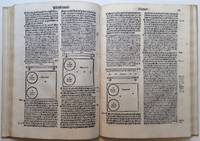
1517260577Venice: Luce Antony de Giunta 1517. hardcover. very good. Illustrated with a fine woodcut headpiece showing St. Thomas teaching; many decorative initials and in-text diagrams throughout and printer's device at end. 6 147 leaves with black letter Latin text printed in double columns. Folio later vellum-backed boards. Venitijs Impensis domini Luce Antonij de Giunta Florentini 1517. A tear in the title page has been carefully mended still a very good tight copy with some contemporary ink marginalia.<br/><br/> Scarce. OCLC lists only 5 copies including those at Cambridge NYU and University of Pennsylvania. An early edition of Saint Thomas Aquinas' 1225-1274 "great commentary on Aristotle's physics - the most important scholastic commentary on this seminal text of ancient science. Aquinas the philosopher is forever entwined with Aristotle as the former came onto the scene just as the Aristotelian corpus arrived in Latin translation and questions of the relation between faith and reason challenged the modus vivendi that had been in effect for centuries." USTC 859417<br/><br/> Luce Antony de Giunta unknown books