Berkeley, GeorgeBiblio.com
41 résultats
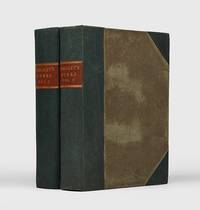
17841352898Dublin: John Exshaw 1784. Hardcover. Quartos two volumes; VG; Rebound in half-red leather with green cloth boards and gilt lettering and ruling to spines; Boards show minimal wear to corners and bottom edges; Text-blocks have moderate age-toning and light foxing to speckled edges light shelf-wear to bottom edges and occasional light foxing to the first several pages of Volume I; Both volumes bear the library stamp of the "Training College Library Avenue Southampton"; Volume I includes a frontispiece portrait of Berkeley and Volume II includes a fold-out map prefacing the title-page; Contents: Vol. I. 4 ci 646 pages; Vol. II. iv 663 pages.<br /> <br /> Oversized books. Additional postage necessary for expedited/international orders. Economy International shipping unavailable due to size/weight restrictions. For international/expedited customers please inquire for rates.; RW consignment. Shelved in Room X. 1352898. Special Collections - Downstairs. John Exshaw hardcover
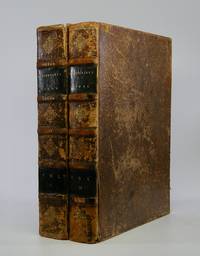
178463146London:: Printed for G. Robinson 1784. old full calf one cover detached; others weak. One cover detached and other covers nearly so; some very very slight foxing; edges of boards rubbed and worn. Folio. Engraved frontispiece portrait. Printed for G. Robinson, hardcover
1784158340Dublin: printed by John Exshaw 1784. Subjective idealism First edition first issue containing all of Berkeley's major works. This Dublin issue precedes the London issue of the same year which used the same sheets with a variant title page. The biography of Berkeley which is prefaced is a revised version of Joseph Stock's Account of the Life 1776. 2 vols quarto. Portrait frontispiece in vol. I 2 plates in vol. II of which 1 folding. Uncut in 19th-century boards recently rebacked and recornered in blue pebbled cloth. Light foxing chip at head of vol. I leaf 4M1 not affecting text. A very good copy. ESTC T142562; Keynes 142. hardcover
1784206029Dublin: John Exshaw 1784. Scattered light spotting and extraneous marks; corners of three pages in Vol. 1 torn off affecting only margins one repaired; near 19th-century marginal notes in pencil; small 1884 clipping mentioning Berkeley pasted into rear of Vol. 1; front board of Vol. 1 mostly detached but holding on by a cord; covers rubbed leather dry. Two vols. 4tos frontispiece 4 i-ci 1-646; iv 1-663; contemporary calf. A decent copy of this uncommon set. The second volume includes the folding plate illustrating an essay on plantation churches in Bermuda. Alongside John Locke Berkeley was the pre-eminent English-language philosopher of his era and among the most lucid writers of philosophical prose of any era. He spent significant time in the colonial "new world" and was intimately involved in establishing the Kings College in New York which became Columbia University. Additional postage required. John Exshaw unknown
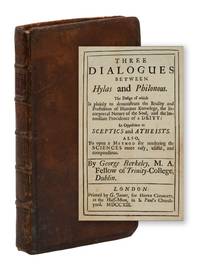
1713140947370London: Henry Clements 1713. First Edition Third Edition. First edition first printing of George Berkeley's work of philosophy. x 166 vi 44 pp. Octavo bound in full contemporary mottled calf laced in boards. Blindstamped ruled borders red morocco title label to spine all edges speckled red. Bound together with the third edition of another work by Berkeley also published by Henry Clements in 1713: Passive Obedience Or the Christian Doctrine Of Not Resisting the Supreme Power Proved and Vindicated upon the Principles of the Law of Nature. In a Discourse Deliver'd at the College-Chapel. <p>Very Good with moderate wear to boards cracking to leather at extremities minimal chipping at head and tail of spine and rounded and bumped corners. Joints repaired leather coated with preservative. Previous owner names have been torn from free endpapers cut more carefully from upper margins of first two leaves. Several 18th century ink markings and inscription "Owner / 1720" remain on the endpapers. <p>The two books are printed on different paper stock. Three Dialogues is slightly tanned with scattered foxing to margins; Passive Obedience is heavily toned. Both books collated complete. From the library of William A. Strutz with his small bookplate to the front pastedown. <p>George Berkeley 1685 - 1753 was an Anglo-Irish philosopher and clergyman who advocated the view that objects cannot exist without being perceived. He wrote Three Dialogues in order to expand on the ideas expressed in his most notable work A Treatise Concerning the Principles of Human Knowledge. Passive Obedience is a call to obey established authorities God above all. That a third edition was published just one year after the first is testament to the intensity of Enlightenment debates about the relationships between individuals and church and state. Henry Clements unknown
171355993London Printed by G. James for Henry Clements 1713. 8vo. Contemporary marbled full calf boards prettily rebacked in period style with gilt title-label raised bands and gilt ornamentations to spine. During the re-backing new end-papers have been inserted but the original front end-paper containing old owners' inscriptions has been preserved and is still withbound. Three old owners' names to title-page two of them crossed out. The title-page had been repaired at the outer margin affecting three letters in the last three lines of the subtitle To open a Method for rendering the/ SCIENCES more easy useful and/ compensious namely the "he" in "the" and the "d" in "and" as well as part fo the double-ruled border which has been drawn up again. The final leaf with a somewhat crode repair causing loss of some words towards the hinge. A small hole in A3 not repaired. A bit of brownspotting mostly at beginning and end. With its flaws still and overall acceptable copy of this extremely rare title. 10 166 pp. <br/><br/><em>The very scarce first edition of Berkeley's other magnum opus his great work of metaphysics second in importance only to his "Treatise Concerning the Principles of Human Knowledge" 1710. The present work is not only a popularized version of the "Treatise" though it is a fact that it was more widely studied and more easily understood - being written as an almost Platonian dialogue between Hylas Greek for "matter" - thought to be the representative for John Locke and Philonous Greek for "the lover of reason" - Berkeley's spokesman - it also constitutes a thorough and elaborated explanation of Berkeley's central ideas and the emergence of many of the principal thoughts that we now associate with him and his anti-materialist philosophy."In this Treatise which does not presuppose in the Reader any Knowledge of what was contained in the former i.e. the "Treatise" it has been my Aim to Introduce the Notions I advance into the Mind in the most easy and familiar manner; especially because they carry with them a great Opposition to the Prejudices of Philosophers which have so far prevailed against the common Sense and natural Notions of Mankind.If the principles which I here endeavour to propagate are admitted true; the Consequences which I think evidently flow from thence are that Atheism and Scepticism will be utterly destroyed many intricate Points made plain great Difficulties solved several useless Parts of Science retrenched Speculation referred to Practise and Men reduced from Paradoxes to common Sense" Preface pp. 7-8.In the present work Berkeley one of the greatest thinkers of early modern philosophy sets out to alter the direction of philosophy and set straight the boundaries of man's knowledge of himself and the world around him. He seeks to bring back man to common sense and to bring back science and knowledge to that which is essential and factual. In the present work he famously defends the idealism because of which he is still considered one of the greatest metaphysicians ever. As his "Treatise" is remembered today for the famous phrase "Esse est percipi" - to be is to be perceived - so his "Dialogues" is remembered for the introduction of the perceptual relativity argument stating that the same object can have different characteristics e.g. shape colour etc. depending on the perspective of the observer e.g. distance angle light etc. Furthermore as Berkeley had used God in the "Principles" as the CAUSE or originator of our ideas of sense in the "Dialogues" he brings God a very important step further stating that our ideas must EXIST IN God when not perceived by us thus seeing this as the warrant for the continuity of our ideas God being unchanging. This leap from claiming that God must cause our ideas to claiming that our ideas must exist in God that Berkeley thus takes in the "Dialogues" is among the most important within his philosophy guaranteeing continuous existence to physical objects. The work is considered the foremost representative of Berkeley's phenomenalism."George Berkeley Bishop of Cloyne was one of the great philosophers of the early modern period. He was a brilliant critic of his predecessors particularly Descartes Malebranche and Locke. He was a talented metaphysician famous for defending idealism that is the view that reality consists exclusively of minds and their ideas. Berkeley's system while it strikes many as counter-intuitive is strong and flexible enough to counter most objections. His most-studied works the Treatise Concerning the Principles of Human Knowledge Principles for short and Three Dialogues between Hylas and Philonous Dialogues are beautifully written and dense with the sort of arguments that delight contemporary philosophers. He was also a wide-ranging thinker with interests in religion which were fundamental to his philosophical motivations the psychology of vision mathematics physics morals economics and medicine. Although many of Berkeley's first readers greeted him with incomprehension he influenced both Hume and Kant and is much read if little followed in our own day." SEP.Berkeley published his first important philosophical work "Essay Toward a New Theory of Vision" in 1709 aged 24. The book was well-received and a second edition came out later that same year. The following year he published "A Treatise Concerning the Principles of Human Knowledge" in which he sought to lay out a complete philosophical system based on the idea that the only existing entities in the world are ideas and the mind that perceives them. The work was not very well received however. This did not affect his search for truth though and he continued the outlay of his philosophical system in his "Three Dialogues between Hylas and Philonous" which was printed in 1713. Though neither of the two works were well received and appeared in small numbers they are by far the most important and enduring of all of his works. The view that he presents in the "Dialogues" is that which he called "immaterialism" now "idealism". He considered this anti-materialism the perfect answer to and refutation of skepticism and atheism and his theories later became the foundation of much idealistic philosophy."Upon the common Principles of Philosophers we are not assured of the Existence of Things from their being perceived. And we are taught to distinguish their real Nature from that which falls under our Senses. Hence arise Scepticism and Paradoxes. It is not enough that we see and feel that we taste and smell a thing. Its true Nature its absolute external Entity is still concealed. For tho it be the Fiction of our own Brain we have made it inaccessible to all our Faculties. Sense is fallacious Reason defective. We spend our Lives in doubting of those things which other Men evidently know and believing those things which they laugh at and despise." Preface p. 6.The first edition of this important work is very difficult to find. It was published in an edition together with the "Treatise" in 1734 which though also scarce is the edition of the work that most libraries and institutions have in their holdings seeing that the first editions of both works are of even greater scarcity. We have only been able to locate three copies in libraries worldwide. </em> hardcover
17449733London: C. Hitch 1744. First Edition . Full Leather. Fair/No Jacket. FIRST EDITION/LONDON PRINTING of this philosophical work by Berkeley here spelled Berkley DOES NOT FEATURE SIRIS IN TITLE PREDATES IT. Extremely rare scarce. Title page: "By the Right Rev. Dr. George Berkley lord Bishop of Cloyne and Author of The Minute Philosopher. "As we have opportunity let us do good unto all men. Gal. vi. 10. Hoc opus hoc studium parvi properemus et ampli. Hor." LONDON printed for C. Hitch in Pater-noster-row; and C. Davis against Gray's Inn Holboutn MDCCXLIV price two shillings. CONDITION: Front board is COMPLETELY MISSING. obvious shelf-wear for a book almost 300 years old all pages present a few pencil markings on title page back board/spine still bound in leather marbled back board. Formerly from Harvard library though with no library markings info paper included with book Please email for any information. <br/> <br/> C. Hitch hardcover
1752268<b>J. & </b><b>R. Tonson and S. Draper 1752. Title page iii-vi 2 9-268 all collated. Full calf. Spine with raised bands. Covers have gold frames. All joints and hinges slightly worn and/or cracked but covers holding well by strings. Some brown stains to edges of endpapers and first and last few leaves. The spine is darkened but a nice uncomplicated copy overall with a refreshed label. </b> J. & R. Tonson hardcover
174844380Chez Henri-Albert Gosse & Comp. Good. 1748. Softcover. Good softcover. Taped spine. Heavily used but in good reading condition and intact. Text is in French. Translates to "Research on the Virtues of Tar Water." ; 4 1/2" x 6 3/4"; 331 pages . Chez Henri-Albert Gosse & Comp. paperback
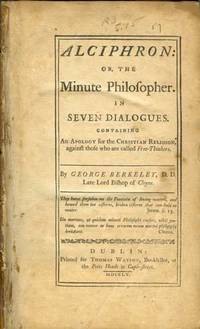
1732BTETM0001889London: J. Tonson 1732. 2nd Edition. Hardcover. Very Good/No Jacket. Octavo Standard 8vo 6 נ9 in 152 נ229 mm . Please email for Photographs or further information. Very Good - Boards rubbed and bumped; text block and binding firm and strong. A lovely copy. Collation: pp. 707 Please see Photos as part of condition report. 1732 2nd Edition With Provenance ALCIPHRON Or The Minute Philosopher in Seven Dialogues By George Berkeley Author Bio: George Berkeley 12 March 1685 14 January 1753 known as Bishop Berkeley Bishop of Cloyne of the Anglican Church of Ireland was an Anglo-Irish philosopher whose primary achievement was the advancement of a theory he called "immaterialism" later referred to as "subjective idealism" by others. This theory denies the existence of material substance and instead contends that familiar objects like tables and chairs are ideas perceived by the mind and as a result cannot exist without being perceived. Berkeley is also known for his critique of abstraction an important premise in his argument for immaterialism. Synopsis: 1732 ALICIPHRON: OR THE MINUTE PHILOSOPHER in Seven Dialogues containing an Apology for the Christian Religion against those who are called free-thinkers Two volumes - complete set 356 pp & 351 pp - Title pages with engravings various ornamental engravings at end of chapters and end of volume. Printed for J. Tonson in the strand 1732 By George Berkeley Book plate for The Right Honourable The Earl of Portsmouth in FEP Earl of Portsmouth is a title in the Peerage of Great Britain. It was created in 1743 for John Wallop 1st Viscount Lymington who had previously represented Hampshire in the House of Commons.Previous owner inscription on FEP. Format: Hardcover Octavo Standard 8vo 6 × 9 in 152 × 229 mm Note: Binding/size selection follows standard bibliographic conventions and is approximate; exact measurements may vary. Language: English Published By: J. Tonson London Condition Report: Dust Jacket: No Jacket Dust Jacket Condition: No Jacket Very Good - Boards rubbed and bumped; text block and binding firm and strong. A lovely copy. Collation: pp. 707 Please see Photos as part of condition report. SKU: BTETM0001889 Shipping Info: Approximate Package Dimensions H: 12.5 L: 30 W: 25 Units: cm W: 2Kg Tracked Shipping Insurance Coverage as per Customer Request J. Tonson hardcover
175515970Dublin: Thomas Watson 1755. Hard Cover. Fair/No Jacket. Thomas Watson1755. Leather binding. Front board missing back board partially detached 1/3 loss on spine. 370 pages 2 pages of advertisement 7 page table of contents. Pages are clean and unmarked moderately foxed throughout. Good reading/research copy. Thomas Watson hardcover
174752088à Amsterdam: Chez Pierre Mortier 1747. Fine. Chez Pierre Mortier à Amsterdam 1747 10 x 17 cm relié First edition. The French edition was expanded with additions and corrections communicated by Berkeley to Bouillier before he began his translation. Title page in red and black. Contemporary brown speckled sheep binding. Raised-band spine richly decorated roulette at foot. Red morocco title-label. Headcap torn away. Tailcap worn. Joints cracked at head and foot. 2 wormholes on spine. Small nibbling to last leaf in upper margin on less than one cm. Fairly good copy. Tar water was a medicine used since the Middle Ages composed of pine or birch tar. Its use spread in 18th-century England. Berkeley describes for the first time its use in a wide variety of cases and wonders whether it might not be the universal panacea. He extrapolates as to its efficacy from a study of mind and soul of which ether would be the divine instrument and the thing that binds beings together. Tar water would be used in various forms until the end of the 19th century. Bergson particularly appreciated the philosophical qualities of the treatise. Chez Pierre Mortier unknown
1789919P1London: C. Elliot; T. Kay; C. Elliot 1789. First edition. Leather. Very Good. 8.5" by 5.5". None. A very scarce volume of biographical pieces and edited correspondence by eminent historical figures the first edition of this work by George Monck Berkeley. The first edition of this very scarce work.The 'Literary Relics' of George Monck Berkeley an interesting selection of research and correspondence of royal figures edited and collected here into one volume.Berkeley's work contains his 'Inquiry into the Life of Dean Swift' a biographical work for which he is best known as well as an edited selection of letters from Kings Charles II and James II Elizabeth of Bohemia Jonathan Swift and more.George Monck Berkeley was a playwright an author who only published a few works before his death at the age of 29. Half-title is present.Bookplate of Edward Winnington to the front paste down. Winnington was a baronet and politician an MP Droitwich Worcestershire for almost thirty years. In a full marbled calf binding. Externally generally smart a little rubbed to the leather. Minor bumping to the extremities. A few light marks to the boards. Very small crack to the head of the front joint. Bookplate to the front paste down. Internally firmly bound. Pages are bright and clean with a few scattered spots. Very Good C. Elliot; T. Kay; C. Elliot hardcover
17161277391716. First Edition. LORD GREY OF WERK BERKELEY Henrietta. The Trial of Ford Lord Grey of Werk et al. For Unlawful Tempting and Inciting the Lady Henrietta Berkeley to Unlawful Love with an Intent to Cause Her to Live in a Scandalous Manner. London: J. Morphew 1716. Slim octavo period-style full paneled calf raised bands red morocco spine label. $2000.First edition of the verbatim transcript of this sensational 17th-century trial in which Lord Grey was charged with seducing the under-18-year-old sister of his wife ""with an intent to cause her to live in a scandalous manner with the said Lord Grey."" Handsomely bound.The prosecution of this scandalous case was ably handled by George Jeffreys; the defense was equally capable and the verbatim transcript of the proceedings vividly portrays the case's high emotional charge. ""In 1682 Lady Henrietta became a well-known figure of scandal when still a minor and under 18 following the revelation of her love affair with Ford Grey Lord Grey of Warke 1655-1701 the husband of her elder sister Mary. The intrigue seems to have begun in 1681 and continued for about 14 months before it was discovered by Lady Henrietta's mother Eventually the earl of Berkeley launched a lawsuit for unlawful seduction against Grey and his accomplices which was brought before the court of king's bench on 23 November 1682. Henrietta herself appeared at the trial but with her evidence the lord chief justice told her 'You have injured your own reputation and prostituted both your body and your honour and are not to be believed' State trials 9.176. As the court was breaking up the earl attempted to take his daughter away with him whereupon Henrietta announced that she was married to William Turner Grey's servant. A scuffle broke out in the courtroom as she refused to return home and her father tried to seize her by force The trial attracted a great deal of publicity and the story of Lady Henrietta's affair with her brother-in-law became the inspiration for Aphra Behn's Love Letters between a Nobleman and his Sister the first part of which was published in 1684"" ODNB. Bound with half title. Old ink annotations to verso of half title; small duplicate stamp to final text leaf.Only occasional faint foxing to text. Fine condition handsomely bound. hardcover
174638412London: in Paternoster-Row; and C. Davis in Holborn. Near Fine with no dust jacket. 1746. Leather. 88 pages; . .to which are subjoined letters from the author of SIRIS showing the medicinal properties of tar-water and the best manner of making it. A new edition complete." Later binding with calf leather over marbled boards. Fine binding. . in Paternoster-Row; and C. Davis, in Holborn hardcover
17461203210002London : Dublin printed London re-printed for W. Innys C. Hitch and M. Cooper in Paternoster-Row; and C. Davis in Holborn 1746. Hardcover. Very Good. Octavo. 192 pp. Modern brown leather gilt raised bands black leather spine label. Fine binding. Minor toning scattered spotting. <br><br> George Berkeley published Siris Philosophical Reflexions and inquiries concerning the virtues of tar-water and divers other subjects connected together and arising from one another. The early 1740's were a period of famine and epidemic in Ireland and there were no physicians in Berkeley's diocese. Berkeley took it upon himself to do what he could for the sick and settled upon tar-water as the best malady for the various ailments that he treated. Berkeley prepared tar-water by mixing pine tar with water allowing it to settle and then draining off the clear fluid for medicinal use. Siris which starts with a discussion of the virtues of tar-water for curing most diseases was the most popular of his books during his lifetime. It was widely read on the continent and in America and quickly went through several editions. Most of its readers however read it for its medical discussions and ignored the main subject of the book a chain of philosophical reflections that start with tar and end with the Trinity. In Siris Berkeley restated many of the tenets of the immaterialism of his youth but mixed them with even more speculative ideas drawing heavily on classical works. The end result is the most difficult of Berkeley's works to read although one with significant philosophical content. Subject; Hydrotherapy. [London] : Dublin printed, London re-printed, for W. Innys, C. Hitch, and M. Cooper, in Paternoster-Row; and C. Davis, in Holbor hardcover