DUPONT DE NEMOURS, Pierre SamuelBiblio.com
9 résultats
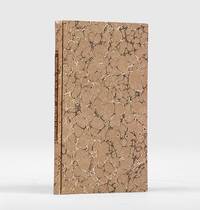
1790127703Paris: Imprimé par ordre du comité de l'imposition 1790. First edition. A supporter of constitutional monarchy Dupont represented Nemours in the National Assembly. The present work is his report on the taxation of drink. A scarce item with WorldCat listing copies in ten institutions: one in the UK five in the US three in France and one in Switzerland. Octavo 191 x 120 mm. Recent marbled boards red morocco label to spine. Numbered in contemporary hand on title page. Toned and a little foxed else a very good copy. Schelle 41t. hardcover
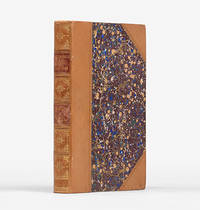
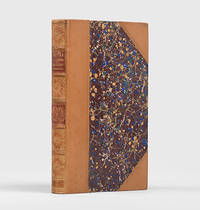
1799113128Paris: chez Goujon Fils 1799 Fructidor An VII. Third and final edition of Dupont's "treatise attempting to state a philosophy of life" Saricks first published in 1792 and addressed to his long-time friend Lavoisier. "From the dates given at the beginning of the book the Philosophie de l'univers was apparently written between December 20 1792 and June 10 1793. With the Philosophie Dupont included the Oromasis a prose-poem which according to his statement in the preface was written while he was concealed in the observatory after August 10. Although of inferior quality this little work displays the same sublime optimism which Condorcet was able to muster in somewhat similar circumstances while composing his famous essay on human progress. The basis of his 'philosophy of the universe' is that nothing is done by chance. Providential laws direct the whole universe as accords with good physiocratic doctrine" ibid. Octavo 196 x 120 mm. Engraved frontispiece portrait of the author. Late 19th or early 20th century half calf and marbled boards by George J. Swayne of Brooklyn spine decorated gilt in compartments morocco labels marbled edges and endpapers. Engraved armorial bookplate of Alexis and Elizabeth du Pont of Rencourt to front pastedown. Paper very lightly toned very occasional spotting; frontispiece a little frayed at top image unaffected; a very good copy. Einaudi 1673; Schelle 64. Not in Goldsmiths' or Kress. Sowerby Catalogue of the Library of Thomas Jefferson 1264 has the second edition sent to Jefferson in 1798 prior to Du Pont's departure for America. See Saricks Pierre Samuel Du Pont de Nemours p.221ff. hardcover
1788113111Rouen & Paris: Chez Moutard 1788. First and only edition of Dupont's defence of the free-trade treaty concluded between France and England in 1786. Du Pont had played an important role in its formation and passage. "Dupont's Lettre constitutes one of the best justifications of the Treaty of 1786 ever published. While admitting that certain interests have been temporarily damaged it insists upon the ultimate benefits which will be certain after necessary changes have been carried out in France. Had these measures been effected as the King and the Ministry desired according to the author there would have been no ill results." Saricks Pierre Samuel Dupont de Nemours p. 97. Octavo 196 x 120 mm. Late 19th or early 20th century half calf and marbled boards by George J. Swayne of Brooklyn spine decorated gilt in compartments morocco labels marbled edges and endpapers. Engraved armorial bookplate of Alexis and Elizabeth du Pont of Rencourt to front pastedown. Very occasional light spotting; an excellent copy. Einaudi 1667; Goldsmith's' 13576; Kress B1404; Mattioli 1077; Schelle 30; 411. Sowerby Catalogue of the Library of Thomas Jefferson 3617. hardcover
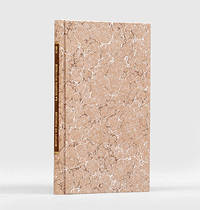
1768123576London & Paris: Desaint 1768. One of the scarcest of Dupont's works and probably one of the most successful publications promoting physiocracy First edition of undoubtedly one of the scarcest of Dupont's works and probably one of the most successful publications promoting physiocracy. Schumpeter in his discussion on the physiocrats calls Dupont "by far the ablest of the lot" p. 226 and Palgrave notes: "If Quesnay was the father of physiocracy Dupont was its godfather for he gave it its name by the publication of his Physiocratie. a collection of Quesnay's articles which the editor introduced by a Discours". Sraffa notes that it was "actually published in December 1767". Octavo 193 x 118 mm. Woodcut headpiece. Rebound in modern marbled paper boards brown morocco label lettered in gilt laid down to spine. Without the half-title and the terminal errata leaf. Contents faintly foxed light dampstain to lower edge of title leaf edges of the cancel B1 browned fore edge strengthened with Japanese tissue overall a very good copy. Goldsmiths' 10390; Higgs 4260; INED 1617; Kress 6547; Mattioli 1074; Schelle 11; Sraffa 1458. hardcover
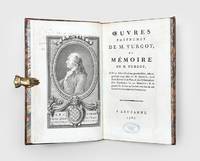
1787175389Lausanne: no publisher 1787. First edition published by Honoré Gabriel Mirabeau the son of Victor de Riquetti. The work was originally drawn up by Du Pont de Nemours in 1776 under the title Mémoire sur les municipalités after a draft left by Turgot. The Lettre which begins on page 99 was written by Du Pont de Nemours and the Observations p. 113ff. by Brissot de Warville. The work was reprinted in 1788 under the title Des administrations provinciales. Turgot was opposed to the summoning of the states-general advocated by Malesherbes possibly on the ground that the two privileged orders would have too much power in them. His own plan is found in the Mémoire which was submitted informally to the King. This copy has a manuscript note on the blank recto of the frontispiece: "Cet ouvrage n'est pas de M. Turgot. Il est de M. dupont qui a pris quelqu'unes de ses idées; je suis certaine de ce que j'avance M. Turgot n'ayant rien écrit sur ses operations." Octavo 192 x 118 mm pp. Engraved portrait frontispiece. iv 5-167 1. Contemporary mottled calf red morocco label flat spine richly tooled in gilt single blind rule border to boards flower cornerpieces marbled endpapers and edges. Ownership stamp of the Château de la Roche Guyonne to title page with their gilt coat of arms stamped in the first compartment of the spine; annotation to blank recto of frontispiece and occasional marginal marks in ink to the contents; pale mostly marginal damp mark to first few gatherings; a very good copy. Einaudi 1668; Goldsmiths' 13504; INED 1614 bis; Kress B.1203. hardcover
1768138456Yverdon: no printer 1768. Second edition of this collection of texts by Quesnay issued as volumes one and two of a six-volume collection of Physiocratic texts published in Yverdon to promote Physiocratic thought. The text is an almost identical reprint of the original Leiden edition published the year before. This copy is extensively annotated in a contemporary hand with pencil markings throughout and ink marginalia in French to over 90 pages. The annotations were made prior to binding and have been slightly trimmed in the binding process but the sense is largely recoverable. Maddeningly there is no indication of who the annotator was. 2 vols octavo 179 x 106 mm. Near-contemporary half calf and sprinkled boards flat spines ruled gilt paper labels lettered in gilt blue sprinkled edges silk bookmarkers. Spines and corners a little worn one spine label chipped. Extensively annotated throughout with marginal cross marks in pencil and notes in ink the ink marginalia trimmed when bound with loss of a couple of characters sense recoverable. Einaudi 4432; Mattioli 2810 hardcover
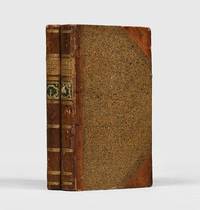
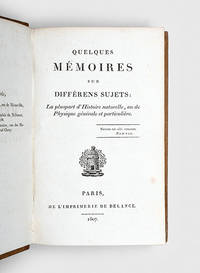
17891669331789-1808. The physiocratic economist in the Revolution First editions beginning with his major collection of 20 essays Quelques mémoires sur différens sujets followed by 13 publications most relating to his role as president of the National Constituent Assembly and his involvement in legal and economic reform during the French Revolution. Comprising: i Quelques mémoires sur différens sujets. Paris: de l'imprimerie de Delance 1807; ii Opinion sur les projets de loterie et sur l'état des revenus ordinaires de la République. Paris: De l'Imprimerie nationale 1797; iii Opinion sur la résolution relative aux canaux d'Orléans et du Loing. Paris: De l'Imprimerie nationale 1797; iv Opinion sur la résolution du premier messidor relative à l'urgence des paiemens et aux négociations à faire par la trésorerie. Paris: De l'Imprimerie nationale 1797; v De la Périodicité des assemblées nationales de leur organisation de la forme à suivre pour amener les propositions qui pourront y être faites à devenir des loix et de la sanction nécessaire pour que ces loix soient obligatoires. Paris: Chez Baudouin Imprimeur de l'Assemblée National 1789; vi Opinion sur la première résolution du 19 messidor relative aux transactions. Paris: De l'Imprimerie nationale 1797; vii Opinion sur les postes. Paris: De l'Imprimerie de Du Pont 1789; viii Opinion sur la résolution du 19 messidor relative aux fugitifs du Haut-Rhin et du Bas-Rhin. Paris: De l'Imprimerie nationale 1797; ix Rapport à la Société philanthropique au nom de sa commission des sociétés de prévoyance sur celle dite des Amis de l'Egalite autrefois Bourse des malades. Paris: no publisher stated 1805; x Extrait de la Revue philosophique littéraire et politique. Notice historique sur M. Quesnay de Saint-Germain. Paris: no publisher stated 1805; xi Le Serpent. Commentaire sur l'ancienne allégorie du Serpent et de la vie qui se trouve dans le Boun-Déhesch et dans plusieurs autres mythologies orientales. Paris: no publisher stated 1796; xii Rapport à la société philanthropique lu à l'Assemblée du 4 ventôse an 13. Paris: Everat 1805; xiii De l'Infidélité. Paris: no publisher stated 1803; xiv Irénée Bonfils. Sur la religion de ses pères et de nos pères. Paris: Chez Firmin Didot Cocheris Nepveu & Delance 1808. 14 works bound in 1 vol. octavo 190 x 115 mm. Contemporary quarter sheep spine lettered in gilt "Oeuvres de Du Pont de Nemours" brown paper-covered sides. Contemporary pencil annotations to p. 49 of first work a little cropped. Light sporadic toning: in excellent condition. unknown
1764174581Soissons: et se trouve a Paris Chez P. G. Simon 1764. An important physiocratic tract First edition of this strong argument for the physiocratic policy of free trade in grain by one of the school's most influential practitioners. Quesnay was pleased with Dupont's tract and encouraged him to dedicate it to his patron Madame de Pompadour which Dupont did although she died before its publication. The work caught the attention of Jacques Turgot then Intendant of Limousin who was drafting an edict to free the grain trade and enlisted Dupont's assistance. The success of the treatise "was due at least in part to the climate of opinion favorable to arguments for removing restrictions on the commerce of grain" Saricks p. 37 an opinion that formed the basis of Turgot's free trade reforms. This copy is from the standard issue with pp. 15-20 and 47-52 cancels; a very few copies are known with the text in manuscript. Octavo 199 x 124 mm pp. vi 2 advertisement leaf vii-viii 174 2 approbation. Large folding table following p. 46. Contemporary mottled calf brown morocco label to spine smooth spine gilt in compartments triple gilt rules to covers with floral cornerpieces marbled endpapers gilt edges. Joints and extremities restored light stain at head. A very good copy. Goldsmiths' 9977; Higgs 3158; INED 1605; Kress S.4336; Schelle 3; not in Einaudi. Ambrose Saricks Pierre Samuel Du Pont de Nemours 1965. unknown
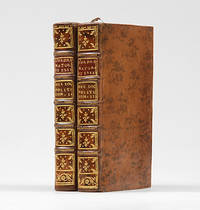
176893587London & Paris: Desaint 1768 and London: John Nourse & Desaint Paris 1767. First edition of undoubtedly one of the scarcest of Dupont's works and probably one of the most successful publications promoting physiocracy. A modern English translation only published in 2003 by Liberty Fund was prepared by Henry H. Clark who describes Dupont's work as "arguably the clearest most concise introduction to the full range of Physiocratic thinking on the nature of an enlightened interdependent exchange-based economy and its moral and political implications." The work is based on Le Mercier de la Rivière's L'ordre naturel et essentiel des sociétés politiques with which it is here bound which Adam Smith referred to as "the most distinct and best connected account of this doctrine". Schumpeter in his discussion on the physiocrats calls Dupont "by far the ablest of the lot" p. 226 and Palgrave notes; "If Quesnay was the father of physiocracy Dupont was its godfather for he gave it its name by the publication of his Physiocratie. a collection of Quesnay's articles which the editor introduced by a Discours." Two works bound in 2 vols duodecimo 163 x 92 mm. Contemporary mottled calf spines decorated gilt in compartments red morocco labels red edges. Housed in a brown cloth flat-back box by the Chelsea Bindery. De l'origine without the terminal errata leaf as called for by Sraffa. Engraved bookplate of Mr. Brossays Duperray to front pastedowns. A superb copy. Goldsmiths' 10390; Higgs 4260; INED 1617; Kress 6547; Mattioli 1074; Schelle 11; Sraffa 1458. hardcover