[Death Row] Lamson, DavidBiblio.com

343 résultats
19359397New York: Charles Scribner's Sons 1935. First edition. Hardcover in illustrated jacket signed by Lamson and dated in the year of publication on the title page. Few charts and tables in the text. Publisher's gray cloth boards lettered in black and white. Near fine copy with some rubbing to rear panel of jacket. <br /> <br /> Beautiful signed first edition of this memoir by the Stanford University executive who was convicted of the murder of his wife in 1933 and sentenced to hang. He spent time in San Quentin prison before the case was overturned by the California Supreme Court. The second trial resulted in a hung jury and after about 3 more attempts at a trial which were unsuccessful for various reasons the DA Fred Thomas ultimately gave up and Lamson went free. In all 30 of the 36 jurors which heard the case in the various trials were convinced of his guilt. The book was adapted into a film in 1937 directed by Christy Cabanne and Starring Preston Foster Ann Dvorak and John Beal. <br /> <br /> An exemplary signed copy of this prison memoir which marks one of the early "trials of the century" in California. Charles Scribner's Sons hardcover
194545972Seattle Washington: Seattle Post-Intelligencer. 1945. First Edition. Newspaper. Very Good. Seattle Post-Intelligencer; Oblong folio; 24 pages; Seattle Post-Intelligencer. Vol. CXXVIII No. 42. Entire issue three sections 24 pages. One horizontal fold as issued. This is an 81 year-old newspaper in its natural state not removed from a volume etc. The pages are very lightly toned but not brittle. A photo of the late President within a banner wreath fills the front page Apart from the simple statement of dates of birth and death: "1882 -- Franklin Delano Roosevelt -- 1945." The editors evidently decided that headlines or even extra words were superfluous. "6 AM FINAL." . Seattle Post-Intelligencer unknown
194545969Seattle Washington: Seattle Post-Intelligencer. 1945. First Edition. Newspaper. Very Good. Seattle Post-Intelligencer; Oblong folio; 16 pages; Seattle Post-Intelligencer. Vol. CXXVIII No. 61. Entire issue two sections 16 pages. One horizontal fold as issued. This is an- 81 year-old newspaper in its natural state not removed from a volume etc. The pages are toned but not brittle; a few leaves in the second section are separated but present. The Front page displays a large b/w image in half-tones depicting Adolf Hitler shaking hands with his eventual successor: Admiral Doenitz. A smaller banner headline at the top of the page reads: "Swedish Count Denies German Surrender Offer." . Seattle Post-Intelligencer unknown
191962005Paris: Chez l’imprimeur Leon Pichon 5 Rue Christine 1919. 12mo. 6.5 x 6.5 3 leaves unnumbered. title w/ woodcut borders & printer’s device 20 numbered woodcut engraved plates. Softcovers minor shelfwear w/ woodcut-decorated jacket folded over the covers minor spotting foxing on back cover very minor bumping to corners still VG copy numbered on colophon & ownership markings on ffep. First edition No. 353 of 400 copies printed of the noted engraver’s first major post-World War I work as a Dance of Death depicting Death’s passage in the blighted and stricken era and a firm protest against modern mechanized warfare. Hermann-Paul 1864-1940 rose to fame during the Belle Epoque with his cutting satiric depiction of the foibles of French Society was a noted defender of Alfred Dreyfus whom after the war departed from his previously leftist ideals of the Parisian art scene and spent much of the between-the-wars period as an outsider. Chez l’imprimeur Leon Pichon, 5, Rue Christine, paperback
194358524Pomona CA: Frashers Inc. 1943. Oblong 12mo. 3.75 x 2.5 in. 12 miniature Real Photo Postcards w/ text w/in the negative preserved in original mailing portfolio die-cut window on recto canceled stamp & address on verso minor dustsoiling shelfwear to portfolio still NF set of RPPC’s from the library of George Stein 1914-1988 stationed at Camp Haan in World War II and was a longtime driver and heavy equipment operator for the Clark County Highway Dept. son of Gran Duchy of Luxembourg immigrant farmers and later builder in Vancouver WA. This complete miniature set of Real Photo Postcards shot by the iconic California photographer includes such images as “20 Mule Team Borax Wagonsâ€; “Furnace Creek Campâ€; “Salt Pool and the Devil’s Golf Courseâ€; “Death Valley Scottyâ€; “Mushroom Rockâ€; and others. Frasher 1888-1955 opened a commercial photography studio with his wife Josephine Angel in 1912 with her shooting portraits and Frasher traveling Eastern California by automobile in the 1920’s and 1930’s on photographic expeditions. He would eventually produce over 60000 negatives and his stock-in-trade Real Photo Postcards were very popular. See: Peter Hiller Visions of the West; The Photographic Legacy of Burton Frasher Sr. Postcard History March 30 2020. Frashers, Inc., unknown
198129366New York:: Harcourt Brace Jovanovich 1981. First Printing of the First US Edition. A Very Good plus copy in a Very Good unclipped dust jacket with light edge wear to the estremities. Donald Knox tells the story of the Bataan campaign the Death March and prison camp life under the Japanese in the words of the survivors themselves. Over a period of seven years he interviewed over 200 veterans; the voices of sixty-eight were selected to provide the personal side of the horrors and heroism experienced in these events. The interviewees all American are mostly enlisted men; however a few officers and nurses also tell their story. Harcourt Brace Jovanovich, unknown
19869948Canberra: National Gallery of Australia 1986. Four accordion fold leaves 13x13cm folded printed on one side only in blue 6 panels each with UV and XY appearing together to make 24 panels in total. Housed in blue printed box. Fine condition box with some wear. <br /> <br /> Eirene Mort's 1879-1977 charming Australian Alphabet printed by the National Gallery which purchased the designs from the artist's estate in 1984. The designs were drawn in London in 1902 when Mort was 23 and were intended to be produced as a book though it was never published. <br /> <br /> OCLC cites just the Australian Alphabet book publication from 1986 with introduction by John McPhee. Perhaps this frieze was published alongside or at a later date by the gallery. In any event we find not mention of it. National Gallery of Australia unknown
19672110502150413265Volume 12 No. 8 Shinchosha 1967. Soft Cover. Fine. Volume: 1 Volume 12, No. 8, Shinchosha paperback
1996209290213760206725th anniversary of Professor Yamauchi's death 1996. Soft Cover. Fine. Number of pages: 282p version 119p size: B5 26cm number of books: 1 25th anniversary of Professor Yamauchi's death paperback
19672111902156001677Ethnological Society of Japan 1967. Soft Cover. Fine. The book is in fine condition. Ethnological Society of Japan paperback
19322110502150400734Dainippon Martyrdom Association Headquarters 1932. Soft Cover. Fine. Volume: 1 Dainippon Martyrdom Association Headquarters paperback
19692110502150414063Naniwashobo 1969. Soft Cover. Fine. Volume: 1 Naniwashobo paperback
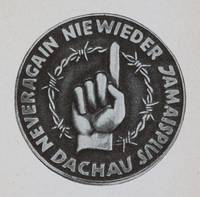
195050266Munich: Philipp Rauscher 1950. First edition. Softcover. Good condition. Sextodecimo. 59 1 1 folding plan. Original tan illustrated wraps with black lettering and double frame on cover. Guide through the memorial sites of the former Concentration Camp Dachau. Pictorial and written reports on the suffering and death of uncounted prisoners from countries around the world. "The booklet was written without any thought of hatred or revenge; it shall give the visitors of the Dachau memorial sites information on everything that has happened here without any exaggeration but also without any extenuating phrases. The attached plans will give detailed orientation on the memorial sites at the Crematory on "Leitenberg" and "Waldfriedhof" in Dachau." Introduction. Profusely illustrated with b/w reproduction of photographs artistic renderings and tables conveying overwhelmingly the horror and suffering that took place in the concentration camp. Includes photographs of the postwar tribunal the memorial sites and plaques and a folding map of the Crematory and the surrounding area at the camp. All images with captions. Text in English and French. Booklet age-toned and back cover with mostly closed tear small chips half way down the spine repaired with japan tissue. Philipp Rauscher unknown
191874831New York City: G. B. Perazzo 1918. Billhead invoice dated April 1 1918. 8 1.2 x 14 inches. The billhead has a photograph illustration of the undertaker G. B. Perazzo who was located on Bleecker Street. Filled in in manuscript. One short tear to top and expected fold lines. Very good.An itemized invoice for the burial of Vincenzo Petello. His family James opted for the Lavender Casket for a whopping 70 dollars. The 7 coaches used to convey the mourners to the grave was only 49 dollars."During the heaviest years of Italian immigration to the South Village businesses in the neighborhood were typically operated by and mostly catered to local Italian clientele. The Porto Rico Importing Company established in 1907 by the Longo family has had several South Village homes over its more than 100 year history including 194 Bleecker Street and its present location at 201 Bleecker Street. The funeral business begun by Giovanni Bautista Perazzo in the building he constructed at 199 sic Bleecker Street in 1924-25 sic also endures today. Many Italian businesses employed their own family members particularly in smaller-scale operations like food-related businesses such as butcheries and bakeries where specific skills were passed down through generations" South Village Historic District Designation Report 2013. G. B. Perazzo unknown
192574084New York: Pacific Coast Borax Co. ca. 1925. First edition. Small twelvemo. The title page reads "Concerning Borax Bill and the Famous 20 Mule Borax Team from Death Valley California." 116 pp. including frontispiece of Borax bill. Charmingly illustrated through and with a half-tone of the mule team across two pages. Publisher's brown printed wrappers with highlights in red. Excellent condition. he wagons were among the largest ever pulled by draft animals designed to carry 10 short tons 9 metric tons of borax ore at a time. The rear wheels measured seven feet high with tires made of one-inch-thick iron. The wagon beds measured 16 feet long and were 6 feet deep and were constructed of solid oak. They weighed 7800 pounds empty; when loaded with ore the total weight of the mule train was 73200 pounds. Long after the transportation of the borax was mechanized the company sent. out these 20 mule teams as a sort of advertisement. Promotional team appearances ended with an outing in the January 1 1999 Rose Parade. They have become perhaps the leading symbol of Death Valley. Pacific Coast Borax Co. unknown
190676852Tonopah: N.p. 1906-06. Two legal Agreements and other ephemera detailing the proposed sale of the Keane Wonder Mine in Death Valley owned by John Keane and Domingo Etcherran to E. H. Wedekind for $150000 in 1905. The 1905 Agreement is 6 pp. printed on rectoss only and details a payment plan fofr Wedekind It is signed by John Keane and Domingo Etcherran and their attorney Thomas Keane attorney signed for all parties as it is likely that John Keane and Domingo Etcherann were Illiterate. The seond official Agreement is only two pages long and it is attorney-signed for the J. Keaned and D. Etcheran and this one was signed by E. H. Wedekind. It just seems to add a proviso that the two men couldd continue theri mining until January 20th of 1906. The original Agreement was never signed by Wedekind and obviously fell through. Homer Wilson and John Campbell were the final purchasers again in 1906 of the twenty claims that comprised theKeane Wonder Mine. Keane Wonder Mine. Agreement 1905. E. H. Wedekind to purchase the Keane Wonder Mine from John Keane and Domingo Etcherran for $150000 with $10000 down. The 1905 contract was drawn up in Tonopah NV and it is not signed by by E. H. Wedekin Five yellow legal pages unsigned with pencil notes concerning deferred payments stock payments payment timing an option memo to John Keane and bond information. Similar terms had been offered to Captain J. R. Delamar in 1904; he was given one year to pay but failed to do so whereupon the mine reverted to Keane and Etcharran and Wedekind was sought as a new purchaser. Wedekind was a prominent California mining engineer incorporator of the Falls City Belt Line Railroad fiscal agent for the Elgin Quicksilver Mines until finally striking it rich in Ryholite. The yellow legal pages bear a “Sunset†watermark listed in the 1910 directory as belonging to H. S. Crocker of San Francisco. 2011-114 N.p. unknown
190976832Death Valley: N.p. 1909. Twenty-seven noncommercial stereoviews 7 x 3 1/2 inches. The photographs are very sharp and mounted onto plain gray mounts. Overall excellent condition.We can find no other history of a stereoscopic documentation of a gold prospecting expedition in Death Valley nor anywhere else in California for that matter. Almost all of the cards are dated and they bear the same date of January 1909 which leads one to think that they packed it up after a month. The ostensible first view is the exception; it is dated Dec. 1908 and shows a couple of the party standing next to two of Smith's huge borax wagons in Ludlow California. Ludlow was the southern railhead for the Tonopah and Tidewater Railroad operated by the Pacific Coast Borax Company and bringing borax and other mining products from Death Valley and Beatty Nevada to long distance Santa Fe Railway lines. The mere fact that one of the exploring party carried a stereoscopic camera is in itself remarkable as a decent such camera is 1909 cost between $50 and $75 dollars or between $2000 and $2500 in today's dollars. Death Valley prospector's were not known for their wealth and a burro was their usual big ticket item.The majority of the cards have annotations on the verso. From those we learn some of the party's names "Emmit" "Dickie"etc. but no last names and the names of the places in the Valley where they prospected. Their main site seems to have been Gold Basin in the Funeral Mountains of the eastern part of Death Valley. There is no record of a Gold Basin in the literature of Death Valley. Place names in Death Valley were still fluid at this point and the name was likely made up at the time. Probably it become what is now called Golden Canyon. We do know that they were solely active in the Funeral Mountains and this was likely due to the fact that the most successful strikes in Death Valley were also in the Funeral Mountains. The famous Keane Wonder Mine was still very active in January of 1909 and some $600000 in gold and silver were mined before it began to fizzle in 1911. Some of the other places named and shown in the stereos are South Mountain. Gold Mountain Rhode's Wash Scott's Canyon and Scott's Cave Death Valley Narrows Saddle Horseshoe Ridge and others. Again none of the names given by this party survived. Member's of the prospecting party are shown in 16 of the views and it seems to have consisted of six members. One interesting view is captioned "Prospector's Camp and Forge Bill Keys of Death Valley." At age 15 Keys left home to work as a ranch hand smelter worker and miner honing skills that would define his later years. His early adventures took him to Arizona where he served as a deputy sheriff in Mohave County and to Death Valley where he befriended the colorful prospector Walter “Death Valley Scotty†Scott. The year after this photo was taken Keys took a job as custodian and assayer at the Desert Queen Mine in what is now Joshua Tree National Park. He soon took ownership of the land and it became the famous Desert Queen Ranch.Why these views were taken remains something of a mystery. It is more than likely especially when keeping in mind the outrageous cost of a stereoscopic camera in 1909 they they were to be used as an advertising ploy to lure investors into investing in mining Death Valley. The two most famous and best producing gold mines in the history of Death Valley Skidoo and the Keane Wonder Mine were both at their height in 1909 and western Nevada with its mining booms in places like Goldfield Tonopah Rhyolite Bullfrog etc. was also in full-swing. We can be thankful that the anonymous photographer was very skilled; the images are very sharp and he often conveyed the desolation and grandeur in a way not seen before. In recent times taking a trip to Death Valley is considered just another fun road trip but in 1909 is was a perilous endeavor not to be undertaken lightly. N.p. unknown
19882090502113709042Not Available 1988. Soft Cover. Fine. The book is in fine condition. Not Available paperback