PLATOBiblio.com

17 résultats
180024713Oxonii: Typographeo Clarendoniano 1800. 8vo pp. vii 1 437 2; late 19th century half calf over marbled boards; rubbed but good and sound. Typographeo Clarendoniano unknown
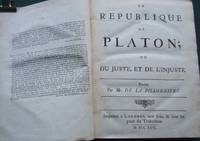
1726010378Imprimé à Londres aux frais & sous les yeux du traducteur. 1726. Book measures 26x20.5.cm. Collation 1xx319pp with an initial leaf of quotation from Cicero. Bound in full period calf with raised bands. Binding worn both boards detached. Internally text block solid pages very clean. Ideal copy for rebinding. . Calf. Quarto. Imprimé à Londres, aux frais, & sous les yeux du traducteur. Paperback
1769387100Amsterdam : chez Marc-Michel Rey 1769. 1st edition in this form. Hardcover. Very good copies in quarter aniline calf leather over marbled boards. Spine bands and panel edges slighty rubbed and dulled as with age. Remain particularly well-preserved overall; tight bright clean and strong. Physical description; 17 cm. Notes; Contains tr. of Plato's Laws. The first of two volumes. Subjects; Printed monograph. Philosophy. Plato. Amsterdam : chez Marc-Michel Rey hardcover
176693395London: Printed for J. Dodsley in Pallmall 1766. Hardcover. Minor edge-wear and toning; else overall a very good if incomplete set. Tight and clean. Please refer to photos. Two 12mo's in full brown leather; marbled endpapers; 228p 275p 20 cm. Volumes 2 & 3 only. In English. Volumes 2 & 3 only of three. Lacks Volume 1 which contains Pindar's Odes. Contents: Vol. II: The Triumphs of the Gout / Translated From the Greek of Lucian; Translations From the Argonauticks of Apollonius Rhodius; the Hymn of Cleanthes; on the Abuse of Travelling: A Canto in Imitation of Spenser; the Institution of the Order of the Garter: A Dramatic Poem; Education: A Poem / Written in Imitation … of Spenser’s Fairy Queen; Father Francis’s Prayer; Menexenus: A Dialogue of Plato – Vol. III. A Dissertation on the Olympick Games. // Ancient Poetry; Ancietn Greek Classic Lyric Poetry; Sport. Olympic games Ancient -- Early works to 1800. Jeux olympiques de l'Antiquité -- Ouvrages avant 1800. Olympic games. Printed for J. Dodsley in Pallmall hardcover
17712772OXONII OXFORD: E Typographeo Clarendorniano Impensis J.& J. Pletcher Bibliopolarum. 1771. 4º .- Plena piel de época lomera con nervios dorados.- XIV de Prefacio y con inclusión de Portada con grabado central y Dedicatoria.- 157 páginas.- 32 páginas.- 80 hojas ÃÂndice. Bella producción tipográfica de la escuela griega de Oxford con el estudio de Guillermo Etwall. Texto Griego y Latino. Contiene la vida de Platón Alcibidades y Hipparchus. La última paginación romana del texto pertenece a las notas y la no paginada a unos extensos ÃÂndices. Brunet Vol. IV col. 699 - Graesse Vol. V pg. 316 E Typographeo Clarendorniano, Impensis J.& J. Pletcher Bibliopolarum. unknown
1772036646London: J. Rivington & Others 1772. Third Edition. . Full-Leather. Fair-Good. Nice tight text block and binding. Moderate edge and corner wear. Several corners worn through. Front and back fly leaves extracted. Texts have a few pencil notations/marks. Professional book dealer with storefront since 1999. All orders are processed promptly and carefully packaged. <br/> <br/> J. Rivington & Others hardcover
17494444593<p>Fourth Edition corrected 336 344pp 17cm by 11cm frontis portrait Vol. I as a young man Vol. II as an old man appear to be original boards full leather gilt decorated compartments exterior general wear except for a few smudge marks unmarked by next ngs tight and square.</p> Printed for R. Ware, P. Knapton, S. Birt, T. Longman, C. Hitch et al. hardcover
17702305606Amsterdam: Marc-Michel Rey 1770. Hard Cover. Very Good/No Jacket. Rebound: cloth spine and corners marbled boards new end sheets. Ink name and stamp on title page of each volume. 1770 Hard Cover. viii 424; vi 442 pp. 12mo. French translations of eight of Plato's Dialogues: Theaetetus; Protagoras; Hippias I; Hippias II; Gorgias; Ion; Philebus; and Meno. Translated from the Greek by Abbe Jean Nicolas Grou 1731-1803 who already had translated Plato's Laws and the Republic. Grou a Jesuit fled to Holland when his order was suppressed in France and it was there that these Dialogues were published. Later he returned to Paris and adopted the alias Leclaire remaining there until the Revolution drove him into a second exile in England. As well as Platonic translations Grou published theological works of a popular nature including The Spiritual Life: A Comprehensive Manual for Catholics Seeking Salvation. Marc-Michel Rey hardcover
17692305607Amsterdam / A Philadelphie. Se vend a Paris: Marc-Michel Rey / Chez Ruault Libraire 1769. First Edition. Full-Leather. Very Good/No Jacket. 1769 first French edition of Plato's The Laws bound together with a 1778 third edition of Benjamin Franklin's La Science du Bonhomme Richard The Way to Wealth. Some pencil marginalia in 'Richard' edges a bit rubbed with minor loss from corners tiny piece of volume II spine label missing. viii 8 398 2 151 5; 502 pp. 12mo. Contemporary full leather morocco spine labels gilt titles and triple rules marbled edges and endpapers. French translation of The Laws a series of twelve Platonic dialogues written towards the end of his life. Grou a Jesuit fled to Holland when his order was suppressed in France and it was there that these Dialogues were published. Later he returned to Paris and adopted the alias Leclaire remaining there until the Revolution drove him into a second exile in England. As well as Platonic translations Grou published theological works of a popular nature including The Spiritual Life: A Comprehensive Manual for Catholics Seeking Salvation. The publisher includes a dedication to the then-living philosopher Jean-Jacques Rousseau. This set also includes a 1778 edition of La Science de Bonhomme Richard Sabin 78111 which is a French version of Benjamin Franklin's The Way to Wealth. This work includes the sayings of Poor Richard as well as the interrogation of Benjamin Franklin relating to the Stamp Act Pennsylvania's new constitution and the interrogation of William Penn by parliament. Franklin spent a good deal of time in France and was well-liked there. The Way to Wealth was his most popular work and though it first appeared in England in 1757 it was the French translation originally published in 1777 that first included his commentary on British taxation of the American colonies. Herein he presages the colonists' discontent with being taxed and ordered about by a foreign power. Marc-Michel Rey / Chez Ruault, Libraire hardcover
1759170351759. Plato. The Greater Hippias 1759 English translation presenting a key Socratic dialogue on the nature of beauty within the context of Enlightenment era engagement with classical philosophy. The work stages an exchange between Socrates and Hippias in which attempts to define beauty are systematically examined and rejected illustrating the Socratic method of testing and dismantling accepted ideas. This edition contributes to the study of eighteenth century philosophical translation the transmission of Greek thought into English intellectual culture and early modern interpretations of aesthetics and moral philosophy.<br /> <br /> Plato. The Greater Hippias: A Dialogue of Plato Concerning the Beautifull. London: H. Woodfall 1759. First edition in English translated by Floyer Sydenham. Quarto volume presenting the dialogue in which Socrates and Hippias attempt to establish a definition of beauty but arrive instead at the limits of such inquiry. The text employs an anatreptic structure advancing philosophical critique through the refutation of inadequate definitions rather than through a final resolution. Sydenham's translation reflects eighteenth century efforts to render Platonic philosophy accessible to English readers and his work was later praised for its "just criticism and extensive learning an elegant taste and a genius naturally philosophic."<br /> <br /> Published during a period of renewed classical scholarship in Britain this edition aligns with broader Enlightenment interest in Greek philosophy as a foundation for discussions of ethics aesthetics and knowledge. The dialogue's exploration of beauty as a concept "good in and of itself" situates it within early philosophical treatments of intrinsic value while its conversational form influenced later literary and philosophical writing. Light rippling to leaves with minor foxing; overall very good. A well preserved example of eighteenth century Platonic translation and philosophical inquiry. unknown
17463784Oxford 1746. Hardcover. Very Good. 8vo - over 7¾" - 9¾" tall. An introduction by Edward Bentham. A rare copy of the orations in Greek Latin and English. Bound in contemporary tan hide with gilt lines and raised bands to spine with gilt decoration. Title label is missing. Edges are bumped especially to top spine. Internally the pages are clean apart from slight staining on frontispiece and following page and small loss to the bottom of the frontispiece and the binding is good. Slight rippling commensurate to age. Occasional pencilled annotations. Small insect holes at rear on base of final pages 1746 hardcover
1769B3220Amsterdam: Marc-Michel Rey c. 1769. Occasional minor browning otherwise a very good copy bound in decorative French 18th century full mottled calf. Edition: First French edition of this work. Binding: Contemporary full mottled calf spine in six compartments of raised gilt-tooled bands with floral motifs and red morocco labels on two and three edges and endpapers marbled. Notes: The book is noteworthy for its dedication to contemporary writer and philosopher Jean-Jacques Rousseau written by the publisher which praises his modesty and humility in public affairs and compares him with Socrates. This is the first time a French translation of Plato’s “The Laws†was published and it was translated by Jean-Nicolas Grou a French Jesuit priest who occupied himself with the French translation of Plato’s works. Size: 12mo Illustration: With two engraved titles beautifully engraved vignettes on final pages of both volumes and decorative bookplates of Isaac C. Edrehi. Volume: Two volumes. References: Brunet IV:701. Pages: P. Volume 1. title preface iii-viii dedication to Rousseau 1-5 advertisement 2 1-398 advertisement 2; Volume 2. title 1-502 advertisement. Category: Book Philosophy; Marc-Michel Rey unknown
17422091202133201331Giuseppe Bettinelli 1742. Soft Cover. Fine. Number of books: 3 books in total Giuseppe Bettinelli paperback
1781000699<p><strong>A significant landmark in classical philology particularly for the study of Plato's works. </strong></p><p><strong>Description:</strong> 12 vols. contemp. half calf over buff paper boards. Spine divided into 7 compartments by horizontal rolls with contrasting green and red morocco labels lettered in gilt. Octavo: 20 × 13 cm; pp. vol.1: 18 xcix 1 267; vol.2: 18 368; vol.3: 6 vii 370; vol.4: 4 vii 1 390; vol.5: 8 viii 359; vol.6: 2 iv 380; vol.7: 2 424; vol.8: 2 vi 442; vol.9: 2 vi 437; vol.10: 2 viii 390; vol.11: 2 xii 483 1; vol.12: 382. With 11 engraved portraits on title pages. Text in Greek and Latin. </p><p><strong>Ref.:</strong> Brunet iv/695; Graesse v/314 </p><p><strong>Condition:</strong> Bindings with some rubbing to extremities slightly soiled and slight wear to the spine vol. 12 well rubbed with some loss. Hinges are sound. Endpapers browned at corners and sporadically soiled. Internally in generally very good condition. Vol. 12 in poorer condition due to water damage to upper right corner: soiling and wormholes mainly affect the outer margin of the first half of the book.</p><p><strong>Notes:</strong> Marsilio Ficino 1433–1499 produced the first complete Latin translation of Plato's works in the 15th century completed around 1468–1484. His translation was commissioned by Cosimo de' Medici and became the standard for Western scholarship until the 19th century. Ficino translated all of Plato's dialogues available at the time including works like <em>The Republic Symposium Phaedo</em> and <em>Timaeus</em> as well as spurious or dubious texts e.g. <em>Epinomis</em>. His translation covered the entire Platonic corpus as understood in the Renaissance which was based on Byzantine manuscripts. The Biponti edition is distinguished by its juxtaposition of Ficino's elegant Latin translation with the Greek text edition from 1758 by Henri Estienne also known as Henricus Stephanus 1531–1598. Estienne's three-volume edition <em>Platonis Opera Quae Extant Omnia</em> published in Geneva in 1758 was considered the most authoritative edition of Plato's works until the early nineteenth century. The page numbering system used in this edition known as 'Stephanus pagination' is still used today when citing Plato's works. For classical philologists this edition remains a vital resource for studying Plato's Greek text its transmission and its reception in Western intellectual history.</p> Ex Typographia Societatis hardcover
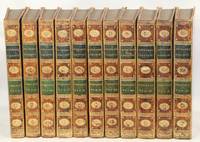
1787000012234Zweibrücken / Biponti: Ex Typographia Societatis Studiis Societatis Bipontinae Deux Ponts Press 1787. Later edition. Hardcover. Very Good or better. 11 vol. 6 iii-c 2 3-267 15; 2 3-368 14 2 pages of publisher's advertisements; 4 3-370 4 i-vii 5; 4 3-390 vii 3 i-vi; 8 i-viii 2 3-359 3; 2 1-380 2; 3 2-424 2; 3 ii-vi 2 1-442 2; 2 1-437 6; 4 3-390 2 i-viii 2; 2 i-xii 2 3-483 1 pp. Contemporary tree calf with the spines in six compartments each spine with a green and a black morocco label lettered in gold gold tooling and decorations on the spines; all edges sprinkled. Each volume's title page with an in-text woodcut of a bust of various ancient persons: Plato Aristippus Diogenes Pericles Alcibiades among others. Text in ancient Greek with the notes and commentary in Latin. With Henry Stephanus' commentary and editing. Also with notes and analysis by Marsilius Ficinius with additional various notes. Brunet 761. Dibdin 299. Moss 426-427. This set was published in twelve volumes. The twelfth volume was published in 1788 and contains only a summary of Plato's philosophy in Latin and an essay by M. Thiedman. It would appear that this final volume is rare: as of 11/23/2022 this cataloger could not locate the twelfth volume of this set in OCLC or in active commerce. All of Plato's philosophy which was published in this set is present in the first eleven volumes. Plato remains a foundational figure in Western philosophy with his dialogues touching on metaphysics love justice civic duty and countless other ancient themes and motifs which remain relevant today. Plato is the reason we are able to construct a picture of Socrates' life: his work provides a good deal of historical information on the Golden Age of Athens. This is a very attractive set of Plato's works edited by two seminal classical scholars. Minor wear to the extremities: overall the bindings are quite sharp except for the front joint of volume nine which is starting. Each volume's front pastedown has an armorial bookplate and an early nineteenth-century name. Volumes six nine and ten each have a small unobtrusive dampspot to a part of their textblocks. Ex Typographia Societatis [Studiis Societatis Bipontinae] [Deux Ponts Press] hardcover
1767140464London: W. Sandby 1767-1779. First edition set contains all eleven parts although without all the individual dated titles. Part one is signed on the dedication page by the translator Floyer Sydenham as usual and includes a sheet laid in with manuscript instructions to the binder. Quarto three volumes bound in contemporary full calf armorial bookplate. Dated title pages in volumes one and two each of eleven parts with undated flytitle and dedication leaf Lesser Hippias and Dissertation both with additional dated part title ad leaves at beginning of volume one and after The Banquet as well "proposal" leaf errata slip in volume three a few poorly inked lines written over nearly in manuscript. Folding diagram in Philebilus engraved plate in Meno. Rare first editions of this important work are scarce. "That Plato should be the first of all the ancient philosophers to be translated and broadcast by the printing press was inevitable. Plato’s central conception of a universe of ideas Perfect Types of which material objects are imperfect forms and his ethical code based on action according to human nature developed by education which represents the authority of the State fitted in as well with the philosophical religious and political thought of western Europe in the 15th century striving to free itself from the shackles of scholasticism as it did with those of the Byzantine Greeks by whom Plato was repopularized in the western world The dialogues are pervaded by two dominant impulses: a love of truth and a passion for human improvement" PMM 27. W. Sandby unknown
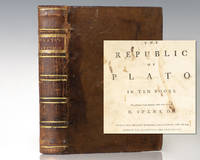
1763138322Glasgow: Printed by Robert and Andrew Foulis 1763. First edition in English of Plato's Republic marking the first appearance in the English language of Plato's profoundly influential dialogue concerning the nature of justice. Quarto bound in full polished calf with raised gilt bands to the spine morocco spine label lettered in gilt all edges speckled red. Harry Spens was a minister at the parish of Wemyss in Fife and respected classicist. In his introduction he professes his intent in his translation is: "To give the English Reader a view of Plato's sentiments and manner of writing and to stir up the youth to the study of the Ancients." Richard Garnett in his own introduction of the Everyman's Library reprint of this translation laments the relative lack of critical attention paid to it writing: "On the whole Spens's version should not be lightly esteemed. It is clearly the work of a scholar and a man of considerable literary ability." The brothers Robert and Andrew Foulis were renowned printers of classical works in their time sometimes referred to as 'the Elzevirs of Britain.' Their works mostly intended for scholars were "much sought after as admirable specimens of typography and are noticeable for their severely plain elegance" DNB 7: 514. In very good condition. Rare and desirable. "Its setting and its characters are full of political meaning. Its arguments are tantalizing and its fables fascinating… Plato's utopia is alarming and his metaphysics are intoxicating" Levi 348. The Republic "has reinforced dedication awakened vocations to leadership and strengthened the morale of those modest and competent souls who are always in reality the guardians of society" Rexroth 79. Printed by Robert and Andrew Foulis unknown