Helvetius, Claude AdrienBiblio.com

45 résultats
178438284Aux Deux Ponts: Sanson & Compagnie. Very Good with no dust jacket. 1784. Leather. ". .la marche progressive de la civilisation et les besoins actuels de la France ; seconde edition revue corrigee et considérablement augmentee. " bound in full tree leather lined in gilt. With armorial bookplates of George Philips with the names J K and B J Brown- Annapolis 1926. Vol I with front cover hinge cracked. 271 397 273. This date not listed in WorldCat. How the faculties develop. . Sanson & Compagnie hardcover
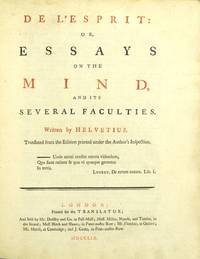
175922826London: printed for the translator and sold by Mr. Dodsley 1759. First edition in English 4to pp. xvi 331; title-p. in red and black; recent full black goatskin gilt ruled border gilt paneled spine red morocco label. About fine. Interesting text and the author's most famous book probing psychology ethics the moralities of social interaction the rewards and virtues of human understanding memory mortality. Kress 5783. printed for the translator and sold by Mr. Dodsley unknown
175969044London: Printed for the Translator 1759. Full Description:<br> <br> HELVETIUS Claude Adrian. De L'Espirit: or Essays on the Mind and Its Several Faculties. Translated from the edition printed under the author's inspection. London: Printed for the Translator 1759.<br> <br> First edition in English published one year after the first edition in France. Quarto<br> <br> 10 7/8 x 8 1/2 inches; 275 x 215 mm. xvi 331 1 blank pp. with the title page printed in red and black.<br> <br> Full later crushed morocco. Red morocco spine label lettered in gilt. Top edge deckled fore-edge and bottom edge uncut. Newer endpapers. Title-page with a small tear to upper blank margin presumably from erasing a previous owner's old signature which there are traces of. Leaf B4 with small tear to top blank margin and a small hole in text only affecting one letter. Leaf X2 with a closed tear with no loss and a large marginal stain. Pages 273-296 with a marginal dampstain not touching text. A few leaves with minor stains and spots. Still A very good copy with wide margins and virtually no foxing.<br> <br> "The main position of Helvetius may be summed up as follows: man is a purely sentient animal only differing from other animals by a higher degree of physical sentiency. Human passions are nothing else but the various modes of manifestation of this physical sentiency which is the only motor of human actions; pleasure or pain are their unavoidable results: to pursue the former and avoid the latter is to conform to the only natural law. Helvetius is thus in some respects a forerunner of modern utilitaranism and hedonism" Palgrave Vol. II p. 299.<br> <br> Higgs 2090. Kress 5783.<br> <br> HBS 69044.<br> <br> $1000. Printed for the Translator unknown
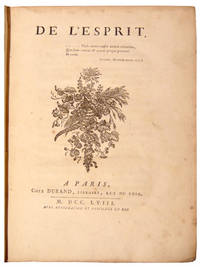
175852026Paris Durand 1758. Large 4to. Large-paper copy bound in a beautiful contemporary full calf binding with five raised bands to richly gilt spine. Triple gilt line-borders to boards all edges of boards gilt and inner gilt dentelles. All edges gilt. A stunning bright clean and fresh copy with minimal wear and no restorations of any kind. Presentation-inscriptions to front free end-paper and to verso of title-page see description in note below. Large woodcut title-vignette and many smaller vignettes throughout. 4 XXII 643 1 pp. 40 ff. i.e. the original uncorrected leaves: pp. 1-16; 35-38; 59-62; 67-70; 75-78; 139-142; 145-154; 169-176; 187-190; 233-34; 227-230; 459-462; 547-550; 603-606 2 extra leaves that were printed incorrectly namely p. 160 - reset & p. 239 - different vignette. <br/><br/><em>Extremely rare first edition first issue with manuscript dedication-inscription from the author of this monumental work of the French Enlightenment. This magnum opus of modern thought is considered the founding work of modern Utilitarianism as it is here that Helvétius articulates the greatest happiness principle "the greatest happiness for the greatest number" for the first time and becomes the first to define social welfare upon this utilitarian maxim directly influencing Bentham and Mill.The materialistic philosophy of Helvétius' "De l'Esprit" also directly influenced Karl Marx who had studied the work while in Paris and called the ideas presented in it "the social basis of communism"."De l'Esprit" arguably constitutes the greatest "succès de scandale" of Western thought and one of the most influential works of Western philosophy.This magnificent copy is stunning in all ways. It contains all the extremely rare condemned and repressed leaves of the first issue bound in the back it is printed on large paper contemporarily bound presumably under instruction by Helvétius himself in a stunning full calf gift binding and with two manuscript ex-dono- presentation- inscriptions by Helvétius himself. One of them on the verso of the title-page is crossed out but is still legible reading "donum auctoris 17 avril 1760 Cl. Helvetius" the second on the front free end-paper reads "ex dono auctoris 1761" - thus indicating that Helvétius who had the copy in his possession to give away when he felt it appropriate had first intended to give it away - perhaps late in the year - in 1760 and then ended up giving it away in 1761. The work lost its privilege almost immediately and even though Hélvetius wrote three retractions it was still condemned and publicly burnt. In spite of this Helvétius still kept a few copies of the very first issue with all the original leaves. According to Smith 15 copies existed and as Jacques Guérin also notes these copies were all intended for his close friends and family we know for instance that Rousseau received one of the copies. These copies of which the present is one are thus of the utmost scarcity. Only one other has been on the market within the last 25 years namely that of Jacques Guérin which however did not have a dedication-inscription from Helvétius.As Tchermerzine describes the extremely rare copies of the first issue which are either without the newly formulated leaves or with the original leaves preserved our copy has them all! are between 10 and 60 times as valuable as the later issues depending on condition - these between 4 and 15 copies are the only ones to contain the 80 revolutionary pages that caused the work to be condemned and burnt and sent Helvétius into exile. Tchermerzine does not however account for copies with a presentation-inscription like the present. The work caused an immense uproar when it appeared. It was considered so heretical atheistic and immoral that it lost its privilege within a fortnight; it was heavily condemned by the Church and the State and was burnt by the Hangman the plan being to destroy all copies of it. Few books in the entire history of printing have been met with such opposition - it was condemned by both the son of Louis XV and the Sorbonne and the priests succeeded in convincing the court that the doctrines were so dangerous that even though Helvetius wrote three retractions the book was still publically burned; and when the Encyclopédie of Diderot and d'Alembert was suppressed for the second time this had much to do with Helvétius' De l'Esprit and the scandal it had caused.This scandalous work however gained so much attention that it was almost immediately translated into all European languages contributing to the immense influence it came to have on all European thought. "The history of Helvetius's De l'esprit 1758 his first major work is eventful complicated and paradoxical. No book during the eighteenth century except perhaps Rousseau's Emile evoked such an outcry from the religious and civil authorities or such universal public interest. Condemned as atheistic materialistic sacrilegious immoral and subversive it enjoyed a remarkable succes de scandale. The work lost its privilege within a fortnight of its publication. It was attacked in Church periodicals and in polemical pamphlets in the literary salons and in popular songs from bishops' pulpits and from the stage of the Théâtre francais. Though Helvetius retracted his book three times he was condemned by the Archbishop of Paris Nov. 1758 the Pope Jan. 1759 the Parlement of Paris Feb. 1759 the Sorbonne Apr. 1759 and by various bishops." Smith p. 332."In "De l'ésprit" 1758 Helvétius follows the Lockean sensationalism of Condillac and pairs it with the claim that human beings are motivated in their actions only by the natural desire to maximize their own pleasure and minimize their pain. "De l'ésprit" though widely read gives rise to strong negative reactions in the time both by political and religious authorities the Sorbonne the Pope and the Parlement of Paris all condemn the book and by prominent fellow philosophes in great part because Helvétius's psychology seems to critics to render moral imperatives and values without basis despite his best attempts to derive them. Helvétius attempts to ground the moral equality of all human beings by portraying all human beings whatever their standing in the social hierarchy whatever their special talents and gifts as equally products of the nature we share plus the variable influences of education and social environment." SEP.D. W. Smith The Publication of Helvetius's De l'esprit in French Studies 1968 p. 105.Tschermerzine III:672. </em> hardcover
175938286A La Haye: Chez Pierre Moetjens. Good with no dust jacket. 1759. Leather. Bound in full morocco leather. Three red and black title pages. Front cover attached by binding cords. Inside front cover scraped by removal of bookplate. An ideological work with heretical and subversive opinions. Possibly a pirate edition. . Chez Pierre Moetjens hardcover
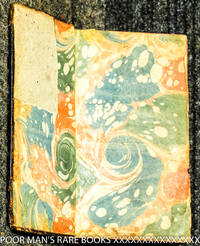
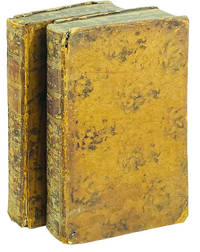
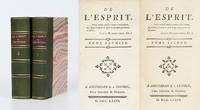
177425060Amsterdam: Arkstee et Merkus 1774. Very Good. Amsterdam: Arkstée & Merkus 1774. Two volumes; 12mo; contemporary cats paw calf gilt spines marbled endpapers all edges marbled blue; 2viii384; 4392pp. collated complete including half titles; decorative head- and tail-pieces. Leather rather scuffed joints starting to crack but holding coin-sized loss to top fore-edge corner of first eight leaves of Vol. II not quite touching text else a Good to Very Good internally clean and fresh set. Arkstee et Merkus unknown
177629193AB1776. A Amsterdam & à Leipsick Chez Arkstée & Merkus 1776. Octavo. Tome Premier: XII 370 pages / Tome Second: 551 pp. avec "Le Bonheur - Poeme" - 'Ou Essai sur la Vie & les Ouvrages de M.Helvetius par M'. Hardcover - Modern masterbinding / Tres bon reliure moderne demi-maroquin. Tres bon etat / Very good condition with only minor signs of external wear. An excellent early french language edition on beautiful uncut excellent paper with extra wide margins. Helvétius' philosophical studies ended in the production of his famous book De l'esprit On Mind. It was first published in 1758 and was intended to be the rival of Montesquieu's Spirit of the Laws with Helvétius arguing strongly against Montesquieu's theory that climate influenced the character of nations. The work attracted immediate attention and aroused the most formidable opposition especially from the dauphin Louis son of King Louis XV. The Advocate General Joly de Fleury condemned it in the Parlement of Paris in January 1759. The Sorbonne condemned the book while the priests persuaded the court that it was full of the most dangerous doctrines. The book was declared to be heretical so atheistic that it was condemned by Church and State and was burned. Helvétius terrified at the storm he had raised wrote three separate and humiliating retractions. In spite of his protestations of orthodoxy the book was publicly burned by the Paris hangman. It had far-reaching negative effects on the rest of the philosophes in particular Denis Diderot and the great work he was doing on the Encyclopedie. The religious authorities particularly the Jesuits and the new pope began to fear the spread of atheism and wanted to clamp down on the 'modern thought' hard and quickly. De l'esprit became almost a scapegoat for this. This great publicity resulted in the book being translated into almost all the languages of Europe. Voltaire said that it lacked originality. Rousseau declared that the very benevolence of the author gave the lie to his principles. Grimm thought that all the ideas in the book were borrowed from Diderot. Madame du Deffand felt that Helvétius had raised such a storm by saying openly what everyone thought in secret. Madame de Graffigny claimed that all the good things in the book had been picked up in her own salon. Wikipedia hardcover
1759024098Amsterdam Leipsick: Arkstée & Merkus 1759. Due tomi in un volume 11x17 cm di XXVI-324 e 336 pagine. Una interessante nota manoscritta d'epoca alla prima pagina bianca. Legatura coeva in piena pelle dorso liscio ornato e dorato risguardie con carta marmorizzata; ex libris settecentesco con stemma eraso al retro del piatto. Condizioni molto buone. Arkstée & Merkus unknown
1772024099Amsterdam Leipsick: Arkstée & Merkus 1772. due volumi 10x17 cm di VIII-384 e 392 pagine. Bella legatura coeva in piena pelle qualche usura ai margini dorso a nervi ornato e dorato con motivi floreali tagli rossi testimoni. Una nota a penna alla prima pagina bianca dice: Quest'Elvezio comprato a Londra. è di Domenico Cayrela. 1776. Condizioni molto buone. Arkstée & Merkus unknown
1758024097Paris: Durand 1758. E.O. Un volume in quarto 21x26 cm di 4 XXII- 643 pagine. Seguito da: CENSURE de la Faculté de Theologie de Paris contre le livre qui a pour titre De lEsprit. Paris Garnier; 1758. Pp 79; testo e titolo anche in latino. ARRETS de la Cour de Parlement du 23 Janvier 1759. Paris Simon; 1759. Pp 31. Condamnation et prohibition. de la part du pape Clement XIII. Roma Camera apostolica; 1759. Pp4; testo in latino e francese. Mandement de Monseigneur lArcheveque de Paris. Paris Simon; 1758. Pp 28; seguito dallEstratto delle Nouvelles Ecclesiastiques. -Legatura coeva in piena pelle dorso a nervi ornato e dorato. Usure alla cuffia superiore a due angoli fenditure alla cerniere; tagli rossi risguardie in carta marmorizzata. Grandi margini. Condizioni molto buone per questa Edizione Originale first edition tiraggio C secondo lo studio di D.W. Smith. Tchemerzine: E.O. Dans beaucoup dexemplaires on trouve à la suite les pièces du procés. Malgrado i tentativi di ritrattazione e di ammenda dellautore lopera venne venne condannata dalla Facoltà di teologia di Parigi dal Papa Clemente XIII 31 gennaio 1759 quindi dal Parlamento. come contenente affermazioni empie blasfeme erronee ed eretiche. Durand unknown
1759005014London: Printed for the Translator 1759. 3 iv-xvi 1 2-331pp 1. Original speckled calf boards later rebacked raised bands spine in six panels old title label to second panel bands with double rules in gilt to top and bottom gilt roll to board edges. Corners repaired some light staining to covers internally lightly browned throughout with occasional spot of foxing but generally clean. Title in red and black. With several pages mispaginated as per Smith but register correct. The first edition in English of Helvetius' 'De L'Esprit' "an almost openly materialistic and atheistic work" Israel 'Democratic Enlightenment' page 71. Smith 'Bibliography of Helvetius' E.14; Higgs 2090; Kress 5783. First Edition. Hardback. Good. 4to. Printed for the Translator Hardcover
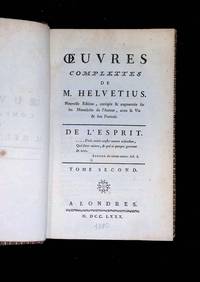
1780174645A Londres 1780. Relié. Etat moyen. in-8. Pleine reliure Charnières et coiffes accidentées Coins frottés unknown
175896792Chez Durand - à Paris 1758. Bonded Leather. <b>Livre en français</b>. Couverture rigide. 3 volumes reliés pleine basane. 379 338 276 pages. Dos légèrement frottés. Graffitis sur les pages de garde. <i>ref. 96792</i> Chez Durand - à Paris hardcover
178438341Londres: Not Attributed. Very Good with no dust jacket. 1784. Leather. Armorial bookplates of Geroge Philips. Tomes II and III. Full bound in sturdy tree calf leather ruled in gilt with carmine morocco spine labels. . Not Attributed hardcover
1758233527Paris: Chez Durand 1758. First edition second issue. 4 xxii 643 1 pp. 1 vols. 4to 9-3/4 x 7-1/4 inches. Contemporary mottled calf gilt spine with red leather label marbled endpapers and edges. Upper joint starting but solid half-title with small stain at outer edge overall a fresh crisp copy. First edition second issue. 4 xxii 643 1 pp. 1 vols. 4to 9-3/4 x 7-1/4 inches. First edition of the last major work of the French philosopher and encyclopédiste Helvetius De l'esprit On the Mind was condemned by the Church and the Sorbonne for its uncompromising atheism regarded as dangerously revolutionary by the Court of Louis XV and publicly condemned by Parliament. A follower of Locke's empiricism Helvetius's work was an important development in the history of utilitarian thought and both Bentham and Mill were strongly influenced by Helvetius's elaboration of a theory which saw mankind as the product of his environment and his education. <br /> <br /> The first issue of the first edition is very rare: Smith locates only 15 copies. Smith E.1B Chez Durand unknown
1758716331758. HELVETIUS Claude-Adrien. DE L'ESPRIT. Nouvelle edition. Revue et corrigee sur un Exemplaire non chatre de la premiere Edition. Paris: Chez Durand libraire 1758. Two octavo volumes. Vol. I: 4xiv318 pp.; Vol. II: xiii334 pp. Contemporary bindings; full calf gilt labels and decoration at spine all edges speckled red. Large armorial bookplate at front pastedown of each volume. Except for occasional light foxing the volumes are clean internally. Bookblocks are lightly foxed at exposed edges and are dust-soiled at top-edges. The bindings are a bit edgeworn with shallow loss at spinal ends. The top joint of volume one and the lower joint of volume two are cracked though the boards are still attached; and the other boards have been professionally re-hinged. One spine label is missing and another is nicked. The leather was varnished at one point and the finish has rubbed off in some places. Very good overall. Helvetius French 1715-71 was one of the encyclopedistes and De l'esprit is his major work. It was written as a response to Montesquie's L'Esprit de lois and was first printed in 1758. It attracted immediate attention and aroused formidable opposition because of its utilitarian philosophy. The Sorbonne the Parlement of Paris the Pope the Bishop of Paris as well as various other bishops condemned the book. It was even publicly burned by the hangman. The attendant controversy caused it to be widely read and many editions were printed within a short time to satisfy the demand. This is a later edition by the publisher of the original edition printed the same year as the first edition. Smith "The Publication of Helvetius's De l'espirit" in French Studies Vol. 18 pp. 332-44. unknown
1759173613Amsterdam: Arkstee & Merkus 1759. hardcover. very good. 2 vols. small 8vo full contemporary calf; leather spine labels. spines rubbed & chipped at the extremes; hinges weak. Amsterdam & Leipzig: Arkstee & Merkus 1759. Very good.<br/> <br/> Early edition of the most important work of the renowned Encyclopedist in which he championed hedonism & self interest. The work was condemned by the Sorbonne and publicly burned in Paris in 1759 the year following the first edition. 18th century bookplate of Cornelius Heathcote Reaston Rodes in each volume as well as 20th century book labels of art historian Meyer Schapiro.<br/> <br/> Arkstee & Merkus unknown
1774009257Liege: Bassompiere 1774. Due volumi in 8vo 12x19 cm di XVI-495pp e 615pp. Mancano gli occhielli. Graziosa legatura dell'inizio dell'800 dorso liscio ornato e dorato piatti marmorizzati. Bassompiere unknown
1781294242London: Societe Typographique 1781. hardcover. very good. 5 volumes. 282; 448; 384; 398; 407 pages. Small 8vo full contemporary tree calf gilt-lettered and decorated spines; books are a bit rubbed top of spine on volume 3 is chipped; speckled edges. Londres: 1781. Internally tight and bright a very good set.<br/> <br/> Societe Typographique unknown
177317694London = France: La Société Typographique 1773. Contemporary mottled calf gold-tooled spine. 8vo. 2 volumes bound as 1. Third or second edition of one of the key works of the Radical Enlightenment published in the same year as the first edition. The author had evoked huge outcry with the publication of De L'esprit 1758 a carefully argued essay on the mind in which he roundly rejected metaphysics and the idea of Truth replacing Christian morals by purely utilitarian ethics and stressing the importance of education as the key to moral behaviour. In De l'homme Helvétius expanded and clarified his views provoking even Diderot to write a Réfutation. The present edition was most likely printed in France and as Smith argues it was probably this edition that the Paris Parliament condemned on 10 January 1774.Binding slightly rubbed; top of spine slightly worn. Fine copy.l Smith Bibliography H.3; cf. Cioranescu 33651 other edition; for Helvétius's philosophy: Blom A Wicked Company pp. 126-129. La Société Typographique, unknown
1774264014London: Societe Typographique 1774. hardcover. very good. 2 volumes. xl 231pp. 123pp and 462pp. 12mo full mottled calf gilt-lettered and decorated spine; both books lightly rubbed and with bumped corners stain to front cover of volume II as well as a small tear to upper front edge. Londres: Chez La Societe Typographique 1774. Internally tight and bright a very good set<br/> <br/> Societe Typographique unknown
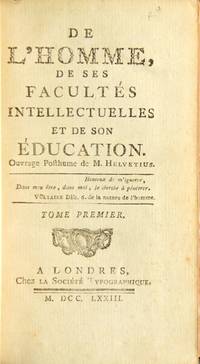
177325123Londres i.e. The Hague: Chez la Société typographique 1773. 2 vols 12mo pp. 2 lxiv 639; 2 760 2 errata; brown morocco-backed brown cloth boards gilt lettering direct on spine; a good solid copy. Edited by Alexander Gallitzin. Posthumously published. There are at least two separate editions each with different title page ornaments. In this edition there is no comma after "intellectuelles" line 6 of title reads "et de son" and the title-page ornament looks somewhat like a stylized scallop shell. I can find no copies in ESTC that are duodecimo in format and with the stylized scallop-shell ornament. See Wellcome III p. 242 for the octavo edition. Chez la Société typographique unknown
1758873<p>Paris: Durand 1758. First Edition. Hardcover. Very good. An Important Document for Understanding 18th Century French Censorship and Printing Practices and the Philosophical-Political Climate in 1758 <br /><br />HELVÉTIUS Claude-Adrien. De lesprit On the Mind Durand Paris 1758. 1 blank leaf half- title TP i-xxii 1-643 644 = Approbation and Privilege du Roi 1 blank leaf. Quarto. The B Tirage of De lesprit see below.Smith E.1b. <br /><br />The history of Helvétiuss De lesprit his first major work is eventful complicated and paradoxical. No book during the eighteenth century except perhaps Rousseaus Émile evoked such an outcry from the religious and civil authorities or such universal public interest. Condemned as atheistic materialistic sacrilegious immoral and subversive it enjoyed a remarkable success de scandale. The work lost its privilege within a fortnight of its publication. <br /><br />The publication history is no less eventful and complicated. There are three distinct first editions of the book: called the A B and C tirages. After carefully orchestrating efforts to mislead and bully the censor into a hasty approval of the text the A tirage the first impressions of the original edition which had begun to leave the presses by the end of June were kept by Helvétius for his personal friends. But before the work could be put on sale to the general public Malesherbes directeur de la librarie ordered that publication of the work be suspended indefinitely. The subversiveness of the book had been discovered and a new censor was introduced into the controversy and changes were made to the text. <br /><br />At this point the cunning of Helvétiuss publisher Durand came into play. He set up a completely new type modeling it upon the original edition. This type it can easily be recognized by its different type-setting and by its several new printing errors was adapted to suit the second censors requirements and was used to produce the second edition the B tirage. Thus when De lesprit was officially published in Paris on July 27th 1758 nobody suspected that it was in fact a completely new edition. However Durand had secretly saved and hidden the original typeset forms. <br /><br />The publication in 1758 of his principal work De lesprit was noisily condemned by the authorities both ecclesiastical and ministerial for its dangerously heretical and subversive opinions. Suppression of the book signaled a grave but fortunately temporary setback for the party of philosophes and Encyclopedists. Despite the recantations that Helvetius was forced to make regarding De lesprit he reaffirmed his ideas even more strongly in De LHomme de ses facultes intellectuelles et se son education published posthumously in 1772. EP Vol. 3 p. 472 Helvètius continued the work of Condillac by reducing all human understanding to sensation or sense- <br />perception. He then took this reductionist psychology and erected a utilitarian theory of morality based upon it making him one of the chief pioneers and promoters of utilitarian moral theory Copelston VI 1 p. 51. Helvètius was a strong defender of the benefits of education and also extremely political attacking all forms of despotism and in particular French despotism. <br /><br />CONDITION: Very good or better in a contemporary full calf binding with boards that are just a bit scuffed. The spine with five raised bands and beautiful gilt lettering and devices. Bookplate to front paste down. Stamp to upper corner of title page. Seemingly rehanged but expertly done. With lovely marbled endpapers. Overall a very beautiful copy of this book. <br /><br /></p> Durand hardcover
1781029514Berna 1781. Un volumetto in 12mo 10x175 cm di VIII-88-1 pagine; una macchia bruna al margine inferiore da pag. 23 più accentuata nelle ultime pagine. Una nota manoscritta alla pagina di titolo: Libro proibito. Brossura cartacea d'attesa gialla qualche macchia. Raro. Il luogo di stampa è certamente fittizio così come resta anonimo l'editore ma è probabile che l'edizione sia di Livorno. unknown
1753009248Berlin Londres 17531773. Due opere in un volume 9x157 cm di 158 pp e LXXII-83 pp. Una brunitura diffusa alla prima opera con erosione marginale all'angolo alto della pagina di titolo senza toccare lo stampato con firmetta antica di possesso. Macchioline al titolo della seconda opera. Legatura coeva in papier dominoté dorso spaccato senza pagine bianche. 1-Luzac LE BONHEUR OU. Prima edizione. L'opera è stata a volte erroneamente anche attribuita a La Mettrie di cui Luzac era editore in Olanda. Ma in realtà era stato lo stesso Luzac a confutare l'opera di La Mettrie con L'Homme plus que machine. La raison la tolérance la modération et l'harmonie sont des valeurs centrales pour Luzac. Il fait partie du monde des Lumières modérées et à ce titre croit en la liberté intellectuelle et s'oppose à l'intolérance du clergé et à la répression gouvernementale. Raro. 2- Helvetius: LE BONHEUR. Edizione dell'anno seguente all'originale. Probabile contraffazione: nel 1773 le edizioni vere o pirata si susseguirono almeno cinque. « Les pages préliminaires sont occupées par un Essai sur la vie et les ouvrages d'Helvetius attribué à Duclos sans raison sérieuse et dont Saint-Lambert s'est déclaré par la suite être l'auteur. On le retrouve dans ses Oeuvres Philosophiques. Grimm en fait le plus grand éloge. » unknown