Condorcet, MBiblio.com
40 résultats
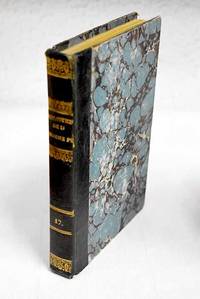
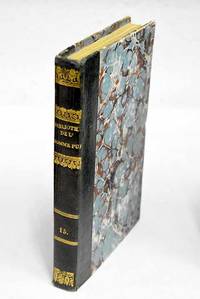
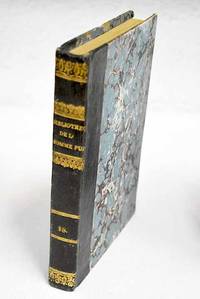
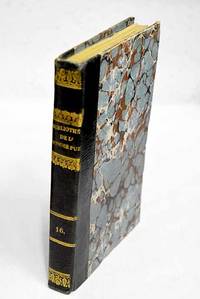
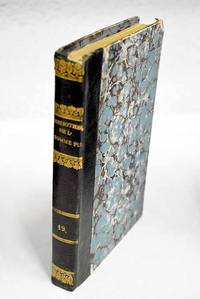
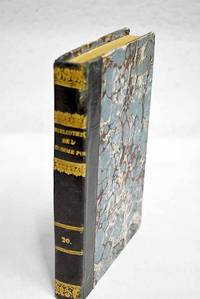
17913304771Paris.: Buisson. 1791. Hardcover. Cubierta deslucida. Good. 19 cm. 280 p. Encuadernación en tapa dura artesanal lomo en piel. Idioma francés . Cubierta deslucida. Buisson. hardcover
17913304768Paris.: Buisson. 1791. Hardcover. Cubierta deslucida. Good. 19 cm. 260 p. Encuadernación en tapa dura artesanal lomo en piel. Idioma francés . Cubierta deslucida. Buisson. hardcover
17913304766Paris.: Buisson. 1791. Hardcover. Cubierta deslucida. Good. 19 cm. 262 p. Encuadernación en tapa dura artesanal lomo en piel. Idioma francés . Cubierta deslucida. Buisson. hardcover
17913304769Paris.: Buisson. 1791. Hardcover. Cubierta deslucida. Good. 19 cm. 268 p. Encuadernación en tapa dura artesanal lomo en piel. Idioma francés . Cubierta deslucida. Buisson. hardcover
17913304767Paris.: Buisson. 1791. Hardcover. Cubierta deslucida. Good. 19 cm. 264 p. Encuadernación en tapa dura artesanal lomo en piel. Idioma francés . Cubierta deslucida. Buisson. hardcover
17913304770Paris.: Buisson. 1791. Hardcover. Cubierta deslucida. Good. 19 cm. 270 p. Encuadernación en tapa dura artesanal lomo en piel. Idioma francés . Cubierta deslucida. Buisson. hardcover
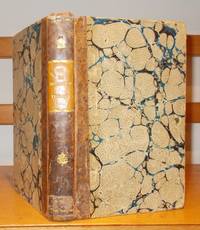
1796054673Philadelphia: Lang and Ustick 1796. No Statement of Printing. . Hardcover. Good/No Dust Jacket. A Good copy in rubbed/scuffed full brown leather with red leather spine label. Lacks the blank front endpaper. Some listings show a frontispiece but this copy does not have one. The first sheet is a half title page with title only followed by the title page and Contents pages.There are two blank endpapers at the rear. The binding is sound and the text is clean/unmarked. Not ex-library. <br/> <br/> Lang and Ustick hardcover
179651690Philadelphia: M. Carey-et al. 1796. Hardcover. Good. 1796 printing. Lacking frontispiece. Original full brown leather binding shows wear and rubbing to the spine edges and corners with the corners rubbed through an slightly bumped. The binding is tight. The text shows scattered foxing and there is a spill stained to some the pages near the end of the book affecting the upper right corners.; 293 pages . M. Carey-et al hardcover
1789102441Sans lieu : Imprimerie de la SociÂŽtÂŽ LittÂŽraire-Typographique 1789. 205x125mm. reliure veau marbrÂŽ de lՎpoque. PiÂce de titre dorÂŽ ornementations et fleurons dorÂŽ au dos. Encadrements dorÂŽs sur les deux plats. Bordures fleuries. Bel exemplaire. 421 Imprimerie de la Socit Littraire-Typographique unknown
1777SZEPEBKS007360IParis: Claude-Antoine Jombert 1777. First edition . Hardcover. Good. 12mo. - 4232 pp. plus plates. - Jombert Paris 1777. - Recent full dark-blue cloth with title stamped in gilt on spine. - Ex-library university with small bookplate embossed stamp and with stamped release; else fine no markings on the plates. - First Edition. - Bibliotheca mechanica p. 9. - With 5 fine quadruple-folding plates with altogether 4612 engraved illustrations as well as with engraved title- page vignette head and tail pieces. - These pioneering fluid mechanics experiments on the resistance of various solid bodies to flow were sponsored by the government of France in connection with inland navigation. - Detailed description of the experimental apparatus of the preparations for the experiments and of the experiments themselves. Tabulated are the data of altogether 293 experiments followed by mathematical modeling and analysis. <br/> <br/> Claude-Antoine Jombert hardcover
1786013838London: no publisher 1786. Book measures 19.5x12.5.cm. 42991pp. Bound in period or early quarter calf marble boards gilt tooling leather title label. Binding rubbed worn chipped on head of spine. Internally library cancellation stamp on free endpaper no other library marks staining to title and about 10 pages. Some occasional minor spotting pencil underlining or minor annotations. Pages in good clean condition. ~A good copy. Quarter Calf. Good Plus. 8vo. [no publisher], Hardcover
179655398Philadelphia:: Printed by Lang and Ustick 1796. old full sheep. Some scattered inoffensive foxing; light use to binding; tight and sound. 12mo. Engraved frontispiece portrait. Being a Posthumous Work of the Late M. de Condorcet. Translated from the French. Printed by Lang and Ustick, unknown
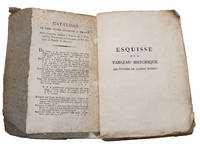
17982060<p>8vo pp. viii 389 1 blank; occasional spotting and marking but never heavy; the odd tear to foot with slight paper loss but never affecting text; final leaf stuck to wrapper but verso blank so with no loss of text; uncut in interim wrappers; wrappers worn but sound spine chipped at head and foot with light dampstain to head and old manuscript paper label.</p><p>First Milan printing uncommon of Condorcet's monumental survey of the history of human endeavour first published posthumously in 1795.</p><p>An 'ouvrage d'un utilité générale et durable' the <em>Esquisse</em> represents a summation of Concordet's thoughts on the notion of human progress and thus can in some ways be seen as a definitive encapsulation of the enlightenment project or at least of one view of it. Condorcet divides his work into ten <em>époques</em> tracing human history from the initial formation of societies through the development of agriculture the invention of writing the intellectual and scientific achievements of classical Greece the progress not uninterrupted of the sciences the invention of printing and the tense relationship between scientific progress and 'the yoke of authority'. Closing with two chapters on the period from Descartes until the French Revolution and on his expectations for future human progress Condorcet demonstrates his optimism: 'Our hopes for the future state of the human species can be reduced to these three important points: the destruction of inequality between nations; the progress of equality within nations; and finally the real perfection of humanity. Are not all nations bound one day to approach the state of civilisation reached by the most enlightened freest least prejudiced of peoples such as the French and the Anglo-Americans' p.328</p><p>Concorcet's work was instantly popular with 1795 printings in Paris and Zürich; it was swiftly translated into English printed in both London and Philadephia and German Tübingen before Zatta in Venice published an Italian translation by Luigi Bossi in 1797. The present edition is the first to be printed in French in Italy.</p><p>Outside Continental Europe OCLC records copies at Connecticut the College of the Holy Cross in Massachusetts and Durham.</p> De l’Imprimerie Italienne et Française à S. Zeno
1790127340Paris: Imprimeur de l'Assemblee Nationale 1790. First edition of Condorcet's critique of the assignats. Condorcet was Inspector of the Coins from 1775 to 1790 and had consequently participated in the great monetary debates of the reign of Louis XVI. Partly invigorated by these debates he was a fierce opponents of the assignats an opposition which would be vindicated as their value plummeted. Octavo 189 x 121 mm. Recent marbled boards red morocco label to spine. A few foxing marks but generally clean. A very nice copy. hardcover
178629371No publisher London Paris 1786. First Edition. Softcover. Very Good Condition/No Dust Jacket. Gerits Edition C listing four editions published in 1786 in "Londres" but more likely Paris. "Contrary to what is suggested by the title this book was not a biography but rather an expose of Turgot's educational political and economic ideas. In fact Stanley Jevons has called it one of the earliest works on 'economie pure' He also included it in his famous list of 'mathematico-economic' works for Condorcet expressed his ideas on fiscal reform and on freedom of commerce and trade in mathematical terms" from Anton Gerits' 'Condorcet's Vie de Monsieur Turgot'. An 'unsophisticated' copy bound in original publisher's wrappers the wrappers rather worn particularly on the spine and some staining to rear wrapper the contents clean with printed pastedown leaf from an earlier work; engraved portrait frontispiece iv 5-287 pages untrimmed a very small single wormhole to last two leaves of text. Approx. 8.5" x 5.4". Quantity Available: 1. Category: Economics; Pictures of this item not already displayed here available upon request. Inventory No: 29371. . No publisher paperback
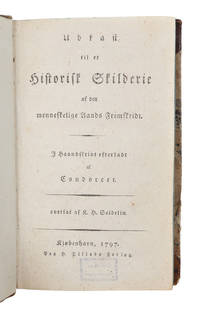
179761971København Tikiøbs Forlag 1797. 8vo. Bound in a contemporary half calf binding with gilt spine and gilt title label. Minor cracks to spine. Insignificant wear to capitals. Edges of boards worn. Corners bumped. Bibliographical notes to front free endpaper. Small ownership stamp to verso of title page. Evenly browned. XII23681: errata pp. <br/><br/><em>The extremely rare first Danish edition of Condorcet's main work "Esquisse d'un tableau historique des progrès de l'esprit humain.1795" "the most fully developed exposition of the progress of man" Printing and the Mind of Man p. 149 and a main work of the Enlightenment as well as of historical thought in general. The author was the creator of what came to found the basis for the modern French system. The great French philosopher political thinker and mathematician M.J.A. Condorcet 1743 - 1794 played a seminal role in 18th century France. He was friends with the likes of d'Alembert Voltaire Turgot etc. and he greatly contributed to the social and political debates of politically turbulent France. As one of the few he advocated a liberal economy equality in public education as well as in gender and race etc. He preached constitutionalism and his thoughts that are still influential today embody those of the Enlightenment and rationalism."A belief in the ultimate perfectibility of man lies at the root of all progressive thinking about the human condition. The "philosophes" and Godwin had familiarized the reading public with this notion; it was left to Condorcet to give it its finest and most durable expression. It was the gospel of nineteenth century that mankind is destined for indefinite future progress. Condorcet looking back and then forward saw proof of this in the growing equality between classes and nations the intellectual physical and moral improvement of man; and he prophesied that popular education on correct principles would strengthen and assure this progress." PMM 246.During the French Revolution Condorcet came to play a dominating role advocating a rationalist reconstruction of society and he championed many liberal causes. In 1791 he became secretary of the Legislation Assembly and the institution adopted his scheme for comprehensive state education which later became the basis of the modern French system. In the struggle between the two political parties the Girondists and the Montagnards Condorcet occupied an independent role but when he opposed the death penalty under the trial of King Louis XVI still supporting the actual trial and the radical Montagnards gained more power Condorcet was branded a traitor and in October 1793 a warrant was issued for his arrest. He now went into hiding for several months almost a year and it is during these months that he writes the work that was to become his most important the main work "Esquisse." "Sketch for a Historical Picture of the Progress of the Human Mind" which was published posthumously the year after his death. In 1794 Condorcet was arrested and two days later he was found dead in his cell -it is unknown whether he committed suicide or was murdered because of fear of fierce reactions that would definitely have occurred had the beloved man been officially sentenced to the death penalty."In the Esquisse" published after his death Condorcet traces the history of man through epochs the first three covering his progress from savagery to pastoral community and thence to the agricultural state. The next five span the growth of civilizations and knowledge down to Descartes and the ninth describes the revolution of Condorcet's own lifetime from Newton to Rousseau. The prophetic view of the tenth epoch shows Condorcet at his most original. He forecasts the destruction of inequality between nation and classes and the improvement intellectual moral and physical of human nature. it exercised considerable influence on Comte. But it is as the most fully developed exposition of the progress of man that Condorcet's work is now remembered and it is this which has given it its lasting appeal." PMM 246. </em> hardcover
1786124115London i.e France: no publisher 1786. One of four editions of Condorcet's life of Turgot printed in 1786 this being Gerits's edition C. All four editions have London imprints but the latter three were printed in France. Condorcet was a strong supporter of Turgot who had attempted to implement physiocratic ideas as the French finance minister from 1774 to 1776. His biography seeks to vindicate Turgot's thought and work and is a powerful defence of Enlightenment economic ideas. Seven editions appeared within two years meaning that it was one of the best-selling works of economics of its day. "Contrary to what is suggested by the title this book was not a biography but rather an exposé of Turgot's educational political and economic ideas" Gerits. This work together with Dupont de Nemours's biography is the chief contemporary account of the renowned financial reformer and friend of the physiocrats. It contains in a footnote Condorcet's early attempt to apply mathematics to economics. On pp. 178-184 he discusses the various mathematical ways "in which indirect taxation could be replaced by direct taxation and the effects of such a change" Theocharis Early developments in mathematical economics p. 65. Condorcet 1743-1794 was secretary to the Académie and was a prolific author. Although more celebrated for his studies in philosophy literature and politics "his mathematical treatment of probabilities and his discussion of differential equations and finite differences show an ability which might have put him in the first rank had he concentrated his attention on mathematics" W.W. Rouse Ball A Short Account of the History of Mathematics p. 388. Octavo 205 x 122 mm. Portrait frontispiece of Turgot. Early 19th-century quarter marbled calf red label to smooth spine with compartments ruled in gilt marbled sides speckled edges. Condorcet's name added to title page in contemporary hand. Front cover lightly marked tiny chip at base of title page a few small blemishes to contents. An excellent copy. ESTC T177159; Anton Gertis Condorcet's Vie de Monsieur Turgot Harvard University Bulletin. unknown
1774127684Paris: Chez Couturier père 1774 but 1775. First edition of Condorcet's defence of the free trade of grain. Turgot's liberalisation of the grain trade in 1774 coinciding with bad harvests and rocketing prices led to a fierce pamphlet war between proponents of the mercantilist and free trade schools of thought. Condorcet had written the present tract prior to Turgot's enactment of the policy perhaps to anticipate it but the work was not published until April 1775 in the midst of the troubles and the month before the outbreak of bread riots in Paris. Condorcet would elaborate his ideas further in his 1776 treatise Réflexions sur le commerce des bleds the year in which Turgot was dismissed and liberalisation of the grain trade scaled back. Octavo 181 x 118 mm. Recent marbled boards black calf label. Half-title present. Some offsetting from type a few minor creases discreet repair to tear on p. 8 else a very good copy. INED 1171 bis; Kress 7003. Williams Condorcet and Modernity p. 19. hardcover
1780136971No place no publisher 1780. First edition of Condorcet's attack on the corps of engineers responsible for France's major canal building projects. Turgot looking to finish the large and ambitious Picardy and Burgundy canal systems placed Condorcet in charge of experimental research on canals. "Condorcet's research was instrumental in demonstrating the flaws in existing proposals for the tunnels for the new canals whose design would have made it impossible for boats to pass through. In the course of the demonstration a whole new branch of physics was invented. Apart from technical issues Condorcet also soon found himself immersed in research of a more sociological nature in Flanders and Picardy on the impact of the new canals on local communities. This resulted in an angry report to Turgot published in 1780 as the Mémoire sur le canal de Picardie in which the corps of engineers and the inadequacies of their professional training were strongly criticised" Williams p. 21. Octavo 194 x 120 mm. Disbound. Contemporary note of Condorcet's authorship to title page. Slight loss at bottom fore corner of pp. 11-14 not near text contents clean; very good. David Williams Condorcet and Modernity 2004. unknown
1794245971794. A Paris chez Agasse l'an III de la RÂŽpublique 1794 / 1795. Un vol. au format in-8 198 x 128 mm de viii - 389 pp. Reliure lÂŽgÂrement postÂŽrieure de demi-basane brune dos lisse ornÂŽ de doubles filets dorÂŽs fleurons dorÂŽs piÂce de titre de maroquin cerise titre dorÂŽ tranches marbrÂŽes. Edition originale. ''Texte capital emblÂŽmatique du projet des LumiÂre de son idÂŽologie du progrÂs comme de sa conception de la perfectibilitÂŽ continue de l'esprit humain''. Alde. ''Aussit™t ÂŽlevÂŽe lors de sa publication en l'an III par Mme de Condorcet et Daunou au rang des Ãuvres nationales l'Esquisse est souvent considÂŽrÂŽe pour le contexte tragique qui a entourÂŽ sa composition comme une Ãuvre de circonstance ÂŽcrite quelques mois avant le dÂŽcÂs de son auteur. S'appuyant sur le rationalisme cartÂŽsien l'empirisme de Locke et le sensualisme de Condillac qui fournissent une caution philosophique ˆ la thÂse de la perfectibilitÂŽ humaine l'Esquisse synthÂŽtise la philosophie des LumiÂres et tÂŽmoigne de l'influence exercÂŽe sur Condorcet par le Tableau philosophique des progrÂs successifs de l'esprit humain et le Plan des deux discours sur l'histoire universelle de son ma”tre et ami Turgot.'' Eric Letonturier. ''Les conclusions de Condorcet ressemblent beaucoup ˆ celles des anciens alchimistes ; en ce qu'il admet comme une certitude que l'homme parviendra t™t ou tard ˆ prolonger son existence ˆ des limites invraisemblables''. in Caillet. Brunet II Manuel du libraire et de l'amateur de livres 3650 - Varet II Manuel de bibliographie philosophique p. 502 - Cioranescu I Bibliographie de la littÂŽrature franÂaise du XVIIIÂme 20528 - QuÂŽrard II La France littÂŽraire p. 269 - Caillet I manuel bibliographique des sciences psychiques et occultes 2545 - Dorbon-A”nÂŽ Bibliotheca esoterica 56 pour une ÂŽdition de 1822 - En FranÂais dans le texte 196 - Martin & Walter n¡8083. Coiffes et coupes ÂŽlimÂŽs. Petit manque angulaire au second plat. Dos prÂŽsentant des frottements. Petit dÂŽfaut angulaire affectant le faux-titre. InÂŽgales mais claires rousseurs dans le texte. PrÂŽsence de passages surlignÂŽs accolÂŽs ou annotÂŽs. b42961 unknown
1786EONe[CON89London ie. Paris: 1786. 1786. 8vo. pp. 3 p.l. 246. old half calf rebacked. One of several issues with identical imprint this one being Gerits' issue 'B'. The present work and Dupont de Nemours' earlier memoir 1782 are the two major contemporary biographies of the great French statesman economist and financial reformer. The Life is also important for containing an early contribution to mathematical economics in a passage where Condorcet discusses the various mathematical ways "in which indirect taxation could be replaced by direct taxation and the effects of such a change". Theocharis Early Development in Maathematical Economics p. 65 A.Gerits in Harvard Library Bulletin 1992-93 Vol. III No. 4. cfCioranescu 20417. cfEinaudi 1217. cfGoldsmiths' 13128. cfKress B.1031-33. Palgrave III p. 594. London [ie. Paris]: 1786. unknown
178683882London: no publisher 1786. One of four printings of 1786 Gerits's edition D with no Avis de l'éditeur and no errata and the misprints corrected: "Contrary to what is suggested by the title this book was not a biography but rather an exposé of Turgot's educational political and economic ideas" Gerits. This work together with Dupont de Nemours's biography is the chief contemporary account of the renowned financial reformer and friend of the physiocrats. It contains in a footnote Condorcet's early attempt to apply mathematics to economics. On pp. 178-184 he discusses the various mathematical ways "in which indirect taxation could be replaced by direct taxation and the effects of such a change" Theocharis Early developments in mathematical economics p. 65. Condorcet 1743-1794 was secretary to the Académie and was a prolific author. Although more celebrated for his studies in philosophy literature and politics "his mathematical treatment of probabilities and his discussion of differential equations and finite differences show an ability which might have put him in the first rank had he concentrated his attention on mathematics" W.W. Rouse Ball A Short Account of the History of Mathematics p. 388. Octavo 214 x 135 mm. Contemporary papier dominoté wrappers paper spine label hand-written in black ink. Short closed tear to pages 245-246 neatly repaired without loss occasional light spotting; a very good uncut copy in an attractive decorated paper wrapper. Kress B.1033. Gerits: "Condorcet's Vie de Monsieur Turgot" in Harvard Library Bulletin. unknown
1788264649Paris: Chez Froullé libraire quai des Augustins 1788. First edition. 4 xvi 383 1; 4 259 1; 4 292; 4 366 pp. 4 vols. 8vo. Contemporary quarter leather pastepaper boards french tips flat spines with red leather title and volume labels. Spines rubbed some minor starting of joints to two volumes small loss to head of vol. I a very good contemporary set. First edition. 4 xvi 383 1; 4 259 1; 4 292; 4 366 pp. 4 vols. 8vo. Mazzei emigrated to America from Italy in 1773 and introduced the cultivation of grapes and olives to the United States. He became a neighbor of Jefferson in Virginia settling near Monticello at Jefferson's request and this association led to their long friendship and the author's acquaintance with Franklin and Adams. A staunch Republican Mazzei took an active role in the Independence movement. In this work he outlines the history of the American colonies the causes of the Revolution and the economy and government of the United States. Also discussed are Indians slavery emigration and the Society of the Cincinnati. The book was a contemporary success and remains an important work which Malone characterizes as "probably the most reliable of all the works of the period on the United States" Thomas Jefferson 2:109-110. Jefferson aided Mazzei in the compilation of the work while acting as American minister in Paris. Sabin 47206; Leclerc 957; Howes M456; Monaghan 1052; Muller 1612; Fay 24; Einaudi 3807; Reese Revolutionary 87 Chez Froullé, libraire, quai des Augustins unknown
1795168984Paris: Chez Agasse 1795. Second. hardcover. very good. 389pp. 4pp. of advertisments 8vo untrimmed rebound in cloth-backed marbled boards spine neatly repaired. Paris: Chez Agasse L'An III 1795. Second Edition. Very good .<br/> <br/> Printing and the Mind of Man 246; Robinet 382. Considered to be Condorcet's most original and most important work. Considered to be Condorcet's most original and most important work. In it he divided history into ten epochs the first nine dealing with history upto the time in which he himself lived whereas the tenth is his prophetic view of the future. It is the most original part of the book in which Condorcet forecasts among others the future moral intellectual and physical improvement of man. '. PMM<br/> <br/> Chez Agasse unknown
179565358Paris: Chez Agasse 1795. Can Man Become Perfect"<br> <br> CONDORCET Marie Jean Antoine Nicolas Caritat Marquis de. Esquisse d'un tableau historique des progrès de l'esprit humain. Ouvrage posthume de Condorcet. Paris: Chez Agasse L'an III. de la République 1795.<br> <br> First edition of Condorcet's philosophical masterpiece. Octavo 7 7/8 x 4 13/16 inches; 201 x 123 mm. viii 389 1 blank pp.<br> <br> Contemporary quarter calf over dark blue paste-paper boards spine gilt with dotted bands and ornaments gilt red morocco lettering piece. Old owner's signature on half-title. A quarter-inch marginal tear at the bottom of leaf M42 that does not affect the text. Light foxing throughout. A blue ink stain on top edge from signature Z to the end. Overall a clean and attractive copy.<br> <br> "It was the gospel of the nineteenth century that mankind is destined for indefinite future progress. Condorcet 1743-1794 looking back and then forward saw proof of this in the growing equality between classes and nations the intellectual physical and moral improvement of man; and he prophesied that popular education on correct principles would strengthen and assure this progress.In the Esquisse 'An Historical Outline of the Progress of the Human Mind' published after his death Condorcet traces the history of man through epochs the first three covering his progress from savagery to pastoral community and thence to the agricultural state. The next five span the growth of civilizations and knowledge down to Descartes and the ninth describes the revolution of Condorcet's own lifetime from Newton to Rousseau. The prophetic view of the tenth epoch shows Condorcet at his most original. He forecasts the destruction of inequality between nations and classes and the improvement intellectual moral and physical of human nature.it is as the most fully developed exposition of the progress of man that Condorcet's work is now remembered and it is this which has given its lasting appeal" Printing and the Mind of Man.<br> <br> Printing and the Mind of Man 246.<br> <br> HBS 65358.<br> <br> $2000. Chez Agasse unknown