AnonymousBiblio.com
693 résultats
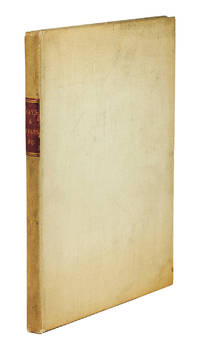
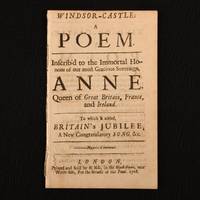
1708930F52London: H. Hills 1708 . First edition. Unbound. Very Good. 7.5" by 5". None. The very scarce first edition of this anonymously authored poem celebrating Queen Anne and her rule of Britain France and Ireland. A very scarce first edition.The poem celebrated Queen Anne in glowing terms: 'till Anna like the Sun did rise/ Anna whose pious Name tunes ev'ry Lyre/ And does my Muse with boundless Thoughts inspire'.ESTC T52558With an advertisement to the tail of the final leaf.To the rear appears a song on 'Britain's Jubilee' the work of Richard Estcourt. Unbound as issued. First and final leaves bright. Internally firmly bound. Leaf A5 trimmed diagonally to fore edge resulting in the loss to the first word of lines on the final two stanzas of the verso of leaf. Pages otherwise lightly age toned but generally clean and bright. Very Good H. Hills unknown
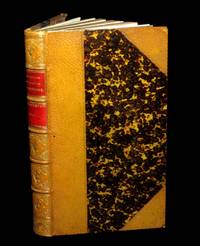
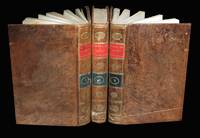
17821259891782. London: Printed for G. Kearsly 1782. <br /> <br /> 4to. 19th century white buckram red morocco spine label gilt lettering. Without half-title. Buckram somewhat soiled and a little rubbed; prelims a bit dust-soiled; a very good copy.<br /> <br /> § First and only edition. Dishing the dirt on the wheeler-dealing of the English nobility. A satire on the Lords Temporal and Spiritual in which the anonymous author challenges the influence and secret dealings that take place in their high offices to their advantage and to the detriment of all others. Sir Robert Walpole's famous statement of 1734 often misquoted as here is part of the subtitle: "Every man his price is the best political principle we can adhere to." The text is a list or catalogue of the Earls Dukes and Lords and what they have been selling and profiting from. ESTC T52283. unknown
1798146971798. Watercolor. Painted on watermarked laid wove paper. Watermarked with a Russell & Co 1798 watermark. In excellent condition with the exception of a number of tiny tears along the edges of the sheet. A crease along the left top corner of sheet. Right margin is creased outside image. A beautiful watercolor depicting a lively port with ships in the harbor.<br/> <br/> Unfortunately we have not been able to discover any information concerning the artist of this beautiful painting. It bears no title or signature therefore it is almost impossible to ascertain the location of the scene or its creator. It is obviously from the hand of an accomplished amateur painter who had a natural talent for design and a keen eye for detail. The scene depicts a busy town and port with a multitude of galleons in the harbor. The artist has obviously spent a considerable amount of time producing this painting and has included a wealth of intricate details. The ship in the lower right corner of the painting flies a British flag off its bow and there is a military encampment on the outlying shore of the bay. These details and the inclusion of the windmill suggest that the image depicts a European port. Towards the end of the eighteenth century Britain was in a nearly constant state of war with Europe English and Continental privateers conducted an ongoing battle on the high seas. The inclusion of numerous ships may be an allusion to this turbulent period in British history. The work was most likely painted by a British artist since the paper was produced by the British papermakers Russell & Co. unknown
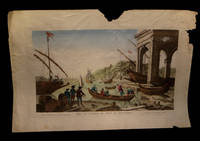
1780148681780. A Paris / A Rouen chez Mondhard / chez Lucas s.d. circa 1780. Dimensions vue : 452 x 233 mm. Belle vue d'optique grave sur cuivre. Elle est anime de nombreux personnages et embarcations en coloris du temps. Plissures parses. Manque affectant les marges sans atteinte la gravure. Du reste belle condition. b42961 unknown
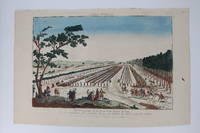
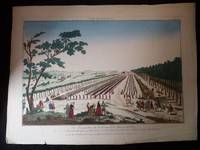
179079269Paris: Chez Daumont et Lachaussée 1790. Fine. Chez Daumont et Lachaussée Paris circa 1790 46 x 33.50 cm une feuille Original engraving. Optical view heightened in watercolour depicting a view of the review of the King's Household ""infantry which takes place every year in the plain of Sablons one league from Paris"". Optical views also called views perspectives or ""mondo nuovo"" are engravings very much in fashion between the end of the 18th and the beginning of the 19th century. They were intended to be observed through a set of several mirrors or by means of a Zograscope an instrument consisting of a mirror and a lens. Optical views can be considered as the precursors of three-dimensional images and stereoscopes which enjoyed great success from the 19th century onwards. Optical views seem to appear in the 1740s and were salon entertainments. The process was first developed in Paris then London and finally in Germany and sought to represent - in an idealized manner - the most famous panoramas and landscapes of East and West. A small trace of angular fold. Fine impression with very fresh colours. Chez Daumont et Lachaussée unknown
179046161Paris: Chez Basset 1790. Fine. Chez Basset Paris circa 1790 30.50 x 48.50 cm une feuille Original engraving. Optical view heightened in watercolors depicting a view representing the gallery erected in the Place de Grève on the occasion of the birth of Monseigneur le Dauphin. Optical views also called views perspectives or ""mondo nuovo"" are engravings that were very fashionable between the late 18th and early 19th centuries. They were intended to be observed through a set of several mirrors or by means of a Zograscope an instrument consisting of a mirror and a lens. Optical views can be considered as the precursors of three-dimensional images and stereoscopes which enjoyed great success from the 19th century onwards. Optical views appear to have emerged in the 1740s and were salon entertainments. The process was first developed in Paris then London and finally in Germany and aimed to represent - in an idealized manner - the most famous panoramas and landscapes of East and West. Fine impression with very fresh colors. Chez Basset unknown
179040682Paris: Chez Lachaussée 1790. Fine. Chez Lachaussée Paris circa 1790 46 x 33.50 cm une feuille Original engraving. Optical view heightened in watercolor depicting a view of the Royal Academy of Painting in Rome. Blue paper. Optical views also called views perspectives or ""mondo nuovo"" are engravings very fashionable between the end of the 18th and the beginning of the 19th century. They were intended to be observed through a set of several mirrors or by means of a Zygrascope an instrument consisting of a mirror and a lens. Optical views can be considered as the precursors of three-dimensional images and stereoscopes which enjoyed great success from the 19th century onwards. Optical views seem to appear in the 1740s and were drawing room entertainments. The process was first developed in Paris then London and finally in Germany and was dedicated to representing - in an idealized manner - the most famous panoramas and landscapes of the Orient and the West. Some very light marginal foxing. Fine impression with very fresh colors. Chez Lachaussée unknown
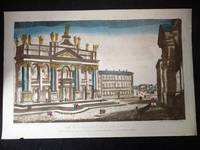
179040686Paris: Chez Daumont et Lachaussée 1790. Fine. Chez Daumont et Lachaussée Paris circa 1790 46 x 33.50 cm une feuille Original engraving. Optical view heightened in watercolors depicting a view of the Church of St. John Lateran in Rome. Optical views also called vues perspectives or ""mondo nuovo"" are engravings that were very fashionable between the late 18th and early 19th centuries. They were intended to be observed through a series of mirrors or by means of a Zograscope an instrument consisting of a mirror and a lens. Optical views can be considered the precursors of three-dimensional images and stereoscopes which enjoyed great success from the 19th century onwards. Optical views seem to appear in the 1740s and were drawing room entertainments. The process was first developed in Paris then London and finally in Germany and focused on representing - in an idealized manner - the most famous panoramas and landscapes of East and West. Fine impression with very fresh colors. Chez Daumont et Lachaussée unknown
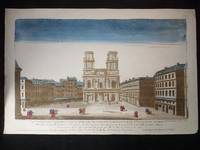
179040665Paris: Chés Lachaussée 1790. Fine. Chés Lachaussée Paris circa 1790 46 x 33.50 cm une feuille Original engraving. Optical view heightened with watercolors depicting Saint Eustache Church. Optical views also known as views perspectives or ""mondo nuovo"" are engravings that were very fashionable between the late 18th and early 19th centuries. They were intended to be observed through a set of multiple mirrors or by means of a Zograscope an instrument consisting of a mirror and a lens. Optical views can be considered as the precursors of three-dimensional images and stereoscopes which enjoyed great success from the 19th century onwards. Optical views seem to appear in the 1740s and were parlor entertainments. The process was first developed in Paris then London and finally in Germany and focused on representing - in an idealized manner - the most famous panoramas and landscapes of East and West. Fine impression with very fresh colors. Chés Lachaussée unknown
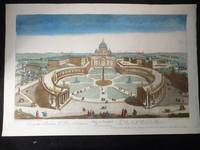
179040681Paris: Chez Daumont et Lachaussée 1790. Fine. Chez Daumont et Lachaussée Paris circa 1790 46 x 33.50 cm une feuille Original engraving. Optical view heightened in watercolor depicting a view of Saint Peter's in Rome. Optical views also called views perspectives or ""mondo nuovo"" are engravings very fashionable between the end of the 18th and the beginning of the 19th century. They were intended to be observed through a set of several mirrors or by means of a Zygrascope an instrument consisting of a mirror and a lens. Optical views can be considered as the precursors of three-dimensional images and stereoscopes which enjoyed great success from the 19th century onwards. Optical views seem to appear in the 1740s and were drawing room entertainments. The process was first developed in Paris then London and finally in Germany and was dedicated to representing - in an idealized manner - the most famous panoramas and landscapes of the Orient and the West. Fine impression with very fresh colors. Chez Daumont et Lachaussée unknown
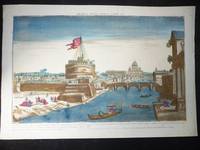
179040680Paris: Chez Daumont 1790. Fine. Chez Daumont Paris circa 1790 46 x 33.50 cm une feuille Original engraving. Optical view heightened in watercolor depicting a view of the Ponte Sant'Angelo in Rome. Optical views also called vues perspectives or ""mondo nuovo"" are engravings that were very fashionable between the late 18th and early 19th centuries. They were intended to be viewed through a set of mirrors or by means of a Zograscope an instrument consisting of a mirror and a lens. Optical views can be considered as the forerunners of three-dimensional images and stereoscopes which enjoyed great success from the 19th century onwards. Optical views seem to appear in the 1740s and were parlor entertainments. The process was first developed in Paris then London and finally in Germany and was devoted to representing - in an idealized manner - the most famous panoramas and landscapes of East and West. A fine impression with very fresh colors. Chez Daumont unknown
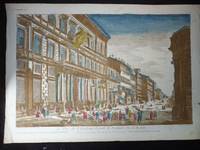
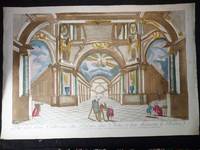
179040689Paris: Chez Daumont et Lachaussée 1790. Fine. Chez Daumont et Lachaussée Paris circa 1790 46 x 33.50 cm une feuille Original engraving. Optical view heightened in watercolor depicting a view of the three galleries of the Palace of Arts and Sciences in Rome. Optical views also called vues perspectives or ""mondo nuovo"" are engravings that were very fashionable between the late 18th and early 19th centuries. They were intended to be viewed through a set of several mirrors or by means of a Zograscope an instrument consisting of a mirror and a lens. Optical views can be considered the predecessors of three-dimensional images and stereoscopes which enjoyed great success from the 19th century onwards. Optical views seem to appear in the 1740s and were salon entertainments. The process was first developed in Paris then London and finally in Germany and sought to represent - in an idealized manner - the most famous panoramas and landscapes of East and West. Fine impression with very fresh colors. Chez Daumont et Lachaussée unknown
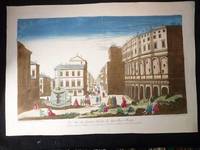
179040691Paris: Chez Daumont et Lachaussée 1790. Fine. Chez Daumont et Lachaussée Paris circa 1790 46 x 33.50 cm une feuille Original engraving. Hand-colored optical view in watercolor depicting a view of the Theatre of Marcellus in Rome. Optical views also called vues perspectives or ""mondo nuovo"" are engravings that were very popular between the late 18th and early 19th centuries. They were intended to be viewed through a set of several mirrors or by means of a Zygrascope an instrument consisting of a mirror and a lens. Optical views can be considered the forerunners of three-dimensional images and stereoscopes which enjoyed great success from the 19th century onwards. Optical views seem to appear in the 1740s and were salon entertainments. The process was first developed in Paris then London and finally in Germany and focused on representing - in an idealized manner - the most famous panoramas and landscapes of East and West. A central fold mark. Fine impression with very fresh colors. Chez Daumont et Lachaussée unknown
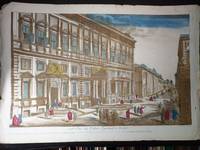
179040684Paris: Chez Lachaussée 1790. Fine. Chez Lachaussée Paris circa 1790 46 x 33.50 cm une feuille Original engraving. Optical view heightened in watercolors depicting a view of the Quirinal Palace in Rome. Blue paper. Optical views also called vues perspectives or ""mondo nuovo"" are engravings that were very fashionable between the late 18th and early 19th centuries. They were intended to be observed through a series of mirrors or by means of a Zograscope an instrument consisting of a mirror and a lens. Optical views can be considered the precursors of three-dimensional images and stereoscopes which enjoyed great success from the 19th century onwards. Optical views seem to appear in the 1740s and were drawing room entertainments. The process was first developed in Paris then London and finally in Germany and focused on representing - in an idealized manner - the most famous panoramas and landscapes of East and West. Some very light marginal foxing. Fine impression with very fresh colors. Chez Lachaussée unknown
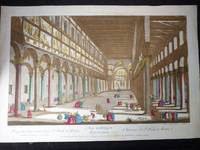
179040695Paris: Chez Daumont et Lachaussée 1790. Fine. Chez Daumont et Lachaussée Paris circa 1790 46 x 33.50 cm une feuille Original engraving. Hand-colored optical view in watercolor depicting an interior view of St. Paul's in Rome. Optical views also called vues perspectives or ""mondo nuovo"" were engravings very fashionable between the late 18th and early 19th centuries. They were intended to be observed through a set of several mirrors or by means of a Zograscope an instrument consisting of a mirror and a lens. Optical views can be considered as the precursors of three-dimensional images and stereoscopes which enjoyed great success from the 19th century onwards. Optical views seem to appear in the 1740s and were parlor entertainments. The process was first developed in Paris then London and finally in Germany and aimed to represent - in an idealized manner - the most famous panoramas and landscapes of East and West. Fine impression with very fresh colors. Chez Daumont et Lachaussée unknown
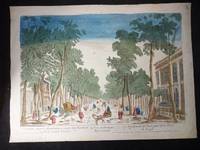
179040688Paris: Chez Daumont et Lachaussée 1790. Fine. Chez Daumont et Lachaussée Paris circa 1790 46 x 33.50 cm une feuille Original engraving. Optical view heightened in watercolor depicting a view of the Boulevards of Paris taken from the Porte du Temple. Optical views also called views perspectives or ""mondo nuovo"" are engravings that were very fashionable between the late 18th and early 19th centuries. They were intended to be viewed through a set of several mirrors or by means of a Zograscope an instrument consisting of a mirror and a lens. Optical views can be considered as the precursors of three-dimensional images and stereoscopes which enjoyed great success from the 19th century onwards. Optical views seem to appear in the 1740s and were parlor entertainments. The process was first developed in Paris then London and finally in Germany and sought to represent - in an idealized manner - the most famous panoramas and landscapes of East and West. Two pale corner dampstains not affecting the engraving. Fine impression with very fresh colors. Chez Daumont et Lachaussée unknown
179040694Paris: Chez Daumont et Lachaussée 1790. Fine. Chez Daumont et Lachaussée Paris circa 1790 46 x 33.50 cm une feuille Original engraving. Hand-colored optical view in watercolor depicting a view of the review of the King's Household ""infantry which takes place every year in the plain of Sablons one league from Paris"". Optical views also called vues perspectives or ""mondo nuovo"" were engravings very fashionable between the late 18th and early 19th centuries. They were intended to be observed through a set of several mirrors or by means of a Zograscope an instrument consisting of a mirror and a lens. Optical views can be considered as the precursors of three-dimensional images and stereoscopes which enjoyed great success from the 19th century onwards. Optical views seem to appear in the 1740s and were parlor entertainments. The process was first developed in Paris then London and finally in Germany and aimed to represent - in an idealized manner - the most famous panoramas and landscapes of East and West. A small angular crease mark. Fine impression with very fresh colors. Chez Daumont et Lachaussée unknown
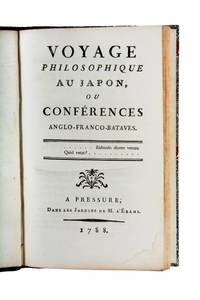
17883005361Pressure" Paris: Dans les Jardins de M. l'Ebahi 1788. A good copy. Octavo half-title woodcut vignette of a ship setting sail at start of text; neat modern quarter calf. <p><p>First edition scarce: a witty and urbane discussion of everything from the rules of Japanese society to the French Compagnie des Indes. The unknown author's reflections on religion and satirical comments on Europe meant that the work must have been skirting very close to being censored.</p> <p>Presumably published in Paris the imprint is meant to refer to l'Ebahi's stately home the Chateau de Pressure in a salon of which the three main characters the much-travelled Monsieur l'Ebahi "Mister Flabbergasted" the Englishman "Thincker" and the Dutchman "Wurtzheim" are comfortably seated as they swap tales of their marvellous adventures not only in Japan but throughout Asia. The whole story is told with such brio that it could almost pass for actual reportage if it were not for the knowing interjections of the author who says at the outset that the only philosophical lesson worth learning is to admire the teachings of Democritus and be amused by the foibles of mankind.</p> <p>The work does appear quite rare with copies recorded in the British Library and the Bibliothèque Nationale de France but with apparently few others.</p> </p> . Dans les Jardins de M. l'Ebahi unknown
1752155351752. A CythÂre chez Cupidon / Librairie des Amours 1752. Deux parties reliÂŽes en un volume au format in-12 171 x 96 mm de 1 f. bl. et 208 pp. ; 238 pp. et 1 f. bl. Reliure postÂŽrieure XIXÂme de demi-maroquin fauve ˆ coins double filet ˆ froid portÂŽs sur les plats dos ˆ nerfs ornÂŽ de filets gras ˆ froid filet dorÂŽ sur les nerfs doubles caissons d'encadrement dorÂŽs fleurons dorÂŽs semis d'ÂŽtoiles dorÂŽes piÂce de titre de maroquin vieux-rouge titre dorÂŽ palette dorÂŽe en queue toutes tranches dorÂŽes. Belz-NiÂŽdrÂŽe. Edition originale complÂte de ses deux parties ici reliÂŽes en un volume. Exemplaire sous dÂŽlicate reliure de demi-maroquin signÂŽe de Belz-NiÂŽdrÂŽe. ''NiÂŽdrÂŽe fut l'un des meilleurs ÂŽlÂves de Thouvenin et succÂŽda ˆ Muller''. in Ramsden. ''Nous arriv‰mes et fžmes frappÂŽs d'un spectacle ravissant. L'”le ÂŽtait jonchÂŽe de fleurs les plaisirs les jeux fol‰tres se mÂlaient aux FÂtes de CythÂre. On ne voyait que danses et courses lÂŽgÂres ; l'air retentissait de chants amoureux le haut-bois la flžte la vieile formaient partout des concerts enchanteurs en cÂŽlÂŽbration de l'amour et des plaisirs de deux amants que VÂŽnus a uni aujourd'hui''. Millin VI Journal des Sciences des Lettres et des Arts 25 - Gay VI Bibliographie des ouvrages relatifs ˆ l'amour aux femmes . p. 441 - Luzarche Catalogue des livres rares curieux et singuliers 3316 - Registrum Librorum Eroticorum I 1228 - Ramsden French bookbinders p. 147. Feuillets de prÂŽface ici absents. Angles ÂŽlimÂŽs. TrÂs lÂŽgers frottements affectant la coiffe supÂŽrieure. Nonobstant trÂs belle condition. Rare. b42961 unknown
1750123496In Roma nella Stamperia di Pallade: per Niccolò e Marco Pagliarini. 1750. Volumi 4 in 12° piene pergamene rigide coeve con titoli su tasselli e fregi a secco ai dorsi. Vol. 1: Libro primo in cui comprendesi tutto cio' che accadde dalla sua nascita fino al primo Concilio di Gerusalemme. Vol. 2: Libro secondo in cui comprendesi tutto cio' che accadde dal primo Concilio di Gerusalemme fino alla partenza da Atene. Vol. 3: Libro terzo in cui comprendesi tutto cio' che accadde dalla partenza da Atene fino al primo viaggio di Roma. Libro 4: Libro quarto in cui comprendesi tutto cio' che accadde nel primo viaggio di Roma fino alla sua gloriosa morte. Front. del volume primostampato in rosso e nero pp. 6 n.n. 16 229 i.e. 233 bb da pag. 204 alla fine un alone a crescere occupa la metà esterna della pagina pp. 2 n.n. 167 i.e. 169 1 bb. pp. 4 n.n. 260 i.e. 264 2 n.n. 346 i.e. 316 per un salto da p. 264 a 295. Salvo il detto buon esemplare con bella marca al primo frontespizio ripetuta come testatina In Roma, nella Stamperia di Pallade: per Niccolò e Marco Pagliarini... unknown
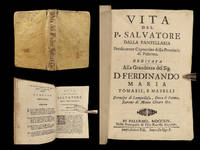
171424123<p><strong>1714 Capuchin Monk Palermo 1st ed Life of Salvatore Pantelleria Sicily Italian </strong></p><p>A rare and rather unknown 18th-century history of the life and ministry of Salvatore of Pantelleria. This book which was printed only once in 1714 describes Salvatore on Patelleria his ministry as a Capuchin preacher and his life in Palermo Italy. Written by an unknown author "<em>Vita del Salvatore dalla Pantellaria</em>" includes descriptions of his Catholic devotion and reverence to the holy sacraments and much more. </p><p>Item number: #24123</p><p>Price: $499</p><p>anonymous</p><p><strong><em>Vita del p. Salvatore dalla Pantellaria predicatore capuccino della Provincia di Palermo .</em></strong></p><p>In Palermo: Nella stamperia di Gio. Battista Aiccardo 1714. First edition.</p><p><u>Details</u>: </p><p><!-- if !supportLists-->· <!--endif-->Collation: Complete with all pages</p><p><!-- if !supportLists-->o <!--endif-->16 245 3 </p><p><!-- if !supportLists-->· <!--endif-->Language: Italian</p><p><!-- if !supportLists-->· <!--endif-->Binding: Vellum; tight and secure</p><p><!-- if !supportLists-->· <!--endif-->Size: ~6.25in X 4in 15.5cm x 10cm</p><p>Our Guarantee:</p><p>Very Fast. Very Safe. Free Shipping Worldwide.</p><p>Customer satisfaction is our priority! Notify us with 7 days of receiving and we will offer a full refund without reservation!</p><p>24123</p><p>Photos available upon request. </p> Nella stamperia di Gio. Battista Aiccardo hardcover
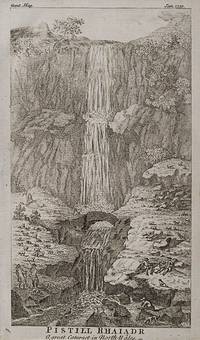
1750200089AG1750. Gentleman's Magazine and others 1750. Original engraving. Plate Size: 13.5 x 9.5 cm - 15 cm x 21.5 cm. Sheet Size: 20 cm x 11.7 cm - 19.5 cm x 24.3 cm. Original engravings. In good- condition. Some browning evident. One sheet has significant tear with section of margin missing. A lovely collection of engraved landscapes of some places of natural beauty in Ireland Wales and Scotland. Text in German and English. The titles of the individual engravings are as follows: 'Ansicht der vordern Seite des Bullers bei Buchan in Schottland'. 'Pistall Rhaiadr -A Great Cataract in North Wales'. 'Die Riesenstrasse in Irland.' 'Die Basalt Insel Staffa mit des Fingals Höhle / Innere Ansicht der Fingals Höhle.' unknown
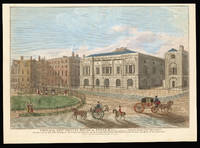
179912423London: Published by Laurie & Whittle 55 Fleet Street 1799. Image: 271 by 397mm 10.75 by 15.75 inches. Sheet: 317 by 428mm 12.5 by 16.75 inches. Engraving with original hand colour crease to upper part of print trimmed to side neat lines. Trinity House was founded as a pilotage authority and maritime charity. In 1793 their London headquarters was in need of repair and a new site was selected in Tower Hill. A new headquarters designed by Samuel Wyatt was completed by 1796. The trust continues to act as the General Lighthouse Authority for England and Wales to this day. The print is dedicated to William Pitt the Younger who at the time was Master of Trinity House and had laid the foundation stone of the new building. BL Maps K.Top.25.8.; BM 18801113.3451. Published by Laurie & Whittle, 55 Fleet Street, unknown
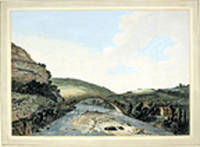
1770103721770. Hand-coloured engraving. Trimmed as usual and mounted on washline background. Mounting sheet is watermarked laid paper. Image size: 14 1/8 x 20 1/8 inches. A wonderful romantic view in the grand tradition of the picturesque English landscape.<br/> <br/> Towards the middle of the eighteenth century a trend developed amongst English artists and printmakers which sought to visually record the natural beauties of England and Wales. Sparked by a sense of national confidence and patriotism English printmakers began to publish topographical prints of the important sights in the British Isles. In addition to being a visual record of the countryside they were meant to encourage public recognition of the beauty and history of England. They were aimed at English and foreign tourists who desired a memento of their travels or at those vicarious tourists who collected topographical prints instead of traveling. This is a wonderful example of a picturesque eighteenth century landscape print. By trimming the image within the platemark and mounting it on a decorative washline background the print has the effect of a landscape painting. The likeness is heightened by the addition of added body colour in the image and the use of a heavy painterly technique of engraving. This practice was common amongst engravers and printsellers who wished to capitalize on this trend for picturesque landscapes of the English countryside. This print is from the famed Oettingen-Wallerstein collection which was compiled over two centuries by various members of the royal household. The collection is known for its stunning impressions and the immaculate condition of its prints.<br/> <br/> Clayton The English Print 1688-1802 p. 155; Lugt Les Marques de Collections Supplement 2715a. unknown
1791285421791. A Paris chez Buisson 1791. 3 volumes in-8 207 x 128 mm de 1 f. n.fol. 470 pp. et 1 f. bl. ; 2 ff. n.fol. et 444 pp. ; 2 ff. n.fol. et 441 pp. Reliures uniformes de l'ÂŽpoque de pleine basane glacÂŽe et flammÂŽe blonde plats jansÂŽnistes dos lisses ornÂŽs d'un double filet d'encadrement dorÂŽ doubles filets dorÂŽs roulettes dorÂŽes larges fleurons dorÂŽs piÂces de titre de maroquin carmin piÂces de tomaison de maroquin turquoise titre dorÂŽ tomaison dorÂŽe au centre d'un ovale dorÂŽ palette dorÂŽe en queue jeu de petits filets obliques dorÂŽs sur les coupes tranches jaunes et mouchetÂŽes. Edition originale rare ; complÂte des trois volumes la constituant. L'ouvrage renferme des anecdotes piquantes. Entre autres la romanesque aventure du duc de Richelieu avec MmeÊMichelin la belle tapissiÂre. ''Si les MÂŽmoires jusqu'ici publiÂŽs sont plut™t l'histoire du fin du rÂgne de Louis XIV de la rÂŽgence et du rÂgne de Louis XV que celle de ce Nestor de la galanterie le lecteur se verra pourtant ici prÂŽsenter un hÂŽros en dÂŽshabillÂŽ. Le flambeau de la vÂŽritÂŽ pÂŽnÂtre ˆ prÂŽsent partout et malheur ˆ ceux dont il ne peut ÂŽclairer que les vices ! Toutes les femmes se disputaient le coeur de Richelieu et jamais homme n'a mieux possÂŽdÂŽ le talent de les subjuguer. Les aimant toutes il prÂŽtendait leur devoir un ÂŽgal hommage ne rougissant pas de descendre de la princesse ˆ la femme qui vit du produit de ses charmes.'' L'ouvrage reproduit ÂŽgalement nombre de manuscrits anecdotes ou lettres de ou adressÂŽ ˆ Richelieu. A cet ÂŽgard l'auteur ''a laissÂŽ en blanc que les noms de femmes qu'il n'a pu dÂŽcouvrir - en petit nombre - et donne toutes les piÂces justificatives prouvant ses assertions lettres du Roi de Madame de Ch‰teauroux du cardinal de Fleury de Madame de Pompadour ou encore de M. d'Argenson. Barbier II Dictionnaire des ouvrages anonymes - QuÂŽrard III La France littÂŽraire p.71 - Brunet VI Manuel du libraire et de l'amateur de livres 23098. Angles ÂŽlimÂŽs. Papier lÂŽgÂrement oxydÂŽ. PrÂŽsence de quelques claires rousseurs ou petites t‰ches dans les corps d'ouvrages. Petit manque angulaire en marge des deux derniers feuillets du deuxiÂme volume. Du reste bonne condition. b42961 unknown