(Emblem Book) Hugo, HermanBiblio.com
73 résultats
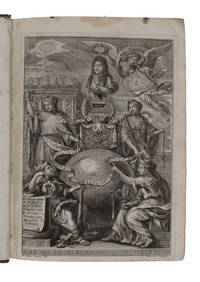
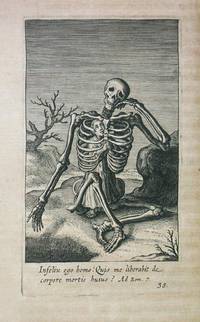
1624244193Antwerp: Vulguait Boëtius a Bolswert Typis Henrici Aertssenii 1624. First edition. Engraved allegorical title page engraved coat of arms of Pope Urban VIiI initial introductory enblem and 45 leaves of engraved emblematic plates by Boëce van Bolswert; 32 412 3. 1 vols. 8vo. Contemporary vellum slightly soiled. Preliminary leaves misbound. First edition. Engraved allegorical title page engraved coat of arms of Pope Urban VIiI initial introductory enblem and 45 leaves of engraved emblematic plates by Boëce van Bolswert; 32 412 3. 1 vols. 8vo. First edition of the most popular spiritual love emblem book which made the genre popular throughout Europe in the 17th century and beyond. By the end of the 18th century the Pia Desideria had been reprinted nearly 40 times in Latin French German Spanish Dutch Polish English Danish and Italian. This emblem book mixes tender messages of care with dire warnings to sinners and while it is written in Latin demanding a well-educated reader it proved to be wildly popular. One of the keys of the popularity of this work are the emblematic designs of Boetius Adamsz. van Bolswert ca. 1580-1633 each of which is accompanied by an explanatory caption. Born in Bolsward Friesland Boetius was a pupil of Abraham Bloemaert at Utrecht and went to Antwerp around 1618 joining the painter's guild in 1620. Boetius also worked in Brussels where he met and was inspired by Pieter Paul Rubens. Herman Hugo 1588-1629 a Brussels Jesuit was teacher at the Jesuit College in Antwerp and confessor of the Duke of Aerschot with whom he went to Spain where he was appointed army chaplain to Spinola. This book was used as a rhetorical example for students of Rhetoric at the Jesuit College at Brussels. Landwehr Emblem & Fable Books 345 Vulguait Boëtius a Bolswert, Typis Henrici Aertssenii unknown
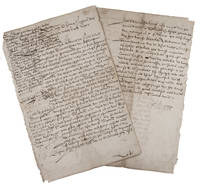
1609A7TEZG01U79ONetherlands 1609. Letter on 2 half-sheets 31 x 20.5 cm. In Dutch. Letter by Hugo de Groot supporting the impoldering of the Wijckermeer a lake situated between Beverwijk and Assendelft north of the IJ: now a polder of ca. 700 hectares. Grotius writes in his capacity as public prosecutor of Holland on behalf of Gerrit VIII van Assendelft. Gerrit's father Cornelis van Assendeft begun constructing the "Assendelftse dijk" ca. 1590 to secure the alluvial lands that had recently silted up. The city of Haarlem and others had protested and the Court had pronounced judgment on 6 April 1591. A later annotation suggests the Supreme Court on 15 December 1609 dismissed the appeal and put off judgement until the future.The original double-leaf separated into two leaves a bit browned and marginal waterstains. Reasonable condition. unknown
1659SEM18337Antwerp: Apud H. Aertssens 1659. Hardcover. Very Good. 32 442 6. Contemporary stiff vellum. The 45 emblems include a full-page engraving of Pope Urban VIII and others by the Dutch engraver Boece van Bolswert. Early ownership signature of Robert Davies. A few scattered marks typical discoloration to vellum; overall a nice copy of this popular book of religious emblems. <br/><br/> Apud H. Aertssens hardcover
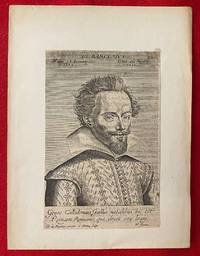
162808733London: Printed by Felix Kyngston for Richard Meighen and Henry Seile 1628. Print. Very Good Plus. PRINTS. Daniel Dumonstier 1574-1646 Claude Mellan 1598-1688 Hugo Grotius 1583–1645. "Engraved Portrait of the Scottish Poet John Barclay 1582-1621." London: Printed by Felix Kyngston for Richard Meighen and Henry Seile 1628. Frontispiece portrait likely clipped from a copy of "John Barclay His Argenis Translated Out of Latine into English" by Robert Le Grys d.1635 published in London in 1628 and tipped at top corners to later sheet. The verso is a printing of Milton's "An Apology for Smectymnuus." The quote at bottom was said by the Dutch jurist Grotius of Barclay and translates to: "By race a Caledonian Scottish by birth a Gaul French this is the man Who teaches Rome to speak in the Roman tongue." Sheet: 7 3/4 x 6 inches. Portrait: 5 1/2 x 3 3/4 inches. 1 oz. 2 pp. Light soiling and toning. Very Good Plus. London: Printed by Felix Kyngston for Richard Meighen and Henry Seile unknown
161930320s'Gravenhage 1619. De Groot 1583-1645 bedeutender holländischer Rechtsgelehrter und Philosoph wird mit diesem Urteil zu lebenslänglicher Haft verurteil. Er konnte aus der Haft entfliehen und lebte fortan in Paris unter dem Schutz des französischen Königs Letzte Seite eventuell fehlend ansonsten guter Zustand Hillebrandt Jacobssz 8°. br. Niederlande unknown
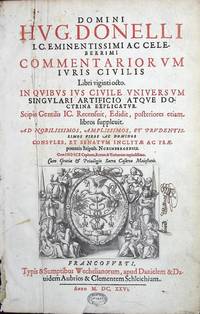
1626k1349Frankfurt: Daniel & David Aubry & Clemens Schleich. G : in good condition. Cover rubbed and soiled. Spine darkened. Browning. 1626. First Edition. Cream hardback vellum cover. 390mm x 260mm 15" x 10". xxiii 1447pp xlvii. Solicitors Supreme Courts Library. Heavy book extra shipping needed for overseas. . Daniel & David Aubry & Clemens Schleich hardcover
165019481Smukt privat hldrbd. med rig rygforgyldning helt guldsnit. Orig. foromslag medindbundet. 8300 pp. samt kort. unknown
170045854Amsterdam: By Daniel vanden Dalen MDCC. 1700.- 19 h. 495 p. 16 h.: Ante la portada Frontis grabado al cobre más 7 grabados al cobre plegados y 1 más a toda plana en total son 9 grabados al cobre incluyendo el frontis; 8º menor 165 x 108 cm; Texto en holandés; Enc. en Pleno Pergamino original.- El autor fue un importante erudito holandés teórico del arte que siempre tuvo una especial inclinación a los estudios sobre el arte y la cultura judÃa. Este libro en su tÃtulo nos dice más o menos: "Tercera parte. O la segunda continuación a la reputación de los hebreos o la Mancomunidad de los judÃos bajo las ceremonias de las órdenes de los sacerdotes de las manos sagradas útiles en Jerusalén". RARO. Un grabado falto de un pequeño trozo en su esquina inferior externa otro falto de un trozo en su parte lateral externa y otros grabados reparados de desgarros y pequeños desperfectos. Las primeras hojas con tenues señales de humedad y la portada con una firma y fecha manuscritas a tinta por un lector de la época. La encuadernación ligeramente restaurada. A pesar de lo dicho que es preceptivo el libro se encuentra en bastante buen estado conteniendo todos los grabados que suelen faltar en esta obra. HEBRAÃSMO EN GENERAL Y BÃBLICA By Daniel vanden Dalen hardcover
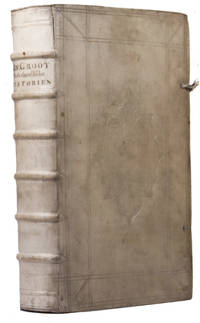
1681ABC_48018Amsterdam: the widow of Joannes van Someren Abraham Wolfgangk and Hendrik & Dirk Boom 1681. Contemporary blind-tooled vellum with the manuscript author and title on the spine a large ornament in the centre of both boards surrounded by two double fillet frames leather closing ties. Folio. With an engraved allegorical frontispiece by Abraham Bloteling after Zacharias Webber I 20 full-page engraved portraits and 27 double-page plates views and plans by Jan Luiken Coenraet Decker and Gilliam van der Gouwen a title page printed in red and black decorated woodcut initials and woodcut head- and tailpieces. 3 parts in 1 volume. First and only Dutch edition as well as the only illustrated edition of the main historical works by the famous Dutch jurist philosopher theologian and diplomat Hugo de Groot Hugo Grotius 1583-1645 also known as the "infant prodigy from Delft". Divided in three parts it covers the history of the Northern Low Countries from 1555 to 1609. Most important are the Annales et historiae de rebus Belgicis in the first part translated as Nederlandtsche jaerboeken en historien . as a contemporary history of the Dutch Revolt or the Eighty Years' War till the Truce in 1609. The work is copiously illustrated with beautiful large portraits of the most important political figures of the time as well as views and plans of important events and towns.Grotius began writing the work when he was just 18 on request of the States of Holland who asked him to compose a history of the revolutionary first years of the Dutch War of Independence. He wrote the Annales covering the years 1555-1588 in the years 1601-1612 using a language clearly inspired by the Latin historian Tacitus. The Historiae covering the years 1588-1609 here also included in the first part followed soon. His text however contained many stories and details which were considered controversial by the States of Holland so the Annales were not published before 1657. The work then became quite popular and was soon translated to French 1662 English 1665 and Dutch 1681. The present Dutch translation was made by Joan Goris dates unknown.The other two parts of the present work include translations of three other works by Grotius namely: 1 the first edition of Grollae obsidio 1629 the history of the siege of the fortified town "Grol" Groenlo by Prince Frederick Henry in 1627; 2 Liber de antiquitate Reipublicae Batavicae 1610 of which a Dutch translation had been published in the same year under the title Tractaet vande oudtheyt vande Batavische nu Hollandsche Republique and 3 perhaps - apart from De iure belli ac pacis 1625 - Grotius most famous work: Mare liberum The freedom of the seas 1609 of which a Dutch translation had appeared in 1614. On the basis of these last two books Grotius is considered as one of the founders of international and natural law. The Mare liberum includes reports and commentary on the Dutch East and West India trade companies as well as a 17th-century perspective on trade in the Americas from 1591-1609.With the armorial bookplate of the Dutch lawyer Wilhelm Cornelis Baert de Waarde 1864-1951 mounted on the recto of the first free flyleaf. The front joint is weakened at the head and tail lacking the bottom pair of closing ties. Otherwise in very good condition.l Klaversma/ Hannema 585 and 586; Sabin no. 28956; cf. Haitsma Mulier E.O.G. Grotius Hooft and the writing of history in the Dutch Republic in: A.C. Duke C.A. Tamse eds. Clios mirror. Historiography in Britain and the Netherlands VIII 1985 pp. 55-72; Heesakkers C.L. Grotius als geschiedschrijver in: Het Delfts orakel Hugo de Groot 1983 pp. 103-110. the widow of Joannes van Someren, Abraham Wolfgangk and Hendrik & Dirk Boom, hardcover
16573300001Amsterdam: Joannis Blaeu 1657. Book. Very Good. Quarter Leather. 4to - over 9¾" - 12" tall. A description of the Dutch republic's revolt against Spain consisting of two parts; the " Annales" covering the period from 1559 to 1588 and the " Historiae" beginning in 1588 and concluding with the Twelve Years' Truce 1609-21 pp xv 569 xxii. Internally in very good condition subject to a modest triangular water stain c4cm x 4cm x 5cm affecting the top corner of the first few pages.The modern quarter leather binding is in excellent condition. Joannis Blaeu hardcover
16582309053Amstelaedami: Ioannis Blaev 1658. Hard Cover. Very Good/No Jacket. 1658 printing early printing of Sabin 28956. Boards soiled lacks frontispiece portrait of Grotius owner bookplate of The Right Honourable Wilmot Earl of Lisburne in the Kingdom of Ireland on front endpaper. xiv 812 34 pp. 24mo. Latin text. Vellum boards morocco spine label gilt titles and rules marbled edges. The title translates as Annals and History of the Low Countries' War which refers to what is now known as The Eighty Years' War or the Dutch War of Independence 1568-1648 though the conflict involved seventeen provinces and their revolt against Philip II of Spain sovereign of the Habsburg Netherlands. These would later become the nations of the Netherlands Belgium and Luxembourg. Sabin quotes F. Muller in stating that this work is "important for the history of the events which impeded the execution of Usselincx's plan to form the East- and West-India Companies from 1591--1609." Grotius wrote the manuscript in 1612-13 covering the period of the war through the Twelve Years' Truce and it was first published in Amsterdam in 1657. He was a Dutch humanist best known for his influence on international law specifically his works 'On the Law of War and Peace' and 'The Free Seas' and the concept of human rights. Ioannis Blaev hardcover
1670083641Amstelaedami Amsterdam: Joannem Blaev Johann Blaeu 1670. Editio Nova cum Annotatis. Leather Bound. pp. viii 620 Index ; 21; 28 conts. list. 8vo. Bound in brown leather. Red speckling to page edges. Vignette title title page in red and black engraved portrait. Formerly the property of Queen's College Library Kingston as shown by a bookplate to front pastedown and blind stamps to ffep and title page. Loss to spine ends joints splitting leather dry with surface cracking over spine pink ink letters to front pastedown gift inscription to ffep dated 1885 ink inscriptions to title page occasional spotting throughout. Binding still tight and sound and contents very clean. Text in Latin with some Greek. Includes a commentary by Grotius on Paul the Apostle's Epistle to Philemon as well as Grotius' dissertation on free access to the ocean 'De Mari Libero'. Joannem Blaev [Johann Blaeu] unknown
1679099741Amstelædami: Amstelaedami : Apud heredes Joannis Blaeu 1679 1679. Books measure 40 x 26 cm. 3 volumes bound in 4. Collation 24800pp 67pp index 4668-1238pp 173pp index 2775pp 62pp index titles printed in red and black 1 full page portrait. Each volume has bookplate of Sir John Holt and inscribed '' Bequeathed by Canon William Munane '' each title page inscribed '' exlibris Munane ''. Sir John Hort 1731-1807 English consul-general at Lisbon in 1767. Canon William Murnane Catholic priest in London attended Roger Casement on the weeks before his death when he converted to Roman Catholicism.Bound in full period vellum panelled boards blind stamped center piece to each board raised bands. Boards bumped on corners hinge joints cracked one joints more substantial cracked with slighly lifting of vellum boards sprung light dust/dirt marking. Generally bindings in good condition. Internally pages clean. A nice set in attractive period bindings. . Full Vellum. Near Very Good. Folio - over 12" - 15" tall. Amstelaedami : Apud heredes Joannis Blaeu 1679 Hardcover
168760297Paris Arnould Seneuze 1687. 4to. Two contemporary uniform full calf bindings with five raised bands to richly gilt spines. Capitals and upper front hinge of volume one worn and boards with a few scrapes. Internally very nice and clean with just the occasional light brownspotting. Engraved frontispiece in vol. 1 engraved title-vignettes large engraved vignette to verso of title-page of vol. 1 engraved portrait in vol. 1 woodcut vignettes and initials. Printed on good paper and with wide margins. 48 621 3 pp. frontispiece and portrait; 4 197 3 pp. <br/><br/><em>The very rare first edition of the first French translation of Grotius' groundbreaking magnum opus "De Jure Belli ac Pacis" the founding work of international law. The profoundly influential masterpiece - written during the Thirty Years' War in the hope that rational human beings might be able to agree to legal limits on war's destruction - "made him famous throughout Europe. the questions which he put forward have come to be the basis of the ultimate view of land and society. This was the first attempt to lay down a principle of right and a basis for society and government outside Church or Scripture. Grotius's principle of an immutable law which God can no more alter than a mathematical axiom was the first expression of the "droit naturel" the natural law which exercised the great political theorists of the eighteenth century and is the foundation of modern international law." PMM 125. This magnum opus of legal philosophy played a tremendous role in French law and politics and in the entire development of international law in general. "It is on the DIB De Iure Bellis that the bulk of Grotius' reputation rests. It consists of an introduction and three books totaling more than 900 pages in translation. As with DIP the introduction or "Prolegomena" holds the greatest interest for philosophers for it is here that Grotius articulates and defends the philosophical foundations of the DIB. While philosophers are naturally attracted to the "Prolegomena" the body of the DIB is also redolent with themes of philosophical interest. Book One defines the concept of war argues for the legitimacy of war and identifies who may legitimately wage war. Book Two deals with the causes of war the origins of property the transfer of rights and more while Book Three is dedicated primarily to the rightful conduct of belligerents in war. After the initial publication in 1625 Grotius ushered several more editions to press during his life each time adding more references without substantially changing the arguments." SEP.Living in the times of the Eighty Years' War between Spain and the Netherlands and the Thirty Years' War between Catholic and Protestant European nations Catholic France being in the otherwise Protestant camp Grotius was deeply concerned with matters of conflicts between nations and religions. His magnum opus was a monumental effort to restrain such conflicts on the basis of a broad moral consensus. It was begun in prison and published during his exile in Paris. "In the dedication of his great work "De Jure Belli ac Pacis" to Louis XIII of France Grotius addresses the king as "everywhere known by the name Just no less than that of Louis . Just when you call back to life laws that are on the verge of burial and with all your strength set yourself against the trend of an age which is rushing headlong to destruction; . when you offer no violence to souls that hold views different from your own in matter of religion; . when by the exercise of your authority you lighten the burden of oppressed peoples."When writing this dedication and the Prolegomena to "De Jure Belli ac Pacis" originally published in Paris in 1625 Grotius was living in exile. Europe was war-torn and depression and suffering from hunger and cold prevailed in many regions justifying Grotius' description of international law as such: "in our day as in former times there is no lack of men who view this branch of law with contempt as having no reality outside of an empty name." The treaty of peace embodying many of the universal and permanent principles which Grotius abstracted "from every particular fact" in those dark days of the early part of the Thirty Years' War was not concluded till 23 years later. The year 1624 was in the negotiation of the treaty assumed to be the norm year for restoration of the "Status quo".The more than three centuries since Grotius wrote his magnum opus seem to bear witness to his views upon war peace in spite of the fact that many a state has not yet realized that the state is "Truly fortunate which has justice for its own boundary line." In 1625 Grotius famously stated: "there is no state so powerful that it may not sometime need the help of others outside itself either for the purposes of trade or even ward off the forces of many foreign nations united against it."Grotius's paramount influence upon international law is widely acknowledged worldwide. For instance since 1999 the American Society of International Law holds an annual series of Grotius Lectures. Because of his theological underpinning of free trade he is also considered an "economic theologist"."To those desirous of understanding the fundamental principles which have motivated some of the greatest statesmen of modern time and the bases upon which a state which is to remain essentially sound must rest a reading of Grotius' Prolegomena to the "Law of War and Peace" is commended." George Grafton Wilson: "Grotius: Law of War and Peace." p. 1. In: The American Journal of International Law vol. 35 nr. 2 1941. </em> hardcover
168751671Paris Arnould Seneuze 1687. 4to. Two contemporary uniform full calf bindings with five raised bands to richly gilt spines. All edges of boards gilt. Hinges and capitals worn with some loss but still tight. A damp stain to first and last leaves of both volumes affecting about 17 leaves in all mostly marginal. Otherwise a nice and clean copy with just the occassional brownspotting. Engraved frontispiece in vol. 1 engraved title-vignettes large engraved vignette to verso of title-page of vol. 1 engraved portrait in vol. 1 woodcut vignettes and initials. Printed on good paper and with wide margins. 48 621 3 pp. frontispiece and portrait; 4 197 3 pp. <br/><br/><em>The very rare first edition of the first French translation of Grotius' groundbreaking magnum opus "De Jure Belli ac Pacis" the founding work of international law. The profoundly influential masterpiece - written during the Thirty Years' War in the hope that rational human beings might be able to agree to legal limits on war's destruction - "made him famous throughout Europe. the questions which he put forward have come to be the basis of the ultimate view of land and society. This was the first attempt to lay down a principle of right and a basis for society and government outside Church or Scripture. Grotius's principle of an immutable law which God can no more alter than a mathematical axiom was the first expression of the "droit naturel" the natural law which exercised the great political theorists of the eighteenth century and is the foundation of modern international law." PMM 125. This magnum opus of legal philosophy played a tremendous role in French law and politics and in the entire development of international law in general. "It is on the DIB De Iure Bellis that the bulk of Grotius' reputation rests. It consists of an introduction and three books totaling more than 900 pages in translation. As with DIP the introduction or "Prolegomena" holds the greatest interest for philosophers for it is here that Grotius articulates and defends the philosophical foundations of the DIB. While philosophers are naturally attracted to the "Prolegomena" the body of the DIB is also redolent with themes of philosophical interest. Book One defines the concept of war argues for the legitimacy of war and identifies who may legitimately wage war. Book Two deals with the causes of war the origins of property the transfer of rights and more while Book Three is dedicated primarily to the rightful conduct of belligerents in war. After the initial publication in 1625 Grotius ushered several more editions to press during his life each time adding more references without substantially changing the arguments." SEP.Living in the times of the Eighty Years' War between Spain and the Netherlands and the Thirty Years' War between Catholic and Protestant European nations Catholic France being in the otherwise Protestant camp Grotius was deeply concerned with matters of conflicts between nations and religions. His magnum opus was a monumental effort to restrain such conflicts on the basis of a broad moral consensus. It was begun in prison and published during his exile in Paris. "In the dedication of his great work "De Jure Belli ac Pacis" to Louis XIII of France Grotius addresses the king as "everywhere known by the name Just no less than that of Louis . Just when you call back to life laws that are on the verge of burial and with all your strength set yourself against the trend of an age which is rushing headlong to destruction; . when you offer no violence to souls that hold views different from your own in matter of religion; . when by the exercise of your authority you lighten the burden of oppressed peoples."When writing this dedication and the Prolegomena to "De Jure Belli ac Pacis" originally published in Paris in 1625 Grotius was living in exile. Europe was war-torn and depression and suffering from hunger and cold prevailed in many regions justifying Grotius' description of international law as such: "in our day as in former times there is no lack of men who view this branch of law with contempt as having no reality outside of an empty name." The treaty of peace embodying many of the universal and permanent principles which Grotius abstracted "from every particular fact" in those dark days of the early part of the Thirty Years' War was not concluded till 23 years later. The year 1624 was in the negotiation of the treaty assumed to be the norm year for restoration of the "Status quo".The more than three centuries since Grotius wrote his magnum opus seem to bear witness to his views upon war peace in spite of the fact that many a state has not yet realized that the state is "Truly fortunate which has justice for its own boundary line." In 1625 Grotius famously stated: "there is no state so powerful that it may not sometime need the help of others outside itself either for the purposes of trade or even ward off the forces of many foreign nations united against it."Grotius's paramount influence upon international law is widely acknowledged worldwide. For instance since 1999 the American Society of International Law holds an annual series of Grotius Lectures. Because of his theological underpinning of free trade he is also considered an "economic theologist"."To those desirous of understanding the fundamental principles which have motivated some of the greatest statesmen of modern time and the bases upon which a state which is to remain essentially sound must rest a reading of Grotius' Prolegomena to the "Law of War and Peace" is commended." George Grafton Wilson: "Grotius: Law of War and Peace." p. 1. In: The American Journal of International Law vol. 35 nr. 2 1941. </em> hardcover
166248Amsterdam. Good with no dust jacket. 1662. Full-Leather. Leather is just starting to crack at the hinges. Small chip at the top of the spine. Early leather with raised bands & gilt titles & devices. Could be contemporary with the publication as the book appears untrimmed. Unfortunately the title page & frontice are missing. The balance of the book is fine to very fine except for some water staining around the edges of the very last pages not affecting the text. Usual library marks.; Ex-Library; 8x12 1/2 . hardcover
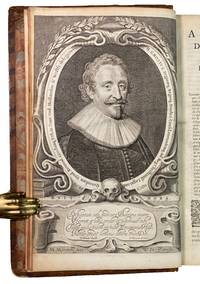
166243065Amsterdam: De l’Imprimerie de Jean Blaeu 1662. First French Edition. Folio. 29cm the First Edition in French. xielaborated engraved frontis portrait676xviiipp. contents index in contemporary full mottled calf real raised bands gilt floral and border decorations upper hinge cracked but holding both inner hinges guards marbled endpapers all edges stained red in contemp. style some wear on the board edges overall clean and text is tight - The elaborate engraved frontis of Grotius in 1632 is by D. Delff after M. Miereveld.Note the books in the borders. ~ L'auteur 1583-1645 était un éminent juriste et humaniste néerlandais ; cet ouvrage est considéré comme le compte rendu faisant autorité des affaires politiques néerlandaises contemporaines et a été traduit à partir de la première édition latine de 1657. ~~~ The author 1583-1645 was a renowned Dutch jurist and humanist; this work is considered the authoritative account of contemporary Dutch political affairs and was translated from the first Latin edition of 1657. De l’Imprimerie de Jean Blaeu unknown
1657313611Amsterdam: Ex Typograpejo Joannis Blaeu 1657. First Edition. Engarved portrait of Grotius. 16 569 22 page. Folio. Later black cloth. Very Good. First Edition. Engarved portrait of Grotius. 16 569 22 page. Folio. Graesse III p.163; Brunet II 1767 Ex Typograpejo Joannis Blaeu unknown
166246115Amsterdam:: De l'Imprimerie de Jean Blaeu 1662. First edition in French. contemporary full calf rebacked with a new spine edges and endpapers. Some light dampstaining and a few wormholes; old repairs to the first two leaves; marginal tear to one leaf; some scattered inoffensive foxing. . Folio. Engraved portrait. . De l'Imprimerie de Jean Blaeu, unknown
1650254468Amsterdam: Apud Johannem Blaeu 1650. Editio Nova Corrected edition first published by Blaeu in 1642. 24 618 45 pp. 1 vols. 32mo. Contemporary vellum over boards manuscript spine title. Bookplate of Arthur Houghton on front pastedown 19th century academic ownership inscription on front pastedown a few scattered early annotations and underscores moderate scattered foxing tanning and occasional spotting bound without binder's endsheets otherwise a very good copy. Editio Nova Corrected edition first published by Blaeu in 1642. 24 618 45 pp. 1 vols. 32mo. A corrected edition of Grotius's masterwork of legal theory begun by him in 1604 and completed after his escape to Paris in 1621. The first edition was published there in 1625 his reputation was soon established throughout Europe and this work was reprinted frequently and translated thereafter. Blaeu first published this text with Grotius' final corrections annotations and enhancements in 1642. "This was the first attempt to lay down a principle of right and a basis for society and government outside of Church or Scripture . Grotius's principle of an immutable law which God can no more alter than a mathematical axiom was the first expression of the 'droit naturel' . and is the foundation of modern international law" PMM. Meulen/Diermanse 574; Printing and the Mind of Man 125 Apud Johannem Blaeu unknown
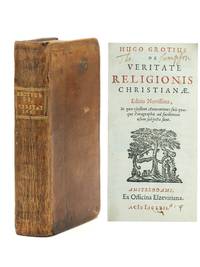
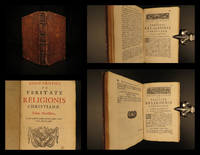
1662504745Ex Officina Elzeviriana Elzevier 1662. Leather. VERY GOOD. 12 408pp. Small 12mo contemporary brown calf blind tooled with corner fleurons 10 blind ruled spine panels brown morocco label lettered and ruled in gilt. In Latin. Title page printed in black and red with woodcut device edges speckled in red. Some minor staining and rubbing to edges ex-libris St. Benedict's Abbey Fort Augustus Scotland with their bookplates to front. Binding remains very sound and square with clean fresh text. This 1662 edition was the first of five Elzevier editions published by Elzevier Willems Les Elzevier: Histoire et Annales Typographiques §1288. Grotius was a Dutch polymath prolific in theology philosophy law mathematics and literature. Following the Synod of Dort he was condemned to prison in 1626 along with many other Arminian leaders receiving a life sentence of which he served 18months before being ingeniously smuggled out in a trunk by his wife. Grotius wrote de Veritate from prison in 1627; it was an international success translated into Latin French English German Chinese and Malay over the next century. 'The original object of this prison work which was written in verse was to furnish seafaring men who should come in contact with the heathen arguments in defense of their faith. But when translated into Latin prose it found its way into the highest circles of educated men and was until very recently a standard text-book on the Evidences of Christianity. In this work Grotius may be said to have erected apologetics into a science and thus rendered immense service even though his treatment of the subject does not meet all the wants of the present age. It is divided into six books of which the first treats of the existence and attributes of God; the second of the excellence of the doctrine and ethics of Christianity; the third of the authenticity of the books of the New Testament; the last three of objections supposed to be made on the part of pagans Mohammedans and Jews.' McClintock & Strong. Ex Officina Elzeviriana [Elzevier] unknown
169611560<p><b>1696 Truth of Christianity Dutch Hugo Grotius Veritate Pennsylvania Provenance</b></p><p><i>"Not to know certain things is a great part of wisdom." </i> </p><p><i> – </i>Hugo Grotius </p><p>Hugo Grotius was an early 17th-century Dutch jurist who is most remembered for his contributions to the foundation of international and natural law. He also made provided groundwork in Arminianism and is considered and 'economic theologist'. In addition to his most famous work '<i>De Jure Belli'</i> Grotius published a treatise outlining the truths of Christianity – '<i>De veritate religionis Christianae'</i>. In this book Grotius argued that Christianity was the supreme truth over all religions. </p><p>Item number: #11560</p><p>Price: $599</p><p>GROTIUS Hugo</p><p><b><i>De veritate religionis Christianae : in qua ejusdem annotationes ipsius textus verbis subjectae sunt</i></b></p><p>Amstelaedami: Henricum Wetstenium 1696.</p><p><u>Details</u>: </p><p>· Collation: Complete with all pages </p><p>o 8 296</p><p>· Provenance:</p><p>o Armorial Bookplate – T JEE "SAPERE AUDE" / Thomas Jee Caledecote</p><p> Rev. Thomas Jee 1776 - 1853 from Caldecote Cambridgeshire served as Clerk of Thaxted Essex.</p><p>o <b>Handwritten – <i>Thomas Penn</i></b></p><p> Thomas Penn 1702 – 1775 was the son of William Penn founder of the Province of Pennsylvania.</p><p> Penn inherited the position of Proprietor of the Colony of Pennsylvania for the British Crown in 1718 along with his brothers John and Richard on the death of their father William Penn</p><p>o Handwritten –<i> Gregori Bernardi Keen</i></p><p> Gregory Bernard Keen 1844 – 1930 was an American historian whose primary work was based on the state of Pennsylvania.</p><p>· Language: Latin </p><p>· Binding: Leather; tight & secure</p><p>· Size: ~6.5in X 4in 16.5cm x 10cm</p><p>Our Guarantee:<br /></p><p>Very Fast. Very Safe. Free Shipping Worldwide.</p><p>Customer satisfaction is our priority! Notify us with 7 days of receiving and we will offer a full refund without reservation!</p><p>11560<br /></p><p>Photos available upon request.</p> Henricum Wetstenium hardcover
1680TH308Amsterdam: Ex Officina Elseviriana 1680. New Edition . Hardback. Vg. 12mo. x 396 pp. Contemporary full claf with raised bands and the remains of a morocco label to the spine. Titles printed in red and black. Fine printers device on the title-page. Grotius Hugo 1583-1645. A small printing from the Elzevir Press. Some early 19th century margin notes in a small hand. <br/> <br/> Ex Officina Elseviriana hardcover
167442703Amsterdam: Ex Officina Elseviriana 1674. Edito Novissima. Full calf. Very good. 408p 16mo. A very good copy ion full calf front fly leaf torn. Small collector's bookplate. <br/><br/> Ex Officina Elseviriana unknown
164046021Lugduni Batavorum Leiden 1640. 12mo. Bound in one contemp. full vellum. Small spots to vellum. MS-title on spine faint. 63277;372 pp. Light marginal browning. From the library of the Danish zoologist Henrik Krøyer. <br/><br/><em>Early edition of this famous work arguing for the truth of Christianity and aiming to convert Muslims and Jews to Christianity.While in Paris Grotius set about rendering into Latin prose a work which he had compiled in prison providing rudimentary yet systematic arguments for the truth of Christianity. Showcasing Grotius' skill as a poet the earlier Dutch version of the work Bewijs van den waren Godsdienst pub. 1622 was written entirely in didactic verse. The Latin work was first published in 1627 as De veritate religionis Christianae."It was the first Protestant textbook in Christian apologetics and was divided into six books. Part of the text dealt with the emerging questions of historical consciousness concerning the authorship and content of the canonical gospels. Other sections of the work addressed pagan religion Judaism and Islam. What also distinguished this work in the history of Christian apologetics is its precursor role in anticipating the problems expressed in Eighteenth century Deism and that Grotius represents the first of the practitioners of legal or juridical apologetics in the defence of Christian belief. Hugely popular the book was translated from Latin into English Arabic Persian and Chinese by Edward Pococke for use in missionary work in the East and remained in print until the end of the nineteenth century."Wikipedia. </em> hardcover