STENDHALBiblio.com
54 résultats
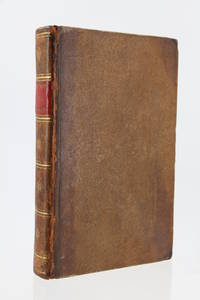
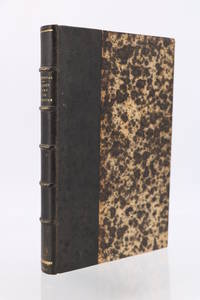
186789582Paris: Michel Lévy frères 1867. Fine. Michel Lévy frères Paris 1867 12 x 18.7 cm Relié  Partly original edition with no mention of a deluxe paper issue. Half black shagreen binding spine with five raised bands tooled with gilt garlands gilt date at foot marbled paper boards comb-marbled endpapers and pastedowns gilt edges contemporary binding. Pleasant copy.   Michel Lévy frères hardcover
189089586Paris: G. Charpentier & Cie 1890. Fine. G. Charpentier & Cie Paris 1890 11.7 x 18.8 cm Relié First edition of which no copies were printed on deluxe paper.Half black shagreen binding spine with five raised bands decorated with gilt garlands gilt date at foot marbled paper boards combed paper endpapers and pastedowns gilt top edge original wrappers preserved.Scattered foxing some reading marks in red and blue pencil in the margins of certain paragraphs ink stamps of the Etienne Vion bookshop and stationery in Amiens on the title page a library shelfmark at the head of the title page. G. Charpentier & Cie hardcover
185589588Paris: Michel Lévy frères 1855. Fine. Michel Lévy frères Paris 1855 11.8 x 18.8 cm 2 volumes reliés First edition. Bound in black half shagreen spines with five raised bands decorated with gilt garlands gilt dates at foot marbled paper boards comb-marbled endpapers and pastedowns gilt edges. Some foxing mainly at the beginning and end of the volumes. Preface by Prosper Mérimée. Michel Lévy frères hardcover
1846435822ª. Ed.- Paris: Publie par J. Hetzel Imp. Centrale de Napoleon Chaix et Cie. 1846.- 2 h. 468 p.; 8º 18 x 113 cm; Media Piel época.- Oeuvres de Stendhal. La encuadernación algo rozada pero restaurada quedando en bastante buen estado. LITERATURA Y ESTUDIOS LITERARIOS EXTRANJEROS DE LOS SIGLOS XVI-XXI Livre en français Publie par J. Hetzel (Imp. Centrale de Napoleon Chaix et Cie.) hardcover
185489589Paris: Michel Lévy frères 1854. Fine. Michel Lévy frères Paris 1854 11.7 x 18.8 cm Relié Edition largely original.Half black shagreen binding spine with five raised bands decorated with gilt garlands gilt date at foot marbled paper boards comb-marbled endpapers and pastedowns gilt edges.Some foxing chiefly at the beginning and end of the volume. Michel Lévy frères hardcover
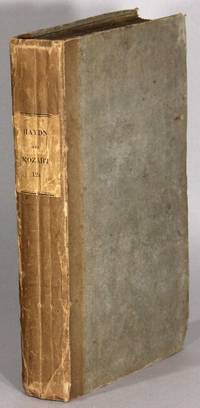
1829879M12Paris; Lugano: Alphonse Levavasseur; Presso G. Ruggia e Comp 1829-1831. Leather. Very Good. 8.5" by 5.5". Not Stated. A vellum-bound work concerning the lives of the important composers Haydn and Mozart and the librettist Pietro Metastasio with a history of the economy of Italy. The second edition of this work in a half vellum binding with marbled boards. Loosely inserted is a catalogue of the Mozart Museum in Salzburg published in 1937. Two volumes bound in one consisting of 'Vies de Haydn de Mozard et de Metastase' by M. de Stendhal Alphonse Levavasseur Paris 1831 and 'Storia della Economia Pubblica in Italia ossia Epilogo Critico Degli Economisti Italiani' by Giuseppe Pecchio Presso G. Ruggia e Comp Lugano 1829. The first is a history of the lives of the important composers Joseph Haydn and Wolfgang Amadeus Mozart and the poet and librettist Pietro Metastasio written in French. This work includes letters about Haydn and the life of Mozart translated from German by M. Schlichtegroll. The second work is a first edition copy of Pecchio's study of the Italian economy including a critical study of Italian economists. It was written in Italian by Giuseppe Pecchio who distinguished himself as a modern and original economist in both Italy and England. This work was influential for developments in political economy. In a half vellum binding. Externally smart though a little rubbed to the joints and extremities. Internally firmly bound. Pages are bright with the odd spot. Very Good Alphonse Levavasseur; Presso G. Ruggia e Comp hardcover
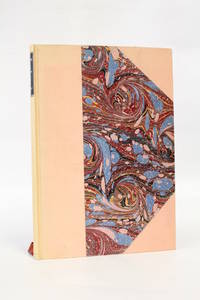
189064861Paris: Les sociétaires de l'Académie des beaux livres 1890. Fine. Les sociétaires de l'Académie des beaux livres Paris 1890 17.50 x 26 cm relié Edition not put into commerce and printed in 160 nominative copies ours for L.J. Baptiste Bourdery. This publication is illustrated with 13 etchings engraved by Manesse after drawings by Eugène Courboin including 7 headpieces and 6 tailpieces as well as 9 Art Nouveau style decorative border frames in one tone repeated on each page by Eugène Courboin. Bradel binding in half pink cloth with corners smooth spine faded and lightened decorated with a gilt floral motif gilt date and double fillet at foot navy blue shagreen title label marbled paper boards illustrated covers and spine preserved contemporary binding. Some light foxing affecting mainly the plain endpapers of the binding. Les sociétaires de l'Académie des beaux livres hardcover
18181242E001London: Henry Colburn 1818. 1st Edition . Hardback. Printed pages: 8vo. xi 1 339. Very Good. 5.25 x 8.5 inches 14 x 21.5 cm. Later half calf leather binding with marbled boards. Spine with five raise bands and leather title label. Marbled page edges. Excellent solid binding. Offsetting to corners of endpapers title page and final page of text. Scattered foxing to text staining to a few pages. Two bookplates to front pastedown endpaper: Sir John Hollams and Panof Grafsos Skinos. The rare first English language edition. This was the first of Beyle's works to use the pen name Stendhal. Includes the preface that was omitted in all later French editions. Overall condition is Very Good. Size: 5.25 x 8.5 inches 14 x 21.5 cm. Henry Colburn hardcover
181767090London: John Murry Albemarle-Street 1817. First edition in English 8vo pp. xv 1 496; engraved leaf of music several pages with musical notation; original drab paper-covered boards brown paper shelfback printed paper label; corners bumped spine toned and rubbed Q3-Q4 with clean tear at the top margin no loss light foxing very good. Small manuscript gift inscription on pastedown "Mrs. W. Blunt with WB's best wishes." The first English edition of Stendhal's first book written under a pseudonym and also translated by him. John Murry, Albemarle-Street unknown
1884977Q20Paris : Librairie L. Conquet 1884 . Leather. Very Good Indeed. 10" by 7". H. Dubochet . A beautiful Ramage-bound limited edition copy of Stendhal's popular psychological novel Le Rouge et le Noir with illustrations from H. Dubouchet. Limited edition of 500 copies. One of the first 150 copies to be printed on Japanese paper. This is No. 73. Elegantly bound by Ramage in full turquoise morocco with gilt tooling and dentelles. With the original wraps bound in. Complete in three volumes. First published in 1830 'Le Rouge et le Noir' or 'The Red and the Black' tells the story of a provincial young man attempting to rise socially escaping his modest upbringing through hard work talent and deception. Written in the original French by Marie-Henri Beyle a French author best known under his pseudonym Stendhal. Beyle received wide acclaim for this novel alongside 'La Chartreuse de Parme' and is particularly praised for his pioneering use of realism in his writings. With a preface by Leon Chapron.Illustrated with eighty engravings by H. Dubouchet containing a portrait 76 vignettes and 3 page adornments. Vignettes are duplicated with each in-text illustration having a corresponding full-page plate with a tissue guard. Bound in full morocco by Ramage. Externally lovely with light rubbing to the extremities slight fading to the spines and the odd light mark. Internally firmly bound. Pages are bright and clean. Bookseller label to front paste down. Very Good Indeed Librairie L. Conquet hardcover
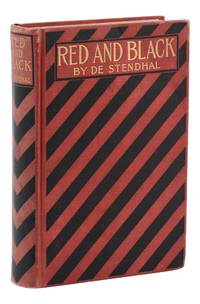
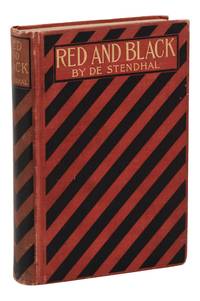
1898017869New York New York U.S.A.: Brentano's 1898. Book. Very Good . Hardcover. 1st Edition. Previous owner's ink name some minor soiling and spotting front and rear hinges starting else a very nice copy bright gilt lettering and black and red striped covers. The first American edition published the same year as the limited edition from G.H. Richmond & Son and published 2 years before the first English edition. A scarce copy of this classic novel. . Brentano's Hardcover
1900170923005London: Downey and Company Limited 1900. First Edition. Hardcover. Near Fine. First British trade edition. vi 439pp. Original black cloth lettered in gilt with red decoration. A Near Fine copy with light rubbing along bottom edge offsetting from long-gone bookplate or slip on paste down otherwise intenally clean and bright. Lengthy gift inscription from former owner on front free endpaper in remembrance of mutual service in World War I British munitions unit small stamp from said unit below and owners' emboss on rear endpaper. <p>An elegant copy of the French masterpiece widely considered one of the world's first psychological novels. An extremely scarce edition with no other copies for sale in the trade few institutional copies shown in OCLC and none recorded at auction. Downey and Company, Limited hardcover
1898140949339New York: Brentano's 1898. First edition. Very Good. First American trade edition. ii 439 pp. Bound in publisher's red cloth stamped with black chevrons and lettered in gilt. Very Good with sunned spine moderate rubbing to covers and light soiling to cloth and textblock edges. Light dampstaining to upper corners of boards and endpapers smudges and ownership signature dated 1913 to front free endpaper. A little overopened at several places.<br /> <br /> <p>A scarce early English-language appearance of the novel Le Rouge et le Noir published the same year as the limited edition from G.H. Richmond & Son translated by Robins priority unknown. Precedes the first UK by two years. Encylopedia of Literary Trans. O. Classe 1331. Brentano's unknown
181491120Paris: Chez H. NicolleDe l'Imprimerie de C.-F. Patris 1814. Fine. Anonymous work attributed to Anna Maria Porter which inspired Stendhal's masterpiece ""La Chartreuse de Parme"" Chez H. Nicolle De l'Imprimerie de C.-F. Patris Paris 1814 10.2 x 17.4 cm Relié First edition of the French translation by Élisabeth de Bon gathering in 2 volumes the 4 parts of this anonymous English novel originally printed in 1809 which according to André Marc in his Dictionnaire des romans anciens et modernes of 1819 is the work of Anna Maria Porter younger sister of the novelist Jane Porter. The Porter sisters contemporaries of Jane Austen and famous before the Brontës were close to the Scottish poet Walter Scott. Contemporary full brown tree sheep smooth spines divided into compartments richly gilt in decorative rolls of laurels annulets and lozenges two compartments with a lozenge network formed by interlacing fillets with fleurons at the corners red and green morocco lettering-piece and numbering-piece blind-tooled fillet border to boards gilt fillet to turn-ins edges sprinkled red marbled endpapers in pebbled pattern. Some light surface wear and minor offsetting to boards corners slightly worn. On volume 1 a charming error in the decorative roll at foot of spine corrected by the binder. On volume 2 small piece of leather at the edge of the numbering-piece slightly detaching. Scattered foxing and faint marginal damp-staining to upper margins. In volume 3 two minor marginal repairs to half-title and p. 8. Several period textual corrections in brown ink and pencil: volume 1 p. 131 volume 2 p. 90 and volume 3 p. 21. In the early nineteenth century English novels were widely translated into French. According to the critic signing as ""E."" in the Journal de l'Empire Les Frères Anglais is a success and according to another reviewer writing for the Gazette de France the French translation as much as the original text deserves praise: ""We have already had the opportunity in this Gazette to praise the translator. English novels are much vaunted but the choice is vast; some prove mediocre and even detestable. This one does honour to the good sense of Madame Elisabeth de B. The situations are lively and varied the characters well drawn; the work pleases and holds one's attention from beginning to end."" Gazette de France December 4 1814 ""What astonishes readers who cannot transport themselves into the society whose customs are depicted and who insist on judging everything by the habits of their own circle is the liberty of young English ladies. If their novels offer a faithful picture of their manners and habits these young women converse familiarly in tête-à-tête with their suitors; they write to them even give them their portraits; they tell their parents without ceremony that their heart is engaged. Never would a French demoiselle make such a frank avowal; at most she allows her secret to be guessed."" Journal de l'Empire May 10 1815 our own translation Two women of letters were behind this literary success: Élisabeth de Bon a translator renowned in her lifetime also a novelist short-story writer and co-proprietor of the periodical the Mercure de France and a mysterious authoress. The name of Anna Maria Porter absent from the title-page would be revealed by the bookseller André Marc as that of the author in 1819. Precocious and prolific Anna Maria began writing and publishing books during adolescence nearly a decade before her elder sister Jane. In 1807 she published The Hungarian Brothers and in 1809 she is thought to have written The English Brothers. These two works with their near-identical titles like false twins are the starting point according to Richard Bolster for the attribution of the latter novel to Anna Maria Porter. It was precisely the same translator Élisabeth de Bon who undertook the translation of the third edition of The Hungarian Brothers in 1818 and in 1815 that of another of the author's works The Recluse of Norway. The En Chez H. NicolleDe l'Imprimerie de C.-F. Patris hardcover
1898140948475New York: Brentano's 1898. First Edition. Very Good. First American trade edition. ii 439 pp. Bound in publisher's red cloth stamped with black chevrons and lettered in gilt. Very Good with light rubbing to cloth more pronounced at corners sunning to spine and light stains to upper edge of textblock. Front hinge exposed and tender owner signature in an old hand to front free endpaper and small bookseller stamp to back pastedown. Overopened at several places contents lightly toned.<br /> <br /> <p>A scarce early English-language appearance of the novel Le Rouge et le Noir published the same year as the limited edition from G.H. Richmond & Son translated by Robins priority unknown. Precedes the first UK by two years. Encylopedia of Literary Trans. O. Classe 1331. Brentano's unknown
1883977Q30Paris: Librairie L. Conquet 1883 . Leather. Very Good Indeed. 10.5" by 7". V. Foulquier . A stunning Ramage-bound limited edition copy of Stendhal's popular historical novel La Chartreuse de Parme signed by the publisher. Limited edition.Number 73 out of 500 copies the first 150 of which were printed on Japanese paper as this one.Bound by Ramage in a lovely full crushed morocco with gilt tooling and dentelles.With the original wraps bound in. Signed by the publisher to the small paper prospectus "L. C. to Monsieur Henry Bretherton" with Bretherton's pencil inscription to the title page. With a specimen prospectus to the front of Volume I containing an example of one of Foulquier's vignettes and other material for subscribers. In the original French. Written by Marie-Henri Beyle a French author best known under his pseudonym Stendhal. Beyle received wide acclaim for this novel alongside 'Le Rouge et Le Noir' and is particularly praised for his pioneering use of realism in his writings. This novel is cited as an early example of realism a stark contrast to the Romantic style popular while Stendhal was writing. It is considered by many authors to be a truly seminal work; Honore de Balzac considered it the most significant novel of his time while Tolstoy was heavily influenced by Stendhal's treatment of the Battle of Waterloo. Wonderfully illustrated with a frontispiece 29 vignettes and 1 page adornment - also included are proofs of each illustration each of which is protected with a tissue guard. Collated complete. Bound by Ramage in full crushed morocco. With the original wraps bound in and silk moire to the endpapers and paste downs. Externally lovely with light rubbing to the extremities and a few marks to boards. Spine has darkened slightly. Internally pages 327-330 to volume I are disbound but present. Otherwise firmly bound. Pages are bright with light scattered spotting. Pencil note to title page. Very Good Indeed Librairie L. Conquet hardcover
182366771A Paris: Chez Bossange Delaunay Mongie & Les Marchands de Nouveautés 1823. M. de. Beyle Henri. Racine et Shakspeare. and No. II. À Paris: Chez Bossange père DeLaunay Mongie and Les Marchands De Nouveautes 1823 1825.<br> <br> Very scarce first edition of both volumes. Two octavo volumes in one 8 3/16 x 5 inches; 209 x 127 mm. 1-55 1 blank; 4 3 advertisements 1-103 1 errata pp. Half-titles for both volumes.<br> <br> Bound together in twentieth-century half brown levant morocco over marbled paper boards by Stroobants. Spine decoratively tooled and lettered in gilt. Marbled endpapers. Top-edge gilt others partially uncut. Red silk page-marker. A few pages trimmed shorter at the fore-edge but with no loss of text. Some minor marking to back board. A bit of very light foxing. Overall an excellent near fine copy.<br> <br> Marie-Henri Beyle known under his pseudonym de Stendhal was born in Grenoble France in 1783 and died in Paris in 1842. Although employed at various military and government posts throughout his life his underlying passion for art and literature is expressed in his writings penned between 1812 and 1839. His peers and contemporaries included Honoré de Balzac Victor Hugo and George Sand. Perhaps most famous for his novel Le Rouge et le Noir 1831 his earlier essays and short works reveal his artistic and literary development. This polemic treatise signaled Stendhal's entry into the struggle between classicism and romanticism. A second essay on Racine and Shakespeare referred to as 'Shakespeare II' was published in 1825 of which is also present here.<br> <br> Ebisch & Schüking A Shakespeare Bibliography p. 151; Lalanne Dictionnaire Historique de la France p. 284-5; Lanson Gustave Manuel Bibliographique de la Litterature Française Moderne 19078. Not in OCLC Bibliotheque Nationale de France or Brunet.<br> <br> HBS 66771.<br> <br> $3500. Chez Bossange, Delaunay, Mongie & Les Marchands de Nouveautés unknown
181788398Paris Paris: DelaunayPelicier 1817. Fine. Delaunay Pelicier Paris Paris 1817 13 x 20 cm Relié Rare first edition as referenced by Clouzot see Guide du bibliophile français XIXe siècle p. 256. A few insignificant spots of foxing a small black ink stain at the bottom of pages 354355. Complete with the errata leaf at the end of the volume. Caramel half calf binding spine with five raised bands ruled with gilt dotted lines and decorated with gilt and black tools gilt fillets at head and foot of spine. Minor rubbing to the spine. Brown morocco title label. Marbled paper-covered boards framed with blind-stamped vertical rolls endpapers and pastedowns in cats-eye paper all edges gilt. Roman booksellers label at the top of a pastedown. Period-style binding signed in blind by Durvand. Rare and important work cf. Carteret notable for being the first to bear Stendhals pseudonym on the title page. DelaunayPelicier hardcover
182673643Paris: Delaunay 1826. Fine. Delaunay Paris 1826 13.50 x 21.50 cm 2 volumes brochés Third original edition: ""In reality an entirely new work completely rewritten by Stendhal and expanded by one volume"" cf Clouzot. The second edition was in fact only a reissue after a few weeks of the original edition with a new title page bearing publisher Colburn's address and mention of ""second edition"". This ""third edition"" is therefore the true second original edition much more complete than the first. Covers slightly and partially browned without gravity some minor foxing. Very rare copy as issued in original wrappers. Delaunay unknown
1883227519Paris: Conquet 1883. hardcover. fine. 2 volumes. Reimpression textuelle de l'edition originale. Preface by Francisque Sarcey. 33 illustrations by V. Foulquier including a full- page frontispiece and 29 other magnificent etchings as chapter headings and endings; plus 3 portraits. & xxix 304pp.; & iv 432pp. Tall 8vo exquisitely bound by Chambolle-Duru in full olive crushed morocco; elaborate delicate gilt-stamped covers and spines; inner & outer dentelles with patterned silk doublures a.e.g; original wrappers bound-in. Paris: Librairie L. Conquet 1883. A very fine copy in a superb binding that must be seen.<br/> <br/> Limited Edition. Number 80 of 150 copies on Japan in large paper format total edition of 500.<br/> <br/> Conquet unknown
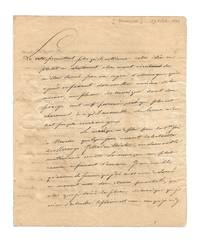
1808Stendhal4<p><strong>STENDHAL Henri Beyle dit 1783-1842</strong></p><p>Autograph letter signed with one of his numerous pseudonyms " Dubois " to his sister and confident Pauline Périer-Lagrange<br />Brunswick " 29 8bre October 1808 " 5 p. in-4°<br />Frayed margin on last folio tears repaired see scans usual folds<br />Red wax seal</p><p><strong><u>From one of the most prestigious Stendhalian collections</u></strong></p><p><strong>A remarkable letter in which the young Stendhal who was still only Henri Beyle deputy to the war commissioners stationed in Brunswick describes his passion for music Italy and women</strong></p><p><strong><em>" I am astonished every day at the little pleasure that German women give me French women bore me I place my happiness of this kind in Italy</em></strong><em> "</em></p><p>Stendhal begins his missive by comparing the emotions of the arts to those of love. He confides in his younger sister without arranging his thoughts and describes the excitement caused by an organ playing in a street next to his own</p><p><em>" <strong>Les arts promettent plus qu'ils ne tiennent</strong> : cette idée ou plutôt ce sentiment charmant vient de m'être donné par un orgue d'Allemagne qui a joué en passant dans une rue voisine de la mienne une phrase de musique dont deux passages sont neufs pour moi et qui plus est charmants à ce qu'il me semble ; <strong>les larmes m'en sont presque venues au yeux.</strong></em><br /><em>La musique m'a plus pour la première fois à Novare</em> Commune dans la région du Piémont<em> quelques jours avant la bataille de Marengo</em> qui eut lieu le 14 juin 1800<em>. J'allais au théâtre ; on donnait Il Matrimonio segreto</em> opéra bouffe de Domenico Cimarosa <em>; <strong>la musique me plut comme exprimant l'amour</strong>.<strong> Il me semble qu'aucune des femmes que j'ai eues ne m'a donné un moment aussi doux et aussi peu acheté que celui que je dois à la phrase de musique que je viens d'entendre</strong>. <strong>Ce plaisir est venu sans que je m'y attendisse en aucune manière il a rempli toute mon âme</strong>. Je t'ai conté une sensation semblable que j'eus une fois à Frascati </em>Commune dans la banlieue de Rome <em>lorsque A</em>dèle Rebuffel une jeune cousine dont il s'était épris <em>s'appuya sur moi en regardant un feu d'artifice. Ce moment a été ce me semble le plus heureux de ma vie. Il faut que le plaisir ait été bien sublime puisque je m'en souviens encore quoique la passion qui me le faisait goûter soit entièrement éteinte</em>.<br /><em>Tout cela me fait penser ma chère Pauline que</em> <strong><em>les arts qui commencent à nous plaire en peignant les jouissances des passions et pour ainsi dire par réflexion comme la lune s'éclaire peuvent finir par nous donner des jouissances plus fortes que les passions. Je suis tous les jours étonné du peu de plaisir que me donnent les femmes allemandes les françaises m'ennuient je place mon bonheur de ce genre en Italie</em></strong><em>. Si le hazard me donnait 40 mille liv</em>res<em>. de rente j'irais en Italie. <strong>Je présume qu'au bout d'un an ces belles romaines ces spirituelles vénitiennes seraient pour moi comme des Allemandes. Ces dernières ont la fraîcheur la plus parfaite leurs couleurs sont de la santé visible les autres ont la passion mais la passion qu'on inspire et qu'on ne partage pas ennuie.</strong><br />Dans les arts c'est tout autre chose il peut chaque jour y avoir du nouveau. Qui nous dit que nous ne verrons pas un musicien supérieur à Cimarosa Et quand il n'aurait pas tout à fait son mérite il nous donnerait du nouveau.<br />Pour les autres à qui j'écris j'arrange mes pensées : pour toi non. J'ai remarqué que quand une chose me gênait quelque peu que ce fût je finissais par ne la plus faire et <strong>je veux t'écrire toute ma vie au-delà même comme madame Necker</strong></em> Germaine de Staël … <em><br />Je crois m'appercevoir que ce bonheur est plus fort que celui que donne les passions. Si cela se confirme je serai bien près du bonheur que je me figurais jusqu'ici dans une passion quelconque l'Ambition l'amour etc. donnant continuellement des moments comme celui de Frascati.</em></p><p>Finally he goes on to talk about the situation of his sister who is married to an "excellent" man and whom he encourages to cultivate artistic pleasures. Pauline had married Daniel Perrier-Lagrange six months earlier on May 25 1808.</p><p><em>Je ne puis te parler de ta position : je ne la connais pas ; mais ayant pour mari un homme excellent elle ne peut qu'être heureuse. Cependant il ne t'en coûtera rien de cultiver ce côté de ton âme auquel les arts font plaisir. <strong>Si tu as le bonheur de ne pas être grosse de sitôt </strong></em>phrase remplacée dans l'édition Martineau par "si rien ne t'arrête" <em>tu pourrais faire un tour à Turin et pousser jusqu'à Milan qui n'est qu'à trente lieues. </em>… <em><br /><strong>Une nouvelle raison pour vous mesdames de cultiver la sensibilité aux arts c'est le changement total qui vous attend au milieu de votre carrière</strong>. Il faut être diablement bien à cheval pour n'être pas désarçonné au moment où les hommes commencent à dire de vous ho c'est une femme raisonnable. Je parie que cette réflexion te paraîtra outrée c'est que tu t'es fait une âme d'artiste tu as suivi d'avance mon conseil. Embrasse Périer pour moi. Je désire aller en Espagne. J'ai le projet d'apprendre la langue et de revenir ensuite en Italie vers trente ans.<br />Dubois "</em></p><p>Autograph address on sixth page</p><p><em>" A Madame</em><br /><em>Madame Périer-Lagrange place Grenette </em><br /><em>Grenoble Isère "</em></p><p>Appointed assistant to the commissioners of war and sent to Brunswick Stendhal was busy with his job. Nevertheless he found time to take riding lessons to go to the theatre to café-concerts to balls… and falling in love with Wilhelmine von Griesheim the daughter of the city's former governor while sleeping with other women. On 11 November he received the order to return to Paris. A doctor confirmed that he had syphilis and ordered him to undergo rigorous treatment.</p><p><u>Provenance:</u><br />Drouot 13-15 novembre 1935. Catalogue A. Blaizot n°585<br />Then Alain Schimel's collection</p><p><u>Bibliography:<br /></u><em>Lettres à Pauline</em> Seuil 1994 p. 421-423<u><br /></u><em>Correspondance générale</em> Tome I éd. V. Del Litto 1997 Honoré Champion n°519<u><br /></u>Both editions have the same mistakes as in the Martineau edition so we restore here the exact transcription of the text</p>
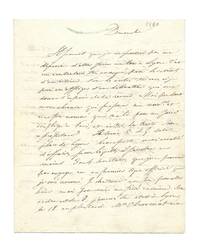
1810Stendhal3<p><strong>STENDHAL Henri Beyle dit 1783-1842</strong></p><p>Autograph letter to his sister Pauline Périer-Lagrange<br />N.p " Sunday " 13rd May 1810 3 p. 1/4 in-4°<br />Autograph address on fourth page<br />Missing wax seal without affecting the words small tears on folds</p><p><strong>Stendhal despairs of know Victorine Mounier escaping him and consoles himself in the arms of another woman</strong></p><p><em>" Il paraît que je ne pourrai pas me dispenser d'aller faire un tour à Lyon. C'est un contre-temps très marqué pour les intérêts d'ambition. <strong>Pour les autres tu sens si je puis m'affliger d'une destination qui me donne l'espoir de te revoir</strong>. Mais pendant mon absence qui pressera ma nomination et une fois nommé qui sera là pour me faire employer à Paris et éviter la triste sous-préfecture Je serai C</em>ommissaire <em>d</em>es <em>G</em>uerres <em>de la place de Lyon beau poste mais accablé d'affaires pour lesquelles il faudra au moins trois ou quatre secrétaires que je ne pourrai pas engager car au premier signe officiel que je suis nommé je déserterai non pas pour aller boire mais pour me faire examiner. Mon ordre est du 8 j'aurais dû être à Lyon le 18 au plus tard. M. Charmat mon ordonnateur sera en colère d'avoir été chargé tout ce temps de l'ennuyeuse besogne de sous-ordre. Ce cruel-là me refusera la permission d'aller passer vingt-quatre heures à Grenoble. <strong>Voilà le plan du drame que je vais exécuter cet été</strong>. Je n'ai pas le temps de te parler de ta simple et charmante lettre. <strong>Tu ne m'annonces que de mauvaises nouvelles et cependant en lisant ta lettre j'étais beaucoup plus occupé de la finesse et de la simplicité charmante que j'y trouvais que du plat renard qui vient m'enlever ce qu'il n'appréciera pas et ce que j'aimais mieux que lui</strong></em> allusion au mariage de Victorine Mounier. <em>J'ai pris sans qu'il y parût des renseignements sur l'homme. C'est l'égoïste le plus sec et le cœur le plus étroit que nous connaissions me dit-on de toutes parts. <strong>Comment ton amie à qui je fais la justice de ne pas la croire aveuglée par l'amour ne voit-elle pas ce qui frappe tout le monde </strong></em><br /><em>Connais-tu quelqu'un à Lyon Envoie-moi une lettre de recommand</em>ati<em>on poste restante. J'y serai d'un beau sombre. <strong>Mes journées sont remplies ici par une femme dont je ne suis pas amoureux mais à laquelle je pense sans cesse. Depuis que je vois le départ sous mes pas je ne puis plus lire tant je pense à elle. Je crois qu'il ne faut qu'un peu d'absence à tout cela pour me remplir de la mélancolie la plus ridicule. Ce qui me le fait craindre c'est que je ne l'ai pas</strong>. Je te conterai tout ça et tu te moqueras de moi ferme. Je me conduis comme un respectable membre de Lycée. <strong>Il me semble que je partirai d'ici à huit jours par conséquent le commencement de juin me verra aux rives du Rhône en grossissant le cours de mes larmes amères</strong>.</em><br /><em>Ne dis pas mon voyage à Gr</em>enoble<em> même à nos parents. Il y a encore quelque possibilité de l'éviter. "</em></p><p>The feelings expressed here for Victorine Mounier 1783-1822 are not recent. He met her in 1806 in Grenoble when his friend Édouard Mounier introduced him to his sister. Knowing her little he imagines a thousand qualities and dreams of marriage. However she remains a "disembodied" love. He wrote first to his brother hoping that he would have his sister read the letters and then to Victorine herself without receiving a reply. Stendhal learned with spite of Victorine's marriage in 1811.<br />The year 1810 marked for Stendhal the beginning of his social ascent. Having been ordered to go to Lyon on May 11 1810 but which he finally decided to ignore he continued to frequent theaters read walk and write. Appointed auditor to the Council of State on 1 August he became inspector of furniture and buildings of the Crown in the autumn. Stendhal then frequented powerful characters and lived in the intimacy of Count Daru's family. He bought himself a fashionable convertible stamps with his initials rents an apartment more in line with his new status. His social situation put an end to his financial worries and made him hope for the barony mentioned at the beginning of the second letter but left him dissatisfied. In need of love he says: "This happiness of dress and money is not enough for me I must love and be loved".</p><p>Favorite sister of Henri Beyle Pauline 1786-1857 had married in 1808 François-Daniel Périer-Lagrange and lived then at the castle of Thuellin near Brangues where will take place the news item at the origin of the novel <em>Le Rouge et le noir</em>.<br />Widowed at the age of 31 Pauline must have been embarrassed because her husband had mismanaged his property. She escaped with the help of her brother who regularly paid her an annuity and bequeathed her modest possessions upon her death.</p><p><u>Bibliography:</u><br /><em>Lettres à Pauline</em> éd. L. Royer La Connaissance 1921 p. 79-80<br /><em>Correspondance générale</em> éd. V. Del Litto Honoré Champion t. II n°566</p><p><u>Provenance:</u><br />Dr Jean Marchand's collection</p>
181478167Paris: De l'Imprimerie de P. Didot l'aîné 1814. Fine. De l'Imprimerie de P. Didot l'aîné Paris 1814 12.50 x 20.50 cm relié De l'Imprimerie de P. Didot l'Aîné Paris 1814 125 x 205 cm bound in calf First edition of Stendhal's very first book published under the pseudonym of Louis-Alexandre-César Bombet. Contemporary binding in half brown calf spine decorated with gilt fillets and tooling as well as a red morocco title piece. Very rare according to Clouzot De l'Imprimerie de P. Didot l'aîné unknown
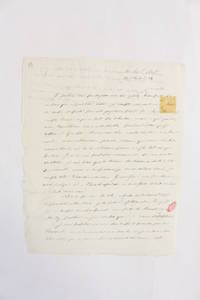
1805669741805. Fine. 10 Floréal 13 30 avril 1805 18.50 x 23.10 cm une feuille Stendhal's autograph letter addressed to his sister Pauline. 28 lines written with a fine writing in black ink. First name ""Pauline"" from the hand of the sender at the bottom of the letter. Inventory number ""36"" in ink from another hand. Two small traces of stamp and stamp a small tear restored in the bottom margin of the page. A few tiny folds inherent in the enveloping of the letter. Rare and beautiful letter of Stendhal addressed to his sister Pauline in which all the sensitivity of the young man and his love for the dramatic art shows more than twenty years before his big romantic successes. This letter comes from the correspondence between Henri Bayle here twenty-two years with his sister Pauline three years younger. This true epistolary liaison which quickly took the form of a ""diary"" - Pauline's answers were rare - is an essential milestone in the constitution of the intellectual journey of the future Stendhal. Our letter of a great lyricism testifies to the strength of the bond uniting the young writer and his sister: ""Let's shake each other my good friend. We will never find anyone who loves Pauline as Henry nor will Henry ever find a more beautiful soul than Pauline. ""The use of the third person and a lover vocabulary erects the young woman to the rank of alter ego a sister-soul and even perfect mistress. The young Henri is then precisely under the yoke of a devouring passion for the actress Melanie Guilbert whom he met during his declamation classes at Dugazon: "" I'm going to be bored perhaps by my dark sadness. I know very well that the seriousness of ardent passions is not pleasant. "" Contrasting with this passionate relationship Pauline symbolizes reason and balance a figure that Henri like a pygmalion can fashion at leisure. In good tutor he advises: ""Learn by heart roles. About declamation I will teach you a thousand things. I'm bringing you a Gil Blas and a Tracy. ""We understand here worship Stendhal devoted to the theater from his earliest years both as a player as a playwright the fund of its archives to the Grenoble Library contains nearly 700 sheets of blanks:"" I am in despair at not being able to wear you Beanies. But wait maybe someday will come . as Ulino says. ""This passion for theater Henry intends to pass it to his sister:"" We will work like hell during the time that I stay in Grenoble. ""In total opposite view with the education of women in his time he put a point of honor that Pauline is an educated person; In several letters moreover we find injunctions from the brother ordering his sister to give up needlework in favor of the reading he recommends. Truly obsessed with theater and convinced that he will become an author of successful comedies he works tirelessly: ""I am told a room where I will not be free and where I can not just declaim. Try to disturb this arrangement. ""Years before writing great novels that make her famous Stendhal already understands that loneliness is for him a source of creation and says:"" A lonely is jealous of his freedom. It is his greatest good as that of all men. "" unknown
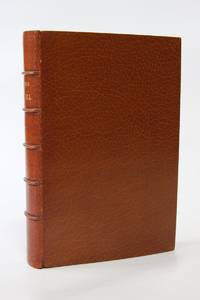
188971152Paris: Librairie moderneMaison Quantin 1889. Fine. Librairie moderne Maison Quantin Paris 1889 13 x 19 cm relié First edition one of 12 numbered copies on Hollande the only deluxe issue. Complete with the folding map at the end. Full fawn morocco binding five raised band spine date at foot comb-marbled paper pastedowns framed with a rich gilt roll comb-marbled endpapers gilt fillet to headcap gilt fillet to leading edges gilt roll to headcaps original wrappers and spine preserved all gilt deckled edges housed in a fawn morocco-edged slipcase. Binding signed by Semet & Plumelle.  Provenance: From the libraries of Dr André Chauveau Lucius Wilmerding and RBL with their bookplates affixed.  A splendid deluxe copy of exceptional rarity. Librairie moderneMaison Quantin unknown