228 résultats
1892feb1187461892. Used. For more details please contact me unknown
1893mon0000992677Charpentier 1893. Hardcover. Very Good. in x in x in. Some light spotting to pages Binding firm Light wear to edges Some light rubbing to head and tail of spine. Charpentier hardcover
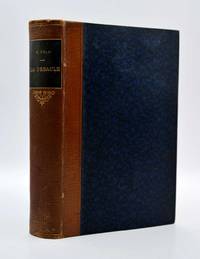
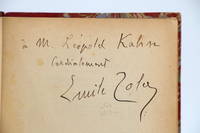
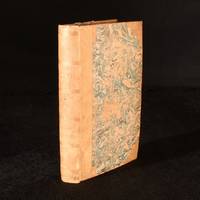
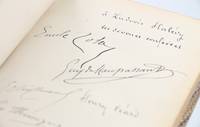
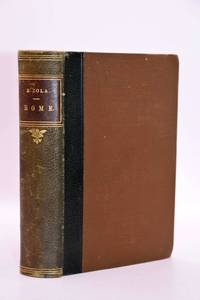
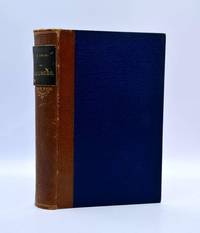
189284801Paris: Charpentier 1892. Fine. Charpentier Paris 1892 12.50 x 19 cm relié First edition. Half red morocco binding spine with five raised bands date gilt at foot restoration to head of one joint marbled paper boards endpapers and pastedowns of combed paper bookplate mounted at head of one pastedown top edge gilt contemporary binding. Occasional light foxing. A handsomely bound copy. Autograph inscription signed by Emile Zola to Léopold Kahn who was Calmann-Lévy's principal collaborator. Charpentier hardcover
187583515Paris: Charpentier & Cie 1875. Fine. Charpentier & Cie Paris 1875 11 x 17.50 cm relié First edition of which no copies were printed on deluxe paper. Half red shagreen binding smooth spine decorated with triple gilt fillets gilt roll at foot marbled paper boards marbled paper endpapers and pastedowns rubbed corners contemporary binding. Some light foxing. A fine and very rare copy. Charpentier & Cie hardcover
1884983Y47Paris : G. Charpentier et Cie 1884. Leather. Very Good. 7.5" by 5". None. The twelfth novel from Emile Zola's prominent 'Rougon-Macquart' series in the original French. "Twelfth thousand" edition. In the original French. Bound in half paper vellum with marbled boards.'La Joie de Vivre' is the twelfth novel in Emile Zola's Rougon-Macquart series. The twenty-volume series Natural and social history of a family under the Second Empire follows the family members of two titular branches of a fictional family living during the Second French Empire. Zola was a twice Nobel Prize nominated French novelist and an important contributor to the development of theatrical naturalism. He was a major figure in the political liberalisation of France and in the exoneration of Alfred Dreyfus which is encapsulated in his renowned newspaper opinion headlined J'Accuse.! Bound in half paper vellum with marbled boards. Externally with discolouration to the vellum and scuffing to the boards. Slight cocking to the spine. Internally firmly bound. With scattered spotting throughout. Worming to the title and first page. Very Good G. Charpentier et Cie hardcover
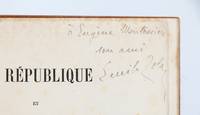
187987597Paris: Charpentier 1879. Fine. Charpentier Paris 1879 14 x 23 cm relié First edition on ordinary paper. Full tawny morocco binding spine with four raised bands set with black fillets bearing small stains at foot gilt fillet frame on burgundy morocco pastedowns brown watered silk endpapers following endpapers of marbled paper original wrappers preserved all edges gilt elegant signed binding by Georges Cretté. Scattered foxing covers marginally and lightly faded. Autograph inscription signed by Emile Zola to the painter and photographer Eugène Montrosier at the head of the title page. Charpentier hardcover
188785323Paris: G. Charpentier & Cie 1887. Fine. G. Charpentier & Cie Paris 1887 12 x 19 cm broché First edition printed on ordinary paper. Heavy foxing primarily at the beginning and end of the volume. In original wrappers as issued. G. Charpentier & Cie unknown
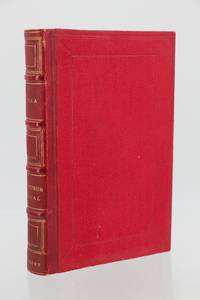
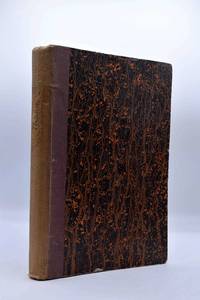
189385495Paris: Charpentier 1893. Fine. Charpentier Paris 1893 12 x 19 cm relié First edition on ordinary paper. The genealogical table is lacking in our copy. Half-red shagreen binding spine with four raised bands decorated with triple gilt compartments gilt name at foot blind-ruled frame on red paper boards pebbled paper endpapers and pastedowns contemporary binding. Charpentier hardcover
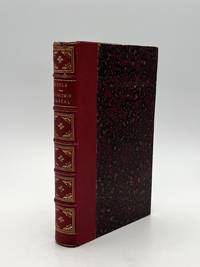
189387311Paris: G. Charpentier & E. Fasquelle 1893. Fine. G. Charpentier & E. Fasquelle Paris 1893 11 x 18 cm relié First edition on ordinary paper. Genealogical tree of the Rougon-Macquart on a folding sheet. Contemporary half-shagreen binding in red. Spine with false raised bands decorated with compartments ornamented with 5 fleurons. Rubbing to headcap with a minor cut. One raised band also rubbed. Paper very fresh. G. Charpentier & E. Fasquelle hardcover
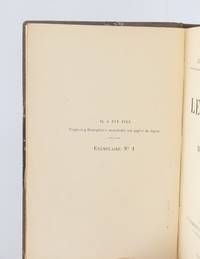
188888481Paris: Charpentier 1888. Fine. Charpentier Paris 1888 13 x 19.5 cm Relié First edition this one the no. 1 of 25 numbered copies on Japon most limited deluxe issue. Bound in grey half morocco smooth spine marbled paper boards mould-made endpapers original wrappers preserved pastedown bookplate top edge gilt contemporary binding signed by L. Pouillet. A rare and handsome copy in an attractive contemporary binding.  Charpentier hardcover
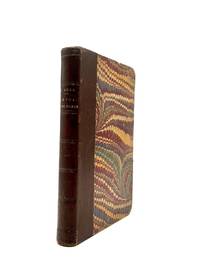
186685365Paris: Achille Faure 1866. Fine. Achille Faure Paris 1866 11 x 18 cm relié The rare first edition of this early novel by the author overshadowed by the Rougon-Macquart series but which prefigures naturalism and whose story is based on a news item. The novel is followed by Esquisses parisiennes a collection of 4 short stories. The second edition would not appear until 1889 with Charpentier. Contemporary half-brown shagreen binding. Smooth spine decorated with black fillets. Signs of rubbing and corners slightly bumped. Achille Faure unknown
188087614Paris: Charpentier 1880. Fine. The Manifesto of Naturalism Charpentier Paris 1880 12 x 19 cm relié First edition. Half blue morocco shagreen smooth spine gilt date at foot of spine marbled paper boards contemporary binding. Exceptionally inscribed by Emile Zola to the playwright and opera librettist Ludovic Halévy with the autograph signatures of Guy de Maupassant Joris-Karl Huysmans Léon Hennique Paul Alexis and Henri Céard on the first flyleaf. Provenances: from the libraries of Ludovic Halévy and Marcel Lecomte with their bookplates on front pastedown. Our copy also includes on a flyleaf an autograph note by Ludovic Halévy: ""See a letter by Guy de Maupassant at the end of the volume. L.H. Inscribed by the six authors of the volume. Ludovic Halévy."" Voir une lettre de Guy de Maupassant à la fin du volume. L.H. Envoi autographe des six auteurs du volume. Ludovic Halévy. The reproduction of the famous letter sent by Guy de Maupassant to Halévy in 1880 is pasted onto six additional leaves at the end of the volume. It bears Halévy's penned note at the beginning and end of the letter: ""Cette lettre est de 1880 / 1880."" Cette lettre est de 1880 / 1880. A fine and rare uncut copy of this manifesto of Naturalism signed and inscribed by Emile Zola with the signatures of the other five authors to their librettist colleague. Halévy notably co-wrote the libretto of Georges Bizet's Carmen. Charpentier hardcover
1896mon0001002108Bibliotheque-Charpentier 1896. Hardback. Very Good. in x in x in. Language: French. 24th thousand. Bookplate on front pastedown. Pages clean and bright no markings light wear to edges. Binding tight. rnRubbing to corners and edges of spine. Bibliotheque-Charpentier hardcover
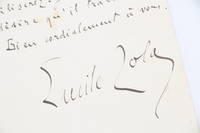
189384893Paris 1893. Fine. Paris 5 Avril 1893 13.50 x 20.50 cm une page et demie Autograph letter dated and signed by Emile Zola 23 lines in black ink on a page and a half addressed to press baron Arthur Meyer Folds inherent to postal delivery. Emile Zola intervenes with Arthur Meyer proprietor of the high-circulation newspaper ""Le Gaulois"" on behalf of his friend Louis de Robert: ""Vous sentirez comme moi que c'est un garçon d'avenir et je suis convaincu que vous l'utiliserez. Je le connais et je désire qu'il travaille."" ""You will feel as I do that he is a young man with a future and I am convinced that you will make use of him. I know him and I want him to work."" in whom he recognizes a talented writer: ""Me permettrez-vous de vous recommander un de mes jeunes confrères Louis de Robert dont j'ai lu les chroniques charmantes. Je crois que vous devriez l'encourager le mettre à l'essai car vous trouveriez en lui un excellent rédacteur pour ""Le Gaulois""."" ""May I recommend to you one of my young colleagues Louis de Robert whose charming chronicles I have read. I believe you should encourage him put him to the test for you would find in him an excellent editor for 'Le Gaulois'."" unknown
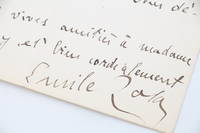
189386093Paris 1893. Fine. An appointment with Gilles de La Tourette Paris 15 octobre 1893 13.50 x 20.50 cm une page 1/4 sur un bifeuillet Autograph letter dated and signed by Emile Zola addressed to his friend the physician Maurice de Fleury dated in his hand October 15 1893. 1 page 1/4 19 lines in black ink on a double sheet. Horinzontal and vertical folds due to mailing. Stain on verso not affecting the text. A most unusual invitation from the master of Naturalism who wishes to organize a luncheon with two eminent specialists in nervous diseases: ""Vous êtes bien aimable de m'inviter à déjeuner. Mais cela va vous faire perdre du temps et à moi aussi . pourquoi ne prendriez-vous pas un rendez-vous pour deux heures et demie par exemple avec M. Gille de la Tourette soit jeudi soit vendredi. Nous irions chez lui simplement ."" ""You are very kind to invite me to lunch. But this will make you lose time and me as well . why wouldn't you make an appointment for two-thirty for example with M. Gille de la Tourette either Thursday or Friday. We would go to his place simply ."" Zola relied on the expertise and scientific knowledge of Maurice de Fleury a student of Charcot to nourish his writing work on the Rougon-Macquart. De Fleury particularly shared publications from his library relating to heredity a subject at the heart of Zola's great social series of novels - most particularly the generational transmission of nervous diseases fits of violence and alcoholism. Maurice de Fleury is also famous for having made ten years after this letter a medico-psychological study of Zola himself through the prism of his working habits: ""De dix heures à midi Zola rédige encore - moins facilement et moins bien que pendant l'heure initiale - et c'est fini pour toute la journée il ne sera plus bon qu'à écrire des lettres. C'est là la puissance du plus puissant cerveau dans le domaine littéraire à la fin du siècle. Avec ce tout petit traintrain modeste trois heures par jour en deux séances cet homme dont l'attention est modique . trouve moyen de nous donner tous les dix mois un de ces livres où ne manquent ni la solidité de la charpente . ni rien de ce qui constitue la force créatrice le génie pour dire le mot"" ""From ten o'clock to noon Zola still writes - less easily and less well than during the initial hour - and it's finished for the whole day he will only be good for writing letters. This is the power of the most powerful brain in the literary domain at the end of the century. With this very modest little routine three hours a day in two sessions this man whose attention is modest . manages to give us every ten months one of those books which lack neither the solidity of the framework . nor anything that constitutes creative force genius to say the word"". ""Maurice de Fleury maintained close relations with Émile Zola and Joris-Karl Huysmans with whom he corresponded in the years 1880-1890. Fervent admirer of the author of the Rougon-Macquart Fleury advised Zola for ""Le Docteur Pascal"" 1893 and confided his admiration in an article in Le Figaro in 1896. Very 'fashionable' among the 'intellectuals' according to Victor Segalen the young physician also appears in the list of symbolist authors - alongside Paul Adam Henri de Régnier and Gustave Kahn - in an essay by André Barre in 1911"" Lola Kheyar Stibler Autograph letter dated and signed by Emile Zola addressed to his friend the physician Maurice de Fleury dated in his hand October 15 1893. 1 page 1/4 19 lines in black ink on a double sheet. Transverse folds inherent to mailing. unknown
189186092Paris 1891. Fine. Paris 22 octobre 1891 13.30 x 20.50 cm une page sur un bifeuillet Autograph letter dated and signed by Emile Zola addressed to his friend the physician Maurice de Fleury dated in his hand October 22 1891. 16 lines in black ink on one page. ""Mon cher de Fleury je crois bien que j'ai trouvé quelque chose pour le supplément du Figaro. Venez donc causer entre cinq et dix heures . Si vous étiez au Théâtre libre samedi soir je songe que nous pourrions en causer dans un entr'acte ce qui vous éviterait de vous déranger ."" ""My dear de Fleury I do believe I have found something for the Figaro supplement. Do come to chat between five and ten o'clock . If you were at the Théâtre Libre Saturday evening I think we could discuss it during an intermission which would save you the trouble of making a special trip ."". Fleury indeed held the medical column at Le Figaro - it is perhaps following this letter and their ""conversations"" that Fleury writes these lines in the supplement of October 31 1891: ""toute l'école naturaliste ayant fait de la médecine les médecins logiquement ont fait de la littérature"" ""the entire naturalist school having practiced medicine doctors logically have practiced literature"". Zola relied on the expertise and scientific knowledge of Maurice de Fleury a student of Charcot to nourish his writing work on the Rougon-Macquart. De Fleury particularly shared publications from his library relating to heredity a subject at the heart of Zola's great social fresco - most particularly the generational transmission of nervous diseases fits of violence and alcoholism. Maurice de Fleury is also famous for having made ten years after this letter a medico-psychological study of Zola himself through the prism of his working habits: ""De dix heures à midi Zola rédige encore - moins facilement et moins bien que pendant l'heure initiale - et c'est fini pour toute la journée il ne sera plus bon qu'à écrire des lettres. C'est là la puissance du plus puissant cerveau dans le domaine littéraire à la fin du siècle. Avec ce tout petit traintrain modeste trois heures par jour en deux séances cet homme dont l'attention est modique . trouve moyen de nous donner tous les dix mois un de ces livres où ne manquent ni la solidité de la charpente . ni rien de ce qui constitue la force créatrice le génie pour dire le mot"" ""From ten o'clock to noon Zola still writes - less easily and less well than during the initial hour - and it's finished for the whole day he will only be good for writing letters. This is the power of the most powerful brain in the literary domain at the end of the century. With this very modest little routine three hours a day in two sessions this man whose attention is modest . manages to give us every ten months one of those books which lack neither the solidity of the framework . nor anything that constitutes creative force genius to say the word"". ""Maurice de Fleury entretient des relations étroites avec Émile Zola et Joris-Karl Huysmans avec lesquels il correspond dans les années 1880-1890. Fervent admirateur de l'auteur des Rougon-Macquart Fleury conseille Zola pour Le Docteur Pascal 1893 et confie son admiration dans un article du Figaro en 1896. Très « à la mode » parmi les « intellectuels » selon le mot de Victor Segalen le jeune médecin figure également dans la liste des auteurs symbolistes - aux côtés de Paul Adam Henri de Régnier et Gustave Kahn - dans un essai d'André Barre en 1911"" ""Maurice de Fleury maintains close relations with Émile Zola and Joris-Karl Huysmans with whom he corresponds in the years 1880-1890. Fervent admirer of the author of the Rougon-Macquart Fleury advises Zola for Le Docteur Pascal 1893 and confides his admiration in an article in Le Figaro in 1896. Very 'fashionable' among the 'intellectuals' according to Victor Segalen the young physician also appears in the list of symbolist authors - unknown
1894mon0000992771Charpentier 1894. Hardcover. Very Good. in x in x in. First edition Pages clean and bright Binding firm Light wear to edges Some rubbing to head and tail of spine. Charpentier hardcover
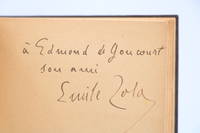
189491151Paris: Charpentier 1894. Fine. Charpentier Paris 1894 12.8 x 18.9 cm Relié First edition on ordinary paper. Bradel binding in chocolate-brown half shagreen smooth spine date gilt at the tail contemporary leather boards japonisants embossed and polychrome decorated with gilded and colorful floral motifs marbled paper endpapers and pastedowns original wrappers and restored spine preserved later binding. Exceptional presentation copy signed by Emile Zola: ""à Edmond de Goncourt son ami Emile Zola."" Below the presentation inscription a manuscript gift inscription by Edmond de Goncourt: ""Edmond de Goncourt à Pauline Zeller."" Goncourt had the privilege of hearing Zola speak on several occasions about his rediscovery of the miraculous city that inspired this very popular novel: ""Here he broke off to tell us that he had been to Lourdes where he had been impressed and amazed by that world of hallucinated believers and that there was something worthwhile to be written about that revival of faith which in his opinion was responsible for the mysticism to be found at the moment in literature and elsewhere."" Goncourt Journal 16 March 1892. ""I arrived at Lourdes in pouring rain and stopped at a hotel where all the good rooms were already taken. And I was in such a bad mood that I felt like leaving the next morning. But I went out for a while and the sight of all those sick people those poor wretches those dying children carried up to the statue those men and women lying prostrate in prayer. the sight of that city of faith born of the hallucinations of that little girl of fourteen the sight of that grotto those processions those stampeding crowds of peasants from Brittany and Anjou.'"" ibid. 26 July 1892. Despite the stylistic disagreements that set them apart Edmond nonetheless had the book he received from Zola bound in one of his famous Japanese-style bindings notoriously fragile at the joints this example has been expertly reinforced with half shagreen. These superb kami-kawa embossed leathers sometimes referred to as the cartonnages des Goncourt for having been introduced by the brothers into the world of Parisian bibliophiles are also the fruit of a fascinating and almost devotional encounter of the Goncourts with Japanese art. The copy was later presented by Edmond to the woman who had nearly become Madame Edmond de Goncourt: Pauline Zeller a cousin of Count Tolstoy whom he had met in the salon of Princess Mathilde. A compelling parallel may be drawn between the tale of two chaste destinies in Lourdes Pierre Froment and Elise Rouquet and that of young Pauline whose diary and account of her first love Edmond obtained in order to write his final novel Chérie. Charpentier hardcover
1882mon0001001086Marpon 1882. Hardcover. Very Good. in x in x in. French edition. Pages clean wear to edges slight foxing throughout. Pages 1-2 are detached. Complete with numerous illustrations. Marpon hardcover
1880C216217Paris: G. Charpentier 1880. Hardcover Hardcover. Very Good. Early reprint 1880. Small octavo. 524pp. Bound in contemporary black cloth with gilt spine titles. Slight wear and rubbing to covers slight nicking to spine ends and splitting to upper spine hinge lacks front endpaper pages with tanning to edges and slight scattered foxing otherwise near very good. No jacket. G. Charpentier, hardcover
1884849P42London: Vizetelly & Co 1884. Leather. Good. 7.5" by 5". None. A scarce early edition in English of one of the most popular novels by Emile Zola one of his volumes in 'Les Rougon Macquart' cycle. The fifth edition in English very scarce to see in such an early English edition.One of Emile Zola's most popular novels following the rise and fall of a French courtesan and those who surround her.The ninth novel in Zola's 'Les Rougon Macquart' cycle this has became one of his best known novels.Bound without the twenty-four plates.Bookplate of William Cuthbert Brian Tunstall to the front paste down. In a half calf binding with cloth to the boards. Externally a little rubbed to the leather. Minor bumping to the extremities. Light marks to the boards and spine. Small crack to the tail of the front joint. Front hinge is a little strained rear hinge is starting but firm. Bookplate to the front paste down. Stamp to the verso of the front endpaper. Internally generally firmly bound. Pages are lightly age-toned and clean with a few scattered spots. Ink inscription to the head of page 5. Bound without the plates. Good Vizetelly & Co hardcover
1886803R45Paris: Librairie L. Conquet 1886. Leather. Near Fine. 8.5" by 5.5". None. A lovely illustrated limited edition of Emile Zola's short story collection in the original French language and bound in delightful leather. 'Contes de Ninon' was amongst Zola's earlier works a collection of short stories which first appeared in 1864 to which 'Nouveaux Contes a Ninon' was a sequel. First published in 1870 this collection includes works such as 'Le Grand Michu' 'Les Fraises' 'Lili' 'Le Forgeron' 'Le Chomage' and 'Le Jeune' amongst countless others. Illustrated with a frontispiece to volume I and thirty illustrations throughout by Ed. Rudaux.Limited edition of five hundred copies this being one of the 350 on Marais vellum and out of series. Presentation copy exemplaire offert hence out of series. Signed by the publisher to the limitation page. With the original wraps bound in. Written by Emile Zola a French novelist and writer known for his role in the political liberalization of France. He was nominated for Novel Prizes in Literature in both 1901 and 1902 the first two years of the prize.Bound by G. Rykers. Rel.Containing the ownership bookplate of E. L. B. with a delightful cockerel. In the original French language. In a half crushed morocco binding. Externally lovely with just the slightest general wear. Ownership bookplate to the front pastedown of each volume. Internally firmly bound. Pages are just slightly spotted to the first and final leaves but otherwise bright and clean. Near Fine Librairie L. Conquet hardcover
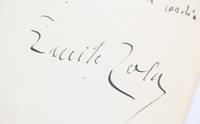
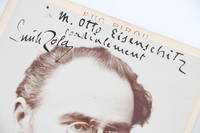
189087793Paris: Eugène Pirou 1890. Fine. Eugène Pirou Paris s.d. ca 1890 10.70 x 15.50 cm une feuille Original inscribed photograph portrait of Emile Zola. Original albumen paper print on cardboard bearing the stamps of the Eugène Pirou studio rue Royale Paris. Signed and inscribed by Emile Zola to Otto Eisenschitz: ""à M. Otto Eisenschitz / cordialement / Emile Zola"". Otto Eisenschitz a leading arts and culture journalist on numerous Viennese periodicals playwright and director of the Josefstadt theater was the author of numerous plays and novels. His translation work from Italian gave preference to contemporary naturalist authors such as Roberto Bracco Guglielmo Ferrero Antonio Fogazzaro Marco Praga and Giovanni Verga. He lost his life in the Theresienstadt ghetto-concentration camp in 1942. Eugène Pirou unknown
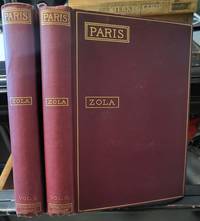
18985030<p>Paris by Emile Zola<br />in 2 volumes<br />first American edition<br />hardcover<br />Publisher:<br />The Macmillan Company 1898<br />Condition: <br />Very Good some signature on the endpaper</p> The Macmillan Company hardcover
1898biblio37653<p>New York: The Macmillan Company 1898. SECOND VOLUME ONLY Contains pages 379-744. NEARFINE Hardcover no dj. Maroon Leather binding Gilt lettering. No Wear. Clean Unmarked throughout. Excellent binding and hinges. 7.1"x4.9"x0.9". be27644.</p> The Macmillan Company hardcover