Emile ZOLABiblio.com
228 résultats
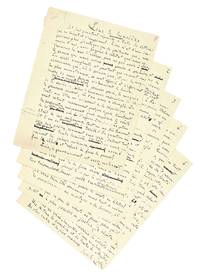
1898Zol1<p><strong>DREYFUS AFFAIR ZOLA Emile 1840-1902</strong></p><p>Unpublished autograph manuscript signed " <em>Emile Zola</em> "<br />Grosvenor Hotel London 19 July 1898 5 pages in-4 on ligned paper<br />Fold marks small hole at the folding junction on 5th folio without affecting the text<br /><br /></p><p><strong><u>Unpublished manuscript on the Dreyfus Affair</u></strong><br /><strong>Written six months after his open letter "J'accuse…!" and directly in its continuity this momentous manuscript testifies to the writer's tireless commitment to the cause of Captain Alfred Dreyfus</strong></p><p><em><br />" La vérité aveuglante est pourtant que ce sont nos adversaires qui dès le premier jour et pas les moyens les plus monstrueux se sont efforcés et s'efforcent encore de nous fermer violemment la bouche. </em>… <strong><em>De toute ma lettre au président de la République </em></strong>" J'accuse…! "<em> <strong>on avait extrait savamment quelques lignes limitant les poursuite uniquement pour empêcher la vérité de se faire jour sur l'affaire Dreyfus</strong>. Le plan était de me condamner tout en me bâillonnant. et l'on se souvient du terrible : 'La question ne sera pas posée' revenant sans cesse sabrant tout éteignant toute lumière.</em> …<strong><em> Enterrer l'affaire tout l'ardent désir est là</em></strong><em> il n'y a rien d'autre au fond de l'effroyable campagne qu'on mène contre nous </em>…<em> nous n'avons d'autre idée que de la faire vivre jusqu'à ce que la vérité et la justice triomphent </em>…<em> Les choses vont trop bien l'abcès mûrit nous avons tout intérêt à attendre qu'il crève. <strong>Comment ! Esterhazy est sous les verrous et l'on s'imagine que nous ne sommes pas curieux de savoir avant toute chose quelle partie de vérité va éclater! Je veux bien être condamné mais tout de même la complaisance au martyre a des bornes</strong></em> …<em> On aura beau jusque-là travestir nos actes prodiguer les mensonges et les ignobles injures nos amis savent que <strong>nous resterons les soldats impassibles du vrai incapables d'une reculade capables de tous les sacrifices</strong> et de toutes les attentes les plus rudes et les plus anxieuses. Emile Zola "</em></p><p><br />"Pour la Lumière" is an unpublished article by Émile Zola written in July 1898 six months after "J'accuse…!" in the midst of the Dreyfus affair. This is the only article on the Affair that Zola wrote during his exile. Intended to appear on the front page of <em>L'Aurore</em> it was never published as it was most likely censored by Georges Clemenceau who was editor of the newspaper. The latter used the present manuscript to publish "Pour la Preuve" on the front page of <em>L'Aurore</em> of July 20 1898. When reading both texts "Pour la Preuve" appears much more watered down than "Pour la Lumière" and largely expurgated in places. All the power of "Zolien" prose thus disappears in the guise of a bland and tasteless article.</p><p>The manuscript dates from the very beginning of the writer's London exile. On July 18 1898 Zola's conviction following the publication of "J'accuse…!" on January 13 of the same year was confirmed by the court of Versailles. On the orders of Georges Clemenceau and his lawyer Fernand Labori Zola left the France for London the same day even before the end of the trial.<br />The circumstances surrounding the writing of "Pour la lumière" are fairly well known from various sources: Zola's correspondence the diary that the writer kept during his exile published later under the title of "Pages d'exil" and a note that Bernard Lazare left on these events. The five pages of the article were written during the end of the day on July 19 1898 in a small room on the top floor of the Grosvenor Hotel in which the writer felt imprisoned: "the window was barred by the openwork frieze that crowns the whole immense building: a foretaste of the prison" he reported in his "Pages d'exil".<br />"Pour la Lumière" was to offer an answer to all those who accused the writer of fleeing justice while retrospective of his trial since his "coup d'éclat" of January 13 tipping point in the Dreyfus affair.</p><p>The manuscript which has remained unpublished to this day opens for Zola an exile that will last almost a year. No text of him concerning the Affair was published until June 1899 marking his return to his homeland.</p>
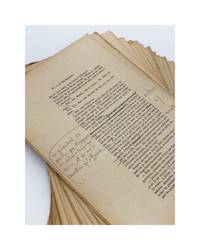
1890Zola7<p><strong>ZOLA Emile 1840-1902</strong></p><p>Corrected proofs for his novel <em>The Beast within</em><br />Paris January 1890 45 proofs printed on recto<br />Very good overall condition except some slightly frayed margin on the first folios some browning</p><p><strong>A precious complete set of proofs for the original edition of his masterpiece <em>La Bête humaine</em> the seventeenth volume in the <em>Les Rougon-Macquart</em> series.</strong></p><p><strong><u>At the heart of the writer's creative process:</u></strong><strong> a total of 45 proof sheets with extensive autograph corrections in Zola's own hand.</strong></p><p><strong><u>One of the very rare Zolian relics still in private hands</u></strong></p><p><strong><em><u>La Bête humaine</u></em></strong><strong><u> in the Making</u></strong><br />The proof sheets in this set bear witness to the author's progress in writing his masterpiece. Émile Zola undertook a meticulous rereading of every line refining the style striking through passages and making corrections to achieve greater accuracy in tone and rhythm. As such the set is extensively annotated with the exception of proof sheets no. 35 to 38. The most substantial corrections appear on sheets no. 2 to 13 and no. 40 which correspond to Chapters I to IV and XI. Special attention was also paid to typography further evidence of the naturalist writer's thorough and exacting rereading.<br />Georges Charpentier added penciled notes on twenty-nine of the proof sheets along with two annotations instructing Zola to henceforth adhere to the paginated layout.</p><p><u>These proofs represent an intermediate stage between the manuscript and the published text as evidenced by certain excerpts:</u><br />– " Roubaud près de sa femme écoutait en fixant également sur elle des yeux vacillants. Il y eut une minute de mortelle angoisse " become " Près de sa femme Roubaud écoutait en fixant également sur elle ses gros yeux pâles " then in the final version " Près de sa femme Roubaud écoutait en fixant sur elle ses gros yeux vifs ".<br />– " Seulement ce matin-là Roubaud dut reprendre haleine comme si sa respiration lui manquait à la suite d'un saisissement inutile. Il hésitait il chercha avant de se rappeler ce que lui avait dit son collègue " become " Seulement ce matin-là Roubaud hésitant dut chercher avant de se rappeler ce que lui avait dit son collègue ".</p><p>Folio #40 includes an important addition of seventeen lines in which the author plays with the lyrical register. Love and death invite each other:<br /><em>" – Dis mon chéri pourquoi donc ai-je peur Sais-tu toi quelque chose qui me menace </em><br /><em>– Non non sois tranquille rien ne te menace. </em><br /><em>– C'est que tout mon corps tremble par moments. Il y a derrière moi un continuel danger que je ne vois pas mais que je sens bien… Pourquoi donc ai-je peur </em><br /><em>– Non non n'aie pas peur… Je t'aime je ne laisserai jamais personne te faire du mal… Vois comme cela est bon d'être ainsi l'un dans l'autre ! </em><br /><em>Il y eut un silence délicieux. " </em></p><p><strong><u>The novel<br /></u></strong><em>La Bête humaine</em> the seventeenth volume in the <em>Rougon-Macquart</em> saga was written between May 1889 and January 1890 and released in bookstores by Georges Charpentier during the first week of March 1890 following its serialization in the weekly magazine <em>La Vie populaire</em> from November 14 1889 to March 2 1890. Like <em>Germinal</em> 1885 it focuses on a facet of the industrial and working-class world of the late 19th century.<strong><br /></strong>In this judicial novel the main characters are murderers. Émile Zola wove together several real-life criminal cases likely including the infamous crimes of "Jack the Ripper" creating a bleak violent and monstrous tableau in which killings occur for motives as varied as greed jealousy or even hereditary madness. Through this narrative—and his exploration of remorse—Zola situates his work within contemporary debates on the moral and social meaning of crime. His writing was nourished by readings of <em>Crime and Punishment</em> by Dostoevsky in a French translation published in 1885 and criminological studies by Cesare Lombroso Prosper Lucas and Gabriel Tarde.<br />He also takes the opportunity to satirize a judiciary subservient to political power through the character of Judge Denizet. The judicial error he commits underscores the limits of justice as administered by men and the inherent fallibility of any rational method.<br />Readers were struck by the confrontation between tradition and modernity by the stunning fusion of primal instinct and technological advancement. The locomotive is endowed with human traits becoming a character in its own right—ultimately transformed into a tragic "blind and deaf beast loosed amid death."<br />Finally this lyrical element is enriched by a fantastical dimension as Henri Mitterrand explains: <em>" La Bête humaine</em> endures through its fantastical elements the intensity of its leitmotifs and rhythms and the perfection of certain passages—such as the final ones—where the extravagance of the action and the baroque modernity of the setting come together in astonishing harmony. <em>" </em></p><p><u>Literary relics of Émile Zola are extremely rare in private hands</u>. In accordance with the novelist's wishes his wife Alexandrine Zola entrusted nearly all of his manuscript materials to the nation in 1904. As a result the invaluable dossiers and a large portion of the corrected proofs for <em>Les Rougon-Macquart</em> and <em>Les Trois Villes</em> are now held by the Bibliothèque nationale de France BnF.</p><p>This set of proofs was unknown to Henri Mitterand when he prepared his edition of <em>La Bête humaine</em> for the Bibliothèque de la Pléiade Paris Gallimard NRF 1966; reissued in 2021.</p> Charpentier
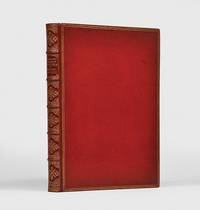
1893154344Paris Médan Monte Carlo and England: 1893-1902. A unique collection of letters by one of the landmark French writers of the 19th century An important group of letters from Émile Zola to his translator and friend Ernest Vizetelly son of Henry Vizetelly who was the first translator of his works. Over almost ten years and across a hundred handwritten pages Zola discusses the publications and translations of his works the reception and specificities of the English public his visit to London for the congress of specialists in 1893 his London exile at the publication of J'Accuse and the trial that followed. Zola sends his manuscripts to Vizetelly who takes on the role of agent seeing to contracts both with newspapers for the publication of serials and for the publication of translations. Though Zola repeatedly says that he is not concerned with money he nonetheless has his contract requirements. He trusts his friend entirely for his business in England but when American publishers are interested in the translations of his works negotiations seem tense at times: "As for the American affair I will tell you that the house Macmillan hurt me by his attitude at the time to Fécondité and I don't see why I will continue to interact with people of such a mind." He finally chose Doubleday noting that he received "1990 fr. 60 cent. for my part of copyright on your translation of Fécondité that the Doubleday house has just published in New York". He is also concerned about the reception of his works in England. On Docteur Pascal: "I'm going to get into Docteur Pascal which has nothing to do with Lourdes. It's an intimate passionate novel. It is to be the last volume of the Rougon-Macquart series. You can try to place the English translation in London. It will not offend the modesty of your compatriots." A little later he even authorizes his translator to modify "the passages which would seem worrying to you." He reiterates this authorization regarding the translation of Travail: "Travail will not frighten English modesty. It is at most if in a single scene a little lively you will have to extinguish the colors of the painting." He also assures his friend that Lourdes which Vizetelly cannot sell to a newspaper is not a "work of Catholic discussion" and that "the book can be put in the hands of young girls." England despite a little mockery is also important to Zola. He discovered it at the journalists' conference to which he was invited in 1893. He seemed rather anxious about the reception that the English press could give him: "I would like to know the importance of this congress and whether it will offer a great interest. You know my situation in London: I am still very much discussed almost denied and it seems to me that. the words I could say there would erase a lot of the misunderstanding." Zola's doubts would finally be unfounded and he returned from London delighted with the reception he received there and with the charm and immensity of the city. At the end of the collection are 39 original photographs taken by Zola at the time of his visit to London in 1893 or during his exile. Most of them bear indications of the places photographed on the back. Following the publication of J'Accuse and the trial which forced him into exile Zola chooses London. He discreetly mentions the piece which appeared in l'Aurore explaining to Vizetelly the delay in the publication of Paris on January 25 1898: "Tell Mr. Chatto that we will not put" Paris "on sale on February 10. It would be a great fault in the midst of the current hustle and bustle." He finally left France in July of the same year. The support of his now "dear colleague and friend" is essential in this difficult period: "My dear colleague and friend thank you for your good wishes on the anniversary of my birth. I am very touched in the sad emotion where I am. You write me good and just things that go straight to my heart. And I thank you on this day for the dedication and the discreet attentions that you have not ceased to have for me since the day I set foot in this land of exile." The correspondence continues until Zola's death in early autumn 1902. Folio 328 x 242 mm. 103 pages with letters photographs and documents mounted in the vol.; in French. Together 61 pieces including 51 signed letters one of them signed as Beauchamp 5 initialled letters 3 business cards autographed and siged one unsigned letter and a response to a questionnaire. All the letters relate to the publication of L'Argent Lourdes Rome Dr. Pascal La Débâcle and his trip to England to the Congress of Journalists in 1893. Also 39 photographs of views of England taken by Zola during his exile there in 1899. Some letters bear on the back of the annotations of Vizetelly. Red morocco by Riviere & Son spine richly gilt between raised bands dark blue endpapers gilt inner dentelles and edges. Housed in a dark blue quarter morocco solander box by the Chelsea Bindery. Published in Émile Zola Correspondance VII X Presses de l'Université de Montreal 1978-1995. Vizetelly's letters to Zola were also published in: Mon cher Maître Lettres d'Ernest Vizetelly à Emile Zola Les Presses de University of Montreal 2002. Transcript and translation of correspondence available upon request. hardcover