215 résultats
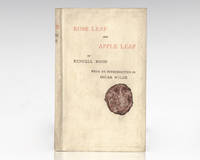
18121303260013Portland Maine: Thomas B. Mosher 1812-01-01. Paperback. Very Good. Portland Maine. Softcover. Illustrated cover. Good binding and cover. Minor shelf wear. Clean unmarked pages with minor foxing.<br><br>Thomas Bird Mosher was a publisher out of Portland Maine known for his contributions to the Private Press Movement in the United States. He reprinted various contemporary poetical works and compiled a monthly small literary and political journal known as The Philistine which also contained political cartoons dealing with issues at the time. Portland, Maine: Thomas B. Mosher paperback
1888PB-0034<p>Signed first edition of Oscar Wilde's incredibly scarce "The Happy Prince and Other Tales." David Nutt publisher. Ballantyne Press. Quarto handmade paper. Original boards in Japanese vellum. Limited edition number 14 of 75 signed by both Oscar Wilde and publisher David Nutt. Publication date: 1888. Stunning illustrations: front cover design in red ink by Jacob Hood as well as head and tailpiece vignettes. Plates by Walter Crane. No dust jacket as issued.</p><p>Published before well before Wilde's incarceration and trial and before his best known works such as "The Portrait of Dorian Gray" and "The Importance of Being Earnest". The fairy tales written for his children originally include "The Happy Prince" "The Nightingale and the Rose" "The Selfish Giant" "The Devoted Friend" and "The Remarkable Rocket."</p><p>Evidence of previous tape repair on spine exterior and front and rear boards with chipping and loss on spine. Interior tape repair on inner hinge and evidence of what appears to be a hastily removed book plate on front pastedown. Light soot or dirt smudging on portion of title page. Interior pages are good. This volume is scarce in any condition but remains an excellent candidate for rebinding or external repairs and is priced accordingly. More photos available on request.</p> David Nutt hardcover
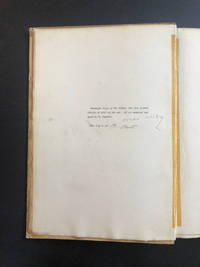
1889042502London: David Nutt 1889. 2nd Edition. Hardcover. Very Good/No Dust Jacket. small quarto. Walter Crane and Jacomb Hood. prior owner inscriptions to flyleaf binding grubby wear to head of spine very slight toning to end papers. David Nutt hardcover
1888024406Cassell 1888. No Binding. Near Fine. Assorted. 1st edition Volume I 4to 12¼ x 9½ ins. Original 3/4 leather and cloth boards. Quite worn with spine missing and both covers loose. First 4 1/2 3/4 pages torn along bottom right-hand edge & Final 2 pages 571/2 torn along center. Pp. iv 572 pages v-viii. All other contents are very good and better Many illustrations and color plates. NOTE: This is NOT a reprint it is the Original Printing from 1888. <br/> <br/> Cassell unknown
184670120081070Printed for T Allman London 1846. First Edition. Hardcover. Very Good Condition/No Dust Jacket. Author details by reference to WorldCat. Original brown covers with simple blind decoration gilt lettering and ornate decoration on spine corners and spine-ends are lightly bumped. Sound binding gift-note dated Nov 27 1846 on front end-paper. Vignette title. Clean pages with occasional very light foxing. Black and white frontis full page illustration facing title-page. No dust jacket as published. Undated by publisher. Dated from gift note. Quantity Available: 1. Shipped Weight: under 1 kg. Pictures of this item not already displayed here available upon request. Inventory No: 70120081070. All our books music and maps are sent by a tracked mail service. Printed for T Allman hardcover
1882140655Philadelphia: J. M. Stoddart & Co 1882. First edition of Rodd's first book of verse which was published with the assistance of Oscar Wilde. 12mo original publisher's vellum with gilt inner dentelles silk watered endleaves top edge gilt with others untrimmed illustrated. In near fine condition. Neat ownership inscription. Rare. J. M. Stoddart & Co hardcover
1879biblio40376New York: Robert Carter and Brothers 1879. 313 pages Ads. NEARFINE Hardcover Embossed IndianRed cloth Gilt spine title no dj. No wear . Clean Unmarked throughout. Strong tight original binding perfect hinges. Very well preserved book. NEARFINE or better. 6.9"x4.75"x1.0". be10199. Robert Carter and Brothers hardcover
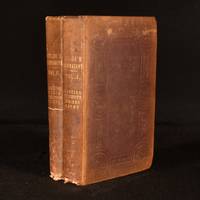
18401002Y49Dublin: William Curry Jun. and Company 1840. First edition. Cloth. Good. 9" by 6". Not Stated . The complete first edition of this travelogue from Oscar Wilde's father William Wilde with illustrations. First edition. Complete in two volumes.In the original cloth binding. Volume I illustrated with a frontispiece and eleven vignettes.Volume II illustrated with a frontispiece two hand coloured plates two maps and fourteen vignettes.Collated complete.A compelling account of a voyage to Madeira Teneriffe and the shores of the Mediterranean including visits to Algiers Egypt Palestine Tyre Rhodes Telmessus Cyprus and Greece. With the author's keen observations on the climate natural history antiquities and prospects of the countries visited.From William Wilde an Irish ophthalmogic surgeon and the author of important works on medicine archaeology and folklore. He was the father of influential author and poet Oscar Wilde.Wilde travelled for nine months as medical attendant to Robert Meiklam the owner of the yacht Crusader who made the sketches for the plates. In the original cloth binding. Externally with rubbing and bumping to the extremities. Fading and marks to the cloth. Split to the cloth to Vol II rear joint which remains firm. Internally generally firmly bound with pp. 5-12 coming away to Vol II. Pages are bright and generally clean with the odd spot or handling mark. Contemporary ownership inscription to each front free endpaper. Good William Curry, Jun. and Company hardcover
1887012823Milano: Sonzogno 1887 1895 18. Prima edizione italiana delle poesie di Whitman; First Italian Editions. In un volume dimensioni 11x17 cm che contiene anche a seguire: George Eliot: LE TRIBOLAZIONI DEL REVERENDO AMOS BARTON. Prefazione di Gaetano Negri. Oscar Wilde: RACCONTI. Traduzione e prefazione di Francesco Stocchetti. G.B. Shaw: IL DISCEPOLO DEL DIAVOLO. -In tutti i casi prime edizioni italiane di quelle opere edite da Sonzogno nella Biblioteca Universale. - Tutte le opere hanno alla pagina di titolo firma e data di possesso di Davide Casella Napoli. - I due CANTI SCELTI DI WHITMAN pur avendo lo stesso titolo e curatore sono in realtà due diverse serie che si completano come spiega il curatore nell'avvertenza alla seconda raccolta e rappresentano la prima edizione delle poesie pubblicate nel 1887 e otto anni dopo nel 1895. Alla prima raccolta all'ultima pagina 103-04 sono stati tagliati i margini superiore e inferiore dove il possessore aveva scritto alcune note di commento; ma il taglio non tocca la stampa. -Legatura degli anni Venti in tela marrone con una scritta in oro al dorso: AUTORI INGLESI.- Di notevole rarità queste prime edizioni italiane riunite. Sonzogno unknown
1888649466E.P. Dutton and Company 1888. First Edition. Hardcover. Very Good. A Very Good copy of the First American Edition in original green pictorial cloth stamped in gilt black white red and blue all edges gilt has some darkening and rubbing to cloth; inner hinges tender. Illustrated with 16 fine chromolithograph plates numerous duotone illustrations. PLEASE NOTE: due to the size and weight of this book it will require additional charges for overseas and expedited shipping. E.P. Dutton and Company hardcover
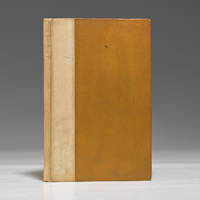
18981262071898. First Edition. WILDE Oscar. The Ballad of Reading Gaol by C.3.3. London: Leonard Smithers 1898. Slim octavo original half cream cloth with cinnamon cloth boards uncut. $3600.First edition one of only 800 copies printed on handmade paper.Inspired by his prison experience and comprised in part by a plea for penal reform The Ballad of Reading Gaol was the last work Wilde completed before his death in 1900. ""In his comedies the miscreants were always pardoned but in the Ballad while ultimately forgiven they are treated vindictively by their fellows who are equally guilty There is no doubt that Wilde had once again touched a great subject and left his fingerprints on it once read it is never forgotten"" Ellmann 532-34. Mason 371. A few pinholes to two preliminary leaves interior otherwise fine. One tiny inkspot to front cover spine slightly toned. A handsome extremely good copy of this scarce first edition. hardcover
18991300991899. First Edition. WILDE Oscar. An Ideal Husband. London: Leonard Smithers and Co. 1899. Octavo original lavender cloth gilt uncut; housed in a custom chemise and slipcase. $4800.Limited first edition one of 1000 unnumbered copies a very nice copy in original decorative cloth designed by Charles Shannon.Wilde's play premiered in January 1895 to an audience that included the Prince of Wales and was an immediate success. Four months later Wilde was in disgrace following his arrest for soliciting homosexual acts and his name was removed from the play's marquee similarly it appears nowhere in this edition. The play closed shortly thereafter and did not appear in print until this first edition. Mason 385. Text about-fine cloth spine with slight fading small mark near base. An extremely good copy. hardcover
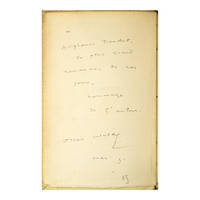
1882#8<p>Oscar Wilde<br />Poems. Fourth Edition.<br />London David Bogue 1882.<br /><br />Octavo. ix pp. 1 blank leaf 234 pp. 2 pp. publisher's catalogue and 1 blank leaf.<br /><br />Publisher's binding. Full white vellum Bradel binding both covers decorated with a symmetrical gilt and blind-stamped floral panel spine likewise adorned with a large gilt floral panel title in gilt lettering top edge gilt untrimmed.<br /><br />Fourth edition.<br /><br />Copy enriched with an autograph inscription signed on the verso of the half-title:<br />"To Alphonse Daudet the greatest novelist of our time homage from the author. Oscar Wilde May 3 83."<br /><br />An exceptional inscription to "the greatest novelist of our time."<br /><br />Having only just returned from New York Oscar Wilde spent the period from February to mid-May in Paris. It was there that he made the acquaintance of Alphonse Daudet whom he met both at his home his wife hosted a celebrated salon and at the residence of the painter Giuseppe de Nittis.<br /><br />Robert Harborough Sherard who was a friend of both Daudet and Wilde testified to the genuine esteem the English writer held for the French novelist.<br /><br />Although their aesthetics may at first appear far apart certain parallels can nevertheless be drawn between their works. Thus it has been written of L'Homme au cerveau d'or one of the tales from Lettres de mon moulin that "one might readily believe it to be the work of an Edgar Allan Poe or an Oscar Wilde."<br /><br />Yet Alphonse Daudet like the vast majority of French writers did not distinguish himself by his courage and even went further: in 1895 after Wilde's sentence to two years' hard labour he refused to sign a petition by Hugues Rebell calling for a reduction of his sentence accompanying his refusal with the remark: "As a father I can only express my horror and indignation."<br /><br />Let us recall that this exemplary family man confided to Gustave Flaubert during a dinner: "To experience pleasure against my own flesh I require the flesh of two women one whom I handle and the other who attends to the backside of the one I am fondling" Journal of Edmond de Goncourt 5 May 1876.<br /><br />This inscription by Oscar Wilde certainly dates from a period when he was seeking to ingratiate himself with the French intellectual milieu yet he was nonetheless fully aware of Alphonse Daudet's great talent and sincere in this fine dedication.</p> David Bogue
1882#9<p>Oscar Wilde<br />Poems. Fourth Edition.<br />London David Bogue 1882.<br /><br />Octavo. ix pp. 1 blank leaf 234 pp. 2 pp. publisher's catalogue and 1 blank leaf.<br /><br />Publisher's binding. Full white vellum Bradel binding both covers decorated with a symmetrical gilt and blind-stamped floral panel spine likewise adorned with a large gilt floral panel title in gilt lettering top edge gilt untrimmed.<br /><br />Fourth edition.<br /><br />Copy enriched with an autograph inscription signed on the verso of the half-title:<br />"To Alphonse Daudet the greatest novelist of our time homage from the author. Oscar Wilde May 3 83."<br /><br />An exceptional inscription to "the greatest novelist of our time."<br /><br />Having only just returned from New York Oscar Wilde spent the period from February to mid-May in Paris. It was there that he made the acquaintance of Alphonse Daudet whom he met both at his home his wife hosted a celebrated salon and at the residence of the painter Giuseppe de Nittis.<br /><br />Robert Harborough Sherard who was a friend of both Daudet and Wilde testified to the genuine esteem the English writer held for the French novelist.<br /><br />Although their aesthetics may at first appear far apart certain parallels can nevertheless be drawn between their works. Thus it has been written of L'Homme au cerveau d'or one of the tales from Lettres de mon moulin that "one might readily believe it to be the work of an Edgar Allan Poe or an Oscar Wilde."<br /><br />Yet Alphonse Daudet like the vast majority of French writers did not distinguish himself by his courage and even went further: in 1895 after Wilde's sentence to two years' hard labour he refused to sign a petition by Hugues Rebell calling for a reduction of his sentence accompanying his refusal with the remark: "As a father I can only express my horror and indignation."<br /><br />Let us recall that this exemplary family man confided to Gustave Flaubert during a dinner: "To experience pleasure against my own flesh I require the flesh of two women one whom I handle and the other who attends to the backside of the one I am fondling" Journal of Edmond de Goncourt 5 May 1876.<br /><br />This inscription by Oscar Wilde certainly dates from a period when he was seeking to ingratiate himself with the French intellectual milieu yet he was nonetheless fully aware of Alphonse Daudet's great talent and sincere in this fine dedication.</p> David Bogue
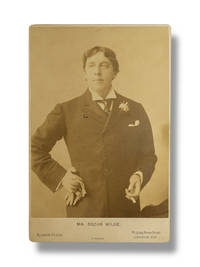
1894#15<p>Oscar Wilde<br />Salome. A Tragedy in One Act: Translated from the French of Oscar Wilde; Pictured by Aubrey Beardsley.<br />Salomé une tragédie en un acte traduite du français illustrée par Aubrey Beardsley.<br />London Elkin Mathews & John Lane; Boston Copeland & Day 1894.<br /><br />Small quarto. 5 unnumbered leaves half-title engraved title dedication to Alfred Douglas list of characters engraved list of illustrations 67 pp. and 16 pp. of publisher's advertisements. 10 engraved plates printed on Japan paper and one historiated tailpiece.<br /><br />A precious copy from the library of Jules Claretie accompanied by an autograph letter and a superb original photograph of Oscar Wilde.<br /><br />Contemporary binding signed by Gruel. Full olive morocco covers framed with a quadruple blind fillet spine with five raised bands extending onto the covers inner dentelles with gilt fillets gilt edges at the head edges ruled.<br /><br />First English edition printed in 500 copies.<br /><br />Copy enriched with:<br />– An original photograph of Oscar Wilde 145 × 105 mm by Alfred Ellis albumen print of the period.<br />– A press clipping announcing Wilde's death and another reporting on his funeral.<br />– An autograph letter signed by Oscar Wilde to Jules Claretie dated "The Cottage Goring-on-Thames" 1894 4 pages 12mo in black ink on a folded vellum paper bifolium.<br /><br />Translation of the letter originally in French:<br />"Dear Monsieur Claretie<br />Pray allow me the pleasure of asking you to accept a copy of my play Salomé and permit me to assure you how highly I value the privilege of meeting the artistic director of the most artistic theatre in the world.<br />I have retired to the country to reflect upon a new play but before the season ends I hope to return to London and to have the opportunity of seeing you again.<br />The only hope I see for our English drama lies in the establishment of a theatre like the French Theatre. I hope we may find a director possessing as much sympathy for art as yourself.<br />Pray accept this expression of my respect and admiration.<br />Oscar Wilde."<br /><br />One year after its first appearance in French the English version of Salome was published. The dedication reads: "To my friend Lord Alfred Bruce Douglas the translator of my play." In fact the translation gave rise to a dispute between Wilde and his young protégé whose command of French was rather limited. Wilde redid the entire work and refused to allow Douglas's name to appear on the title page. Douglas saw between this dedication and the absence of his name on the title page "the difference between a tribute of admiration from an artist and a tradesman's receipt."<br /><br />The book is one of the masterpieces of the English illustrated book featuring the striking compositions of Aubrey Beardsley 1872–1898 who also designed two magnificent historiated borders for the title page and the list of illustrations as well as the final tailpiece. These stylized and sinuous drawings show the artist at the height of his powers playing with bold areas of deep black ink contrasted with untouched white spaces and sophisticated decorative elements inspired equally by Renaissance ornament and the then-fashionable Japanese style. For Salome the young artist created the archetype of the poisonous woman typical of Symbolism surrounded by grotesque and perverse secondary figures. Wilde paid tribute to him declaring that Beardsley was "the only artist who knew what the dance of Salome was and who could see that invisible dance."<br /><br />This copy belonged to the novelist playwright and critic Jules Claretie 1840–1913 who from 1885 until his death served as administrator of the Comédie-Française which Wilde here does not hesitate to call "the most artistic theatre in the world." Claretie introduced contemporary authors such as Henry Bataille and Octave Mirbeau into its repertoire.<br /><br />This was a bold undertaking and Wilde here pays tribute to it: "The only hope I see for our English drama lies in the establishment of a theatre like the French Theatre."<br /><br />The very fine portrait of Oscar Wilde mounted at the beginning of this copy was taken in 1892 by the London photographer Alfred Ellis 1854–1930. The writer is captured as he truly was at the height of his career: impeccably dressed posing in a high-buttoned double-breasted jacket flower in his buttonhole white pocket square a cigarette in his left hand and his gloves in his right the latter resting on his hip.</p> Elkin Mathews & John Lane
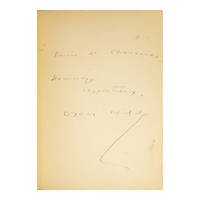
1893#16<p>Oscar Wilde Salomé. Drame en un acte. Paris Librairie de l'Art indépendant; London Elkin Mathews and John Lane 1893. Square 12mo 196 × 145 mm. 2 blank leaves 84 numbered pages the first 8 unnumbered: half-title title dedication to Pierre Louÿs list of characters; text beginning on p. 9 and 2 unnumbered leaves 1 leaf with the colophon dated 6 February 1893 and 1 blank leaf. Modern binding. Half black morocco with small corner pieces bluish paper sides smooth spine title in gilt untrimmed top edge with matte gilt doublures and endleaves of the same paper. Original violet wrappers and spine the upper cover printed in silver lettering preserved. Excellent condition. A few small spots; upper edges of the boards slightly faded; wrappers somewhat sunned. First edition. This celebrated play was written directly in French by Wilde between 1891 and 1892; first performed in 1896 its text was revised at the author's request by Marcel Schwob Stuart Merrill and Pierre Louÿs. The first English edition appeared the following year. Limited edition of 600 copies with no special issue on large paper. The second blank leaf bears the following autograph inscription signed in black ink: "<em>À Puvis de Chavannes / </em><em>Hommage respectueux / </em><em>Oscar Wilde</em>" To Pierre Puvis de Chavannes respectful homage Oscar Wilde. The celebrated painter and muralist Pierre Puvis de Chavannes 1824–1898 like Oscar Wilde 1854–1900 lived in the cult of Beauty. Renowned for his compositions of noble and hieratic character influenced both by Greco-Roman classicism and by Symbolism his work exerted a profound fascination on late nineteenth-century painters and sculptors particularly Edgar Degas Paul Gauguin Aristide Maillol and Maurice Denis. The aesthetic connection between Oscar Wilde and Puvis de Chavannes is to be sought precisely around Salomé since the artist had painted in 1869 a Beheading of Saint John the Baptist that may well have inspired the author. Moreover it is known that when Aubrey Beardsley—who would illustrate the English version of the play in 1894—came to Paris in 1893 he was strongly encouraged by the French painter who introduced him as "a young English artist who produces astonishing things." The inscription in Salomé is therefore particularly significant and of greater import than a simple tribute. A very fine provenance for this celebrated drama written directly in French by Oscar Wilde.</p> Librairie de l’Art indépendant
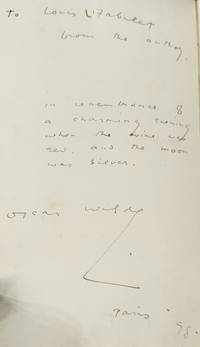
18986<p><strong>Oscar Wilde</strong></p><p><strong>The Ballad of Reading Goal by C.3.3.</strong></p><p><em>Leonard Smithers Royal Arcade London W. 1898.</em></p><p>Original white quarter cloth spine lettered in gilt yellow cloth sides.</p><p>Inscribed in ink on the back of the half-title:</p><p><em>To Louis Fabulet</em></p><p><em>from the author</em></p><p><em>in remembrance of</em></p><p><em>a charming evening</em></p><p><em>when the wine was </em></p><p><em>red and the moon</em></p><p><em>was silver</em></p><p><em>Oscar Wilde</em></p><p><em>Paris</em></p><p><em>98</em></p><p>Autograph note from Louis Fabulet:<em><br /><br />"This book: "The Ballad of Reading Jail" was given to me by Oscar Wilde in June 1898 a few days after the dinner that after his release from prison in England I persuaded my friend the poet Edouard Ducôté then director of the magazine "L'Ermitage" to offer in his honor.<br />Hugues Rebell André Gide Henri Ghéon René Boylesve and I were the guests.<br />Louis Fabulet.<br /><br /></em>Attached is the business card bearing the name under which Oscar Wilde then lived in Paris. The address in pencil: <em>"Hôtel d'Alsace rue des Beaux-Arts is in his handwriting.<br /></em></p><p>"<em>Melmoth" is the man "who sold his soul for eternal youth."</em></p><p>Louis Fabulet 1862-1933 was one of the main translators from English to French in his time notably of the works of Kipling and Thoreau. It is said that it was Oscar Wilde who introduced him to <em>The Jungle Book.</em></p><p>This inscription exceptionally long and colorful which is almost akin to a brief poem refers to the dinner that Louis Fabulet speaks of in his note.</p><p>Wilde had arrived in Paris in March and the French literati were keen to pay him public homage with this banquet which he presided over.</p><p>The inscription makes a nice reference to the event with perhaps a reminiscence of the <em>Ballad</em> itself where we read in the second verse: <em>"For blood and wine are red"</em> .</p><p>Mounted in the copy is Wilde's rare card in the name of Sebastian Melmoth. The aged ruined writer abandoned by almost everyone hid himself under the name of the hero of Robert Mathurin's novel <em>Melmoth the Wanderer.</em></p><p>The card does not have an address. Wilde in fact lived at the Hôtel d'Alsace in Saint-Germain des Prés a shabby establishment at the time <em>"it's so dirty so totally depressing and hopeless"</em> he wrote. He wrote down the address of his hand in pencil. It was there that he died two years later. The hotel took the name "L'Hôtel" in 1963 and became a rather chic place.</p><p>These combined elements: the poetic inscription which evokes a happy moment and the moving card which evokes his misery make this copy one of the most precious there is.</p> Leonard Smithers
189916660Bruxelles: Ad.Mertens 1899. Gebunden. Ad.Mertens unknown
186947911No place 1869. 8vo. In the original printed wrappers no backstrip. Offprint from the "Philosophical Magazine" January 1869. With authors presentation inscription to front wrapper: "With the author's Compliments.". Fine and clean. 9 pp. <br/><br/><em>Offprint issue with author's presentation insciption to front wrapper of Wilde's paper on how to control and render the magneto-electri current which nearly led to the discovery of the principle of self-excitation. This was however achieved by other inventors first notably Charles Wheatstone and the Siemens brothers."In 1856 Wilde established a business in Manchester as an electric-telegraph and lightning-conductor engineer and spent some years on the development of a magneto-electric alphabetic telegraph which was demonstrated at the international exhibition in London in 1862. In December 1863 he patented a twin-armature machine in which a magneto-electric generator provided excitation current for the field winding of another generator. These machines were made in quantity by Wilde & Co. but in use they had the disadvantage of becoming very hot. In 1867 Described in the present paper. he patented an entirely different type of multipolar machine which was used for electro-deposition and arc lighting. Among his other patents was one in 1875 for the making of copper rollers for calico printing.". Oxford DNB. Henry Wilde 1833 - 1919 was a wealthy individual from Manchester England who used his self-made fortune to indulge his interest in electrical engineering. He invented the dynamo-electric machine or self-energising dynamo an invention for which Werner von Siemens is more usually credited and in fact discovered independently. At any rate Wilde was the first to publish his paper was communicated to the Royal Society by Michael Faraday in 1866. The self-energising dynamo replaces the permanent magnets of previous designs with electro-magnets and in so doing achieved an enormous increase in power. The machine was considered remarkable at the time especially since Wilde was fond of spectacular demonstrations such as the ability of his machine to cause iron bars to melt. </em> unknown
187346830London Taylor and Francis 1873. 8vo. Offprint seperately paginated with author presentation inscription to top of front wrapper "Joseph Sidelbotham / with the Author's best regards". Fine and clean. 8 pp. 1 folded plate. <br/><br/><em>Scarce offprint issue with a most interesting presentation inscription to one of the fathers of photography of Wilde's paper on improvements of his electromagnetic induction machine introduced in 1866. Wilde discovered independently of Werner von Siemens who is usually credited for the invention the dynamo-electric machine. Despite Siemens being the one credited for the invention Wilde was the first to publish a paper describing it; this was communicated to the Royal Society by Michael Faraday in 1866.Joseph Sidebotham 1824-1882 was the first to practice photography in Manchester and of the most important local photographers in general. His interest was however not confined to photography; he was an amateur botanist entomologist and astronomer. He was also a Fellow of the Royal Astronomical Society and lectured to the Mechanics Institute on astronomy and electro-magnetism. </em> unknown
189548924Manchester 1895. 8vo. In the original printed wrappers. Offprint from: "Memoirs and Proceedings of the manchester Literary and Philosophical Society" Volume Nine Fourth series. With the authors presentation inscription to top of first page: "With the Author's Compliments". Lacking backwrapper. Internally fine and clean. Pp. 95-107. <br/><br/><em>Offprint with the author's presentation inscription. Henry Wilde a wealthy individual from Manchester England who used his self-made fortune to indulge his interest in electrical engineering. He invented the dynamo-electric machine or self-energising dynamo published in 1866. The machine was considered remarkable at the time especially since Wilde was fond of spectacular demonstrations such as the ability of his machine to cause iron bars to melt. </em> unknown
189648036Manchester The Manchester Literary and Philosophical Society 1896. 8vo. In the original printed wrappers. Offprint from "Memoirs and Proceedings of the Manchester Literary and Philosophical Society" Tenth 10 volume Fourth series. With author's presentation inscription to top of front wrapper: "With the Author's Compliments.". Lacking 1 cm of lower part of front wrapper not affecting text otherwise a very fine and clean copy. Pp. 61-71 1 plate. <br/><br/><em>Scarce offprint issue with author's presentation inscription of Wilde's important contribution to the quantitative relations of the physical and chemical forces especially in relation to batteries. Henry Wilde 1833 - 1919 a wealthy individual from Manchester England who used his self-made fortune to indulge his interest in electrical engineering. He invented the dynamo-electric machine or self-energising dynamo published in 1866. The machine was considered remarkable at the time especially since Wilde was fond of spectacular demonstrations such as the ability of his machine to cause iron bars to melt. </em> unknown
189448038Manchester The Manchester Literary and Philosophical Society 1894. 8vo. In the original printed wrappers. Offprint from "Memoirs and Proceedings of the Manchester Literary and Philosophical Society" Ninth 9 volume Fourth series. With author's presentation inscription to top of front wrapper: "With the Author's Compliments.". Light soiling to extremities. Very fine and clean. Pp. 181-186 1 folded plate. <br/><br/><em>Scarce offprint issue with author's presentation inscription of Wilde's contribution to the magnetic declination of the Earth.Henry Wilde 1833 - 1919 a wealthy individual from Manchester England who used his self-made fortune to indulge his interest in electrical engineering. He invented the dynamo-electric machine or self-energising dynamo published in 1866. The machine was considered remarkable at the time especially since Wilde was fond of spectacular demonstrations such as the ability of his machine to cause iron bars to melt. </em> unknown
189548037Manchester The Manchester Literary and Philosophical Society 1895. 8vo. In the original printed wrappers. Offprint from "Memoirs and Proceedings of the Manchester Literary and Philosophical Society" Ninth 9 volume Fourth series. With author's presentation inscription to top of front wrapper: "With the Author's Compliments.". Front wrapper loose and back wrapper detached light miscolouring to wrappers. Internally fine and clean. Pp. 67-85 1 folded plate. <br/><br/><em>Scarce offprint issue with author's presentation inscription of Wilde's contribution to helium and its place in the natural classification. Henry Wilde 1833 - 1919 a wealthy individual from Manchester England who used his self-made fortune to indulge his interest in electrical engineering. He invented the dynamo-electric machine or self-energising dynamo published in 1866. The machine was considered remarkable at the time especially since Wilde was fond of spectacular demonstrations such as the ability of his machine to cause iron bars to melt. </em> unknown
1892009173Manchester: George Falkner and Sons 1892. Reissue of the 1878 offprint with new preface and French translation. Inscribed "with Author's Compliments." Small pieces torn from outer edge of rear wrapper; blank corners of final leaf and folding table torn off; two library ink stamps on front wrapper; embossed stamp on title page. Privately published version. Unrecorded on OCLC/WorldCat. Collation: vi 17 1 iv 18 pp. folding table. Reissue. Original Printed Wrappers. Good. George Falkner and Sons Paperback