WILDE, WR W RBiblio.com
215 résultats
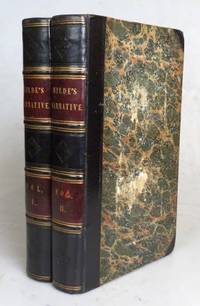
184051206Dublin: William Curry Jun. and Company; London: Longman Orme Browne and Co. 1840. First edition. Two volumes. 8vo. xiv 464; viii 495 1 pp. Contemporary black half calf over marbled boards spines with raised bands gilt lettered maroon labels 2 tinted lithographic frontispieces 2 plans Tyre and Jerusalem and 2 plates skulls plus numerous illustrations in the text. Some mostly light wear to the covers slight staining to the frontispieces some leaves proud towards the front of volume II though still firmly attached a decent set overall. Dublin: William Curry, Jun. and Company; London: Longman, Orme, Browne and Co. unknown
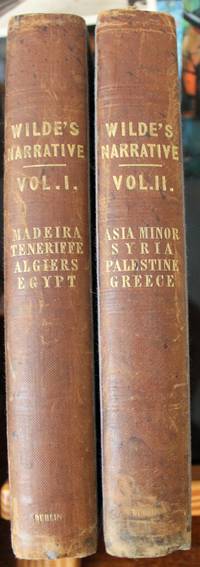
1840000202Dublin: William CurryJunand Co Longman OrmeBrowne and Company London 1840. 1st Edition 1st Printing. Hardcover. Very Good/Not called for>. Two Volumes.Original boards rebacked.New end papers. Boards and spine unevenly sunned. A tight firm set. Light sporadic foxing spots. Frontispiece Vol 1 The Yacht "Crusader" Frontispiece Vol 2 "Telmessus" from a sketch by R.Meiklam.Wilde a medical student was hired to accompany Robert Meiklam on his yacht "Crusader" " In September 1837 my friends Sir Henry Marsh and Professor Graves proposed that I should accompany as medical attendant a gentleman who was about to make a voyage for the benefit of his health. Anxiety to see the World coupled with the fact of my health then being in a precarious state induced me gladly to accept this kind offer" Contact seller regarding postage. <br/> <br/> William Curry,Jun,and Co, Longman, Orme,Browne and Company, London hardcover
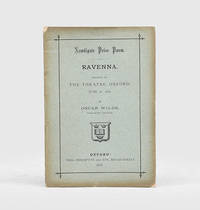
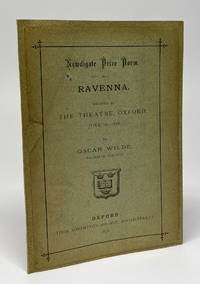
1878182528Oxford: Thos. Shrimpton and Son 1878. Wilde debuts First edition of Wilde's first independent publication a poetic evocation of the historic Italian city composed while a student at Oxford and awarded the university's prestigious Newdigate Prize; "its laments for the sufferings of Dante and Byron proclaimed admiration and anticipation" ODNB. The inspiration for the poem came on a "vacation ramble" to Italy in 1877. Wilde recited the poem at the Sheldonian Theatre on 26 June where according to the review published the next day in the Oxford and Cambridge Undergraduate's Journal he was "listened to with rapt attention and frequently applauded" Ellman p. 94. Octavo pp. 16. Original grey-green printed wrappers lettered in black. Housed in custom green cloth box. Wrappers partially detached but holding edges of wrappers lightly toned with small chips internally fresh. A very good copy of a fragile publication. Mason 301. Richard Ellmann Oscar Wilde 1987. hardcover
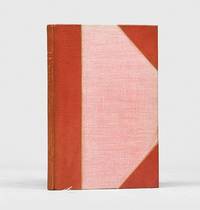
1878149908Oxford: Thos. Shrimpton and Son 1878. Attractively bound copy of Wilde's first independent publication First edition of Wilde's first independent publication an attractively bound copy preserving the original wrappers and with the bookplate to the front pastedown of the eccentric sportsman and artist William Eden 1849-1915 father of future Prime Minister Anthony Eden and who like Wilde had a dispute with the artist James McNeill Whistler. The inspiration for Wilde's prize-winning poem came on a "vacation ramble" to Italy in 1877 with the precentor and junior dean of Trinity College Dublin William Mahaffy. According to the review published the next day in The Oxford and Cambridge Undergraduate's Journal Wilde's recitation of it at Oxford was "listened to with rapt attention and frequently applauded" Ellman p. 94. Eden excelled at a range of sports from boxing and horse riding to shooting "the epitome of the sporting squire" ODNB a member of several clubs and well known in London society. So too was he a keen amateur artist and aesthete building a fine collection of paintings and was a member of the aristocratic group The Souls. The contrast between the sportsman and the aesthete has been noted: "There was little that was harmonious in his nature and the aesthetic side warred with and exacerbated rather than complemented his athleticism making him a bored sportsman and a militant aesthete. As he grew older the world's failure to correspond to his ideals drove him to furious rages and the debased taste of humanity confirmed his atheism - for how could a God have made such a botch of things" ibid. His dispute with Whistler was occasioned when Eden commissioned a portrait of his wife which Whistler executed but then kept the cheque without handing over the painting leading to a legal case which resulted in Whistler's book The Baronet and the Butterfly 1899. Wilde too had a lengthy rivalry with Whistler out of the courts but with very public sparring. Octavo 16 pp. 176 x 119 mm. Early 20th-century pink straight-grain morocco for Hatchards of Piccadilly spine lettered in gilt pink cloth sides marbled endpapers top edge gilt pink silk page marker; bulked with 20 binder's blanks. With the original green printed wrappers bound in. Spine lightly sunned very light rubbing at extremities short split at foot of front wrapper; an excellent copy. Richard Ellmann Oscar Wilde 1987; Mason 301. hardcover
187811085Oxford: Thos. Shrimpton and Son 1878. First Edition. Sewn binding. Very good . Octavo 16pp. First and only issue with the Oxford crest on the front wrapper and title page there were pirated editions that lacked these. A nice sound copy internally lovely with the original grey-green wrappers expertly backed onto sympathetic archival paper. Overall very good or better. A fragile publication and among the most elusive of Wilde volumes. The Newdigate Prize awarded since 1806 is given to the best composition in English verse by an undergraduate student at Oxford. A strong effort right out of the gate from the short-lived but highly influential Anglo-Irish writer. Mason 301. Thos. Shrimpton and Son unknown
186947911No place 1869. 8vo. In the original printed wrappers no backstrip. Offprint from the "Philosophical Magazine" January 1869. With authors presentation inscription to front wrapper: "With the author's Compliments.". Fine and clean. 9 pp. <br/><br/><em>Offprint issue with author's presentation insciption to front wrapper of Wilde's paper on how to control and render the magneto-electri current which nearly led to the discovery of the principle of self-excitation. This was however achieved by other inventors first notably Charles Wheatstone and the Siemens brothers."In 1856 Wilde established a business in Manchester as an electric-telegraph and lightning-conductor engineer and spent some years on the development of a magneto-electric alphabetic telegraph which was demonstrated at the international exhibition in London in 1862. In December 1863 he patented a twin-armature machine in which a magneto-electric generator provided excitation current for the field winding of another generator. These machines were made in quantity by Wilde & Co. but in use they had the disadvantage of becoming very hot. In 1867 Described in the present paper. he patented an entirely different type of multipolar machine which was used for electro-deposition and arc lighting. Among his other patents was one in 1875 for the making of copper rollers for calico printing.". Oxford DNB. Henry Wilde 1833 - 1919 was a wealthy individual from Manchester England who used his self-made fortune to indulge his interest in electrical engineering. He invented the dynamo-electric machine or self-energising dynamo an invention for which Werner von Siemens is more usually credited and in fact discovered independently. At any rate Wilde was the first to publish his paper was communicated to the Royal Society by Michael Faraday in 1866. The self-energising dynamo replaces the permanent magnets of previous designs with electro-magnets and in so doing achieved an enormous increase in power. The machine was considered remarkable at the time especially since Wilde was fond of spectacular demonstrations such as the ability of his machine to cause iron bars to melt. </em> unknown
187346830London Taylor and Francis 1873. 8vo. Offprint seperately paginated with author presentation inscription to top of front wrapper "Joseph Sidelbotham / with the Author's best regards". Fine and clean. 8 pp. 1 folded plate. <br/><br/><em>Scarce offprint issue with a most interesting presentation inscription to one of the fathers of photography of Wilde's paper on improvements of his electromagnetic induction machine introduced in 1866. Wilde discovered independently of Werner von Siemens who is usually credited for the invention the dynamo-electric machine. Despite Siemens being the one credited for the invention Wilde was the first to publish a paper describing it; this was communicated to the Royal Society by Michael Faraday in 1866.Joseph Sidebotham 1824-1882 was the first to practice photography in Manchester and of the most important local photographers in general. His interest was however not confined to photography; he was an amateur botanist entomologist and astronomer. He was also a Fellow of the Royal Astronomical Society and lectured to the Mechanics Institute on astronomy and electro-magnetism. </em> unknown
189548924Manchester 1895. 8vo. In the original printed wrappers. Offprint from: "Memoirs and Proceedings of the manchester Literary and Philosophical Society" Volume Nine Fourth series. With the authors presentation inscription to top of first page: "With the Author's Compliments". Lacking backwrapper. Internally fine and clean. Pp. 95-107. <br/><br/><em>Offprint with the author's presentation inscription. Henry Wilde a wealthy individual from Manchester England who used his self-made fortune to indulge his interest in electrical engineering. He invented the dynamo-electric machine or self-energising dynamo published in 1866. The machine was considered remarkable at the time especially since Wilde was fond of spectacular demonstrations such as the ability of his machine to cause iron bars to melt. </em> unknown
189648036Manchester The Manchester Literary and Philosophical Society 1896. 8vo. In the original printed wrappers. Offprint from "Memoirs and Proceedings of the Manchester Literary and Philosophical Society" Tenth 10 volume Fourth series. With author's presentation inscription to top of front wrapper: "With the Author's Compliments.". Lacking 1 cm of lower part of front wrapper not affecting text otherwise a very fine and clean copy. Pp. 61-71 1 plate. <br/><br/><em>Scarce offprint issue with author's presentation inscription of Wilde's important contribution to the quantitative relations of the physical and chemical forces especially in relation to batteries. Henry Wilde 1833 - 1919 a wealthy individual from Manchester England who used his self-made fortune to indulge his interest in electrical engineering. He invented the dynamo-electric machine or self-energising dynamo published in 1866. The machine was considered remarkable at the time especially since Wilde was fond of spectacular demonstrations such as the ability of his machine to cause iron bars to melt. </em> unknown
189448038Manchester The Manchester Literary and Philosophical Society 1894. 8vo. In the original printed wrappers. Offprint from "Memoirs and Proceedings of the Manchester Literary and Philosophical Society" Ninth 9 volume Fourth series. With author's presentation inscription to top of front wrapper: "With the Author's Compliments.". Light soiling to extremities. Very fine and clean. Pp. 181-186 1 folded plate. <br/><br/><em>Scarce offprint issue with author's presentation inscription of Wilde's contribution to the magnetic declination of the Earth.Henry Wilde 1833 - 1919 a wealthy individual from Manchester England who used his self-made fortune to indulge his interest in electrical engineering. He invented the dynamo-electric machine or self-energising dynamo published in 1866. The machine was considered remarkable at the time especially since Wilde was fond of spectacular demonstrations such as the ability of his machine to cause iron bars to melt. </em> unknown
189548037Manchester The Manchester Literary and Philosophical Society 1895. 8vo. In the original printed wrappers. Offprint from "Memoirs and Proceedings of the Manchester Literary and Philosophical Society" Ninth 9 volume Fourth series. With author's presentation inscription to top of front wrapper: "With the Author's Compliments.". Front wrapper loose and back wrapper detached light miscolouring to wrappers. Internally fine and clean. Pp. 67-85 1 folded plate. <br/><br/><em>Scarce offprint issue with author's presentation inscription of Wilde's contribution to helium and its place in the natural classification. Henry Wilde 1833 - 1919 a wealthy individual from Manchester England who used his self-made fortune to indulge his interest in electrical engineering. He invented the dynamo-electric machine or self-energising dynamo published in 1866. The machine was considered remarkable at the time especially since Wilde was fond of spectacular demonstrations such as the ability of his machine to cause iron bars to melt. </em> unknown
1892009173Manchester: George Falkner and Sons 1892. Reissue of the 1878 offprint with new preface and French translation. Inscribed "with Author's Compliments." Small pieces torn from outer edge of rear wrapper; blank corners of final leaf and folding table torn off; two library ink stamps on front wrapper; embossed stamp on title page. Privately published version. Unrecorded on OCLC/WorldCat. Collation: vi 17 1 iv 18 pp. folding table. Reissue. Original Printed Wrappers. Good. George Falkner and Sons Paperback
189248041London Paris Kegan Paul Gauthier-Villars et fils 1892. Large4to. Without front wrapper and backtrip. Internally fine and clean. VI 18 pp 1 folded plate. <br/><br/><em>Second issue with alterations and additional material of Wilde's contribution to the origin of elements and his views on the newly created periodic system including the first French translation. Wilde states in the preface printed here for the first time that: "The reprinting of this paper is all the more desirable as some of the views set forth therein have been modified by subsequent investigatiors without advancing much beyond what had already been accomplished; while in other instances there has been a distinct retrogression from the solid position which chemical philosophy had attained more than forty years ago." Henry Wilde 1833 - 1919 a wealthy individual from Manchester England who used his self-made fortune to indulge his interest in electrical engineering. He invented the dynamo-electric machine or self-energising dynamo published in 1866. The machine was considered remarkable at the time especially since Wilde was fond of spectacular demonstrations such as the ability of his machine to cause iron bars to melt. </em> unknown
187848040Manchester T. Sowler and Co. 1878. 8vo. In the original printed wrappers. Offprint from "The Proceedings of the Manchester Literary and Philosophical Society" April 30. Author's presentation inscription to front wrapper "Edmund J Mills / with the Author's Compliments". Miscolouring to lower part of front wrapper. Internally fine and clean. 25 pp. 1 folded plate. <br/><br/><em>Scarce offprint issue with author's presentation inscription of Wilde's contribution to the origin of elements and his views on the newly created periodic system.Henry Wilde 1833 - 1919 a wealthy individual from Manchester England who used his self-made fortune to indulge his interest in electrical engineering. He invented the dynamo-electric machine or self-energising dynamo published in 1866. The machine was considered remarkable at the time especially since Wilde was fond of spectacular demonstrations such as the ability of his machine to cause iron bars to melt. </em> unknown
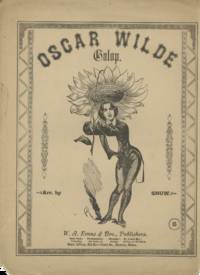
1882List3658Boston Massachusetts: W. A. Evans & Bro 1882. Folio illustrated wraps. Pages detached from each other small chip to corner images and music fine remains good to very good and quite attractive. Good to very good. A visually striking example of Oscar Wilde–related ephemera issued during the height of the writer’s American lecture tour of 1882. Though lacking a printed date the title strongly suggests publication in connection with Wilde’s appearance at the Boston Music Hall on January 31 1882 where he delivered his lecture “The English Renaissance†as part of his widely publicized tour across the United States. Contemporary accounts describe the event as a notable cultural moment including the presence of Harvard students dressed in exaggerated aesthetic costume who occupied the front rows of the hall reflecting both the fascination with and satirical reception of Wilde’s aesthetic persona.1<br /> <br /> The lithographic cover prominently depicts a figure carrying an oversized sunflower an image closely associated with Wilde and the broader Aesthetic Movement. Such illustrated sheet music functioned not only as musical publications but also as collectible artifacts capitalizing on the figure of Wilde. Over the course of several months he traveled widely across the United States and Canada delivering lectures on art decoration and cultural taste and quickly became a subject of both admiration and parody in the American press. Although he never returned for a comparable national tour Wilde maintained a lasting connection to American audiences. We know of a variant edition of the Evans imprint with a different illustration as well as a different version published in Boston by Ditson the same year. <br /> <br /> OCLC 500491189 specifying this edition with the large sunflower illustration locating five copies. <br /> <br /> 1 “Freshmen at Oscar Wilde’s Lecture†The Harvard Crimson February 1 1882. W. A. Evans & Bro unknown
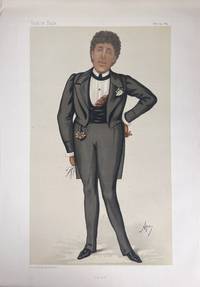
18849061<p>Scarce chromolithograph of Oscar Wilde published in Vanity Fair magazine on May 24th 1884 accompanied with a page of text. The page measures 10.5 x 15 in 27 x 38 cm.</p> Vanity Fair
184670120081070Printed for T Allman London 1846. First Edition. Hardcover. Very Good Condition/No Dust Jacket. Author details by reference to WorldCat. Original brown covers with simple blind decoration gilt lettering and ornate decoration on spine corners and spine-ends are lightly bumped. Sound binding gift-note dated Nov 27 1846 on front end-paper. Vignette title. Clean pages with occasional very light foxing. Black and white frontis full page illustration facing title-page. No dust jacket as published. Undated by publisher. Dated from gift note. Quantity Available: 1. Shipped Weight: under 1 kg. Pictures of this item not already displayed here available upon request. Inventory No: 70120081070. All our books music and maps are sent by a tracked mail service. Printed for T Allman hardcover
1894304460London: Printed for Private Circulation. 11 pages. Number 69 of 75 copies. Some light foxing to the pages. A piracy actually printed circa 1905. In Stuart Mason's bibliography as item 600. . Near Fine. Soft cover. First Thus. 1894. Printed for Private Circulation paperback
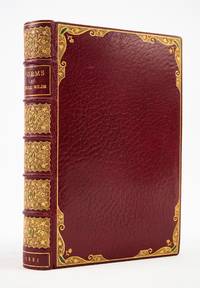
1881ST20886London: David Bogue 1881. FIRST EDITION First Issue. 192 x 126 mm. 7 1/2 x 5". ix 1 236 1 pp. <br/> EXTREMELY ATTRACTIVE CRIMSON MOROCCO INTRICATELY GILT BY ZAEHNSDORF stamp-signed and dated 1909 on front turn-in covers framed in gilt with delicate pointillé cornerpieces surrounding inlaid green morocco drawer handles and oblique floral tools raised bands spine panels densely gilt in the pointillé style of Bozerian with stems of flowers radiating from pairs of inlaid green drawer handles turn-ins gilt-ruled red silk endleaves top edge gilt other edges untrimmed. Original slightly soiled gilt limp vellum binding bound in at rear. Mason 304. A few trivial spots internally but A VERY FINE COPY--the leaves fresh clean and wide-margined and the binding lustrous and virtually unworn.<br/> <br/> This is a finely bound copy of the first edition of Wilde's first book of poetry and his first substantial work of any kind. The collection is made up of 61 poems 31 of which appear here for the first time. Many reflect Wilde's delight in his visit to the art towns of Italy; other poems such as the tender "Resquiescat" written in memory of Wilde's sister Isola who had died at the age of eight show a more personal emotional sentiment. According to Mason "the first printing June 1881 consisted of 750 copies of which only 250 copies were used for the first edition the remaining 500 being equally divided between the second and third editions." Wilde himself oversaw the layout and design of the book choosing the handmade Dutch paper on which it is printed and the design of prunus blossoms on the vellum binding here bound in at the rear. The only published books by Wilde to appear before the present work were his student poem "Ravenna" which was named the "Newdigate Prize Poem" at Oxford for 1878 issued in wrappers and his drama "Vera; or the Nihilists" printed in 1880 of which Mason had knowledge of only two copies. Our attractive binding is a fine example of the work of the Zaehnsdorf firm long a top-ranked English bindery. Born in Pest Hungary Joseph Zaehnsdorf 1816-86 served his apprenticeship in Stuttgart worked at a number of European locations as a journeyman and then settled in London where he was hired first by Westley and then by Mackenzie before opening his own workshop in 1842. His son and namesake took over the business at age 33 when the senior Joseph died and the firm flourished under the son's leadership becoming a leading West End bindery. Over the years Zaehnsdorf employed a considerable number of distinguished binders including the Frenchman Louis Genth who was chief finisher from 1859-84 and trained a number of others including Roger de Coverly and Sarah Prideaux. A family-run business until 1947 the Zaehnsdorf bindery continued to produce consistently attractive and innovative designs executed with unfailing skill. David Bogue unknown
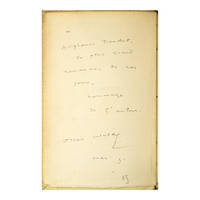
1882#8<p>Oscar Wilde<br />Poems. Fourth Edition.<br />London David Bogue 1882.<br /><br />Octavo. ix pp. 1 blank leaf 234 pp. 2 pp. publisher's catalogue and 1 blank leaf.<br /><br />Publisher's binding. Full white vellum Bradel binding both covers decorated with a symmetrical gilt and blind-stamped floral panel spine likewise adorned with a large gilt floral panel title in gilt lettering top edge gilt untrimmed.<br /><br />Fourth edition.<br /><br />Copy enriched with an autograph inscription signed on the verso of the half-title:<br />"To Alphonse Daudet the greatest novelist of our time homage from the author. Oscar Wilde May 3 83."<br /><br />An exceptional inscription to "the greatest novelist of our time."<br /><br />Having only just returned from New York Oscar Wilde spent the period from February to mid-May in Paris. It was there that he made the acquaintance of Alphonse Daudet whom he met both at his home his wife hosted a celebrated salon and at the residence of the painter Giuseppe de Nittis.<br /><br />Robert Harborough Sherard who was a friend of both Daudet and Wilde testified to the genuine esteem the English writer held for the French novelist.<br /><br />Although their aesthetics may at first appear far apart certain parallels can nevertheless be drawn between their works. Thus it has been written of L'Homme au cerveau d'or one of the tales from Lettres de mon moulin that "one might readily believe it to be the work of an Edgar Allan Poe or an Oscar Wilde."<br /><br />Yet Alphonse Daudet like the vast majority of French writers did not distinguish himself by his courage and even went further: in 1895 after Wilde's sentence to two years' hard labour he refused to sign a petition by Hugues Rebell calling for a reduction of his sentence accompanying his refusal with the remark: "As a father I can only express my horror and indignation."<br /><br />Let us recall that this exemplary family man confided to Gustave Flaubert during a dinner: "To experience pleasure against my own flesh I require the flesh of two women one whom I handle and the other who attends to the backside of the one I am fondling" Journal of Edmond de Goncourt 5 May 1876.<br /><br />This inscription by Oscar Wilde certainly dates from a period when he was seeking to ingratiate himself with the French intellectual milieu yet he was nonetheless fully aware of Alphonse Daudet's great talent and sincere in this fine dedication.</p> David Bogue
1882#9<p>Oscar Wilde<br />Poems. Fourth Edition.<br />London David Bogue 1882.<br /><br />Octavo. ix pp. 1 blank leaf 234 pp. 2 pp. publisher's catalogue and 1 blank leaf.<br /><br />Publisher's binding. Full white vellum Bradel binding both covers decorated with a symmetrical gilt and blind-stamped floral panel spine likewise adorned with a large gilt floral panel title in gilt lettering top edge gilt untrimmed.<br /><br />Fourth edition.<br /><br />Copy enriched with an autograph inscription signed on the verso of the half-title:<br />"To Alphonse Daudet the greatest novelist of our time homage from the author. Oscar Wilde May 3 83."<br /><br />An exceptional inscription to "the greatest novelist of our time."<br /><br />Having only just returned from New York Oscar Wilde spent the period from February to mid-May in Paris. It was there that he made the acquaintance of Alphonse Daudet whom he met both at his home his wife hosted a celebrated salon and at the residence of the painter Giuseppe de Nittis.<br /><br />Robert Harborough Sherard who was a friend of both Daudet and Wilde testified to the genuine esteem the English writer held for the French novelist.<br /><br />Although their aesthetics may at first appear far apart certain parallels can nevertheless be drawn between their works. Thus it has been written of L'Homme au cerveau d'or one of the tales from Lettres de mon moulin that "one might readily believe it to be the work of an Edgar Allan Poe or an Oscar Wilde."<br /><br />Yet Alphonse Daudet like the vast majority of French writers did not distinguish himself by his courage and even went further: in 1895 after Wilde's sentence to two years' hard labour he refused to sign a petition by Hugues Rebell calling for a reduction of his sentence accompanying his refusal with the remark: "As a father I can only express my horror and indignation."<br /><br />Let us recall that this exemplary family man confided to Gustave Flaubert during a dinner: "To experience pleasure against my own flesh I require the flesh of two women one whom I handle and the other who attends to the backside of the one I am fondling" Journal of Edmond de Goncourt 5 May 1876.<br /><br />This inscription by Oscar Wilde certainly dates from a period when he was seeking to ingratiate himself with the French intellectual milieu yet he was nonetheless fully aware of Alphonse Daudet's great talent and sincere in this fine dedication.</p> David Bogue
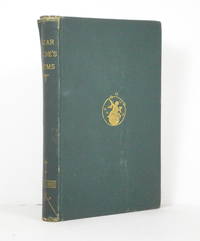
1882001873Boston Massachusetts: Roberts Brothers 1882. 4th Edition . Hardcover. Very Good/No Jacket. 16mo - over 5¾ - 6¾" tall. Covers in brown cloth with black decoration; spine gold stamped with wear at head and foot; top edge gilt; 16mo; with 230 pages. <br/> <br/> Roberts Brothers hardcover
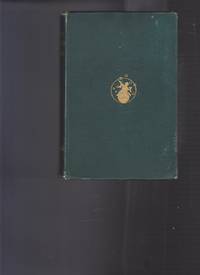
188121118Roberts Brothers. Good with no dust jacket. 1881. Hardcover. Green boards gilt titling to spine gilt embossed globe with child atop on cover. Light scuffing to surface corners and head and tail of spine bumped. Floral endpapers front and back no tears or separations in gutters. Binding stitching has broken with pages 65-88 loose from binding and pages 89-112 hanging by the bottom threads. All other sections appear intact. Penciled name and date on blank fly. Text unmarked. Photos on request. ; 7.0 X 4.75 X 0.80 inches; 230 pages . Roberts Brothers hardcover
1881010736Boston: Roberts Brothers 1881. Mason 310 with all the first issue points: Yellow top-stain green floral endpapers and child-on-a-globe front board design in gilt. Green cloth. Light shelfwear with frayed spine ends. The cloth has a 2" tear along the rear joint. The front hinge is just starting to crack. In an otherwise tight binding. First American Edition. Hard Cover. Good/No Jacket. 12mo - over 6¾" - 7¾" tall. Roberts Brothers Hardcover
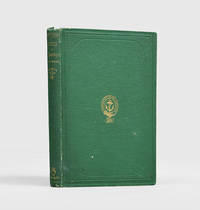
1871190902Glasgow: Cameron & Ferguson 1871. Second edition of this collection of poetry by Jane Francesca Wilde 1821-1896 the mother of Oscar Wilde. Prior to the publication of the first edition in 1864 Lady Wilde contributed pro-Irish independence poetry to The Nation under the nom-de-plume "Speranza". Octavo. Engraved frontispiece of the poet after Bernard Mulrenin. With 10 pp. of publisher's ads at rear. Original green cloth spine and front cover lettered and decorated in gilt brown coated endpapers. Bookplate of Jeremy J. Mason. Extremities a little worn cockling to rear cover binding shaken foxing to outer leaves. A good copy. hardcover