Welch, WillyBiblio.com

1 044 résultats
2000Q-0439139945Scholastic Paperbacks 2000-06-01. Paperback. New. In shrink wrap. Looks like an interesting title! Scholastic Paperbacks paperback
1995Q-059048298XScholastic 1995-04-01. Library Binding. New. New. In shrink wrap. Looks like an interesting title! Scholastic unknown
1994BN49245Berlin ; Basel ; Boston : Birkhäuser 1994. Erstauflage EA. <br/><br/>Politik Berlin ; Basel ; Boston : Birkhäuser unknown
1990Q-0937708216Great Northwest Pub & Distributing 1990-08-01. Paperback. New. In shrink wrap. Looks like an interesting title! Great Northwest Pub & Distributing paperback
1998Q-0792381866Springer 1998-06-30. Hardcover. New. In shrink wrap. Looks like an interesting title! Springer hardcover
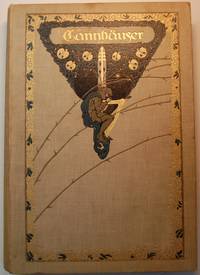
1910BN24494Gustav Weise Verlag 1910. Leinen. Für die Jugend ausgewählt und bearbeitet. Mit 4 Farbdruckbildern nach Aquarellen von Walter Zweigle und 15 Tondruckbildern von Willy Planck. sehr gut erhalten! Seiten altersbedingt nachgedunkelt! Gustav Weise Verlag unknown
191855752Vienna: M. Munk. Good. 1918. First Edition. Softcover. Original pictorial wraps. Spine worn pages loose in binding. 26 of 27 un-numbered leaves. Color illustrations. Text in German. ; quarto . M. Munk paperback
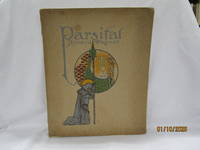
191254914NY: Thomas Y. Crowell. Very Good. 1912. First Edition. Hardcover. Original gilt-stamped burgundy cloth. First American trade edition. Illustrated by Pogany including tipped-in color plates. Spine gilt darkened wear to spine ends/edges with small loss to spine heel. Long closed tear along gutter of one of the preliminary pages. ; quarto . Thomas Y. Crowell hardcover
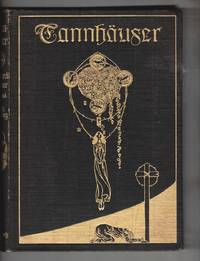
191059033NY: Brentano's. Very Good with no dust jacket. 1910. Hardcover. Light scratch to back cover No DJ; Gilt-decorated black cloth hardback. Unpaginated apprx 150 pp . Color & B&W illustrations. Epic poem. Date uncertain ca 1910; 8vo . Brentano's hardcover
19111124630<p>London: George G. Harrap & Co. 1911. Hardcover. Collectible - Very Good/No Jacket. Large hardcover with light gray cloth covers. Embossing with blue and gilt decoration on covers. Gilt lettering on spine. Spine has darkened. Cover wear at edges and spine tips. Owners inscription on front free endpaper dated 1919. No publisher date in book. Small paste down illustration facing title page with 16 tipped in illustrations by Willy Pognay. Every page is on a gray card stock with Pognay illustrations. 11.25x8x1.25 with 230 pp.</p> George G. Harrap & Co. hardcover
191170440New York:: Thomas Y. Crowell & Co 1911. publisher's cloth decorated in gold and colors in glassine wrapper and publisher's two-part decorated box. Ink gift inscription on the illustrated front free endpaper; otherwise a lovely copy in slightly used glassine. The box shows the lightest of use. . Large 8vo. Illustrated throughout by Willy Pogany. Thomas Y. Crowell & Co,, hardcover
191161781London:: G. G. Harrap & Co. 1911. First trade edition. publisher's gilt full morocco t.e.g. Leather slightly rubbed at corners and joints; tight and sound; contents fine. Large 8vo. Illustrated throughout by Willy Pogany. G. G. Harrap & Co., hardcover
191124558London: G. G. Harrap & Co 1911. Limited edition. Hardcover. Very good. 4to. Full calf embossed on the spine and upper board. Top edge gilt. Illustrated throughout by Pogány in black and white and tipped-in full color plates. Leather rubbed at hinges and edges with some light soiling else this is a very good copy.<br /> <p><br /> One of 525 numbered copies signed by Pogány. This is number166.<br /> <p>. G. G. Harrap & Co hardcover
191324584London: G. G. Harrap & Co 1913. First edition. Very good. Hardcover. Three volumes. 4to. Quarter green calf spine blocked in gilt; Cloth sides with gilt title and design on the upper boards. Top edges gilt. Illustrated throughout by Pogány in black and white and 40 mounted full color plates Spines sunned to a pleasing tan color else this is a very good set. In the publisher's slipcase which has some light wear.<br /> <p>. G. G. Harrap & Co unknown
19621010130.32Johann Ambrosius Barth Verlag Leipzig 1962. 3 verbesserte Auflage. Hardcover. Very Good. 8vo hardcover. Tan cloth no dj. Vg condition. Ex-US Air Force copy markings to opening pgs. pocket in rear spine label removed; otherwise contents bright & clean binding tight. 489 pp. Johann Ambrosius Barth Verlag, Leipzig hardcover
192724331Berlin: Julius Springer 1927. First Edition. Cloth. Very Good. First Edition. viii 418 2-ads pages. 8vo. Publisher's blue/black boards with gilt lettering and publisher's device on spine and titles on front panel. Bookstore tag on front pastedown. Binding glued in gutter at Vorwort foreword. Otherwise a nice clean bright copy. Text in German. Cloth. Wagner was a full member of the Academy of Sciences Berlin and was made in 1931 an Honorary Member of the American Academy of Arts and Sciences Boston. He held numerous other awards including in 1930: Slaby-Plakette des Deutschen Funktechnischen Verbandes. In 1924 he founded the magazine Zeitschrift Elektrische Nachrichtentechnik.<br /> <br /> In the foreword Wagner notes that the sudden onset of broadcasting has created high demand for wireless telephony and has accelerated technical developments dramatically. The new building blocks of broadcasting can be built on the progress made in radio technology. In addition to the general relations of electrodynamics the laws of transmission propagation and reception of electric waves the events occurring in the electron tubes and their mode of action in the various circuits as rectifiers amplifiers and vibration exciters and finally the laws of acoustics and the operation of the electro-acoustic devices all play a role. Knowing all of these things is essential for building a good broadcast radio but is not easy to acquire because so far there has been no where to go for sound details regarding all of these issues.<br /> <br /> The Heinrich Hertz Society in 1925 created a plan to promote broadcasting over the airwaves by organizing a series of lectures about "The scientific basis of radio communications". This book was the much enlarged result. Wagner is probably best known for the development of what we now call wave filterswork he did starting in 1915.<br /> <br /> "The most prominent researchers G. A. Campbell in the United States and K. W. Wagner in Germany explored selective filter circuits for telephone applications in the early years of World War I thus paving the way for the first ideas about electrical circuit synthesis. They designed sophisticated filter circuits simply by cascading elementary sections of lossless inductors and capacitors. The circuits obtained in this way had a striking similarity to circuit models in engineering transmission line theory and henceforth were called ‘wave filters’." Life and Work of Wilhelm Cauer 1900 – 1945 Cauer et al Proc. MTNS2000 Perpignan France June 19 - 23 2000<br /> <br /> Waveguide filters today are most useful in the microwave band of frequencies where they are a convenient size and have low loss. Examples of microwave filter use are found in satellite communications telephone networks and television broadcasting. <br /> <br /> Davis Electrical and Electronic Technologies #372 noting that in 1915 filter technology came into being with the independent proposal of it by Campbell and Wagner. Julius Springer unknown
1905342131905. BKW 42/2425. - Berlin August Hirschwald 12. und 19. Juni 1905 4° pp.737-796 feine Broschur. Erstdruck! unknown
1952059635New York: Viking Press 1952. 1st Edition 1st Printing. Hardcover. Near Fine/Very Good. 11 " Tall. Xiv 147 Pp. First Edition Stated First Printing 1952. Green Cloth Stamped In Silver Thick Pages. A Bright Clean Almost Unworn Example No Marks Or Dampstaining. Dustjacket Priced $3.95 Small Chip To Head Of Spine Some Surface Loss Along Front Spine Edge And Along The Flap Folds Spine Faded But Lettering Very Clear. <br/> <br/> Viking Press hardcover
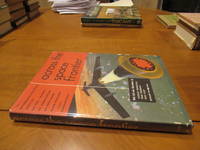
1952260109-MB24Viking Press 1952. Very Good Hardcover with Dustjacket First edition illustrated DJ spine hs several chips and tears. First Edition. Hard Cover. Very Good/Good. Illus. by Bonestell Chesley; Freeman Fred; Klep Rolf illustrators. Viking Press Hardcover
1953215566Viking 1953. First Edition. Hardcover. Fair Condition/No Dust Jacket. Illustrator: Bonestell Chesley; Freeman Fred; Klep Rolf. 126 pages. Oversized. Ex-library book some staining and wear to the covers; pages yellowed some stained margins. Musty from storage. Name stamped on cover and on title page. No jacket. A reading copy. Illustrator: Bonestell Chesley; Freeman Fred; Klep Rolf. Quantity Available: 1. Category: Aviation; Inventory No: 215566. . Viking hardcover
1953140947434New York: The Viking Press 1953. First Edition. Very Good/Very Good. First edition first printing. Signed by Wernher von Braun on the title page. viii 126 pp. Bound in publisher's green cloth stamped in silver. Very Good with moderate wear and soiling to covers 1-3/4 inch tear to lower edge of contents page. Gift inscription dated 1984 to half-title page. Offsetting from two newspaper clippings taped to facing page likely indicating occasion of book's signing. In a Very Good unclipped dust jacket with moderate edgewear and toning. <p>Dr. Wernher von Braun was a brilliant and visionary German engineer and onetime SS Stormbahnfuerer who led the V-2 ballistic missile program during the Second World War. He convinced his colleagues to surrender themselves and their materials to the Americans after the war ignoring orders to kill themselves rather than fall into enemy hands. The Americans knew a good thing when they saw it and smuggled 118 German scientists one hundred V-2s and tons of related components and documents out of the country. To Stalin's fury the Soviets were left only with lower-level rocket scientists to press into service hindering their performance in the Space Race years later. <p>Once in the United States von Braun spent fifteen years working for the United States Army on ballistic weapons but his true passion was space travel. He once told a group of British journalists: “The V-2 was a fine rocket. The only thing wrong with it was that it landed on the wrong planet.†Frustrated with being sidelined von Braun convinced Collier’s associate editor Cornelius Ryan whom he met at a symposium on space medicine in San Antonio to run a series on space travel. The magazine series provided the material for The Conquest of the Moon published in 1953 by Viking. Neil Armstrong read the book when he returned from his tour of duty in Korea and it influenced his decision to become an astronaut. <p>Von Braun’s work co-written with popular science writers and beautifully illustrated by Chesley Bonestell inspired the U.S. government as well. In 1960 President Eisenhower transferred von Braun’s rocket development group from the Army to the newly established National Aeronautics and Space Administration NASA separating space science from military science for the first time. Von Braun became the director of the Marshall Space Flight Center and was in charge of developing the Saturn space boosters used as the launch vehicles for the Apollo Moon program. His work was essential in the competition with the Soviet Union and the former Nazi was lauded as a national hero. The Viking Press unknown
1953AU00005Rare 1953 First Edition <br />dust jacket<br />very good Viking Press hardcover
1953500046700London: Sidgwick & Jackson 1953. 1st Edition. . Hardcover. VG/G. <br/> <br/> Sidgwick & Jackson hardcover
1956140947438New York: The Viking Press 1956. First Edition. Near Fine/Good. First edition first printing. Signed by Wernher von Braun on the half-title page and inscribed to a young recipient: "Your Uncle Stu has told me of your interest in rockets and satellites. Good luck. Christmas 1958." x 176 pp. Bound in publisher's green cloth titled in silver on the spine blindstamped rocket design to front board. Near Fine with light soiling to covers rubbing to corners and softening to head and tail of spine. Contents lightly toned. In a Good unclipped dust jacket with moderate edgewear creasing and horizontal tears to fold lines and spine and chipping at fold ends and head and tail of spine. <p>Wernher Magnus Maximilian Freiherr von Braun a Prussian aristocrat and SS Stormbahnfuerer who was spirited to the United States after the Second World War was one of the most important rocket developers of the 20th century. His passion had always been space exploration but during the 1940s he was charged with the development of the ballistic missiles that terrorized London during the final months of the war. After surrendering to the Americans in 1945 in order to safeguard his legacy and scientific work and himself von Braun was frustrated to spend the next few years cooling his heels with fellow German scientists in Texas and Alabama. He told one of his colleagues: “We can dream about rockets and the Moon until Hell freezes over. Unless the people understand it and the man who pays the bill is behind it no dice.†<p>Von Braun wrote the book The Mars Project in order to spark public enthusiasm for his project. Eighteen publishers turned it down but von Braun had a stroke of luck when he met Cornelius Ryan associate editor of Collier’s magazine at a symposium on space medicine in San Antonio. Ryan was impressed with the German engineer’s vision and the magazine published eight influential features on space travel over the next two years starting March 1952 in which von Braun essentially outlined the future of NASA. <p>Those features were expanded into the book The Conquest of the Moon in 1953 and by the time Viking published The Exploration of Mars in 1956 von Braun had become a national figure appearing on a “Tomorrowland†feature on Disney’s popular television show watched by tens of millions of people. The book was co-written with his Collier’s collaborators Willy Ley who had fled Nazi Germany in 1935 to become a science fiction and popular science writer in the United States and the astronomical artist Chesley Bonestell. <p>The Christmas 1958 inscription to little Jimmy was written at the end of a momentous year for von Braun: on January 31 after years of development the satellite Explorer I was successfully launched into orbit. Americans were thrilled and The American Weekly ran von Braun’s autobiography in three installments. The story was turned into the 1960 biopic I Aim at the Stars which inspired Kennedy speechwriter Mort Sahl to quip that Wernher von Braun had aimed for the stars but sometimes hit London. The Viking Press unknown
1999AME_9780792384175Kap 1999. 1st. Hardcover. New/New. Kap hardcover