Schmidt, Heinrich WillyBiblio.com
1 044 résultats
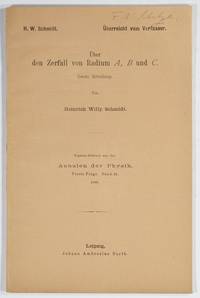
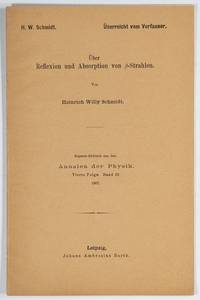
1907112721907. Ann. Phys. 4. Folge 23. - Leipzig Johann Ambrosius Barth 1907 8° pp. 671-697 orig. Broschur; mit Aufdruck: "H. W. Schmidt Überreicht vom Verfasser.". Seltener Separat-Abdruck! Heinrich Willy Schmidt 1876-1914 war ein Physiker der an der Georg-August-Universität Göttingen ausgebildet wurde und im Physik. Inst. der Universität Göttingen lehrte. unknown
1905376731905. Verh. Ges. Naturf. Ärzte 77.Vers. Meran 1905. - 12/1 Bd. - Leipzig F.C.W. Vogel 1905 8° 3 308; X 223 pp. Halbleinenband der Zeit. unknown
1983__311277860XDe Gruyter 1983. Hardcover. New. 6th reprint edition. 160 pages. German language. 6.69x0.44x9.61 inches. De Gruyter hardcover
1903116991903. Slg. klin. Vortr. N.F. 356/57. - Leipzig Verlag von Breitkopf & Härtel 1903 8° 80 pp. 5 Abbildungen orig. Broschur. Sehr gutes Exemplar des Erstdruck dieser wichtigen Arbeit. Willy Anschütz Assistent bei Mikuliz habilitierte sich mit diesem Thema. Die Arbneit ist historisch wertvoll: Auf 15 Seiten werden die bis dato bekannten Fälle aufgezählt und die Literatur genannt. unknown
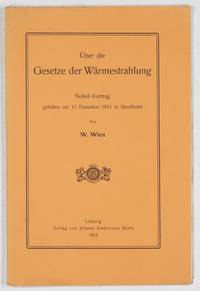
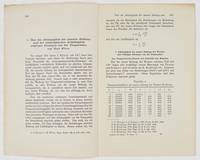
1912113881912. Leipzig Verlag von Johannes Ambrosius Barth 1912 Gr.-8° 21 3 pp. orig. Broschur; unbeschnittenes Expl. First Edition! Wilhelm Wien 1865-1928 "grew up in the east Prussian town of Rastenburg today Ketrzyn Lithuania. He then studied at the prominent universities of Heidelberg and Göttingen before he eventually completed his doctorate in Berlin. In 1900 he succeeded W.C. Röntgen 1901 Physics Laureate as a professor in Würzburg. Wien's research concerned how various metals radiate heat and he received the Nobel Prize for the law of black-body radiation now known as Wien-Planck's law. It was drawn up jointly with Max Planck Physics 1918 and many felt that they should have shared in the award." "When a completely dark body is heated it emits visible light and other electromagnetic radiation. The spectrum of the radiation is entirely dependent on the temperature of the body and not its composition. In 1893 Wilhelm Wien formulated his displacement law which indicates at which wavelength the radiation is most intense at a certain temperature. He subsequently also formulated a law indicating how the radiation spectrum varies as temperature changes. However this does not apply to long wavelengths and in 1900 Max Planck formulated a law that conforms better." Wilhelm Wien - Facts. NobelPrize/org The Nobel Prize in Physics 1911 unknown
1925680881925. Ann. Phys. 4. Folge 77. - Leipzig Verlag von Johann Ambrosius Barth 1925 8° pp.560-586 7 Fig. orig. Broschur. First Edition! Wilhelm Wien 1865-1928 "grew up in the east Prussian town of Rastenburg today Ketrzyn Lithuania. He then studied at the prominent universities of Heidelberg and Göttingen before he eventually completed his doctorate in Berlin. In 1900 he succeeded W.C. Röntgen 1901 Physics Laureate as a professor in Würzburg. Wien's research concerned how various metals radiate heat and he received the Nobel Prize for the law of black-body radiation now known as Wien-Planck's law. It was drawn up jointly with Max Planck Physics 1918 and many felt that they should have shared in the award." "When a completely dark body is heated it emits visible light and other electromagnetic radiation. The spectrum of the radiation is entirely dependent on the temperature of the body and not its composition. In 1893 Wilhelm Wien formulated his displacement law which indicates at which wavelength the radiation is most intense at a certain temperature. He subsequently also formulated a law indicating how the radiation spectrum varies as temperature changes. However this does not apply to long wavelengths and in 1900 Max Planck formulated a law that conforms better." Wilhelm Wien - Facts. NobelPrize/org The Nobel Prize in Physics 1911 unknown
1906112711906. Ann. Phys. 4. Folge 21. - Leipzig Johann Ambrosius Barth 1906 8° pp. 609 - 664 orig. Broschur; mit Aufdruck: "H. W. Schmidt. Überreicht vom Verfasser.". Seltener Separat-Abdruck! Heinrich Willy Schmidt 1876-1914 war ein Physiker der an der Georg-August-Universität Göttingen ausgebildet wurde und im Physik. Inst. der Universität Göttingen lehrte. unknown
1928680891928. Ann. Phys. 4. Folge 85/7. - Leipzig Verlag von Johann Ambrosius Barth 1928 8° pp.795-811 5 Fig. orig. Broschur. Rare Offprint! Wilhelm Wien 1865-1928 "grew up in the east Prussian town of Rastenburg today Ketrzyn Lithuania. He then studied at the prominent universities of Heidelberg and Göttingen before he eventually completed his doctorate in Berlin. In 1900 he succeeded W.C. Röntgen 1901 Physics Laureate as a professor in Würzburg. Wien's research concerned how various metals radiate heat and he received the Nobel Prize for the law of black-body radiation now known as Wien-Planck's law. It was drawn up jointly with Max Planck Physics 1918 and many felt that they should have shared in the award." "When a completely dark body is heated it emits visible light and other electromagnetic radiation. The spectrum of the radiation is entirely dependent on the temperature of the body and not its composition. In 1893 Wilhelm Wien formulated his displacement law which indicates at which wavelength the radiation is most intense at a certain temperature. He subsequently also formulated a law indicating how the radiation spectrum varies as temperature changes. However this does not apply to long wavelengths and in 1900 Max Planck formulated a law that conforms better." Wilhelm Wien - Facts. NobelPrize/org The Nobel Prize in Physics 1911 unknown
1910296061910. Arch. Dermat. Syph. 105. - Wien/Leipzig W. Braumüller 1910 8° V 572 LXXXV pp. 22 Taf. Halbleinenband d.Zt. Further: Philippson: Die Erkrankungen der kleinen Hautvenen in ihren Beziehungen zu Hautkrankheiten S.387-406 20 Lichtdrucktafeln mit 40 Abb. unknown
1913113891913. S.ber. Akad. Wiss. Berl. 1913. - Berlin Verlag der Königlichen Akademie der Wissenschaften / In Commission bei Georg Reimer 1913 Gr.-8° pp.184-200 5 Fig. orig. Broschur. First Edition! "Die Ergebnisse der Strahlungstheorie und die neuere Theorie der spezifischen Wärme haben den Nachweis geliefert daß die Elektronentheorie der Metalle auf eine wesentlich neue Grundlage gestellt werden muß. Man kann nicht mehr die Annahme aufrechterhalten daß die Elektronen in einem Metall wie freie Gasmoleküle herumfliegen und daß ihre mittlere lebendige Kraft der absoluten Temperatur des Metalls proportional ist. Solche Elektronen müssen vielmehr wie Lorentz gezeigt hat eine Wärmestrahlung erzeugen die dem Rayleigh-JEANSschen Gesetz folgt das sich bekanntlich mit der Erfahrung nicht in Übereinstimmung bringen läßt. Man würde nach diesem Gesetz für kürzere Wellenlängen eine viel größere Strahlung erhalten müssen als sie erfahrungsmäßig vorhanden ist. Ebenso zeigt die Theorie der spezifischen Wärme welche die Wärmebewegung in festen Körpern als Schwingungen der Moleküle um feste Zentren auffaßt und diese nach der PLANCKSchen Formel statistisch verteilt durch ihre Übereinstimmung mit den Beobachtungen daß die Elektronen nicht an der Wärmeenergie merklich beteiligt sein können." WienWien Wilhelm Carl Werner Otto Fritz Franz Wien 1864-1928 physicist who in 1893 used theories about heat and electromagnetism to deduce Wien's displacement law which calculates the emission of a blackbody at any temperature from the emission at any one reference temperature. He also formulated an expression for the black-body radiation which is correct in the photon-gas limit. His arguments were based on the notion of adiabatic invariance and were instrumental for the formulation of quantum mechanics. Wien received the 1911 Nobel Prize for his work on heat radiation. unknown
1998x-3764359315Birkhaeuser Basel 1998. Paperback. New. 312 pages. German language. 8.26x5.82x0.71 inches. Birkhaeuser Basel paperback
1998BN301720Birkhäuser Basel Springer Basel 1998. 1998. Softcover. Zukunft der Arbeit welcher Arbeit <br/><br/>Zukunft der Arbeit welcher Arbeit Willy Bierter Uta von Winterfeld Birkhäuser Basel, Springer Basel paperback
195514444o.O. ohne J. ca. 1955. ill. Orig. Geprägter und illustr. Leinwandkassette mit Rücken- und Deckeltitel 20 Tafeln 4° =31 x 25 cm. Wunderschöne Kassette mit auf festem Karton montierten Fotos jedes von hand beschriftet wie SIGNIERT ! Vermutlich kleine Auflage in aufwendiger handarbeit erstellt im Selbstverlag des Photographen. sehr gut erhalten ! ANY QUESTIONS Please don´t hesitate to ask for details !! unknown
1958243222C.H. Beck`sche Verlagsbuchhandlung München 1958. Softcover Band 21 Zustand: keine Beschädigungen keine Eintragungen. Rücken Ecken Kanten gut. Die Druckbögen sind ungeöffnet. Der Preis ist für alle 3 Bücher mit den Heften 1-3. C.H. Beck`sche Verlagsbuchhandlung, München, paperback
199227834HETHKE NORBERT 1992. 1. softcover. HETHKE, NORBERT paperback
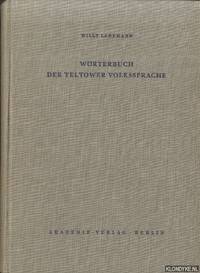
195600228155Berlin Akademie-Verlag 1956. Hardcover. Good. Loose foldable map: ""Karte des ehemaligen Kreises Teltow"" Berlin, Akademie-Verlag hardcover
1971G0307168263I3N00Golden Books 1971. Hardcover. Good. Disclaimer:A copy that has been read but remains in clean condition. All pages are intact and the cover is intact. The spine may show signs of wear. Pages can include limited notes and highlighting and the copy can include previous owner inscriptions. At ThriftBooks our motto is: Read More Spend Less.Dust jacket quality is not guaranteed. Golden Books hardcover
1971G0307168263I3N01Golden Press 1971. Hardcover. Good. Missing dust jacket; Pages can have notes/highlighting. Spine may show signs of wear. ~ ThriftBooks: Read More Spend Less.Dust jacket quality is not guaranteed. Golden Press hardcover
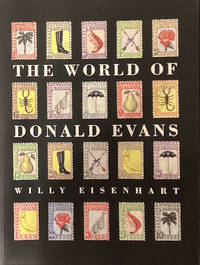
1994042025A<p>Biography of the artist and a catalogue of his color hand painted stamps of fictional places. 175pgs w/index. Erratum on pg 76</p> Abbeville Press paperback
1991Q-0943173477Roberts Rinehart 1991-03-01. Paperback. New. New. In shrink wrap. Looks like an interesting title! Roberts Rinehart paperback
1996Q-0943173949Roberts Rinehart 1996-01-01. Paperback. New. In shrink wrap. Looks like an interesting title! Roberts Rinehart paperback
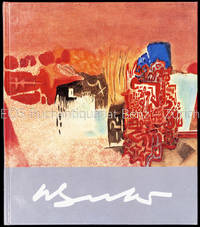
19844429DB1984. Ollon. Édition Cenre d'Art - Les Fontaines. 1984. Qudratische-4°. 99 Seiten mit zahlreichen farbigen Illustrationen. Illustrierter Pappband. Exemplar N°. HC. Gesamtausgabe von 1000 Exemplaren. Text in deutscher und französischer Sprache. - Tadellos erhalten. Mit handschriftlicher Widmung. unknown
1966309549London: Leonard Hill Books 1966. hardcover. very good/very good. Willy Staubli. Illustrated in black and white throughout. 199 pages. Tall 4to light blue boards with silver lettering dust wrapper. London: Leonard Hill Books 1966. A very good copy of this scarce title in a very good dust wrapper.<br/> <br/> Willy Staubli a former member of Switzerland's national council as well as an established reporter and author turn his attention to Brazil. Staubli does not deal with the social and economic aspects of Brasilia but presents it solely from an architectural point of view.<br/> <br/> Leonard Hill Books unknown
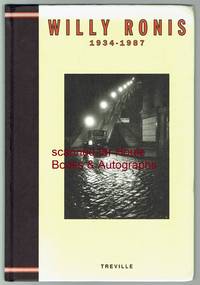
19912222367<p>First edition. Small octavo. Illustrated with 56 b/w photographs. Text in English and Japanese. Original boards. No dust jacket. Very good. Unpaginated. No signatures or bookplates.</p><p><br /></p><p><b>Designed by Tomohiro Itami and Masataka Horiki.</b></p><p><b>Published by Taro Kaneda.</b></p> Treville Co., Ltd. hardcover
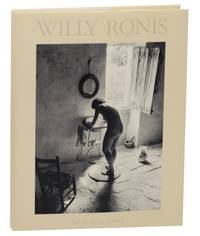
1986161193Paris: Contrejour 1986. Later printing. Hardcover. Text in French. Includes numerous black and white images. A very good copy with bumping to the bottom corners in a close to near fine dust jacket with the same bumping. Also with a laid in folded caption list in English. Contrejour unknown