234 résultats
18632021757Berlin GE: Verlag von A. Haack 1863. First Edition. Hardcover. Good. Folio 368 pages lacks spine with nos. 2-48 not collated with any faults. <br/><br/>Extensively illustrated with articles stories and more for the home. Verlag von A. Haack hardcover
181931400Sydney: Wireless Press 1918-19. Very Good. lge. octavo. cloth binding 770pp. b/w pls. col. ills. diags. maps index Australasian Monthly Journal for the Navy & Mercantile Marine Aviation Radio-telegraphy & Telephony. Vol. 1 No. 1 to Vol. 1 No. 12. Copiously illustrated inc. photos of decorated Australian Sailors & Flyers. Also many fine photos of Australian Ships & AFC aircraft. Very Scarce Wireless Press hardcover
187472902Bakersfield: Joe K. Acklin July 9 1874. First edition. Bifolio 4 pp.; 21 1/2 x 14 1/2 inches. A very good copy.Information and ads for early Kern County. Joe K. Acklin unknown
187476538Virginia City: The Chronicle Printing Company 1874-5. Two issues. No. 49 is dated December 4 1874. No. 113 is dated February 20 1875. Folio 15 1/2 x 22 inches. 4 pp. each. Some minor edge chipping and #49 with a couple of short tears to center fold. Overall in very nice condition.These were issued at the very peak of heyday of the Comstock Lode. The Big Bonanza of 1873 made it a very important place and added ffour more Robber Barons to the ranks. At the end of 1874 and the start of 1875 Virginia City Nevada was experiencing both the height of its mining boom and a growing realization that its golden days were starting to fade. At its height Virginia City was a thriving metropolis of 25000 residents. The Republican Daily Territorial Enterprise where Mark Twain started his career and the Democratic Virginia Evening Chronicle were integral to the city. In October of 1875 a serious fire burned most of the town to ashes and although residents rebuilt the really lucrative perios of mining there ended in about 1880. By 1890 there were only about 8500 people still living there and by 1900 that figure shrank to about 2500. The Chronicle Printing Company unknown
187474143Honolulu: Samuel Damon 1874. First edition. Thirteen copies each one being a large sheet folded to make 4 pages 9 1/2 x 12 1/2 inches. Comprising pp. 40-48. Masthead with two vignettes. Scattered light foxing but very clean overall. No tears.Samuel Cheney Damon 1815 –1885 was an early missionary to Hawaii pastor of the Seamen's Bethel Church chaplain of the Honolulu American Seamen's Friend Society and editor of the monthly newspaper The Friend. The newspaper was not solely concerned with religious matters but served the community at large for general news of the Islands with sections such as "Important to Navigators of the Pacific" "New Explorations in Micronesia" "Marine Journal Port of Honolulu S.I." and numerous ads for local businesses. [Samuel Damon] unknown
187376928Silver City: W. H. Hill 1873. Complete issue for October 4 187 4 pp. 20 x 13 1/2 inches. A few very minor marginal chips. Very good.This was the first paper in the Idaho Territory to publish daily to have telegraphic service and to print on a steam-powered press. Founded in Ruby in 1865 it went through a few owners before William John Hill became the sole owner of the Avalanche in 1870. It is still going. W. H. Hill unknown
1870D11031England 1870s. Hardcover. Very Good. England Kent and Norfolk counties: c. 1871-1874. 8vo 175 x 115mm; 61 numbered pages in the hand of Charles W. Prescott detailing his various hunting excursions around the Kent countryside. Prescotts ownership inscription on front free-endpaper is dated 1871. His entries are easily read and cover Prescotts adventures on hunting hares with a skulk of foxes writing Found another in the same field ran her straight back to Old Park round the pond and the pack hunted her beautifully . Dec. 16 1871. The hunts took place over sprawling village and countryside or as he describes hop-gardens hills and ploughs of land in the Herne Bay area of Kent England. Many entries are headed by recognizable locations; Stroud Park Broomfield Hilsborough Wolston Heath and Chislet Mill and are dated with month and sometimes year. Only a portion of the way full his entries span about three years the first dated: Oct. 19 71 Stroud Park and last March 25 1874. Contemporary black morocco marbled endpapers and marbled endpapers with original brass clasp faint splitting at lower hinge of first few leaves strengthened at endpapers corners rubbed otherwise in very good shape especially considering it was wielded around so much of the Kentish countryside. Prescott makes many personal anecdotes about his day noting things in his surroundings like scent moderate or adding his opinions we could not kill I think we should have but the sun was too hot. Prescott often ends the entries with jotting down the days weather as something like very indifferent but as good as could be expected with a very cold east wind or simply stating Frost. It is evident from Prescotts personal asides that he was a vigilant huntsman quite dedicated to the task. Further personal glimpses reveal a record of his horses charming names including Salt Fish and Molly Malone. At the time Prescott was taking these notes Herne Bay area and the Kentish villages would have been teeming with people. The Victoria era was one of prosperity when elite English folk flocked to popular destinations to partake in their favorite pastimes. From 1873 on in the journal Prescott notes he was hunting with Pytchley by writing their name in parentheses. The Pytchley hunt is an organization originally based in Northamptonshire in formation as early at the 1630s. The organization is still active today. Pytchleys website notes that from 1819-1873 right as Prescott began with Pytchley for one year the Althorp and Pytchley countries were hunted by one pack with a second pack established at Brigstock. Prescott was part of the famous hunt organization at a time when it was amid significant change and expansion. His notes may keep further clue of such growth. While the huntsman himself may be unknown to history the anecdotal evidence in Prescotts diary gives us a glimpse of the Victorian man fond of his sport. <br/><br/> hardcover
1804247484Hudson N.Y. 1804. 8 pp. printed in three columns. 4to. Old fold lines. Minor soiling and toning. Very good. In a tan half morocco and cloth folder spine gilt. 8 pp. printed in three columns. 4to. A single issue of this Upstate New York weekly newspaper which began publication in 1801. This issue contains the text of President Jefferson's Message to Congress of Nov. 8th. In his speech Jefferson discusses relations with foreign powers including the Delaware and other Indian tribes the Louisiana Purchase; the United States Navy; and the federal budget. Critical of Jefferson Croswell would later be tried for libel and defended before the Supreme Court by Alexander Hamilton. The publication of this weekly newspaper would continue through 1807. unknown
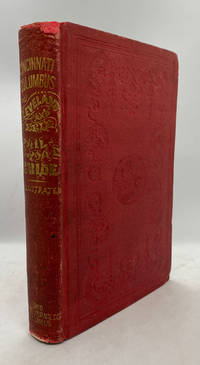
18549279Columbus: Ohio State Journal Company 1854. Second Edition. Hardcover. Very good-. Octavo 135pp. illustrated. This is the second edition published two years after the first and certainly the better one being the first to contain the numerous tinted lithographed plates. About very good in the publisher's blind-tooled red cloth with gilt detail on the spine. Some inartful but not disfiguring coloring-in to some chipped areas on the spine extremities. This copy lacking the folding frontispiece and one plate "View of Morrow from the South" but otherwise complete and with five plates not noted in the list of illustrations all in the Cleveland area "Cleveland Station" "West Branch Rocky River Near Olmsted Station" "East Branch Rocky River Berea Station" "Elk Creek" and "Grand River Near Painesville Station". The list of illustrations calls for 28 plates including the map. While we have 26 of the 28 the 5 extra yield a total of 31 plates. Thus while incomplete still a desirable and very "Cleveland" copy of this important image-driven guide for rail travelers in Ohio. The author goes on tangents for example spending more than two pages discussing the general history of the Mormons as the guide passes through Kirtland but these digressions seem to be in some sense the point--offering diversion to the weary traveler. Howes O52; Thomson 887. With strong recent auction records we have priced the book accordingly at about 1/3 its natural price were the frontispiece present. Ohio State Journal Company hardcover
1842352080Istanbul: Matbaa-yi Ceride-yi havadis 1842. Ornamental title piece. Text in Turkish. 4 pp. 1 vols. Folio. Old folds some toning. very good. Ornamental title piece. Text in Turkish. 4 pp. 1 vols. Folio. Representative issue of this long-running Turkish newspaper first published in 1840 appearing thrice monthly from its found in 1840 until 1847 and weekly thereafter. Includes coverage of domestic political events foreign news and advertisements. Matbaa-yi Ceride-yi havadis] unknown
1888224763Vicksburg Miss 1888. FACSIMILE. 1p. printed on verso of floral wallpaper. Folio. Stamped copyright applied for Jan. 1888 on lower margin. Some splitting at old folds. FACSIMILE. 1p. printed on verso of floral wallpaper. Folio. A facsimile of a Confederate wall-paper newspaper printed on the verso of a sheet of wallpaper due to the scarcity of paper. "Compelled to print on one side of the paper only and frequently shorn of advertisements the editor gave to his readers only the military information the local news and occasional quotations from other journals" Brigham.<br /> This issue is famous for the note added July 4th at the bottom of the page by just victorious Union soldiers: "Two days bring about great changes. The banner of the Union floats over Vicksburg . this is the last wall paper edition and is excepting this note from the type as we found them. It will be valuable hereafter as a curiousity". Clarence Brigham "Wall-Paper Newspapers of the Civil War unknown
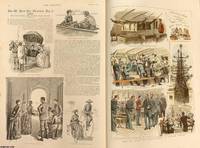
1887374714Graphic Illustrated Weekly Newspaper London 1887. Half Leather. Good Condition. 734 pages. Bound in contemporary half leather. Gilt lettered spine with gilt ruled bands. Contents sound with no shaken or torn pages. The binding is firm with a very scuffed and rubbed spine and the boards are rubbed and discoloured. Some minor foxing. Given the relatively complex nature of The Graphic volumes and the weekly issues we believe this book is complete but we cannot be absolutely certain in regard to any fold out sections. Size: 29 x 42 cms. Category: Antiquarian & Rare; Graphic Illustrated Weekly Newspaper. This item may require more postage than the rates shown for delivery outside the UK. If extra postage is required we will contact you before processing your order and you will be given the details and option to decline the extra cost. Graphic Illustrated Weekly Newspaper hardcover
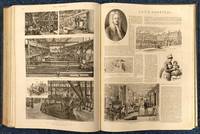
1887374712Graphic Illustrated Weekly Newspaper London 1887. Half Leather. Good Condition. 686 pages with index. Bound in contemporary green half leather. Gilt lettered spine with gilt ruled raised bands. Contents sound and the binding is firm with a scuffed and rubbed spine and the boards are mildly scuffed. Some minor foxing. Given the relatively complex nature of The Graphic volumes and the weekly issues we believe this book is complete but we cannot be absolutely certain in regard to any fold out sections. Size: 29 x 42 cms. Category: Antiquarian & Rare; Graphic Illustrated Weekly Newspaper. This item may require more postage than the rates shown for delivery outside the UK. If extra postage is required we will contact you before processing your order and you will be given the details and option to decline the extra cost. Graphic Illustrated Weekly Newspaper hardcover
1820165851820. Tuckerman H. P. Poetry and prayer journal 1820-1830 documents early nineteenth-century manuscript album culture within Anglo-American Protestant communities with particular attention to women's devotional writing moral instruction and shared literary practices. The volume supports research into gendered authorship religious education and the circulation of poetic and didactic texts in the early republic where handwritten albums functioned as spaces for communal inscription. The presence of multiple hands across dated entries demonstrates a participatory literary culture structured around kinship and social networks while recurring themes of childhood piety mortality and moral virtue situate the text within contemporary evangelical and didactic traditions.<br /> Tuckerman H. P. Poetry and prayer journal. Circa 1820-1830. Manuscript volume with 53 handwritten entries by multiple contributors including poems hymns and devotional reflections. Entries include a hymn composed for the British and Foreign School Society emphasizing education and moral uplift through the metaphor "Oh stream of knowledge when thy tides.Forget not then the flowers" alongside gendered moral instruction concluding "woman's Happiest destiny Is only - to be good." Biblical passages including references to Luke 2 appear throughout accompanied by original prayers such as an 1827 entry: "Heaven sees no sight so fair As happy childhood bowed in prayer." Several texts address mortality and impermanence including reflections such as "Life is but a scanty ledge.suspended o'er a fathomless abyss" and a memorial poem introduced as written by a young man shortly before death from consumption invoking Romantic-era associations with illness and artistic sensibility. Additional entries focus on natural landscapes including "Spring Mountain" 1828 which situates spiritual reflection within pastoral imagery. The volume includes an original drawing of a mother and child signed "S. Tuckerman" as well as two pencil drawings of forest scenes reinforcing the integration of visual and literary expression within album practices.<br /> This manuscript emerges from a period in which evangelical Protestantism moral education movements and literary cultivation intersected within domestic and semi-public spheres particularly among women and youth. The reference to the British and Foreign School Society situates the volume within transatlantic educational reform efforts emphasizing literacy and moral discipline. The collaborative nature of the entries aligns with early nineteenth-century album traditions where social exchange and authorship were intertwined. Such materials provide insight into how religious belief gender norms and literary expression were internalized and reproduced within everyday practice. Original red half morocco binding with owner's name "H. P. Tuckerman" in gilt on front cover; approximately 120 pages with writing on 76 pages; includes three original drawings; measures 9 x 7 1/2 inches. Light toning and minimal foxing throughout; very good condition. A substantive example of early American manuscript culture linking devotional life gendered authorship and communal literary exchange. unknown
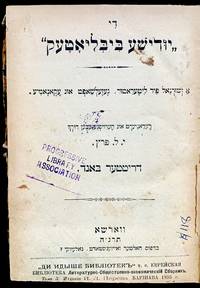
189543079Warsaw: Izdanie I.L. Perets 1895. First edition period boards 8vo 179 pages. 23 cm. In Yiddish. Title translates as “The Jewish Library: A Journal for Literature Society and Economics.â€<br> Third volume of semiannual publication edited by I.L. Peretz. Di Yudishe Bibliotek was published periodically between 1891 and 1904. This issue includes belle-lettres poetry and scientific essays.<br> “To encourage Jews toward a wider knowledge of secular subjects Peretz for several years wrote articles on physics chemistry economics and other subjects for Di yudishe bibliotek which he also edited.†Encyclopedia Britannica.<br> Yitskhok Leybush Peretz 1852-1915 is one the best known Yiddish and Hebrew authors of the 19th century. Peretz was one of the three classic Yiddish writers with S. Y. Abramovitsh and Sholem Aleichem and the founder of Yiddish modernism. In the first decade of the 20th century he was at the center of an active literary circle in Warsaw. <br> SUBJECTS: Yiddish literature -- Poland -- Periodicals. Jews -- Poland -- Periodicals. Jews. Yiddish literature. OCLC: 992802478. <br> Ex-library with usual markings and normal wear and age to pages but otherwise in good condition. Good Condition. YID-46-19-GGLEX-’cc. Warsaw: [Izdanie I.L. Perets] unknown
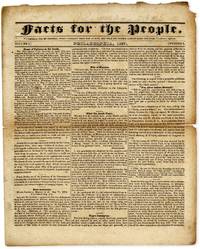
183788394Philadelphia: Anti-slavery Society of the City and County of Philadelphia; printed by Merrihew & Gunn 1837. Single quarto issue 29cm x 23cm; ca. 11-1/2" x 9-1/4". Bifolium 4pp pages numbered 9-12. Issued monthly. Old horizontal fold at center as issued; small loss at upper margin away from printed area brief separations at folds without loss to text; complete and Good. <br /> <br /> Single issue of this very scarce presumably short-lived abolitionist newspaper published by Benjamin S. Jones under the auspices of the Anti-slavery Society of the City & County of Philadelphia. This copy with dated 1864 pencil ownership markings of "J.E. Jones" this possibly being the publisher's spouse the reformer abolitionist and suffragist Jane Elizabeth Jones née Hitchcock; 1816-1896. The paper's contents are devoted almost entirely to exposure of the injustices of the southern slave system with excerpts from Southern papers quoted and sharply rebuked by Jones' editorial comments. This issue also includes a brief notice of the progress of the recently-founded city of Houston Texas which now contained ".about 3000 people two hundred buildings four hotels thirteen retail stores and one wholesale establishment." The extracts quoted in this issue are generally dated from March April and May of 1837 leading us to suggest a May-June date for this issue.<br /> <br /> It is unclear how many issues of Facts for the People appeared. The only recorded example for a physical copy is at AAS which holds two unspecified issues with the annotation "sparse holdings." Not in LCP Afro-Americana. Not in Blockson. Anti-slavery Society of the City and County of Philadelphia; printed by Merrihew & Gunn unknown
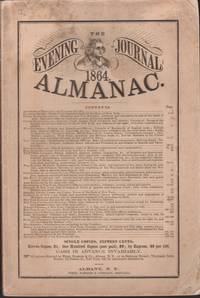
186432462Albany New York: Albany Evening Journal 1864. First Edition. Wraps. Good. Stitched wraps. 144 pages. Tan paper wraps with illustrated title top of the outer wrap. Contents printed on the front cover. Full page advertisement for the Albany Evening Journal printed on the back. Toning and light edge wear to the covers. Some corner creases to the pages. Much content on the Civil War. Almanac lists organization of the War Department and Navy Department; includes news of captured blockade runners; captures and losses in the Army; New York State volunteers; Rebel Government; and next to last on the bottom of the contents are two pages of Abraham Lincoln's Amnesty Proclamation. Albany Evening Journal unknown
18451160505.23Philadelphia: Lea and Blanchard 1845 1846. Hardcover. Good. 8vo hardcover no dj. Binds together the 12 monthly issues for each of 1845 and 1846: 24 issues total. Good condition. Quarter leather over brown cloth boards gilt spine lettering. Moderate interior foxing contents otherwise clean no markings binding & hinges firm. Reconditioned leather supple & smooth with pea-sized scuff spot at front edge of spine; gilt title lettering bright. 98 & 118 pp. incl's Index for each volume. Philadelphia: Lea and Blanchard hardcover
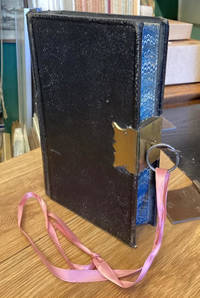
189072121unknown: unknown n.d. circa 1890. 8vo. Unpaginated. Black full morocco with a working brass key-locked clasp. All edges and endpapers marbled. With a contemporary pink ribbon attached to the key. Leaves are ruled and blank. Edgewear and rubbing to boards alongside some chipping to the leather at the spine. Some damage to the endpapers from the nails fastening the lock to the binding. Occasional marks and foxing to the leaves. No date but likely a late Victorian to early Edwardian binding. . Very Good. Full Morocco. 1890. [unknown] [n.d.] circa 1890 unknown
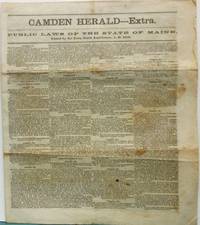
187026Camden Maine: Dunton Brothers 1870. Wraps. Very good. 8pp; two horizontal folds; some spotting and chipping of edges; very good. The Camden Herald newspaper is a mid-coast Maine Knox County paper founded in 1869. This Extra reports on the Legislature includes legislation passed relating to: attorneys banks cemeteries coroners fishing highways industry lime insane hospitals insurance judgements land licenses liquor manufacturing pensions of soldiers and seamen railroads salaries schools tax collection and wildlife preservation. Dunton Brothers unknown
1897149789Edinburgh: W & R Chambers 1897. Nice copy. octavo. disbound 16pp. Inc. an article ÔThe ÔMountain MysteryÕ of New South WalesÕ reporting on the trial & execution of ÔÕthe notorious Frank ButlerÕÕ. Also a fascinating article ÔThe Tourist in the Land of the TsarÕ about travelling in Imperial Russia W & R Chambers unknown
18612786np: np 1861. First edition. Original leather covers. Good. A REMARKABLY EXTENSIVE ARCHIVE OF A UNION SOLIDER INCLUDING DIARIES FROM 1861-1865 SPANNING HIS ENTIRE CIVIL WAR CAREER.<br /> <br /> THE SOLDIER CHARLES E. SMITH PARTICIPATED IN SOME OF THE MOST CRITICAL CAMPAIGNS OF THE WAR INCLUDING THE SEIGE OF VICKSBURG THE FALL OF ATLANTA AND SHERMAN'S MARCH TO THE SEA. Background:<br /> <br /> Charles E. Smith 1836-1905 was born in Berlin Township Ohio. He worked as a farmer and country schoolteacher in Alum Creek Delaware County Ohio. He enlisted in the 32nd Ohio Volunteer Infantry at the age of 25 on September 3 1861 and mustered in September 7 1861. He was promoted to the rank of corporal in Company I of the regiment on January 30 1864. He was slightly wounded on July 29 1864 during the Atlanta Campaign. He mustered out of the service on July 20 1865 at Louisville Kentucky.<br /> <br /> The 32nd Ohio Infantry was organized at Mansfield Ohio on August 20-September 7 1861 and mustered in for three years' service under the command of Colonel Thomas H. Ford. The regiment was involved in several important engagements and operations during the Civil War including the Battle of Greenbrier River the Battle of McDowell the Battle of Harpers Ferry the Battle of Champion Hill the Siege of Vicksburg the Atlanta Campaign the Battle of Jonesborough Sherman's March to the Sea the Carolinas Campaign and the Battle of Bentonville. The 32nd Ohio Infantry mustered out of service at Louisville Kentucky on July 20 1865.<br /> <br /> The Collection:<br /> <br /> The collection consists of 26 dairies dating from 1859 to 1866. Except for four volumes covering a period from 1856 to April 1861 and one covering the period September 18 1865 to December 5 1866 the remaining dairies 21 volumes span his entire Civil War career in the 32nd Ohio Volunteer Infantry covering the period September 3 1861 the date of his enlistment to the date of his mustering out of the service on July 20 1865. The diaries of various sizes average approximately 100 pages with few blank pages.<br /> <br /> His daily entries in his Civil War diaries many of which are detailed consist of descriptions of the weather diet geographical locations his devotion to the Union camp activities military news and description of engagements. He also included several drawings in the diaries some in color. He described his day of enlistment of September 3:<br /> <br /> "Enlisted at Lewis Center between 8 and 9 oclock in Captain Dyre's company of 3 years volunteers. I bid good bye to all my folks and started having resolved to assist in sustaining the Government. But the feelings which came over me when I left home friends and all that seemed dear to me I cannot describe."<br /> <br /> The new enlistees moved to Camp Dennison and Smith records the daily activities in camp as his company prepared for their first movement. From Camp Dennison the 32nd Ohio was ordered to western Virginia present-day West Virginia to assist in driving Confederate forces out of the region. On October 3 1861 the 32nd Ohio participated in the inconclusive Battle of Greenbrier River. Smith records in his diary beginning on September 29 through October 3:<br /> <br /> "In the evening we received orders to march to make an attack on Greenbrier about 12 miles distant. Our company numbered 86 men. Our regiment probably numbered 900 men present and able to perform duty. The 32nd. Went in advance and cleared out the road and took one prisoner. Our regiment stopped at the cross roads within four miles of Greenbrier and stopped. We expected there that the battle commenced. but they Confederate troops did not come and we. crept into the thick laurel bushes to lay till morning. When I awoke it was daylight and other regiments were passing. The artillery was hurrying along as fast as possible each gun was drawn by six horses and about nine oclock the canons began to roar. It was kept up till two oclock on both sides when our communication failed and our men withdrew from the field without losing any guns. The canons roared very loud and the sound rolled over the Mountains and valleys and made everything ring once more. Our loss was including those that were killed on the field and those that died of wounds after the battle about 12 men. We took 13 prisoners." <br /> <br /> Smith describes an engagement with Confederate forces around Beverly Virginia on December 18 1861:<br /> <br /> "The rebels came out and met our forces and a bloody fight ensued. The 32nd fought bravely and drove the enemy back. The 25th were in the advance and were cut up dreadfully. They fell back and the 32nd stood their ground and fought them like tigers. Our men made two or three gallant charges and drove them out of their entrenchments and were forced out themselves. Our boys could not drive them out again and after a desperate and bloody struggle our troops retreated. having lost about one hundred men."<br /> <br /> After spending the winter in Beverly Virginia the 32nd Ohio participated in the Shenandoah Campaign of 1862 where they engaged Stonewall Jackson's Confederate force at the Battle of McDowell Virginia on May 8 and were defeated. On that day Smith recorded the following:<br /> <br /> "We formed into line and gave three cheers to the cavalry and were waiting to welcome the infantry when a dispatch came for us to report immediately at headquarters armed and equipped. We went forthwith and formed into line of battle on an open field. The rebels came down on the hills & tried to pick a spot to plant a gun and our boys threw shell amongst and drove them out. The rebels gathered on a mountain at the right of town about 4000 men. Our boys did not find out what they were at or where they were till late in the afternoon. Two regiments went up the mountain and the ball was opened. The battle lasted till after 8 oclock at night when our boys withdrew bringing the wounded and mostly all the dead from the field. The fight lasted about 4 hours."<br /> <br /> The 32nd Ohio retreated to Franklin Virginia where they joined General John C. Fremont's command. Fremont followed the Confederates into the valley and engaged a Confederate force at Cross Keys Virginia on June 8 1862 but Smith's company did not participate in the action. The 32nd Ohio move on to Winchester Virginia where they performed garrison duty for the remainder of the summer.<br /> <br /> In September 1862 the 32nd Ohio was dispatched to Harper's Ferry. The regiment again faced Stonewall Jackson participating in the Battle of Harper's Ferry September 12-15 1862. In this engagement Jackson captured the town and nearly twelve thousand Union soldiers including the 32nd Ohio subsequently paroling them after confiscating their supplies. In his entry for September 15 Smith describes the last day of the battle:<br /> <br /> "At sunrise the ball opened with a heavy cannonade from both sides. Our men were nearly out of ammunition for artillery and the enemy was mowing down our ranks. The shells and shot came down like hail all around and amongst us and many of our officers and soldiers were mortally wounded. Our artillerists run out of ammunition and there was no other way for us to do than surrender or be slaughtered on the field. At about 8 oclock the stripes and stars were hauled down and the white flag waved as a signal for surrender. The rebel cavalry and officers were soon riding through our camp. They hoisted the bars and stars where an hour before our glorious old star spangled banner floated proudly in the breeze. O how my heart beat and my bosom heaved to see that corrupt flag raised in defiance over us."<br /> <br /> The surrender of the 32nd Ohio resulted in a revolt in the ranks of the enlisted men against the regiment's officers which Smith later discusses in a January 15 1863 entry in his diary stating: "we were obliged to surrender 11500 men to the Rebels General A.P. Hill. It was the opinion of nearly all of our men that Colonel Miles of Baltimore betrayed us into the hands of the Rebels. It was said that he got 15 cents per head for us. Our Col Thomas H. Ford was examined by a committee and dismissed from the service for blame that was unjustly laid against him for the evacuation of the Maryland Heights. Since we were paroled a hard feeling was created between the officers of the regiment." Smith and his regiment eventually rejoined General Ulysses Grant's Army of the Tennessee in Memphis on January 25 1863. The regiment was involved in Grant's Siege of Vicksburg beginning in April 1863.<br /> <br /> A pivotal engagement in Grant's Vicksburg Campaign was the Battle of Champion Hill which occurred on May 16 resulting in a Union victory. Smith's entry for that day records the fighting:<br /> <br /> "A battle had begun on the left the firing seemed to be from large guns and the line seemed to be several miles long. We halted to await orders. Soon they came & we went forward & laid behind a ridge where we could see the fighting. The scene was grand but terrible. The heavy fighting was on the left & center at first. Our brigade charged on a rebel battery and took it & hauled it off. The 32nd did a noble part charging on the hills & ravines and out the battery driving the enemy before them killing a large number."<br /> <br /> The siege of Vicksburg ended on July 4 1863 when the Confederate forces surrendered and the Union troops under Grant including the 32nd Ohio entered the city. Smith recorded the events of July 3 and 4 in his diary. On July 3 he wrote: "This is the 46th day of the Siege. The rebels have sustained at this place and nobly and bravely have they defended it but General Grant has been too much for them." The next day's entry detailed the surrender. "At nine oclock it was announced that Vicksburg was surrendered. What a thrill of joy ran through every heart. The boys all seem lively and jubilant over the success which has crowned our arms. At half past ten oclock the rebels march out of their forts and rifle pits. and form in line outside their works and stuck arms."<br /> <br /> After Vicksburg the 32nd Ohio joined an expedition to Monroe Louisiana and then participated in General James McPherson's expedition to Brownsville Mississippi. In addition to his daily entries Smith also drew a number of pencil and ink sketches that reflected what he described in on a particular day such as sketching images that depicted the sleeping arrangements in the soldiers' tents maps of terrains and a two-page spread showing the capture of a Confederate battery in Mississippi. He also wrote down poems whether written by him or others. For example on January 31 1864 he added a six-stanza poem possibly written by him entitled "Evening Thoughts" to that day's entry. A partial transcription reads: "I'm weary and I'm lonely//As I'm sitting in my tent//And I'll take my leaden pencil//And give you my feelings sent// O would this war be over//And these bloody strivings cease//And our country now distracted//Return with lasting peace."<br /> <br /> In February 3 to March 6 1864 the 32nd Ohio was involved in General William T. Sherman's Meridian Expedition which resulted in the capture of Meridian Mississippi. On March 3 Smith recorded a diary entry that detailed the destruction rendered by the campaign:<br /> <br /> "I cannot fully give the amount of damage done to the Southern Confederacy while on this Expedition but the result foots up about as follows. About 200 miles of railroad running east & west was destroyed. About 60 miles of the Mobile and Ohio railroad was destroyed and about 40 miles of the Central Mississippi road destroyed. There were about 25 Locomotives and a considerable number of cars together with Confederate railroad houses machine shops and foundries manufacturing establishments of arms ammunition. A large amount of cotton was burned."<br /> <br /> On June 10 1864 the 32nd Ohio joined Sherman's Atlanta Campaign. In the campaign the 32nd fought in the Battles of Kennesaw Mountain Atlanta Ezra Church and Jonesborough. The campaign ended on September 2 1864 when Union forces occupied Atlanta. Smith's diary entry for June 27 mentions the engagement at Kennesaw Mountain:<br /> <br /> "We were aroused at early dawn. and then ordered to pile our knapsacks and be ready to move. A battery had been brought up and was shelling the Rebels lively for a while. Our division having formed a line of battle came to a right shoulder shift arms and then we advanced in line through the woods toward the enemy. The skirmishers engaged the enemy who replied by volleys of musketry which whizzed overhead and sounded hideous. The rebels brought several batteries down and opened upon us. Moved up a little higher and laid down again and the rebels opened with shot and shell which came whizzing overhead. Some of them sung like an old spinning wheel under the control of a northern farmer's wife. Our loss in this engagement was considerable. We fell back learning that the rebels were massing their force to right and formed a new line of battle in front of our new breastworks and behind the skirmishers. Skirmishing was kept up lively along the lines and many had hair breadth escapes. We made our demonstration to draw as much rebel force away from the right as possible."<br /> <br /> His diary entry for September 3 1864 reported the good news concerning the fall of Atlanta:<br /> <br /> "Atlanta was evacuated yesterday morning at daylight the rebels having blown up large magazines of ammunition destroyed government stores and eighty carloads of ammunition. The Twentieth Corps under General Slocum marched into and took possession of the city of Atlanta an eleven oclock. We have last caused the rebels to evacuate what they called the 'Gate City' or 'Key' to the southern Confederacy and that without a very general battle. The rebels have made many boasting speeches and declared that they would fight for Atlanta till the last man woman and child was sacrificed before they would give it up. Where is their vain boasting where are their prophesies"<br /> <br /> The capture of Atlanta had a major impact on the presidential election of 1864 and helped President Lincoln's chances for reelection enormously. On election day November 8 the 32nd Ohio voted in the field. Smith's diary entry for the day reads "This being election day the polls were opened and we voted for President. Abe Lincoln carried the day."<br /> <br /> In mid-November 1864 the 32nd Ohio participated in General Sherman's "March to the Sea." The command engaged in no noteworthy battles or skirmishes until reaching Savannah Georgia. On December 10 1864 the regiment was among the lead Northern units that drove the Confederate garrison into the confines of city. Upon the Union Army's capture of Savannah on December 21 1864 the 32nd entered and encamped in the city.<br /> <br /> Within a week of the fall of Richmond the capital city of the Confederacy the news of President Lincoln's assassination and death on April 15 spread slowly to the soldiers in the south including the 32nd Ohio. On Monday April 17 Smith recorded in his diary:<br /> <br /> "An order said to have come from Secretary Stanton to General Howard was announced to the soldiers. That President Lincoln Secretary Seward and son were assassinated and that the President was killed. Whether this be true or not it caused sadness in many hearts and was believed to be reliable."<br /> <br /> The next day's entry was in response to the confirmation that Lincoln was dead:<br /> <br /> "News of the death of our President Abraham Lincoln causes a gloom over our minds. We feel that in losing him we have lost one of the best men our nation ever produced. In losing him we lose a wise and intelligent statesman a great and good counsellor a lover of freedom and humanity and the deliverer of our nation from the curse of slavery."<br /> <br /> In addition to the dairies there are several documents and papers relating to Smith and his family including the following: 1 An autograph manuscript entitled "The Vicksburg Campaign from Millikens Bend Louisiana. From March to July 4th 1863" 81 pages one side only in a bound copy book cover missing 8.5" x 11.5" n.p.; n.d.<br /> <br /> 2 An autograph manuscript entitled "The Siege of Vicksburg Continued" 34 pages one side only in a bound copybook 6.75" x 8.25 n.p.; n.d.<br /> <br /> 3 Autograph manuscript signed entitled "Diary of Events Transpiring between the United States and Spain over Cuban affairs." 117 pages in bound copy book 5.75" x 9" n.p.; circa 1901.<br /> <br /> 4 Autograph manuscript signed entitled "Closing Scenes of the Rebellion. An Original Poem" Six pages one side only in bound copybook 8" x 10" n.p.; May 30 1895. Poem was recited on Decoration Day at Cheshire Ohio on May 30 1895.<br /> <br /> 5 An autograph manuscript entitled "The Great Three Days Battle of Gettysburg Fought July 1 2d & 3d 1863. The Greatest and Most Decisive Conflict of the Great Struggle for American Independence" 28 pages one side only in bound copy book missing front cover 8" x 10" n.p.' n.d.<br /> <br /> 6 Autograph manuscript part 2 of number 4 above 27 pages one side only in bound copy book 8" x 10" n.p.; n.d.<br /> <br /> 7 Autograph manuscript entitled "Original Poem Written for the 49th anniversary of the birth of Mrs. Louisa Rolson Smith" Five pages one side only 8" x 10" n.p.; June 22 1895.<br /> <br /> 8 Autograph manuscript signed entitled "Incidents in the war of the rebellion from 1861 to 1865. Poetical Effusions from the pen of Charles E. Smith late of Co. F. 32d Ohio veteran volunteer Infantry" 68 pages one side only in bound copybook missing front and back cover 8.5" x 11.75" n.p.; n.d.<br /> <br /> 9 Photograph of Charles E. Smith 3.5" x 4.75 oval albumin print mounted on board n.p; circa 1894. <br /> <br /> 10 CDV of George Smith brother of Charles E. Smith 2.5' x 4" T.Beach photographer Delaware Ohio; circa 1860s. <br /> <br /> 11 Medal with badge for 32nd National Encampment GAR Cincinnati 1898.<br /> <br /> 12 Photograph of residence of Charles E. Smith West Berlin Ohio an 9.25" x 7.5 albumen print on a 10.25" x 8.5" mount Acme View Company McAlisterville Pennsylvania; 1894. <br /> <br /> 13 A Confederate envelope "captured on the battle field of Raymond Miss. May 12 1863 by C. E. Smith. <br /> <br /> 14 Discharge of Charles E. Smith from the service one page 6" x 8.5" Columbus Ohio; July 28 1865.<br /> <br /> 15 Two pencil sketches by Smith of "A residence near camp of 20th Ohio sketched by C. E. Smith Dec 3d 1863" on front and "A scene in co. D. 20th O.V.I. Thursday evening Nov 26th 1863. A Thanksgiving oyster supper. Sketch by C. E. Smith Nov 27th 1863." <br /> <br /> 16 A pencil sketch of the "View of The Court House at Vicksburg. Drawn by C.E. Smith Nov 4th 1863."<br /> <br /> 17 Pencil sketch of the Rock House inside the Confederate fortifications at Vicksburg "Sketched by C.E. Smith Nov 2d 1863." On verso is sketch by Smith of the city vault in Vicksburg November 2 1863.<br /> <br /> 18 Photocopy of will of Charles E. Smith Two pages West Berlin Ohio; December 18 1901. <br /> <br /> Condition: The 26 diaries all have leather covers over boards which in most cases are worn but intact. The front cover of volume #9 has separated. Most have flaps. Overall the dairies are in good condition. The other items in the collection are overall good; numbers #1 and #7 manuscripts are brittle and fragile. Foxing and toning to letters along with creasing and light tearing at edges. Wear and staining to the exterior of diaries.<br /> <br /> Note: The text of the collection has been published as "A View From the Ranks: The Civil War Diaries of Corporal Charles Smith" in a very limited printing by the Delaware County Historical Society 1999. A copy of the book is included with the collection. <br /> <br /> A REMARKABLE UNBROKEN RUN OF DIARIES OFFERING A HIGHLY LITERATE FIRST-HAND ACCOUNT OF THE CIVIL WAR EXPERIENCE THROUGH THE EYES OF A UNION SOLDIER. np unknown
186136009New York 1861. Elephant folio 15-3/4" x 22". 8pp. Caption title as issued printed in six columns. Disbound light wear and several short closed tears at outer margins Very Good. <br /> <br /> A Civil War illustration of wishful thinking: "Your correspondent has this moment - half-past five o'clock P.M. - received a special despatch from a reliable source dated Louisville Kentucky Sept. 5 couched in the following language which confirms the announcement of the death of Jeff. Davis first made in this correspondence on Tuesday last:- 'Positive advices received here this morning on Davis' death.' A special messenger from Fortress Monroe who arrived here to-day announces that flags have been flying at half-mast along the rebel lines for several days and information was received at the fortress that it was in consequence of the death of Jeff Davis."<br /> A source from Richmond stated that Davis had a serious illness and "little hope was entertained of his recovery." This is then followed by a biographical sketch of the provisional Vice President Alexander H. Stephens under the heading "THE NEW PRESIDENT OF THE SOUTHERN CONFEDERACY." Much other war news is printed. unknown
18629136New York. Good with no dust jacket. 1862. First Edition. Hardcover. Large 5 1/2" tear in first leaf without loss of text. Small tears to margins. Folded horizontally in half. ; 8 page newspaper. Page dimensions: 22" x 16". Headlines include: Flight of the Rebels from Nashville; A Stand to be made at Murfreesboro' Columbus Randolph and Memphis; The Streets of Memphis Barricaded with Cotton. "Martial Law Declared in West Tennessee" - "Gen. Grant has declared martial law over West Tennessee with the understanding that when a sufficient number of citizens of the state return to their allegiance and show a desire to maintain law and order over the territory all military restrictions shall be withdrawn." ; Folio . hardcover
186241734Turnwold Putnam County Ga. 1862. Each issue a folio sheet folded to 8 pp. Each page 9-1/4" x12." Each number printed in three columns per page. No. 12 with a persistent corner chip and occasional small loss. Light foxing. Very Good. EACH ISSUE $250 OR THE ENTIRE RUN FOR $1000<br /> <br /> Crandall does not record Numbers 4 and 5; but AAS which says The Countryman was "suspended intermittently" evidently owns them. Its first printing was March 18 1862. The articles cover an array of subjects including of course much on the War: <br /> This interesting Confederate weekly was printed at Turnwold Turner's Putnam County plantation probably the only wartime newspaper so printed. "Joel Chandler Harris was an apprentice for Joseph Addison Turner. In 1862 Turner decided to produce a newspaper from his home at Turnwold Plantation. In fact in a more-than-semi-autobiographical book Harris wrote called On the Plantation he explains that the printing office for The Countryman was established 'in an outhouse.'. . . As was the typical arrangement for the time Harris worked for Turner in exchange for clothing and boarding at the Turnwold Plantation for the four plus years he apprenticed there. As a printer's devil Harris was responsible for setting and inking the type for the paper on the hand-press individually placing the letters so they were spaced appropriately for printing" "Joel Chandler Harris and The Wren's Nest" December 3 2020 Blog site of American Writers Museum accessed May 01 2026. <br /> Crandall 5152. Not in Parrish & Willingham. unknown