63 résultats
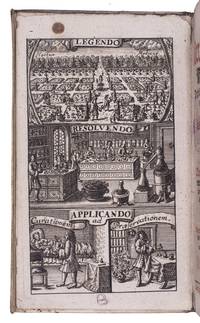
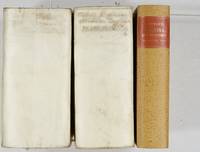
1732D7280Halle 1732-38. Hardcover. Very Good. Contemporary vellum over boards; 12 parts in 6 volumes 4to 166 x 206 mm. Frontispiece portrait in Volume 1. Bookplate of Herbert McLean Evans. Spines chipped and torn; boards lightly rubbed and dust-soiled; text blocks age-toned but otherwise clean. A nice set worthy of repair. <br/><br/>A collection of early editions of Friedrich Hoffmann possibly the most important of the latrochemists. Friedrich Hoffmann was one of the most distinguished physicians and chemists of his time court physician to the King of Prussia and primatus professor of medicine at the University of Halle. He was the first to perceive pathology as an aspect of physiology. hardcover
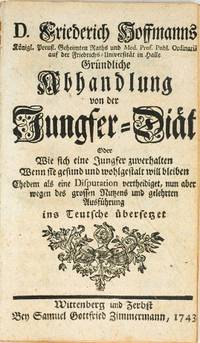
1743455241743. Wittenberg und Zerbst Bey Samuel Gottfried Zimmermann 1743 8° 18 74 pp. feiner Halbpergamenteinband. Selten - Erste Deutsche Ausgabe der ersten Frauen-Diätetik: "Gründliche Abhandlung von der Jungfer-Diaet/ oder wie sich eine Junger zuverhalten/ Wenn sie gesund und wohlgestalt will bleiben. Ehedem als eine Disputation "Dissertatio inauguralis medica de diaeta virginum . praeside Fridcrico Hoffmanno . committet Gottlieb Fridericus Berens. Halae. Magdeburgicae: Hilliger 1729" vertheidigt nun aber wegen des grossen Nutzens und gelehrten Ausführung in Teutsche übersetzet." "Während ältere landessprachliche Diätetiken geschlechtliche Unterschiede nicht herausgestellt sondern eher nach anderen Parametern wie dem jeweiligen Lebensalter oder dem Temperament Complexion unterschieden hatten betonte der noch vielen späteren Generationen durch seine "Hoffmannstropfen" geläufige Hallenser Medizinprofessor Friedrich Hoffmann 1660-1742 in seiner lateinischen Dissertation 1729 erstmals die Notwendigkeit von Diätetiken für Frauen und zwar für Frauen der gehobenen Schichten mit ihren besonderen Schwächen. Wenige Jahrzehnte später machten sich viele Verfasser populärer Schriften diese Ansicht ganz zueigen und damit gleichzeitig dem 'schönen' und 'schwachen' Geschlecht der privilegierten Stände viele Vorschriften die sich teilweise wie ein Domestizierungsprogramm lesen lassen. Nicht nur der alten Mäßigkeit wurde das Wort geredet sondern vor allem Verzicht gepredigt. Als neuer zeittypischer Aspekt trat zu den 'sex res non naturales' als Siebtes nun die Sauberkeit hinzu. Also: Reinlichkeit von Körper und Kleidung aber auch der Wohnung. Was unter Reinlichkeit im einzelnen zu verstehen sei welche Körperteile wie oft gewaschen werden sollten darüber herrschte jedoch keine Einigkeit." Frank Stahnisch & Florian Steger Hrsg.: Medizin Geschichte und Geschlecht. Körperhistorische Rekonstruktion von Identitäten und Differenzen 2005 Sabine Sande: Die dreißig Schönheiten der Frau - Ärztliche Ratgeber der Frühen Neuzeit pp.58-59 "Süssigkeiten betrachtete man als besondere Verlockung für Frauen denen Naschhaftigkeit als geschlechtstypische Untugend nachgesagt wurde die sie mit Kindern gemeinsam hätten. Vor Essig und Kreide als gängigen innerlich wirkenden Schönheitsmitteln wurden die Leserinnen gewarnt." "In Bezug auf Wachen und Schlafen ergaben sich im Jahrhundert der Aufklärung keine neuen Aspekte für die Belehrung der weiblichen Leserschaft. Ärzte sprachen sich durchweg für frühes Schlafengehen und frühes Aufstehen aus. Sofern konkrete Uhrzeiten angegeben wurden bedeutete das eine Nachtruhe von ca. 21 Uhr bis fünf Uhr morgens. Dieser gegenüber dem heute Üblichen versetzte Wach-Schlaf-Rhythmus entsprach den Gepflogenheiten einer überwiegend agrarischen Gesellschaft. Für Frauen der gehobenen und höheren Schichten hatte die Vorgabe dieses Rhythmus zugleich eine erzieherische oder sozialdisziplinierende Funktion indem er Abendgesellschaften und Vergnügungen weitgehend ausschloss und bürgerliche Tugenden wie Arbeitsamkeit und Fleiss zu befördern suchte. Auffallend ist dass Frauen ausdrücklich eine eher kurze Nachtruhe nahegelegt wurde. Dem sogenannten «schwachen Geschlecht» sollte weniger durch Ruhe und Schlaf geholfen werden als durch mässige Reizung und Belastung vor allem durch Hausarbeit was zum Aspekt Bewegung und Ruhe überleitet." Sabine Sander Gesundheit statt Galanterie. Der Paradigmenwechsel in ärztlichen Schönheitsratgebern im Jahrhundert der Aufklärung. Gesnerus 60 2003 pp.25-61 unknown
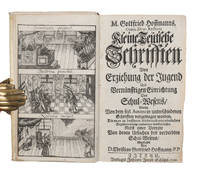
172061982Zittau J. J. Schops 1720. 8vo. In contemporary full vellum with title in contemporary hand. Light wear to extremities. Frontispiece and title-page detached otherwise a nice and clean copy. 12 318 2 239 440 26 pp. frontispiece. <br/><br/><em>Rare first collected edition with a preface on "Ursachen des verderbeten Schul-Wesens" by Hoffmann’s son Christian Gottfried Hoffmann ofthis pedagogical work that focuses on the education of youth and the organization of the school system. Hoffmann was a schoolmaster pedagogue and secretary to Christian Weise in Zittau while also working as a private tutor. In 1685 he became vice-principal Konrektor in Lauban later becoming principal in 1695 and in 1708 he succeeded Christian Weise as head of the school in Zittau. He was the author of numerous pedagogical works. </em> hardcover
17386669GB1738. 3 Werke in 1 Band. Venedig Balleoni 1738-1739. XII 412 S. - 4 Bl. 311 S. - 2 Bl. 334 S. Pergamentband der Zeit mit Lederrückenschild und vergoldetem Rückentitel leicht verzogen und fleckig. Umlaufend bunter Sprenkelschnitt Vorderschnitt leicht fleckig. Durchgehend mit unauffälligem Wasserrand im oberen Viertel bis S. 92 sehr kleiner Wurmgang am oberen Bund. Vereinzelt geringfügig fleckig sonst in schöner Erhaltung. unknown
1755EBS100395Napoli: Benedicti Gessari 1755. 1st Edition. Hardcover. Very Good/No Jacket. Hoffmann 1660-1742 German chemist personal physician of Frederick I in Berlin was professor of medicine in Halle author of treatises on the analysis of mineral waters on magnesia alba and founder of chemical analysis. Hoffmann advocates a rational and systematic medicine with which he takes an intermediate position between Stahl's animistic vitalism and Boerhaave's mechanism. This is the third edition first in 1722. Friedrich Hoffmann s Observationum Physico-Chymicorum Selectorum is highly valued 18th-century work that reflects the intersection of chemistry medicine and natural philosophy during the early Enlightenment period. Hoffmann was instrumental in the development of iatrochemistry the application of chemistry to medicine and was a major advocate of mechanistic physiology. BOOK DETAILS AND CONDITION: Large 4to in possibly contemporary buff heavy cardboard bound with leather cords cont. writing on spine: 1 blank 6 leaves pp 1-288 i.e. 188 since pp 177-188 the index misnumbered as pp 278-288. Curiously this is reminiscent of very similar misnumbering in two different Venice editions of 1740 see Neville I pp 646-647. Overall VG. Napoli: Benedicti Gessari hardcover
175335100DB1753. 2 Titel in 1 Band. Leipzig bey Friedrich Lankischens Erben und: Naumburg bey Christian Friedrich Gessner 1753 und 1757. Klein-8°. 204 S. 20 n.n. S. Register; 4 n.n. Bl. 154 S. 6 n.n. S. Index. Halblederband der Zeit mit Rückenschild. Beide Titel nicht bei Blake. - Wellcome 3 285 für Hofmanns lateinische Erstausgabe von 1746. - Sehr seltene Verhaltensregeln für Mediziner in der Praxis und in der Gesellschaft. Die erste deutsche Ausgabe erschien beim gleichen Verleger 1752. - Das "Vade Mecum" von Knör ist eine pharmazeutische Rezeptsammlung mit einem Vorwort und aus dem Nachlass herausgegeben von Christian Theodor Wachter. Knör wurde durch seine "Venus à la mode" berühmt eine 1717 erschienene Sammlung von Mitteln gegen Geschlechtskrankheiten. - Einband an den Aussen- und Innenkanten mit Wurmspuren. Durchgehend etwas gebräunt und stockfleckig. - Selten. unknown
173857402København J.J. Höpfner 1738. 8vo. I et samtidigt særdeles nydeligt mørkeblåt hellæderbind med seks ophøjede bind. Med forgyldt kongeligt våben og titel på ryg. Med ciseleret guldsnit. Med forgyldt spejlornamentik på permer. Indbundet af Engelke Maria Boppenhausen ca. 1717-1778 hvis signatur fremgår i forgyldt skrift på rødt skind på verso af forperm. Bindet er dateret til 1740. unknown
1705L14CGEGLDC1HLeipzig: Friedrich Lankisch 1705. Contemporary vellum manuscript title on spine. 8vo. With an engraved frontispiece title-page printed in red and black a folding letterpress table some woodcut initials and headpieces and occasional lines in Greek and Hebrew type. Rare first and only edition of a theological work by the German Protestant pedagogue and composer Gottfried Hoffmann 1658-1712. The work was intended for young people teaching them how to read and understand the Bible. It opens with a dedication to Lady Catharina Magdalena of Büntherin and a preface. The main text is divided into two parts. The first is an introduction to reading the Bible: how to read understand interpret live by and act on the Bible. The second contains forty Biblical "Kern-Sprüche" the most important Biblical passages each followed by an explanation and application of the text and a relevant prayer. With a faint library stamp on the title-page. Some spots and some dog-eared leaves. Binding slightly stained foot of spine slightly damaged. Otherwise in very good condition.l Hein Gottfried Hoffmann als Pädagog p. 94; VD18 11520353; WorldCat 4 copies; for the author see: Wels Gottfried Hoffmann 1658-1712 2012. Friedrich Lankisch, hardcover
1722EBS100318Halle: Cum Privilegio S.R.M. Polon. Et Elect. Sax 1722. 1st Edition. Hardcover. Very Good/No Jacket. KEY BREAKTHROUGH IN HISTORY OF PHOTOGRAPHY. 4to cont. leather raised bands on spine leather label: 14 leaves 378 pp 11 leaves. Title page in black and red with engraved vignette. Friedrich Hoffmann was one of the most distinguished physicians and iatro-chemists of his time court physician to the King of Prussia and primatus professor of medicine at the University of Halle. This book is rare with no sales recorded at auction in the last century RBH. See Neville I p 646: The darkening of silver salts p. 350 by light is described which makes this book important in the history of photography. int some foxing VG. Ferguson I. Halle: Cum Privilegio S.R.M. Polon. Et Elect. Sax hardcover
1753006549Neapoli: Benedicti Gessari 1753. Book. Very Good. Soft cover. First Thus. 4to - over 9¾" - 12" tall. The RARE First Italian edition published in Naples 1753-1763 this being a 12 volume partial set of Hoffman's major works containing the following: "Medicinae Rationalis Systematique" Tomus Secundus Tomus Tertius Section I and II all published 1753 and Tomus Quarti Pars Secunda and Pars Tertius 1754 ; "Observationum Physico-Chymicarum Selectiorum" Libri III 1755; "Operum Omnium Physico-Medicorum Supplementum" by itself a 13 volume set books 1 1754 5 1757 8 1760 10 1762 and 13 1763 ; and "Opuscula Medica Varii Argumenti Seu Dissertationes" 1756. Two of the volumes have handwritten " ex Libris Josephi de Bertolois Medici Physici Avia" an 18th century M.D. who appears to be the original owner. The "Opuscula Medici" and Book 1 of the "Operum Omnium" are Good only the "Opuscula Medici" lacking its binding but complete in its contents and Book 1 of the "Operum Omnium" the boards heavily soiled and loose in its binding. The rest of the 10 volumes Very Good soiling to boards some worm holes corner creasing. A remarkable collection of Hoffmann's works. Benedicti Gessari Paperback
1721705751721-1739. Halle im Magdeburgischen : Zu finden in der Rengerischen Buchhandlung 1721-1739 4° mit gestochenem Portraitfrontispiz 4583 pp.; 1.-10.Theil in 2 Pergamenteinbände d. Zt. und 11.-12. Theil in Pappband im Stil. d.Zt.; feines Expl. DER MEDIZINISCHE RATGEBER DES 18. JAHRHUNDERTS Titel: "Friderici Hoffmanni Diversorum Principum S.R.I. Consiliarii Medici & Professoris Medicinae in Academia Fridericiana Primarii Medicina Consultatoria : Worinnen Unterschiedliche über einige schwehre Casus ausgearbeitete Consilia auch Responsa Facultatis Medicae enthalten Und in Fünf Decurien eingetheilet Dem Publico zum besten herausgegeben". 1.Th.: 24 295 1; 2.: 8 272; 3.: 24 264; 4.: 16 344 40; 5.: 24 375; 6.: 12 360 28; 7.: 8 334 i.e. 344 36; 8.: 12 384; 9.: 16 408; 10.: 16 365 55; 11.: 12 408; 12.: 6 408 34 pp. Friedrich Hoffmanns Königl. Preuß. Medici und Professoris wie auch der Käyßerlichen Königl. Groß-Britannischen und Preußischen Societaeten der Wissenschafften Mitglieds Gründlicher Bericht Gründlicher Bericht von dem Selter-Brunnen: Dessen Gehalt Würckung und Krafft auch Wie derselbe sowohl allein als mit Milch vermischt Bey verschiedenen Kranckheiten mit Nutzen zu gebrauchen Halle: Gedruckt bey Joh. Christ. Hilligern Universitäts Buchdruckern 1727 4° 35 pp. Erste Ausgabe. Wegen des langen Erscheinungszeitraums selten vollständig vorkommendes Sammelwerk ". eine reichhaltige Sammlung von Krankheitsgeschichten darstellend und dadurch sehr werthvoll . hrsg. von einem der Heroen der dt. Medizin im 18. Jhdt" Hirsch-Hübotter. Krankheitsfälle mit Ursache und Verlauf sowie mit den entsprechenden Berichten der Patienten selbst über Erfolg oder Misserfolg. Texte meist in Deutsch einige ganz wenige in Latein. Friedrich Hoffmann 1660-1742 Arzt und Chemiker Professor der Medizin in Halle war Leibarzt des preußischen Königs Friedrich I. "Boerhaave in Leiden Hoffmann und Stahl in Halle wurden die drei großen "Systematiker" der Medizin des beginnenden 18. Jahrhunderts. H.s simplifizierendes System der "mechanischen Arzneigelahrtheit" führte ihm zahlreiche Anhänger zu provozierte aber auch heftige Angriffe der Stahlschen Schule des "Animismus". H. sah den Organismus als eine Art hydraulischer Maschine an. Der Spannungszustand Tonus der Fasern und damit alle das Leben charakterisierenden Bewegungsvorgänge werden gesteuert von einem "Nervenfluidum" das aus dem überall im Kosmos vorhandenen "Äther" hergeleitet und vom Gehirn über die Nerven verteilt wird. Diese Vorstellung knüpft an die alten "Spiritus" ebenso an wie an die solidarpathologischen Lehren der antiken Methodiker. "Spasmus" einerseits "Atonie" andererseits bewirken Krankheit und müssen vom Arzt mit Gegenmitteln behoben werden. Die "Seele" der Stahl eine physiologische Funktion zuweist bleibt streng vom Körper getrennt in der Zuständigkeit der Theologen. In seiner Praxis war H. jedoch kein Doktrinär; er hatte großen Erfolg war ein gesuchter Consiliarius und wurde wegen seiner Liebenswürdigkeit und weltmännischen Sicherheit allgemein bewundert." "Seine chemischen Kenntnisse nutzte H. zu grundlegenden Arbeiten über Mineralquellen unter anderem Karlsbad Lauchstädt. Aber auch präparativ hat er gearbeitet: Die schmerzstillenden "Hoffmannstropfen" bis heute ein beliebtes Hausmittel haben seinen Namen auch im Publikum allgemein bekannt bleiben lassen." Hans-Heinz Eulner NDB 9 1972 pp. 416-418 VD18 11081708. Hirsch-Hübotter III 256. Blake 216 -7; Wellcome III 284 unknown
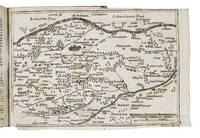
1753ABC_46972Tübingen 1753. 4to 18.5 x 15.5 cm. Johann Philipp Erhardt Modern brown decorated paper over boards with a black label on the spine with the title in silver modern endpapers. Ad 1 with an engraved folding map 18.5 x 27 cm of Memmingen and the Bosserhard by J.F. Rupf and with an elaborate woodcut headpiece with a rising phoenix and a factotum in the form of a person with a shield and spear. 2 works in 1 volume. 2 70 20; 24 pp. Two rare 18th-century dissertations "Jagdrechtliche Hochschulschrifte" from the University of Tübingen on the subject of hunting in Memmingen and the Bosserhard or Booser Hart the general area around Memmingen between the rivers Iller and Gunz. Free hunting or stalking was permitted in this area based on a 400-year-old hunting law unlike other areas in the German states where one needed authorisation and/or a permit to hunt from law enforcement or the landowner.Ad 1: First edition of a very valuable dissertation for the history of hunting law in and around Memmingen. It discusses the hunting rights in the region of Swabia in the electorate Kurfürstentum of Bavaria Germany. While Memmingen is located on the edge of Swabia these rights and laws still applied to the general area and the Bosserhard in particular. The appendix presents ten rules instructions protocols and/or ordinances regarding hunting activity in the area from the 16th to 18th centuries. The book also includes a beautifully detailed map by Johann Friedrich Rupf showing Memmingen and surroundings including the outline of the Bosserhard.Sayler's dissertation was republished as: "Dissertatio XX" with the same title in Thesaurus rerum Suevicarum seu dissertationum selectarum volumen quartum 1760.Ad 2: First edition of an early 18th-century dissertation by Johann Erhard Kessel giving an overview of historical free hunting rights in the Bosserhard surrounding the city of Memmingen in the region of Swabia in present-day Bavaria Germany. The city and its surroundings officially became a part of the electorate and later kingdom of Bavaria at the beginning of the 19th century at which point all free hunting rights were terminated and abolished. Many conferences were held to evaluate the rights and restrictions of free hunting in the Bosserhard and surrounding area during the 16th century and thereafter and Kessel discusses this development and evolution of the free hunting rights in the region of Swabia.The present copy comes from the famous hunting library Bibliotheca Tiliana of Kurt Lindner 1906-1987 a German entrepreneur bibliophile and scholar on the subject of hunting. With the brown and gold bookplate of the "Bibliotheca Tiliana" Kurt Lindner's famous hunting library on the front paste-down and a small stamp of the same library on the back of the title page of ad 1 and on the last page of ad 2. The ends of the spine and corners of the boards are very slightly scuffed slightly browned throughout. Otherwise in good condition.l Ad 1: Lindner 11.0973.01; VD18 14933810; WorldCat 165503260 690355634; Ad 2: Lindner 11.0833.01; VD 18 11386495; WorldCat 165151735 257770589 1138200617. ABE CAT Falconry & Hunting hardcover
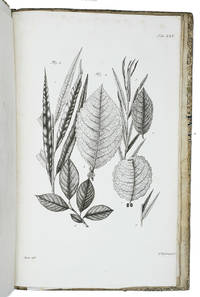
1785M2H99OL1K649Leipzig: Siegfried Leberecht Crusius 1785. Blue sprinkled paper over boards vol. 1 and limp grey paper wrappers stab-sewn through the wrappers vol. 2. Preserved in a professionaly handmade box made for this book. Folio. With 24 engraved plates in vol. 1 numbered 1-24 and 6 engraved plates in vol. 2 numbered 25-29 31: all published all signed by I. Nuszbiegel after originals by the author except plate 31 which is signed by Johann Stephan Capieux. 2 volumes. Both volumes of the first and only edition of Hoffmann's monograph on willows published in instalments from 1785 to 1791 including the series of 30 engraved plates numbered as 31 made to accompany them showing willows their branches leaves and flowers. He describes different kinds of willows their varieties habitat and sizes. All descriptions refer to the plates so that readers could use them together.Georg Franz Hofmann was a German botanist and physician. He first served as professor of botany in Erlangen then professor of botany and director of the botanical garden in Göttingen. Finally he went to Moscow where he continued his botanical studies taking charge of the Imperial Academy of Science's botanical garden and herbarium.Plate 30 is never mentioned in the text or bibliographies so it was apparently never published or was misnumbered 31.With manuscript owner's inscriptions on the title-page of instalment 1 and on the title-page of vol. 1. With the title-page to vol. 1 misbound between instalments 3 and 4. Binding of vol. 1 slightly worn corners bumped. Paper wrappers of vol. 2 slightly frayed at the corners. With a small professional restoration to the foot of the spine. With some minor stains in each volume but still in good condition. Both volumes rarely found together of a remarkable monograph on willows with all the plates.l Hunt II 678; Johnston 565; Nissen BBI 893; Pritzel 4127; Stafleu & Cowan II 2879. Siegfried Leberecht Crusius, hardcover