898 résultats
19882111902160600626Shunju-sha 1988. Soft Cover. Fine. Number of books: 5 Shunju-sha paperback
19782111902161004418Shunju-sha 1978. Soft Cover. Fine. Number of pages: 379p Plate size: 20cm Shunju-sha paperback
1976Q-0394498151Pantheon Books 1976-01-01. Hardcover. New. New. In shrink wrap. Looks like an interesting title! Pantheon Books hardcover
197657425Mowbrays 1976. Hardback. Very Good hardback light edgewear in Very Good dustwrapper light edgewear spine gently sunned. Overall clean and unmarked. Hardback in dustwrapper. The image on the listing page is of the actual book for sale. Mowbrays hardcover
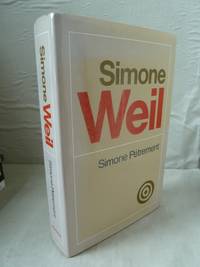
1976G0394498151I4N01Pantheon Books 1976. Hardcover. Very Good. Missing dust jacket; May have limited writing in cover pages. Pages are unmarked. ~ ThriftBooks: Read More Spend Less.Dust jacket quality is not guaranteed. Pantheon Books hardcover
197613326New York: Pantheon 1976. First Edition. Original Wraps. Very Good in Wraps. First Edition. Original Wraps. Underlining and annotations on pp 404 496-472 by Oliver Sacks. Dr. Sacks often made comments in the margins or had conversations with the author in the text.<br /> From the library of Dr. Oliver Sacks the renowned neurologist author and educator. He was in his life celebrated for his contributions to the understanding of the human brain and his ability to communicate complex scientific concepts to a broader audience. In doing so he highlighted the profound impact of neurological disorders on human identity and experience. His library is a reflection of this remarkable polymath's questing mind. Shelfwear/toning else tight bright and unmarred. Pictorial wrappers. 8vo. xiv 363pp. All underlining emphasis and notations are in the hand of Dr. Oliver Sacks. Pantheon unknown
1977mon0000550893Mowbray 12/05/1977 00:00:01. hardcover. Acceptable. in x in x in. Ex-library book usual marking. Clean copy in good condition. Library rebind with original dust cover pasted to the boards. Some marking at edges but overall book remains in good condition considering age. Mowbray hardcover
1978W4-08-06-26-003RANDOM HOUSE TRADE @ 1978-01-01. paperback. Acceptable. 9x6x1. Some wear on edges and corners. Clean pages with no markings. Ships same day in most cases!Any queries just ask for photos. Your satisfaction matters! RANDOM HOUSE TRADE @ paperback
1977G0394498151I3N10Knopf Doubleday Publishing Group 1977. Hardcover. Good. Disclaimer:A copy that has been read but remains in clean condition. All pages are intact and the cover is intact. The spine may show signs of wear. Pages can include limited notes and highlighting and the copy can include previous owner inscriptions. An ex-library book and may have standard library stamps and/or stickers. At ThriftBooks our motto is: Read More Spend Less.Dust jacket quality is not guaranteed. Knopf Doubleday Publishing Group hardcover
2000SKU0652751Grove Press 2000-09-30. paperback. New. 5x0x8. New Textbook Ships with Tracking Grove Press paperback
19706903London: Oxford University Press 1970. Hardcover. Very Good. pp 368 The First and Last Notebooks of French philosopher political activist and Christian mystic Simone Weil translated by Richard Rees. An unidentified ownership inscription appears on the front free end paper along with extensive annotations to the text especially to the New York Notebook. Very good in red cloth sunned to spine ends top edge and contents page spotted; in a good dust jacket creased and rubbed to the edges but complete red spine faded. Simone Weil has been described variously as prophet psychopath religious masochist and saint. Very Good 1970 Oxford University Press hardcover
2000Q-0802137296Grove Press 2000-09-30. Paperback. New. In shrink wrap. Looks like an interesting title! Grove Press paperback
1998Q-1570752044Orbis Books 1998-12-17. Paperback. New. In shrink wrap. Looks like an interesting title! Orbis Books paperback
1986Q-1555840213Weidenfeld & Nicolson 1986-09-01. Paperback. New. In shrink wrap. Looks like an interesting title! Weidenfeld & Nicolson paperback
1991BN24052Carl Hanser 1991. 1991. Hardcover. 208 x 136 x 32 cm. Simone Weils Cahiers ihre Notizhefte sind das Kernstück ihrer Schriften und eines der großen intellektuellen und menschlichen Dokumente dieses Jahrhunderts. Das widerständige Denken dieser großen Notizhefte Simone Weil Kernstück ihrer Schriften intellektuelle menschlichen Dokumente dieses Jahrhundert widerständige Denken einer großen Philosophin weltanschaulichen Richtung politischen Gruppe Reflexionsprozesse dauernde Auseinandersetzung mit anderen Platon Descartes Spinoza Shakespeare Racine Goethe indische heilige Schriften Bibel Mystiker Jean de la Cruz philosophisches System Offenheit Aufmerksamkeit Literatur Essays Feuilleton Ethik Frankreich Belletristik Literaturkritik Interview Mystik Philosophie ReligionPhilosophin die sich von keiner weltanschaulichen Richtung keiner politischen Gruppe oder Partei vereinnahmen ließ spiegelt sich in diesen nie zu einem Abschluß findenden Reflexionsprozessen. Die Form der dauernden Auseinandersetzung mit anderen Platon Descartes Spinoza Shakespeare Racine Goethe oder mit den indischen heiligen Schriften der Bibel und dem Mystiker Jean de la Cruz war für Simone Weil Voraussetzung unter der sich ihre Gedanken entwickeln konnten; das Gespräch nicht das geschlossene philosophische System entsprach der ihr eigenen Offenheit die große Aufmerksamkeit verdient.Simone Weils Cahiers ihre Notizhefte sind das Kernstück ihrer Schriften und eines der großen intellektuellen und menschlichen Dokumente dieses Jahrhunderts. Das widerständige Denken dieser großen Philosophin die sich von keiner weltanschaulichen Richtung keiner politischen Gruppe oder Partei vereinnahmen ließ spiegelt sich in diesen nie zu einem Abschluß findenden Reflexionsprozessen. Die Form der dauernden Auseinandersetzung mit anderen Platon Descartes Spinoza Shakespeare Racine Goethe oder mit den indischen heiligen Schriften der Bibel und dem Mystiker Jean de la Cruz war für Simone Weil Voraussetzung unter der sich ihre Gedanken entwickeln konnten; das Gespräch nicht das geschlossene philosophische System entsprach der ihr eigenen Offenheit die große Aufmerksamkeit verdient.Wolfgang Matz geboren 1955 in Berlin lehrte von 1987 bis 1995 deutsche Sprache und Literatur an der Universität Poitiers und arbeitet seitdem als Verlagslektor in München. Er veröffentlichte zahlreiche Essays zur deutschen und zur französischen Literatur wurde als Übersetzer mit dem Paul Celan Preis und dem Petrarca-Preis ausgezeichnet und ist Herausgeber von Adalbert Stifters "Sämtliche Erzählungen in der Fassung des Erstdrucks" 2005. Buchveröffentlichungen: "Musica humana. Versuche über Ernst Blochs Philosophie der Musik" 1988 "Adalbert Stifter oder Diese fürchterliche Wendung der Dinge. Biographie" 1995 und "Julien Green. Das Jahrhundert und sein Schatten" 1997. Reihe/Serie Cahiers 1 - 4 ; BD 1 Übersetzer: Elisabeth Edl Wolfgang Matz Sprache deutsch Maße 136 x 210 mm Literatur Essays Feuilleton Ethik Frankreich Hardcover Belletristik Essays Feuillton Literaturkritik Interviews Belletristik Essay Feuillton Literaturkritik Interview Mystik Philosophie Religion ISBN-10 3-446-15749-2 / 3446157492 ISBN-13 978-3-446-15749-1 / 9783446157491 Cahiers 1 Bd.1 Band 1 Aufzeichnungen Gebundene Ausgabe von Elisabeth Edl Herausgeber Übersetzer Wolfgang Matz Herausgeber Übersetzer deutsche Sprache und Literatur Universität Poitiers Verlagslektor München Essays zur deutschen und zur französischen Literatur Übersetzer Paul Celan Preis Petrarca-Preis Herausgeber von Adalbert Stifters Sämtliche Erzählungen in der Fassung des Erstdrucks Musica humana. Versuche über Ernst Blochs Philosophie der Musik Adalbert Stifter oder Diese fürchterliche Wendung der Dinge. Biographie Julien Green. Das Jahrhundert und sein Schatten Simone Weil Autor Notizhefte Kernstück ihrer Schriften intellektuelle menschlichen Dokumente dieses Jahrhundert widerständige Denken einer großen Philosophin weltanschaulichen Richtung politischen Gruppe Reflexionsprozesse dauernde Auseinandersetzung mit anderen Platon Descartes Spinoza Shakespeare Racine Goethe indische heilige Schriften Bibel Mystiker Jean de la Cruz philosophisches System Offenheit Aufmerksamkeit Literatur Essays Feuilleton Ethik Frankreich Belletristik Literaturkritik Interview Mystik Philosophie Religion <br/><br/>Belletristik Essays Feuillton Literaturkritik Interviews Belletristik Essay Feuillton Literaturkritik Interview Mystik Philosophie Religion ISBN-10 3-446-15749-2 / 3446157492 ISBN-13 978-3-446-15749-1 / 9783446157491 Cahiers 1 Bd.1 Band 1 Aufzeichnungen Gebundene Ausgabe von Elisabeth Edl Herausgeber Übersetzer Wolfgang Matz Herausgeber Übersetzer deutsche Sprache und Literatur Universität Poitiers Verlagslektor München Essays zur deutschen und zur französischen Literatur Übersetzer Paul Celan Preis Petrarca-Preis Herausgeber von Adalbert Stifters Sämtliche Erzählungen in der Fassung des Erstdrucks Musica humana. Versuche über Ernst Blochs Philosophie der Musik Adalbert Stifter oder Diese fürchterliche Wendung der Dinge. Biographie Julien Green. Das Jahrhundert und sein Schatten Simone Weil Autor Notizhefte Kernstück ihrer Schriften intellektuelle menschlichen Dokumente dieses Jahrhundert widerständige Denken einer großen Philosophin weltanschaulichen Richtung politischen Gruppe Reflexionsprozesse dauernde Auseinandersetzung mit anderen Platon Descartes Spinoza Shakespeare Racine Goethe indische heilige Schriften Bibel Mystiker Jean de la Cruz philosophisches System Offenheit Aufmerksamkeit Literatur Essays Feuilleton Ethik Frankreich Belletristik Literaturkritik Interview Mystik Philosophie Religion Simone Weils Cahiers ihre Notizhefte sind das Kernstück ihrer Schriften und eines der großen intellektuellen und menschlichen Dokumente dieses Jahrhunderts. Das widerständige Denken dieser großen Notizhefte Simone Weil Kernstück ihrer Schriften intellektuelle menschlichen Dokumente dieses Jahrhundert widerständige Denken einer großen Philosophin weltanschaulichen Richtung politischen Gruppe Reflexionsprozesse dauernde Auseinandersetzung mit anderen Platon Descartes Spinoza Shakespeare Racine Goethe indische heilige Schriften Bibel Mystiker Jean de la Cruz philosophisches System Offenheit Aufmerksamkeit Literatur Essays Feuilleton Ethik Frankreich Belletristik Literaturkritik Interview Mystik Philosophie ReligionPhilosophin die sich von keiner weltanschaulichen Richtung keiner politischen Gruppe oder Partei vereinnahmen ließ spiegelt sich in diesen nie zu einem Abschluß findenden Reflexionsprozessen. Die Form der dauernden Auseinandersetzung mit anderen Platon Descartes Spinoza Shakespeare Racine Goethe oder mit den indischen heiligen Schriften der Bibel und dem Mystiker Jean de la Cruz war für Simone Weil Voraussetzung unter der sich ihre Gedanken entwickeln konnten; das Gespräch nicht das geschlossene philosophische System entsprach der ihr eigenen Offenheit die große Aufmerksamkeit verdient.Simone Weils Cahiers ihre Notizhefte sind das Kernstück ihrer Schriften und eines der großen intellektuellen und menschlichen Dokumente dieses Jahrhunderts. Das widerständige Denken dieser großen Philosophin die sich von keiner weltanschaulichen Richtung keiner politischen Gruppe oder Partei vereinnahmen ließ spiegelt sich in diesen nie zu einem Abschluß findenden Reflexionsprozessen. Die Form der dauernden Auseinandersetzung mit anderen Platon Descartes Spinoza Shakespeare Racine Goethe oder mit den indischen heiligen Schriften der Bibel und dem Mystiker Jean de la Cruz war für Simone Weil Voraussetzung unter der sich ihre Gedanken entwickeln konnten; das Gespräch nicht das geschlossene philosophische System entsprach der ihr eigenen Offenheit die große Aufmerksamkeit verdient.Wolfgang Matz geboren 1955 in Berlin lehrte von 1987 bis 1995 deutsche Sprache und Literatur an der Universität Poitiers und arbeitet seitdem als Verlagslektor in München. Er veröffentlichte zahlreiche Essays zur deutschen und zur französischen Literatur wurde als Übersetzer mit dem Paul Celan Preis und dem Petrarca-Preis ausgezeichnet und ist Herausgeber von Adalbert Stifters "Sämtliche Erzählungen in der Fassung des Erstdrucks" 2005. Buchveröffentlichungen: "Musica humana. Versuche über Ernst Blochs Philosophie der Musik" 1988 "Adalbert Stifter oder Diese fürchterliche Wendung der Dinge. Biographie" 1995 und "Julien Green. Das Jahrhundert und sein Schatten" 1997. Reihe/Serie Cahiers 1 - 4 ; BD 1 Übersetzer: Elisabeth Edl Wolfgang Matz Sprache deutsch Maße 136 x 210 mm Literatur Essays Feuilleton Ethik Frankreich Hardcover Carl Hanser hardcover
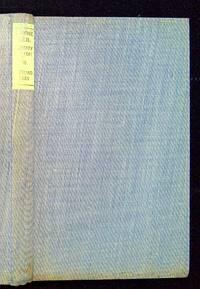
1965279868United Kingdom: Oxford University Press 1965. Book. Very Good. hardback. hardback octavo blue cloth lettered gilt on yellow to spine lacking dust wrapper. Title to spine lightly rubbed. A tightly bound copy with a clean and unmarked text xiv 207pp. Oxford University Press Hardcover
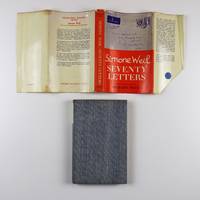
196524333<p>London: Oxford University Press 1965. 1st UK Edition. hardbound. Very Good in Good dustwrapper/Dustwrapper. 8vo. b&w illustrations 1st UK edition of this selection of letters by Simone Weil all but one hitherto untranslated written before and during the Second World War; reflections on politics art philosophy religion mathematics; edited and translated by Richard Rees; 4 b&w plate illustrations; two-tone blue/cream cloth boards with lime-green title label to spine with gilt titling; former owner's name to front endpaper endpapers/prelims/text block foxed occasional foxing in text o.w. Very Good throughout; dustwrapper edgeworn and rubbed price clipped creases to folds of flaps front and rear.</p> Oxford University Press hardcover
198687713London: Virago Press 1986. Signed and inscribed by the editor Sian Miles. Pages clean and bright boards and binding tidy light shelf wear to edges of dust jacket. Signed and Inscribed By the Editor. Hard. Very Good/Very Good. 8vo. Virago Press Hardcover
1990Q-0385301731Delacorte Books for Young Readers 1990-08-31. hardcover. New. New. In shrink wrap. Looks like an interesting title! Delacorte Books for Young Readers hardcover
1995P18NL1229Unesco / Marie d'Albi 1995. 1st Edition. SOFTCOVER. Large 4to. in colour printed stiff glossy card covers 51 pp on glossy art paper colour plates etc. Text in French __CONDITION : An extremely well preserved AS NEW unmarked copy. . __To see more of our Art Monographs etc type DbbARTIST in the Keywords search box __We always ship in PROTECTIVE CARD PARCELS Unesco / Marie d'Albi paperback
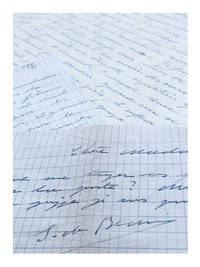
1956SDB2<p><strong>BEAUVOIR de Simone 1908-1986</strong></p><p>Autograph manuscript fragments with an autograph letter signed addressed to her typist for <em>La Longue Marche – Essai sur la Chine<br /></em>Paris 1956 15 p. in-4° on graph paper<br />Two autograph envelopes stamped with postmarks<br />Usual fold marks numerous corrections and words crossed out by Simone de Beauvoir</p><p><strong>A few of the last surviving pages from <em>La Longue Marche – Essai sur la Chine</em> the account of the official trip Simone de Beauvoir took to China with Jean-Paul Sartre at the end of 1955</strong></p><p><u>The present corpus unfolds in three distinct movements:</u></p><p>The first section is headed "2 to 5 September 1955" and paginated 25 to 30 including one leaf numbered "bis". It corresponds to the "Preliminaries" and opens with the travelers' observations in the waiting room at Orly Airport. Simone de Beauvoir draws a striking contrast between on the one hand those bound for Boston dressed impeccably—almost to the point of caricature—and on the other those modestly clothed preparing to depart for Moscow on an "official expedition." The philosopher takes notes on the Soviets Hungarians and Czechs at the Moscow airfield as well as on a South African also an official guest of the Chinese government with whom the couple converses. This travel account is enriched with glimpses of the landscape and reflections on the Western presence in Mongolia since the 17th century particularly that of scholars and monks.</p><p><em>" <strong>Comme Paris est loin ! Derrière moi le temps et l'espace se sont si bien embrouillés le système de nos besoins – faim soif sommeil – et de toute ma vie a été si radicalement lissé qu'il me semble non avoir fait un voyage mais terminé un rite de passage</strong> long fatigant et qui m'a jetée insensiblement ailleurs. J'écoute l'aimable discours qu'on nous adresse en chinois et qu'un interprète traduit. <strong>Les porteurs de hautes fleurs écarlates la moiteur de l'air la forte odeur végétale qui monte de la terre me suffoque</strong>. </em>… <strong><em>Jusqu'ici quand je pensais à la Chine je pensais à une histoire une civilisation un régime </em></strong>… <strong><em>mais la Chine n'est pas une entité politique ; je devine avec joie qu'elle a un ciel ses couleurs ses arbres une chair</em></strong><em> "</em></p><p>On 16 December 1956 she sent a second fragment paginated 476 and 486 bis. It corresponds to Chapter V "Culture."<br /><em>" <strong>Sous les Mandchous la décadence du monde féodal se réflète dans la littérature</strong> ; elle commença à s'évader des règles formelles ; des genres nouveaux se développèrent. Le roman devint autre chose qu'un divertissement</em> … <em>Le Rêve de la chambre rouge entre autres est caractéristique de cette période "</em></p><p>On December 18 1956 she sent a final fragment paginated 757 781 and 782. It corresponds to Chapter VIII "Cities of China."<br /><em>" Elle fut la capitale des Song dont le règne coïncida avec le plus beau moment de la civilisation chinoise et on la considère comme l'Athènes de la Chine.</em> … <em>Les maisons ne ressemblent pas à celles de Pékin. Au lieu de se cacher derrière des murs elles exhibent des façades de deux à trois étages garnies de fenêtres "</em></p><p>An official guest of the Chinese government alongside numerous other European intellectuals Simone de Beauvoir traveled to China with Jean-Paul Sartre from September 6 to October 6 1955. The following year in April 1957 the philosopher published her essay praising a country that had just completed its revolution. Speaking of her work she wrote:<br /><em>"This book is not a reportage: a reporter explores a stable present whose more or less contingent elements serve as keys to one another. In China today nothing is contingent; everything draws its meaning from the future they all share. The present is defined by the past it surpasses and the novelties it announces: it would be a distortion to regard it as static. </em><em>It is only one stage of this 'long march' that is peacefully leading China from democratic revolution to socialist revolution. It is therefore not enough to describe it: it must be explained. That is what I have tried to do."<br /></em>The manuscript itself has been lost; these fifteen leaves are the last surviving fragments of the work. The envelopes confirm unsurprisingly that she was working on it in 1956. Sylvie Le Bon de Beauvoir notes that the material belongs to an earlier version of the final text. Simone de Beauvoir removed almost all of the pages numbered 25 to 30 substantially reworking her "Preliminaries."</p><p><u>Provenance:</u><br />Estate of Berthe Mandinaud</p>
1995Q-0590539604Scholastic Inc 1995-09-01. Paperback. New. In shrink wrap. Looks like an interesting title! Scholastic Inc paperback
1991Q-0531058786Orchard Books 1991-03-01. Hardcover. New. New. In shrink wrap. Looks like an interesting title! Orchard Books hardcover
1994Q-0531070565Scholastic 1994-09-01. Paperback. New. In shrink wrap. Looks like an interesting title! Scholastic paperback
1991Q-0531084787Orchard Books 1991-03-01. Library Binding. New. In shrink wrap. Looks like an interesting title! Orchard Books unknown