2 résultats
1771C05844 books in 2 volumes: 8xvi255 pages with frontispiece; 205 pages with index and errata. Octavo 8" x 5 3/4 bound in stiff wrappers with lables to spines and deckle edges. This edition not in Bibliotheca Van der Linde-Niemeijeriana; however there are a number of listings for this title in the bibliography 4315 through 4330 listing 16 editions of various dates and publishers. First published in 1528.<br /><br />Baldassare Castiglione count of Novilara was an Italian courtier diplomat soldier and a prominent Renaissance author. He was born into an illustrious Lombard family at Casatico near Mantua. In 1494 at the age of sixteen Castiglione began his humanist studies in Milan which would eventually form his future writings. However in 1499 after the death of his father Castiglione left his studies and Milan to succeed his father as the head of their noble family. Soon his duties seem to have included representative offices for the Gonzaga court. For the Gonzaga he traveled quite often; during one of his missions to Rome he met Guidobaldo da Montefeltro duke of Urbino. Urbino was at that time the most refined and elegant among Italian courts a meeting point of culture ably directed and managed by duchess Elisabetta Gonzaga and her sister-in-law Maria Emilia Pia. The most constant guests included: Pietro Bembo Giuliano de' Medici Cardinal Bibbiena Ottaviano and Federigo Fregoso and Cesare Gonzaga a cousin of both Castiglione and the duke. The hosts and guests organized intellectual competitions which resulted in an interesting stimulating cultural life producing brilliant literary activity. Castiglione wrote about his works and of those of other guests in letters to other princes maintaining an activity very near to diplomacy though in a literary form. In 1516 Castiglione was back in Mantua where he married Ippolita Torelli descendant of another ancient noble family; two passionate letters he wrote to her expressing deep sentiment have survived but she unfortunately died only four years later. At that time Castiglione was in Rome again as an ambassador this time for the Duke of Mantua. In 1521 Pope Leo X conceded to him the tonsura first sacerdotal ceremony and thereupon began Castiglione's second ecclesiastical career. In 1528 the year before his death the book by which he is most famous The Book of the Courtier Il Libro del Cortegiano was published in Venice by the Aldine Press run by Andrea d'Asolo father-in-law of Aldus Manutius. The book is based on a nostalgic recreation of Castiglione's experience at the court of Duke Guidobaldo da Montefeltro of Urbino at the turn of the sixteenth century. It describes the ideal court and courtier going into great detail about the philosophical and cultured and lively conversations that occurred at Urbino presided over by Elisabetta Gonzaga. Castiglione himself does not contribute to the discussion the book is his tribute to his friendship with the participants of the discussion all of whom went on to have important positions. The Book of the Courtier caught the "spirit of the times" and was soon translated into Spanish German French and English. One hundred and eight editions were published between 1528 and 1616 alone. Pietro Aretino's La cortigiana is a parody of this famous work. Castiglione's depiction of how the ideal gentleman should be educated and behave remained for better or for worse the touchstone for all the upper classes of Europe for next five centuries. The work on chess is in the second book of this work.<br /><br />Condition:<br /><br />Old stamps to title of volume two and first un-numbered page of volume one Spine ends chipped with loss to heal corners bumped wrappers rubbed else a good copy of scarce title. Vendramini Mosca hardcover books
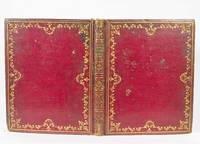
17771309Geneve 1777. Quarto. 7 3/4†x 9 1/2â€. Contemporary red morocco ruled with gilt floral sprays and pointelles at corners. Covers show a few small gouges spine rubbed and worn label frayed. Marbled endpapers bookplate of Edmond Couleru. Notes in pen and pencil on title. Stain on front blank otherwise very bright and clean. Four changes to the text in contemporary hand on pXXX. A stamp “Sold by H.M. Stationery Office†on p.XXXI indicates that the text was sold in England.<br/><br/> Pagination: One leaf verso with frontis portrait of Gonzaga after Corvi engraved by Giovanni Volpatto Designer and engraver. B. Bassono 1733 D. Rome 1803. Leaf of title verso blank text pages 1-124 in Roman numerals: Collation 1l A-P4 Q2. Contents: p III: Homme de Lettres Bon Citoyen; p. XXI: Reflexions sur la Poesis p. XXVII Essay Analytique sur les Decouvertes Capitales de L’Esprit Humain. The work ranges over modern philosophers including the English empiricists. It also discusses the American revolution. The last essay was given at the Royal Society in London 1777. <br/><br/> Luigi Gonzaga prince of Castiglione 1745-1819 was a scholar and a native of Vienna. His lineage was from the ancient house of Gonzaga a noble family that ruled Mantua in Northern Italy from 1328 to 1708; they also ruled Monferrato in Piedmont and Nevers in France. His family was a subbranch of the Gonzaga and Solferino family. His parents were Ferdinand III of Castiglione and Elena Medin. Childless he was the last in the line of this branch of the Gonzaga family. Luigi Gonzaga became a scholar traveler and activist and who read and followed the philosophers of the enlightenment and understood the need for progressive measures to support civil rights freedom and democracy.<br/><br/> Expelled from Venice for his progressive ideas Luigi Gonzaga became first a refugee then an exile then a tolerated member of a learned and ancient family. During his stay in Rome he became a friend of the poet Maria Maddalena Morelli. He was elected to membership in the patrician Pontificia Accademia degli Arcadi. Founded Rome 1690 The “Accademia degli Arcadi†was an important if archly conservative force in classical literature and culture until the 20th century.<br/><br/> First published Roma : B. Francesi 1776 as Il Letterato buon cittadino discorso filosofico e politico di. Don Luigi Gonzaga di Castiglione with extensive running commentary by Luigi Godard. A second edition in French in 12mo was published in Paris : Barrois l'aîné 1785.<br/><br/> Ref: Portalupi Napoleone. Sulla legittimitÅ• dei principi Gonzaga della linea di Vescovato per . Milano 1871.<br/><br/> Provenence : Edmund Coleru author of .Au pays de l'absinthe. MontbeÄ›liard Impr. MontbeÄ›liardaise 1908 unknown books