Biblio.com

211 résultats
1849006191Philadelphia: Merrihew & Thompson printers 1849. Paperback. Very Good . 31 1 p.; 22 cm. Yellow wrappers with black wrapper title. The Union Benevolent Association was established in 1831 to provide assistance to Philadelphia residents by lending stoves to help heat their homes during a harsh winter along with wood and coal. The intention was to help the "worthy poor" without regard for religion or race. The activities of the organization have evolved since 1831; today it provides grants to projects to fight poverty. This report contains the constitution and by-laws of the Union Benevolent Association as well as detailed data about the people with whom the association had worked in the previous year. The male officers of the Association are listed; none of the members of the Ladies' Board of Managers are named although the majority of the report is theirs. Scarce. In Very Good Condition: wrapper is lightly soiled; lower corner of front wrapper creased; lower corner of title page lightly soiled; minor damage at lower edge of back wrapper and final pages; otherwise clean and tight. Merrihew & Thompson, printers paperback
1850006192Philadelphia: Merrihew & Thompson printers 1850. Paperback. Very Good. 32 p.; 23 cm. Green wrappers with black wrapper title. The Union Benevolent Association was established in 1831 to provide assistance to Philadelphia residents by lending stoves to help heat their homes during a harsh winter along with wood and coal. The intention was to help the "worthy poor" without regard for religion or race. The activities of the organization have evolved since 1831; today it provides grants to projects to fight poverty. This report contains a list of people who contributed to the Union Benevolent Association for the previous year with the amount given as well as detailed data about the people with whom the association had worked. The male officers of the Association are listed; none of the members of the Ladies' Board of Managers are named although the majority of the report is theirs. Scarce. In Very Good Condition: wrapper is lightly soiled and creased; 3-cm. closed tear at upper corner of front wrapper; internally clean and tight. Merrihew & Thompson, printers paperback
1900003159New York: s.n. 1900. Hardcover. Very Good . 518 p.: many full-page and in-text illustrations; 27 cm. Publisher's grey cloth with gilt spine and cover titles; black and red spine and cover illustrations. Title page printed in red and black. No publication information other than the place. Copyright 1900 by C.R. Graham. Advice for Americans travelling to Paris and London by someone who thought they should really stay in the United States. "It is an undeniable fact that Europeans do not know how to live; they have no idea of luxuries and very little of comforts." p. 47 The anonymous author emphasizes the scandalous aspects of life in Paris as much as possible the can-can "consists of high kicking and lascivious posturing by depraved women.". Contains amusing descriptions of restaurants cafes and theaters; parks monuments cemeteries and catacombs; cultural and educational institutions; horse races and festivals; and street life with the types of people to be seen: students artists' models vendors socialists anarchists gamblers and criminals. In general the section on Paris presents the fascinating and slightly scandalous world first dramatised for the world in Puccini's La Bohème. The section on London emphasizes the city's history and architecture. A heavy book; for international shipping it will have to be sent by priority international. In Very Good Condition: ends of spine slightly rubbed; cover is lightly soiled; slightly shaken; pages are clean and bright. s.n. hardcover
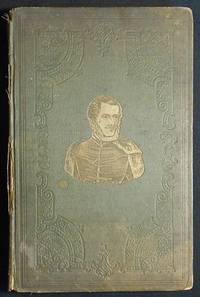
1851006346New York: Mark H. Newman & Co 1851. Hardcover. Good -. Sartain John. iv 241 1 p. engraved frontispiece portrait of Kossuth and 15 leaves of engraved plates: music; 25 cm. Dark green cloth with gilt-stamped spine title and decoration; gilt-stamped portrait of Kossuth on front cover with the same blind-stamped on back cover; blind-stamped decoration on both boards. All page edges gilt. Pale yellow endpapers. Gift inscription on front free endpaper: "From M. H. Bidwell Jany 1st 1852 to Thomas Hamilton." Faxon Literary Annual and Gift Books 428e. The extreme popularity of Hungarian statesman Lajos Kossuth de Udvard et Kossuthfalva 1802-1894 or Louis Kossuth as he was known in English is indicated by the publisher naming this literary annual for him. He had served as Hungary's president during the revolution of 1848-49; in 1851 he spent time in London before coming to the United States. He arrived in New York in Dec. 1851 as this volume appeared to a hero's welcome including a visit to the White House with President Millard Fillmore. The volume includes: 5 plates engraved by John Sartain; 2 works by Metta Victoria Fuller 1831-1885: The City of Night and The Wo-Prophet of Jerusalem; an engraving of the Crystal Palace; The Fear of Being an Old Maid by Mrs. E. H. Hall; and a biography of Kossuth. Very scarce. In Good- Condition: edges of spine and corners are rubbed; loss at ends of spine; cloth is separating along front joint; cloth is soiled and faded; front hinge is separating; old dampstain at lower corner of a few leaves; foxing throughout; otherwise clean and solid. Mark H. Newman & Co hardcover
1836004125Philadelphia: E.L. Carley and A. Hart 1836. Hardcover. Very Good. 9 18-212 2 p. frontispiece and 5 additional leaves of plates; 16 cm. Original calf boards with embossed decoration on both boards. Possibly late 19th-century spine replacement with brown silk with star pattern. Modern recasing with the silk spine and repair of front hinge. All page edges gilt. Faxon 822. Contents: Introductory Dialogue by Eliza Leslie -- Louisa Simons by Caroline Gilman -- The Partners by Catherine E. Gooch -- The Sale of the Water-Lily by Hannah Flagg Gould -- The Eagle's Speech by Horatio E. Hale -- The Broken Arm by C.M.W. of Philadephia -- The Strawberry by Catherine E. Gooch -- The Happy Trio by Sarah J. Hale -- The Bird's Home by Hannah Flagg Gould -- Childhood's Joys by Horatio E. Hale -- The Willow the Poppy and the Violet by Lydia H. Sigourney -- The Phials by Eliza Leslie -- The Little White Cottage by Mrs. H. Bayley -- Violets by Emma C. Embury -- The Invitation by E.H. of Philadelphia -- Emma and Her Brothers by Eliza Leslie -- Left Foot Foremost by Catherine E. Gooch -- The Dove: A Drama translated by Eliza Leslie from the French of Madame de Genlis -- Viola by Eliza Leslie -- The Christmas Gifts by C.H.W. of Philadelphia -- The Children's Pic-Nic by Catherine E. Gooch. Louisa Simons; or The Advantages of Application by Caroline Gilman has pencilled editorial marks. In Very Good Condition: edges rubbed; occasional foxing and staining; some pencilled notations; otherwise clean and tight. E.L. Carley and A. Hart hardcover
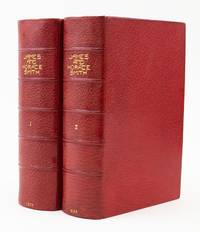
1899ST19035London: Hurst and Blackett Limited 1899. 190 x 125mm. 7 1/2 x 5". xii 128 pp.; 1 p.l. volume II title page handwritten in ink 129-312 pp. One volume expanded to two. <br/> Fine crimson crushed morocco by the Guild of Women Binders stamp-signed in gilt on front pastedown raised bands stylized gilt lettering on spines all edges gilt. With five portraits as called for and EXTRA-ILLUSTRATED WITH 264 PLATES 31 of these colored 12 folding about half of them scenes or views the rest portraits. Also containing the bookplate of David Garrick mounted on card at p. 10; an autograph letter signed from George Smart; an invoice or accounting signed by Eliza Matthews; and five other autographs mounted on heavy stock. Occasional trivial offsetting from inserted plates but A VERY FINE COPY clean and fresh internally in unworn bindings.<br/> <br/> Richly extra-illustrated with depictions of the people places and events discussed in the text this joint biography of brothers James and Horace Smith was simply and tastefully bound by members of the Guild of Women Binders. Although James 1775-1839 was a lawyer and Horace 1779-1849 a successful stockbroker both had literary aspirations and enjoyed being part of theatrical and artistic circles. Their dreams were realized when in 1812 the Drury Lane Theatre offered a £50 prize for an address to be recited on the theater's reopening following repair of fire damage. The Smiths hit on the idea of producing parodies of popular poets with James imitating Wordsworth Southey and Coleridge while Horace took on Byron Moore and Scott. Their humorous publication was an unexpected runaway hit going to seven editions in three months. According to Britannica "'Rejected Addresses' are the most widely popular parodies ever published in England and take classical rank in literature. . . . A striking feature is the absence of malice; none of the poets caricatured took offence while the imitation is so clever that both Byron and Scott are recorded to have said that they could hardly believe they had not written the addresses ascribed to them." In addition to being witty both men were kind and generous friends often helping impecunious artists. Percy Shelley and Horace became friends after competing in a sonnet-writing contest which Shelley won by producing "Ozymandias". Before leaving for Italy the poet entrusted his financial affairs to Horace of whom he said "Is it not odd that the only truly generous person I ever knew who had money enough to be generous with should be a stock-broker He writes poetry and pastoral dramas and yet knows how to make money and does make it and is still generous." The binding here was produced by the Guild of Women Binders established by bookseller Frank Karslake in 1898 to give an organizational identity to a group of women already at work binding books in various parts of Britain often in their own homes. Karslake first became interested in women binders when he visited the Victorian Era Exhibition at Earl's Court in 1897 held to celebrate the Queen's Diamond Jubilee. He was impressed with a number of bookbindings at the Jubilee exhibit prominent among them being those of Mrs. Annie MacDonald of Edinburgh and he invited the women to exhibit their work in his shop at 61 Charing Cross Road. The Guild was formed soon thereafter and operated until 1904. As Tidcombe notes "because the women were generally unaware of the long history of traditional bookbinding design they produced designs that were freer and less stereotyped than those of men in the trade." Our binding is more restrained that other Guild works but the spine lettering which juxtaposes curves and sharp angles stands out as a distinctive feature. Hurst and Blackett, Limited unknown
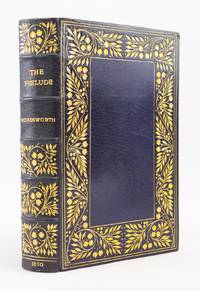
1850ST19683London: Edward Moxon 1850. FIRST EDITION. 222 x 140 mm. 8 3/4 x 5 1/2". x 374 pp. <br/> HANDSOME DARK BLUE MOROCCO GILT BY THE GUILD OF WOMEN BINDERS see below covers with frame of swirling flowering vines raised bands spine panels with similar floral decoration gilt lettering pastedowns framed by multiple gilt rules intersecting into squares at corners all edges gilt. Front pastedown with pencilled inscription attributing the binding to the Guild of Women Binders in the hand of former owner antiquarian bookseller John P. Love; front free endpaper with pencilled bibliographic information; handwritten card from Love's library catalogue laid in at front. Wise p. 35. Spine gently and evenly sunned one opening with two tiny brown marginal dots but A VERY FINE COPY with few signs of use inside or out.<br/> <br/> This is a lovely copy of one of the great autobiographies in verse offered here in a binding attributed to the Guild of Women Binders by a previous owner with extensive expertise in the field. According to DNB Wordsworth 1770-1850 began his "Prelude" in 1799 while travelling with his sister Dorothy and Samuel Coleridge in Germany using his sister's German exercise notebook to enter poetic accounts of his boyhood. These entries became the first version of his autobiographical testament a work that "is for many his most impressive poem." He completed it in 13 books in 1805 but continued to revise it throughout his lifetime adding a 14th book at the end. It was published poshumously and given its title by his wife. The Guild of Women Binders was established by bookseller Frank Karslake in 1898 to give an organizational identity to a group of women already at work binding books in various parts of Britain often in their own homes. As Tidcombe notes "because the women were generally unaware of the long history of traditional bookbinding design they produced designs that were freer and less stereotyped than those of men in the trade." Our binding is unsigned and is perhaps more conventional that other Guild works but there are elements that would lead an experienced connsoisseur like former owner John P. Love to make a confident attribution. One is the whimsical yet carefully executed spine decoration which carries over the curving floral vines from the covers. Another hint is the very slight variation in the parallel gilt rules indicating a less experienced hand. John Percival Love 1896-1974 joined the staff of the distinguished antiquarian bookseller Francis Edwards founded in 1855. Love served as Chairman of the firm from 1944 until his retirement in 1972. Like many antiquarian booksellers Love was also a collector. He built an impressive collection that was especially rich in incunabula and fine bindings. It is certainly possible that the present volume was once part of the Francis Edwards inventory and was definitively identified at that time as a Guild binding. Edward Moxon unknown
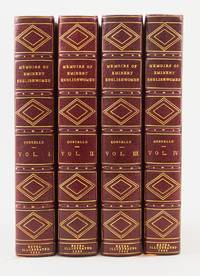
1844ST19249London: Richard Bentley 1844. FIRST EDITION. 220 x 138 mm. 8 3/4 x 5 1/2". Four volumes. <br/> HANDSOME BURGUNDY MOROCCO BY BAYNTUN stamp-signed in gilt on front turn-ins covers with triple gilt-ruled frame interlinking with a triple-gilt-ruled diamond raised bands with gilt dots gilt ruled compartments with gilt diamond shapes gilt lettering gilt-ruled turn-ins with a floral tool at each corner all edges gilt. With 18 portraits as called for four of these with hand coloring and EXTRA-ILLUSTRATED WITH AN ADDITIONAL 60 PLATES. Only the barest hint of wear to extremities spines just a shade darker than covers a handful of portraits a bit foxed but A FINE SET clean and fresh internally the bindings lustrous and the set obviously very little used.<br/> <br/> This is a very attractively bound set containing the biographies of 38 notable Englishwomen extra-illustrated with plates depicting some of the people and places integral to the subjects' lives. Covering the period from the reign of Queen Elizabeth I to the 18th century these four volumes include many women of noble birth and position such as Arabella Stuart Elizabeth Cromwell and Elizabeth Stuart Queen of Bohemia; poets and artists such as Susanna Centlivre Lady Mary Wortley Montagu and Mary Beale; and women famous for their fantastic deeds such as Jane Lane who assisted Charles II during his escape after the Battle of Worcester. Our author Louisa Stuart Costello 1799-1870 was a miniaturist poet and writer of biographies travel stories and fiction. According to DNB "her biographies of royal and noble women--which clearly traded on the popularity of similar works by Lucy Aikin the Strickland sisters and Mary Anne Everett Green--were creditable examples of this literary genre and generally involved some original research." For the present work Costello relied heavily on access to the library and papers of the duke of Devonshire whom she thanks in her introduction. In addition to 18 portraits called for in the contents several of which were drawn by Costello herself this set has been "grangerized" with 60 additional plates that further illustrate the life and times of these illustrious women. The lustrous bindings by an eminent British firm are an additional source of pleasure making a beautiful appearance on the shelf. Richard Bentley unknown
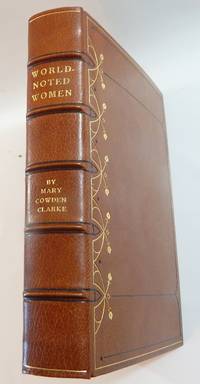
185818363New York: D. Appleton and Company 1858. First edition. Hardcover. Near fine. LArge 4to. 407pp. Illustrated with full page engraved portraits of Sappho Lucretia Aspasia Cleopatra St. Cecilia Heloise Laura Valentine de Milan Joan d'Arc Margaret of Anjou Isabella of Castile Lady Jane Grey Pocahontas La Valliere Maria Theresa Catherine II Florence NIghtingale.<br /> <p><br /> A lovely Arts and Crafts binding in full Niger Morocco in a medium brown color. Spine in six compartments with nicely spaced gilt titles in two. Blind tooling along the bands and onto the boards in a suggestion of clasps. The boards both upper and lower with gilt and blind rules in a pleasing rectangular design interrupted by a "Noveau-style" design on the binding side with gilt curves ending in gilt leaves and dots. Simple parallel gilt line inner dentelles with box-shapes and blind dots at the corners of the inner line peach water-color endpapers all edges gilt. A sumptuous binding. The pastedowns have been nicely repaired occasional trace of foxing not affecting the images else this is in fine condition.<br /> <p><br /> Unsigned binding though almost certainly the work of the Guild of Women Bookbinders based on the design and the tools used. <br /> <p>. D. Appleton and Company hardcover
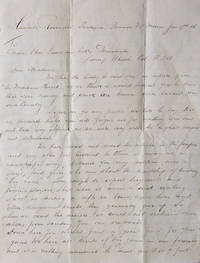
1896315329Hacienda Rosendal Tantojón Pánuco Vera.Cruz Mexico 1896. 2 pages; with original envelope featuring pen and ink portrait of a bear on the back; and with clipped article from the "Mexican Herald" of December 24 1895. 4to. Old folds. 2 pages; with original envelope featuring pen and ink portrait of a bear on the back; and with clipped article from the "Mexican Herald" of December 24 1895. 4to. A charming tribute with subtle overtures from three Swedish bachelors living in Mexico to three California sisters whose hunting prowess was described in an article in the "Mexican Herald." Headlined "Three California Dianas. They Kill Bears and Panthers and Olive in Particular is an Expert Shot" the article describes the sisters who live in the "wilderness above Ukiah California" as "sportswomen of rare talent" and gives an account of their encounter with a bear which ends up with their treeing and killing the animal. The letter reads in part: ".we think it would interest you to know that your bravery and pluck are known even outside your own Country . We have read and reread the article and . we could not restrain ourselves from sending our respects. Down here you would find a great field for your guns. We have all kinds of big game . it is nothing unusual to meet an 8 or 9 feet sic tiger on the roads when we are out riding. We will described one of our hunting experiences that might interest you." The letter goes on to relate how after wounding and trailing a deer towards a lagoon "a big Puma jumped out from the jungle and pounced upon our poor wounded deer. A rifleshot and we had both deer and Puma." The letter continues: "We are three Swedes 26 28 & 31 years old and run a fruit plantation in partnership in the district of Huasteca on the shores of the beautiful Panuco river. We have been here only 5 months but we have found the prospects for the future very bright. We would greatly enjoy a few lines from you as to ascertain whether our epistle ever reached you . and if the article is a ghost-story or not." They close "With admiration for the 3 brave Dianas in California. unknown
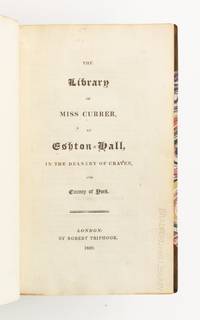
1820ST16983London: Robert Triphook 1820. ONE OF 40 COPIES PRINTED. 235 x 142 mm. 9 1/4 x 5 3/4". iii-xi 1 308 pp. lacking the first of the two title pages at front. <br/> In a very nice replica binding of honey-brown sheepskin over marbled boards raised bands ruled in gilt gilt titling. Front free endpaper INSCRIBED IN INK BY CURRER: With Miss Currer's Compliments"; small ownership perforation of the Bradford Free Library on title page and p. 99; two small ink stamps on p. 59 and 99. Front free endpaper with thinned area where indication of earlier ownership likely appeared. The boards just very lightly scuffed though probably to provide a feeling of authenticity otherwise only trivial imperfections. Apart from the signs of library ownership a very fine copy the text showing virtually no signs of use.<br/> <br/> This is a presentation copy of the first library catalogue of Frances Mary Richardson Currer an Englishwoman described by De Ricci as "England’s earliest female bibliophile" and hailed by Dibdin as "the head of all female collectors in Europe." An only child Currer 1785-1861 inherited considerable assets from both her father's and her mother's families: her relative Dorothy Richardson wrote in 1815 "She is in possession of both the Richardson and Currer estates and inherits all the taste of the former family having collected a very large and valuable library . . . in addition to what were collected by her great grandfather and great-uncle." Dibdin noted that her library at Eshton Hall in North Yorkshire was surpassed only by three collections those of Earl Spencer and the dukes of Devonshire and Buckingham. According to DNB "the library had substantial holdings in natural science topography antiquities and history together with a collection of the classics. There were rarities some early printed books a collection of Bibles and a fine gathering of illustrated books. . . . Dibdin first estimated the number of volumes at 15000 and later 18000. In 1852 Sir J. B. Burke put the number at 20000." With just 40 copies printed this first printing there was a 1933 second edition is very rarely seen on the market. Robert Triphook unknown
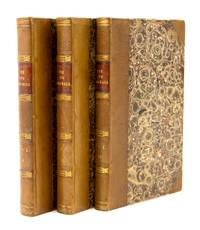
1842ST16673London: Richard Bentley 1842. FIRST EDITION. 195 x 115 mm. 7 3/4 x 4 5/8". Three volumes. <br/> Contemporary half calf over brown marbled boards raised bands with gilt tooling spine panels blind-stamped in a scolloped pattern red morocco label marbled endpapers and edges. Front pastedown with the bookplate of the celebrated book-collector Frances Mary Richardson Currer of Eshton Hall in each volume. Provenance: Dibdin "Reminiscences of a Literary Life" 1836 pp. 949–57; De Ricci "English Collectors of Books and Manuscripts" 1930 pp. 141-43. Extremities a bit rubbed boards lightly chafed occasional minor marginal stains or light patches of foxing but a pleasing copy generally clean and fresh in sturdy original bindings with no significant condition issues.<br/> <br/> This novel of the British navy during the Jacobite Rebellion comes from the library of a woman described by De Ricci as "England’s earliest female bibliophile" and hailed by Dibdin as "the head of all female collectors in Europe." An only child Frances Mary Richardson Currer 1785-1861 inherited considerable assets from both her father's and her mother's families: her relative Dorothy Richardson wrote in 1815 "She is in possession of both the Richardson and Currer estates and inherits all the taste of the former family having collected a very large and valuable library and also possessing a fine collection of prints shells and fossils in addition to what were collected by her great grandfather and great-uncle." Dibdin noted that her library at Eshton Hall was "surpassed only by those of Earl Spencer the duke of Devonshire and the duke of Buckingham." According to DNB "the library had substantial holdings in natural science topography antiquities and history together with a collection of the classics. There were rarities some early printed books a collection of Bibles and a fine gathering of illustrated books. . . . Dibdin first estimated the number of volumes at 15000 and later 18000. In 1852 Sir J. B. Burke put the number at 20000." Although best known for his Leatherstocking Tales set on the early American frontier James Fenimore Cooper 1789-1851 had originally intended a career in the navy and spent several years at sea before an inheritance from his father allowed him to pursue a literary career. Deemed by Day "an excellent naval novel" the text here is a poignant tale of conflicting loyalties and the importance of friendship seen through the eyes of the titular "Two Admirals" lifelong friends supporting opposing political forces in the contest over the Stuart succession to throne of Britain. Richard Bentley unknown
1810338060Baltimore: Publshed by Edwar J. Coale. 1810. First Edition. 12mo. Contemporary mottled American calf leather spine label isncription on title-page lacvking ffep some foxing. First Edition. 12mo. Rare in commerce. Publshed by Edwar J. Coale. unknown
1860267777Boston: John P. Jewett & Co 1860. First edition. Illustrated. 6 vols. 12mo. Originally variously coloured cloths spines gilt a.e.g. Fine. First edition. Illustrated. 6 vols. 12mo. The Almanac for 1854 was the first issued. John P. Jewett & Co unknown
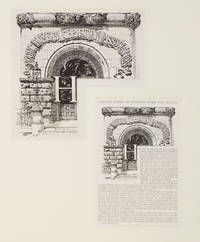
188822743New York 1888. Published in The Century Magazine June 1889 p. 217. 1 vols. Image 8-1/4 x 9 inches; archivally matted with the original page showing the illustration as published. Fine. Fenn Harry. Published in The Century Magazine June 1889 p. 217. 1 vols. Image 8-1/4 x 9 inches; archivally matted with the original page showing the illustration as published. A splendid rendering of the Romanesque facade of the New York YWCA at 7 East 15th Street incorporating the letter H the initial letter of the article "Certain Forms of Woman's Work for Woman". Harry Fenn 1838-1911 was born in England and came to the United States in 1864 where he made a successful career as an engraver painter and illustrator. Among his commissions was one from D. Appleton to travel extensively throughout the country and illustrate Picturesque America. He was one of the founders of the American Water Color Society and was a member of Salmagundi Club and the Society of Illustrators. Reed The Illustrator in America p. 20 unknown
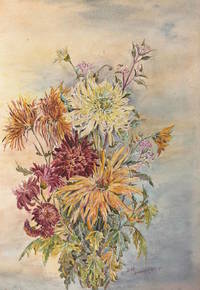
187932820588This magnificent imposing album was made by a prominent late-Victorian hostess patron of the arts and gifted artist.<br />Folio. Approx. 225 pages heavy card. Brown morocco gilt-stamped "H.R.H." metal lock and corner-pieces gilt edges rubbed at joints. Excellent condition.<br /><br />Helen Rose Huth was the wife of the banker Louis Huth. The Huths were major art collectors who displayed their art in the gallery built for the purpose at their home Possingworth. Helen sat for both George Frederic Watts and James Abbott McNeill Whistler who painted the celebrated Arrangement in Black No. 2: Portrait of Mrs Louis Huth. Whister required many sittings and when she complained that Watts never treated her that way Whistler replied "And still you know you come to me!" After Louis Huth's death in 1905 she married Archibald Howe.<br /><br />The album the product of vast labor contains 50 watercolors all but four by Mrs. Huth comprising studies of flowers landscapes and other scenes in Possingworth East Sussex and Scalpay and other Hebridean locations; 70 photographs of buildings landscapes people and paintings; and six pen-and-ink or pencil sketches. Many of the watercolors bear signatures dates and places. The album is filled with elegant calligraphic transcriptions of poems and prose pieces by Victorian writers the Brownings being particular favorites often with pen-and-ink floral borders. A number of the unsigned poems appear to be by Helen Rose Huth herself.<br /><br />The earliest watercolor in the album is dated 1879 and work continued until at least 1905. In that year Louis Huth died. A photograph of his tombstone is displayed opposite a portrait of the banker. A fine seated studio portrait of Helen Rose Huth dated 1895 appears early in the volume. The photographs are often connected to the subjects of the poems they accompany.<br /><br />Provenance: Helen Rose Huth 1837-1924. The Huths' fine country house Possingworth Park completed in 1866 "was a highly ornate neo-Gothic mansion … The house contained 42 bedrooms large oak panelled reception rooms and a conservatory named the Winter Garden. There was also a large picture gallery. Louis Huth was a passionate art collector and his house was designed to display artwork at its best. A large picture gallery on the ground floor was designed specifically to exhibit his most treasured artworks. … Possingworth was also the venue of a secret meeting between Major Generals Montgomery and Eisenhower in 1942. There they laid plans for the cross-channel invasion that was to take place two years later" Holy Cross Priory website. The house is now Holy Cross Priory. <br /> hardcover
1837218424Albany New York: From the Press of Hoffman and White 1837. 34 pp. 1 vols. 8vo. Disbound. Inked stamp on the title Mercantile Library New York. Provenance: presentation inscription from Robert Pruyn to L. Pruyn. 34 pp. 1 vols. 8vo. Printing of a talk delivered by Young a veteran New York state politician on the importance to society at large of educating women and decrying the treatment of women as inferiors throughout history: "Men alone are responsible for this omission. It is they who in every age have arrogated to themselves and have exercised both the moral and political power of the world and also a control more or less exclusive and despotic over all the avails of human industry . females have been subjected to laws and institutions grossly unequal and manifestly unjust and oppressive" p. 13. <br/><br/> From the Press of Hoffman and White unknown
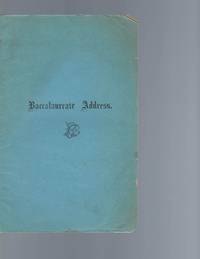
1868162021868. 19 cent Women Education. Henry M. Pierce "Address to the Second Graduating Class of the Rutgers Female College; delivered in The West Presbyterian Church Rev. Dr. Hastings' on Sabbath Evening May 31st 1868. By Henry M. Pierce LL.D. President of the College. New York: Agathynian Press. 1868. Inscribed on inside end page "Compliments of H. M. Pierce President". Blue wrappers. 16 pages. 9 ¼ x 6 in. While Rutgers had a "Female Institute" for higher education since 1839 the school was accredited to award four-year degrees in 1867 and became Rutgers Female College with a location on 5th Avenue in Manhattan. An important piece of history from one of the earliest four-year colleges open to women. unknown
1823160841823. Early Women Education ALS : Autograph Letter Signed by John Howard. Preston. To his daughter Sarah "My Dear Child."Nov. 29 1823. Autograph Letter Signed 3 pages folded from a large sheet with the 4th page showing the original stampless address panel. Usual holes where original wax seal was torn off.<br /> <br /> He writes in his hand in Part: "My dear child I had great pleasure in reading your letter to your Brother-and the more-when I understood that you had not only written it but composed it. I feel persuaded you will try to profit every Day by the kind and good instruction of your Cousin and Tutoress:--you must never esteem anything too difficult which you are set to do. If you were the King's Daughter you would have to learn in patient submission; and how much more ready should you be to do so in your situation in Life! Your dear mother and I have always been glad to see your fondness for reading but you must try always to understand and remember what you read-as it is not the quantity of reading but duly improving it which is the thing to be desired-and that makes it of real worth. Believe me dear Sarah we do not forget you but love you much tho' you are at a distance from us--" A touching and encouraging letter from a progressive parent whose interest in his daughter's education is clearly more than the polite drawing room variety. unknown
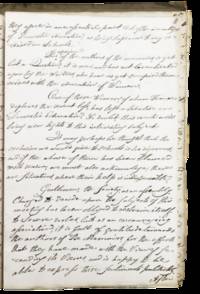
1827152741827. Philis Mr. Report of the Commission Charged to Examine Memoirs Relative to the Education of Women. Third Subject: Morality. 1827. This 1827 manuscript records one of the earliest sustained formal debates advocating systematic education for women across social classes. Structured as a commission evaluation of submitted memoirs the text advances the argument that education should be universally accessible to women "from the daughter of the Prince to that of the most humble of the subjects" asserting that the "elements of Language and Calculations" are "necessary and indispensable to women in all stations." At a time when formal education for girls was limited and higher education for women virtually nonexistent the manuscript situates female instruction not as ornamental refinement but as moral and civic necessity.<br /> <br /> Philis Mr. Report of the Commission Charged to Examine Memoirs Relative to the Education of Women. Third Subject: Morality. 1827. Folio manuscript in paper boards. 68 pages of handwritten script in black ink. The manuscript is organized around three submitted theses: "The Education Best Adapted to Form A Good Mother of A Family Is That Received at Home"; "It is Well Known That The Bad Education Of Women Does More Harm Than That of Men."; and "To Instruct the Children One Must Enlighten the Mothers." While the framing reflects prevailing assumptions that motherhood constituted women's primary social role the author strategically reverses that premise arguing that education is precisely what "nature formed women to be" capable of fulfilling their duties. Written one year after the opening of the first public high schools for girls in New York and Boston and more than a decade before women would begin earning college degrees the manuscript provides early evidence of reformist thought that linked women's education to broader civic improvement. Boards show wear with light soiling and scattered stains; manuscript evenly toned with occasional minor soiling; text clear and complete. Overall condition very good to good. unknown
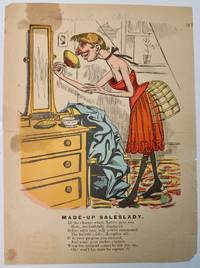
189516961n.p.: ca. 1895 Three leaves two sized 7" x 10" one sized 6 " x 11 ". . Printed in color with caricatures mocking the appearance and character of three working women. With captions in verse. Some creasing and a few small open tears to edges. Two sheets reinforced with document tape on versos. A few stains to "Made-Up Saleslady." Pencil signatures of Clementine Allen to rectos of "Gossiping Wash-Lady" and "Made-Up Saleslady" plus pencil inscription on verso of the former "To Clementine from Lloyd 1895" and date 1895 on verso of the latter. A very good set of these fragile "vinegar valentines." These insulting valentines commonly referred to as vinegar valentines or penny dreadfuls sharing the nickname with Victorian-era dime novels first appeared in the 1840s and maintained a prominent place in pop culture well into the twentieth century. They were produced from the cheapest paper and were designed to be sent anonymously; the inscriptions in the present set however beg the question of whether Clementine sent a vinegar valentine to Lloyd in return. Vinegar valentines were "designed to caricature the shortcomings of the recipient and encapsulate the spirit of the Victorian era…During the 1920s and 1930s they were very popular among schoolboys who were more than happy to give their cranky teacher their grouchy neighbor and bullish schoolgirls. Every trade or profession was represented in terms far from flattering including politicians…Vinegar valentines reflected the spirit of the times between the late 1800s to 1920s with rising taxes wartime and the women's suffrage movement."
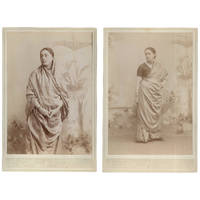
1892307182San Francisco: Abell & Priest 1892. Two fine images of pioneering physician Pauline Root dressed in a sari presumably one she wore in Madurai India while working as a doctor for the American Board of Commissioners for Foreign Missions ABCFM. <br /> <br /> Root 1859–1944 graduated from the Women's Medical College in Philadelphia and was the first female doctor to hold many posts throughout her working life. She spent seven or eight years in India establishing a Woman's Hospital in Madurai. She left India in 1891 and visited China and Japan before returning to the West Coast of the United States giving talks on her work to Christian groups along the way. She gave a lecture to the Occidental Board of Foreign Missions in San Francisco on February 3 1892 and these photographs are likely to have been taken at that time. <br /> <br /> After returning to the East Coast Root studied surgery at Cornell obtained licenses to practice in Massachusetts and New York and took a position as the resident physician at Smith College. In the 1920s she taught "social hygiene" sex-ed for the Bureau of Indian Affairs. <br /> <br /> Nineteenth century photographs of Dr. Root and other female physicians are uncommon. Drexel University has two poor condition cabinet cards of Root in Japan a few months before she arrived in San Francisco. Both images are fine with medium contrast sepia tones. The albumen silver prints measure 3-3/4 by 7-7/16 inches on 4-1/4 by 6-7/16 inch mounts. The photographer's imprint is "Abell & Priest Bancroft Building / 723 Market St. S.F. Cal." Both have blank backs with the notation "Dr. Pauline Root" and "India. Abell & Priest unknown
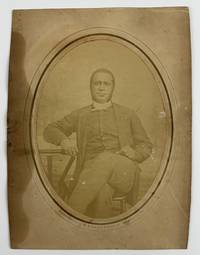
18804292Wilmington De: E. Webb 1880. Good. Oval albumen photograph 7.25 x 5.25 inches at nexus points on a printed studio mount measuring 10 x 7.5 inches. Long stain along left edge not touching the image some edge wear and spotting to mount minor soiling and surface wear to image. Verso tanned. A striking photographic portrait of a dignified African-American man in jacket and collar leaning against a table in a Delaware photographic studio in the latter part of the 19th century. The photographer was Emily Webb 1830-1914 an early Delaware photographer trained by her shutterfly father Benjamin Webb. The printed caption on the present studio mount reads "Photographed by E. Webb 302 Market St. Wilmington Del." Webb opened her Union Gallery studio on Market Street in 1864 and became a legendary local figure who at one time was referred to as "The Most Interesting Woman in Wilmington." She was a prolific photographer who took studio portraits of the local community especially the African-American community but also pets and other wildlife. She even helped found the Wilmington chapter of the SPCA in 1882. Webb's photographs are uncommon in the trade but her portraits of African-American figures even more so. E. Webb unknown
186464004Detroit MI: Corydon C. Randall Photographer 220 Woodward Ave. c. 1864 1881-1882. One mounted albumen cabinet card photo sized 3.9 x 5.9 in. mounted on tan studio board sized 4.25 x 6.5 in. rounded corners printed caption below the image printed photographer’s imprint on verso minor age-toning minor spotting slight soiling to fore-edges old tiny pinhole evidenced at upper blank margin of mounted board not affecting the photograph very upper right w/ slight creasing & cracking of photo now neatly re-affixed still a VG exemplar of this very rare cabinet card image. A very scarce full-length albumen cabinet card portrait of Sojourner Truth 1797-1883 taken when she was 84-83 years old and used as a fund-raiser at her public events at the end of her life. This is one of Truth’s late portraits and she was quite unusual having acquired her copyright to her portrait during the Civil War giving her control over both the distribution of the CDV and Cabinet Card images and the revenues they generated. As one of the best-known African-American former slaves abolitionists and women’s rights advocates of the 19th-Century she traveled the country for decades giving lectures and attending conferences where she would sell her “Shadow†photographs as a primary means of support for her ongoing mission. According to extensive historical research by Darcy Grimaldo Grigsby Truth posed for Detroit photographer Corydon C. Randall’s camera on three occasions between June 1881 and April 1882. The finished albumen photos were prepared in both Carte de Visite 2.25 x 3.5 in. and Cabinet Card 4 x 6 in. formats and sold to Truth at .5¢ apiece. Randall’s studio records show purchases of 50 50 and 100 copies of each of the three separate poses which was “an astonishing order for a woman in her eighties†but considering they were some of the last photographs of Truth the editions size was quite small with the Cabinet cards scarcer than the CDV versions. Grigsby details this standing pose in her book: the photographs “stage her against a pedastal in front of painted seaside backdrop. The effect is unique among her portraits. She stands in what purports to be a natural scene her figure is smaller than the background suggesting a vastness of space we have not seen before. . . Even as we recognize its artiface we indulge in the illusion of space and air and natural light that it so economically suggests. . . In these late seaside portraits there is a soft winsome quality intensified when we realize that she is in her eighties and at the very end of a long arduous life of personal and political struggle.†Worldcat locates 1 copy of seated version CDV Boston Athenaeum; See: Grigsby Enduring Truths 2015 pp. 178-184. [Corydon C.] Randall, Photographer, 220 Woodward Ave., unknown
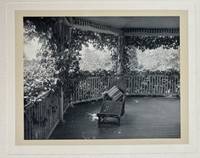
189559263Boston MA: Annie Louise Richards 394 Beacon Street August 1895. Oblong folio. 15 x 12 in. 9 leaves on thick card stock w/ mounted silver print photographs sized 6.5 x 8 in all carefully annotated on verso in manuscript w/ negative numbers identification and Richards’ address. Contemporary three-quarter red morocco over pebbled red cloth gilt borders raised bands on spine chipping wear front hinge split endpapers removed still good exemplar w/ all photos in excellent condition. The album includes a series of images of a stately Queen Anne Victorian summer home in Magnolia Massachusetts featuring a wide well-shaded veranda & wraparound porch climbing vines and plantings growing up the porch pillars well-appointed surrounding gardens beautiful balcony with curved canvas shade as well as an extra cottage nearby. Following the Civil War Magnolia MA grew into a popular summer village for well-to-do Boston families attracting celebrities as well and families often situated their homes with views of Kettle Cove. Annie Richards b. 1853 was the daughter of Calvin Richards 1828-1892 noted Boston merchant and later director of the Metropolitan Street Railroad. He retired in 1887 to become a real estate developer and landlord of the “Richards†office building at No. 114 State St. Annie worked as a photographer and artist as well as served as companion to her mother Ann Babcock Richards 1832-1923. The 1900 & 1910 census records list Annie Richards working on her “own account†out of 394 Beacon St. and although she is listed in several street directories along with her mother we could find no death record for her. Annie Louise Richards, 394 Beacon Street, hardcover