[NINE POSTCARDS OF BEAUTIFUL WOMEN].Biblio.com
659 résultats
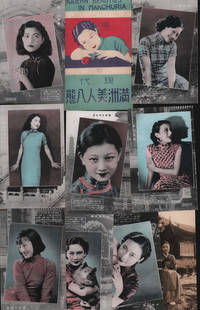
1933217569Japan. Circa Showa 8 1933 . Nine postcards eight in colour and one real photograph black and white postcard which is not part of the set 14 x 9cm envelope size 15.2 x 9.5cm Japanese captions. All cards in very good condition presented in a slightly worn and soiled pictorial colour envelope. This collection of post cards features eight young women in Manchuria and a separate real photograph postcard showing a beautiful Korean woman in traditional dress. Most of the Manchurian women wear qipao the accompanying captions introduce them as "attractive companions". Some of the women are portrayed as seductive while others look shy and innocent. . unknown
1972List2862New York City 1972. 15 ½ x 22 ½ inches. Masking tape at top and bottom; some folding to upper left edge some marginal chipping; fine contrast. Overall excellent. Nanette Dembitz 1913–1989 graduated cum laude from the University of Michigan then attended Columbia Law School where she edited the Columbia Law Review graduating in 1938. She was unable to find work in private practice because of her gender; as her April 1989 obituary in The New York Times reports she was told in an interview “that she might find a spot as a secretary if she could typeâ€. Dembitz instead went into public law and in 1967 was appointed to the Family Court by Mayor John Lindsay. This campaign poster is from Judge Dembitz’s 1972 run for New York State Court of Appeals. Dembitz successfully challenged Democratic appointees in the primary but Republicans swept the general election. unknown
195961384Hollywood CA: United Artists Corporation 1959. Oblong folio. 11 x 14 in. 8 leaves. Colour-lithograph lobby cards on thick paper stock some dustsoiling thumbing to fore-edges minor bumping to couple corners still a VG set. First edition of this complete set of movie theatre lobby cards for this 1959 Film Noir Las Vegas heist movie featuring the sultry Mamie Van Doren as the femme fatale gangster’s mole juxtaposed with the resentment and violence between Gerald Mohr and Lee Van Cleef over Van Doren’s affections. No copies in Worldcat. United Artists Corporation, unknown
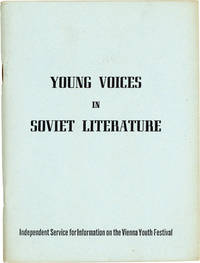
195943493Cambridge: Independent Service for Information on the Vienna Youth Festival 1959. First Edition. 12mo 15cm.; publisher's blue printed staplebound card wrappers; 84pp. Wrappers a bit toned else Very Good or better. Having struggled to find work in New York City 25-year-old Gloria Steinem moved to Cambridge in 1959 to assume the position of co-director of the anti-Communist program the Independent Service for Information on the Vienna Youth Festival. The Service masquerading as a private enterprise whose aim was to send democracy- and capitalism-loving American youth to the communist-run Festival was funded by an anonymous donor later revealed to be the CIA though Steinem would have been aware of this from the start. The present pamphlet was issued a month before the Festival began and provides a detailed critique of the quality of Soviet literature: "The trouble with Soviet literature as Ilya Ehrenburg sees it is that Soviet writers say things they do not believe" p. 5. Independent Service for Information on the Vienna Youth Festival unknown
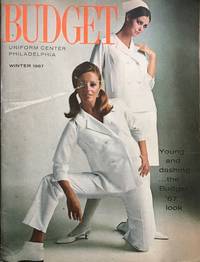
196758002Philadelphia: Budget Uniform Center 1613 Chestnut Street Winter 1967. 4to. 54 2 pp. With 100’s of photo illustrations many in colour. Colour-illustrated softcovers scuffing front & back cover minor shelfwear rubbing still VG copy from library of Phyllis M. Compton w/ mailing label on back cover. First edition of this 1960’s marketed to the “miss who likes to be ‘with it’ while maintaining a professional look.†Budget Uniform Center nursing and medical uniforms emphasized their drip-dry Dacron and Cotton Bengaline blends or the Drip-Dry Dacron and Nylon stretch jersey fabrics featuring “top designer’s†shift shape dresses swinging skirts demi-fit skimmer shapes and more all presented as the new sleek slim high-fashion uniforms. Candy Striper and other auxiliary uniforms and smocks were available while also offering for sale Kay’s No-Starch Caps shadowproof slips and graceful Naturalizer sole shoes. No copies in Worldcat. Budget Uniform Center, 1613 Chestnut Street, paperback
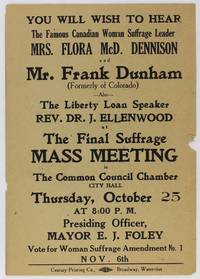
19173183Watervliet NY: Century Printing Co 1917. Very good. Broadside 8.5 x 6 inches. Evenly toned a couple of shallow edge chips. A rare surviving flyer advertising a series of speeches at "The Final Mass Meeting" of the New York State Woman Suffrage Party before voting takes place for "Woman Suffrage Amendment No. 1" in 1917. The speakers include Mrs. Flora McDonald Dennison billed as "The Famous Canadian Woman Suffrage Leader" Frank Durham "Formerly of Colorado" and "The Liberty Loan Speaker Rev. Dr. J. Ellenwood." The meeting was presided over by E.J. Foley mayor of the New York town of Watervliet located near Troy and Albany. Flora Dennison was the leader of the Canadian Woman Suffrage Association; she spent two years on a lecture tour for the New York State Woman Suffrage Association as evidenced here. The speakers encourage people to vote for the woman's suffrage amendment which did indeed pass on the November 6 1917 ballot in New York. The vote was close with supporters outnumbering detractors 703129 to 600776. Passage of New York Women's Suffrage Amendment 1 predated ratification of the 19th Amendment by almost three years. OCLC records just five physical copies with another held in the noted suffrage collection of Ann Lewis. Century Printing Co unknown
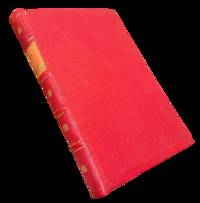
19597947New York: Henry Holt and Company 1959. 8vo 172pp. Photos illustrations. Signed with a generic inscription by Spring on the first blank page. Bound in red morocco with gilt lettering and design on spine and orange spine label. Samuel Weiser ticket at front front and inner flaps of jacket bound in as single leaf at rear. Some scuffing to endpapers else clean internally. <br /> <br /> An important mid-century Yoga manual written by a woman and student of Blanche DeVries to whom the book is dedicated Clara Spring 1899-1989. This is one of a few titles from the decade written by women which sold well and helped advance the emerging Eastern philosophy-adopting counterculture. Other pioneers of the era included Indra Devi Elisabeth Haich and Swami Sivananda Radha. Spring's inscription reads:<br /> <br /> <br /> "May Yoga always be your best friend as it has been mine!"<br /> <br /> Signed copies are scarce. . Henry Holt and Company unknown
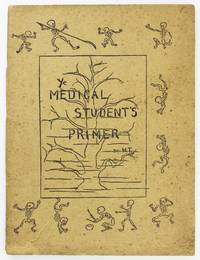
19016405Philadelphia 1901. Very good. 52pp. Quarto. Original tan printed wrappers stitched as issued. Closed tear and slight loss in lower front corner repaired with tape on verso. Light wear toned minor soiling. A charming small-press publication comprised of humorous poetry and drawings by Martha Tracy during her tenure as a medical student at the Women's Medical College of Pennsylvania. Each set of lines is preceded by a title page such as "Ye Serene Skeleton" which is then accompanied by a line drawing: "Ye skeleton seems happy quite / Hung by his head morn noon and night -- / Though students come and students go / He still swings gently to and fro". Other stanzas are dedicated to Ye Booklover Ye Distasteful Drugs about a female medical student testing drugs by tasting them Ye Frightful Germ etc. Martha Tracy 1875-1942 graduated from Bryn Mawr in 1898 and thence from medical school in 1904. After post-graduate work at Cornell she became a professor of chemistry at WMCP in 1907 then served as dean from 1917 until her death in 1942. The present work was edited by her classmate Ellen Culver Potter 1871-1958 who graduated in 1903; Potter went on to become a prominent physician and public health official. A wonderfully charming production and quite rare likely due to a very limited production run. We locate three copies in OCLC. unknown
1944235151944. Women's Royal Naval Service photograph album documenting life at HMS Royal Arthur the Royal Navy's training camp establishment at Skegness where a prewar holiday camp was transformed into a military training and accommodation center during the Second World War. Named individuals throughout with handwritten identifications the album follows Dorothy Gardner and other Wrens serving in the expanding wartime navy while also capturing the theatrical entertainment routines featuring cross dressed men and ceremonial duties that shaped daily life away from the front lines. Beyond its images of uniformed women the album records a military community of offices dining halls stages chalets and training facilities that supported Britain's wartime naval operations at a camp which was bombed by German aircraft on February 21st 1942.<br /> <br /> Photo album of approximately 73 silver gelatin photographs various sizes ranging from 1.5" x 1.5" to 8.5" x 6.5" chiefly HMS Royal Arthur Camp Skegness Lincoln and other British locations c. 1944. Large group portraits are captioned "H.M.S. Royal Arthur July 1944" showing rows of Wrens in naval caps and dark uniforms. Several photos show soldiers by artillery navy men on small military boats and canons. Multiple group photos show men and women in Navy uniform. The photographs place women within the essential but often overlooked machinery of wartime naval administration including supply clerical work communications camp management transport and food service. Captions identify Peggy Marjorie Dorothy Margaret Joan Harry Blake Farnsworth Bernard Cavanagh Dennis Leo Dugay May of Glasgow Geoffrey Roy Bluemel Mrs. Thomason of Leigh Pat Taylor Nancy and Cynthia of HMS Ariel. Additional off camp photographs show bicycle outings skating scenes shipboard snapshots barracks and chalet interiors social gatherings and a guard of honour at Lincoln near the cathedral. Particularly notable is the album's extensive documentation of entertainment and morale-building activities. Several photographs are captioned "Up Spirits" and "concerts at H.M.S. Royal Arthur" revealing an active performance culture within the camp. Sailors appear in theatrical productions alongside women in costume while musicians perform with accordions and pianos before assembled audiences. One series features actor Charles Redgrave "with the girls" and another photograph captures the wartime tradition of gender-crossing stage entertainment in which male servicemen performed in women's clothing for camp audiences. These scenes provide an unusually vivid record of military leisure performance and social life within a wartime naval community.<br /> <br /> HMS Royal Arthur was bombed by German aircraft on 21 February 1942 The album therefore records daily life at a site that was both a military workplace and a target of wartime attack. By 1944 the Women's Royal Naval Service had expanded dramatically from its earlier First World War role with women serving in hundreds of naval occupations while remaining largely excluded from combat at sea. The photographs capture that transformation through named individuals workplace groups ceremonial events friendships and recreational activities illustrating how women became integral to the operation of Britain's wartime navy. The album documents the social world created when thousands of servicewomen and servicemen lived and worked together inside one of Britain's largest naval shore establishments. Sailors Wrens airmen Canadians civilians performers and local acquaintances appear throughout its pages creating a rich portrait of wartime relationships and community formation. Album shows handling wear page wear and a few removed photographs; handwritten captions remain extensive and legible throughout. Overall in good condition. An unusually dense and highly personal record of women's naval service wartime labor military entertainment gender performance and everyday life at HMS Royal Arthur during the Second World War. unknown
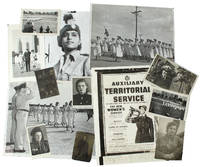
1940184471940. Women Military Archive of 17 silver gelatin photographs 1930s-1950s documents women's military service across multiple national contexts during the period surrounding the Second World War. As global mobilization required women to fill combat-support anti-aircraft and logistical roles these images record the transformation of gendered labor within armed forces. The archive supports research into wartime propaganda recruitment strategies colonial and postcolonial military participation and racial diversity within women's units.<br /> <br /> Archive of 17 photographs ranging from 2.25 x 3.25 inches to 8 x 10 inches. Includes press photographs real photo postcard and image of recruitment propaganda poster for the British Auxiliary Territorial Service reading "The New Women's Service. To relieve men of non-combatant duties during a national emergency." One larger portrait shows an Indian female soldier identified en verso as "Best cadet in National Cadet Corps of India." Another press photograph depicts an array of Air Force soldiers in parade rest including a woman of African American descent. Additional image shows male soldiers saluting a marching women's Air Force unit; original newsprint retained with one photograph.<br /> <br /> Produced during an era when over half a million women served in auxiliary and combat-support roles worldwide the archive reflects how military necessity reshaped public representations of female authority and competence. Light sunning to some photographs; surfaces clean and legible; annotations preserved. Overall very good condition. A cross-national photographic record of women's expanded military participation during mid-twentieth-century global conflict. unknown
1999Q-0310977355Zondervan 1999-02-01. Hardcover. New. In shrink wrap. Looks like an interesting title! Zondervan hardcover
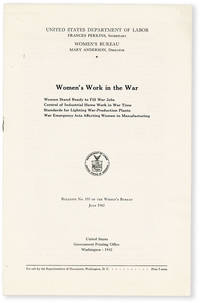
194250712Washington DC: United States Government Printing Office 1942. First Edition. Slim octavo 23cm; original printed wrappers stapled; 10pp. Mild wear and handling else Near Fine. Pamphlet issued as "Bulletin No.193" of the Women's Bureau U.S. Department of Labor highlighting the contributions of nearly 1.5 million newly-registered women in unemployment offices around the country. United States Government Printing Office unknown
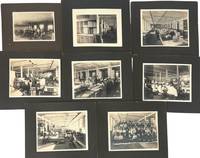
1918234351918. Women's industrial labor in an American textile finishing mill photographed likely between 1918 to 1922 documenting the inspection folding hemming and stamping of finished blankets and sheeting in the years around the First World War. The work shown belonged overwhelmingly to women who by 1920 made up about a fifth of the American labor force and were concentrated in exactly this kind of semiskilled textile work. The wartime labor shortage had pulled women deeper into industrial production and these images catch that expanded workforce on the floor before the 1919 recession and returning soldiers pushed women's share of factory labor back down. The conical galvanized fire buckets stenciled "Fire" mounted on posts in several frames date the images and tie them to the workplace fire safety reckoning that followed the 1911 Triangle Shirtwaist fire in which 146 workers most of them young women died.<br /> Photo archive of eight silver gelatin photographs approximately 6.5 x 8 inches mounted to card stock each measuring 12 x 10 inches with one smaller image American textile mill circa 1918 to 1922. Seven photographs show the mill interior: long finishing floors lined with cast iron columns and overhead pipe runs electric pendant lamps and tables stacked with uniform folded and rolled white goods tied with string. Women predominate at every station. They sit at inspection benches turning over folded cloth stand at long tables rolling and bundling sheeting and run a row of treadle and electric sewing machines hemming finished pieces with thread spools and machine heads sharp in the foreground. One worker operates a rack of hand stamps the date and numbering stamps used to mark finished goods before shipment. A few older men in vests dark suits and detachable collars stand among them as foremen and supervisors. One frame shows the shipping area with finished goods crated in wooden boxes stenciled for transport. The classroom image stands apart from the mill series: teenage students seated at ornate cast iron school desks a wall clock and a chalkboard covered in arithmetic. The eighth and largest subject is a full staff group portrait of roughly eighty workers overwhelmingly women posed on the production floor against stacked bundles of finished cloth with a length of white sheeting unrolled across the floor at their feet.<br /> The years these images were made were among the most volatile in American labor history. In 1919 more workers went on strike than in any year before some four million people twenty-two percent of the workforce and in June 1920 Congress created the Women's Bureau within the Department of Labor by Public Law 66-259 the first permanent federal agency charged with the welfare of wage-earning women which began studying the eight-hour day for women in 1921. The textile finishing trade these women worked in had been built on female labor since the start of the industrial revolution and the staff portrait records the scale and the gender composition of one such workforce directly. These photographs showing women's industrial work the fire buckets the stamping rack the sewing line the crated shipment ties the archive to specific developments in labor safety and women's employment law. Overall in very good condition with the mounts showing minor edge wear and some en verso pencil markings. unknown
1974ZB393093NY: Women Studies Abstracts 1974-1998. Volumes 3-26 1974-1998 partly bound library markings textually clean & tight price is for the lot. - If you are reading this this item is actually physically in our stock and ready for shipment once ordered. We are not bookjackers. Buyer is responsible for any additional duties taxes or fees required by recipient's country. Photos available upon request. NY: Women Studies Abstracts unknown
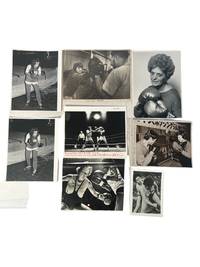
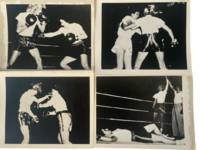
1970201881970. Women's boxing photograph archive 1974 to 1983 documents women as fighters trainers judges and sanctioned competitors during a period when boxing remained one of the most heavily gendered professional sports. The archive provides primary visual evidence of women's participation in combative athletics before women's boxing received Olympic recognition as a medal sport in 2012 and it records several forms of ring authority: women entering the ring as athletes women training male and female boxers and Eva Shain appearing as a pioneering judge. Shain became the first woman to judge a world heavyweight championship bout when she scored the 1977 Muhammad Ali and Earnie Shavers fight at Madison Square Garden placing one image in this group within the broader history of women claiming official authority in professional boxing.<br /> <br /> The archive consists of eight black-and-white silver gelatin photographs of women boxers and women in combat-sport settings circa 1970s to 1980s measuring from approximately 5 x 7 inches to 8 x 10 inches. One press photograph shows a co-ed boxing match between Sheila McGuire and Buddy DiBenedetto in a ring with a referee watching closely behind them. Another press photograph shows Eva Shain at age seventy-one wearing boxing gloves presenting her public identity through the equipment of the sport she judged. A 1983 photograph shows boxing coach Butch Fohndan training a young woman at Palmer Boxing Club in Alaska. A 1974 photograph from Japan shows Masako Takatsuki training a young male boxer; the attached press information identifies Takatsuki as a twenty-seven-year-old cosmetician and the only female boxing trainer-manager then licensed by the Japan Boxing Commission to spar and act as a second. Another action photograph shows an outdoor wrestling match between Gisa Pipa and Aggi Tillman with Tillman holding Pipa from behind. Two photographs show an unidentified woman near a boxing ring in a crouched stance with a direct combative expression suggesting training or promotional posing. The final 1975 photograph shows Sharon Allbery charging toward Zinda Foster at Seattle Center Arena in what contemporary women's boxing history sources identify as the first sanctioned female prizefight in Seattle Washington and the Pacific Northwest.<br /> <br /> The photographs are significant because they show women's boxing as a developing practice rather than a single symbolic breakthrough: fighters in sanctioned and mixed bouts a female judge associated with a heavyweight title fight a Japanese woman trainer-manager local gym instruction and women using combat poses to claim athletic presence. Their strongest research value lies in the way they document the infrastructure around women's boxing including referees licenses gyms press captions arenas and training relationships alongside images of women's physical force. Light handling wear and minor edge wear; press details present on several images; photographs remain crisp with clear ring gym and figure detail; overall very good. Concentrated women's sports photography archive documenting the contested expansion of women's boxing and combat-sport authority in the 1970s and early 1980s. unknown
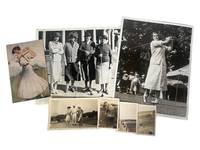
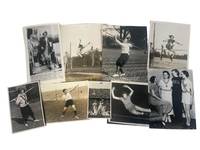
1910200811910. Women's competitive golf archive 1910s to 1930s documents women golfers in practice tournament and club settings during the formative decades of organized women's golf in the United States. The group provides visual evidence of women's athletic participation in a sport long associated with country-club respectability social access and gendered expectations about dress leisure and competition. The U.S. Women's Amateur Championship began in 1895 as one of the USGA's first three championships and the USGA identifies it as marking the beginning of women's competitive golf in the United States; these photographs and postcard show how that competitive culture appeared in everyday and press imagery in the decades that followed. <br /> <br /> The archive consists of seven items dated between the 1910s and 1930s: six silver gelatin photographs and one brightly illustrated postcard measuring from approximately 1.75 x 2.75 inches to 7.25 x 9 inches. The photographs include a 1934 press image of golfer Barbara Stoddard in a swing position; a 1935 lineup from the Annual Women's St. Valentine Golf Tournament identifying Helen Waring Sarah Fownes Wadsworth Myrom W. Marr and W.C. Fownes Jr.; three small circa 1928 photographs of women positioned with clubs on a golf range; and an early 1930s image of two women posed with a man at a country club the women holding several clubs with one woman wearing trousers. The illustrated postcard from the early twentieth century shows a woman swinging a club in an athletic outfit still shaped by long-skirted fashion rather than later sportswear. Across the group recurring details include golf clubs held as markers of athletic identity posed swings tournament lineup conventions country-club settings and changing women's clothing from long skirts to less restrictive dress.<br /> <br /> The archive records women's golf as both competitive sport and social performance making visible the relationship between athletic skill class-coded club culture and evolving public ideas about women's physical capability. Its strongest research value lies in the mix of press photographs vernacular practice images tournament documentation and illustrated popular culture allowing comparison between women as actual competitors and women as stylized sporting subjects. Light handling wear minor edge wear and typical surface wear to photographs and postcard; images remain clear and identifiable; overall very good. Cohesive women's sports archive documenting early twentieth-century women golfers as competitors club participants and subjects of changing athletic representation. unknown
1910201861910. Women's participation in boxing long preceded formal recognition of the sport for female athletes developing through informal exhibitions training clubs and novelty bouts that challenged prevailing gender norms. Although women were largely excluded from organized boxing competitions during the nineteenth and early twentieth centuries scattered photographic evidence demonstrates that women continued to box recreationally and publicly despite social restrictions. This archive of photographs dating from the early twentieth century through the mid twentieth century documents women participating in boxing across a range of informal settings illustrating the gradual emergence of female athletic culture in a sport historically defined as masculine.<br /> <br /> Archive of sixteen black and white photographs including six silver gelatin prints and one real photo postcard measuring approximately 2.5 x 3.5 inches to 3.5 x 5.25 inches dating from the 1910s through the 1950s. The earliest image a real photo postcard dated August 1914 depicts two women wearing corsets and long dresses while sparring with boxing gloves before a mixed group of spectators. The postcard bears a pencil inscription on the verso reading "August 1914 For fun women boxers Francis Edith." Another early photograph shows two women posing with gloved fists raised before a snowy background with the inscription "Grace Miss Vandehei boxing This is Grace's roommate. A fine girl she's here now." Later photographs from the 1920s depict staged boxing encounters between a man and a woman with the female boxer dressed in athletic trousers and high heeled shoes reflecting the novelty and spectacle often associated with early female boxing exhibitions. One image shows the pair squared off with raised fists while another captures the moment of a punch landing against the man's chest. Another photograph shows two women sparring on a ship deck while surrounded by onlookers one boxer wearing a dress and curlers beneath her head covering while raising her gloved fists before a mixed audience of men and women.<br /> <br /> Boxing has historically generated controversy due to its physical intensity and female participation in the sport remained marginal for decades. Women occasionally boxed publicly as early as the eighteenth century yet organized opportunities remained rare. Women's boxing appeared briefly as a demonstration sport at the 1904 Olympic Games in St. Louis and training clubs such as Andrew Newton's Women's Boxing Club in London emerged during the 1920s. Nevertheless women's boxing did not become an official Olympic sport until the 2012 Olympic Games. The photographs in this archive illustrate the persistence of women athletes who trained and competed informally despite these restrictions offering visual evidence of women's athletic experimentation and resilience during a period of shifting gender expectations in sport. Sixteen photographs including silver gelatin prints and a real photo postcard measuring approximately 2.5 x 3.5 inches to 3.5 x 5.25 inches. Photographs clear and well preserved with light handling wear. Overall condition very good. unknown
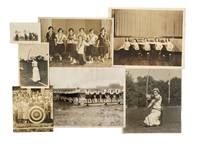
1910219051910. Archive of original photographs documenting women's participation in athletics and organized physical culture during the early twentieth century when women's sports and exercise programs increasingly became accepted within schools colleges camps and recreational organizations. The photographs show women engaged in archery synchronized gymnastics calisthenics and cheer leading during a period when female athletic participation expanded alongside broader debates concerning women's health education public visibility and social independence. The photographs provide visual evidence of the physical culture movement as it shaped women's recreational and educational environments in the United States and abroad preserving both formal athletic training and communal performance activities that contributed to changing expectations surrounding women's physical activity and public presence.<br /> Collection consists of seven original silver gelatin photographs dating approximately from the 1910s through the 1930s. The archive includes several photographs of women participating in organized physical education exercises and athletic activities while dressed in period sporting attire. One image dated July 5 1928 documents uniformed women performing synchronized gymnastic drills during a Sokol Festival dress rehearsal in Prague capturing rows of participants in coordinated motion during a major international physical culture gathering influenced by Central European nationalist and athletic traditions. Another photograph from the 1910s-1920s shows a group of young women posed with medicine balls Indian clubs and batons while wearing sailor-inspired gymnasium uniforms associated with school or collegiate athletic programs. A separate 1930s image depicts a cheerleading squad in matching lettered "S" sweaters posed in formation within a school auditorium. Archery appears prominently throughout the archive. One press photograph portrays Olympic diver and sportswoman Helen Meany Balfe standing with a bow on the grounds of White Sulphur Springs West Virginia as identified by a typed caption on the verso. Another image depicts Stella M. Ives identified in manuscript drawing a bow while dressed in full sporting attire. A vernacular photograph portrays four young women practicing archery in the hills above Troy New York including one identified as Louise Hatch of Troy with a handwritten verso inscription linking the group to Bridgewater Massachusetts. The final photograph shows a large assembly of young women gathered on outdoor steps beside a prominent archery target possibly at a camp or collegiate event emphasizing organized recreation and group participation.<br /> The archive documents the increasing visibility of women's athletic participation during the early twentieth century when organized exercise and sports became associated with women's education health reform and public modernity. Physical culture programs in schools colleges camps and civic organizations promoted athletics as both disciplined recreation and social training while sports such as archery and gymnastics offered women expanded opportunities for public competition and physical expression. Particularly notable is the range of activities represented from regimented calisthenic performance to recreational archery and cheerleading illustrating the broad spectrum of athletic environments available to women before the widespread professionalization of women's sports. Light wear and occasional handling marks consistent with age; photographs remain well-preserved overall in very good condition. A visually engaging archive documenting the growth of women's athletics and physical culture in the early twentieth century. unknown
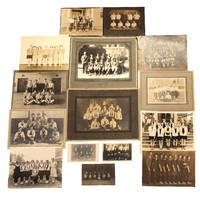
1918185121918. Women's basketball photograph archive 1918-1929 documents the early institutionalization of women's competitive athletics in the United States recording team organization uniform development and player identification in the decades following the sport's introduction to women's education. Basketball adapted for women in the 1890s under the direction of physical educator Senda Berenson at Smith College expanded into intercollegiate and regional competition by the early twentieth century despite ongoing debate over women's participation in organized sport. These images provide direct visual evidence of that expansion with named players and structured teams indicating the normalization of women's basketball within school and community settings during the interwar period.<br /> <br /> Archive of 15 silver gelatin photographs ranging in size from approximately 3.5 x 5.5 inches to 11 x 13 inches dating between 1918 and 1929. All images are formal team portraits with groups of six to twelve players in some cases accompanied by coaches. Many photographs include handwritten identifications on versos naming players or teams. Several compositions feature a central player holding a basketball marked with team initials and year. The photographs document changes in athletic dress including high top sneakers short skirts sailor style tops and later variations incorporating shorts reflecting evolving standards of movement and athletic practicality. Produced during a period when women's athletics expanded within educational institutions while remaining subject to cultural scrutiny the archive provides material for the study of gender norms physical education and the development of organized sport prior to formal Olympic inclusion of women's basketball in 1976. The progression of uniforms and team structures across the decade offers evidence of shifting expectations regarding women's physical activity and public visibility in competitive environments. Light edge wear and minor foxing to some prints; images remain sharp and fully legible. Overall very good condition. unknown
19992083002116411160Iwanamishoten 1999. Soft Cover. Fine. The book is in fine condition. Iwanamishoten paperback
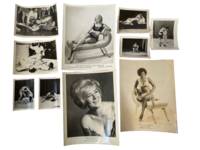
1940206421940. Women's Sports Women's wrestling photograph archive documenting amateur competitions gymnasium training and professional wrestling performers between the 1940s and the 1970s. The images record women participating in a sport historically dominated by men illustrating the gradual emergence of female wrestling as both an amateur athletic activity and a professional entertainment circuit during the mid twentieth century.<br /> <br /> Archive of ten photographs including nine black and white silver gelatin prints and one sepia toned image measuring approximately 3.5 x 4.5 inches to 8 x 10 inches. Several early photographs from the 1940s depict women grappling in an indoor ring during staged matches. Later images show girls wrestling during a gymnasium class setting while classmates watch from the sidelines. Three studio photographs from the 1970s portray professional wrestlers associated with promoter Mary Lillian Ellison known professionally as The Fabulous Moolah.<br /> <br /> Portraits include full length promotional photographs of Joyce Grable of Ozark Alabama Lilly Thomas of Memphis Tennessee and a headshot of Paulla Kaye of Oklahoma City Oklahoma. These performers were active on the professional wrestling circuit during a period when women's wrestling was gaining visibility in regional promotions across the United States. Female wrestling remained controversial throughout much of the twentieth century facing both cultural criticism and sensationalized marketing. Light wear consistent with age. Very good condition. A visual record of women participating in amateur and professional wrestling across several decades of American sports culture. unknown
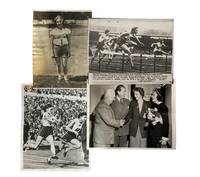
1925218901925. Women in Sports Archive of four photographs documenting women's track and field achievements from 1925 to 1956 highlighting pioneering female athletes in Olympic and exhibition competition. Includes NEA and United Press photo service stamps and typed caption slips on versos. The images span the 1920s to post-WWII era and depict notable moments in women's sports history from athletes representing Australia the Netherlands and beyond. They capture critical milestones in the visibility and legitimization of women in professional athletics especially in Olympic contexts where female participation was still relatively novel and contested.<br /> <br /> Included is a striking 1956 action shot of Australia's Shirley Strickland clearing the final hurdle en route to her gold medal victory in the 80-meter hurdles at the Melbourne Olympics where she set a new Olympic record of 10.7 seconds. The image is identified via an INP Radio Soundphoto caption. A 1952 United Press photo from Helsinki captures the dramatic baton drop in the women's 4x100 relay by Australia's Marjorie Jackson who had earlier taken gold in the 100-meter sprint; the caption dramatically underscores how the error "killed Australia's chances." A third image shows Dutch Olympic legend Fanny Blankers-Koen-winner of four gold medals at the 1948 London Games-greeted with tulips and accolades at New York's Idlewild Airport in May 1955. The accompanying caption notes her role as both a mother and athletic icon foregrounding the persistent framing of female athletes through maternal identity. Lastly a ca. 1925 press photo shows an unnamed track competitor on the field with the reverse stamped August 11 1925 suggesting the early presence of women in organized publicly documented competition during a decade when such participation was still controversial. All images well-preserved with clear annotations on three captioned photos. Overall very good condition. This archive offers an illuminating view into women's evolving presence on the global athletic stage highlighting moments of both triumph and adversity in a narrative of gender progress within competitive sports. unknown
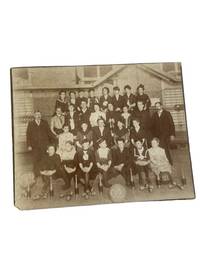
1902182601902. Original Albumen photograph of women in physical education class. 1902. Measures 9.75 x 8 inches. Mounted to photographer's board. Image shows 26 women and girls seated in tiers and posing with various early exercise equipment including dumbbells and large leather balls marked with the year. One man poses wiwth the women in suit and tie and two older men presumably instructors pose alongside the girls one of them extending a hand to touch the shoulder of the girl beside him who looks away. The women's eyes are turned from the camera expressions fixed and unsearchable. They appear to be in a school gymnasium a ladder hung like a track on the wall behind them and racks of free weights beneath it. Women's exercise was first introduced as calisthenics a European import in the 1830s which consisted of light choreographed movements not unlike dance steps. By the late 1800s exercise had been closely linked to women's educational reform. Educational activist Catherine Beecher advocated broadly for physical education as a safeguard for female health and for forming good physical habits in the young. Corner very slightly clipped on one side. Light sunning to image. Overall good condition. unknown
1921185131921. Unidentified photographers photograph archive of women's track and field athletes 1921 to 1949 documenting the expansion of women's participation in international athletics and Olympic competition during the early twentieth century. The material provides primary visual evidence of women competing in events historically excluded from female participation supporting research into gender and sport Olympic history and the institutional acceptance of women's athletic achievement across multiple nations.<br /> <br /> Archive of nine silver gelatin photographs many issued as press images with original article clippings or captions mounted on the verso while others include handwritten identifications of athletes. The photographs depict women actively engaged in track and field events including javelin throwing high jumping and discus. One press photograph shows Fanny Blankers-Koen arriving by airplane captioned as an Olympic champion and mother following her victories at the 1948 Summer Olympics where she won four gold medals. Another image issued as a photographic postcard captures Gisela Mauermayer mid-discussion throw during the 1936 Berlin Olympics with a full stadium and officials visible in the background. Additional photographs include three javelin throwers identified on the verso three high jumpers captured in motion clearing the bar and one press image depicting a coach with members of a women's Olympic track team in uniform accompanied by descriptive captions outlining their roles and achievements. The images emphasize athletic motion competition settings and formal presentation through press distribution.<br /> <br /> Nine photographs ranging in size from approximately 3.75 x 5.5 inches to 8 x 10 inches. These images emerge from a period in which women's track and field gained increasing international recognition following initial exclusion from Olympic competition with early twentieth-century advocacy and independent competitions contributing to eventual inclusion. The presence of Olympic medalists alongside lesser-known competitors situates the archive within a broader landscape of athletic participation and achievement. Minor edge wear and occasional surface markings including ink notation on one image; otherwise photographs remain clear and well-preserved; overall very good condition. A focused visual record of women's athletic advancement and Olympic participation in the early twentieth century. unknown
198030487Francestown: R.T. Risk 1980. First Printing one of 50 copies only. This copy Signed by the Author. 8vo publisher's original blue wraps the upper cover with label printed in blue. 12 pp. A very fine copy as pristine. FIRST EDITION AND ONE OF 50 COPIES ONLY. THIS COPY SIGNED BY THE AUTHOR. The book contains two of the author's poems "A Woman Striding" and "To A Traveler". R.T. Risk paperback