51 résultats
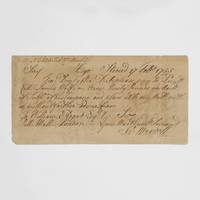
178277889N.p. April 2 1782. Old horizontal and vertical crease where folded; very attractive. . 4-3/8 x 6-1/2 inches. Capt. Bissell served in the Continental Army for six years; participated in three battles and several skirmishes; was wounded three times; and held as a prisoner for nearly two years. unknown
17181019044 page lettersheet 9 3/4x 8 1 1/2 pages of text with docketing and commentary by several officials on the 4th page. Some soiling and aging to the last page a little toning; otherwise very good or better. The letter from Woods attempts to resolve what must have been a common problem in the Union Army during the Civil War which was the red tape involved in battle field promotions. Woods 'was mustered into the Service of the United Sates as an enlisted man. on the 29th day of July 1861 at Washington City D.C. by Lieut. Jno. Elwood. On the 14 day of Decbr. I was promoted to the 2nd Lieutenancy in said Co. vice Lieutenant Donaldson died May 15th 1862 but did not receive my Commission as such until 5th day pf March 1863 since which time I have actually performing the duty of 2nd Lieut. in said company and as such I have been on the muster and pay rolls for March and April. I would respectfully ask the Order mustering me out as an enlisted man being 2nd Serge. of said Company when I received my commission and ordering my muster in as 2nd Lieut. to date from March 5 1863. I have made efforts to be mustered but without success. " Perhaps even more interesting are the comments by several officials on the forth page trying to cut through the 'red tape'.
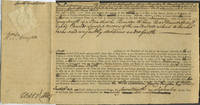
178113905JN.p: 1 page oblong 8vo January 19 1781. Autograph Document Signed of Abraham Hite Assistant Paymaster of the 8th Virginia Regiment. "I do certify that Lieut. Joseph Swearingen of the 8th Virga. Regt. was not included in the Pay Rolls of said Regt. for the Six Months Pay allowed by the Assembly of Virginia he being absent from the Regt. at the time said pay was drawn.". The amount owed Lt. Swearingen was "160 Dolls. 1 page, oblong 8vo unknown
179721360London: War Office 1797. 1st edition. Very Good. octavo. original boards xv 342pp. 16 fldg. pls. In orig. binding worn paper-backed boards & spine-label. Internally excellent. Scarce early cavalry manual War Office hardcover
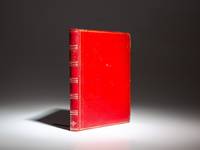
179617385London: T. Burton and Co 1796. First Edition. Leather bound. Very good. First edition of A Narrative of the Proceedings of His Majesty's Fleet Under the Command of Earl Howe published in 1796. The first major sea battle of the Revolutionary War. Quarto 8 118pp. Full red crushed levant thin gilt trim. Spine professionally rebacked five raised bands title in gilt. Green silk endpapers all edges gilt. Previous ownership bookplates to front endpapers. Errata on verso of title page. Solid text block worn corners foxing to edges of leaves a very good example. Complete with a detailed frontispiece portrait of King George III tipped-in frontispiece portrait of Earl Howe and two large fold-out plates of battle plans bound in at rear. Binding by L. Staggemeire and Welcher of London. NMM Catalogue V 1798. Richard The First Earl Howe 1726-1799 was a Royal Navy officer who served Great Britain in the Seven Years' War the American Revolutionary War and the French Revolutionary War. This work describes Howe's success in commanding the British Fleet during the "Glorious First of June" naval battles in 1794 with the British defeat of the French fleet of Villaret de Joyeuse in the North Atlantic. The first British naval victory of the Revolutionary War. T. Burton and Co unknown
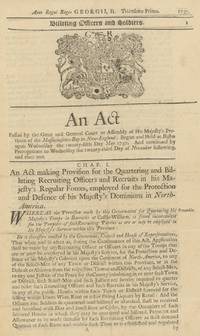
1757List1527Boston: S. Kneeland 1757. Broadside double sided 13 x 8 inches. Slight creasing small holes from being previously bound near fine overall. Near Fine. A broadside printed by S. Kneeland in 1758 concerning the billeting of soldiers and officers during the French and Indian War. Title continues: Billeting Officers and Soldiers. An Act. Passed by the Great General Court or Assembly of His Majesty’s Province of Massachusetts-Bay in New England: Begun and Held at Boston upon Wednesday the twenty-fifth Day May 1757. An Act making Provision for Quartering and Billeting Recruiting Officers and Recruits in his Majesty’s Regular Forces employed for the Protection and Defence of his Majesty’s Dominions in North-America.†The law required town officials to quarter and billet recruiting officers and recruits. Disputes over the funding of the war would help lay the groundwork for the American Revolution. We find no physical copies in OCLC. Cushing Mass. Laws 628. S. Kneeland unknown
175535632London: Scots Magazine 1755. First Edition. Leather bound. Defective. Octavo. 12 monthly issues bound in one volume. 648 pages 16 pages partial index. No illustrations in this volume. Brown calf leather binding with red leather title labels on the spine. Defective. Missing all the preliminary pages. Missing index pages and rear end papers after the name "Stuart". Leather covers are rubbed and edge worn. Outer joints and inner hinges are cracked. Covers are loose but attached. Title page has light damp stains and a small scuff. Pages 159 160 have an edge tear resulting in minor loss of print. The first page is present in the January issue. Defective.<br /> <br /> A sampling of subjects covered in this volume include East India Company Mutiny Bill; Sir Isaac Newton on the ancient year; Affairs in Spain Barbary and France; An Account of Mr. Johnson's English Dictionary; Improvements of the musket and of church-music; 'Pensylvania' German Protestants; Importance of British Plantations; Gov. Dinwiddies Speech to the assembly of Virginia; Gov. Dobb's message to the assembly of N. Carolina; Affairs in the United Provinces and the Plantations; General Braddock's defeat with the lists; Further accounts of the fatal action in America; Affairs in France and the Plantations; Different accounts of General Braddock's defeat; An Examination of the Edinburgh Review; A New History of 'Pensylvania'; Of the French 'incroachments' in America; Gov. Glen's interview with the Cherokee Indians; Speeches of Indian Chiefs and several more articles. Contents also include European history public affairs parliament acts births deaths marriages poetry book reviews and more. Interior contents are mostly in good condition. Volume published during the French Indian War era in America. Scots Magazine unknown
1772269008Venice: Heredis Nicolai Pezzana 1772. First. hardcover. very good. Volumes I & II out of four. Title page vignettes Volume I title in red & black; minor worming & foxing; llibrary mark eradicated from the bottom of each title page. Folio contemporary limp vellum; stained. Venetiis: Heredis Nicolai Pezzana 1772.<br/> <br/> First edition of Guerra's edition of the Luxemburg Bullarium one of the most famous editions of papal bulls.<br/> <br/> Heredis Nicolai, Pezzana unknown
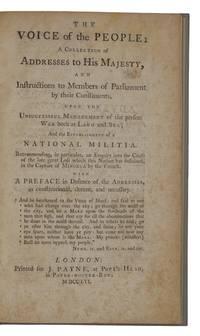
1756AQ26625London: Printed for J. Payne 1756. 2 xiii 1 56pp. Modern buff paper boards contrasting red morocco lettering-piece to spine. Title page browned. An anthology of letters addressed to the heads of state from numerous county officials occasioned by the conquest of the British controlled Mediterranean island of Minorca by French forces in 1756. The naval battle was the opening maritime engagement of the Seven Years' War in the European theatre. The failure of the Royal Navy to defend the territory led to the court-martial and execution of commanding officer Admiral John Byng. The defeat led to nationwide consternation that the French would press their advantage to capture British possessions in America and perhaps countenance an invasion of England. ESTC T50978. First edition. 8vo. Printed for J. Payne hardcover
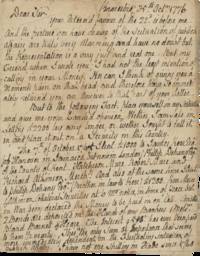
1776List3149Knaresborough England 1776. Single three page letter measuring 6 ¼ x 7 ¾ inches. Normal wear; Near Fine. A letter from Nathaniel Sharpe in Knaresborough to Edmund Green a merchant in London addressed to Green at the Jamaica Coffee House. This café the first of its kind in London was established in the mid-17th century; in 17th and 18th century Britain coffee houses were popular meeting places particularly for conducting business. Sharpe writes to Green:<br /> <br /> “Your Esteem’d favour of the 22d is before me and the picture you have drawn of the situation of publick affairs are truly very alarming and have no doubt but the Representation is a very just and real one. . But to the following Fact place yourself in my situation and give me your Candid opinion Wether I am safe in letting £2200 lay any longer or whether I ought to call it in and place it out on a Security in this Country.â€<br /> <br /> He describes his investments and states that:<br /> <br /> “I have not one shilling in Trade since 1760 and in Decemr. 1762 Retir’d to this place and found myself in possession of a Happiness that I could ill brook to part with. And which I would wish to preserve. Should this sum be in no danger I can live as usual.â€<br /> <br /> The American Revolutionary War had a significant impact on the British economy; at the time Sharpe was writing although the conflict had been ongoing for some time the war itself was in its early days and uncertainty was high.<br /> <br /> Other than asking for financial advice Sharpe tells Green that Green’s “Brother Tommy had . taken a Cup of Liquor rather too freely and had been drawn into Cards†alarming their mother who had requested that Sharpe inform Green about the event; asks Green to visit her; and sends his good wishes to a mutual friend. unknown
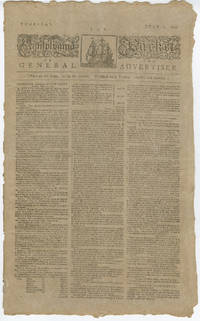
177921556.07Philadelphia PA 1779. No binding. Fine. Pennsylvania Packet or General Advertiser. Newspaper. Pennsylvania Packet or General Advertiser. John Dunlap Philadelphia Pa. July 1 1779. 4 pp. 10 1/2 x 17 untrimmed. Page 1-2 leads with extracts from the Journals of Congress regarding Indian Affairs and New Hampshire land disputes. Extensive content on the Revolutionary War medical department including a lengthy serialized ""Doctor Morgan's Vindication"" regarding the Continental Congress's dismissal of Dr. John Morgan who had great success managing military hospitals for Washington's Army without cause or explanation. Here he obtains testimony from General Nathanael Greene and even Washington himself to defend his reputation.Page 3 reports war news from Pennsylvania as well as a June 29 1779 act of the Continental Congress borrowing $20 million to maintain fiscal solvency.Page 4 includes advertisements for runaway slaves book auctions and stolen horses.Excerpt ""IN CONGRESS June 29 1779.AS Congress are bound by every motive of policy and of public & private justice to maintain the credit of the paper money emitted by their authority on the faith of the United States; so it is their intention not only to avoid further emissions but to diminish the quantity in circulation provided that the respective States by correspondent and vigorous exertions shall put it in their power to raise the necessary supplies.Resolved therefore That twenty millions of Dollars or such a part thereof as shall be brought into the Continental Loan-Offices on or before the first day of October next be borrowed on the faith of the United States at an interest of six per cent. per annum.For facilitating the said Loan Resolved1. That the Loan-Officers in every state do immediately open subscriptions for the said Loan. 2. That the executive authorities of the several states be requested immediately to appoint persons of character and influence in every county town or district to receive subscriptions and transmit the same to the Loan-Officer or Officers in the states respectively. 3. That no subscription be received for less then five hundred dollars. 4. That all subscriptions under ten thousand dollars shall be paid into the Loan-Office where the same shall be subscribed or into the Hands of the person obtaining the subscription within fourteen days after the subscription shall be made. 5. That any person subscribing ten thousand dollars or upwards shall be allowed to pay the same at two periods to wit one half within fourteen days after the subscription the residue on or before the first day of October next; the whole to bear interest from the time of the first payment provided the other payment shall be punctually made. 6. That each lender shall have his election either to receive the principal at the expiration of three years from the date of the Loan or to continue it in the funds on interest until the whole amount of Continental bills in circulation shall not exceed the sum in circulation at the time of the Loan. 7. That interest on all sums which shall be paid into the Loan-Office before the said first day of October or which shall be subscribed and paid agreeably to the terms of the 5th resolution aforesaid shall be payable annually at the Continental Loan-Office of the State in which the money was originally subscribed. 8. That when the interest on Monies which have been or may be placed in the several Loan-Offices on or after the first day of March 1778 shall become due and be paid the same until some more accurate standard of value can be devised shall be increased in proportion to the increase of the sum of Continental paper money which may be in circulation after the date of such Loans respectively.Extract from the MinutesCHARLES THOMSON Sec'ry."" unknown
176136901London: Chez D. Wilson T. Beckett & P. A. DeHondt 1761. First English edition. Pp. 2 60. Wanting half-title. 1 vols. 4to. Calf-backed marbled boards spine lettered in gilt. Some rubbing stitchmarks some light discoloration. Ink notation concerning first edition on title else very good. Provenance: John Carter Brown armorial bookplate with deaccessioned stamp on the bookplate and ink stamp on verso of title. First English edition. Pp. 2 60. Wanting half-title. 1 vols. 4to. Choiseul's narrative and commentary with the state diplomatic correspondence and papers relating to the treaty of 1762 dealing primarily with the areas of the cession of Canada the fisheries of Newfoundland Cape Breton and the West Indies and the limitation of Louisiana. Sometimes attributed to Jean François de Bastide. The London edition is considerably more scarce than the French first edition published the same year. Goldsmith's Kress 9718; Sabin 47516; Howes M-507 Chez D. Wilson, T. Beckett & P. A. DeHondt unknown
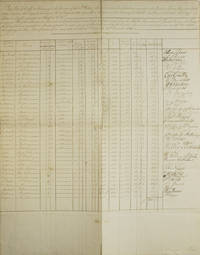
1783303187Minorca 1783. Two single sheets. Folio. Very good copies a little toned old folds. Two single sheets. Folio. The first is titled: "No. 26 Pay List for additional Subsistence etc to the officers in st. Philips Castle from 25 Dec. 1781 to 23 Feb. 1782." The second has written on the verso: " No. 136 Pay List to make up Subs. to Brevet Officer etc equal to the Rank where in they respectively serve in The Garrison of Fort St. Philips during the Siege Decemb. 24 1781 - Dollars 4350-50." These two officer pay lists are signed by each of the 36 and 44 listed officers. They're a wonderful souvenir of the siege and with a sample of every officer's signature a valuable source for further research. <br /> <br /> The five month Siege of Minorca August 19 1781 - February 5 1782 was a vital victory over England in the European theatre of the Revolutionary War. Throughout most of the eighteenth century English possession of the island was of real strategic importance from its deep-water harbor the Royal Navy could launch attacks against the Mediterranean fleets of Spain France and Italy. unknown
1739606731739. Relates to Events in the Americas Anglo-Spanish War. Cotejo de la Conducta de S.M. Con la de el Rey Britanico Assi en la Acaecido Antes de la Convencion de 14. de Enero de Este Anno de 1739 Como en lo Obrado Despues Hasta la Publicacion de Represalias y Declaracion de Guerra: Con Licencia en Madrid. His Catholick Majesty's Conduct Compared With That of His Britannick Majesty As Well With Regard To What Happened Before the Convention of the 14th of January of This Year 1739 As to What Has Been Done Since Untill the Publication of Reprisals and Declaration of War: Printed by Authority at Madrid by Antonio Marin. London: Printed for T. Cooper 1739. 63 pp. Spanish text with English translation on facing leaves. Octavo 8" x 5". Later quarter morocco over textured paper boards gilt title to spine. Some rubbing to joints corners lightly bumped hinges just starting at ends. Discoloration to free endpapers light toning to text somewhat heavier in a few places. Early owner signature Eyre to head of title page interior otherwise clean. $1250. Only edition. A legalistic analysis of Spanish claims advanced during the Anglo-Spanish War 1739-1748. Also known as the War of Jenkins' Ear after the conflict's flashpoint it related to Great Britain's exclusive right granted by the Treaty of Utrecht at the end of the War of the Spanish Succession 1713 to ply the slave trade and sell other goods in Spain's American colonies. This war was eventually subsumed into the War of the Austrian Succession 1742-1748. The signature in this copy may be that of Sir James Eyre 1734-1799 the notable judge later chief justice of the Court of Common Pleas. Sabin A Dictionary of Books Relating to America 17026. unknown
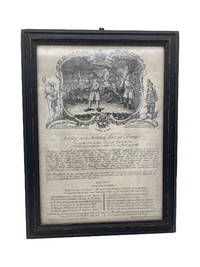
1756004150<p>Worcester: S. Gamidge and W. Pendrill 1756. Single sided engraved broadside approximately 265mm x 380mm engraving 335 x 450 Frame. Lightly soiled surface abrasion towards head on the left hand side but not affecting image several small worm holes but again not affecting image or text. Vignette to head showing Penderel holding a billhook in the foreground with the king on a horse in disguise to the background. Penderel's epitaph is recorded towards the bottom of the engraving with an added note that George II had ordered that his monument be 'cleaned up & beautified in the year 1739'. Engraved broadside celebrating the life of Richard Penderel Richard Pendrill of Hobball Grange Shropshire who with his four brothers saved the life of Charles II after the battle of Worcester hiding him from Cromwell's soldiers. After the Restoration both he and his brothers were rewarded with a pension and he was known as 'Trusty Dick' at Court. He died in 1671 while visiting London and his surviving brothers were later granted exemption from prosecutions for recusancy after the 'Popish Plot'. The publishers were S.amuel Gamidge fl. 1756-1777 see BBTI and W. Pendrill presumably a descendant unlocated in BBTI. Not in ESTC. First Edition. Framed and Glazed. Good. Elephant Folio. Broadside.</p> S. Gamidge and W. Pendrill hardcover
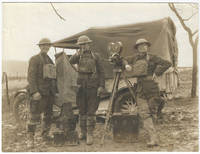
1719100887France Belgium & Luxembourg 1917-1919. 129 vintage silver prints comprising 1 panorama 5-3/4 x 21 inches 27 larger format prints 6 x 8 & 8 x 10 inches and 103 smaller format prints various sizes generally 2-1/2 x 4-1/4 & 3-3/4 x 4-3/4 inches many prints docketed on the verso by Fineberg a few with alphanumeric code that corresponds to the Catalogue of Official A.E.F. Photographs 1919. Occasional creasing and wear small chip from corner of panorama generally in very good condition Archive of photographs from the Western Front of World War I by the American photographer Sergeant First Class Morris Fineberg 79th Division Photographic Unit of the American Expeditionary Forces Signal Corps. These are Fineberg's own retained copies many with his docketing and captioning on the rear. Images include a three-panel panorama Looking towards Woevre Plain between St. Michel & Verdun aerial reconnaissance images captured German munitions battlefields with casualties Fineberg with other members of his Photographic Unit Harry Rathburn and Henry Paschen.Fineberg ca. 1892-1949 was killed while on assignment for the Boston Post. He was photographing a US Marines and Navy mock invasion drill at Carson Beach in South Boston when shrapnel from an exploded mortar hit him in the head. His final words: That ought to make a good picture. The Boston Press Photographers Association presents an annual Moe Fineberg Award for first place in the feature still photography category. unknown
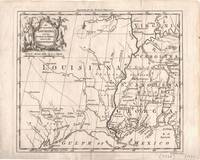
17603697A great small map of a good portion of the now southeastern United States reaching to the Gulf coast at the south and Texas to the west. The area to the east of the Mississippi is marked "Territory in Dispute." The colonies of Virginia North and South Carolina and Georgia all extend to the Mississippi. <br /><br />English claims to the disputed area are bolstered by a notation along the border between the Carolinas noting: "A large country subject to the English since 1729." Numerous Indian tribes are noted as well as "Wandering Indians" at the western portion of the Gulf coast. <br /><br />Maps from <i>The British Magazine</i> are cited by Jolly as "practically unobtainable." A fascinating portrayal of the area that was the subject of the French and Indian War in a very uncommon source. <br /><br />Reference: Jolly Maps of America in Periodicals before 1800: 157. Not in Cumming; <i>The Southeast in Early Maps</i>. ICN 7568. From The British Magazine, February, 1760 issue.
1772178R58Printed by W. Strahan Jun. for T. Becket and Co. and T. Cadell in the Strand T. Davies in Russel Street and T. Evans in King Street London: . 1772 pp. 8 540 2 22 56 57 65 32 33 A handsome bust portrait engraved by Basire after Cipriani. Portrait offset on to the unusual title page. Some old foxing. Large 4to. 295 mm. x 240 mm. Modern plain full leather binding. Hardbound. Very good. WITH AMERICAN CIVIL WAR ERA 1863 MANUSCRIPT NOTES AND ANNOTATIONS. Edited by the great 'Republican' Thomas Hollis with additions and corrections by Joseph Robertson this edition includes: Memoirs of the Life of Algernon Sydney; Discourses Concerning Government; Letters of Algernon Sydney taken from Thurloe's State Papers; The Protector's Advice to Algernon Sydney; Letters of Algernon Sydney taken from the Sydney papers; Letters of A. Sydney to Henry Savile Ambassador in France; The Trial of A. Sydney; The Apology of A. Sydney in the Day of his Death; and A General view of Government in Europe. This is an important book in the history of the ideas that founded the American republic but what is perhaps most interesting about this copy are the manuscript notes and annotations written in a careful small hand in America during the Civil War 1863. A few of these struck our eye and we're glad to reproduce a few selections here: "I have lately undertaking to read Algernon Sydney on government. There is great difference in reading a book at four and twenty and at eighty eight. As often as I have read it and fumbled it over it now excites fresh admiration that this work has excited so little interest in the literary world. As splendid an edition of it as the art of printing can produce as well as for the intrinsic merits of the work as for the proof it brings of the bitter sufferings of the advocates of liberty from that time to this and to show the slow progress of moral philosophical political illumination in the world ought to now be published in America" - John Adams to Thomas Jefferson 17 September 1823. ".the danger in America. arises from 1 the indifference of the people to the character of their deputies; 2 the disinclination of good men to go as deputies; 3 and the inclination of bad men to go as such. The rottenness of our law making bodies has reached such a point that if it shall not soon be cured it can not longer endure." - 1863. "Among the causes which have brought the USA to their present unhappy condition may be reckoned as a leading one the predominance in their councils of mere municipal lawyers. The low morals and the crass ignorance of these are not equal to the work of government filched by them from a blindly confiding people. A profession proverbially selfish and dishonest can not produce statesmen however fecund it may be of politicians. The conduct of government is the work of statesmen - of unselfish honest high-hearted great-minded men = that class has disappeared and has given way to small country lawyers whose minds exercise only upon petty squabbles of the neighborhood incapable of grasping the vast concerns of a nation. Bad as this is there is something worse. and that is that the profession of the law is every year sinking lower in ignorance and in contempt while at the same time it is rising in power." - 1863. These manuscript annotations make this copy UNIQUE and very worthy of further study. W150. PRICE JUST REDUCED! Language: eng. Hardcover. Very Good. Printed by W. Strahan Jun. for T. Becket and Co. and T. Cadell in the Strand, T. Davies in Russel Street, and T. Evans in King S hardcover
1776105881776. Ephemera. Very good condition. A Revolutionary War period writ issued in Charleston South Carolina signed by William Henry Drayton. A large sum of money is demanded of William Bath pilot of Charleston by James Smyth. Bath is not present in Charleston and somehow the writ is transferred to Sarah Johnson who it is inferred is in possession of Bath's property including a Negro girl named Lucey. The sheriff Thomas Gimbell executes the writ on Sarah Johnson. <br /> <br /> The writ is executed at a transition time for the American colonies from the Colonial to the Revolutionary War period. The form was issued on September 17 1776 just 2 months after the Declaration of Independence. As such all the pre-printed areas that refer to the "Province" South Carolina are crossed out and "State" is inserted. "Year of our Reign is also crossed through. The money demanded is in pounds. Included in the writ is reference to a "negro named Lucey with one Sarah Jones in Union Street" with a long statement by Thomas Gimball Sheriff of Charles Town signed. The writ was served Oct. 17 1776 and filed Jan 10th 1777. The witness is the Hble. William Henry Drayton Chief Justice at Charleston. <br /> <br /> It is not completely clear which William Drayton has signed the writ. It is most likely that of William Henry Drayton Sept. 1742-September 3 1779. He was the son of John Drayton and Charlotta Bull daughter of the colony's Governor William Bull. He was educated in England at Westminster School and Oxford before returning home in 1764. He served as a delegate for South Carolina to the Continental Congress in 1778 and 1779. He died of typhus in Philadelphia while in office. His signature "Wm Hy Drayton" is on the left side of the writ partially obscured by the duty stamp. <br /> <br /> However his cousin was William Drayton Sr. 1732-1790. Also born in Ashley River South Carolina he was the son of Thomas Drayton III & Elizabeth. Drayton was educated in the Middle Temple in London England in 1754. He read law to enter the South Carolina Bar in 1756 and was thereafter a Justice of the peace for Berkeley County South Carolina until 1763. From 1763 to 1780 he was Chief justice for the Province of East Florida. In 1789 he was a judge of the South Carolina Admiralty Court and an associate judge of the South Carolina Supreme Court appointed by George Washington. <br /> <br /> William Bath is included on the Grand Jury List for the "District of George Town" Parish of Prince George in 1778 & 1780. There is a marriage record for a William Bath to Elizabeth Baker widow on 2 Nov 1771. South Carolina Magazine of Ancestral Research Vol 10 #3. Sarah Jones is possibly the widow of Thomas Jones Sr whose will was probated in 1773. In the 1790 census she is listed as the head of the household with 2 boys under 16 and 2 women and no slaves. In 1800 just the mother and daughter comprise the household. In 1806 & 1809 she is listed as a seamstress in two different Charleston directories Negrin's directory and Almanac for the year 1806 and Directory for the District of Charleston 1809 by Richard Hrabowski. There are a series of James Smith's spelled Smyth in the writ. James Smyth is listed in Charleston in 1758; in 1780 he is on the Petit Jury List for the "District of Charles Town Johns Island Colleton County"; in the 1790 Federal Census he is in the parish of St. Phillips and St. Michaels in Charleston with no slaves. <br /> <br /> Alas there is no further reference to "Lucey". <br /> <br /> The heading is trimmed off the top and it appears that this area referred to the King and was hence trimmed off. Written carefully below is "The State of South Carolina to all Singular the Sheriffs of the State aforesaid Greeting. Laid paper 13 x 6 3/4" printed on one side with manuscript additions docketed manuscript notations on the verso. Uniformly tanned. unknown
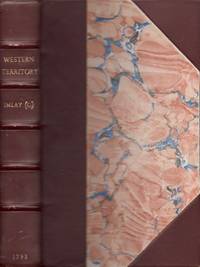
179332480London: Printed for J. Debrett 1793. The Second Edition with Considerable Additions. Three-quarter leather. Good. Octavo. 1 xvi 433 pages 1 page blank 19 page index 1 page errata 2 pages advertisements 1. Recased binding with three-quarter brown leather and marbled paper covered boards. Gilt title and five raised bands on the spine. Newer front and rear end papers and one front blank end sheet inserted. The original rear end sheet is present. The folding frontispiece map is toned on the verso with an old repair made also on the verso. Some light edge wear to the map. The folding view of the Rapids of the Ohio and the State Map of Kentucky are in very good condition with light toning. <br /> <br /> Pages 417-433 includes a "Report of the Secretary of State to the President of the United States of the Quantity and Situation of the Lands not Claimed by the Indians Nor Granted to Nor Claimed by Any Citizens Within the Territory of the United States. Read in the House of Representatives Nov. 10 1791" by Thomas Jefferson. <br /> <br /> Howes I 12; Howes Reference Filson - F 129; Sabin 34355; Streeter III 1523; Clark II 41 "An early account of the western country.which was produced by a man who left Kentucky without settling his obligations who seems to have been involved in efforts to organize a French expedition to take the lower Mississippi Valley and who treated Mary Wollstonecraft Shamelessly. This book was written in the form of letters from Kentucky to a friend in England. In all probability they were written in Europe. Printed for J. Debrett unknown
178579297Council=Chamber January 19 1785. handsomely matted. Very fine condition. Approx. 3-1/2 x 5-1/2 inches . The printed date 1784 was altered in ms. to 1785. unknown
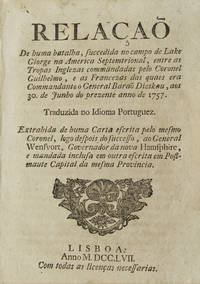
1757303318Lisboa: Domingos Rodrigues 1757. First edition. Woodcut vignette to title-page. 7 blank pp. Small 4to. A very good copy some very faint dampstaining. First edition. Woodcut vignette to title-page. 7 blank pp. Small 4to. A Portuguese translation of General William Johnson's "Letter to the Governours of the Several Colonies who raised Troops on the Present Expedition" signed in the text "Wilhelmo Gonson." <br /> <br /> Not long after the commencement of the Seven Years' War Johnson was appointed British agent to the Iroquois. On 28 August 1755 he renamed Lac Saint Sacrement Lake George in honor of the British monarch and proceeded north as part of a four-pronged attack on the French specifically to capture the French-held Fort St. Frédéric at Crown Point. <br /> <br /> "It was not the greatest battle of the French and Indian War but it came when a victory was needed and the results were momentous. It retrieved both the glory and morale so badly depleted when Braddock fell at the forks of the Ohio the previous July. It blunted a French drive which menaced Albany and the northern frontier set up a new English outpost in that area and the capture of a distinguished French general Dieskau was triumph for the victors and humiliation for the enemy" Hamilton.<br /> <br /> The publication of this letter was of course a remarkable source of propaganda for the English and boosted Johnson's career signficantly. The letter was reprinted in London an engraved plan of the battle was produced as well as portrait. This Lisbon printing is however very rare and little known. It's not in COPAC there wasn't a copy in the Streeter Sale. In fact the last copy on the market we can find was in 1928. Not in Church; Sabin 38661; Maggs "Biblioteca Americana" IV 2998; Milton W. Hamilton "Battle Report: Genreal William Johnson's Letter to the Governors Lake George September 9-10 1755" in Proceedings of the American Antiquarian Society April 1964 pp 19-36 [Domingos Rodrigues] unknown
1784elala979Paris: Ponce & Godefroy c1784. 1784. 4to. 16 engraved plates incl. title. contemporary bds. rebacked in calf. First Edition. An attractive series of sixteen plates and maps of the American Revolution engraved by Nicolas Ponce and François Godefroy after designs by Fauvel Marillier Le Paon and other notable French artists of the period. Recorded here are some of the major events of the War and of the larger global conflict between Great Britain and France including the tarring and feathering of John Malcom at Boston the battle of Lexington the capitulation of Burgoyne at Saratoga the capture of Dominica Senegal Grenada Pensacola and Tobago the surrender of Cornwallis at Yorktown the battle of St. Eustache the siege of Fort S.Philippe and the attack on Brimstomhill. There is also a general map of the United States and a composite map of the Gulf of Mexico Barbary Minorca and Tobago. Below each view forming part of the engraved surface is brief explanatory text by Niquet. The engraved title contains a précis of the War surmounted by five inset views of military and naval engagements while the final plate decorated with four similar insets gives a précis of the Treaty of Versailles in 1783 and a list of the principal officers killed or wounded in the war. Howes describes this as the first French book with a title-page mentioning the United States. Another issue of the book is also recorded with additional title-page Collection d'estampes. and with several of the plates unnumbered. Cohen-De Ricci 862. Howes C-576. Sabin 68421. Winsor VI p. 185. cfJCB II 2997. 1st Edition. Paris: Ponce & Godefroy, [c1784]. unknown
1755374677Stroud 1755. Other endorsements on verso. Other endorsements on verso. A very rare French and Indian War signature. Wolfe fell famously in battle on the Plains of Abraham during the siege of Quebec in 1759. unknown
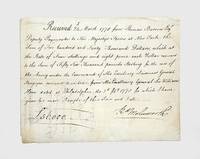
1778155748Rhode Island: 24 March 1778. Sustaining Burgoyne's Wandering Army Revealing a crucial moment in the aftermath of Saratoga this 1778 receipt documents the transfer of £56000 from New York to support General Burgoyne's imprisoned Convention Army in Boston. The receipt was signed at a delicate point for the British Army. In the summer of 1777 General William Howe succeeded in taking Philadelphia but in October a separate force under John Burgoyne was forced to surrender to Horatio Gates following the two battles of Saratoga in the autumn of 1777. Subsequently the Convention Army named for the treaty of surrender was marched to Boston where they were held prisoner. Burgoyne was permitted to leave for England in April 1778 but his army remained in captivity until the end of the war. This immense sum of £56000 perhaps equivalent to £9500000 today was sent to Burgoyne to feed his starving army. The Battles of Saratoga represented the turning point of the Revolutionary War winning the assistance from France "which was the last element needed for victory" Morgan pp. 82-3. The receipt was signed by Richard Molesworth 1737-1799 a longstanding deputy paymaster in the War Office. Molesworth is briefly mentioned in a letter to Howe on 10 April 1778 where the need for money to support General Burgoyne and his army in Boston is discussed. Richard was the brother of the Robert 5th Viscount Molesworth who inherited the title from his cousin Richard Nassau Molesworth 4th Viscount Molesworth who died without heirs. This document was previously folded and kept in an envelope mounted on the front pastedown of a book from the Molesworth family library a first edition of the English translation of Souligné's The Desolation of France Demonstrated. It was gifted by Souligné to Robert Molesworth 1st viscount Molesworth 1656-1725. Molesworth has inscribed the front blank: "Donum Authoris" Gift from the Author and his note on the title-page reads: "Mons. De Souligny sic Grandson to the famous Du Plessis Mornay". The 1st Viscount Molesworth was an experienced political figure and a prominent member of the Privy Council of Ireland who later held a seat for Dublin County in the Irish House of Commons. The book has a later ownership inscription of Samuel Crompton 1753-1827 on the preliminary blank. Crompton was a pioneer of the spinning industry and was married to Harriet Molesworth the daughter of John Edward Nassau Molesworth. John was the great-grandson of Robert Molesworth 1st Viscount Molesworth. A 20th-century bookplate of another viscount Molesworth is pasted over the white envelope which held the subsistence receipt on the front pastedown. Also present is a manuscript bankers' draft dated 1796 signed by the 5th Viscount Molesworth requesting a payment to his son-in-law John Forster Hill. Single leaf 147 x 187 mm hand-written on both sides in black ink; the book: octavo 186 x 117 mm; also with manuscript bankers' draft dated 1796 and signed by Robert 5th Viscount Molesworth. The book: contemporary black crushed morocco raised bands spine gilt in compartments covers ornamentally gilt marbled endpapers. Ink annotations possibly in Crompton's hand. Rubbed minor loss at spine ends a few marks to covers binding open to the cords after free endpapers but sound occasional minor staining. ESTC R8752; Goldsmiths' 3380. 3380. Edmund Sears Morgan The Birth of the Republic 1763-89 1956; Report on the American Manuscripts in the Royal Institution of Great Britain volume 9 No. 180. hardcover