580 résultats
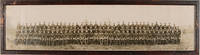
191846479n. p.: Newark Photo Co 1918. Photograph housed in an early varnished brown wood frame. Rear exterior paper backing absent. Varnish being to chip off from frame. Oblong photo: 7-5/8" x 43-1/8" <br/><br/>Camp Hancock active 1917 - 1919 was a U.S. Army World War I National Guard Mobilization and Training Camp established near Augusta Richmond County Georgia. The facility was named Camp Hancock in G.O. 95 18 Jul 1917 after Major General Winfield Scott Hancock U.S. Civil War and Mexican War General. The first commander of the camp was Major General Charles M. Clement who formed the 28th U.S. Infantry Division from Pennsylvania National Guard units. The 28th entered Federal service 5 Aug 1917 and began departing for France on 21 Apr 1918. The 28th distinguished itself in combat fighting sometimes hand to hand. The 28th suffered heavy casualties including 2531 killed 13746 wounded and 726 captured. The 28th returned to the U.S. and was demobilized on 17 May 1919 at Camp Dix New Jersey. At the end of the war the camp became a demobilization center until it was abandoned 27 Mar 1919 and turned over to a caretaker detachment. Nothing remains today. fortwiki A rare visual relic documenting this WWI mobilization effort. Newark Photo Co unknown books
194575299Germany: Second Armored Division. Very Good. 1945. Original Vintage Map. 29 x 42 inch original vintage map produced by the U.S. Military titled "Hell on Wheels War Against the Axis 1942-1943-1944-1945" detailing the route and battles of the 2nd Armored Division as they worked their way from France through Belgium and into Germany in World War II. This is the larger version of a map which was issued the previous year. The map shows general handling wear and some edge chipping. There is a small mostly closed tear in the lower left quadrant. Included with the map is the original heavy mailing tube which shows it was sent by a Private Anderson APO New York to his family in Quinnimont Fayette County West Virginia. The map appears to be scarce in the trade with only 1 original currently listed for sale online vialibri. An example is listed and shown at David Rumsey's map website. We are offering this vintage World War II map with its original mailing tube. OCLC offers this note: "Shows route of 2nd Armored Division from Littry France to Gutergluck Germany with historical notes for selected locations. Includes brief history of the 2nd Armored Division. Marginal information includes place names military insignia and names of military divisions. Passed for press duplication by A.E.F. Field Press Censor." . Second Armored Division unknown books
191843834New York: American Lithographic Co 1918. 1st Printing Borkan p. 181; Rawls p. 159. Only minor wear. Colors vibrant. Nr Fine. Single sheet broadside printed in orange brown & black on white paper. Image shows a doughboy with books in hand standing over a seated sailor who is reading a book. 30" x 20" <br/><br/> American Lithographic Co unknown books

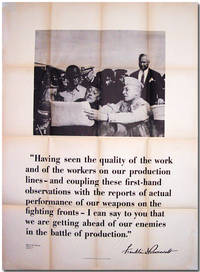
1942WRCLIT70812Washington DC: US Government Printing Office / Office of War Information Poster No. 13 1942. Folio photolithographed broadside 40 x 28"; 102 x 72 cm. Folded as issued. Very slight tanning at the folds on the blank verso but a very near fine bright unused example. A powerful WWII homefront poster promoting the achievement of war production. The poster incorporates a photograph of President Franklin D. Roosevelt in an automobile at an inspection site looking at a performance report with military officers. The text below the image states in part: "Having seen the quality of the work and of the workers . and coupling these first-hand observations with the reports of actual performance of our weapons on the fighting fronts -- I can say. that we are getting ahead of our enemies in the battle of production. Franklin D Roosevelt " printed signature in script. US Government Printing Office / Office of War Information Poster No. 13 unknown books
1934WRCLIT84785Np: Reprinted from The Journal of American Folk- lore XLVII:186 1934. 369-376pp. Large octavo. Printed self-wrappers. Very good or better. An author's offprint of this article supplementing Carey's substantial two volume study of the roots and variations of the song. Reprinted from The Journal of American Folk- lore XLVII:186 unknown books
1917WRCAM54342Washington D.C.: Schutz Group 1917. Silver gelatin panoramic photograph 8 x 46 inches. Short closed tear to right margin just into the image minor surface wear. Very good. A fascinating image capturing the 12th Regiment Field Artillery's camp in Virginia while training for service in World War I. The 12th served across France in 1918 including Aisne Lorraine St. Mihiel Ile de France Aisne-Marne and Meuse-Argonne winning not one but two French Croix de guerre for their valiantry in the latter two battles. The Schutz Group photographed a great deal of World War I including numerous panoramic views of Europe and homefront subjects during the war. The Library of Congress holds over eighty examples of Schutz Group panoramas though not this one. No copies recorded in OCLC. A rare image of World War I training in the American South. Schutz Group unknown books
1918WRCAM55300Long Island N.Y.: Pictorial News Co. 1918. Panoramic photograph 11 x 39 3/4 inches with title caption publisher and "No. 233" written in negative in lower part of the image. With two-page "Duty Roster" in envelope on verso. Framed. Wear to frame minor water damage to left margin of photo slight creases along upper margin small scrape to center-right of photo. "Duty Roster" worn and chipped along several edges and with a few small holes from previous hanging. Overall very good. A panoramic photo of the 13th Provisional Company U.S. Army Air Service a specialized training unit for aircraft mechanics. The photo features 112 soldiers in three rows note the propeller insignia visible on several of the soldiers' sleeves designating them as aviation mechanics. Four officers in campaign hats sit in the middle of the front row. The accompanying typed "Duty Roster" divides soldiers by "Sergeants" "Cooks" and "Privates" with tent and cot numbers added in manuscript. The officers are not included on the roster. <br> <br> The Air Service started as the Air Service of the American Expeditionary Force in 1917 and then on May 24 1918 merged with the Aviation Section Signal Corps of the U.S. Army to become the U.S. Army Air Service. The Air Service's early organization fluctuated substantially during World War I with numerous units like this one formed temporarily and then disbanded renamed or merged with other units. There is no record of this unit in the ORDER OF BATTLE OF THE UNITED STATES LAND FORCES IN THE WORLD WAR. although extrapolating from personnel records and oral histories this unit was likely stationed at Hazelhurst Field or Mitchel Field both located on the Hempstead Plains of Long Island two of the largest air bases in the country at the time. This unit was likely formed toward the end of the war and while they could not have known it at the time most of these soldiers were never deployed overseas or even served active duty stateside. In an oral history conducted by the Chesaning Michigan Public Library in 1976 former Sgt. Arthur Walser 1898-1980 relates how he was working at Curtiss Aircraft and had hoped to join the Army but had trouble obtaining a release from his employer and for good reason: aircraft manufacturing had exploded with America's entry into World War I and Curtiss was a major military contractor. Walser was finally released but enlistments had closed although "they opened enlistments if you could pass a certain exam in Detroit motor mechanics and there was four of us went down and we passed then we came home and sat here and waited until they called us and we were supposed to be trained in what we went in. We were sent directly to Long Island." Art and Ferne Walser Oral History Interview. This was October 30 1918. Walser was transferred to the 107th Aero Squadron which was in France at the time but he never departed; the Armistice was signed on November 11. He was discharged on December 10. Walser notes that his fellow sergeant and hometown friend Wayne Perrott 1899- 1939 had been transferred to the 45th in England but he never departed either. <br> <br> An uncommon photo at the dawn of American air power. Transcript Art and Ferne Walser Oral History Interview. River Rapids District Library Chesaning Mi. 1976 accessed online. ORDER OF BATTLE OF THE UNITED STATES LAND FORCES IN THE WORLD WAR Washington D.C.: Center of Military History United States Army 1949. Pictorial News Co. unknown books
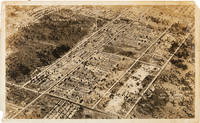
191722926New York - London: Fotocraft 1917. Panoramic photograph showing parts of the camp with many completed barracks buildings in the distance with other areas in the foreground that are cleared for streets and further development; closest to the camera are seen structures with lumber strewn in front still under construction - streets & parking areas with vehicles pedestrians; Camp Upton was established in 1917 in order to train U.S. soldiers for service in World War I; approx. 6 1/2" x 49" size; identified in the photo and giving the photographic studio name of Fotocraft Inc. 206 W. 34th St. N.Y.; prev. owner pencil name on back; some crinkling to paper especially towards ends one end with old discoloration; couple of short closed tears at the other; little edgewear; image especially in foreground very good with fade-out to the distance; very good condition and interesting Long Island military history photography. Photograph. Not Bound. Very Good. Fotocraft Paperback books
191815610Columbus OH: np 1918. First Edition. Hardcover. Good. 4to. Cloth hardcover three ring binder. Holding 151 leaves; 110 holograph 41 typed. Many sheets loose from ring binding. Cloth torn at spine. Overall contents well preserved. <br/><br/>The classroom lecture notebook of an unnamed cadet at The United States Army School of Aeronautics at Ohio State University Columbus OH covering January through March 1918. During WWI a pilot shortage in the United States became apparent. In response the War Department and U.S. Army formed the Aviation Cadet Training Program installing aviation training schools at six universities across the country. This program at Ohio State appears to have consisted of 8 weeks of classes with training in military drill discipline and technical instruction with an emphasis on aviation. Curriculum from the program formed the basis for the aeronautical engineering courses later taught at OSU. A scarce set of materials from an early instructional program of military aviation training and education one that would eventually become the US Air Force. np hardcover books
197526531New York N.Y.: Grosset & Dunlap 1975. 16 pages; illustrated in color black and white including a 4-panel centerfold. Issued by the publisher as a promotional preview for the then forthcoming WWII James Jones book giving the table of contents and samples of the writing to be found within. Approx. 9" x 12" size; glossy illustrated heavy paper covers; light wear; in very good condition; interesting high-quality promotional ephemera for this WWII book. First Edition. Soft Cover. Very Good. Grosset & Dunlap paperback books
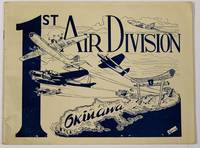
194736860Okinawa 1947. 1st printing. Off-white paper wrappers printed in dark blue stapled. Drawing by 'Lapan' to front wrapper. Modest wear & soiling to wrappers. Age toning to paper. A VG copy. 68 pp. Filled with b/w photographic images typically 3-4 per page of Okinawa its people & divers aspects of the 1st Air Division. Line drawings by McFadden. 2 page map at center. Oblong format: 8-1/4" x 11" <br/><br/> unknown books
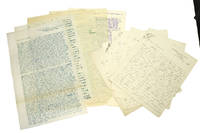
1901303348VP including Ladysmith Geluk Farm Vluchfontein et al. 1901. Nine ALS three TLS eight carbons. 64 pp in total. Folio & 4to. Very good some tiny chips to carbons and one two spots of minor dampstaining not affecting legibility. In manilla folder. Nine ALS three TLS eight carbons. 64 pp in total. Folio & 4to. FIRST-HAND ACCOUNT OF THE SIEGE OF LADYSMITH. A fine group of letters by an English intelligence officer steadily rising through the ranks. In 1899 he is "sleeping in the open air only one blanket & one waterproof sheet." Within a year he was Lord Roberts' private clerk and in December 1900 he is stationed at the Commander-in-Chief's Office Kitchener's doing "confidential military work for the Military Secretary to Lord Kitchener." <br/><br/>Although part of the intelligence service Carter saw more than his share of fighting. He describes the march to Ladysmith and the action at Elands Laagte Station noting "a bullet going through the top of my helmet and cutting off some of my hair but without even scratching the skin."<br/><br/>The next four letters were written from Ladysmith and provide a full account of the siege. "The Boers had big siege guns mounted on the hills around Ladysmith which quite outclassed our light field guns . They'd completely invested Ladysmith & cut the telegraph lines & pulled up the Railway . Then began the long dreary siege." Carter reports using "a lot of pigeons" and the cost of Kaffir and Zulu runners to get letters out of Ladysmith and at least one of his letters not here was published in the Hamilton Spectator.<br/><br/>The siege is depicted much like a holiday camp citing football matches swimming races water polo cricket. "We got so indifferent to the Boer 'snipers' that you would see most of our chaps having an afternoon siesta behind their trenches while bullets would be chipping the stones around them. We also used to organise pools when we could see some of the Boers and have a long range shooting match the man who bowled the first Boer over taking the pool." Yet there is also much on troops movements information on the Boers the conditions of Ladysmith accounts of engaging the enemy and reflections on the experience of combat: "the actual fighting is all right as the excitement deadens your faculties but after a battle when . you see your poor companions who a few hours before were joking with you lying dead or else writhing in the agonies of pain caused by frightful wounds then you feel your courage leaving you and your nerves getting like wax." <br/><br/>The remaining correspondence includes three letters as Carter's regiment treks across the Transvaal through August and September 1900. These too are full of detail of life in the field bivouacking scouting enemy positions and action: "There was a grand opportunity for our Field Artillery. They simply pumped shrapnel into them the Artillery Officers going mad at the sight and shrieking to the gunners 'fire! fire! hurry up you b----- fools you never had such a chance fire!' . You could see at every discharge of the guns the Boers falling and at the same time our splendid Infantry running for all they were worth trying to get at them with the bayonet . It is very seldom the Boers leave any wounded or dead behind them and it proves how hard we pressed them . It was like a shambles . one two or more bodies horribly mutilated by the effects of the Lyddite."<br/><br/>The final group commences with Carter being stationed at the Commander-in-Chief's office and he wastes no opportunity to use the special mail service for his own correspondence. He describes Kitchener at work and provides insight to life in the office. Yet beneath this is a yearning for the war to end and a frustration that it can't be done in one swift battle: "We cannot get a good fight out of the beggars they simply have a few shots at us and as soon as we get near enough to do some damage off they go helter-skelter." <br/><br/>This group were all addressed to Carter's long time friend we know only by the name of Jose. Given the warmth and detail included here it's possible that he was using these letters as a substitute for a diary. Carter served with some distinction in 1st Manchester Regiment and was mentioned in the despatches. unknown books
1941WRCAM56386Detroit: Spencer & Wyckoff 1941. Large format photograph 12 x 19 3/4 inches. A few small chips and short tears. Mild scuffing moderate staining and soiling. Good condition. A rare aerial view of the short-lived American military installation at Camp Livingston Louisiana. The camp opened in 1940 and closed in 1945 and was created to train field artillery regiments during World War II hence the "F.A." in the title of the photograph. The most notable use of Camp Livingston began the year after this photograph was taken when the American government used the camp to house thousands of Japanese German and Italian prisoners of war. In addition as many as a thousand Japanese-American citizens were held at Camp Livingston as part of the War Relocation Authority's wartime internment program. The present photograph would be useful in studying the accommodations for wartime prisoners and internees or perhaps the changes over time to the camp to accommodate them. No copies located in OCLC. Spencer & Wyckoff unknown books
1945WRCAM55486N.p.: Edward D. Biggerstaff Jr. 1945. Seventeen sepia-toned photographs each with captioned tissue guard. Oblong 16mo. Original textured wrappers title printed in dark blue on front wrapper. Minor edge and corner wear front joint creased. Fore-edge of photographs a bit curled but clean. Very good. Pocket-sized photograph album commemorating the members of the 604th Ordnance Ammunition Company a unit of African-American soldiers who served as battle support in Italy during World War II. A small line of text on the rear wrapper reads: "Photographs by 1st Lt. E.D. Biggerstaff Jr." Edward D. Biggerstaff Jr. was the commanding officer of the 604th Ordnance Ammo. Company evidenced by his photograph in the album; he is also pictured with the other white company officers in a separate photograph. <br> <br> The album opens with a photograph of the entrance to the company's "Bivouac Area" and an image of the Villa Traxler in Nugola Italy which is captioned as "Occupied by 604th Ordnance Ammunition Company." Then following the images of Biggerstaff and the senior officers the album features a series of photographs depicting the African-American junior or non-commissioned officers and personnel beginning with First Sergeant Leroy Crosby. After Crosby's photograph the album includes group photographs of Crosby with his other five staff sergeants; the company headquarters personnel; the depot office personnel gathered around a small cannon; kitchen staff; the motor pool with a separate photograph of their vehicles; separate group pictures of the first second and third magazine platoons; the service and supply section; the guard mount; and a photograph of the remaining members of the company who did not appear in the other images. Especially useful in this album are the captioned tissue guards before each photograph which identify each soldier by name and rank. <br> <br> The album was likely made by or at the behest of commanding officer Edward D. Biggerstaff in an unknown quantity. It appears to be quite rare as we can locate no other copies in OCLC auction records or the trade. Edward D. Biggerstaff, Jr. unknown books
197226455Paris: Editions Robert Laffont 1972. First Edition #40 of 40 copies printed on velin chiffon. Illustrated. 1 vols. Large 8vo. Bound in full green and black morocco "Reliure mosaique dans la forme & la couleur du Ruban de la croix de la liberation" with a bronze medallion inset in the front cover "une medaule des compagnons de la liberation" a.e.g. by Sangorski & Sutcliffe. A beautiful binding. First Edition #40 of 40 copies printed on velin chiffon. Illustrated. 1 vols. Large 8vo. Inscribed at the front and with an A.L.S. from the author tipped in at the back. Editions Robert Laffont unknown books
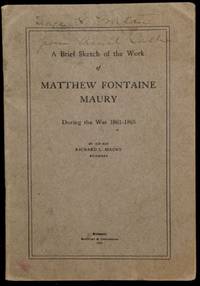
1915268669Richmond: Whittet and Shepperson 1915. First Edition. Stapled Pamphlet. Very Good binding. A pamphlet discussion of mine warfare of interest as Maury perfected the "electric torpedo" which wreaked havoc with northern shipping. The Nevins bibliography considers the work to be "satisfactory" Nevins I 229. A decent copy with some light creasing to the cover. There is a previous owner name at top of the first page and a gift inscription by the same person at the top of the front cover. Nevins I 229. Very Good binding. Whittet and Shepperson unknown books
191832663Boston: Houghton Mifflin Company 1918. 1st US edition. Purple cloth backed drab paper boards. Buff printed dust jacket with the rear panel & flap listing other publications on the war. NF/NF. Uncommon in dust jacket. v 3 110 2 pp. 12mo. 7-1/8" x 4-1/4" <br/><br/> Houghton Mifflin Company hardcover books
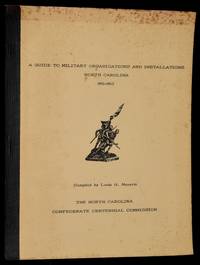
1961247122Raleigh: North Carolina Confederate Centennial Commission 1961. Soft Cover. near Very Good binding. No pencil or ink markings in text; paper binding stapled at spine; front cover is spotted on upper half; light spotting to text block edges. near Very Good binding. North Carolina Confederate Centennial Commission unknown books
1959173fdiBangkok: Chalermnit Bookshop 1959. Octavo white cloth hardcover gilt letters 300 pp. Very Good with light foxing age darkened spotting in a Very Good mylar protected dust jacket with light edgewear. Chalermnit Bookshop, (1959). hardcover books
1918295743New York: American Red Cross 1918. Original poster mounted on linen. Color lithograph. 27 1/4" x 20 1/8"<br/><br/> This poster was part of the Second War Fund a fundraising campaign led by the American Red Cross in 1918 with the goal of raising $100000 in a single week in May. The poster reads "All of the Red Cross War Fund goes for War Relief."<br/><br/> American Red Cross unknown books
1946WRCLIT84197London: Jonathan Cape 1946. Cloth. A very good copy in poor badly town and internally mended dust jacket. First edition. The poet's first collection one of the most distinguished volumes of verse to come out of World War II. He issued a pamphlet of criticism in the same year which may or may not precede. REILLY WWII p.273. Jonathan Cape hardcover books
19432305287Washington D.C: War and Navy Departments 1943. Stapled Binding. Near Fine. An excellent copy. 1943 Stapled Binding. 57 pp. CONTENTS: Introduction; Money; Currency Table; Paper Notes; Weights and Measures; Calendar and Time; Check List of Do's and Don'ts; Hints on Pronouncing Arabic; List of Most Useful Words and Phrases; Additional Words and Phrases. War and Navy Departments unknown books
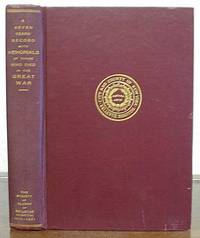
192234575New York: Published by The Society of Alumni of Bellevue Hospital 1922. 1st edition. Maroon cloth binding with gilt stamped title lettering to spine. Gilt stamped Hospital medallion to front board. Spine a bit dull. Hinges restored. A VG - VG copy. 285 3 pp. Illustrated with inserted plates. 8vo. <br/><br/> Published by The Society of Alumni of Bellevue Hospital hardcover books
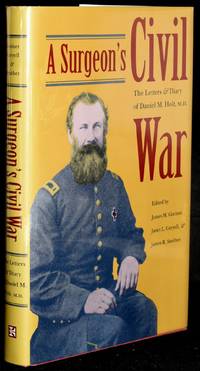
1994218379Ashland Ohio U.S.A.: Kent State Univ Pr 1994. First Edition. Hard Cover. Very Good binding/Very Good dust jacket. Signed. Illustrated; Some underlining in text. Signed by editor. Pink cloth binding. Light wear at top of dj spine; DJ protected with Mylar Cover. Very Good binding / Very Good dust jacket. Kent State Univ Pr unknown books
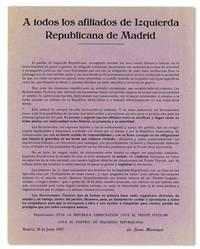
193738496Madrid: Partido Izquierda Republicana 1937. First Edition. Broadside 27.5cm x 21.5cm; printed recto-only in black on purple stock. Paper a bit faded at margins still a clean presentable copy Very Good. Broadside to the citizens of Madrid calling on all Republican forces to join under the banner of the Izquierda Republicana historically the main-line leftist party of pre-Revolutionary Spain. Dated June 30 1937 some ten days after the fall of Bilbao to Nationalist forces. Fragile and scarce; not separately catalogued in OCLC. Partido Izquierda Republicana unknown books