Waterloo, StanleyBiblio.com
31 résultats
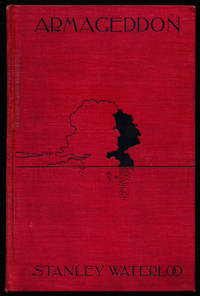
1898000016789Chicago & New York: Rand McNally & Co. c. 1898. first edition. hardcover. near Very Good. Octavo red cloth covers with black titles and design. Some fading on spine a little spotting. 259 pages. The corner of one leaf pages 145/146 is torn does not affect text. Bleiler 1978 page 203 Imaginary Wars. 020207A <br /><br /> Rand, McNally & Co. hardcover
189809583ARMAGEDDON Rand McNally 1898 first edition inner hinges starting else a vg vopy. Rand McNally unknown
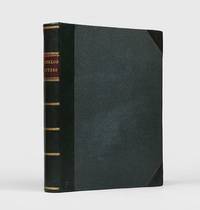
18061547621806-45. They "succeeded to the utmost & overthrew every thing" - Uxbridge and the "heavies" at Waterloo In two vivid deeply detailed letters Lord Uxbridge - later Marquess of Anglesey and commander of allied cavalry at Waterloo - recounts the withdrawal from Quatre Bras and the battle of Waterloo. Written within six months of the engagement they are almost certainly among his earliest surviving narratives. Autograph correspondence from any senior Allied commander is exceptionally rare. Uxbridge 1768-1854 had been Wellington's brilliant and inspirational cavalry commander in the Peninsula. At Waterloo he reached his zenith at a critical juncture when Picton's infantry was under overwhelming pressure. He personally led the British heavy cavalry in a sweeping charge that routed vastly superior French numbers destroyed batteries and took prisoners and eagles though at severe cost in men and horses. Throughout the day he moved ceaselessly between units - losing eight or nine horses - until his right knee was shattered by grapeshot in the battle's final moments. His supposed exchange with Wellington - "By God sir I've lost my leg!" / "By God sir so you have!" - became the most famous anecdote of the field. John Morewood quoted both letters in Waterloo General 2016 and Edward Owen cited them in The Waterloo Papers 1997. Owen identifies the recipient as Colonel James Allan of the 57th Foot formerly Fitzroy Somerset's successor as Wellington's military secretary a veteran of the Cape 1795 Seringapatam 1799 and the Peninsular War. Written from Beaudesert Staffordshire in December 1815 and addressed to "My dear Sir" and earlier "My dear Colonel" the first letter 10 pages 9 December describes Uxbridge's management of the Allied withdrawal from Quatre Bras. After a quiet morning a substantial force of French cavalry and artillery appeared on the left of Quatre Bras advancing from the pursuit of the defeated Prussians. As the Anglo-allied light battalions withdrew Uxbridge organized the cavalry retreat over the Genappe. He gives a sharply observed account of the fighting there where French harassment became so severe that he ordered a spirited attack by the Hussars followed by a decisive charge of the Life Guards which checked the French advance. The second letter 9 pages 18 December covers the day of Waterloo. Uxbridge begins by admitting that to answer Allan fully "wd be writing a history of my own exploits" before setting out the celebrated charge of the heavy cavalry: their simultaneous assault under Sir William Ponsonby and Lord Edward Somerset the overthrow of infantry and cavalry the seizure of two eagles and some 2500 prisoners and the deep penetration into French squares. He notes their over-extension and heavy losses from French artillery then comments on the actions of Dörnberg Colquhoun Grant Arentsschildt Vandeleur who took over after Uxbridge fell and Hussey Vivian. He ends by directing Allan to his aide-de-camp Captain Thomas Wildman of the 7th Hussars at Stevens's Hotel Bond Street for further detail. The collection includes a note of 17 January 1816 from FitzRoy Somerset - Wellington's military secretary at Waterloo and later Lord Raglan - giving allied numbers engaged and remarking "I hope it will be as useful to you as you are welcome to it". Written shortly after Somerset himself lost an arm at Waterloo it is reproduced in Owen's Waterloo Papers. Three letters from Wellington to his former India colleague Sir Alexander Allan first baronet date from 1806 1814 and 1820 and address James Paull's actions against Richard Wellesley Allan's candidacy for an East India Company directorship which Wellington strongly endorsed and Wellington's request for Allan's influence at India House during the 1820 general election. Two revealing letters from Catherine Duchess of Wellington express her lifelong devotion to her husband ask to keep a portrait lent by Allan and describe her efforts to canvass support for Allan's directorship bid. A brief account of Allan notes his service in the Mysore Wars his published aquatints his parliamentary career and his later role as an East India Company director trusted by Richard Wellesley. The remaining correspondence includes Allan's three political letters of July 1813 advocating Lord Wellesley's alignment with Sidmouth Buckinghamshire and John Sullivan; an 1809 letter from the Marquis de Montalembert describing winter campaigning in the Peninsula; an 1816 note from Sir William Knighton apparently on Allan's mother's death; a friendly letter from "von Kuefstein" in Vienna referring to dispatches to Genoa and to Captain Cotton; a Stuttgart letter of February 1820 on affairs in Württemberg; and two mid-19th-century letters involving John Palfrey Burrell and William Boone seeking access to Waterloo documentation likely addressed to Major Edward Thomas Fitzgerald a wounded Waterloo veteran. Folio 300 x 245 mm contains an archive of 17 letters 55 pp. various sizes letters gummed direct to the leaf or with paper tape. Black half morocco-grain skiver album green pebble-grain cloth boards linen hinged mounting leaves;. Bookplate of Otto Orren Fisher 1881-1961 who after studying medicine at Johns Hopkins became an industrial surgeon for the Hudson Motor Company in Detroit establishing one of the first modern industrial first aid units there. Expected folds and minor toning to most letters generally very good the volume presenting handsomely. The Marquess of Anglesey One-Leg: The Life and Letters of Henry William Paget First Marquess of Anglesey 1768-1854 1991; David Howarth Waterloo: A Near Run Thing 1974. hardcover
189058342Waterloo Falls OR: n.p. June 8 1890. Oblong 8vo. 1 boudoir sized albumen photo sized 8 x 4.5 in. mounted on studio board 8.5 x 5 in. w/ pencil annotations indicating location date and very faintly a few of the participants although without last names indicated minor toning shelfwear still VG bright image. At the time this photo was shot there was a concerted push by business leaders and local citizenry pushing for an electric excursion train to the Waterloo Falls 1889-1890 along the South Santiam River as seen by articles published periodically in the Lebanon Express newspaper. The image is a striking shot with the band members and family members strewn about seated on the rocks next to the river during late Spring runoff and the Falls. Contemporary images of Waterloo Falls and the South Santiam River area are fairly uncommon and the caption refers to Andrew John S.B. Walter and George standing near “me.†n.p., unknown
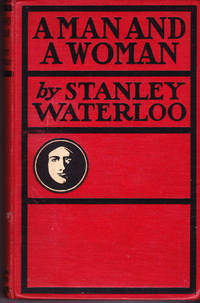
1892004723Chicago: Way & Williams 1892. Stanley Waterloo 1886-1913 who was quite popular in his time was famously plagiarized by Jack London. This was his second book first published in 1892. This is a Very Good Plus copy of the "New Edition" by Way and Williams. Uncommon to scarce. Bright red decorative cloth binding in a striking design by the art neouveau artist Will Bradley 1868-1962. Ruled and titled in black with a round lozenge of a face in black and white. Clean text; 250 pages; top-edge is gilt others rough-cut. Bookplate on the front paste-down. Mildly bumped very light soil. The spine is slightly faded and has a small black spot ink. A solid copy and very attractive presence. In an archival plastic protector. Later Printing. Decorative Cloth. Very Good Plus/No Jacket. 12mo - over 6¾" - 7¾" tall. Way & Williams Hardcover
1892209018Chicago: Schulte 1892. Softcover. Good. Good in wrappers. Cover loose but included spine and corners chipped spine and cover edges lightly browned. Schulte unknown