166 résultats
194573992Poessneck i. Thuer.Germany:: Fr. Gerold Verlag 1945. First edition. publisher's quarter leather and illustrated cloth. Spine a little sunned; tight and sound. Folio. Illustrated from photographs and drawings; folding map at rear. Fr. Gerold Verlag, hardcover
19160009183CAMP COTTON EL PASO TEXAS TX. Good. 1916. On offer is a fascinating journal kept by an officer or high ranking NCO at Camp Cotton in El Paso Texas. He appears to be an officer with the 9th Massachusetts infantry fresh off training from Camp Framingham in Massachusetts who have come down to Camp Cotton. It appears that the troops were sent down to Camp Cotton to take place in the Pancho Villa Expedition attempting to hunt down Mexican Revolutionary Pancho Villa for his role in attacking New Mexico though they may have also been used to provide support for the ongoing Border War between Mexico and America. Beginning in June of 1916 and ending in September of the same year the journal documents the daily every day duties of the officer's command. Such looks into the darily Army command responsibilities in the early 20th century are not easy to come by. Such daily entries offer fantastic glimpses as to the uniform routine and daily activities of the officers and the enlisted men. One entry even goes over each detail of a meeting in which the Infantrys camp was set up:El Paso. Camp Cotton. Sunday July 2 1916. 1st meeting 11 am. Push all work till next meeting later in day. 2nd meeting 5-20 pm. Capt. Lawless will require spare parts and cleaning materials. Tops. 10 pm. Roll call chief and repeat to Regmt. Officers can buy for cash at Depot Quartermaster. Draw for Enlisted Men: 1 hat 1 cord. 1 O.T. shirt. 6 jean undershirts. 6 jean underdrawers. Belt if necessary. 3 breeches - cotton. 1 pr. Leggings. 6 pr. Socks for work. 1 pr. Shoes. 4 pr. Leggings laces. 4 pr. Shoe laces. All men must have one new outfit at all times. The above will be paid for by each man from his ____ of $4.00 for 1set 6 mos. Then $6 or $7 allowance for each 6 mos thereafter. Muster In Rolls. Col. Buck is sending the roll for correction. they must bear names of all officers and men. Ammunition 100 rds must be issued to each man. 6:30 pm. Recd 5 cases of 1200 rounds each from Capt. Lawless same as usual. At 7 pm each man recd 90 rounds which is all they belt can carry. Balance for present will be held by 1st srgt in his tent for immediate distribution. Tents must be ditched and cinders placed in Company seets. Calls Reveiller at 6am and all other calls same as those need used at Framingham. Tents Loop up early in morning drop at 9 am until further advised. Cots Request in for cots. Mess An officers mess will be established. Pay It is understood that Col. Parker is on his way here and will arrange to pay men for 8 days from Mass state funds. There are many more meetings in the new few days as the camp is set up for the soldiers arriving soon to the Camp. The men arrive a few days later around July 11th. There is an officer's meetings: 11 July. Meeting at 10 am. Meat only 2 times a day. Coffee twice a day. Muster and pay bills. Men to keep away from the citizens of the city. Physical inspection this weekend. Thereafter once a week. There is a tremendous amount of information about the nitty gritty details of running a camp full of enlisted men in the early 20th century. What to do if men go AWOL What happens when they are ready to be discharged Who will set up the latrine What supplies to order for the cook staff Who will staff the canteen and what will be served All these details come from the many notes the author took in the twice daily officers meetings held at the camp. The journal ends with notes on a 15 day hike about to take place. This hike may very well be the Infantry getting ready to hunt down Pancho Villa in Mexico though it is unknown: Revelle 4:45 am. Men carry two blankets. One man left believed in prison. Regtl surgeon will decide men who are to be excused. Carry 3 days dry components. Have men report to Capt. Doly 5:30 am. There journal is an absolute wealth of fascinating information and provides a really great amount of daily officer work and details of the life of an enlisted man on the border of the U.S. and Mexico during the Mexican Revolution. The books cover and spine are still in good condition. The covers are marbled paper and show some wear and fading. The book opens from top to bottom not from right to left. There are approximately 65 handwritten pages and the book itself is 110 pages in length. The paper is still in good condition showing only minimal wear and aging. While the binding is still intact it is no longer very tight. The book should be handled with care. The handwriting is clear throughout in pencil. There is so smudging and fading in a few pages but in general the handwriting is clear and legible. The Pancho Villa Expeditionnow known officially in the United States as the Mexican Expedition but originally referred to as the "Punitive Expedition U.S. Army"was a military operation conducted by the United States Army against the paramilitary forces of Mexican revolutionary Francisco "Pancho" Villa from March 14 1916 to February 7 1917 during the Mexican Revolution of 19101920. The expedition was launched in retaliation for Villa's attack on the town of Columbus New Mexico and was the most remembered event of the Border War. OVERALL: G; Manuscript; 8vo - over 7¾" - 9¾" tall; KEYWORDS: HISTORY OF CAMP COTTON EL PASO TEXAS BORDER WAR BORDER CAMPAIGN MEXICAN REVOLUTION PANCHO VILLA EXPEDITION MEXICO-UNITED STATES BORDER U.S.-MEXICAN RELATIONS PERSHING EXPEDITION PUNITIVE EXPEDITION U.S. ARMY 9TH MASSACHUSETTS INFANTRY CAMP FRAMINGHAM WORLD WAR ONE ERA UNITED STATES ARMED FORCES SOUTHERN BORDER RIO GRANDE RIVER HIGH RANKING OFFICER DUTIES ESTABLISHMENT OF ARMY CAMP DAILY OFFICER DUTIES AMERICANA HANDWRITTEN MANUSCRIPT DOCUMENT LETTER AUTOGRAPH WRITER HAND WRITTEN DOCUMENTS SIGNED LETTERS MANUSCRIPTS HISTORICAL HOLOGRAPH KEEPSAKE WRITERS AUTOGRAPHS PERSONAL MEMOIR MEMORIAL ARCHIVE DIARY DIARIES JOURNAL LOG ANTIQUITÉ CONTRAT VÉLIN DOCUMENT MANUSCRIT PAPIER ANTIKE BRIEF PERGAMENT DOKUMENT MANUSKRIPT PAPIER OGGETTO DANTIQUARIATO ATTO VELINA DOCUMENTO MANUSCRITTO CARTA ANTIGÜEDAD HECHO VITELA DOCUMENTO MANUSCRITO PAPEL . unknown
19170001391Camp MEADE USS AGAMEMNON EUROPEAN THEATER. Good. 1917. Hardcover. On offer is an original and simply sensational manuscript relic of World War I being the handwritten diary of Sgt. John Reed of the 316 Infantry Band. Over 120 pages fully written in neat dense hand Reed details his experiences 'To Whom It May Concern'. He begins July 5th retrospectively explaining his being drafted November 3rd 1917 and then spending an easy 8 months at Camp Meade for him it was an easy transition into the Army life as he had already served in the US Regulars. From July 5th on he writes with dedication to a very abrupt end June 8th 1918. Reed is a super diarist has a great personality and is a dedicated American. One cannot help admire this soldier. The very first writings on the free endpaper states: Advance into Germany Millions of trained fighters Eagerness to crush Prussianism Righteousness and readiness to serve Immense Resources Crushing blows delivered to Huns Army unconquerable Navy superb Safety for Democracy for World spelling out the word AMERICANS. Here is a snippet: 'Sept 29th Our infantry was still advancing and fighting like tigers it wasn't interesting for me to stay in the supply loo so I started all alone for the front my revolver and lots of ammunition was my only friend. I walked until I got to a town that we had just captured but 'Bosh' still bombarding it heavily while looking around for wounded friends I found out that by this time Charlie Miller was still ahead of me and well and fighting like an old regular. I also met my old friend Hal Anderson working day and night as a stretcher bearer he was tired out and hungry as I send a man back after food for him and seven others as I am writing this 'Bosh' are still bombarding with monster bullets bursting all around us.' 'Sept 30th I only crawled out of a hole twice all day and that was at mess time. This day the Germans bombarded our field hospital killing many of the hospital wounded lads. Hospital had been put to close too the front.' near Verdun. Of course there is the mundane - but it is never really mundane - dinner in the rough is described as a rabbit with its neck broken the French woman cutting out the eyes the house they waited in during a bombardment the rain the mud and the waiting. Being in the band there are many concerts but they seem secondary to the action and the observations. Oblong flipbook style in this 5.25"x 2.5" also includes an actual photograph not a copy of his 316 Infantry Band Unit. Also included: a First Edition copy of the U.S. official issued song book entitled "Songs of the Soldiers and Sailors. Issued by the Commissions on Training Camp Activities of the Army and Navy departments. First Printing 1917. Also included is a newspaper clipping that Sgt. Reed had tucked away in his journal. It includes information about his company's orders to go to France.; 48mo - over 3" - 4" tall; KEYWORDS: CAMP MEADE USS AGAMEMNON ARMY BAND EUROPEAN THEATER VIMY VERDUN BOSH WORLD WAR I WWI WORLD WAR ONE WORLD WAR 1 HANDWRITTEN MANUSCRIPT DOCUMENT LETTER AUTOGRAPH DIARY JOURNAL LOG KEEPSAKE WRITER HAND WRITTEN DOCUMENTS SIGNED LETTERS MANUSCRIPTS HISTORICAL HOLOGRAPH WRITERS DIARIES JOURNALS LOGS AUTOGRAPHS PERSONAL MEMOIR MEMORIAL PERSONAL HISTORY AMERICANAAls antiquité contrat vélin document manuscrit papier Antike Brief Pergament Dokument Manuskript Papier oggetto d'antiquariato atto velina documento manoscritto carta antigüedad hecho vitela documento manuscrito Papel . hardcover
19190011016Coblenz Germany Benton Pa: Occupied Germany Coblenz Benton PA 56th Infantry. Good. 1919. Softcover. On offer is a superb pocket notebook kept by an American soldier in occupied Germany in the months immediately following World War One WW1. The author of this notebook is Ezra Skow. Little is known of Skow's early life. He was born in 1892 and enlisted in the U. S. Army in about September 1918 at the age of 25 or 26. Burial records in Benton PA indicate that he was attached to the 156th Infantry Regiment. However there was no 156th Infantry in the United States Order of Battle in WWI. In his notebook Skow records that he served in the 56th Infantry. This accords with the record of service of the 56th Infantry Regiment. The 56th Infantry Regiment was a regular infantry regiment in the United States Army. Its roots date back to the American Civil War where it served in the North's Army of the Potomac. It originated from personnel of the 17th Infantry Regiment in 1917 and fought in the region of Metz during World War I. In April 1919 a battalion of the 56th entered Metz as an honour guard for the Commanding General of the American Expeditionary Force John J. Pershing. Skow was married before joining the army. His wife Laura lived until 1987 passing away at the age of 93. Skow himself died in 1947 at the age of 57. His entries take the form of letters to his wife. They cover the period Jan 11 1919 through June 25 1919. In his diary Skow records several of the towns and cities in which his unit was stationed including Metz France Mulheim Metternich and other places in and around the city of Coblenz Germany. His entries speak about the day-to-day existence of a private soldier: "This is some place. Gee I wish I was home now. I would tell you a lot. The women are carrying their things on their back when they go to the store" Jan 13; ". I wrote you a letter tonight and send you the worlds clock too as I saw that today over at the city. And I was to see Charley Chaplin in the front line trenches and it was good. I would like to see you now. . I sit here at a Dutch table now writing notes and the Dutch man is reading the paper and his wife is talking out of the front window and you can see they are like but not quite as bad. Your Husband Ezra Skow xxxx" May 2; ". I was over to Coblenz today and wrote you a letter. And it is a fine day. I didn't do very much today. But believe me I would love to be home to loved you again. As I am getting tired of this life and will be able to tell you all about it when I get home . Your most lonely husband this side of the water. Ezra Skow" May 12. On June 4th he writes that he has learned his unit is going to be leaving the Coblenz area and hopefully heading home to the United States. In fact this is exactly what happened. By June 23rd he is in Fort Dix NJ and on the 25th he is out of the army. : ". I am out of the army now. Coming home to you dear." June 25. There are several other pages of note which include among other things the names and addresses of several other men - likely men he met and befriended. For a historian this is an outstanding piece of primary source material. It details the very ordinary day-to-day life of a soldier in WWI capturing his duties and his longing for home. For a regimental historian this fills in details of the history of their regiments. For a genealogist it offers some links to other Americans who served in that regiment. Measuring 5.25 inches by 3.5 inches this notebook contains 72 pages and is 85% complete. The book is in good condition. The binding and pages are intact. His handwriting is cramped but generally legible. ; Manuscripts; 24mo 5" - 6" tall; 72 pages; Keywords: handwritten manuscript document letter autograph writer hand written documents signed letters manuscripts historical holograph writers autographs personal memoir memorial antiquité contrat vélin document manuscrit papier antike brief pergament dokument manuskript papier oggetto d'antiquariato atto velina documento manoscritto carta antigüedad hecho vitela documento manuscrito papel 56th Infantry World War One US Army American soldier Occupied Germany . Occupied Germany, Coblenz, Benton, PA, 56th Infantry paperback
1919000114Post War Germany 1919. Very interesting and intriguing diary once one gets used to the author's scrawl. Containing approximately 29 pages written on both sides Ezra Skow writes one sometimes two days per page in this notebook style journal. Many entries are letter-style to his wife and signed at the bottom with his name and location. Many times he closes with XXX. May 19 writing of Coblenz and Berlin he closes: "I would just like to love you Dear. This is some life to be in and I don't know when I am coming home.I think next month." Another note on the inside front cover dated May 15th: "One year and 5 months since we have been married and have been in the army over 9 months now." Book shows general light wear and is about 3 1/4 x 5 1/4 inches. There is a sleeve for a pencil which it seems is long gone. . Good. 24mo - over 5" - 5¾" tall. Manuscript. unknown
1934000530Borden Hants Hampshire England. Good. 1934. Original Wraps. On offer is a handwritten notebook-style instruction manual as titled on the cover "Fencing Lessons Foil - Sabre - Epee". The inside front cover has a pastedown fully identifying the writer: "Serjeant T. Wells of the 1st BATTALION OXFORDSHIRE & BUCKINGHAMSHIRE LIGHT INFANTRY. 19th Sept. to 13th Dec. 1934. Instructors Gartzen and Harkinson". An Index of the 67 page book shows that besides the lessons in the three sword types there are chapters on the Army Fencing Union Pitches and Arenas and Bayonet Team Competitions. We are led to believe that this book is also a manual for the Instructor trainee as most pages have three columns headed: Pupil Master Remarks. The remarks appear to be helpful hints for the Instructor in dealing with the pupil. There are a number of hand drawn illustrations including charts tables graphs and such plus there are quite a few little. 1.5" x 1" photographs which were cut from elsewhere and glued in as part of the lesson. In addition to the identification on the cover and inside front cover the back cover has Sjt. Wells handwritten address being we believe Bordon Hants Hampshire. Boards are cracked in the hinges and the netting shows but otherwise in very good shape. Provenance: From the library of a famed Hungarian fencing master instructor Olympian and coach. Superb fencing collectible.; Manuscript; 4to - over 9¾" - 12" tall; Manuscript Handdrawn HANDWRITTEN MANUSCRIPT DOCUMENT LETTER AUTOGRAPH DIARY JOURNAL LOG KEEPSAKE WRITER HAND WRITTEN DOCUMENTS SIGNED LETTERS MANUSCRIPTS HISTORICAL HOLOGRAPH WRITERS DIARIES JOURNALS LOGS AUTOGRAPHS PERSONAL MEMOIR MEMORIAL PERSONAL HISTORY FENCING FENCERS SWORD FIGHTING SABRE EPEE FOIL CUTLASS FENCING MASTER OLYMPICS OLYMPIAN antiquité contrat vélin document manuscrit papier Antike Brief Pergament Dokument Manuskript Papier oggetto d'antiquariato atto velina documento manoscritto carta antigüedad hecho vitela documento manuscrito papel. . paperback
19912504120031Fort Stewart Georgia 1991. Hardcover. Very Good. 0x0x0. Hardcover shows only light cover wear. Text is unmarked and binding tight. LTG Taylor's copy. Ships FAST! Fort Stewart, Georgia hardcover

1991250412003224th Mechanized Infantry Division Combat Team 1991. Hardcover. Very Good. Original hardcover shows only light cover wear. Text is unmarked and binding tight. Ships FAST! 24th Mechanized Infantry Division Combat Team hardcover
1986814761986. Hardcover. very good condition full of Photos; full of Photos; NOVI007153 . hardcover
19202090202120402693Ogawa makoto Kiyoshi 1920. Soft Cover. Fine. Number of books: 1 Ogawa makoto Kiyoshi paperback
1944220931944. 40th Infantry Division Pacific campaign photograph album documenting combat operations and daily military life of U.S. Army forces during World War II. The 40th Infantry Division served extensively in the Southwest Pacific Theater participating in campaigns across New Guinea New Britain and the Philippines as Allied forces advanced against Japanese defensive positions. The photographs record amphibious landings artillery operations destroyed towns and the collaboration between American troops and Filipino guerrilla forces during the campaign to liberate the Philippines. The album therefore documents the operational environment of Pacific warfare including jungle terrain fortified Japanese defensive networks and the logistical systems required to sustain prolonged combat across island battlefields.<br /> <br /> Photograph album containing approximately 200 original black and white photographs documenting operations of the 40th Infantry Division during the Pacific campaigns of World War II. Each photograph is sequentially numbered in white ink at the lower corner and corresponds to descriptive entries in a photographic index within the album. Early images depict American Red Cross workers disembarking from landing craft and greeted by U.S. soldiers illustrating the presence of female support personnel assigned to medical and relief operations. Additional photographs record amphibious landing scenes aerial views of destroyed towns in Luzon artillery and tank operations and soldiers operating mounted machine guns overlooking jungle valleys. Several images depict Japanese military casualties reflecting the intense close combat that characterized fighting across the Pacific islands. A printed military map within the album shows Japanese tunnel and cave fortifications in the Zambales Mountains illustrating defensive positions encountered during operations in the Philippines.<br /> <br /> The album also documents logistical and civilian dimensions of the campaign. Photographs show ships unloading cargo Filipino guerrilla units marching through urban streets and groups of local porters assisting Allied forces in moving supplies through mountainous terrain. Weapons and equipment visible in the images include field artillery pieces mortars and armored vehicles such as the M4 Sherman. One photograph depicts African American soldiers accompanied by scout dogs operating in jungle terrain illustrating the presence of Black servicemen serving within the segregated structure of the wartime U.S. Army. Other photographs show tent encampments mess areas interactions with local populations and the recovery of prisoners of war following combat operations. The photographs collectively present a visual record of combat logistics and daily military life during the Pacific campaigns. Album contains approximately 200 photographs with indexed numbering. Light handling wear visible to album and photographs consistent with wartime field compilation. Overall condition very good. unknown
1946mon0003554016Army and Navy Publishing Company 1946T. hardcover. Good. . shows minor wear and foxing. Army and Navy Publishing Company hardcover
195273990Atlanta Ga.:: Albert Love Enterprises 1952. First edition. publisher's embossed cloth. Colorful hotel label on front pastedown; slight tanning to endsheets; light use to cloth at extremities. Tight and sound. Folio. Illustrated throughout from photographs. Albert Love Enterprises], hardcover
194650501Baton Rouge Louisiana: Special Troops of the 4th Infantry Division. 1946. Hardcover. Good. 1946 first edition. Black hardback covers. Shelf wear and rubbing to the spine edges and corners. The corners are bumped. There are several small rubbed and stained spots on the covers. A very scarce World War II unit history. The 4th Infantry Division participated in the Normandy D-Day invasion and landed at H-Hour on D-Day at Utah Beach. An excellent unit history. ; 178 pages . Special Troops of the 4th Infantry Division hardcover
1912337848Winchester : Warren & Son 1912. First Edition. Hardcover. Near fine copy bound in the original quarter cloth over decorated paper boards. Scattered foxing throughout. Remains well preserved overall; bright tight clean and sharp-cornered. Physical description; 52 pages. Subjects; King's Royal Rifle Corps. British Military History. Winchester : Warren & Son hardcover
1919155247The Schilling Pres 1919. First Edition. Hardcover. Very Good/No Jacket. First Edition First Printing. Published by The Association of the 310th Infantry 1919. Octavo. Pictorial boards. Book is very good; clean with no writing or names. Sharp corners and spine straight. Binding tight and pages crisp. Spotting and toning to page ends and light bumps to bottom corners. No dust jacket as issued. A nice copy of this history of the 310th Infantry including black and white photographs. 265 pages. 100% positive feedback. 30 day money back guarantee. NEXT DAY SHIPPING! Excellent customer service. Please email with any questions or if you would like a photo. All books packed carefully and ship with free delivery confirmation/tracking. All books come with free bookmarks. Ships from Southampton New York. The Schilling Pres hardcover
1919667274<p>This is an original 1919 edition of the book with text and illustrations very clean. The spine is damaged but still present - see the photos. 265 pages. K500</p> Association of the 310th Infantry hardcover
1920A38704New York: Members of the Sixty-Third U. S. Infantry / H. H. Bissell. Good. 1920. 1st Edition; 1st Printing. Hardcover. B&W Illustrations; This book is in Good condition and is lacking a dust jacket. The spine ends and corners of the book covers have edge wear bumping and fraying. There is one inch long triangular chip out of the spine of the dust jacket and the top spine end has some tearing to the cloth and noticeable fraying. The text pages are generally clean and bright. There is some tidemarking to the bottom spine end of the first 15 or so pages. Both inner hinges have cracking to the paper and there is some loosening to the spine. "When the United States entered the big war in 1917 I was stationed in Honolulu senior Lieutenant Colonel of the Infantry arm and like dozens of other officers was aching to return to the mainland and get to work with a regiment. from the foreword of the book. . Members of the Sixty-Third U. S. Infantry / H. H. Bissell hardcover
190432505Manila P. I.: E. C. McCullough & Co. Inc 1904. First Edition. Hardcover. Good. Octavo. 169 pages. Illustrated with 20 photographs and 2 folding maps. Green cloth hardcover with title in white on the front cover. Stain on the front cover. Cloth edge worn at the extremities. Binding slightly shaken. Hinges are still intact. Toning to the end sheets. Occasional light brown spots to the text. <br /> <br /> Undated. Preface page dated 1904. This copy is signed by Capt. R. L. Hamilton on the preface page. The regiment was organized in 1812. This regimental history covers the first three Yellowstone Expeditions Indian Wars the war with Spain and causalities from 1898-1904. <br /> <br /> From page 14 during the Civil War the 22nd infantry was organized as the "second battalion of the 13th infantry a regiment of three battalions each battalion consisting of eight companies. During the civil war the first battalion participated in numerous campaigns and engagements; there are no records however of any services of the second battalion. The most noted and distinguished of the officers of this regiment were the first colonel William T. Sherman and one of the original captains Philip H. Sheridan. E. C. McCullough & Co. Inc hardcover
1921152394Taunton: Goodman and Son The Phoenix Press 1921. Introduction by P. A. Somerset L.I. Pp. xii128last blank 8 folding maps at end appendices; post 8vo; green cloth spine lettered in gilt gilt insignia to upper board the cloth browned and lightly marked lightly frayed along portions of lower joint fore-corners slightly bruised; book label of David Levine Sydney on upper pastedown endpapers offset and browned gift inscription to Isabel L. Majendie on upper free endpaper; Goodman and Son The Phoenix Press Taunton 1921. White p. 66; Sutcliffe 1/p. 96. Goodman and Son, The Phoenix Press unknown
192010163n.p.: 63rd Infantry 1920. fair to good. 393 illus. some fold-out rosters some soiling inside boards and to fore-edge boards scuffed board and spine edges worn. Dornbusch #2011. 63rd Infantry hardcover
19184145Amesbury England: printed "In Camp" by the Battalion 1918. Octavo pamphlet in original printed wrappers 28 pp. illustrated. Covers chipped some foxing but good condition overall. Scarce First World War Australian Battalion history.</p> <p>The preface gives some indication of the production of the pamphlet being the work of Private H. MacPherson with sketches by Private W.H. Smith. The author writes: </p> <p>'This work is a continuation of the career of the 44th Battalion of the Australian Imperial Forces from Western Australia. We find that the Battalion is now absorbed by the 11th Brigade; consequently the publication assumes a Brigade aspect. We have endeavoured to portray the different affairs at the training camps with a splash of history interwoven.'</p> <p>Typical of such Battalion mementos produced in training camps in the English countryside this publication reflects the lives of soldiers at rest from the harrowing conditions across the channel in European battlefields. The author describes the terrain as similar to the Western plains of New South Wales and includes some information on Stonehenge and local hamlets. Light hearted digs at the officers and mixed with poems including one such verse named 'The Kaiser's Dream'. The pamphlet concludes with an illustrated page titled 'A London Girl's Opinion of the Australian Soldier' penned by one Nellie Ellis who is gushing in her enthusiasm for the ANZAC boys about town.</p> <p></p> <p>The pamphlet is rare and only three copies are held in Australian institutional collections at the State Libraries of New South Wales and Western Australia and also at the War Memorial in Canberra. It is not recorded in the Bibliography of Australin Army Unit Histories by Trigellis-Smith and others although Battalion histories for the 41st 42nd and 43rd are included. Likewise the pamphlet is not included in 1963 checklist Australian Military Bibliography by C.E. Dornbusch. However both Trigellis-Smith and Dornbusch note that an informal account of life in the 44th Battalion was published by one Captain Longmore Perth 1921.</p> <p>The pamphlet bears the colophon of Bennet Brothers printers in Salisbury. printed "In Camp" by the Battalion unknown
1930157216Glasgow: John M'Callum & Co 1930. With a Foreword by Principal R. S. Rait. Pp. xvi176last colophon 28 plates including maps appendix including in memoriam honours and awards rolls; demy 8vo; blue cloth lettered and decorated in gilt ruled in blind edges slightly worn upper board lightly marked; endpapers offset leaves lightly browned and foxed; John M'Callum & Co. Glasgow n.d.c.1930. First edition. Sutcliffe 1/p. 374. John M'Callum & Co unknown
1919216951919. Victory: History of the 805th Pioneer Infantry by Paul S. Bliss published in 1919 documents the service of an African American regiment of the American Expeditionary Forces during the final year of World War I. The volume records the organization deployment and wartime duties of the 805th Pioneer Infantry a Black regiment formed during the rapid expansion of the United States Army in 1918. Composed of African American enlisted soldiers serving under white officers in a segregated military structure the regiment deployed to France during the closing phase of the war and performed engineering construction and logistical work in areas affected by active combat operations. Regimental histories such as this were produced soon after the war to preserve the institutional record of individual units and to commemorate the contributions of the soldiers who served within them.<br /> <br /> Bliss Paul S. Victory: History of the 805th Pioneer Infantry American Expeditionary Forces. St. Paul Minnesota: Paul S. Bliss 1919. First edition. The book presents rosters portraits and photographs documenting the regiment's organization and activities while serving in France. The 805th Pioneer Infantry was organized at Camp Funston Kansas in July 1918 and deployed overseas during the Meuse Argonne campaign. Although classified as a pioneer unit responsible for construction and engineering tasks the regiment often worked in forward operational areas exposed to enemy fire. Photographs in the volume depict companies of the regiment in formation including an image titled "Company C at Brieulles sur Meuse" along with scenes of soldiers repairing damaged structures posing with captured German artillery and assembling for inspection during a visit by General John J. Pershing. Portrait collages identify numerous enlisted men and officers of the regiment while an illustrated frontispiece portrays African American soldiers advancing with fixed bayonets across a shell damaged battlefield landscape.<br /> <br /> Regiments such as the 805th Pioneer Infantry formed part of the broader mobilization of African American soldiers during World War I when more than 350000 Black men served in the United States Army in segregated units. Pioneer infantry regiments were frequently assigned labor and engineering duties supporting front line operations including road construction trench repair and logistical supply work. Printed regimental histories produced after the war served as commemorative records preserving the service of these units and documenting the participation of African American soldiers in the American Expeditionary Forces. Volume bound in original embossed leather boards with gilt and blind stamped decoration and heavy card stock leaves printed on recto only. Includes color printed pages depicting regimental and national flags. Spine worn and partially split with rubbing to board edges and scattered foxing and toning to leaves; contents remain intact. Overall good condition. The book provides an extensive visual and documentary record of an African American regiment serving in the United States Army during World War I. unknown
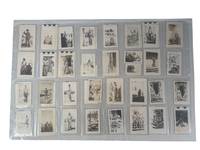
1943214881943. African American MilitaryWWII African American U.S. Army soldiers photo archive from Fort Huachuca Arizona 1943 documenting the lived experience of segregated military training during World War II. The archive shows Black army soldiers in training for the 93rd Infantry Division one of only two African American infantry divisions organized during the conflict. While the division is not explicitly named in the photographs contemporary handwritten annotations identify Fort Huachuca and the 1943 date strongly suggesting the men pictured were a part of that unit.<br /> Archive comprises 46 original black and white snapshot photographs measuring approximately 2.5 x 3.5 inches to 3.25 x 5 inches several bearing manuscript identifications of location and named soldiers. The images depict Black servicemen in standard World War II U.S. Army dress including M 1941 and M 1943 field jackets wool service uniforms garrison caps and M1 steel helmets. Rank insignia are clearly visible across multiple photographs including private first class corporal technician fifth grade staff sergeant and other non commissioned officer grades. Identified individuals include Sgt. Aaron C. Morton Sgt. William U. Dean Sgt. Lockleau and Sgt. Asbury the latter humorously photographed overturned on a barracks railing with a caption noting his antics. Several images show non commissioned officers posed with younger recruits underscoring internal mentorship and command structure within segregated companies. One photograph captures a soldier manning an M1919 Browning .30 caliber machine gun reflecting weapons training and infantry preparedness. Other images depict barracks life informal camaraderie saluting poses and interactions that convey unit cohesion during stateside training.<br /> <br /> Fort Huachuca functioned as a central site for Black military training during the years of segregation prior to the Korean War. The 93rd Infantry Division would later deploy to the Pacific Theater where elements engaged in security operations and combat patrols under conditions shaped by discriminatory assignment practices. These photographs document the formative training phase preceding overseas service capturing visible evidence of rank progression technical specialization and heavy weapons instruction within Black units. The presence of named non commissioned officers enhances the archive's value for regimental research. Minor curling and light edge wear to several photographs; manuscript annotations remain legible; overall very good. A substantial visual record of African American military service within the segregated U.S. Army during World War II mobilization. unknown