51 résultats
19582091202133001873Yomiuri Shimbun 1958. Soft Cover. Fine. Number of books: 1 Yomiuri Shimbun paperback
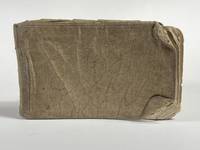
19154227France Belgium England 1915. Good. Oblong 8vo. Small "Walker's Service Notebook" 154 x 94 mm lined 26 pages filled with neat entries in pencil and pen final page of diary loose the remaining portion of the notebook i.e. about 2/3 blank. Original limp cloth covers worn. § Extraordinary manuscript diary of an anonymous British soldier beginning April 12th 1915 and ENDING ABRUPTLY IN THE TRENCHES AFTER A GAS ATTACK. The final entry was dated December 19th 1915 which was THE FIRST DAY PHOSGENE GAS WAS USED AGAINST BRITISH SOLDIERS. The short diary is rich in detail of life at the front. The anonymous soldier belonged to the 49th West Riding Division which had a large number of gas casualties when soldiers in reserve lines did not receive a warning in time to put on their helmets. A study by British medical authorities arrived at a figure of 1069 gas casualties 120 of which were fatal. It is very possible that the present manuscript was written by one of those men. It seems probable that with access to the right regimental records the identity and fate of the soldier could be learned and his story told in full; however even as an anonymous diary the interest and poignancy of this personal record is clear.<br /> <br /> The events recorded span just nine months. On April 12th the soldier leaves Edenthorpe near Doncaster and crosses the channel to Le Havre that evening "packed like herrings" and accompanying horses and wagons. Over the next few months he records laying lines opening signal offices handling horses towns and villages visited billets and meals injuries regiments encountered names of comrades and O.C.s shelling rain and mud. He sees the Northumberland Hussars the Indian Corps and Royal Horse Artillery. On May 9th he records the Battle of Aubers Ridge: "Off duty at 7am. Attack began at 5am by Artillery. Signal thro' during day showed heavy losses in E. Lancs Lincolns. 13th London and other Batts. Had coffee in Fleurbaix and then to bed in barn. Off duty 3pm. Attack still proceeding without much impression on our line. French said to be doing well. At night we have the two windows in our Signal Office made up with corrugated iron & sandbags."<br /> <br /> For the entry dated May 12th our author notes that the name of the Division has been "altered to the 49th" thereby confirming the identity of his Division. On May 24th: "The Allamands dropped about 6 shrapnel in our vicinity."<br /> <br /> From a period of steady work and periodic pleasures "had tea & cakes at a patisserie & and then back after buying some books" "glorious day" the situation deteriorates with the weather "torrential rain dugouts leaking & 18" water on my floor".<br /> <br /> They move to Chateau de Trois Tours and on July 13th there is "rather an exciting night" with a bombardment from 7.30 to 10.30. On the 14th "The whole place is being encircled by barbed wire & trenches & the furniture is being moved out of the chateau." On the 15th "At 12.45pm about 12 shells fell round the chateau made a dive for the Signal Office Billy Edwards & Gus Harris wounded in thigh and ankle." They were shelled again on the 16th.<br /> <br /> On December 1st he travels back to Sheffield on leave returning on December 8th. The company are now holed up near Ypres at Hospital Farm the name given to a farm building used as a dressing station. The final entry reads "Dec 19th 'S.O.S.' Gas attack 5.30 am things lively until 8.30am. 146 & 148 des. 148 soon repaired from chateau". The cemetery at Hospital Farm contains 115 Commonwealth burials of the First World War.<br /> <br /> On the significance of the 19 Dec. 1915 battle at Wieltje Belgium northeast of Ypres see the long Wikipedia entry "German Phosgene Attack of 19 December 1915." <br /> <br /> The diary contains many clues that could help identify our writer in military records. It is not certain that he was one of the first British casualties to Phosgene gas but it seems tragically likely. As it stands the final entry in the diary marks an important milestone in the war: phosgene gas would eventually be responsible for about 85% of the 90000 deaths caused by chemical weapons during World War I. unknown
1917050554Istanbul: Erkân-i Harbiye-i Umûmiye Matbaasi. H.: 1333 1917. Soft cover. Very Good. Atlas Folio - over 23 - 25" tall. Original color map. Folded. Oblong atlas folio. 50 x 60 cm. In Ottoman script. Shows Southeastern parts of Asia Minor and Syria; Siverek Sard Iraq and Ras Al-Ayn Rasulayn - Resualyn in Syria. Hegira: 1333 = Gregorian: 1917. Not description on map-maker. Scale: 1: 200.000. This is one the serie of the Bonn projection maps which are the first map series in modern techniques in Turkey and the Ottoman Empire. In order to produce these maps covering Turkish territory Reconnaissance Branch was incorporated into The Mapping Commission. The maps were produced in the datum based on the latitude and longitude of Ayasofya Mosque in equal area Bonn Projection. The field works for the 123 sheets covering the country were conducted by 76 staff. The production was completed in 18 years starting from east west. Field works continued without stopping except in years 1914 and 1920. This map series called also reconnaissance maps contributed a lot to producing 1:25.000 scale maps. According to Türkezer & Çobanoglu: History of Mapping in Turkey-1:200.000 Scale Maps last cartographer of Diyarbakir regio is M. Sait Malatyali. No his biographic material and info in 'Savaslarda Haritacilar'. Rare. <br/> <br/> Erkân-i Harbiye-i Umûmiye Matbaasi., [H.: 1333] paperback
197579194Frankfurt: Soldat & Technik 1975-79. 1st edition. As New. small folio. pictorial wrappers c.600pp. b/w plates text ills. diags. Editorial supplement to Soldat & Technik the German Army journal. Copiously illustrated with photos & diagrams primarily of armour & missiles Soldat & Technik unknown
1912052625Autograph Letter Signed ALS Letterhead 'Çatalca Ordusu Menzil Müfettisligi'. AH 1328 1912. Soft cover. Very Good. Original autograph letter signed by Ali Hikmet Ayerdem. 38x23 cm. In Ottoman script. 1 p. Three long lines. Dated 22 Kanunisani 81328 AD 1912. Written to Ayastefanos High Commands for the assignment of cavalry major 'Mustafa Resid Bey'. Ali Hikmet Ayerdem 1877; Larissa - March 21 1939; Istanbul was an officer of the Ottoman Army and a general of the Turkish Army. Rare. <br/> <br/> Autograph Letter Signed (ALS) Letterhead 'Çatalca Ordusu Menzil Müfettisligi'., [AH 1328] paperback
194218480Los Angeles CA: Circle-V Press 1942. fair to good. 23 cm 415 illus. bds & spine stained & discolored. Inscribed by the author to Drew Pearson; 1942 Drew Pearson traffic ticket laid in. Some damp lines at the edge of some pages. Circle-V Press unknown
194544498Okayama: Photographed in many Japanese Locations with most of the loose photographs taken in Okayama Japan n. d. ca 1945. 1945. WORLD WAR II JAPAN. First edition. Blue cloth photograph album 124 silver gelatin photographs mostly 2 1/4" x 3 1/4" with 106 of them in corner mounts. A fascinating vernacular photograph album capturing scenes in American-occupied Japan just after the Second World War. Most of the photographs are captioned in white ink on the black album pages and organized in sections such as "Landmarks" "The People" "The Cities" “The Military” and “Personalities.” “Landmarks” include views of sites in Kokura Yakata Okayma Prefecture picturing shrines country homes water works the "International Military Tribunal Far East" and more. "The People" shows Japanese residents of all ages some in Western dress others in traditional Japanese garb standing in front of structures on the streets at a military checkpoint playing "yakkyu national game" baseball swimming and other activities. The section on the cities comprises street views in Okayama Kokura Fukuoka Hiroshima Yakata Tokyo Kyoto and Yokohama. Surprisingly the four shots of Hiroshima do not contain much evidence of destruction and provide a rare contemporary glimpse of areas of the city not leveled by Little Boy. Views of Tokyo include the Dai Ichi Building the Imperial Museum and an image of an American soldier "on the Ginza." The various views in the other cities show Japan's largest steel works a partially-demolished department store temples and the Yokohama wharf. The military section includes photographs of Okayama Post the "A.G. Office" barracks headquarters of the 24th Division in Kokura Kyushu the Kokura Arsenal and Post Exchange Fukuoka's 118 Station Hospital and more. The "Personalities" section is comprised of shots of American soldiers in and out of uniform almost all of them identified by their first names or nicknames. This section also includes photographs of "A.G. Girls" a few Japanese people identified by name American soldiers at the War Ministry Hotel in Tokyo U.S. soldiers at the "4th Repl. Depot" in Sobudai" and more. A handful of the captions and some of the loose photographs are captioned in Japanese. Some of the loose photographs are stamped on the verso "Jack Woytych" with his Wisconsin address though it is unclear whether this refers to the owner/photographer of the album or the printer of the photographs. Most of the loose photographs emanate from Okayama. A noteworthy collection of personal images from an American serving in Japan at the end of World War II. Moderate wear to the spine ends and spine panel light edge wear and rubbing to the extremities else a very good copy. Photographed in many Japanese Locations, with most of the loose photographs taken in Okayama, Japan, n. d. (ca 1945). hardcover
19486818Madrid: La Arcadia 1948 Imp. en Gráficas Ultra.- XIII65 p. 4 h.: Va ilustrado con la reproducción facsímil de la portada de la obra original; 4º 255 x 175 cm; Portada a dos tintas; Intonso; Fina impresión sobre excelente papel ahuesado verjurado con todas sus barbas; Enc. original en Cartulina Ed.- Publs. de La Arcadia. 6.- Tirada de 110 ejemplares numerados. En excelente estado de conservación. Reimpresión de la rarísima edición de: "Zaragoza en las prensas de Jorge Coci hacia 1504". La obras nos relata de un modo directo y popular la conquista de Nápoles por el Gran Capitán Don Gonzalo Fernández de Córdoba. RARA EDICION DE BIBLIOFILO. HISTORIA DEL SIGLO DE ORO ESPAÑOL Libro en español La Arcadia paperback
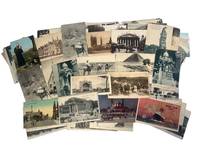
1915207331915. Australian Imperial Force soldiers postcard correspondence Archive 1915 to 1916 documents ANZAC service during the Gallipoli campaign and subsequent deployments across the Mediterranean theater through sustained communication with a civilian recipient in Sydney. The archive centers on letters addressed to a woman identified as Olga written by multiple soldiers including her brother Eric and another correspondent George. The material records trench conditions troop movement and the transmission of news from the front including the report of Eric's death. The correspondence situates individual experience within the Gallipoli campaign where Allied forces sustained heavy casualties in operations against Ottoman defenses and traces the continuation of service across France Egypt and Greece following the withdrawal.<br /> <br /> Archive of 54 handwritten postcard letters. Europe North Africa and the Mediterranean 1915 to 1916. Each message is written on the verso of a period postcard most measuring approximately 5.5 x 3.5 inches with photographic views of cities and towns including London French villages Cairo and locations in Greece. Several images depict damaged urban environments. One postcard bears a censorship marking with portions of text obscured. The correspondence includes multiple authors primarily Eric and George. In one letter from France George writes "Thank you for the pose.We are having beautiful weather at present. Just like an Australian spring. Love from George." Eric writing from Egypt on April 16 notes "We are once again in the trenches where we have had a very lovely time for a few days." A later letter reports Eric's death stating "You need have no fear that he was decently buried" while subsequent correspondence reflects diminished communication and shifting personal relationships including George's inquiry "Do you ever write to me Olga. I wish a few letters from you would turn up."<br /> <br /> The Gallipoli campaign fought from April 1915 to January 1916 resulted in extensive casualties and became central to the development of ANZAC identity commemorated annually as Anzac Day. Following the evacuation of Gallipoli Australian forces were redeployed across multiple theaters including the Western Front and Middle Eastern campaigns reflected in the geographic range of these postcards. The archive documents the function of wartime correspondence under censorship and the role of letters in conveying both military experience and personal loss to the home front. Light wear consistent with handling; overall very good condition. unknown
1987778157PN. New. 1987. Soft Cover. Date is original print. This is a reprint edition. . PN paperback
19942091502135413109Hebei Science and Technology Publishing House 1994. Soft Cover. Fine. Number of books: 4 Hebei Science and Technology Publishing House paperback
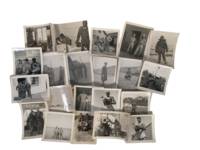
1957193551957. Vernacular photograph archive of African American soldiers in integrated U.S. Army units circa 1950s documents the early implementation of military desegregation following Executive Order 9981 and provides visual evidence of Black and white soldiers serving together during and after World War II including the Korean War. The photographs place African American servicemen within the first generation of formally integrated military units preceding broader civil rights gains in civilian society. Scenes of joint training transport and daily life show Black soldiers operating alongside white counterparts in contexts ranging from shipboard movement to antiaircraft defense positions indicating the practical realities of integration in active and post-conflict environments. The archive captures both structured military activity and informal moments offering a record of service that contrasts with the segregated conditions that had defined earlier periods of U.S. military history.<br /> <br /> United States and Korea circa 1950s. Archive of 21 silver gelatin vernacular photographs with several images bearing manuscript captions on the verso identifying individuals and locations including one noting Korea 1957-1958. Photographs depict a range of settings including military bases in Korea stateside camps shipboard scenes and antiaircraft gun emplacements in snowy terrain. Multiple images show interracial groups of soldiers posing with rifles and submachine guns while others capture informal activities including one sequence featuring a soldier holding an inflated puffer fish aboard a ship. One photograph includes a note written in Italian on the verso indicating cross-cultural contact or circulation. Composition and subject matter vary from posed group portraits to candid operational and leisure scenes.<br /> <br /> Created during the first decade of enforced military integration these photographs align with the transitional period in which desegregation policies were implemented unevenly across the armed forces with fuller integration not realized until the mid-1950s. The Korean War served as a critical testing ground for integrated units accelerating changes in military structure and social dynamics within the ranks. This archive provides a ground-level view of those developments documenting both the normalization of interracial military service and the persistence of shared routines duties and environments across racial lines. Light wear from handling with minor surface marks and occasional verso annotations; overall very good condition. unknown
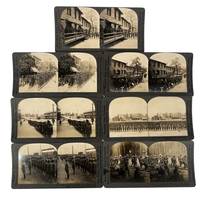
1918205021918. Buffalo Soldier regiments depicted in stereoview photographs from the World War I era document African American cavalrymen and infantry units serving in segregated formations of the United States Army during the early twentieth century. These images record soldiers from several historically significant Black military units including the 9th U.S. Cavalry the 10th Cavalry and the 369th Infantry Regiment. African American soldiers served in large numbers during World War I despite segregation in the armed forces and the war marked a turning point in public recognition of Black military service. The photographs capture cavalry movement machine gun training and celebratory returns from the European front preserving visual evidence of the military presence and public visibility of Buffalo Soldiers during the conflict.<br /> <br /> Archive consists of seven stereoview photographs published by the Keystone View Company during the World War I period. The views depict soldiers from the 9th U.S. Cavalry the 8th Regiment of Colored Troops the 10th Cavalry the Chicago Regiment of Colored Troops and the 15th Regiment of the 369th Infantry. Two stereoviews show Black machine gun companies operating Lewis guns one of the principal light machine guns used on the Western Front during the war. Another view shows Troop K of the 10th Cavalry moving on horseback at Camp Chickamauga in Georgia. Additional stereoviews depict African American soldiers returning from European service and marching in public celebrations including scenes of troops parading along major boulevards such as Fifth Avenue in New York.<br /> <br /> The Buffalo Soldier regiments had already established a long military record before the First World War. Units such as the 10th Cavalry formed part of the segregated Regular Army created after the Civil War and served in campaigns across the western United States during the Indian Wars later participating in the Spanish American War the Philippine American War and operations during the Mexican Revolution. World War I marked one of the final periods in which cavalry units remained visible in American military organization as mechanized armor and motorized vehicles soon replaced mounted troops. At the same time Black soldiers who returned from service were celebrated in wartime parades yet continued to face segregation and racial discrimination within American society. Stereoview cards remain well preserved with light age wear typical of early twentieth century photographic prints. Very good condition overall and a visually compelling record of Buffalo Soldiers during the World War I era. unknown
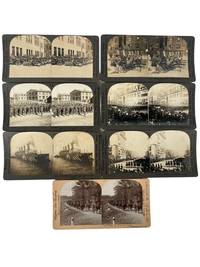
1918205031918. Keystone View Company. Buffalo Soldiers stereoview photographs World War I era document African American military service in the American Expeditionary Forces and place segregated Black troops within the broader Allied war effort in Europe. The images identify units of "Colored Troops" including engineers of the Signal Corps and depict formations logistical organization and moments of assembly such as soldiers "lined up for democracy." These photographs situate African American soldiers-many of whom descended from the Buffalo Soldier regiments established after the Civil War-within a transnational military environment that included French British and colonial forces. Scenes showing interaction with Moroccan and Indian troops on French roads reflect the multinational composition of Allied armies during the final phases of the war while the presence of Black American troops underscores their continued participation in major military operations despite segregation within the U.S. Army.<br /> <br /> France and possibly other European locations circa 1917-1919. Archive of seven stereoview photographs published by the Keystone View Company. Images depict African American soldiers in formation including lines for mess and organized ranks as well as mixed Allied groupings on roadways and near encampments. Stereographic format intended for three-dimensional viewing with printed captions identifying subjects and units. Photographs emphasize both structured military order and the varied roles occupied by Black troops particularly in engineering and support divisions.<br /> <br /> Produced during the final years of World War I these stereographs align with the expanded deployment of African American soldiers overseas and the broader visibility of Black troops within global conflict. While their service contributed to Allied operations these soldiers returned to a United States that maintained racial segregation and limited civil rights situating the archive within the larger history of African American military participation and postwar inequality. As visual records the images support research into race military organization and the international dimensions of the war. Light handling wear; overall very good condition. unknown
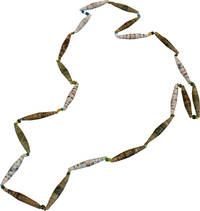
191821085London: St. Thomas' Hospital 1918. Very Good. London: St. Thomas' Hospital ca. 1918. Original necklace of twenty-one hand-made wallpaper beads each approx. 4cm. in length interspersed with colored glass beads. Wallpaper beads a bit browned else a fine piece of vernacular jewelry. <br /> <br /> Slightly later manuscript card attached to necklace stating "Necklace made of wall paper by a wounded soldier / In St. Thomas' Hospital London. 1914 - 1918 War." The hospital located on London's South Bank would indeed have seen many convalescing soldiers though we have been unable to find mention of other similar examples of soldier-made wallpaper beads this example possibly made to be sold at a local fundraiser or bazaar. St. Thomas' Hospital unknown
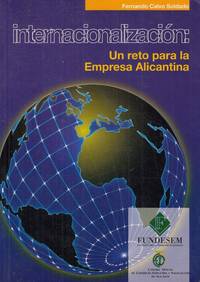
19977355Gráficas Cubanas 1997. paperback. Bueno. Alicante 1997. Gráficas Cubanas. Sello del anterior propietario. Rústica. 424 pp. 21x14 Gráficas Cubanas paperback
194527245Vancouver B. C.: P. R. P. Very Good with No dust jacket as issued. 1945. First Edition. Softcover. No author. Closed tears to the wraps. Interior is "fine." B/W photos of ruined cities in Germany "actual photographs by a Canadian Soldier." a scarce bit of WW2 ephemera. ; Oblong 16mo 6" - 7" tall; 30 pages . P. R. P. paperback
19812111902158500119Tsugu Village Office Aichi Prefecture 1981. Soft Cover. Fine. Number of pages: 184p. Size: 27cm Tsugu Village Office (Aichi Prefecture) paperback
1917200631917. Czechoslovak Legion soldiers photographed during World War I document the participation of Czech and Slovak troops fighting alongside Allied forces in campaigns across Europe. Approximately seventy eight photographs record military life among soldiers associated with the Czechoslovak armed formations that emerged during the war as nationalist units seeking independence from the Austro Hungarian Empire. The images depict trench warfare troop encampments drills and daily life among soldiers whose political objective was the creation of an independent Czechoslovak state. The photographs illustrate the conditions and routines experienced by these soldiers during the conflict that ultimately contributed to the establishment of Czechoslovakia at the end of the war in 1918.<br /> <br /> Photographic album containing approximately seventy eight photographs measuring about 4.75 x 6.5 inches mounted on album leaves. The images depict soldiers in trench positions infantry movements across terrain and group formations during drills. Additional photographs show military camps outdoor meals mess areas and group portraits including one of a military band. Several photographs capture village architecture including houses courtyards and churches encountered by the soldiers during the campaign. The album also contains images of wartime medical care including a medic working with wounded soldiers a funeral scene with graves and cemetery crosses and a horse drawn wagon train traveling along a mountain road. Other photographs depict staged performances and theatrical scenes presented outdoors for soldiers.<br /> <br /> During World War I Czech and Slovak nationalist leaders organized volunteer military formations known collectively as the Czechoslovak Legions composed of soldiers drawn from prisoners of war and expatriate communities who sought to fight alongside the Allied powers against Austria Hungary. Their participation in the war strengthened international support for the creation of an independent Czechoslovakia which was established following the collapse of the Austro Hungarian Empire in 1918. Photographs of trench systems encampments and military drills in this album illustrate the entrenched character of warfare that dominated much of the conflict as armies constructed extensive defensive systems while attempting to break enemy lines through periodic assaults. Album containing approximately seventy eight photographs measuring about 4.75 x 6.5 inches. Album boards show chipping along the edges while photographs remain clear with strong contrast. Overall condition very good. unknown
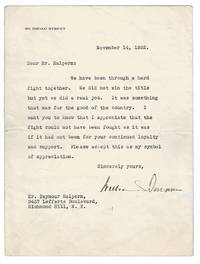
1932100747<p>New York November 14 1932. 1932. Very good. - Over 85 words typed on his 8-5/8 inch high by 6-1/2 inch wide "90 Broad Street" stationery. Addressing the young campaign volunteer Seymour J. Halpern William J. Donovan the future head of the Office of Strategic Services writes "We have been through a hard fight together. We did not win the title but we did a real job." He goes on to show his appreciation to the young autograph collector "I want you to know that I appreciate that the fight could not have been fought as it was if it had not been for your continued loyalty and support. Please accept this as my symbol of appreciation." Signed in full "William J. Donovan". Donovan ran for Governor of New York State to succeed FDR in 1932. A Republican he lost to Herbert Lehman. Folded in half for mailing the edges are soiled and there are tears to the edges of the fold. Very good.</p><p>To house his law firm in March of 1932 Colonel William J. Donovan leased a large suite of offices in the Stone & Webster Building at 90 Broad Street in New York City.</p><p>The American attorney diplomat soldier and intelligence officer William J. Donovan 1883-1959 is best known as the head of the OSS the Office of Strategic Services which was the war time precursor to the CIA. A veteran of World War I Donovan was awarded the Medal of Honor the Distinguished Service Cross the Distinguished Service Medal and the National Security Medal. In 1941 FDR established the Office of the Coordination of Information with Donovan as its director. Once the U.S. entered the war the COI became the OSS in June of 1942 with Donovan now a major general as its head. Donovan created the OSS as a military psychological warfare service to include both psychological and unconventional warfare. The service would soon include elements that would be called "special operations" the first phase of which would be intelligence penetration including research and analysis and propaganda followed by a second stage incorporating sabotage and subversion. This second stage would be followed by guerilla action commando raids and support of resistance movements.</p><p>An avid autograph collector in his youth the then 19-year old campaign volunteer the future Queens New York Republican Congressman Seymour Halpern 1913-1997 started his political career as a campaign aide to New York's powerful mayor Fiorella La Guardia and first served in New York's State Senate for 14 years before seeking a seat in the U.S. Congress. In Albany Halpern sponsored 279 bills that became law including measures on schools housing civil rights nutrition and mental health. A Liberal he was something of an anomaly as the lone Republican representative from New York City and generally garnered support from Labor Unions and endorsement from the Liberal Party. Yet he never even considered switching parties as he considered membership in the Republican Party a family tradition and commitment. While he found ample time for his private pursuits including painting and collecting autographs he took his legislative duties very seriously. Of these he was proudest of his co-sponsorship of the 1964 Civil Rights Act and of the original 1965 Medicare legislation.</p> [New York], November 14, 1932.
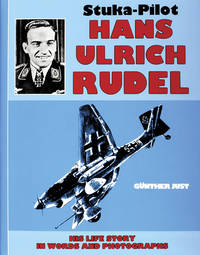
1990Q-0887402526Schiffer Publishing Ltd 1990-10-01. Hardcover. New. In shrink wrap. Looks like an interesting title! Schiffer Publishing, Ltd hardcover
19562111902160306110Ninglaku Bookstore 1956. Soft Cover. Fine. The book is in fine condition. Ninglaku Bookstore paperback
19572091202132801902Gakufu Shoin 1957. Soft Cover. Fine. Number of books: 1 Gakufu Shoin paperback
19552090502128701625Masushobo 1955. Soft Cover. Fine. Size: New book Number of copies: 1 Masushobo paperback
19582090502128701776Social Thought Study Group Publishing Department 1958. Soft Cover. Fine. Size: Paperback Number of books: 1 Social Thought Study Group Publishing Department paperback