228 résultats
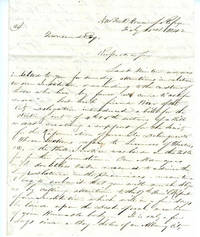
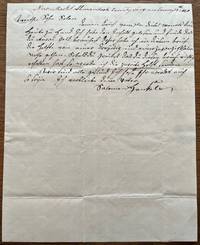
184036650New Market Virginia: N/A 1840. Letter. Good. Letter. Folded lined paper measures approximately 9.5" x 7.75". One page of content. Address and New Market postal mark located on the back. "Free" is stamped on the paper next to the address. Paper is chipped on the far edge from opening. Light toning to the paper. Good condition. <br /> <br /> Contents of the letter most likely in the German language and not transcribed. It is signed by Solomon Henkel at the bottom of the letter. Solomon Henkel was the oldest son of Paul Henkel a prominent Lutheran Minister in New Market. He was a Doctor and cofounder of the Henkel Press. He was also a Post Master in New Market. This letter is addressed to his son Solon who later graduated from medical school in Philadelphia. N/A unknown
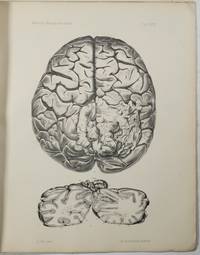
1896185001896. Stockholm 1896 2° 6 245 pp. 27 z.T. farb. lith. Taf. mit zahlr. Abbildungen feiner Halbleinenband. Inhalt: Neue Fälle die Lehre von der Sehbahn und dem Sehcentrum betreffend; Über hemiopische Pupillenreaktion; Zwei Fälle von Hemianopsie durch Geschwülste im unteren Parietallappen; Über die Beziehung der Sehfasern zu den Centralganglien; Zur Extirpation der Hirntumoren; Über die Veränderungen der Sehbahn bei kongenitaler Augen - Atrophie. Walker No.1062 unknown
1898504171898. Leipzig und Wien Franz Deuticke 1898 8° 4 97 3 pp. Portrait Halbleinenband der Zeit; Portrait fleckig. Erstdruck! Herrn Prof. Dr. S. Stricker zur Feier seines 25jährigen Jubiläums als ordentlicher Professor der allgemeinen und experimentellen Pathologie und zur Erinnerung an den 30jährigen Bestand des Institutes für experimentelle Pathologie in Wien gewidmet Von Freunden und Schülern. Inhaltsverzeichniss: Die Stellung der Pathologie. Von E. Albert 1868-1898. Von J. Wagner. Die ersten Jahre des Institutes für experimentelle Pathologie. Von E. Klein. Die Verdienste Stricker's und seiner Schule auf dem Gebiete der Mikroskopie der normalen und entzündeten Gewebe. Von A. Spina. Stricker's Unterrichtsmethode. Von G. Gaertner. Die Leistungen Stricker's und seiner Schule auf dem Gebiete des vivisectorischen Experimentes. Von A. Biedl. Verzeichniss der wissenschaftlichen Publicationen Stricker's und seiner Schüler. unknown
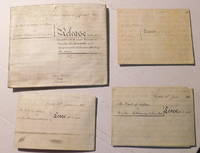
181899422Liverpool June 16 1818. 1818. Fine. - Original vellum document consisting of 2 attached sheets with scalloped top edges. An indenture 24 inches high by 30 inches wide and the assigns 22 inches high by 30 inches wide as usual folded down to 9 inches by 10-1/2 inches. 84 lines of text handsomely calligraphed over the two sheets. Within the initial "T" is the British emblem encircled by the words: "Honi soit qui mal y pense" a motto of the British chivalric Order of the Garter which translated means "Shamed be whoever thinks ill of it". The document has 2 George III embossed revenue stamps with a metal band one for three pounds and the other for one pound. There are also 2 Royal Cyphers.<p>On the rear fold of the document is a sketch of property showing several divisions including "Embleton Street 12 yards wide Dr Solomons land & Cottage". Upper Stanhope Street "20 yards wide" is on the south and Hayton Street "6 yards wide" is on the north. To the west of Solomon's land is land of Bland and another party. Further to the west is a 12 yard plot of land sold to Rowland Owen and "Release dated 23rd & 24th December 1818". This parcel appears to have the signature of Sefton over its description. Another entry on the indenture dated August 11th & 12th 1820 conveys property to Robert Rawlinson and Thomas Hesketh by the trustees of the will of Samuel Solomon. The conveyance is signed by two of Solomon's sons Abraham an oculist in Birmingham and John an amateur boxer and non-practicing lawyer. It is also signed by Ebenezer Daniell the manager of Solomon's Cordial Balm firm. Further in 1828 there is notice of "59 yards including half of Hayton Street" being conveyed to James Watts of Toxteth Park. It was later conveyed to a M J Hicks in October 1832. Both of these later conveyances are accompanied by minimal sketches. <p>The document is signed by the Earl of Sefton a party of the first part Peter Still and Alexander Strong of Lincoln's Inn parties of the second part Joseph Dawson of Liverpool party of the third part John Henderson of Toxteth party of the fourth part John Clare of Liverpool party of the fifth part. The lessees are described as "Samuel Solomon of Gilead House near Liverpool Doctor of Physic" and his Trustees "John Bird of Liverpool aforesaid Architect" and "Thomas Murrow of Liverpool".<p>In addition to the June 16 indenture there are 3 others:<p>1 A 15 inch high by 24 inch wide indenture on parchment dated June 15 1818 and titled "The Earl of Sefton to Doctor Solomon & Trustee / Lease for a year". The trustee is identified as John Bird of Liverpool Architect and it is signed by Sefton.<p>2 A 16 inch high by 23-1/2 inch wide indenture on parchment dated June 15 1818 and titled "The Earl of Sefton to Doctor Solomon & Trustee / Lease for a year". The trustee is identified as John Bird of Liverpool Architect and it is signed by Sefton.<p>3 A 17 inch high by 23 inch wide indenture on parchment dated August 17 1818 and titled "Peter Brown to Dr. Solomon and Trustee / Lease for a year". The trustee is identified as John Bird of Liverpool Architect and it is signed by Peter Brown. The indentures are folded down to approximately 8-1/4 by 6 inches.<p>Each of these 3 indentures on parchment has a George III embossed revenue stamp of one pound fifteen shillings a royal cypher the stamp of James Walker of Bermondsey parchment dealer and the British emblem within the initial "t" encircled by the words: "Honi soit qui mal y pense".<p>The 3 indentures by the Earl of Sefton are of particular interest for this reason - parliamentary elections were being held from June 17 to July 18 1818 and being an Irish peer Sefton was eligible to run for a seat. Dr. Solomon who by this time had become quite wealthy was the chief organizer of the Earl's campaign. Solomon spared no expense on his behalf in Liverpool which was famous for lively electioneering. It was to no avail as Sefton lost his election to George Canning. It seems quite possible that these leases given their dates within 2 days of the campaign served as a kind of reward for Solomon's future efforts.<p>"Doctor" Samuel Solomon c. 1768 - May 21 1819 was born in Cork and moved to Dublin influenced by his uncle Isaac Solomon who worked as a druggist there. Around 1789 he and his uncle went into business in Liverpool's dockland area. In 1796 he began marketing his "Cordial Balm of Gilead" which he claimed would cure one of ulcers of the lung kidneys and liver sexual dysfunction hypochondria female complaints etc. His claim to have been a Doctor of Medicine is suspect. Solomon became very wealthy from the sales of his expensive tincture made from a mixture of brandy and turpentine flavored with herbs as well as from real estate investments. [Liverpool], June 16, 1818. hardcover
1834H3038Albany NY: Hoffman & White 1834. First printing. Hardcover. Very Good. First edition 1834 cloth with spine label very good light wear to cloth foxing throughout 10 pp. recommendations xxxvii 2 40-314 pp. Hoffman & White hardcover
183410589Albany: Hoffman & White 1834. 12mo original cloth with paper spine label a bit of wear. pp 10 314. Scattered light foxing about Very Good. <br /> <br /> Southwick writing in the last years of his life "became a religious and moral enthusiast." DAB. Herttell a well-regarded New York City lawyer and assemblyman who favored a wall of separation between Church and State had argued against the appointment of Chaplains to minister to the State's legislature. Southwick warns of "the dark cloud of INFIDELITY which has lately made its appearance in our political horison" and which will destroy America unless religion-- and chaplains-- prevail and the influence of Herttell Fanny Wright and Robert Owen is diminished. <br /> FIRST EDITION. AI 26884 5. Sabin 88643. Cohen 6043. Singerman 0592. Not in Eberstadt Decker Marvin Harv. Law Cat. Marke. Hoffman & White unknown
183654797New York:: Leavitt Lord & Co. 1836. First edition. publisher's embossed cloth with printed paper label on spine. Light foxing; spine label darkened; short splits to joints not affecting the structure of the book which is tight and sound. . 12mo. Large folding map. Howes V-40; Sabin 98548. Leavitt, Lord & Co., hardcover
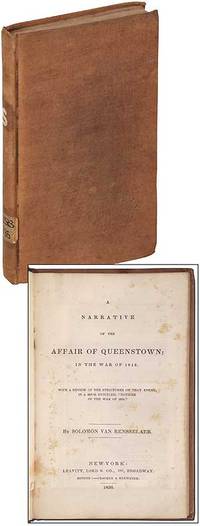
1836372494New York: Leavitt Lord & Co 1836. Hardcover. Very Good. First edition. Octavo. viii 9-41 95pp. folding frontispiece map and publisher's catalogue at the rear. Publisher's light brown ribbon-embossed cloth. Ex-library copy with spine letters bookplate small number stamp at the bottom of the first text page and paper shelf label on the rear free endpaper. Fading to the cloth light scattered foxing about very good. Van Rensselaer commanded the American army that attacked Queenstown on October 13 1812. The folding map of the river and environs between Lake Ontario and Lake Erie with Niagara Falls at the center is especially fine. Leavitt, Lord & Co hardcover
1836elala622<p>New-York: Leavitt Lord & Co. & Boston: Crocker & Brewster 1836. 1836. 12mo. pp. viii 9-41 blank leaf 95 22ads. folding map frontis. original embossed cloth spine label & foot of spine chipped stain on front cover some foxing. First Edition. A reply to General Armstrong’s Notices of the War of 1812 by the Commander of the advance American force attacking Queenstown Oct. 13 1812. The lengthy appendix pp. 95 consists of letters and general orders relating to the affair. Howes V-40. Lande 872. Sabin 98548. TPL 929. 1st Edition. Hardcover.</p> New-York: Leavitt, Lord & Co. & Boston: Crocker & Brewster, 1836. hardcover
183625609New York: Leavitt Lord & Co. 1836. First Edition. . Hardcover. Fair/No Dust Jacket. 4495pp publisher's ads. Fold-out map in front. Top of spine chipped. Paper spine label chipped but legible. Front outer hinge fragile splitting at top and bottom. Inner front hinge weak but holding. Top 1/2" of title page clipped where previous owner's name was. Attractive bookplate tipped in - Wallace Hugh Cathcart - easily removeable. Interior good. Size: 12mo - over 6¾" - 7¾" tall <br/> <br/> Leavitt, Lord & Co. hardcover
18910726W190303Chappell. Good. 1891. Unknown Binding. Bound with: Vocal score of Utopia limited by Gilbert and Sullivan. London: Chappell 1893. Blue pebbled cloth soiled and worn stained. Bookplate od G. C. Druce botanist editor. End papers much foxed text foxed too. Scarce.; 48 pages . Chappell unknown
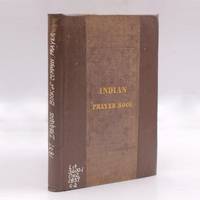
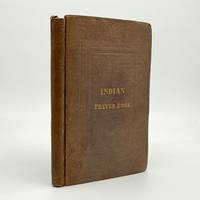
1837373005New York: Swords Stanford & Co. D. Fanshaw Printer 1837. 168pp. 8vo. Original cloth taped GTS markings. 168pp. 8vo. Oneida prayer book for tribes in Wisconsin and upper New York. Davis' work is a revision of the Indian prayer book published in 1815 by the Rev. Eleazar Williams a catechist in Oneida Castle New York. It does not contain the entirety of the prayer book but "the Morning and Evening Service the Litany Catechism some of the collects and the prayers and thanksgivings upon several occasions in the Book of Common Prayer.together with forms of family and private devotion." At the end are four hymns in Oneida without music. The Episcopal Church had a very successful ministry to the Oneida in the 19th century and one of the Episcopal Seminaries Nashotah House was founded in 1842 specifically as a mission to them. Siebert Sale 499. Ayer INDIAN LINGUISTICS ONEIDA 3. Pilling PROOF-SHEETS 998. American Imprints 46443; Pilling J.C. Iroquoian languages p. 53; Sabin 18885; Field T.W. Indian Bib. 404 Swords, Stanford, & Co. D. Fanshaw, Printer unknown
1837371596New York: Swords Stanford & Co 1837. 168pp. 1 vols. 12mo. Original publisher's cloth. Library bookplate and markings. 168pp. 1 vols. 12mo. Oneida prayer book for tribes in Wisconsin and upper New York. Davis' work is a revision of the Indian prayer book published in 1815 by the Rev. Eleazar Williams a catechist in Oneida Castle New York. It does not contain the entirety of the prayer book but "the Morning and Evening Service the Litany Catechism some of the collects and the prayers and thanksgivings upon several occasions in the Book of Common Prayer.together with forms of family and private devotion." At the end are four hymns in Oneida without music. The Episcopal Church had a very successful ministry to the Oneida in the 19th century and one of the Episcopal Seminaries Nashotah House was founded in 1842 specifically as a mission to them. Siebert Sale 499; Ayer Indian Linguisitcs Oneida 3; Pilling Proof Sheets 998 Swords, Stanford, & Co unknown
183762547New York:: Swords Stanford & Co. 1837. First edition. publisher's gilt-lettered cloth blind-embossed in a floral pattern; expertly rebacked retaining the original spine. Institutional bookplate on pastedown; faint evidence of pocket on rear pastedown; some light foxing and wear to cloth; an attractive copy. 12mo. Swords, Stanford, & Co., hardcover
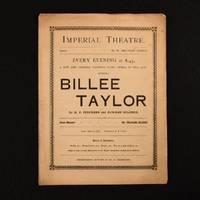
1880939Q21London: Letts Son & Co. 1880 . First edition. Brochure/Pamphlet. Very Good. 10" by 7.5". None. A vanishingly scarce programme for the nautical comic opera "Billee Taylor" by H. P. Stevens and Edward Solomon which was performed at the Imperial Theatre from 1880. Bound in the publisher's original wraps. An exceptionally scarce programme for the operatic performance of 'Billee Taylor' a nautical comic opera first performed at the Imperial Theatre on Saturday October 30th 1880 at 8pm.Written by Edward Solomon with a libretto by H. P. Stevens this initial performance starred Phillip Day Furneaux Cook and J. A. Arnold among others and was produced under the direction of Charles Harris. It subsequently played at the Standard Theatre in New York the following year. With the original advertisements to the rear including for Oysters 'Zoedone' a non-alcoholic champagne and for various other performances. Bound in the publisher's original wraps. Externally very smart with light edge wear a little age toning and the odd mark. Pages are bright internally a little age toned. Very Good Letts, Son & Co. unknown
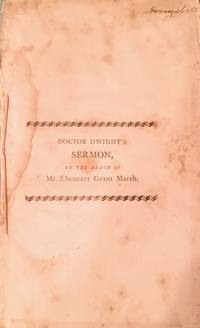
180463142<p>Hartford CT: Hudson and Goodwin. Good; 21pp. Good. Stain at center spine other stains to front cover and first several leaves owner name on front cover and numerals inked at top . of first sermon. 1804. Softcover. Sewn printed wraps. Also contains An Oration on the Death of Mr. Ebenezer Grant Marsh Senior Tutor Hebrew Instructor and Professor Elect of Languages and Ecclesiastical History in Yale College Who Died on the 16th of November 1803 in the 27th year of His Age Pronounced in the College Chapel on the 19th of January 1804 by Bancroft Fowler Hartford CT: Hudson and Goodwin 1804. 13pp. Both sermons are listed as BAL 5057. ; 12mo 7" - 7½" tall; 21 pages .</p> Hudson and Goodwin paperback
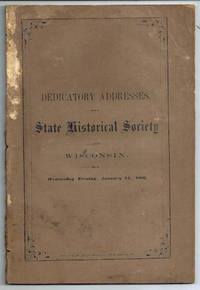
1866005000Madison: W. J. Park 1866. First Edition. Printed wraps. Some worming along spine of wraps. Good. Printed wraps; 31 1 pages. Early Wisconsin printing. One word corrected in blue pencil. <br/><br/> W. J. Park paperback
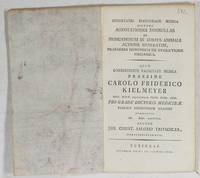
1807652181807. Tubingae : Litteris Reis- et Schmidianis 1807 kl.-8° 34 1 pp. Broschur d.Zt. Erstdruck! Präses.: Karl Friedrich von Kielmeyer 1765-1844 Resp.: Joh. Christ. Salomo Tritschler 1785-1841 Obristenfeldensis. unknown
1868248181868. Hdb. d. Lehre v.d. Geweben 1/1. - Hrsg. v. Salomon Stricker. - Leipzig Verlag von Wilhelm Engelmann 1868 8° XXVIII 176 pp. 49 Holzschnitten Halbleinenband Ferner enthält diese Lieferung: Salomon Stricker: Allgemeine Methodik Allgemeines über die Zelle; Alexander Rolltett: Von den Bindesubstanzen; Maximillian Johann Sigismund Schultze: Allgemeines über die Structurelemente des Nervensystems; Julius Arnold: Gewebe der organischen Muskeln; Wilhelm Kühne: Nerv und Muskelfaser; Ernst Brücke: Muskelfasern im polarisirten Lichte. unknown
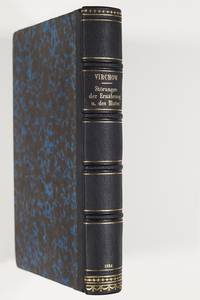
18549001854. Hdb. Path. Ther. Vir. 1. - Erlangen Verlag von Ferdinand Enke 1854 8° XIV 551 pp. Halbledereinband der Zeit. First Edition! The earliest attempts to explain the doctrine of celluar nature of vital processes was made by Virchow in the present work. It is a comprehensive preliminary study and a invaluable source book of his famous "Celluar Pathology" published 4 years afterwards in 1858. Virchow's original contributions comprising the pages 1-371. Von Rudolf Virchow stammen die Arbeiten auf den Seiten 1-371. "Hier finden sich auch schon mehrfach die Gedanken aus welchen Virchow seine fundamentale Cellular-Pathologie aufgebaut hat." W.Becher Virchow. "Virchows so sehr erfolgreiche Synthese das Buch über die Zellular-Pathologie aus dem Jahre 1858 war nicht sein erster Versuch in dieser Richtung. Sein "Versuch zur Einigung der wissenschaftlichen Medizin" von 1849" . war so allgemein das sie den Zweck verfehlte." "Ein zweiter weit ernsthafterer und ausgedehnterer Vorstoß in dieser Richtung waren die einführenden vierhundert Seiten die Virchow 1854 Würzburg für sein "Handbuch" schrieb. Er begann mit allgemeinen Feststellungen über Leben und Krankheit: Die Zellen sind die wirkliche Herde des Lebens die vitalen Elemente. Diese Elemente besitzen eine gewisse Selbstständigkeit; doch sind sie voneinander abhängig und bilden höhere Einheiten. Solche Einheiten werden durch gemeinsame Zirkulation gemeinsame nervöse Versorgung und direkten Zusammenhang oder Berührung der Zellen untereinander erhalten. Die letztere Beziehung ist vernachlässigt worden. Das Leben kann nur durch ständige Stimulierung und Irritierung bestehen. Die Krankheit ist immer eine Schwächung des Lebens die durch die Gefahr gekennzeichnet wird. Jede Störung des Lebens beginnt lokal. Die pathologische Erscheinungen unterscheiden sich qualitativ nicht von den gewöhnlichen vitalen Erscheinungen; sie sind nicht heterolog im engeren Sinne des Wortes sie sind vitale Erscheinungen die zur falschen Zeit auftreten heterochron oder am unrechten Platz heterotop. Normale Verhältnisse können durch nervöse Regulierung durch das Blut- und Kreislaufsystem und durch eine Reaktion des Gewebes wieder hergestellt werden. In dem letzteren Zusammenhang übernahm Virchow von John Simon den Gedanken daß die Organe Substanzen in das Blut ausscheiden die auf andere Organe einwirken Er hob auch die Wirkung der Geschlechtsdrüsen auf die Schilddrüse Milchdrüse und den Kehlkopf vor einer der nicht so seltenen Hinweise dieser Periode auf die innere Sekretion die erst in den achtziger Jahren durch die Arbeit von Brown-Séquard Schiff u.a. näher untersucht wurde." "Da Virchow sein Thema im Rahmen eines traditionellen Textes über allgemeine Pathologie entwickelte mußte er viele Gebiete die außerhalb seines direkten Tätigkeitsfeldes lagen behandeln." Er war gezwungen in der Hauptsache über die Beobachtungen und Theorien anderer zu berichten. Dadurch ist der Text von großem historischen Interesse" Ackerknecht Rudolf Virchow p.71-74 "So gehört der erste Abschnitt zu den wichtigsten in weiten Bereichen noch heute gültigen jedoch vergessenen Dokumenten der Medizin im 19.Jahrhundert . Erstaunlich ist folgendes . das Grundkonzept der Cellularpathologie ist in dem ersten Abschnitt des Handbuchbeitrages bereits voll und ganz enthalten." W. Jacob Ferner enthält der Band die "Störungen der Blutmischung" pp.372-470 von Karl Julius Vogel 1814-1880 und Salomon Friedrich Stiebel 1792-1868: "Rachitis und Osteomalacie" pp.471-551. unknown
1849584K. 1849. Samt. hshirt. Ryg mangler. St.p.t. VI 191 pp. samt 6 litograf. foldeplancher med mange fig. vedr. anlæg og redskaber. <br/><br/><em>Det første værk af sin art i Danmark. </em> unknown
184215444New York 1842. Addressed from "New York House of Rep.ys. Feby 21st 1842". The writer appeals to Townsend to modify a bill supporting the "Society for the Reformation of Juvenile Delinquents". He says that theaters have long acted as safe havens for wayward youth and wishes to continue as such which the bill he suggests impairs. He gives several examples: "It is only a few days since a Boy - the son of an Albany City Marshall was sent us having been guilty of stealing some 7 or 9 dollar! And this for the purpose of enabling sic him to attend a theatrical exhibition - and a Girl of our City borrowed 10 Dollars in her Aunts name for the purpose of giving to the Theater ." He concludes "it does not seem necessary to kill that law Just Now." Townsend family members were prominent Revolutionary War patriots & iron workers one manufactured the West Point Chain across the Hudson River with homes in Oyster Bay Long Island Raynham Hall & Orange County NY. 2pp on 4 leaves contemporary folds with postal stamp on outside sheet. Addressed to "Hon. Townsend of the N.Y. City Delegation Legislature. Albany New York". Sml. wax seal residue has lifted off blank side causing a small closed tear. unknown
18381260001838. First Edition. SLAVERY CONSTITUTION GILMAN Winthrop S. SOLOMON John LINCOLN William S. Alton Trials: of Winthrop S. Gilman Who Was Indicted with Enoch Long and Thadeus B. Hurlbut: For the Crime of Riot Committed on the night of the 7th of November 1837 while engaged in defending a Printing Press From an attack made on it at that time by An Armed Mob Written out from notes of the trial taken at the time By a Member of the Bar of the Alton Municipal Court. Also The Trial of John Solomon . and James M. Rock Indicted with James Jennings Solomon Morgan and Frederick Bruchy: For a Riot Committed in Alton On the night of the 7th of November 1837 in unlawfully and forcibly entering the Warehouse of Godfrey Gilman & Co. and breaking up and destroying a Printing Press. Written out from notes taken at the time of trial by William S. Lincoln A Member of the Bar of the Alton Municipal Court. New York: John F. Trow 1838. Small octavo 4-3/4 by 7-1/4 inches later 19th-Century three-quarter brown calf and marbled boards; pp. i-ii 1-5 6-158 2. $2200.First edition of the crucial record of the controversial 1838 trials of over 20 defendants documenting the deadly mob attack on Reverend Lovejoy and his press a work that swiftly provoked Northern fears that free speech required ""not only protection against governmental suppression but also protection against private violence aimed at silencing speakers.""The deadly 1837 mob riot that killed the abolitionist publisher and minister Elijah Lovejoy and destroyed his printing press had swift national impact. It proved to be ""a climactic event in the larger struggle for free speech"": one that raised fundamental questions on the ""private suppression of speech and the nature and future of republican government."" It also triggered ""an emerging view that free speech and press were rights or 'privileges' and 'immunities' to which all American citizens were entitled everywhere in the U.S."" The murderous riot demonstrated that free speech required ""not only protection against governmental suppression but also protection against private violence aimed at silencing speakers"" Curtis Free Speech 217-18.Prior to his death Reverend Lovejoy had seen mobs twice destroy his presses in Alton Illinois but despite no support from the state legislature or local officials he persisted. On November 7 1837 the warehouse where his new press was held was set on fire and he was murdered. In January 1838 eleven of Lovejoy's supporters and Gilman owner of the warehouse were indicted for attempting to protect Lovejoy and defend his pressa prosecution that outraged many in the North. At the same time eleven of the rioters ""only a small fraction of those who attacked the warehouse"" were also indicted Finkelman Slavery 148 The January trial of Gilman and his co-defendants is documented in the nearly 80 first pages of this very elusive first edition followed by coverage of the same month's trial of the eleven mob participants. Both trial records contain indictments arguments of counsel and witness testimony. While all in both trials were acquitted anger remained that defenders of Lovejoy and his press were indicted at all. The trials ""crystallized the fear that slavery would destroy free speech and civil liberty Lovejoy's death was part of a great transformation"" in a movement that recognized ""states and cities had acted against free speech simply by not acting by failing to provide protection free speech then required protection to be a meaningful right"" Curtis 227 239-400. To scholar Paul Finkelman ""the history of speech and anti-slavery is critical for our understanding of how opposition to free speech works"" Speech Press and Democracy 818. First edition first printing: with engraved frontispiece; rear pre-publication advertisement for Twelve Months in Alton. Cohen Bibliography of Early American Law 121163. Ex-library with gilt numbers on otherwise plain spine and evidence of library label removal.Text fresh with mild occasional soiling edge-wear to bright boards. A distinctive near-fine copy. hardcover
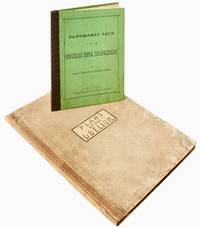
1861BB2214Boston: printed by Samuel N. Dickinson Washington Street / Published by Luther Stevens 186 Washington Street 1861. Two works documenting the first public obelisk in the United States and the technology developed to create it. First and only Edition of the Willard quite scarce. Royal 8vo 340 x 253 mm: 56-311pp with 14 inserted leaves including frontispiece of plates one folding. Original drab boards brown muslin spine upper cover with publisher's paper title label ruled and printed in black. Inscribed on front fly-leaf in pencil: "Charles W. Pearson August 13 185" A handsome survival tightly bound hinges neatly reinforced with Japanese tissue pages and plates generally clean and free of foxing with occasional smudges and stains. American Imprints 43-5291; Hitchcock 1409. The second work by Smillie: Slim demy 8vo 223 x 175mm: 16pp with frontispiece view of the monument engraved by E. A. Fowle from a drawing by R. P. Mallory seven-part accordion-fold panoramic view engraved for Drakes History of Boston of 160 important sites and institutions pp 2-12 provide "A key to the engraving" and woodcut in text. Publisher's green paper-covered boards printed in black rebacked with black cloth spine mimicking the original. End sheets and first page of text tanned from binder's glue else pages and plates including folding panorama fresh bright and free of foxing. Also issued in 1848 by Redding & Co. 8 State Street Boston in brown cloth decorated in blind and gilt. Stokes & Haskell P.1855—G-37. Abbey Life 573 for Mallory's panorama issued by Redding. The Battle of Bunker Hill actually was fought on Breed's Hill site of the Willard's Bunker Hill Monument on June 17 1775. The first monument commemorating the major opening battle of the American Revolution was an 18-foot wooden pillar with gilt urn erected in 1794 by King Solomon's Lodge of Masons to honor the fallen patriot and mason Major-General Dr. Joseph Warren who was killed during the battle's third and final assault. From 1824 to 1842 Willard designed and built the present monument a 221-foot tall granite obelisk for which he also developed the granite quarry in Quincy Massachusetts that provided stone. The first railroad in the country was built to transport granite from that quarry to the waterfront where it was taken by boat to Charlestown and hauled to the building site. N. B. With few exceptions always identified we only stock books in exceptional condition carefully preserved in archival removable mylar sleeves. All orders are packaged with care and posted promptly. Satisfaction guaranteed. Fine Editions Ltd is a member of the Independent Online Booksellers Association and we subscribe to its codes of ethics. [printed by Samuel N. Dickinson, Washington Street] / Published by Luther Stevens, 186 Washington Street unknown
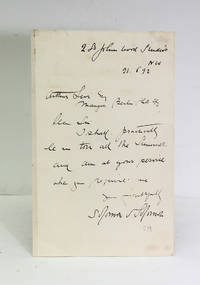
1892030999UK 1892. First Edition . Paper. Good. 48mo - over 3 - 4" tall. An Original Handwritten and Signed Letter by Artist Solomon Joseph Solomon. Dated 1892. A letter discussing his summer whereabouts. Solomon Joseph Solomon RA 1860 - 1927 was a British painter a founding member of the New English Art Club and member of the Royal Academy. He made an important contribution to the development of camouflage in the First World War working in particular on tree observation posts and arguing tirelessly for camouflage netting. Size is 180 x 115mm. Condition is good. Light folding crease. Paper strip to edge. Ref19209 <br/> <br/> unknown