1 398 résultats
1999303772Oxford University Press 1999. Softcover 1.2. Band Zustand: Keine Beschädigungen keine Eintragungen. Rücken Ecken Kanten sehr gut unbenutzt. Oxford University Press, paperback
1993287190Institut für Moderne Lehr- und Lernmethodik Marktredwitz 1993. Softcover in Kunststoffmappe Großformat 11. Auflage; 6 Bände Zusätzlich Informationsschrift zum Heintges-Lernsystem 2 Fischerei-Zeitschriften. Zustand: Keine Beschädigungen keine Eintragungen. Rücken Ecken Kanten gut. Institut für Moderne Lehr- und Lernmethodik, Marktredwitz, paperback
1939ZB319298Newark: 1939. 262 pp. original paper wrappers quarto mimeographed minor ownership markings & slight old water stains to several pages else good . - If you are reading this this item is actually physically in our stock and ready for shipment once ordered. We are not bookjackers. Buyer is responsible for any additional duties taxes or fees required by recipient's country. Newark: unknown
1972OCT310079154Scientific and Technical Information Office National Aeronautics and Space Administration; for sale by the Supt. of Docs. U.S. Govt. Print. Off. 1/1/1972. Paperback. Good. Paperback book in good condition. Scientific and Technical Information Office, National Aeronautics and Space Administration; [for sale by the Supt. of Docs., U.S paperback
1989059892Baltimore MD: U. S. Dept. Of Transportation 1989. Presumed First Edition . Soft cover. Very Good . Highlighting On Several Pages Otherwise In Very Nice Condition. <br/> <br/> U. S. Dept. Of Transportation paperback
196259924Government Printing Office. VG. 1962. Paperback. Paperback in Very Good condition. 7.44 X 0.1 X 9.69 inches. 40 pages. Quick shipping excellent customer service. All books carefully packaged in boxes and ship with tracking information. . Government Printing Office paperback

1987015470East Brunswick New Jersey: Jewish Historical Society of Central Jersey 1987. A gorgeous copy. Appears unread. Fine condition. Bright shiny clean and tight. Sharp corners. The spine is square and flat. NO creases. NO owner's name or bookplate. NO remainder mark. Pages are fresh and crisp -- apparently never read. NO underlining. NO highlighting. NO margin notes. First Edition. Trade Paperback. 6" wide by 9" tall. Includes chapters on: Samuel Huday Class of 1816; To the Turn of the Century; The Quota System; The Jewish Presence on the Faculty; The Rise of the Jewish Fraternities; The Jewish Athletes; Distinguished Jewish Personalities; etc. Bibliographical references. Index. Bound in the original red wraps lettered in bright white on the spine and front cover. First Edition. Softcover. Fine condition. ii 112pp. Jewish Historical Society of Central Jersey Paperback
1998030918Mahwah New Jersey & London: Lawrence Erlbaum Associates Publishers 1998. NOT a library discard. The cover is in Very Good condition. HARDCOVER. Cover lightly rubbed. Square and tight. Sharp corners. FINE inside. NO owner's name or bookplate. NOT a library discard. NOT a remainder. Pages are fresh crisp clean and unmarked -- apparently seldom if ever read. NO underlining. NO highlighting. NO margin notes. 1998. First printing of the Third Edition Revised and Updated. Bound in the original green and purple laminated boards. From the publisher: "Child study is a very complex field. Human beings and children specifically are very complex beings. Consequently simple answers and solutions to problems are very often just that: too simple. This text presents principles and methods for studying children in the varied contexts in which they live and function. These theories and methods can be used as a kind of 'tool kit' for application in a variety of situations by the people who work with children such as researchers parents educators pediatricians nurses social workers and child psychologists to name but a few. In short the book is written for people interested in how to examine and describe children as well as those interested in creating educational environments for children.". Third Edition Revised and Updated. Hardcover. Very Good - Fine condition/No dust jacket as issued. Illus. by NOT a library discard. 8vo. ix 243pp. Great Packaging Fast Shipping. Lawrence Erlbaum Associates, Publishers Hardcover
1992031540Boston: Allyn & Bacon 1992. Please note: This is the 1992 First printing of the Second Edition with 528 total pages. The cover is in PERFECT condition. Square and tight. Sharp corners. NO owner's name or bookplate. NOT a remainder. A few sentences highlighted in chapters 5 and 12 only. All other chapters/pages are fresh crisp clean and unmarked -- apparently never read. Illustrated with numerous figures/diagrams/graphs. Bibliographical references after each chapter. Index. Bound in the original white laminated boards printed in red purple and black 7.25" wide by 9.5" tall. First printing of the Second Edition. Hardcover. Near Fine condition/No dust jacket as issued. Illus. by NOT a library discard. xviii 510pp. 528 total pages. Great Packaging Fast Shipping. Allyn & Bacon Hardcover
1987011856Boston Massachusetts: Allyn and Bacon Inc 1987. Bright clean square tight unmarked copy. Sharp corners. No owner's name or bookplate. No remainder mark. Illustrated. From the cover: "A practical hands-on guide to designing and developing computer based materials for education and training written from an instructional design rather than computer programming point of view." References. Index. Original glossy pictorial boards. First Printing of the First Edition. Hardcover. Fine condition/No jacket as issued. 8vo. xi 251pp . Allyn and Bacon, Inc Hardcover
1939019431New York: The H. W. Wilson Company 1939. This is a beautiful copy of the original 1939 FIRST EDITION -- not a cheaply-made modern reprint. NOT a library discard. Near Fine condition. Sharp corners. Hinges are perfect. NO owner's name or bookplate. Pages are clean and crisp. NO underlining. NO highlighting. NO margin notes. A massive bibliography with frequent annotations on rhetoric and public speaking story-telling drama language and phonetics speech pathology and correction speech science and education acoustics etc. Indexed by subject and author. Bound in the original maroon cloth. Gilt-stamping is as bright and shiny as new. Oversize Hardcover. 7" wide by 10.25" tall by 2" thick. This large heavy book will require extra postage for Priority and International shipments but only the standard charge for media mail. First Edition. Oversize Hardcover. Near Fine condition/No jacket probably as issued. 800pp. Great Packaging Fast Shipping. The H. W. Wilson Company Hardcover
1975013018West Springfield Massachusetts: Smith College at the M. J. O'Malley Company 1975. 8.5" wide by 9.5" tall. Clean square tight unmarked copy. Sharp corners. Previous owner's name. From the Dust Jacket: "This book is a collection of opinions impressions recollections and reminiscences about what some women found at Smith College." Based on interviews with 150 alumnae including Betty Goldstein Friedan Nancy Davis Reagan and Gloria Steinem. Includes views on their Smith education and its influence on their lives. Original black simulated leather decorated in silver. First Printing of the First Edition. Oversize Hardcover. Fine condition/Very Good dust jacket. 228pp. Smith College at the M. J. O'Malley Company Hardcover
197716173David McKay Co 1977. Hardcover. Like New/Excellent Dust Jacket. 0x0x0. This book and dust jacket are both in Excellent Condition - The book appears to have never been read. This Scarce Hardcover Edition has many illustrations and photos. The copyright page shows 1977 as the published date. We always ship in a sturdy box. David McKay Co hardcover
1972330812Scholarly Press 1972-06-16. Hardcover. Very Good/No Dust Jacket. 7x1x10. 1972 hardcover reprint Somerset Publishers a division of Scholarly Press Inc. Brown buckram with gilt lettering on spine. xxxii 549pp. No dust jacket don't know if one was ever issued for this edition. Binding is tight sturdy and square; boards also very good. Text has one named added to index on page 545 otherwise interior appears unmarked and clean. Shelfwear is minimal exterior looks quite nice. From a private home collection. Ships same or next business day from Dinkytown in Minneapolis Minnesota. Due to the size/weight of this book extra charges may apply for international shipping. Scholarly Press hardcover
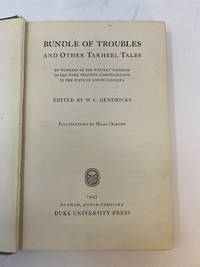
194330553Durham North Carolina Press: Duke University Press 1943. 1st edition. Cloth. Fair. 1st edition. A Fair copy. Ex-Library. 8vo. ix 206 pp. illustrated with b&w plates of drawings. Bound in grey cloth with title on a red field on spine. Heavy edge wear tips rubbed through with Library markings of call numbers stampings blind stamp to title page pocket at rear and crossed off markings. A very suitable place holder for a more desirable copy. Duke University Press unknown
1987biblio7259<p>Sewn binding. Paper over boards. 192 p. Classical Pastoral Care Series 1. Audience: General/trade.</p> Crossroad Pub Co hardcover
1941018493Lancaster PA: The Board of County Commissioners 1941. Hardcover. Fine/No Jacket. Gilt on blue covers. 8vo 294pp. <br/> <br/> The Board of County Commissioners hardcover
194389881Washington DC: U.S. Government Printing Office 1943. Presumed First Edition Presumed original issuance to this recipient. Single sheet printed on both sides. Good. The format is approximately 5 inches by 4 inches. This application was sent to OPA Mailing Center in Chicago IL and has a cancelled 3 cent stamp and a cancelation date of in June 1943. This apparently was returned to the applicant who was Arthur S. Galvin of Assumption IL. We believe that this belonged to Arthur Steven Galvin who was born 8 June 1915 - Assumption Christian County Illinois USA and who died 30 August 1989 - Assumption Christian County Illinois USA This RARE surviving ephemera would be appropriate for a museum exhibit or as an important artifact in a prized collection. Rationing is the controlled distribution of scarce resources goods or services or an artificial restriction of demand. Rationing controls the size of the ration which is one person's allotted portion of the resources being distributed on a particular day or at a particular time. Rationing in the United States was introduced in stages during World War II with the last of the restrictions ending in June 1947. The Office of Price Administration OPA was established within the Office for Emergency Management of the United States government by Executive Order 8875 on August 28 1941. The OPA had the power to place ceilings on all prices except agricultural commodities and to ration supplies of other items including tires automobiles shoes nylon sugar gasoline fuel oil coffee meats and processed foods. In the summer of 1941 rationing in the United Kingdom increased because of military needs and German attacks on shipping in the Battle of the Atlantic. The British government appealed to Americans to conserve food to help the UK. The Office of Price Administration OPA warned Americans of potential gasoline steel aluminum and electricity shortages. It believed that with factories converting to military production and consuming many critical supplies rationing would become necessary if the country entered the war. The OPA established a rationing system after the attack on Pearl Harbor on 7 December. The work of issuing ration books and exchanging used stamps for certificates was handled by some 5500 local ration boards of mostly volunteer workers selected by local officials. Many levels of rationing went into effect. Some items such as sugar were distributed evenly based on the number of people in a household. Other items like gasoline or fuel oil were rationed only to those who could justify a need. Restaurant owners and other merchants were accorded more availability but had to collect ration stamps to restock their supplies. In exchange for used ration stamps ration boards delivered certificates to restaurants and merchants to authorize procurement of more products. The work of issuing ration books and exchanging used stamps for certificates was handled by some 5500 local ration boards of mostly volunteer workers selected by local officials. Many levels of rationing went into effect. Some items such as sugar were distributed evenly based on the number of people in a household. Other items like gasoline or fuel oil were rationed only to those who could justify a need. Restaurant owners and other merchants were accorded more availability but had to collect ration stamps to restock their supplies. In exchange for used ration stamps ration boards delivered certificates to restaurants and merchants to authorize procurement of more products. Each ration stamp had a generic drawing of an airplane gun tank aircraft carrier ear of wheat fruit etc. and a serial number. Some stamps also had alphabetic lettering. The kind and amount of rationed commodities were not specified on most of the stamps and were not defined until later when local newspapers published for example that beginning on a specified date one airplane stamp was required in addition to cash to buy one pair of shoes and one stamp number 30 from ration book four was required to buy five pounds of sugar. The commodity amounts changed from time to time depending on availability. Red stamps were used to ration meat and butter and blue stamps were used to ration processed foods. To enable making change for ration stamps the government issued "red point" tokens to be given in change for red stamps and "blue point" tokens in change for blue stamps. The red and blue tokens were about the size of dimes 0.63 inches and were made of thin compressed wood fiber material because metals were in short supply. There was a black market in stamps. To prevent this the OPA ordered vendors not to accept stamps that they themselves did not tear out of books. Buyers however circumvented this by saying sometimes accurately as the books were not well-made that the stamps had "fallen out". In actuality they may have acquired stamps from other family members or friends or the black market. U.S. Government Printing Office unknown
194289878Washington DC: U.S. Government Printing Office 1942. Presumed First Edition Presumed original issuance to this recipient. Single sheet printed on one side. Good. The format is approximately 7 inches by 3.75 inches. Folded in half and folded again. This RARE surviving ephemera would be appropriate for a museum exhibit or as an important artifact in a prized collection. This appears to have been issued to Cathryn Graham Assumption City in Christian County in the State of Illinois. This Sugar Purchase Certificate was for 52 pounds of sugar pursuant to Rationing Order No. R. It was issued by Local Rationing Board No. 11-1. It is dated May 27 - 42 and was signed by Harold R. Horton Registrar. This copy of a triplicate document was to be retained by the original holder. Rationing is the controlled distribution of scarce resources goods or services or an artificial restriction of demand. Rationing controls the size of the ration which is one person's allotted portion of the resources being distributed on a particular day or at a particular time. Rationing in the United States was introduced in stages during World War II with the last of the restrictions ending in June 1947. The Office of Price Administration OPA was established within the Office for Emergency Management of the United States government by Executive Order 8875 on August 28 1941. The OPA had the power to place ceilings on all prices except agricultural commodities and to ration supplies of other items including tires automobiles shoes nylon sugar gasoline fuel oil coffee meats and processed foods. In the summer of 1941 rationing in the United Kingdom increased because of military needs and German attacks on shipping in the Battle of the Atlantic. The British government appealed to Americans to conserve food to help the UK. The Office of Price Administration OPA warned Americans of potential gasoline steel aluminum and electricity shortages. It believed that with factories converting to military production and consuming many critical supplies rationing would become necessary if the country entered the war. The OPA established a rationing system after the attack on Pearl Harbor on 7 December. The work of issuing ration books and exchanging used stamps for certificates was handled by some 5500 local ration boards of mostly volunteer workers selected by local officials. Many levels of rationing went into effect. Some items such as sugar were distributed evenly based on the number of people in a household. Other items like gasoline or fuel oil were rationed only to those who could justify a need. Restaurant owners and other merchants were accorded more availability but had to collect ration stamps to restock their supplies. In exchange for used ration stamps ration boards delivered certificates to restaurants and merchants to authorize procurement of more products. The work of issuing ration books and exchanging used stamps for certificates was handled by some 5500 local ration boards of mostly volunteer workers selected by local officials. Many levels of rationing went into effect. Some items such as sugar were distributed evenly based on the number of people in a household. Other items like gasoline or fuel oil were rationed only to those who could justify a need. Restaurant owners and other merchants were accorded more availability but had to collect ration stamps to restock their supplies. In exchange for used ration stamps ration boards delivered certificates to restaurants and merchants to authorize procurement of more products. Each ration stamp had a generic drawing of an airplane gun tank aircraft carrier ear of wheat fruit etc. and a serial number. Some stamps also had alphabetic lettering. The kind and amount of rationed commodities were not specified on most of the stamps and were not defined until later when local newspapers published for example that beginning on a specified date one airplane stamp was required in addition to cash to buy one pair of shoes and one stamp number 30 from ration book four was required to buy five pounds of sugar. The commodity amounts changed from time to time depending on availability. Red stamps were used to ration meat and butter and blue stamps were used to ration processed foods. To enable making change for ration stamps the government issued "red point" tokens to be given in change for red stamps and "blue point" tokens in change for blue stamps. The red and blue tokens were about the size of dimes 0.63 inches and were made of thin compressed wood fiber material because metals were in short supply. There was a black market in stamps. To prevent this the OPA ordered vendors not to accept stamps that they themselves did not tear out of books. Buyers however circumvented this by saying sometimes accurately as the books were not well-made that the stamps had "fallen out". In actuality they may have acquired stamps from other family members or friends or the black market. U.S. Government Printing Office unknown
194389874Washington DC: U.S. Government Printing Office 1943. Presumed First Edition First printing. Single sheet printed on both sides. Good. The format is approximately 8 inches by 10.5 inches. Folded in half and again in half. Illustrations. Page 1 is titled Why Canned Fruits Vegetables and Soups Are Rationed and Page 2 it title How to Use Your New Ration Book To Buy Canned or Bottled Fruits Vegetables Souls and Juices; Frozen Fruits and Vegetables; Dried Fruits. Use Your OLD Ration Book for Sugar and Coffee. This discusses how items are rationed. This is specific to War Ration Book Two. It discusses BLUE stamps POINT stamps. NUMBER on the POINT stamps. Letters show when to use the stamps. It was noted that citizens "may use ALL the books of the household to buy processed foods for the household. Anyone you wish can take the ration books to the store to do the buying for you or ours household. Rationing is the controlled distribution of scarce resources goods or services or an artificial restriction of demand. Rationing controls the size of the ration which is one person's allotted portion of the resources being distributed on a particular day or at a particular time.<br /> Rationing in the United States was introduced in stages during World War II with the last of the restrictions ending in June 1947. The Office of Price Administration OPA was established within the Office for Emergency Management of the United States government by Executive Order 8875 on August 28 1941. The OPA had the power to place ceilings on all prices except agricultural commodities and to ration supplies of other items including tires automobiles shoes nylon sugar gasoline fuel oil coffee meats and processed foods. In the summer of 1941 rationing in the United Kingdom increased because of military needs and German attacks on shipping in the Battle of the Atlantic. The British government appealed to Americans to conserve food to help the UK. The Office of Price Administration OPA warned Americans of potential gasoline steel aluminum and electricity shortages. It believed that with factories converting to military production and consuming many critical supplies rationing would become necessary if the country entered the war. The OPA established a rationing system after the attack on Pearl Harbor on 7 December. The work of issuing ration books and exchanging used stamps for certificates was handled by some 5500 local ration boards of mostly volunteer workers selected by local officials. Many levels of rationing went into effect. Some items such as sugar were distributed evenly based on the number of people in a household. Other items like gasoline or fuel oil were rationed only to those who could justify a need. Restaurant owners and other merchants were accorded more availability but had to collect ration stamps to restock their supplies. In exchange for used ration stamps ration boards delivered certificates to restaurants and merchants to authorize procurement of more products. The work of issuing ration books and exchanging used stamps for certificates was handled by some 5500 local ration boards of mostly volunteer workers selected by local officials. Many levels of rationing went into effect. Some items such as sugar were distributed evenly based on the number of people in a household. Other items like gasoline or fuel oil were rationed only to those who could justify a need. Restaurant owners and other merchants were accorded more availability but had to collect ration stamps to restock their supplies. In exchange for used ration stamps ration boards delivered certificates to restaurants and merchants to authorize procurement of more products. Each ration stamp had a generic drawing of an airplane gun tank aircraft carrier ear of wheat fruit etc. and a serial number. Some stamps also had alphabetic lettering. The kind and amount of rationed commodities were not specified on most of the stamps and were not defined until later when local newspapers published for example that beginning on a specified date one airplane stamp was required in addition to cash to buy one pair of shoes and one stamp number 30 from ration book four was required to buy five pounds of sugar. The commodity amounts changed from time to time depending on availability. Red stamps were used to ration meat and butter and blue stamps were used to ration processed foods. To enable making change for ration stamps the government issued "red point" tokens to be given in change for red stamps and "blue point" tokens in change for blue stamps. The red and blue tokens were about the size of dimes 0.63 inches and were made of thin compressed wood fiber material because metals were in short supply. There was a black market in stamps. To prevent this the OPA ordered vendors not to accept stamps that they themselves did not tear out of books. Buyers however circumvented this by saying sometimes accurately as the books were not well-made that the stamps had "fallen out". In actuality they may have acquired stamps from other family members or friends or the black market. U.S. Government Printing Office unknown
1915006867Unknown 1915. First Edition. Hardcover. Very Good. Nice Copy. No writing other than the owners name. Full refund if not satisfied. Unknown hardcover
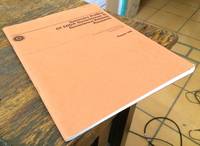
1976057718Washington D.C.: US Energy Research & Development Administration Div.of Physical Research 1976. Paper Back. Very Good/No Jacket. 4to - over 9¾" - 12" tall. 76pp.; SC staple-bound; paleorange w/blk.; slight rub w/lt.stain; 'bureau of mines' stamp&staple holesft.cover; cleantight pgs. Summaries from different divisions. ERDA-76-114 UC11 <br/> <br/> US Energy Research & Development Administration, Div.of Physical Research unknown
1972172706Caracas : Comision de Administracion Publica 1972. First Edition. Hardback. Fine copy in the original color printed boards. Particularly and uncommonly well-preserved; tight bright clean and especially sharp-cornered. ; 8vo 8"" - 9"" tall; 2 pages; Description: 2 vol. set : ill. ; 24 cm. Subjects: Venezuela --Politics and government --1935- Caracas : Comision de Administracion Publica hardcover
194111586<p>Northport NY: Bacon Percy & Daggett 1941 Book. Good. Hardcover. Good hardback in blue cloth w/gilt lettering. P.O. inscription to ffep minor wear to extremities foxing to epps mild toning to edges--otherwise clean and tight.</p> Bacon, Percy & Daggett hardcover
194058732Columbus: The Ohio State Achaeological and Historical Society. Very Good. 1940. First Edition. Heavy pictorial wrapper covers. Original Printed Wrappers 115 pages fold out map at rear Very Good condition. . The Ohio State Achaeological and Historical Society unknown