1 398 résultats
1999Q-0865876746Government Institutes 1999-08-01. Paperback. New. In shrink wrap. Looks like an interesting title! Government Institutes paperback
1995x-0865874263Government Inst 1995. Paperback. New. 144 pages. 11.00x8.50x0.50 inches. Government Inst paperback
19092092902138101945Warakuji Bookstore 1909. Soft Cover. Fine. Size: 18.5cmx7cm Number of books: 1 Warakuji Bookstore paperback
19522081002108700767Not Available 1952. Soft Cover. Fine. Number of pages: 173 sheets Size: B4 Not Available paperback
19792091502135404433Not Available 1979. Soft Cover. Fine. Number of books: 1 Not Available paperback
19142090502113703561Not Available 1914. Soft Cover. Fine. The book is in fine condition. Not Available paperback
19822090502128705528Nippon Telegraph and Telephone Public Corporation Kobe City Administration Department 1982. Soft Cover. Fine. Size: A4 Number of books: 1 book Nippon Telegraph and Telephone Public Corporation Kobe City Administration Department paperback
19972080502106915542Not Available 1997. Soft Cover. Fine. The book is in fine condition. Not Available paperback
1909319562Akademische Verlagsgesellschaft Leipzig 1909. Hardcover mit Leinenrücken und -ecken Zustand: Keine Beschädigungen keine Eintragungen. Rücken Ecken Kanten gut. Aus einer Klosterbibliothek mit Kennungen Stempel Rückenschild. Akademische Verlagsgesellschaft, Leipzig, hardcover
1937158289The Caxton Printers Ltd 1937. hardcover. Good. 1x6x9. Some edgewear small 1/4" tear top center spine personal bookplate ffep The Caxton Printers, Ltd hardcover
1962382163Washington: Government Printing Office 1962. Hardcover. Very Good. First edition. Multiple Senate Documents 87th Congress 2d Session bound in one volume. Thick octavo. With black and white photographs. Complete as issued in the original publisher's cloth. Ex-library with ink stamps front board and pastedown else no other markings. Moderate soiling to the boards very good. Contains the Senate hearing on the Orbital Flight of John H. Glenn Jr. No. 79: iii 126pp. black and white photographs and many important documents relating to the cold war foreign policy of the United States especially in Latin America. These include: Education for Survival in the Struggle Against World Communism No. 93: v 127pp.; Special Report on Latin America No. 80: v 62pp.; Latin America and United States Policies No. 82: v 85pp.; and Study Mission to South America No. 91: vi 17pp. A nice copy scarce in the trade. Government Printing Office hardcover
1979048671Mexico D.F.: Grupo Editorial Expansion 1979. Paper Back. Very Good/No Jacket. 4to - over 9¾" - 12" tall. 218pp.; HB burgundy w/gilt; some rub w/PON; hilite first 25pgs.otherwise cleantight pgs. Title trans.: "Marketing I" illus. in Spanish. <br/> <br/> Grupo Editorial Expansion unknown
1980048672Mexico D.F.: Grupo Editorial Expansion 1980. Paper Back. Very Good/No Jacket. 4to - over 9¾" - 12" tall. 213pp.; HB burgundy w/gilt; some rub w/cleantight pgs. Title trans.: "Motivation & Leadership I" illus. in Spanish. <br/> <br/> Grupo Editorial Expansion unknown
19856493New York: U. S Department of Energy 1985. Measuring approximately10.75" x 8.25" with 70 numbered pages. <br /> <br /> This book is in very good condition. Minor bumping to both ends of spine and around corners of panels. Interior pages are bright and clean. <br /> <br /> Please view the many other rare titles available for purchase at our store. We are always interested in purchasing individual or collections of fine books.<br /> <br /> Inventory #O8-93. U. S Department of Energy unknown
1938572841New York: The Viking Press. Sponsored by the Mississippi Advertising Commission 1938. Hardcover. Very Good. First edition. Octavo. 545pp. Illustrated. Folding map in pocket in rear. Endpapers toned along the inside hinges else near fine lacking the dust jacket. This WPA state guide includes at lest three photographs taken by Eudora Welty who took photographs for the WPA. The Viking Press. Sponsored by the Mississippi Advertising Commission hardcover
197490734Johnson Space Center Texas: U. S. Government Printing Office 1974. Presumed to have been uniquely signed in person. Photograph. Very good. The format is approximately 8 inches by 10 inches. There is a quarter inch white border around the color image. At the bottom edge in the white space there is the following text: JSCL-119 ASTRONAUT DONALD K. SLAYTON U. S. Government Printing Office 1974-779 888/2. The color image is of the full face of Deke Slayton in has astronaut space suit showing him from the waist up. Near his ungloved hands is a spacecraft mode. Across his chest he has inscribed the photograph as follows "Best wishes to Randy Sarbocher -- Deke Slayton." The back of the photograph is blank. Donald Kent "Deke" Slayton March 1 1924 – June 13 1993 was an American Air Force pilot aeronautical engineer test pilot and one of the original NASA Mercury Seven astronauts. He went on to become NASA's first Chief of the Astronaut Office and Director of Flight Crew Operations responsible for NASA crew assignments. Slayton joined the U.S. Army Air Forces during World War II and flew in Europe and the Pacific. He left the Army after World War II went on to receive a Bachelor of Science degree in aeronautical engineering from University of Minnesota in 1949 and later joined the Minnesota Air National Guard after working for Boeing as an aeronautical engineer. He joined the United States Air Force and attended the U.S. Air Force Test Pilot School in 1955. In 1959 he applied to and was selected as one of the Mercury Seven NASA's first class of astronauts. Slayton was scheduled to pilot the second U.S. crewed orbital spaceflight but was grounded in 1962 by atrial fibrillation. In March 1972 he was medically cleared to fly and was the docking module pilot of the 1975 Apollo–Soyuz Test Project ASTP. Slayton continued to work at NASA until 1982. He also helped develop the Space Shuttle. In January 1959 Slayton was selected as one of the candidates for NASA's Project Mercury the first U.S. crewed space flight program. Slayton was psychologically and physically tested at the Lovelace Clinic in Albuquerque New Mexico along with fellow future astronauts Scott Carpenter and Jim Lovell. On April 2 1959 Slayton was notified of his selection as an astronaut. After a decade of seeing doctors around the world in 1971 Slayton was examined at the Mayo Clinic after a long period without heart fibrillation and was determined to not have a coronary condition. On March 13 1972 NASA announced that Slayton had returned to flight status. The Apollo and Soyuz spacecraft both launched on July 15 1975. He was 51 years old making him the oldest astronaut to fly in space at the time. U. S. Government Printing Office unknown
196290736Manned Spacecraft Center Houston Texas: National Aeronautics and Space Administration Presumed Manned Spacecraft Center 1962. Presumed to have been uniquely signed in person. Photograph. Very good. The format is approximately 8 inches by 10 inches. There is a quarter inch white border around the color image. At the bottom edge in the white space there is the following text: Frank Borman. The color image is of the full face of Frank Borman in business suitfrom mid-thigh up. He is standing next to a model of a launch vehicle/rocker. Across his chest he has inscribed the photograph as follows "To Randy! Frank Borman." The back of the photograph has identifying text and states in part: "FRANK BORMAN one of a group of 9 astronauts selected in September 1962 by the National Aeronautics and Space Administrations. It also states that this photograph is a government publication and not subject to copyright. Frank Frederick Borman II March 14 1928 – November 7 2023 was an American United States Air Force USAF colonel aeronautical engineer NASA astronaut test pilot and businessman. He was the commander of Apollo 8 the first mission to fly around the Moon and together with crewmates Jim Lovell and William Anders became the first of 24 humans to do so for which he was awarded the Congressional Space Medal of Honor. Four days before he graduated with the West Point Class of 1950 in which he was ranked eighth out of 670 Borman was commissioned in the USAF. He qualified as a fighter pilot and served in the Philippines. He earned a Master of Science degree at Caltech in 1957 and then became an assistant professor of thermodynamics and fluid mechanics at West Point. In 1960 he was selected for Class 60-C at the USAF Experimental Flight Test Pilot School at Edwards Air Force Base in California and qualified as a test pilot. On graduation he was accepted as one of five students in the first class at the Aerospace Research Pilot School. Borman was selected as a NASA astronaut with the second group known as the Next Nine in 1962. In 1966 he set a fourteen-day spaceflight endurance record as commander of Gemini 7. He served on the NASA review board which investigated the Apollo 1 fire and then flew to the Moon with Apollo 8 in December 1968. The mission is known for the Earthrise photograph taken by Anders of the Earth rising above the lunar horizon as the Command/Service Module orbited the Moon and for the reading from Genesis which was televised to Earth from lunar orbit on Christmas Eve. During the Apollo 11 Moon landing mission he was the NASA liaison at the White House where he viewed the launch on television with President Richard Nixon. After retiring from NASA and the Air Force in 1970 Borman became senior vice president for operations at Eastern Air Lines. He became chief executive officer of Eastern in 1975 and chairman of the board in 1976. Under his leadership Eastern went through the four most profitable years in its history. National Aeronautics and Space Administration Presumed, Manned Spacecraft Center unknown
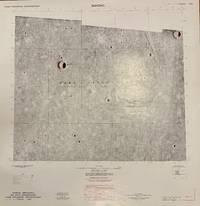
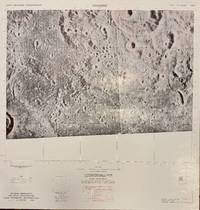
1974333135Washington: Defense Mapping Agency Topographic Center 1974. unbound. Orthophotograph. 26 3/8" x 25 1/2"<br/> <br/> Early large format map of Banting Crater in the Mare Serenitatis of the moon. It was named after Sir Frederick Banting in honor of his contributions to the medical field - most famously his discovery of insulin. Originally named Linee E the crater was renamed in 1973 just prior to this map's publication. <Br> <br> An orthophotograph is an aerial satellite image geometrically corrected "orthorectified" such that the scale is uniform: this photo follows a Transverse Mercator Projection. Condition is very good.<br/> <br/> Defense Mapping Agency Topographic Center unknown
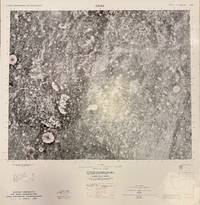
1974333137Washington DC: Defense Mapping Agency Topographic Center 1974. unbound. Orthophotograph. 26 1/4" x 25 3/8"<br/> <br/> Early large format map of the Cajal Crater on the northern part of the Mare Tranquilitatis of the moon. It was named after Spanish doctor and Nobel laureate Santiago Ramon y Cajal. The map also features the Bernini and El Greco craters both names provisional pending IAE approval at the time of publication. Contour lines slope ticks and spot elevations are indicated.<Br> <br> An orthophotograph is an aerial satellite image geometrically corrected "orthorectified" such that the scale is uniform: this photo follows a Transverse Mercator Projection. Condition is very good.<br/> <br/> Defense Mapping Agency Topographic Center unknown
1974333136Washington: Defense Mapping Agency Topographic Center 1974. unbound. Orthophotograph. 26 3/8" x 25 1/2"<br/> <br/> Early large format map of the Daguerre Crater a circular formation near the north end of Mare Nectaris of the moon. It was named after French artist and photographer Louis Daguerre in 1935. The map also features the Madler and Isidorus craters. Contour lines slope ticks and spot elevations are indicated.<Br> <br> An orthophotograph is an aerial satellite image geometrically corrected "orthorectified" such that the scale is uniform: this photo follows a Transverse Mercator Projection. Condition is very good.<br/> <br/> Defense Mapping Agency Topographic Center unknown
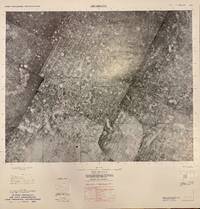
1974333138Washington DC: Defense Mapping Agency Topographic Center 1974. unbound. Orthophotograph. 26 1/4" x 25 3/8"<br/> <br/> Aryabhata was produced by the Defense Mapping Agency and is available for viewing through resources supported by NASA such as the Lunar and Planetary Institute. The Aryabhata crater on the Moon is a submerged impact crater in the eastern Mare Tranquillitatis named after the ancient Indian astronomer Aryabhata with only its arc-shaped eastern rim visible above the lunar mare due to lava flows.<br/> <br/> Defense Mapping Agency Topographic Center unknown
199183822Washington DC: National Aeronautics and Space Administration 1991. Presumed First Edition First printing before correction to replace Discovery with Atlantis. Single sticker sheet printed on both sides. Good. RARE with Discovery attribution. Approximately 5 inches at its highest and 4 inches at its widest. Some soiling noted. STS-43 the ninth mission for Space Shuttle Atlantis was a 9 day mission whose primary goal was launching the TDRS-E satellite TDRS-5. The flight also tested an advanced heatpipe radiator for potential use on the then-future space station and conducted a variety of medical and materials science investigations. Apparently Space Shuttle Discovery was originally intended to fly this mission. From the text on the sticker's peelable back the STS-43 insignia portrays the evolution and continuity of the U.S. space program by highlighting 30 years of American manned spaceflight experience from Mercury to the Space Shuttle. The emergence of the shuttle Discovery from the outlined configuration of the Mercury space capsule commemorates this special relationship. The energy and momentum of launch are conveyed by the gradations of blue which mark the shuttle's ascent from Earth to space. Once in Earth orbit Discovery's cargo bay opens to reveal the Tracking and Data Relay Satellite which appears in gold emphasis against the white wings of Discovery and the stark blackness of space. As primary mission objective the Tracking and Data Relay Satellite System will enable almost continuous communication from Earth to space for future space shuttle missions. The stars on the insignia are arranged to suggest this mission's STS number: four stars left of Shuttle and three starts to the right. NOTE: Later versions of the sticker properly reference the Shuttle Atlantis! The five astronauts are named on the front: Blaha Baker Lucid Adamson and Low. John Elmer Blaha born August 26 1942 in San Antonio Texas is a retired United States Air Force colonel and a former NASA astronaut. He is a veteran of five space missions aboard the Space Shuttle and Mir. Michael Allen Baker born October 27 1953 is a retired captain in the United States Navy former NASA astronaut and the International Space Station Program Manager for International and Crew Operations at NASA's Johnson Space Center. Shannon Matilda Wells Lucid born January 14 1943 is an American biochemist and retired NASA astronaut. At one time she held the record for the longest duration stay in space by an American as well as by a woman. She has flown in space five times including a prolonged mission aboard the Mir space station in 1996; she is the only American woman to have served aboard Mir. George David Low February 19 1956 - March 15 2008 was an American aerospace executive and a NASA astronaut. In addition to holding some technical assignments he logged more than 700 hours in space including stints on the Columbia the Atlantis and the Endeavour Space Shuttles before he left NASA in 1996. James Craig Adamson born March 3 1946 is a former NASA astronaut and retired Colonel of the United States Army. James Adamson flew on two missions STS-28 and STS-43 and completed 263 orbits and 334 hours in space. In terms of mission highlights the primary payload TDRS-E attached to an Inertial Upper Stage IUS was deployed about six hours into flight and the IUS propelled the satellite into geosynchronous orbit. TDRS-5 became the fourth member of the orbiting TDRS cluster. Secondary payloads were Space Station Heat Pipe Advanced Radiator Element SHARE II; Shuttle Solar Backscatter Ultra-Violet SSBUV instrument; Tank Pressure Control Equipment TPCE and Optical Communications Through Windows OCTW. Other experiments included Auroral Photography Experiment APE-B Protein Crystal Growth Ill PCG Ill; Bioserve / Instrumentation Technology Associates Materials Dispersion Apparatus BIMDA; Investigations into Polymer Membrane Processing IPMP; Space Acceleration Measurement System SAMS; Solid Surface Combustion Experiment SSCE; Ultraviolet Plume imager UVPI; and the Air Force Maui Optical Site AMOS experiment. TDRS-E which became TDRS-5 on orbit was successfully boosted to geosynchronous orbit at more than 22000 miles 35400 km 22000 mi above Earth by two firings of the Inertial Upper Stage IUS booster the last of which occurred approximately 12½ hours into the mission. TDRS then deployed its antennas and solar panels and separation from the IUS took place less than 45 minutes later. National Aeronautics and Space Administration unknown
199247164Washington DC: NASA c. 1992. First Edition. First Printing. very good. 535 & 537 wraps 2-vol. set illus. diagrams slight wear and soiling to covers. NASA Conference Publication 3136. The Conference was held in San Jose CA and was sponsored by NASA the Technology Utilization Foundation and NASA Tech Briefs Magazine. NASA paperback
194389911Washington DC: Office of Price Administration U.S. Government Printing Office 1943. Presumed First Edition First issuance to this individual. Front and back covers printed on one side with stamp sheets inside. Fair. The format is approximately 11.5 inches by 4.25 inches This has sheets of removable stamps originally within. MANY War Ration stamps remain some with numbers and letter some with numbers and illustrations. Office of Price Administration stamp present on front with number 144930EL different from number on the booklet! This was issued undated. Signed by Arcelia C. Ditzler. War ration books varied in design and content throughout the war years. Some were simple booklets with basic information while others included more elaborate instructions and patriotic messages. The stamps inside were often brightly colored and featured images of everyday items like shoes and cooking oil serving as a constant reminder of the sacrifices being made for the war effort. War Ration Book Two - January 1943 was the property of the United States Government. It is unlawful to sell or give it to any other person or to use it or permit anyone else to use it except to obtain rationed goods for the person to whom it was issued. Persons who violate Rationing Regulations are subject to $10000 fine or imprisonment or both. By 1944 whisky had disappeared from liquor store shelves as distilleries converted to the production of industrial alcohol. New car production was banned beginning January 1 1942 as former auto plants switched to the production of military vehicles. This is believed to belong to Arcelia Ceora “Celia†Chapman Ditzler Born 8 Sep 1854 in Ohio who died Aug 1952 Shelby County Illinois. This War Ration Books listed Shelbyville Illinois as Mrs. Ditzler's city and state. The 1943 war ration book is a unique and valuable collectible item that offers a glimpse into the United States’ war effort during World War II. The 1943 war ration book was issued to the American public in 1943 as part of the United States’ war effort. It was used to allocate food fuel and other essential resources to ensure fair distribution and minimize waste. The book contained a series of coupons which could be redeemed for specific goods and services such as gasoline tires sugar and coffee. Civilians first received ration books—War Ration Book Number One or the "Sugar Book"—on 4 May 1942 through more than 100000 schoolteachers PTA groups and other volunteers. Sugar was the first consumer commodity rationed with all sales ended on 27 April 1942 and resumed on 5 May with a ration of 1 2 pound 8 oz per person per week half of normal consumption. Bakeries ice cream makers and other commercial users received rations of about 70% of normal usage. Coffee was rationed nationally on 29 November 1942 to 1 pound every five weeks about half of normal consumption in part because of German attacks on shipping from Brazil. As of 1 March 1942 dog food could no longer be sold in tin cans and manufacturers switched to dehydrated versions. As of 1 April 1942 anyone wishing to purchase a new toothpaste tube then made from metal had to turn in an empty one. By June 1942 companies also stopped manufacturing metal office furniture radios television sets phonographs refrigerators vacuum cleaners washing machines and sewing machines for civilians. By the end of 1942 ration coupons were used for nine other items: typewriters gasoline bicycles shoes rubber footwear silk nylon fuel oil and stoves. Meat lard shortening and food oils cheese butter margarine processed foods canned bottled and frozen dried fruits canned milk firewood and coal jams jellies and fruit butter were rationed by November 1943. Many retailers welcomed rationing because they were already experiencing shortages of many items due to rumors and panics such as flashlights and batteries after Pearl Harbor. Ration Book Number Five is a very rare ration book only issued to very few people. By the end of 1942 ration coupons were used for nine other items: typewriters gasoline bicycles shoes rubber footwear silk nylon fuel oil and stoves. Meat lard shortening and food oils cheese butter margarine processed foods canned bottled and frozen dried fruits canned milk firewood and coal jams jellies and fruit butter were rationed by November 1943. Many retailers welcomed rationing because they were already experiencing shortages of many items due to rumors and panics such as flashlights and batteries after Pearl Harbor. Ration Book Number Five is a very rare ration book only issued to very few people. Office of Price Administration, U.S. Government Printing Office unknown
197659736Energy Research and Development Administration 1976. Wraps. Good. No dust jacket. Cover has some wear and soiling. 2 volume set. Includes illustrations. Various paginations approximately three inches combined in the two volumes. ERDA-1542. This Environmental Statement has been prepared by the Energy Research and Development Administration as the lead agency with the collaboration of the Department of State which was primarily concerned with the portions of the Statement involving foreign policy considerations; the Nuclear Regulatory Commission which was primarily concerned with the portions of the Statement involving export licensing activities; and the Export-Import Bank which was primarily concerned with the portions of the Statement involving export financing. Energy Research and Development Administration paperback