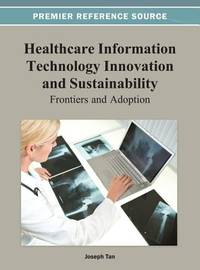
Tan, Professor Department of Business Wayne State University School of Business Administration JosepBiblio.com
463 résultats
2013DADAX1466627972Medical Information Science Reference 2013-01-31. 1. hardcover. New. 8.50x0.81x11.00. Buy with confidence. Excellent Customer Service & Return policy. Medical Information Science Reference hardcover
2017x-1634877810Cognella Academic Publishing 2017. Paperback. New. 252 pages. 10.00x7.99x0.53 inches. Cognella Academic Publishing paperback
200190620Albuquerque NM: Sandia National Laboratories 2001. Presumed First Edition First printing. Wraps. Very good. 2 iii 162 pages plus covers. Illustrations many with color. Appendix A--Level 1 Milestones. Appendix 2--Glossary. From the Table of Contents these areas of discussion are found: The Role of ASCI in Stockpile Stewardship Defense Applications and Modeling Simulation and Computer Science Verification and Validation Physics Modeling Distance Computing Distributed Computing Weapons Simulation and Terascale Simulation. The Advanced Simulation and Computing Program ASC is a super-computing program run by the National Nuclear Security Administration in order to simulate test and maintain the United States nuclear stockpile. The program was created in 1995 in order to support the Stockpile Stewardship Program or SSP. The goal of the initiative is to extend the lifetime of the current aging stockpile. After the United States' 1992 moratorium on live nuclear testing the Stockpile Stewardship Program was created in order to find a way to test and maintain the nuclear stockpile. In response the National Nuclear Security Administration began to simulate the nuclear warheads using supercomputers. As the stockpile ages the simulations have become more complex and the maintenance of the stockpile requires more computing power. Over the years due to Moore's law the ASC program has created several different supercomputers with increasing power in order to compute the simulations and mathematics. Sandia National Laboratories paperback
200375104U.S. Department of Energy 2003. Presumed First Edition First printing thus--August 2003 Revision to April 2003 version. Spiral bound wraps. Very good. Various paginations approximately 70 pages. Illustrations some with color. Cover has an identifer--03-GA50854. Clear plastic sheets protect front and back covers. Definitions. Acronyms References. Bibliography. Appendices. This report was prepared in response to Recommendations 3 and 3.b page 18 of the report of the Senior Managers task Group on Suspect/Counterfeit Items S/CI. "Resolution of Outstanding Issues Identified from Inspector General Report DOE/IG-0304" June 21 1996. Specifically the intent of this report is to disseminate information regarding Department of Energy DOE S/CI trends analyses and related procurement/quality assurance issues. The DOE complex is provided with general guidance about controlling S/CI and other procurement/quality security issues while DOE management is provided information on progress within the Department relative to these issues. This annual report is an update to the S/CI report issued in 2002 and includes data on the S/CI reported in the Occurrence Reporting and Processing Systems ORPS between January 1 1991 and December 31 2002. The changes to the April 2003 reports are that 1 the ORPS report counts and analyses that have been added to the database from January 1 2002 through December 31 2002 have been included; 2 New information was added regarding other significant activities related to S/CI; and 3 Section 2.3 has been updated to summarize the findings and discussions for the S/CI videoconferences. U.S. Department of Energy paperback
200173569Washington DC: U. S. Department of Energy 2001. Presumed First Edition First printing. Trade paperback. Very good. 217 3 pages. Illustrations. Cover has some wear and soiling. The mission of the Office of Nonproliferation and Arms Control NPAC is to prevent proliferation ensure peaceful nuclear uses and enable verifiable nuclear reductions. NPAC provides a comprehensive approach to strengthen nonproliferation and arms control regimes achieving its mission through four subprograms: International Nuclear Safeguards; Nuclear Controls; Nuclear Verification; Nonproliferation Policy. One of the gravest threats the United States and the international community face is the possibility that terrorists or rogue nations will acquire nuclear weapons or other weapons of mass destruction WMD. NNSA through its Office of Defense Nuclear Nonproliferation DNN works closely with a wide range of international partners key U.S. federal agencies the U.S. national laboratories and the private sector to secure safeguard and/or dispose of dangerous nuclear and radiological material and detect and control the proliferation of related WMD technology and expertise. The Office of Nonproliferation Research and Engineering part of the National Nuclear Security Administration within the Department of Energy conducts wide-ranging research for diverse end users at the federal and local level. As such the Office faces a number of unusual challenges in determining how to best serve its users' needs within its budget. The Chemical & Biological National Security Program was initiated in FY97 in response to the growing awareness of both the chemical and biological weapon capabilities available to potential attackers and the vulnerabilities of the U.S> population to these weapons. From the outset the program has drawn from the deep scientific and engineering talents in the national laboratories as well as from specialized expertise in academia and industry. A basic philosophy of the CBNP is that any near-term impact of research and development requires a mission focus. The program's goal was not just to develop technology but to apply it to solve real problems and to develop demonstrate and deliver technologies and systems to improved domestic defense capabilities and ultimately to save lives in the event of a chemical or biological attack. U. S. Department of Energy paperback
200480749Albuquerque NM: U. S. Department of Energy National Nuclear Security Administration 2004. 56XB Issue A Rev 2 Change 1. Three Ring Binder. Good. Various Paginations. Most of the pages are single sided some are printed on both sides. Tables. Figures. Some check marks and other notations to several pages. Contents mostly from February 27 2004 but some from dates in March 2004 and May 2004. Table of Contents 6 pages; Chapter Introduction 10 pages Chapter 1.1 Agency Functions Within the Nuclear Weapons Complex 8 pages; Chapter 1.2 Development and Production Functions 11 pages; Chapter 10.1 Advanced Design and Production Technologies ADAPT Activity 6 pages; Chapter 10.3 Management of Nuclear Materials 5 pages; Chapter 13.1 Quality Program 5 pages; Chapter 13.2 Metrology Program 8 pages; Glossary Acronym & Cross Reference 57 1 pages. Issue A was the original release. It is up to at least Change 15. While not complete the available portions reflect the processes and priorities at the time. This abbreviated set was used as part of the NA-12 New Employee Orientation. NNSA receives its authority for the responsibility for all weapon and weapon-related functions from 50 USC 2402 Chapter 41. DOE/NNSA and DoD cooperate in the development production and maintenance of nuclear weapons. Figure 1.1-1 illustrates DOE/NNSA/DoD organizational interrelationships. The basic document that establishes the interrelationships between the two agencies is "An Agreement Between the AEC and the DoD for the Development Production and Standardization of Atomic Weapons" dated March 21 1953. This is commonly referred to as the "1953 Agreement." It was updated on September 5 1984 by the "Supplement to the 1953 Agreement for the Development Production and Standardization of Atomic Weapons Between the Department of Energy and the Department of Defense." The supplement delineates the functions of DOE/NNSA and DoD during joint feasibility studies for nuclear weapons Phase 2 design definition and cost studies Phase 2A and development engineering Phase 3. The 1953 Agreement was updated again in<br/>1990 and supersedes the 1953 version. Numerous Memoranda of Understanding MOU Memoranda of Agreement MOA and supplements provide additional guidance to agencies involved in the weapon development programs. Most of these are identified in a document titled "An Overview of DOE/DoD Memorandums of Understanding MOU and Memorandums of Agreement MOA Relating to Nuclear Weapons Development Production and Stockpile." In general DOE/NNSA is responsible for designing developing producing updating and dismantling nuclear warheads nuclear weapon trainers and ancillary equipment while DoD is responsible for designing developing and producing and dismantling the weapon delivery system. U. S. Department of Energy National Nuclear Security Administration unknown
200775574Los Alamos NM: Los Alamos National Laboratory 2007. Concurrence Draft. DVD. Very good. This disk includes the Summary Volume 1 chapters 1-11 Volume 2 Appendices A-M and Volume 3 Comment Response Document. The disk contains 2358 KB. NNSA proposes to continue operating Los Alamos National Laboratory LANL which is located in Los Alamos County in north-central New Mexico. NNSA has identified and assessed three alternatives for continued operation of LANL: 1 No Action 2 Reduced Operations and 3 Expanded Operations. The Expanded Operations Alternative includes the impacts of actions to implement the March 2005 Compliance Order on Consent Consent Order entered into by DOE the LANL management and operating contractor and the State of New Mexico to address the investigation and remediation of environmental contamination at LANL. NNSA intends to implement actions necessary to comply with the Consent Order regardless of whether it implements other actions analyzed as part of the Expanded Operations Alternative. Expanded Operations is NNSA's Preferred Alternative. Under the No Action Alternative NNSA would continue the historical mission support activities conducted at LANL at currently approved operational levels. Under the Reduced Operations Alternative NNSA would eliminate some activities and limit the operations of other activities. Under the Expanded Operations Alternative NNSA would operate LANL at the highest levels of activity currently foreseeable including full implementation of mission assignments. Under all of the alternatives the affected environment is primarily within 50 miles 80 kilometers of LANL. Analyses indicate little difference in the environmental impacts of the alternatives on many resource areas. The primary discriminators are public risk due to radiation exposure collective worker risk due to radiation exposure socioeconomic effects due to LANL employment changes electrical power and water demand waste management and transportation. Los Alamos National Laboratory unknown
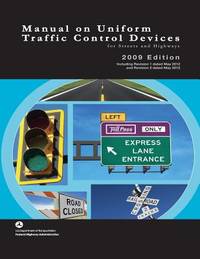
2013BN240121DATAMOTION PUB LLC 2013. 2013. Softcover. Manual on Uniform Traffic Control Devices for Streets and Highways - 2009 Edition with 2012 Revisions <br/><br/>Manual on Uniform Traffic Control Devices for Streets and Highways - 2009 Edition with 2012 Revisions U. S. Department of Transportaton Federal Highway Administration DATAMOTION PUB LLC paperback
2012DADAX1782660763www.Militarybookshop.Co.UK 2012-06-30. paperback. New. 7.44x0.53x9.69. Buy with confidence. Excellent Customer Service & Return policy. www.Militarybookshop.Co.UK paperback
20172081502111902488Culture publishing company 2017. Soft Cover. Fine. The book is in fine condition. Culture publishing company paperback
201374122Washington DC: United States Department of Energy National Nuclear Security Administration 2013. Presumed First thus. Coin. Very good. The Joint Verification Experiments occurred in 1988. One occurred in the U.S. and one in Russia. A 25th anniversary commemoration was held at the National Nuclear Security Site formerly the Nevada Test Site in 2013. This coin was given out to a select few participants officials and organizers. Coin has a 1.5 inch diameter. On one side the center image is the Department of Energy logo with two outer rings with text. The outermost ring text is "Building Trust and Confidence National Nuclear Security Admiistration" The other side has a center image with the dates 1988-2013 Russian and U.S. flags and the atomic symbol and an outer ring with the following text "25th Aniversary U.S.-Russia Joint Verification Experiment". Agreement Between the United States of America and the Union of Soviet Socialist Republics on the Conduct of a Joint Verification Experiment May 31 1988. Reaffirming the statement of the Secretary of State of the United States and the Foreign Minister of the Union of Soviet Socialist Republics of December 9 1987 Proceeding from the agreement to conduct a joint Verification Experiment hereinafter referred to as JVE for the purpose of the elaboration of effective verification measures for the Treaty Between the United States of America and the Union of Soviet Socialist Republics on the Limitation of Underground Nuclear Weapon Tests hereinafter referred to as the 1974 Treaty on the Limitation of Underground Nuclear Weapon Tests the parties have agreed in part as follows: 1. For purposes of the JVE there shall be two nuclear explosions one at the U.S. Nevada Test Site and one at the USSR Semipalatinsk Test Site each hereinafter being referred to as a JVE explosion. 2. The planned yield of the JVE explosion at each test site shall be not less than 100 kilotons and shall approach 150 kilotons. 3. Each Party shall have the opportunity to measure on the basis of reciprocity the yield of the JVE explosion conducted at the other Party's test site using teleseismic methods and at the other's test site using hydrodynamic yield measurement methods. 4. Each Party shall also perform teleseismic measurements with its national seismic station network for both JVE explosions. To assist in teleseismic measurement the Parties shall exchange data on five nuclear explosions conducted after January 1 1978 but before January 1 1988 to include yield date and time geographic coordinates depth of burial and associated geological and geophysical data. For each of these historical explosions the Parties shall exchange teleseismic recordings taken at five designated stations on each side including station corrections and the best network seismic magnitude. 5. Each Party shall perform hydrodynamic yield measurements within the satellite hole provided for that purpose of the JVE explosions at both Parties' test sites using the methods it has identified in this Agreement. DONE at Moscow on May 31 1988 in two copies each in the English and Russian languages both texts being equally authentic. FOR THE UNITED STATES OF AMERICA George P. Shultz FOR THE UNION OF SOVIET SOCIALIST REPUBLICS E. Shevardnadze. United States, Department of Energy, National Nuclear Security Administration unknown
200276354Washington DC: United States Department of Energy National Nuclear Security Administration Defense Programs 2002. Presumed First Edition First printing. Wraps. Very good. iv 55 3 pages. Illustrations. Acronyms & Abbreviations. Glossary. This type of document is very ephemeral and it is believed that very few copies have survived in the more than two decades since it was issued. The United States government's Strategic Computing Initiative funded research into advanced computer hardware and artificial intelligence from 1983 to 1993. The initiative was designed to support various projects that were required to develop machine intelligence in a prescribed ten-year time frame from chip design and manufacture computer architecture to artificial intelligence software. The project was superseded in the 1990s by the Accelerated Strategic Computing Initiative and then by the Advanced Simulation and Computing Program. These later programs did not include artificial general intelligence as a goal but instead focused on supercomputing for large scale simulation such as atomic bomb simulations. The Advanced Simulation and Computing Program or ASC is a super-computing program run by the National Nuclear Security Administration in order to simulate test and maintain the United States nuclear stockpile. The program was created in 1995 in order to support the Stockpile Stewardship Program or SSP. The goal of the initiative is to extend the lifetime of the current aging stockpile. Among the sections in the Table of Contents are: Stockpile Stewardship Defense Applications Computer Science Integrated Computing Systems Strategic Alliances Verification and Validation Physics Modeling Weapons Simulation Modeling and Simulation Level 1 Milestones High Explosives Advanced Visualization Detonation Wave Titan IV Solid Rocket Motor Metropolis Center JCEL. United States Department of Energy, National Nuclear Security Administration, Defense Programs paperback
200677506Washington DC: United States Department of Energy National Nuclear Security Administration Military Application and Stockpile Operations Office of Stockpile Technology 2006. Presumed First Edition First printing. Spiral bound. Very good. Clear plastic sheet protects front and back covers. 2 vi 48 pages printed on one side only. Acronyms and Abbreviations. Chemicals and Units of Measure. Figures. Tables. References. Appendix A--Uranium Resource Classification System. Appendix B-- Nuclear Fuel Sources Evaluation; B.1 Evaluation Methodology and Results; B.2 Definition of Uranium Source Evaluation Terms. The strategic importance of assuring a supply of tritium constitutes the impetus for this analysis to identify a 40-year supply of nuclear fuel for the nuclear power plants used to produce tritium concurrently with the generation of civilian nuclear power. Assuring the nuclear fuel supply for those plants is one component of demonstrating that DOE can provide tritium for U.S. nuclear weapons with a high degree of confidence. Ms. Nanette D. Founds was listed as the Tritium Readiness Subprogram Manager Diversification is a prudent approach to achieving the highest probability of success in ensuring a long-term nuclear fuel supply because it reduces reliance on one source or technology and allows for flexibility to accommodate the dynamic nuclear fuel market. For a diversified mix of acceptable nuclear fuel supply sources the analysis recommended that NNSA take a series of specified actions to ensure the highest possible confidence in a 40-year nuclear fuel supply for the nuclear power plants then currently employed in the production of tritium for the National Nuclear Security Administration. Among the steps advocated included: allocation of a portion of the DOE inventory of depleted uranium hexafluoride use of market-based uranium procurement procedures to swap or barter for uranium appropriate for use for the tritium program and traditional procurement of U.S.-origin uranium. United States Department of Energy, National Nuclear Security Administration, Military Application and Stockpile Operations, Off unknown
200475433United States Department of Energy National Nuclear Security Administration Office of Defense Programs 2004. Presumed First Edition First printing thus. DVD. Very good. DVD has 40 files and many of them are folders. On July 13-14 2004 the Caltech ASC Level 1 Center hosted an ASC TriLab V&V Workshop in La Jolla CA to discuss and compare what the NNSA laboratories and the ASC Level 1 University Centers are learning with respect to code verification and validation. About 50 people participated in the workshop. Presentations were organized into four sessions and moderated by key V&V personnel from the NNSA labs and ASC Centers: 1 V&V Program Overviews Jamileh Soudah ASC HQ - Chair 2 Code and Solution Verification Tomek Plewa University of Chicago Flash Center - Chair 3 Validation Experiments Dan Meiron Caltech ASC Center - Chair 4 Validation and Uncertainty Quantification Tony Giunta Sandia - Chair The workshop began with V&V overviews presented by speakers from Los Alamos Lawrence Livermore and Sandia National Laboratories and the ASC Level 1 Alliance Centers at Caltech the University of Chicago the University of Illinois Stanford University and the University of Utah. These baseline presentations were followed by talks addressing approaches and lessons learned in code and solution verification designing and implementing validation experiments and what has been accomplished and remains to be done in uncertainty qualification. At the end of the workshop Dan Meiron Caltech hosted a discussion to summarize commonalities across the lab and university programs and identify collaborative efforts that might follow this workshop. The workshop began with V&V overviews presented by speakers from Los Alamos Lawrence Livermore and Sandia National Laboratories and the ASC Level 1 Alliance Centers at Caltech the University of Chicago the University of Illinois Stanford University and the University of Utah. These baseline presentations were followed by talks addressing approaches and lessons learned in code and solution verification designing and implementing validation experiments and what has been accomplished and remains to be done in uncertainty qualification. At the end of the workshop Dan Meiron Caltech hosted a discussion to summarize commonalities across the lab and university programs and identify collaborative efforts that might follow this workshop. The purpose of this document is to provide a synopsis of the key issues discussed during the workshop. The intent is not to review the substance of the technical presentations which are available from the Caltech V&V Workshop web site and CD but to provide a record of the important issues raised during the workshop discussion and interaction. Input for this synopsis comes primarily from the summary session moderated by Dan Meiron and notes taken during the course of the workshop sessions. United States Department of Energy, National Nuclear Security Administration, Office of Defense Programs unknown
200659608Washington DC: United States Department of Energy National Nuclear Security Administra 2006. Wraps. Good. No dust jacket. Signed on front cover by Thomas D'Agostino Senate Confirmed Presidential Appointee Administrator of the NNSA. Some wear. 21 p. Illustrations. Title from cover. DOE/NA-0013. This is a precursor to the current Complex Transformation planning activities which includes a massive Supplemental Programmatic Environmental Impact Statement and associated activities. This is a major defining document related to approaches to upgrade modernize and improve the nation's nuclear weapon design and production capabilities. United States, Department of Energy, National Nuclear Security Administra paperback
200569058Washington DC: National Nuclear Security Administration Office of Defense Programs 2005. Presumed first edition/first printing. Very good. Includes illustrations. CD-ROM In 2005 the Nation's nuclear weapons enterprise put forth a vision for evolving the program and its design and production facilities and the underlying technologies and infrastructure for the coming quarter century. This CD-ROM contains information on this vision. From the NNSA website: "The NNSA was established by Congress in 2000 as a separately organized agency within the U.S. Department of Energy responsible for the management and security of the nation s nuclear weapons nuclear nonproliferation and naval reactor programs. In 2002 NNSA reorganized removing a layer of management by eliminating its regional operations offices in New Mexico California and Nevada. Contract and project management oversight responsibility for NNSA s labs plants and special facilities was given to the site offices. NNSA headquarters retained responsibility for strategic and program planning budgeting and oversight of research development and nonproliferation activities. NNSA is responsible for the management and security of the nation s nuclear weapons nuclear nonproliferation and naval reactor programs. It also responds to nuclear and radiological emergencies in the United States and abroad. Additionally NNSA federal agents provide safe and secure transportation of nuclear weapons and components and special nuclear materials along with other missions supporting the national security. NNSA relies on contractors to manage day-to-day site operations and to adhere to Department of Energy policies when operating the laboratories production plants and other facilities within the complex. Together the facilities implement NNSA s all-encompassing Stockpile Stewardship program that includes operations associated with surveillance assessment maintenance refurbishment manufacture and dismantlement of the nuclear weapons stockpile as well as research and development and certification efforts." National Nuclear Security Administration, Office of Defense Programs unknown
201773761Albuquerque NM: United States Department of Energy National Nuclear Security Administration Office of Defense Programs 2017. Presumed First Edition First printing if Issue B. Spiral bound. Very good. Various paginations approximately 150 pages. Illustrations. Some pages laminated. This Compilation includes Level 2 Federal Requirements Level 3 Contractor Agreements and Tools for Product Realization. The Defense Programs Business Process System DPBPS Portal as the mechanism for implementing DOE Order O 452.3 Management of the DOE Nuclear Weapons Complex. The Portal delivers business requirements and processes specific to the Deputy Administrator for Defense Programs DP for directing managing operating and executing programs at the nuclear weapons production facilities and laboratories within the Nuclear Security Enterprise NSE. The DPBPS shall be the official web-based repository housing the business requirements processes and tools to perform DP activities within the Enterprise. M&O Contractors develop Level 4 content to specify and further details needed for site compliance. b. Content posted in the DPBPS shall become contractually binding on the effective date informed through the Site Impact Analysis T014 process and authorized by the PADAMA. NNSA publishes the content after PADAMA authorization and before the effective date to allow contractors time to bring site-specific processes into compliance. The DPBPS' content apply to all federal organizations responsible for maintaining and enhancing the safety reliability and performance of the United States nuclear weapons stockpile including the ability to design produce and test in order to meet national security requirements. Field Office Contracting Officers are responsible for including this policy in the Managing & Operating M&O Contractor contracts for the National Security Enterprise sites. The Contractor Requirements Document CRD sets forth requirements of this directive that apply to contracts. The CRD must be included in contracts of National Security Enterprise M&O Contractor sites performing work under the Defense Programs. United States, Department of Energy, National Nuclear Security Administration, Office of Defense Programs unknown
201774294Washington DC: United States. Department of Energy. National Nuclear Security Administration 2017. Presumed First Edition First printing. Wraps. Very good. vi 203 1 pages. Illustrations. Acronyms. References. Format us approximately 8.5 inches by 11 inches. Cover has slight wear and soiling. This is the final report on the NNSA's Security Roadmap Key Strategy 4 Develop and Sustain a Highly Capable Security Workforce. The report is the culmination of a year's work by a team of Industrial Organizational Leadership Development professionals from the National Training Center NNSA's Office of Human Capital Management and the Pacific Northwest National Laboratory. The report is a comprehensive states of how the NNSA can significantly improve the recruitment development maturation and retention of the security professional. The report was designed to address the whole-person in that the report uses a competency-modeling concept as a key predictor in human performance. The next steps will include teaming to actively work the approved recommendations as well as establishing working groups to develop action plans for achieving success of each recommendation. The National Nuclear Security Administration NNSA is the U.S. agency responsible for enhancing national security through the military application of nuclear science. NNSA maintains and enhances the safety security and effectiveness of the U.S. nuclear weapons stockpile without nuclear explosive testing; works to reduce the global danger from weapons of mass destruction; provides the U.S. Navy with safe and effective nuclear propulsion; and responds to nuclear and radiological emergencies in the U.S. and abroad. Established by the United States Congress in 2000 NNSA is a semi-autonomous agency within the United States Department of Energy. The National Nuclear Security Administration was created by Congressional action in 1999 in the wake of the Wen Ho Lee spy scandal and other allegations that lax administration by the Department of Energy had resulted in the loss of U.S. nuclear secrets to China. Originally proposed to be an independent agency NNSA gained the reluctant support of the Clinton administration only after it was instead chartered as a sub-agency within the Department of Energy to be headed by an administrator reporting to the Secretary of Energy. The first NNSA administrator appointed was Air Force General and CIA Deputy Director John A. Gordon. NNSA has four missions with regard to national security: · To manage the U.S. nuclear weapon stockpile. · To reduce global danger from weapons of mass destruction and to promote international nuclear safety and nonproliferation. · To provide the United States Navy with safe militarily effective nuclear propulsion plants and to ensure the safe and reliable operation of those plants. · To support United States leadership in science and technology. United States. Department of Energy. National Nuclear Security Administration paperback
200359621Washington DC: U. S. Department of Energy 2003. Wraps. Very good. No dust jacket. Removed from shrinkwrap for cataloguins. Includes a "Dear Interested Party" distribution letter. 3 volume set. 3 volume set. Includes: illustrations maps. Various paginations. Includes a Summary 57 pages and 2 volumes. Volume I approximately 700 pages; Volume II approximately 200 pages. DOE/EIS-236-S2. The National Nuclear Security Administration is responsible for the safety and reliability of the U. S. nuclear weapons stockpile including production readiness required to maintain that stockpile. This document addresses issues associated with constructing a new facility for the manufacturing of a key nuclear weapon component. This proposed facility proved to be controversial and did not recieve Congressional support and funding. However it retains significant value as a source of unclassified information about the use of plutonium and associated plutonium operations in the United States nuclear weapon program. U. S. Department of Energy paperback
200268511Washington DC: United States Department of Energy 2002. Presumed first edition/first printing. Wraps. Very good. No dust jacket. Cover has slight wear and soiling. Includes: illustrations diagrams index. 2 volumes. Volume 1 Chapters 1 throught 11 approximately 350 pages; Volume 2 Appendices A through K approximately 200 pages. Various paginations. References. Glossary. TA-18 supported important defense nuclear safety and other national security mission responsibilities. The operations at TA-18 enabled DOE personnel to gain knowledge and expertise in advanced nuclear technologies that supported: nuclear materials management criticality safety; emergency response in support of counterterrorism activities nuclear safeguards arms control; and criticality experiments. Technical Area 18 housed at the time the Western Hemisphere's largest collection of machines for conducting nuclear safety evaluations. Under the right conditions at Techncial Area 18 usingfissile material experiments capable of maintaining a self-sustaining nuclear fission chain reaction had been achieved. As part of the national response to the September 11 2001 terrorist attacks the Department of Energy proposed to relocate the Technical Area 18 operational capabilities and materals to a new location. This environmental impact statement was part of that process. United States Department of Energy paperback
201776194Washington DC: United States National Nuclear Security Administration Defense Programs 2017. Presumed First Edition First printing thus. Wraps. Very good. Various paginations approximately 400 pages. Figures. Tables. Appendices. List of Acronyms. This had previously been Marked Unclassified Controlled Nuclear Information but this marking has been struck through on every page where it had appeared. The National Nuclear Security Administration requires a sustained production capacity of no fewer than 80 pits per year PPY by 2030. NNSA is developing and installing capability at LANL in Plutonium Facility PF-4 to produced 30 ppy by 2026. The Analysis of Alternatives AOA for meeting pit production requirements completed in September 2017 assessed alternatives to close this identified mission gap in the NNSA's pit production capability. The AoA is a post Critical Decision CD-0 pre-CD-1 activity to identify a preferred alternative for conceptual design in preparation for the Deputy Secretary of Energy to make a program decision at CD-1. The pit named after the hard core found in fruits such as peaches and apricots is the core of an implosion nuclear weapon - the fissile material and any neutron reflector or tamper bonded to it. Some weapons tested during the 1950s used pits made with U-235 alone or in composite with plutonium but all-plutonium pits are the smallest in diameter and have been the standard since the early 1960s. Between 1954 and 1989 pits for US weapons were produced at the Rocky Flats Plant; the plant was later closed due to numerous safety issues. In 1996 the pit production was also relocated to Los Alamos. The current LANL production of new pits is limited to about 20 pits per year though NNSA is pushing to increase the production for the Reliable Replacement Warhead program. The US Congress however has repeatedly declined funding. Up until around 2010 Los Alamos National Laboratory had the capacity to produce 10 to 20 pits a year. United States, National Nuclear Security Administration, Defense Programs paperback
200477646Amarillo TX: United States Department of Energy National Nuclear Security Administration and BWXT Pantex 2004. Presumed First Edition First printing thus. Spiral bound. Very good. Various paginations approximately 1/2 inch of material including stiff card tabs. 19 tabbed sections with vugraphs rather than text. This is marked Official Use Only exemption category 2h. Based upon Supreme Court rulings and other guidance this limitation is understood to no longer apply. The Pantex Plant is the primary United States nuclear weapons assembly and disassembly facility that aims to maintain the safety security and reliability of the nation's nuclear weapons stockpile. The facility is located near Amarillo Texas. The plant is managed and operated for the U. S. Department of Energy by Consolidated Nuclear Security and Sandia National Laboratories. Consolidated Nuclear Security LLC CNS is composed of member companies Bechtel National Inc. Leidos Inc. Orbital ATK Inc. and SOC LLC with Booz Allen Hamilton Inc. CNS also operates the Y-12 National Security Complex. Among the topics covered are: Authorization Basis/USQ Process Lightning W56 Incident Electro-Static Discharge Multi-Unit Processing Tooling LEP Preparations IWAP Program Management Budget Laboratory Partnership/Relations SMRI Performance Indicators Safety QA Delivery Performance Maintenance Software Quality Assurance SQA Long Term Operating Plan and BWXT Pantex Long-Term View. United States Department of Energy, National Nuclear Security Administration and BWXT Pantex unknown
200674915Las Vegas NV: United States Department of Energy National Nuclear Security Administration 2006. Presumed First Edition in CD form of this report. DVD. Very good. This DVD is approximately 4.5 inches in diameter. The Nevada Test Site-Directed Research Development and Demonstration SDRD program completed a very successful year of research and development activities in FY 2005. Fifty new projects were selected for funding this year and five FY 2004 projects were brought to conclusion. The total funds expended by the SDRD program were $5.4 million for an average per project cost of just under $100000. Two external audits of SDRD accounting practices were conducted in FY 2005. Both audits found the program's accounting practices consistent with the requirements of DOE Order 413.2A. Highlights for the year included: the filing of 18 invention disclosures for intellectual property generated by FY 2005 projects; programmatic adoption of 17 FY 2004 SDRD-developed technologies; participation in the tri-lab Laboratory Directed Research and Development LDRD and SDRD program review that was broadly attended; peer reviews of all FY 2005 projects; and the successful completion of 55 R&D projects as presented in this report. United States Department of Energy, National Nuclear Security Administration unknown
201474295Washington DC: United States. Department of Energy. National Nuclear Security Administration. Office of Safety and Health 2014. Review draft. Binder clip at upper left corner. Very good. Approximately 200 sheets printed on one side only. Acronyms and Organizational Designations. Format is approximately 8.5 inches by 11 inches. The final version of this supplemental directive was issued/dated 11-17-14. The evaluations described in this Supplemental Directive comprise a formalized approach to ensuring the nuclear explosive safety NES of all nuclear explosive operations NEOs performed by the National Nuclear Security Administration NNSA and its contractors. This approach requires that all new approved current and proposed changes to NEOs and associated supporting infrastructure receive a commensurate level of review and analysis. The Nuclear Explosive Safety Evaluation Process is a key mission responsibility of the National Nuclear Security Administration and the Office of the Deputy Administrator for Defense Programs. Among the topics and activities covered are: Nuclear Explosive Safety Studies NESS Operations Safety Reviews Contractor Nuclear Explosive Safety Change Evaluations Secure Transportation Security Operations Study Group Technical Advisors Post-Evaluation Process Change Control Process Deliberation Topics Findings Information Evaluation Finding Disposition Qualification Requirements Nuclear Explosive Operations. United States. Department of Energy. National Nuclear Security Administration. Office of Safety and Health unknown
200364937Washington DC: U.S. Government Printing Office 2003. Presumed first edition/first printing. Hardcover. Very good. No dust jacket as issued. Cover has slight wear and soiling. Sticker with ISBN barcode on fep. xii 2 817-1637 18 15 and 9 pages. Illustrations color. Indexes. Contains public messages and statements of the President of the United States released by the White House from June 30 to December 31 2001. This volume contains the materials related to the September 11 2001 attacks and the actions taken by the United States shortly thereafter. U.S. Government Printing Office hardcover